
Application International Trade 1 The Determinants of Trade

- Slides: 16
Application: International Trade 1
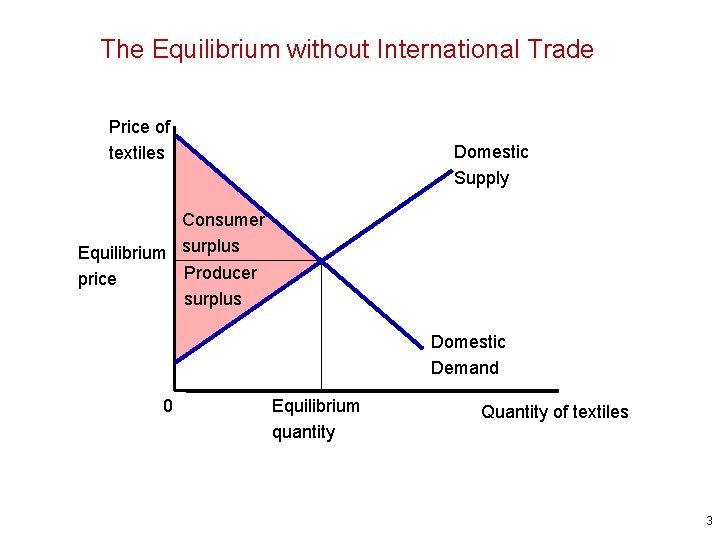
The Determinants of Trade • The equilibrium without trade – Only domestic buyers and sellers – Equilibrium price and quantity • Determined on the domestic market – Total benefits • Consumer surplus • Producer surplus 2
The Equilibrium without International Trade Price of textiles Domestic Supply Consumer Equilibrium surplus Producer price surplus Domestic Demand 0 Equilibrium quantity Quantity of textiles 3
The Determinants of Trade • Allow for international trade? – Price and quantity sold in the domestic market? – Who will gain from free trade; who will lose, and will the gains exceed the losses? – Should a tariff be part of the new trade policy? 4
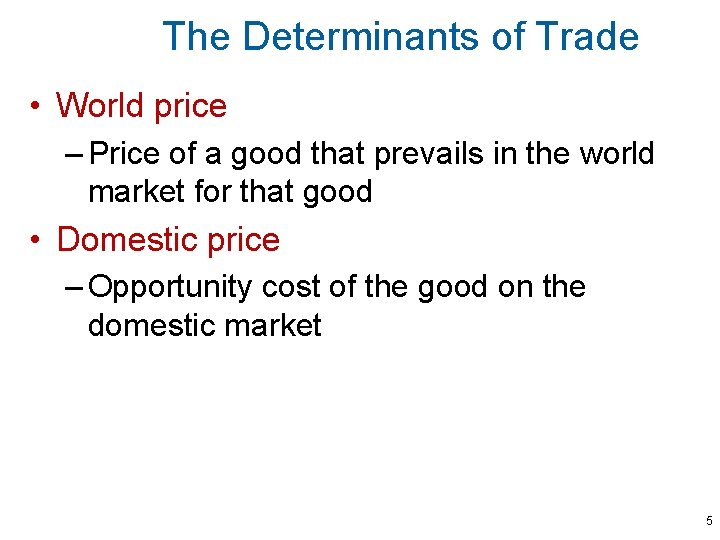
The Determinants of Trade • World price – Price of a good that prevails in the world market for that good • Domestic price – Opportunity cost of the good on the domestic market 5
The Determinants of Trade • Compare domestic price with world price – Determine who has comparative advantage – If domestic price < world price • Export the good • The country has comparative advantage – If domestic price > world price • Import the good • The world has comparative advantage 6
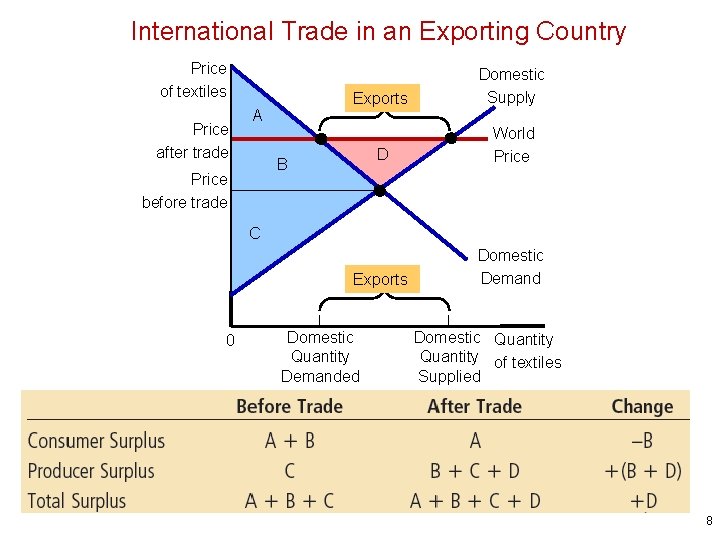
Winners and Losers From Trade • Exporting country – Domestic equilibrium price before trade is below the world price – Once trade is allowed • Domestic price rises to = world price • Domestic quantity supplied > domestic quantity demanded • The difference = exports 7
International Trade in an Exporting Country Price of textiles Price after trade A Exports Domestic Supply D World Price Exports Domestic Demand B Price before trade C 0 Domestic Quantity Demanded Domestic Quantity of textiles Supplied 8
Winners and Losers From Trade • Exporting country, with international trade – Domestic producers of the good are better off – Domestic consumers are worse off – Trade raises the economic well-being of a nation • Gains of the winners exceed the losses of the losers 9
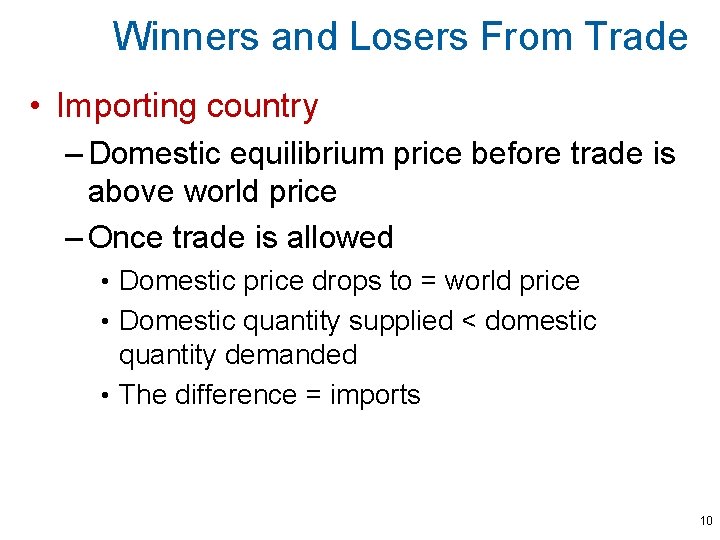
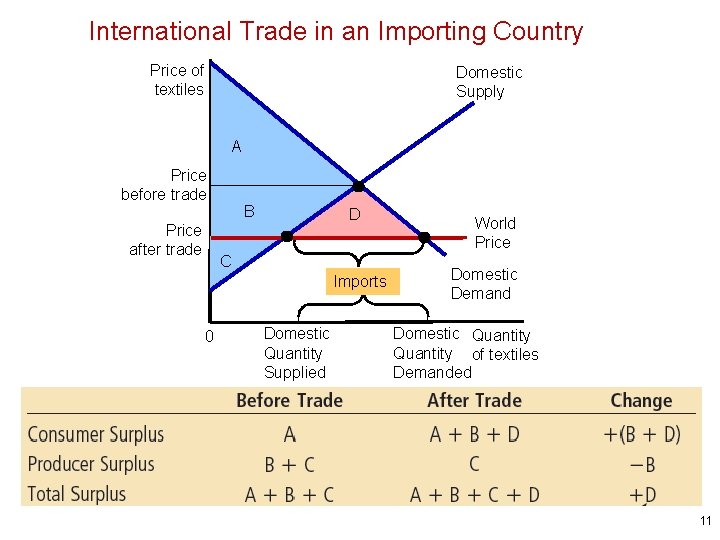
Winners and Losers From Trade • Importing country – Domestic equilibrium price before trade is above world price – Once trade is allowed • Domestic price drops to = world price • Domestic quantity supplied < domestic quantity demanded • The difference = imports 10
International Trade in an Importing Country Price of textiles Domestic Supply A Price before trade Price after trade B D C Imports 0 Domestic Quantity Supplied World Price Domestic Demand Domestic Quantity of textiles Demanded 11
Winners and Losers From Trade • Importing country, with international trade – Domestic producers of the good are worse off – Domestic consumers are better off – Trade raises the economic well-being of a nation • Gains of the winners exceed the losses of the losers • Trade can make everyone better off 12
Winners and Losers From Trade • Other benefits of international trade – Increased variety of goods – Lower costs through economies of scale – Increased competition – Enhanced flow of ideas 13
Arguments For Restricting Trade • The jobs argument – “Trade with other countries destroys domestic jobs” – Free trade creates jobs at the same time that it destroys them • The national-security argument – “The industry is vital for national security” – When there are legitimate concerns over national security 14
Arguments For Restricting Trade • The infant-industry argument – “New industries need temporary trade restriction to help them get started” – Difficult to implement in practice – The “temporary” policy is hard to remove – Protection is not necessary for an infant industry to grow 15
Arguments For Restricting Trade • The unfair-competition argument – “Free trade is desirable only if all countries play by the same rules” – Increase in total surplus for the country • The protection-as-a-bargaining-chip argument – “Trade restrictions can be useful when we bargain with our trading partners” – The threat may not work 16