
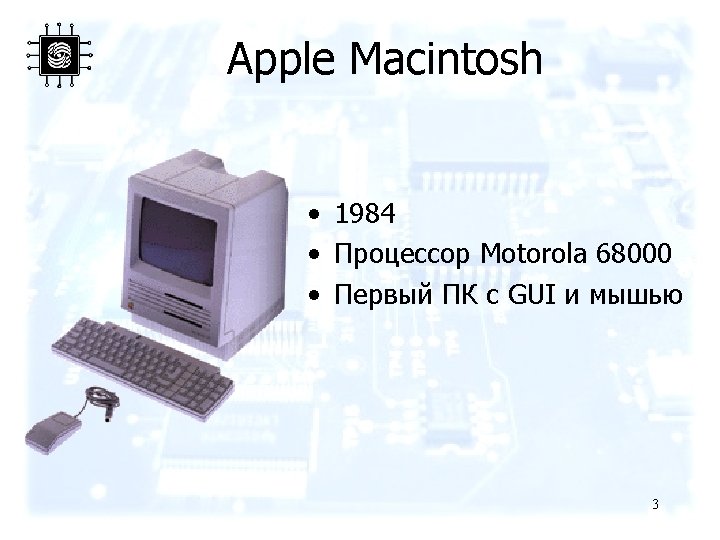
Apple Macintosh 1984 Motorola 68000 GUI 3 Milestones
- Slides: 56
Apple Macintosh • 1984 • Процессор Motorola 68000 • Первый ПК с GUI и мышью 3
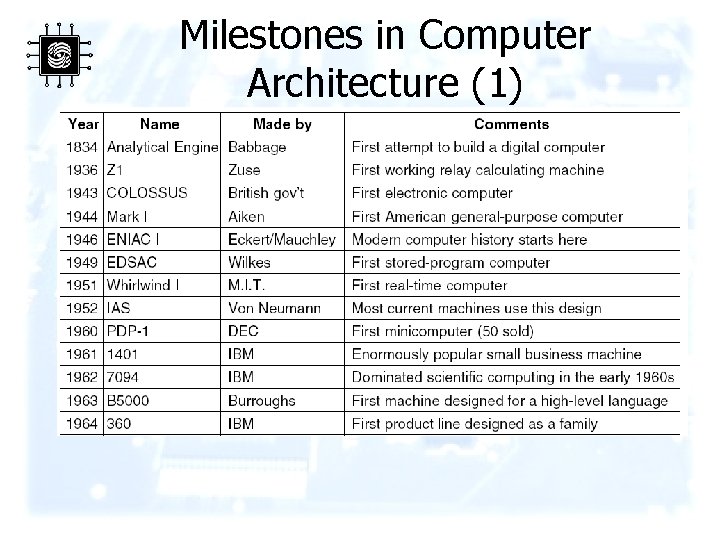
Milestones in Computer Architecture (1) Some milestones in the development of the modern digital computer.
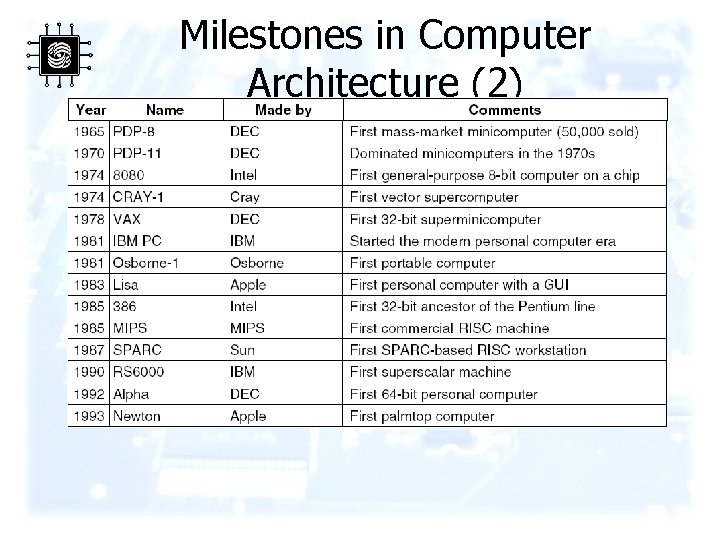
Milestones in Computer Architecture (2) Some milestones in the development of the modern digital computer.
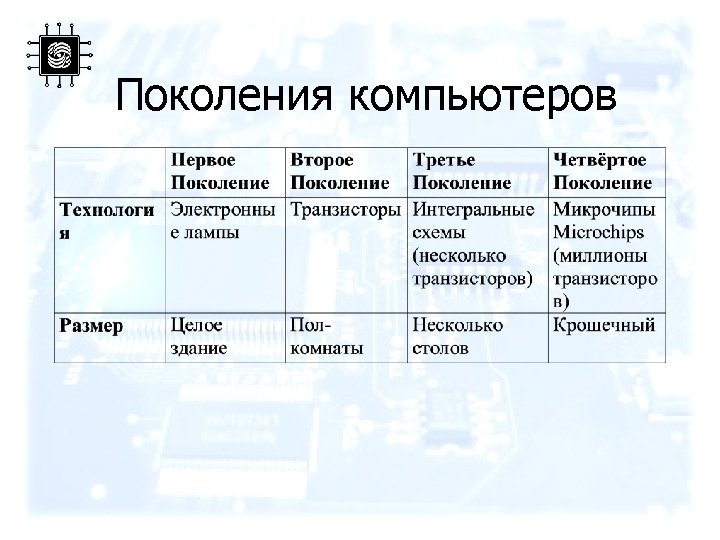
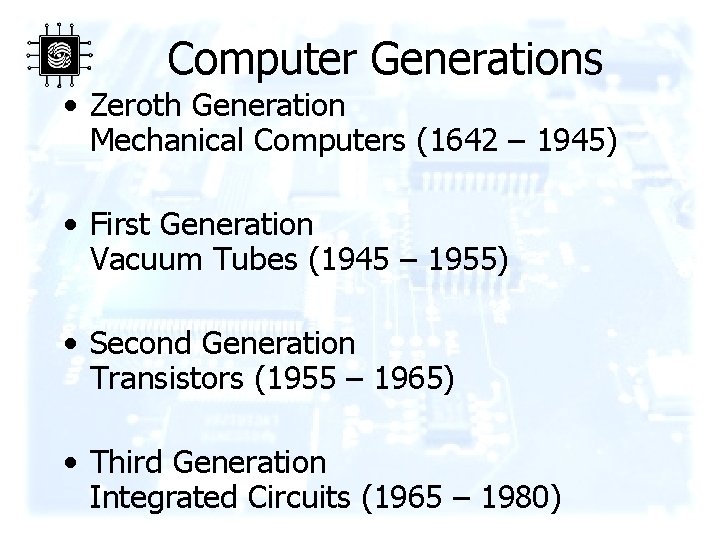
Computer Generations • Zeroth Generation Mechanical Computers (1642 – 1945) • First Generation Vacuum Tubes (1945 – 1955) • Second Generation Transistors (1955 – 1965) • Third Generation Integrated Circuits (1965 – 1980)
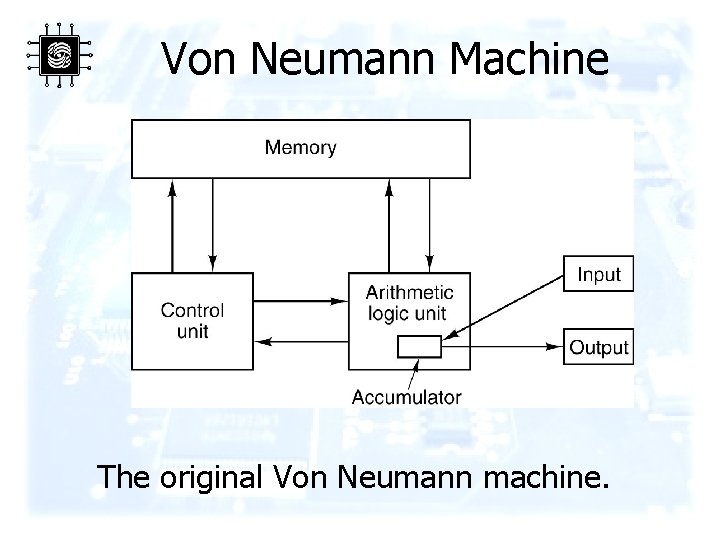
Von Neumann Machine The original Von Neumann machine.
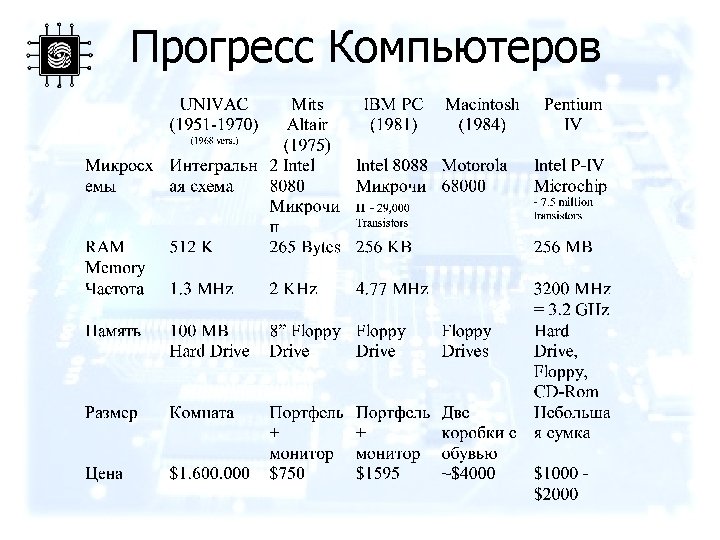
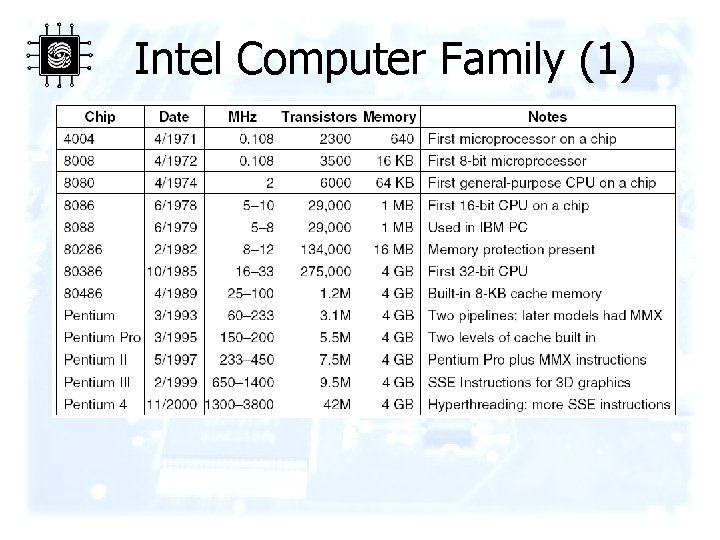
Intel Computer Family (1) The Intel CPU family. Clock speeds are measured in MHz (megahertz) where 1 MHZ is 1 million cycles/sec.
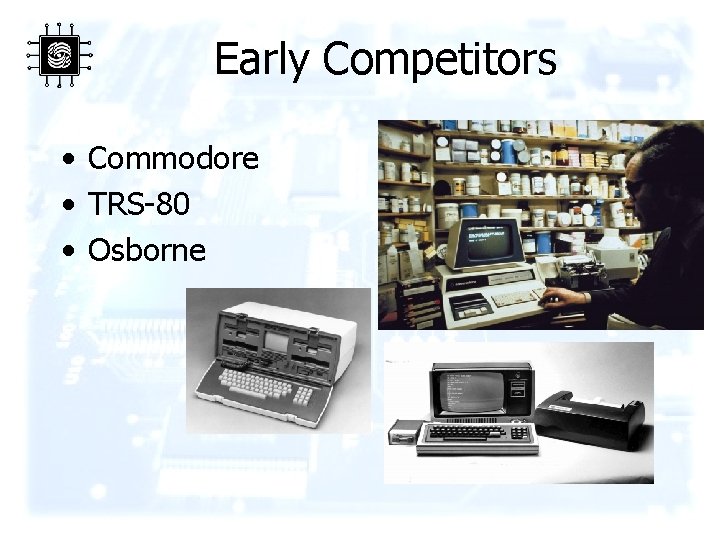
Early Competitors • Commodore • TRS-80 • Osborne
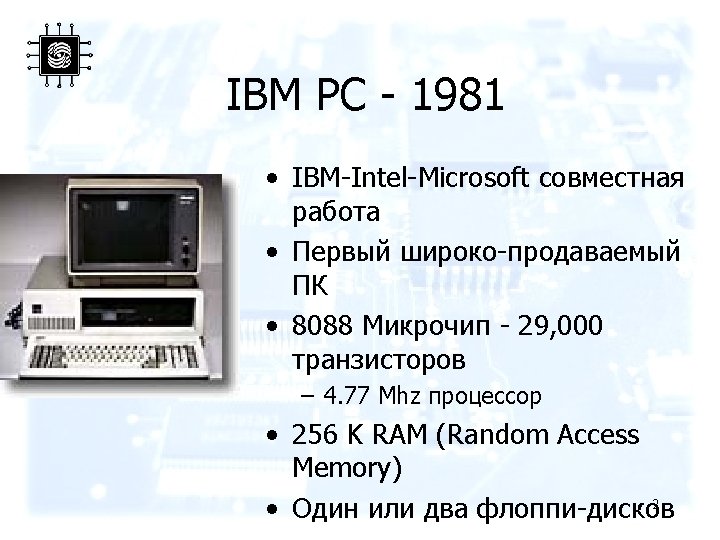
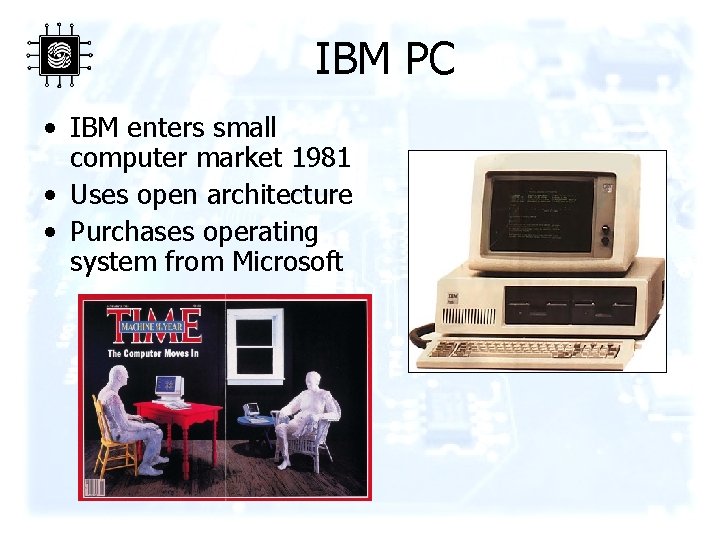
IBM PC • IBM enters small computer market 1981 • Uses open architecture • Purchases operating system from Microsoft
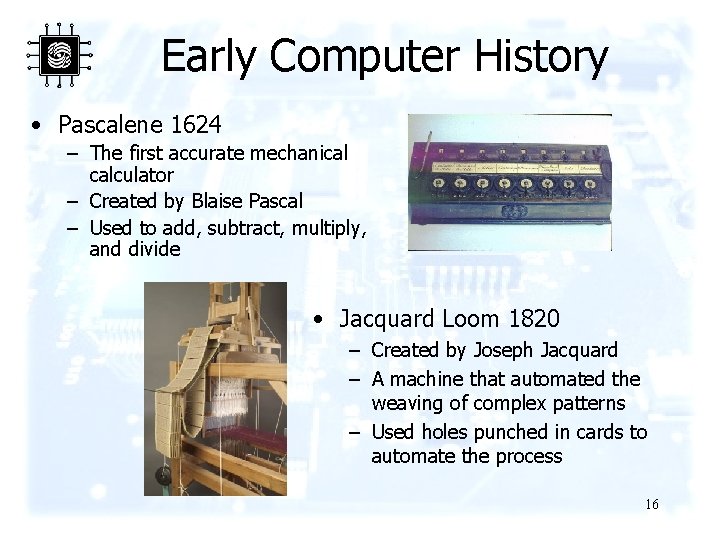
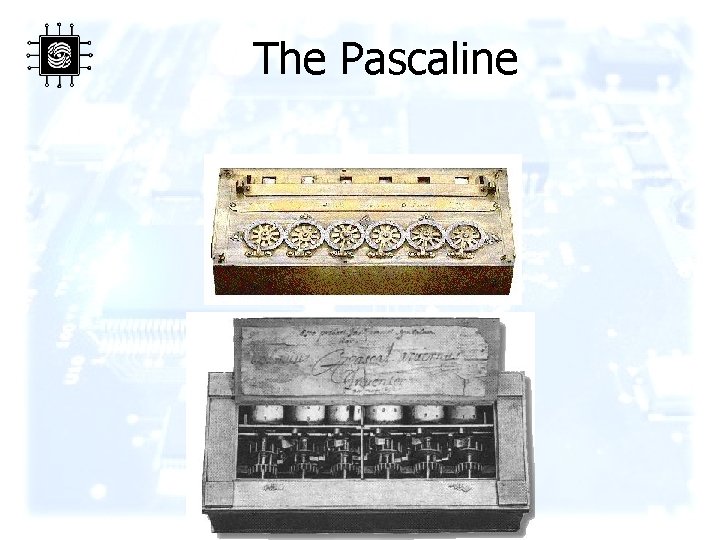
Early Computer History • Pascalene 1624 – The first accurate mechanical calculator – Created by Blaise Pascal – Used to add, subtract, multiply, and divide • Jacquard Loom 1820 – Created by Joseph Jacquard – A machine that automated the weaving of complex patterns – Used holes punched in cards to automate the process 16
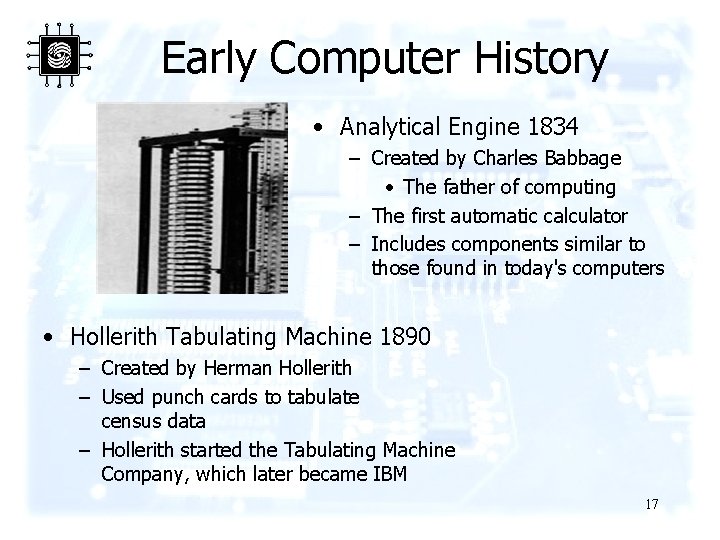
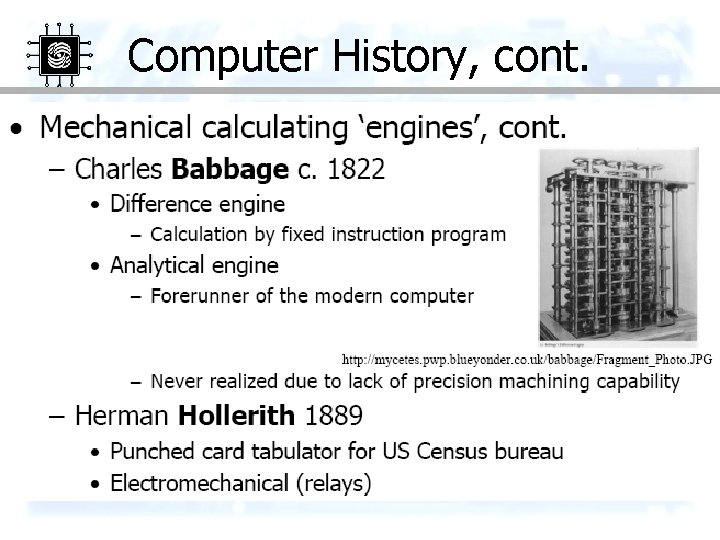
Early Computer History • Analytical Engine 1834 – Created by Charles Babbage • The father of computing – The first automatic calculator – Includes components similar to those found in today's computers • Hollerith Tabulating Machine 1890 – Created by Herman Hollerith – Used punch cards to tabulate census data – Hollerith started the Tabulating Machine Company, which later became IBM 17
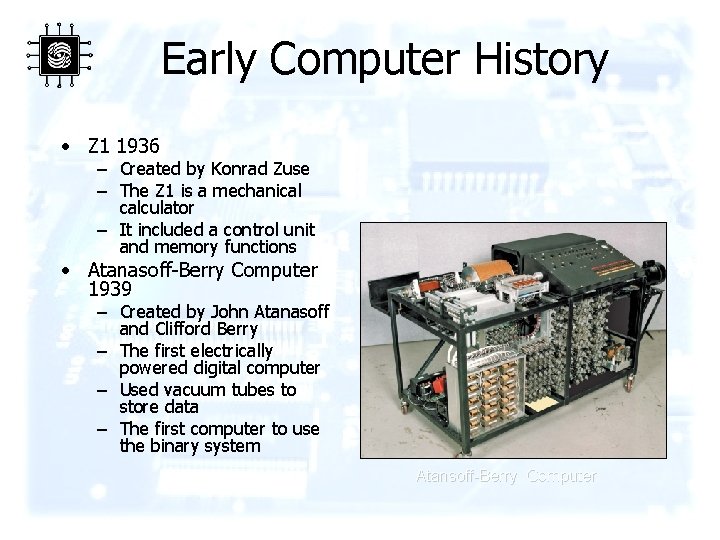
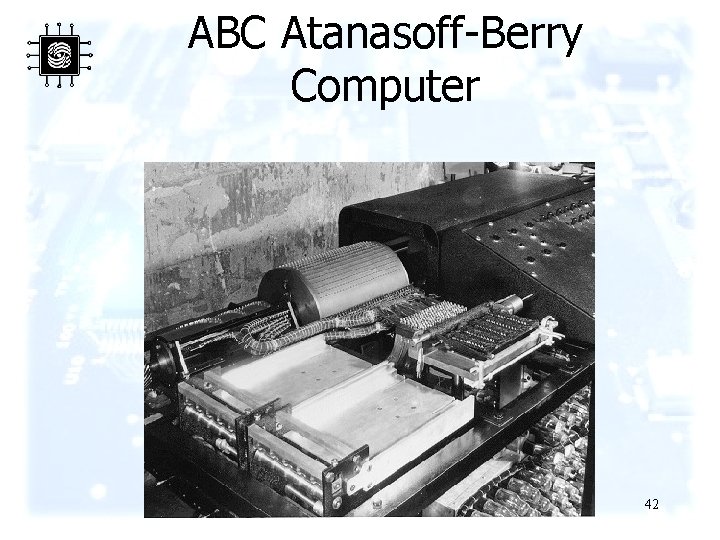
Early Computer History • Z 1 1936 – Created by Konrad Zuse – The Z 1 is a mechanical calculator – It included a control unit and memory functions • Atanasoff-Berry Computer 1939 – Created by John Atanasoff and Clifford Berry – The first electrically powered digital computer – Used vacuum tubes to store data – The first computer to use the binary system Atansoff-Berry Computer
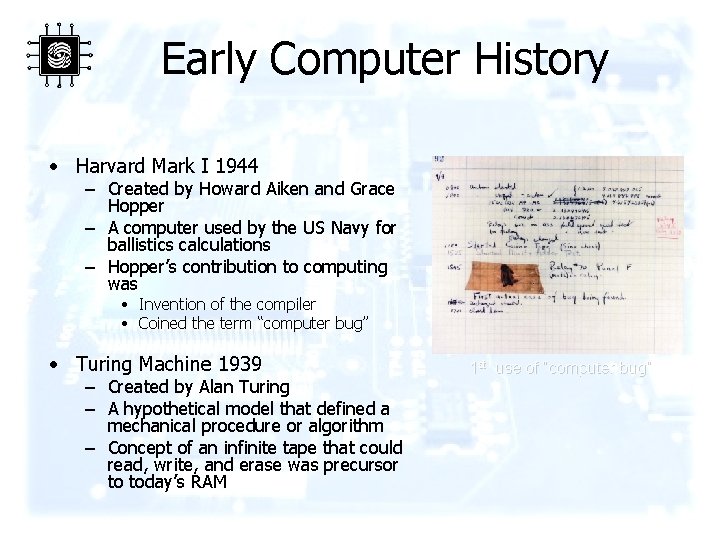
Early Computer History • Harvard Mark I 1944 – Created by Howard Aiken and Grace Hopper – A computer used by the US Navy for ballistics calculations – Hopper’s contribution to computing was • Invention of the compiler • Coined the term “computer bug” • Turing Machine 1939 – Created by Alan Turing – A hypothetical model that defined a mechanical procedure or algorithm – Concept of an infinite tape that could read, write, and erase was precursor to today’s RAM 1 st use of “computer bug”
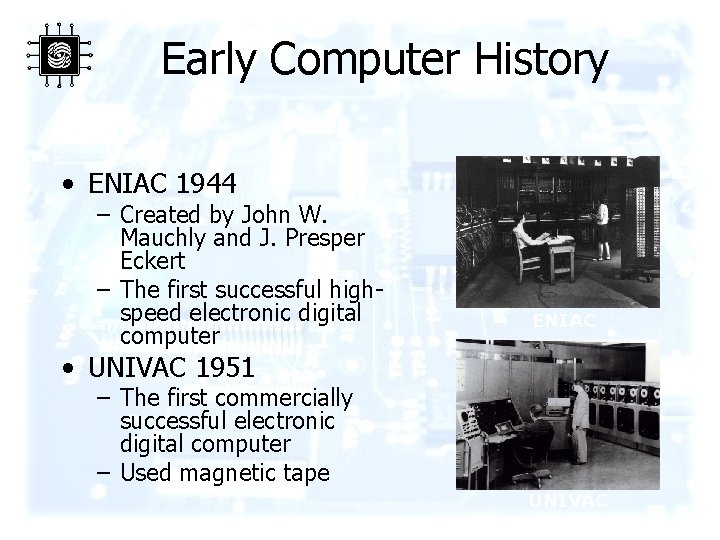
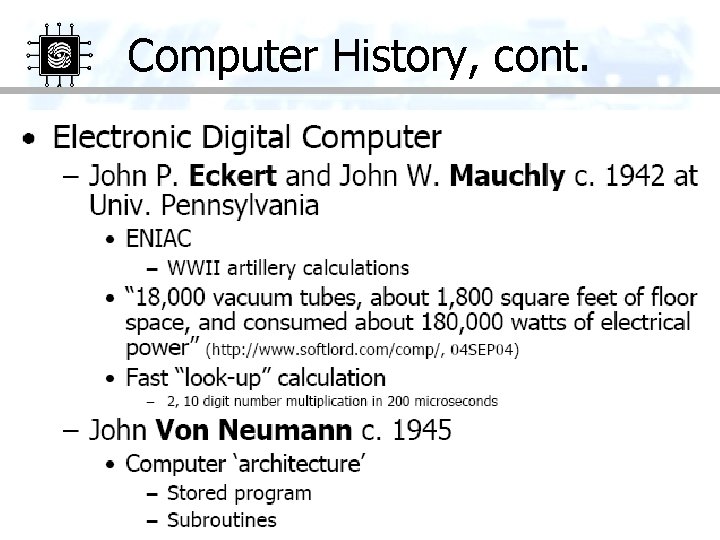
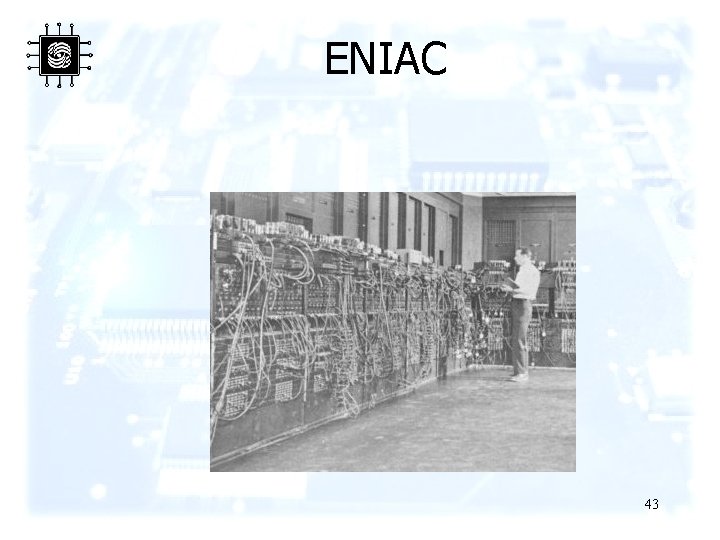
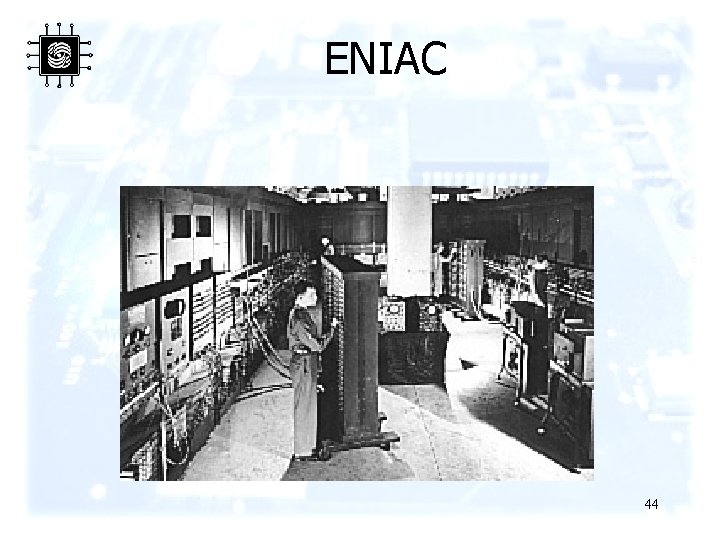
Early Computer History • ENIAC 1944 – Created by John W. Mauchly and J. Presper Eckert – The first successful highspeed electronic digital computer ENIAC • UNIVAC 1951 – The first commercially successful electronic digital computer – Used magnetic tape UNIVAC
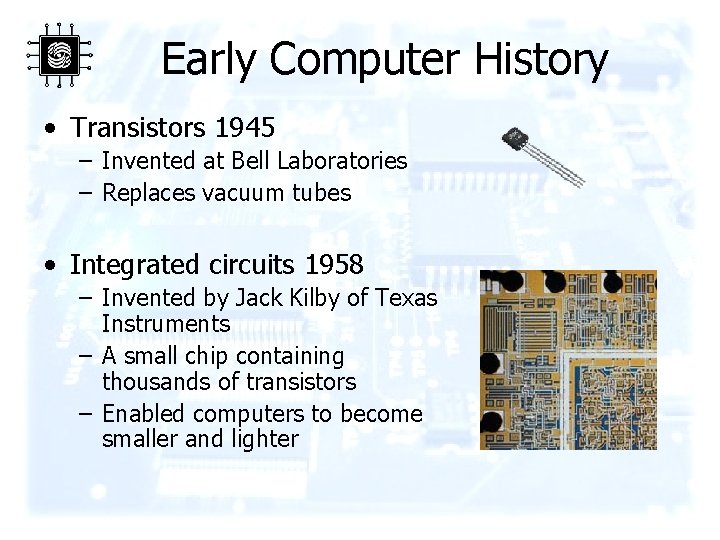
Early Computer History • Transistors 1945 – Invented at Bell Laboratories – Replaces vacuum tubes • Integrated circuits 1958 – Invented by Jack Kilby of Texas Instruments – A small chip containing thousands of transistors – Enabled computers to become smaller and lighter
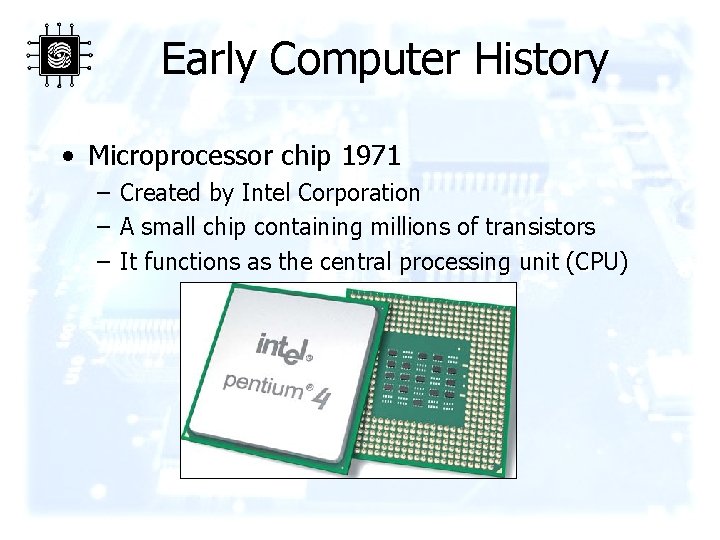
Early Computer History • Microprocessor chip 1971 – Created by Intel Corporation – A small chip containing millions of transistors – It functions as the central processing unit (CPU)
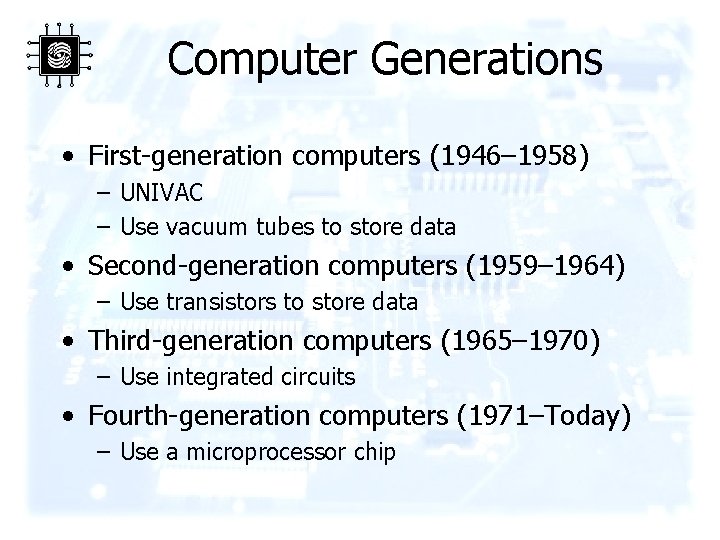
Computer Generations • First-generation computers (1946– 1958) – UNIVAC – Use vacuum tubes to store data • Second-generation computers (1959– 1964) – Use transistors to store data • Third-generation computers (1965– 1970) – Use integrated circuits • Fourth-generation computers (1971–Today) – Use a microprocessor chip
Computer History
Computer History, cont.
Computer History, cont.
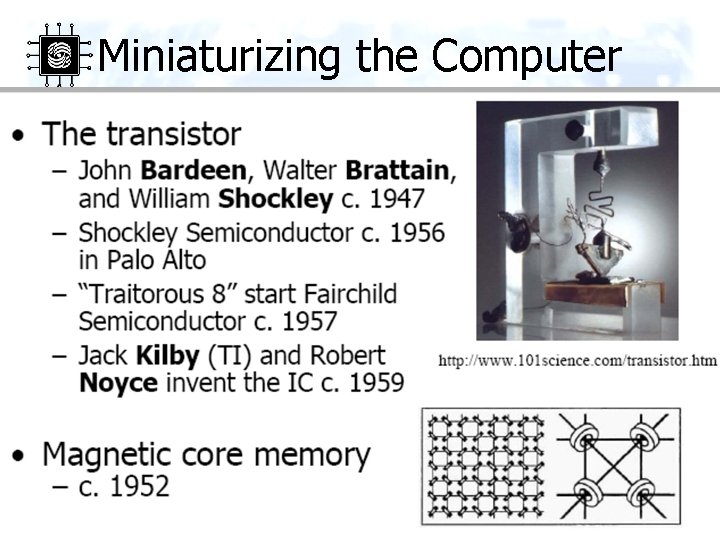
Miniaturizing the Computer
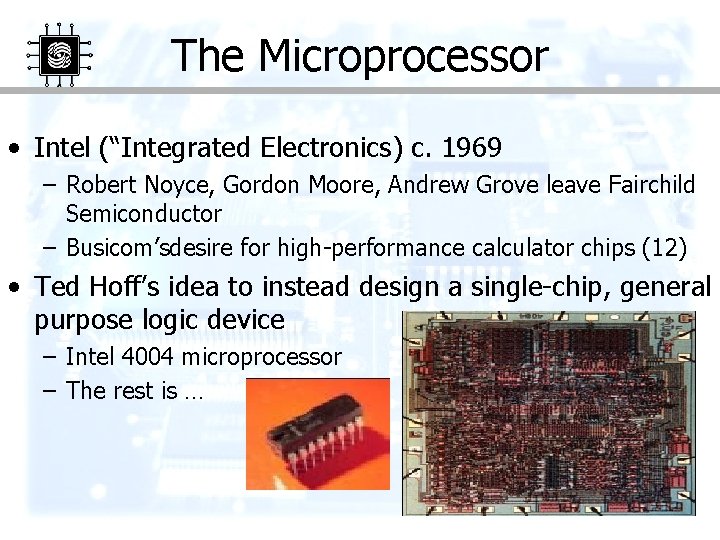
The Microprocessor • Intel (“Integrated Electronics) c. 1969 – Robert Noyce, Gordon Moore, Andrew Grove leave Fairchild Semiconductor – Busicom’sdesire for high-performance calculator chips (12) • Ted Hoff’s idea to instead design a single-chip, general purpose logic device – Intel 4004 microprocessor – The rest is …
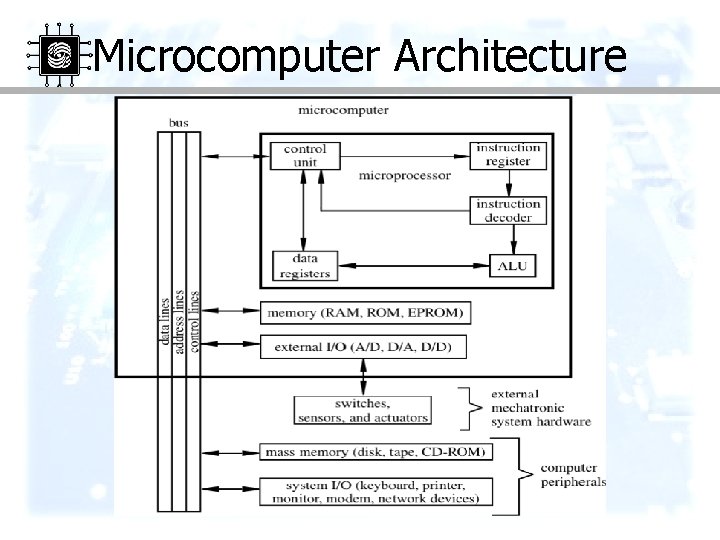
Microcomputer Architecture
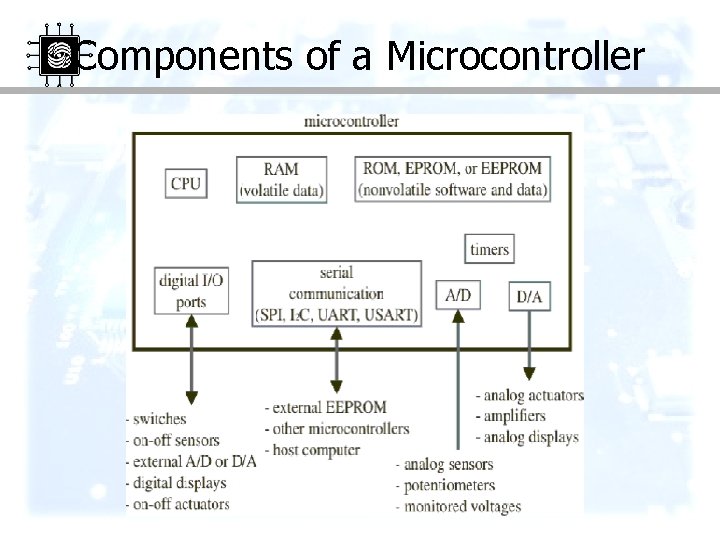
Components of a Microcontroller
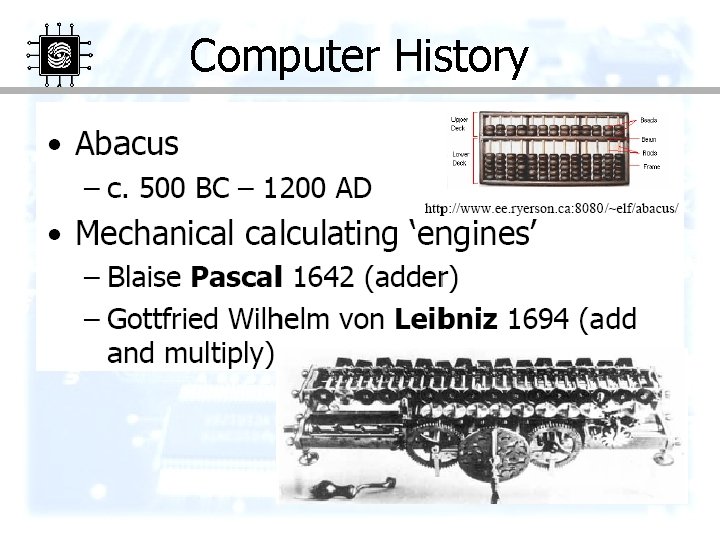
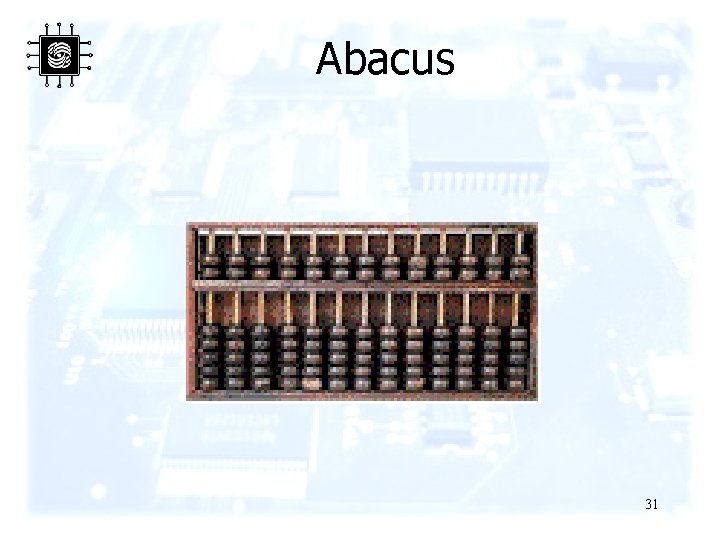
Abacus 31
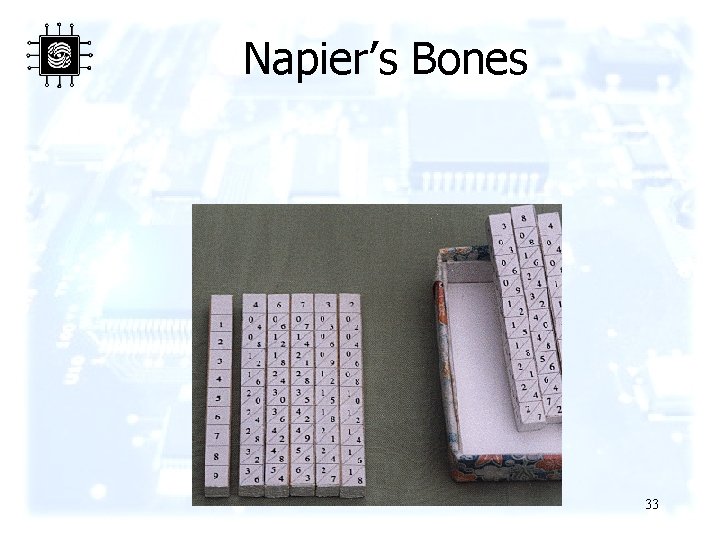
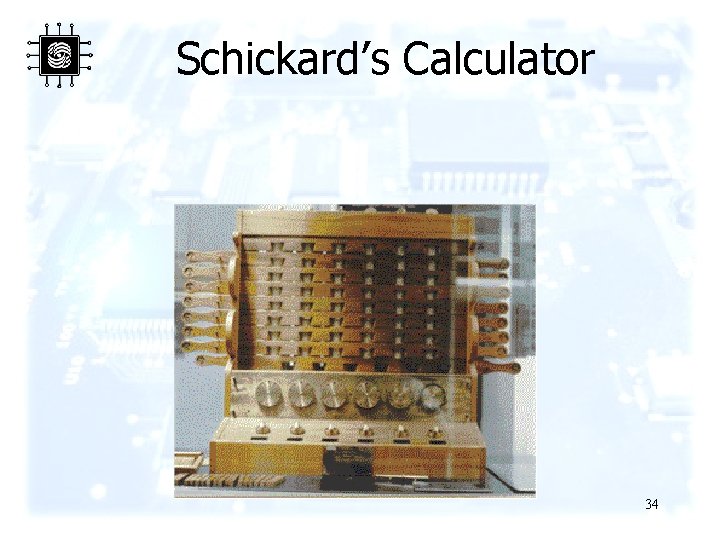
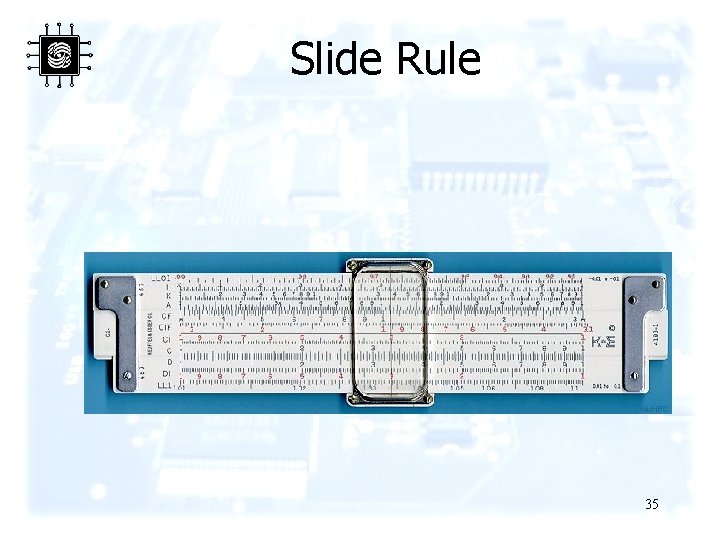
Early Calculators • 1614 John Napier, Napier’s Rods multiply, divide, square roots • 1623 Wilhelm Schickard, Calculating Clock reconstructed in 1960 • 1625 slide rule invented • 1642 Blaise Pascal invented the Pascaline, the first “digital calulator”
Napier’s Bones 33
Schickard’s Calculator 34
Slide Rule 35
The Pascaline
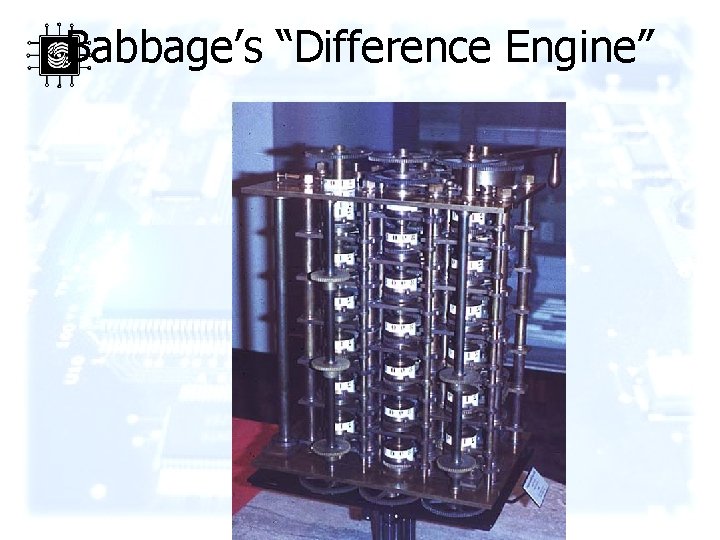
Early Caluclators • 1822 Charles Babbage Mechanical computing machine. Too complicated to build until 1853
Babbage’s “Difference Engine”
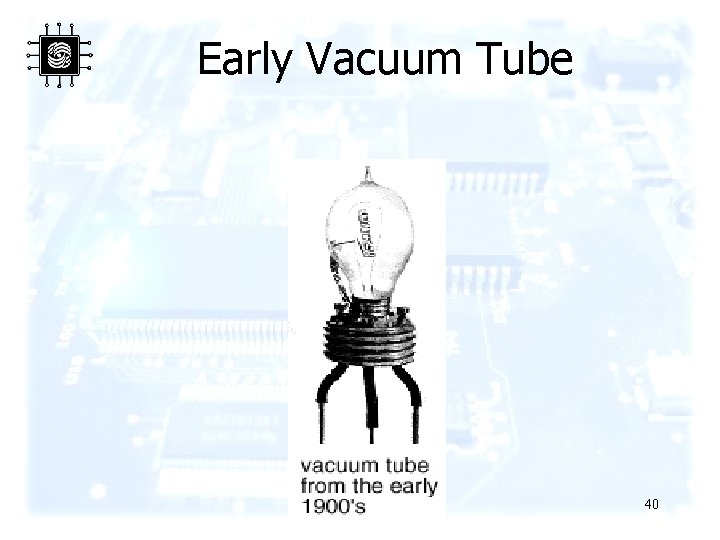
Vacuum Tube • 1906 • Lee Forest invented the “Electronic Valve” • This made digital electronic computers possible
Early Vacuum Tube 40
First Generation computers • 1939 - 1959 • Use vacuum tubes and wire circuits • 1939 ABC computer completed, clock speed of 60 Hz, uses punch cards for secondary memory • 1946 ENIAC 18, 000 valves, used 25 KW of power, 100, 000 calculations/second
ABC Atanasoff-Berry Computer 42
ENIAC 43
ENIAC 44
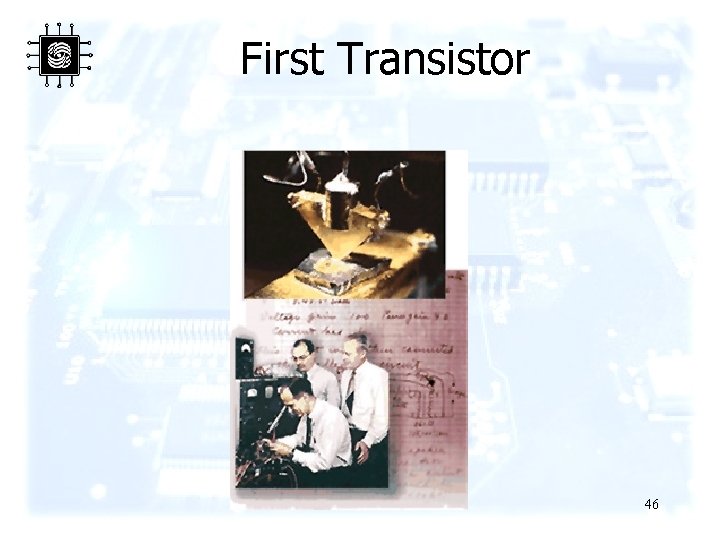
Transistors • 1947 • Bell laboratories invent the transistor • Smaller, cheaper, more reliable, less heat
First Transistor 46
Second Generation Computers • 1959 - 1964 • Based on transistors and printed circuits • Much smaller and less power consumption
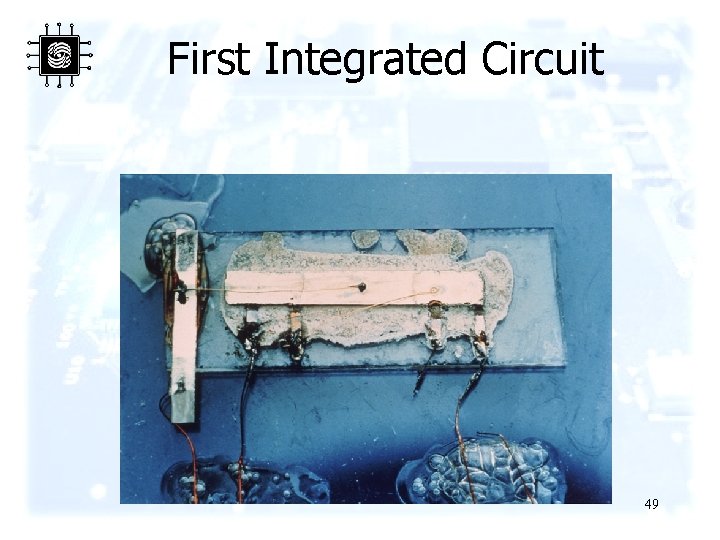
Integrated Circuit • 1958 • Invented by Jack Kilby at Texas Instruments • Integrates the functions of many transistors into one physical component
First Integrated Circuit 49
Third Generation Computers • 1964 - 1972 • Based on integrated circuits, smaller than 2 nd Generation
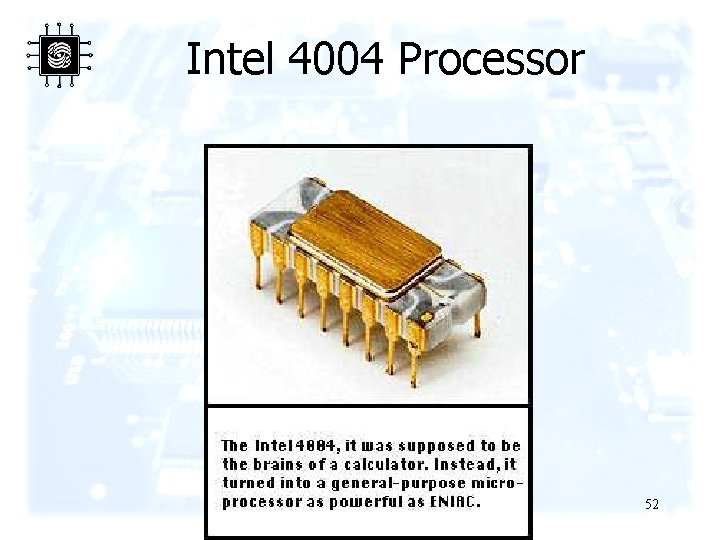
Microprocessors • 1971 • Intel released first microprocessor, the 4004 • Equivalent to 2, 300 transistors, 4 bit data path, ran at 108 KHz • Microprocessors are complex integrated circuits, capable of many different functions
Intel 4004 Processor 52
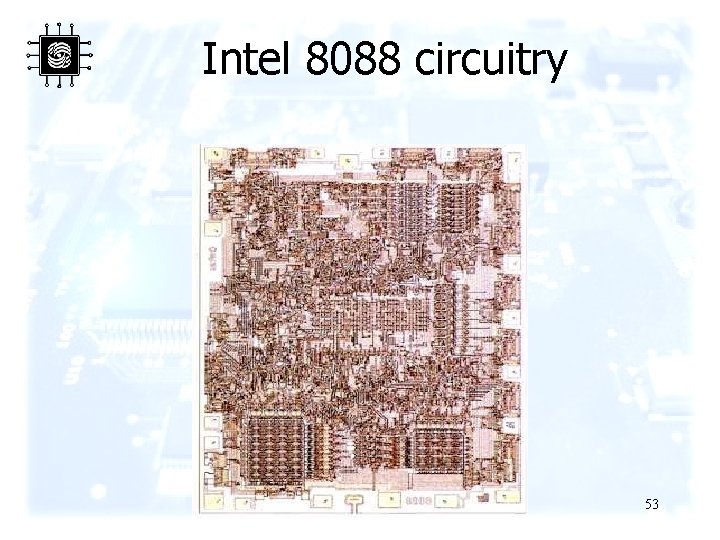
Intel 8088 circuitry 53
Fourth Generation Computers • 1972 • Based on microprocessors • Utilize LSI (Large Scale Integration), and VLSI (Very Large Scale Integration) • Smaller, faster, and more complex than 3 rd Generation
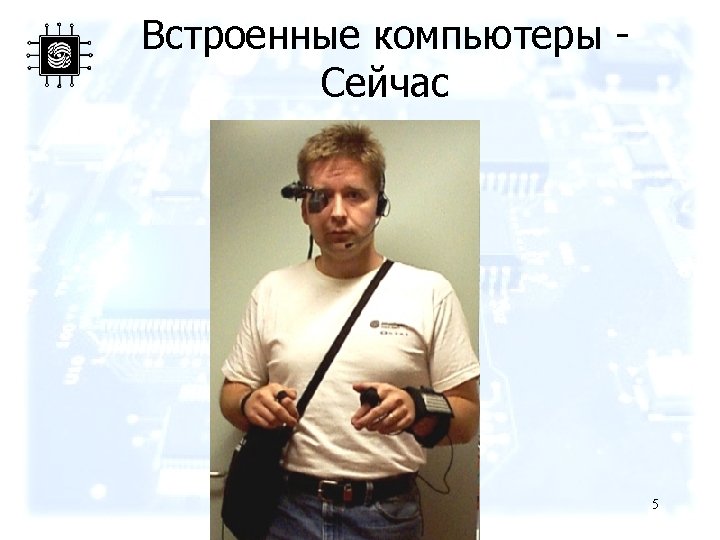
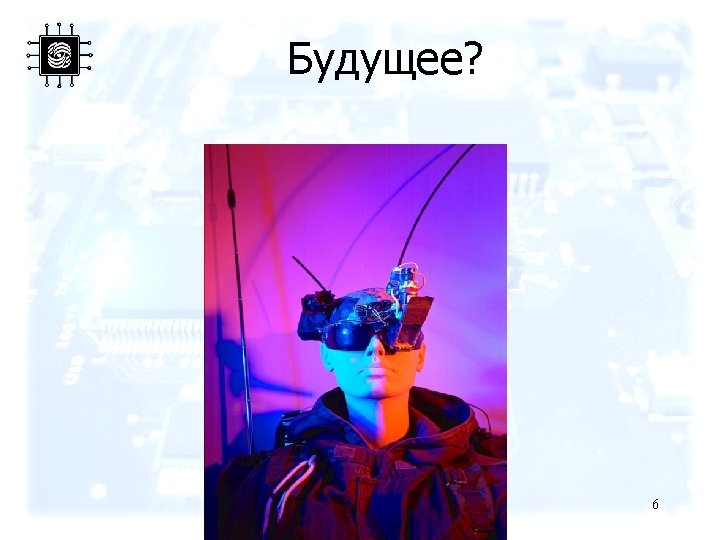
Fifth Generation Computers • ? ? • Will be much smaller and faster than 4 th Generation • Greatly increased data storage capability • Will most likely have light, easily transportable display capabilities • May be built into clothing
Fifth Generation Computers • Fifth Generation - Present and Beyond: Artificial Intelligence Fifth generation computing devices, based on artificial intelligence, are still in development, though there are some applications, such as voice recognition, that are being used today. The use of parallel processing and superconductors is helping to make artificial intelligence a reality. Quantum computation and molecular and nanotechnology will radically change the face of computers in years to come. The goal of fifth-generation computing is to develop devices that respond to natural language input and are capable of learning and selforganization.