
Appendix 11 A Labor Contracts and NominalWage Rigidity
Appendix 11. A Labor Contracts and Nominal-Wage Rigidity
Appendix 11. A: Labor Contracts and Nominal-Wage Rigidity • Some Keynesians think the nonneutrality of money is because of nominal-wage rigidity, not nominal-price rigidity – Nominal wages could be rigid because of longterm contracts between firms and unions – With nominal-wage rigidity, the short-run aggregate supply curve slopes upward instead of being horizontal – Even so, the main results of the Keynesian model still hold Copyright © 2014 Pearson Education 11 A-2

Appendix 11. A: Labor Contracts and Nominal-Wage Rigidity • The short-run aggregate supply curve with labor contracts – U. S. labor contracts usually specify employment conditions and the nominal wage rate for three years – Employers decide on workers' hours and must pay them the contracted nominal wage – The result is an upward-sloping short-run aggregate supply curve • As the price level rises, the real wage declines, since the nominal wage is fixed • As the real wage declines, firms hire more workers and thus increase output Copyright © 2014 Pearson Education 11 A-3
Appendix 11. A: Labor Contracts and Nominal-Wage Rigidity • Nonneutrality of money – Money isn't neutral in this model, because as the money supply increases, the AD curve shifts along the fixed (upward-sloping) SRAS curve (Fig. 11. A. 1) – As a result, output and the price level increase – Over time, workers will negotiate higher nominal wages and the SRAS curve will shift left to restore general equilibrium – Thus money is nonneutral in the short run but neutral in the long run Copyright © 2014 Pearson Education 11 A-4
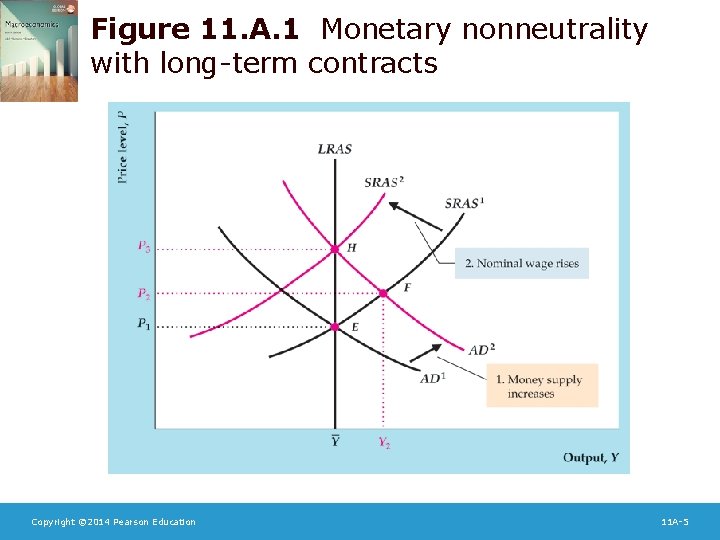
Figure 11. A. 1 Monetary nonneutrality with long-term contracts Copyright © 2014 Pearson Education 11 A-5
Appendix 11. A: Labor Contracts and Nominal-Wage Rigidity • Nonneutrality of money – There are several objections to this theory • Less than one-sixth of the U. S. labor force is unionized and covered by long-term wage contracts; however, some nonunion workers get wages similar to those in union contracts, and other workers may have implicit contracts that act like long-term contracts Copyright © 2014 Pearson Education 11 A-6
Appendix 11. A: Labor Contracts and Nominal-Wage Rigidity • Nonneutrality of money – There are several objections to this theory (cont. ) • Some labor contracts are indexed to inflation, so the real wage is fixed, not the nominal wage; however, most contracts aren't completely indexed • The theory predicts that real wages will be countercyclical, but in fact they are procyclical; however, if there are both aggregate supply shocks and aggregate demand shocks, real wages may turn out on average to be procyclical, but could still be countercyclical for demand shocks Copyright © 2014 Pearson Education 11 A-7
- Slides: 7