
Appendix 1 HR Diversity Monitor Workforce Analysis October

Appendix 1 HR Diversity Monitor Workforce Analysis October 2014 Presented by Laura Mullins HR Policy & Practice Team Analysis by Phil Gray WSCC Insight Team
WSCC Insight The Insight Team supports commissioners in designing and sourcing services for better outcomes by providing Insight and Commissioning Intelligence. The team undertakes research and data analysis to create Customer & Community Insight, Market, Business and Commissioning Intelligence. Ment Contact: insight. team@westsussex. gov. uk Customer Segmentation Customer/ Community Insight CUSTOMER VOICE Business Intelligence Mindspace TOOLS Market Intelligence Infographics Mosaic Behavioural studies Engagement Customer journeys Social Marketing DATA & INFORMATION Commissioning Intelligence HR Diversity Monitor Sociodemographic profiles Community profiles 2
Introduction Aim: The aim of this report is to determine whether people of all characteristics are fairly and equally represented throughout the WSCC workforce. Purpose: The purpose is to provide a brief overview of six protected characteristics across the workforce, analysing the representation of different groups across directorates, pay grades and against other details. The six characteristics analysed in this report are: gender, age, ethnicity, disability, sexual orientation and religion. Data Sources Workforce data analysed in this report is based on SAP downloads of employee records, grievances, disciplinaries, recruitment and people leaving WSCC employment. Employee records are as of 1 st April 2014, while sickness, grievances, disciplinaries, recruitment and leavers refer to incidences in the year April 2013 – March 2014. This includes where an incidence of grievance or disciplinary action began before this period but continued during it, for instance a grievance beginning in March 2013 and ending in April 2013 would be included. Grievance and disciplinary data covers all incidences where HR are formally notified; informal instances may be dealt within teams or between employees; such occurrences do not appear in the data. All analysis excludes employees in Schools. Employees who work in schools but come under other directorates are included, e. g. Learning Service in Communities Commissioning. Non-disclosure In the context of this report, ‘non-disclosure’ for any employee is taken to mean where a particular characteristic such as ethnicity is not known for that employee because no answer was given for the relevant HR Diversity Monitor question. Such incidences are recorded as ‘Unknown’ in the data. Employee gender and age are mandatory pieces of information, hence non-disclosure is not an issue for these two characteristics. Non-disclosure does not include where employees have chosen not to state a particular characteristic, since this counts as disclosure, and these are recorded as ‘Prefer not to say’ in the data. All employees are asked HR Diversity Monitor questions at the point of recruitment, and the majority are also given further opportunities to complete this information about themselves periodically. HR Diversity Monitor 3

Executive Summary Gender – Across WSCC, 64. 8% of employees are female and 35. 2% are male. However, for employees on NJC grades 1 to 6 (or equivalent) the proportion who are female rises to 78. 8% of the total. By comparison, HAY and SMG or equivalent grades are 57. 3% female and 42. 7% male. A higher proportion of females took time off sick in 2013/14 than males, although men tended to take slightly longer for each episode of sickness. Age – WSCC has an older age profile than the working age population of West Sussex, with employees aged 15 – 24 particularly under-represented in the workforce. As might be expected, both pay and time off sick increase with age. Ethnicity – 5. 1% of the workforce belong to BME groups, compared to 11. 9% of the working age population. However, 18. 0% of employees are of unknown ethnicity, so the proportion for the workforce could be higher. BME groups appear to be fairly represented across different pay grades, with no clear trends in grievances, disciplinaries or sickness between ethnic groups. Disability, Sexual Orientation and Religion – These three characteristics all display high levels of non-disclosure, so it is not possible to identify whether they are fairly represented across WSCC. Non-disclosure rates are significantly higher for employees on lower pay grades; NJC grades 1 to 6 in particular. HR Diversity Monitor 4

1. Gender in WSCC Overall, the workforce of West Sussex County Council is 64. 8% female and 35. 2% male. Although this does not reflect the demographics of the working age population in West Sussex, it is broadly similar to patterns seen in public sector employment across the UK where approximately 66% of employees are female [1]. There are significant variations across directorates, from Children’s Services where 83. 2% of employees are female, to the Fire & Rescue Service where 88. 7% are male. Compared to 2013, the proportion of males in the overall workforce increased by 0. 1%, with Fire & Rescue Service and Public Health & HSC Commissioning seeing the largest differences in the proportion of males, up 2. 1% and 1. 3% respectively. [1] Estimating Differences in Public and Private Sector Pay, 2013, Office for National Statistics, www. ons. gov. uk HR Diversity Monitor 5
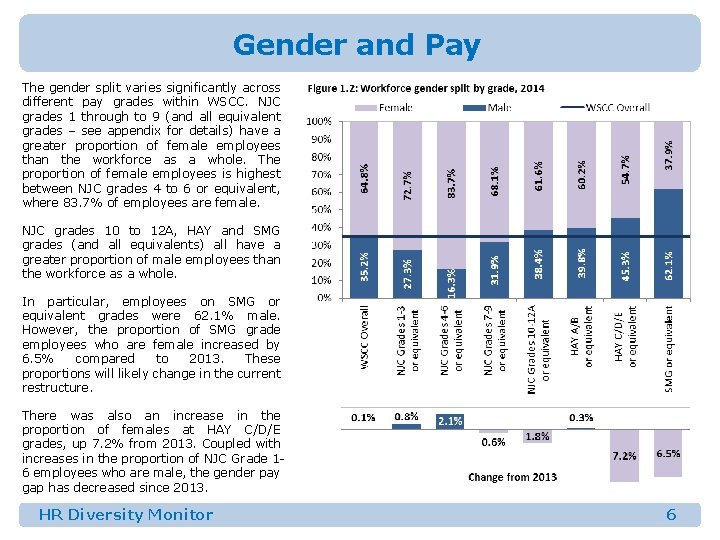
Gender and Pay The gender split varies significantly across different pay grades within WSCC. NJC grades 1 through to 9 (and all equivalent grades – see appendix for details) have a greater proportion of female employees than the workforce as a whole. The proportion of female employees is highest between NJC grades 4 to 6 or equivalent, where 83. 7% of employees are female. NJC grades 10 to 12 A, HAY and SMG grades (and all equivalents) all have a greater proportion of male employees than the workforce as a whole. In particular, employees on SMG or equivalent grades were 62. 1% male. However, the proportion of SMG grade employees who are female increased by 6. 5% compared to 2013. These proportions will likely change in the current restructure. There was also an increase in the proportion of females at HAY C/D/E grades, up 7. 2% from 2013. Coupled with increases in the proportion of NJC Grade 16 employees who are male, the gender pay gap has decreased since 2013. HR Diversity Monitor 6
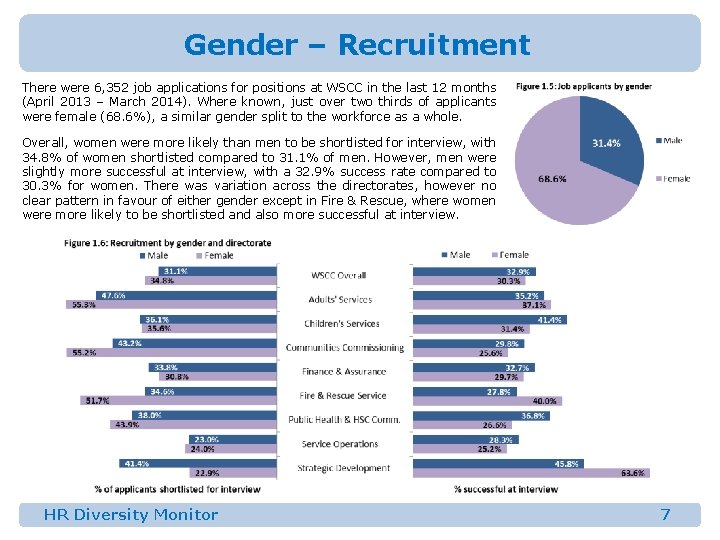
Gender – Recruitment There were 6, 352 job applications for positions at WSCC in the last 12 months (April 2013 – March 2014). Where known, just over two thirds of applicants were female (68. 6%), a similar gender split to the workforce as a whole. Overall, women were more likely than men to be shortlisted for interview, with 34. 8% of women shortlisted compared to 31. 1% of men. However, men were slightly more successful at interview, with a 32. 9% success rate compared to 30. 3% for women. There was variation across the directorates, however no clear pattern in favour of either gender except in Fire & Rescue, where women were more likely to be shortlisted and also more successful at interview. HR Diversity Monitor 7
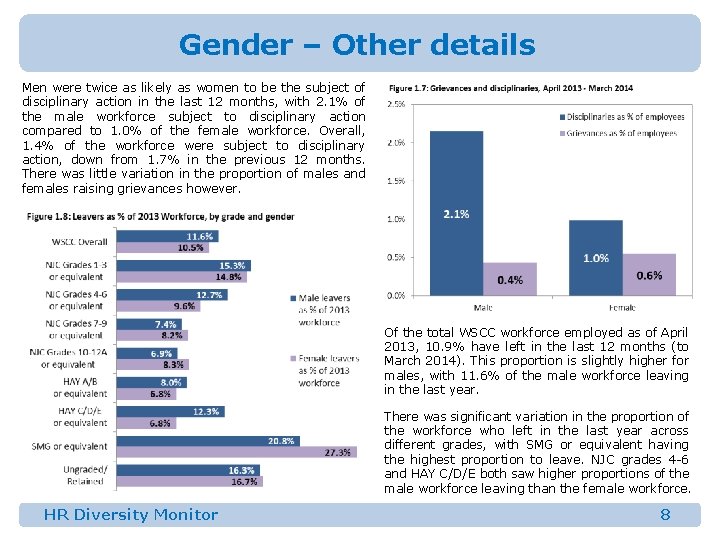
Gender – Other details Men were twice as likely as women to be the subject of disciplinary action in the last 12 months, with 2. 1% of the male workforce subject to disciplinary action compared to 1. 0% of the female workforce. Overall, 1. 4% of the workforce were subject to disciplinary action, down from 1. 7% in the previous 12 months. There was little variation in the proportion of males and females raising grievances however. Of the total WSCC workforce employed as of April 2013, 10. 9% have left in the last 12 months (to March 2014). This proportion is slightly higher for males, with 11. 6% of the male workforce leaving in the last year. There was significant variation in the proportion of the workforce who left in the last year across different grades, with SMG or equivalent having the highest proportion to leave. NJC grades 4 -6 and HAY C/D/E both saw higher proportions of the male workforce leaving than the female workforce. HR Diversity Monitor 8
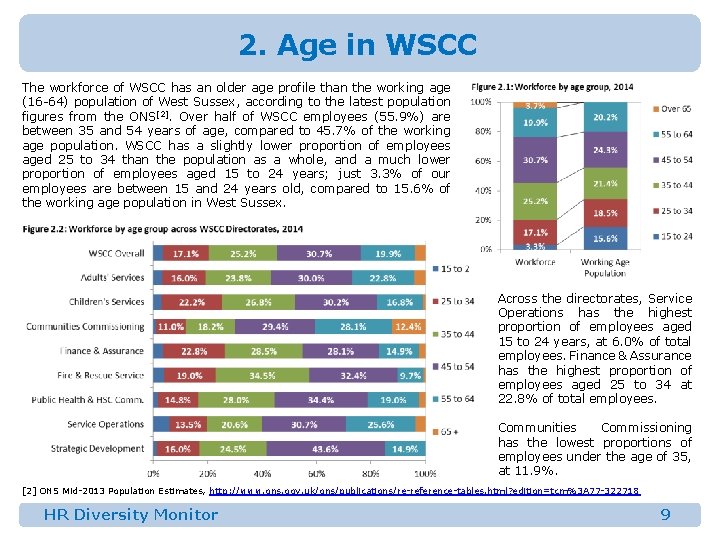
2. Age in WSCC The workforce of WSCC has an older age profile than the working age (16 -64) population of West Sussex, according to the latest population figures from the ONS[2]. Over half of WSCC employees (55. 9%) are between 35 and 54 years of age, compared to 45. 7% of the working age population. WSCC has a slightly lower proportion of employees aged 25 to 34 than the population as a whole, and a much lower proportion of employees aged 15 to 24 years; just 3. 3% of our employees are between 15 and 24 years old, compared to 15. 6% of the working age population in West Sussex. Across the directorates, Service Operations has the highest proportion of employees aged 15 to 24 years, at 6. 0% of total employees. Finance & Assurance has the highest proportion of employees aged 25 to 34 at 22. 8% of total employees. Communities Commissioning has the lowest proportions of employees under the age of 35, at 11. 9%. [2] ONS Mid-2013 Population Estimates, http: //www. ons. gov. uk/ons/publications/re-reference-tables. html? edition=tcm%3 A 77 -322718 HR Diversity Monitor 9
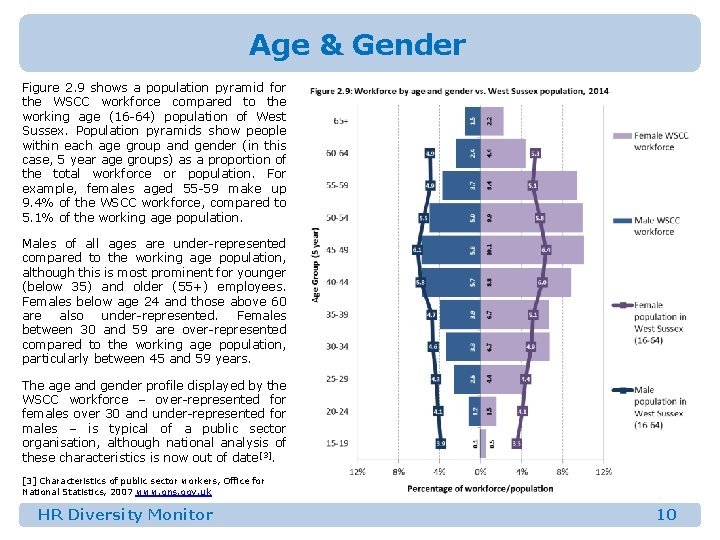
Age & Gender Figure 2. 9 shows a population pyramid for the WSCC workforce compared to the working age (16 -64) population of West Sussex. Population pyramids show people within each age group and gender (in this case, 5 year age groups) as a proportion of the total workforce or population. For example, females aged 55 -59 make up 9. 4% of the WSCC workforce, compared to 5. 1% of the working age population. Males of all ages are under-represented compared to the working age population, although this is most prominent for younger (below 35) and older (55+) employees. Females below age 24 and those above 60 are also under-represented. Females between 30 and 59 are over-represented compared to the working age population, particularly between 45 and 59 years. The age and gender profile displayed by the WSCC workforce – over-represented for females over 30 and under-represented for males – is typical of a public sector organisation, although national analysis of these characteristics is now out of date [3] Characteristics of public sector workers, Office for National Statistics, 2007 www. ons. gov. uk HR Diversity Monitor 10
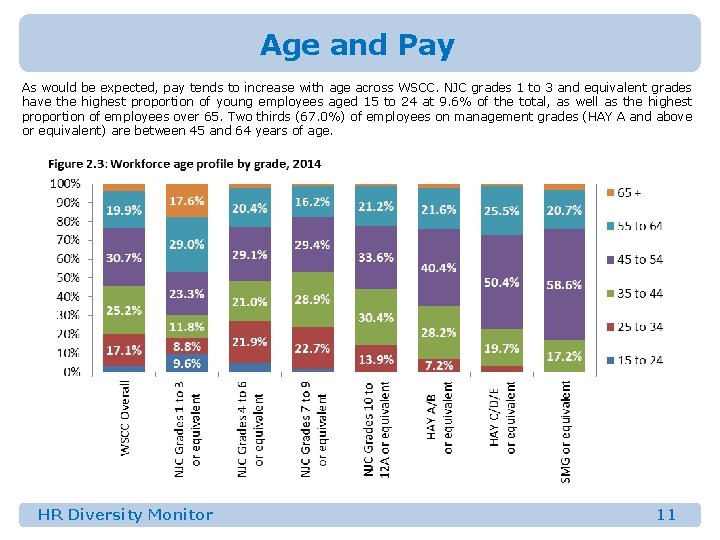
Age and Pay As would be expected, pay tends to increase with age across WSCC. NJC grades 1 to 3 and equivalent grades have the highest proportion of young employees aged 15 to 24 at 9. 6% of the total, as well as the highest proportion of employees over 65. Two thirds (67. 0%) of employees on management grades (HAY A and above or equivalent) are between 45 and 64 years of age. HR Diversity Monitor 11
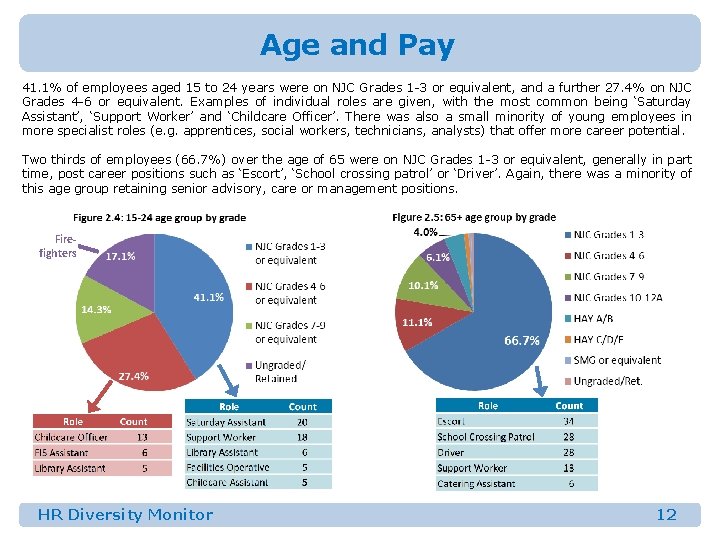
Age and Pay 41. 1% of employees aged 15 to 24 years were on NJC Grades 1 -3 or equivalent, and a further 27. 4% on NJC Grades 4 -6 or equivalent. Examples of individual roles are given, with the most common being ‘Saturday Assistant’, ‘Support Worker’ and ‘Childcare Officer’. There was also a small minority of young employees in more specialist roles (e. g. apprentices, social workers, technicians, analysts) that offer more career potential. Two thirds of employees (66. 7%) over the age of 65 were on NJC Grades 1 -3 or equivalent, generally in part time, post career positions such as ‘Escort’, ‘School crossing patrol’ or ‘Driver’. Again, there was a minority of this age group retaining senior advisory, care or management positions. Firefighters HR Diversity Monitor 12
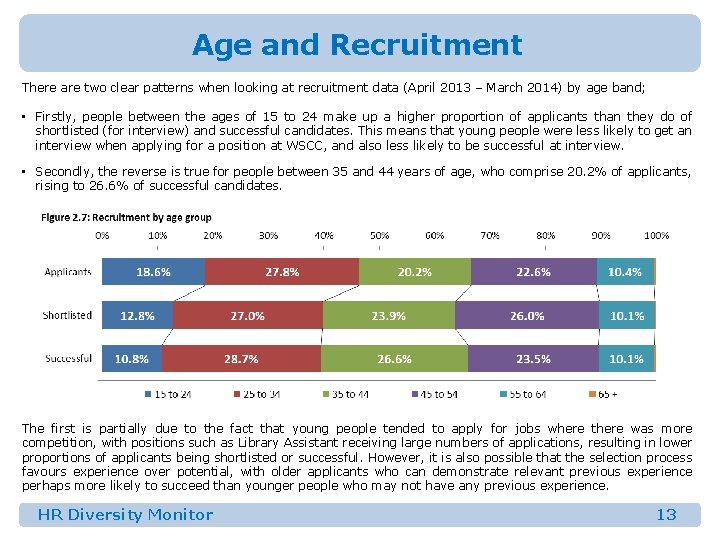
Age and Recruitment There are two clear patterns when looking at recruitment data (April 2013 – March 2014) by age band; • Firstly, people between the ages of 15 to 24 make up a higher proportion of applicants than they do of shortlisted (for interview) and successful candidates. This means that young people were less likely to get an interview when applying for a position at WSCC, and also less likely to be successful at interview. • Secondly, the reverse is true for people between 35 and 44 years of age, who comprise 20. 2% of applicants, rising to 26. 6% of successful candidates. The first is partially due to the fact that young people tended to apply for jobs where there was more competition, with positions such as Library Assistant receiving large numbers of applications, resulting in lower proportions of applicants being shortlisted or successful. However, it is also possible that the selection process favours experience over potential, with older applicants who can demonstrate relevant previous experience perhaps more likely to succeed than younger people who may not have any previous experience. HR Diversity Monitor 13
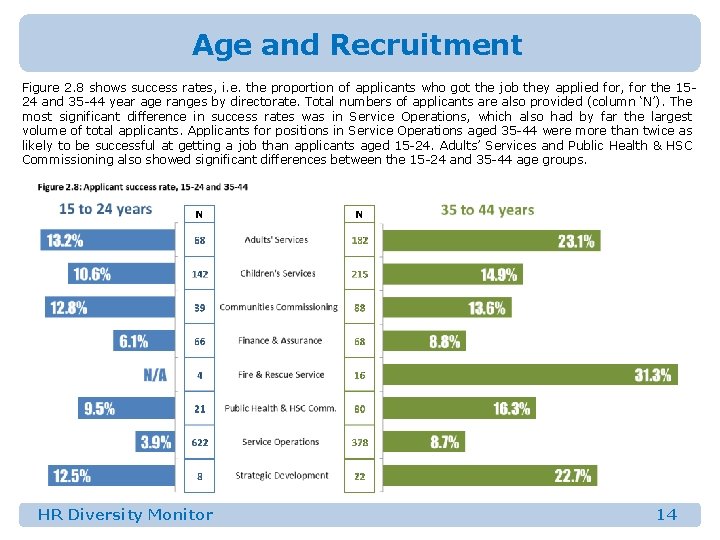
Age and Recruitment Figure 2. 8 shows success rates, i. e. the proportion of applicants who got the job they applied for, for the 1524 and 35 -44 year age ranges by directorate. Total numbers of applicants are also provided (column ‘N’). The most significant difference in success rates was in Service Operations, which also had by far the largest volume of total applicants. Applicants for positions in Service Operations aged 35 -44 were more than twice as likely to be successful at getting a job than applicants aged 15 -24. Adults’ Services and Public Health & HSC Commissioning also showed significant differences between the 15 -24 and 35 -44 age groups. HR Diversity Monitor 14
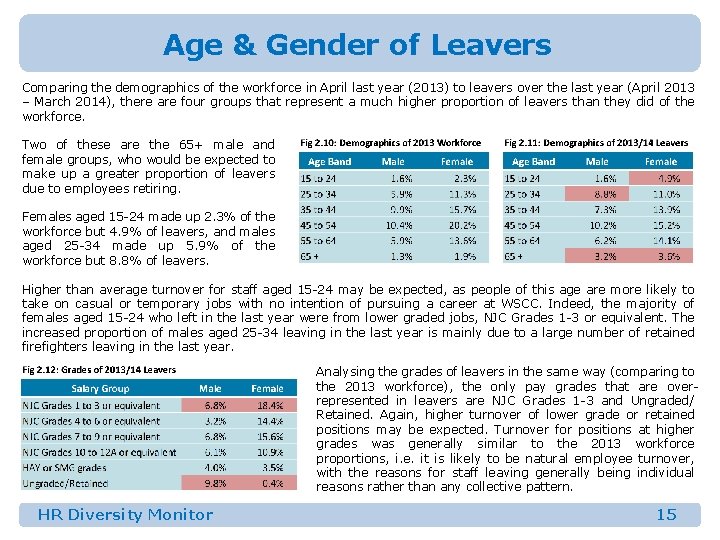
Age & Gender of Leavers Comparing the demographics of the workforce in April last year (2013) to leavers over the last year (April 2013 – March 2014), there are four groups that represent a much higher proportion of leavers than they did of the workforce. Two of these are the 65+ male and female groups, who would be expected to make up a greater proportion of leavers due to employees retiring. Females aged 15 -24 made up 2. 3% of the workforce but 4. 9% of leavers, and males aged 25 -34 made up 5. 9% of the workforce but 8. 8% of leavers. Higher than average turnover for staff aged 15 -24 may be expected, as people of this age are more likely to take on casual or temporary jobs with no intention of pursuing a career at WSCC. Indeed, the majority of females aged 15 -24 who left in the last year were from lower graded jobs, NJC Grades 1 -3 or equivalent. The increased proportion of males aged 25 -34 leaving in the last year is mainly due to a large number of retained firefighters leaving in the last year. Analysing the grades of leavers in the same way (comparing to the 2013 workforce), the only pay grades that are overrepresented in leavers are NJC Grades 1 -3 and Ungraded/ Retained. Again, higher turnover of lower grade or retained positions may be expected. Turnover for positions at higher grades was generally similar to the 2013 workforce proportions, i. e. it is likely to be natural employee turnover, with the reasons for staff leaving generally being individual reasons rather than any collective pattern. HR Diversity Monitor 15
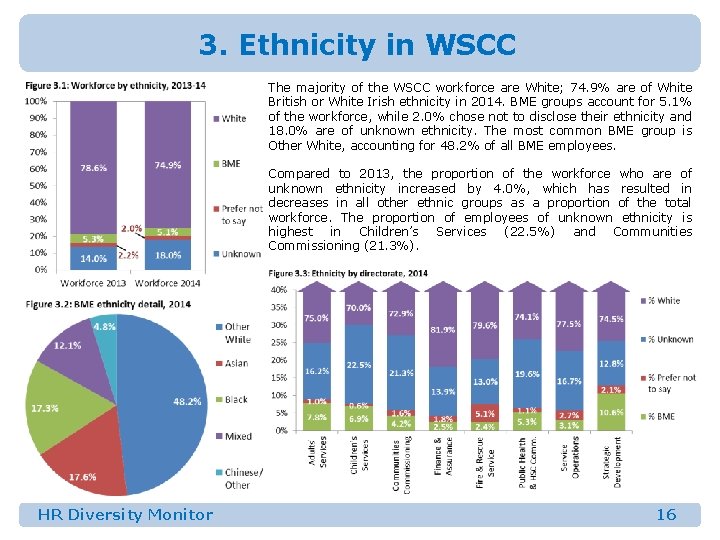
3. Ethnicity in WSCC The majority of the WSCC workforce are White; 74. 9% are of White British or White Irish ethnicity in 2014. BME groups account for 5. 1% of the workforce, while 2. 0% chose not to disclose their ethnicity and 18. 0% are of unknown ethnicity. The most common BME group is Other White, accounting for 48. 2% of all BME employees. Compared to 2013, the proportion of the workforce who are of unknown ethnicity increased by 4. 0%, which has resulted in decreases in all other ethnic groups as a proportion of the total workforce. The proportion of employees of unknown ethnicity is highest in Children’s Services (22. 5%) and Communities Commissioning (21. 3%). HR Diversity Monitor 16
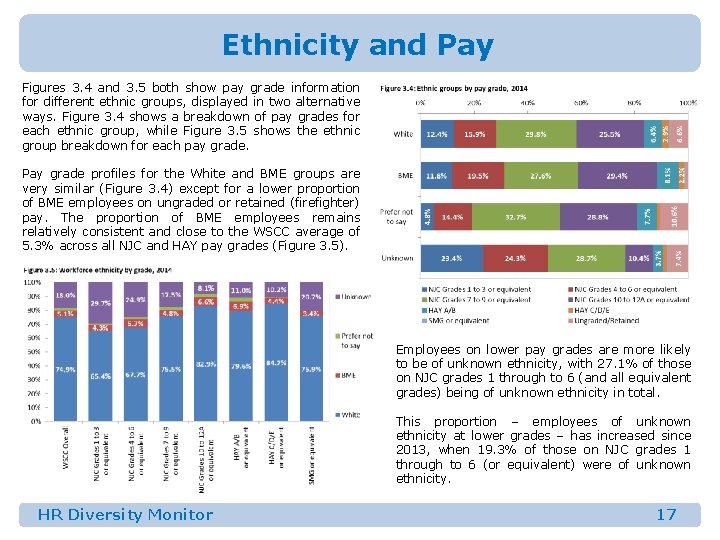
Ethnicity and Pay Figures 3. 4 and 3. 5 both show pay grade information for different ethnic groups, displayed in two alternative ways. Figure 3. 4 shows a breakdown of pay grades for each ethnic group, while Figure 3. 5 shows the ethnic group breakdown for each pay grade. Pay grade profiles for the White and BME groups are very similar (Figure 3. 4) except for a lower proportion of BME employees on ungraded or retained (firefighter) pay. The proportion of BME employees remains relatively consistent and close to the WSCC average of 5. 3% across all NJC and HAY pay grades (Figure 3. 5). Employees on lower pay grades are more likely to be of unknown ethnicity, with 27. 1% of those on NJC grades 1 through to 6 (and all equivalent grades) being of unknown ethnicity in total. This proportion – employees of unknown ethnicity at lower grades – has increased since 2013, when 19. 3% of those on NJC grades 1 through to 6 (or equivalent) were of unknown ethnicity. HR Diversity Monitor 17
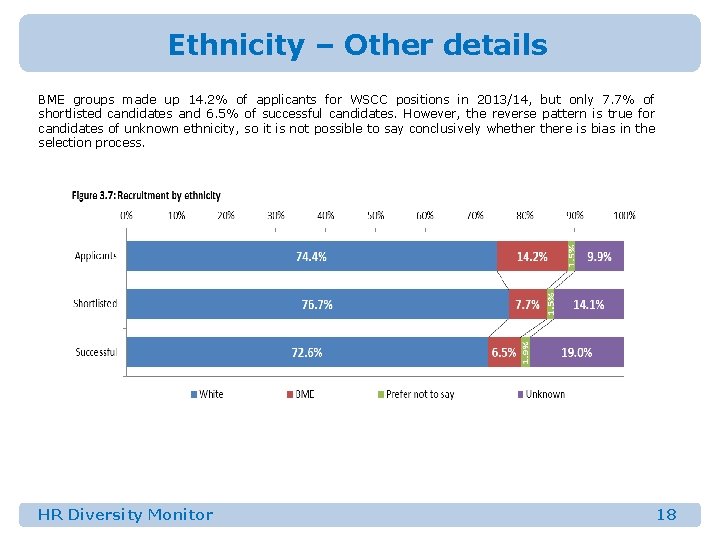
Ethnicity – Other details BME groups made up 14. 2% of applicants for WSCC positions in 2013/14, but only 7. 7% of shortlisted candidates and 6. 5% of successful candidates. However, the reverse pattern is true for candidates of unknown ethnicity, so it is not possible to say conclusively whethere is bias in the selection process. HR Diversity Monitor 18
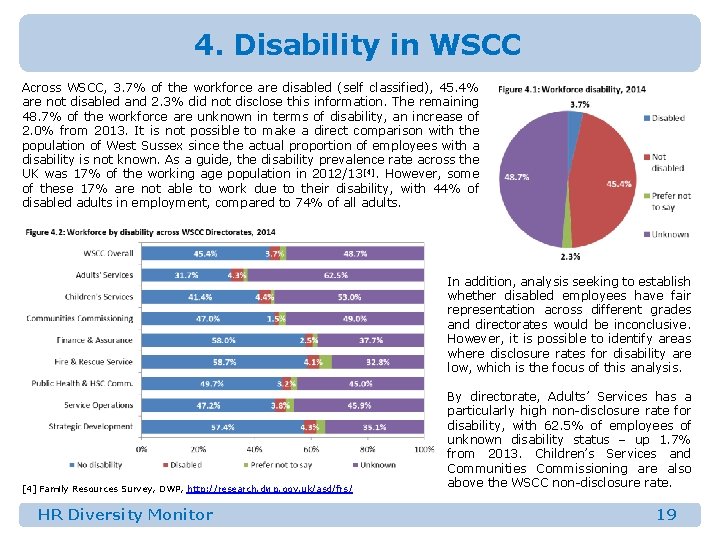
4. Disability in WSCC Across WSCC, 3. 7% of the workforce are disabled (self classified), 45. 4% are not disabled and 2. 3% did not disclose this information. The remaining 48. 7% of the workforce are unknown in terms of disability, an increase of 2. 0% from 2013. It is not possible to make a direct comparison with the population of West Sussex since the actual proportion of employees with a disability is not known. As a guide, the disability prevalence rate across the UK was 17% of the working age population in 2012/13[4]. However, some of these 17% are not able to work due to their disability, with 44% of disabled adults in employment, compared to 74% of all adults. In addition, analysis seeking to establish whether disabled employees have fair representation across different grades and directorates would be inconclusive. However, it is possible to identify areas where disclosure rates for disability are low, which is the focus of this analysis. [4] Family Resources Survey, DWP, http: //research. dwp. gov. uk/asd/frs/ HR Diversity Monitor By directorate, Adults’ Services has a particularly high non-disclosure rate for disability, with 62. 5% of employees of unknown disability status – up 1. 7% from 2013. Children’s Services and Communities Commissioning are also above the WSCC non-disclosure rate. 19
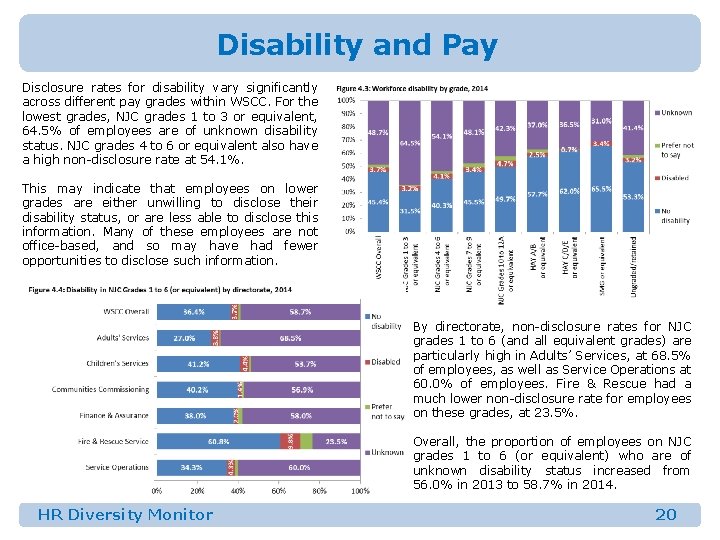
Disability and Pay Disclosure rates for disability vary significantly across different pay grades within WSCC. For the lowest grades, NJC grades 1 to 3 or equivalent, 64. 5% of employees are of unknown disability status. NJC grades 4 to 6 or equivalent also have a high non-disclosure rate at 54. 1%. This may indicate that employees on lower grades are either unwilling to disclose their disability status, or are less able to disclose this information. Many of these employees are not office-based, and so may have had fewer opportunities to disclose such information. By directorate, non-disclosure rates for NJC grades 1 to 6 (and all equivalent grades) are particularly high in Adults’ Services, at 68. 5% of employees, as well as Service Operations at 60. 0% of employees. Fire & Rescue had a much lower non-disclosure rate for employees on these grades, at 23. 5%. Overall, the proportion of employees on NJC grades 1 to 6 (or equivalent) who are of unknown disability status increased from 56. 0% in 2013 to 58. 7% in 2014. HR Diversity Monitor 20
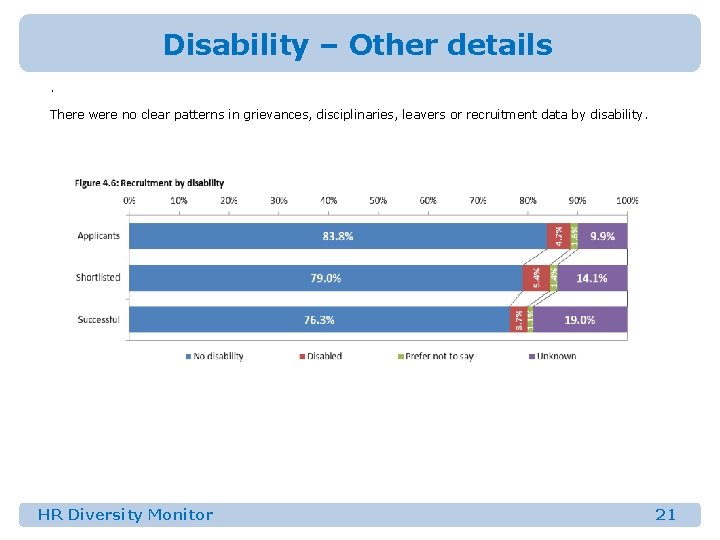
Disability – Other details. There were no clear patterns in grievances, disciplinaries, leavers or recruitment data by disability. HR Diversity Monitor 21
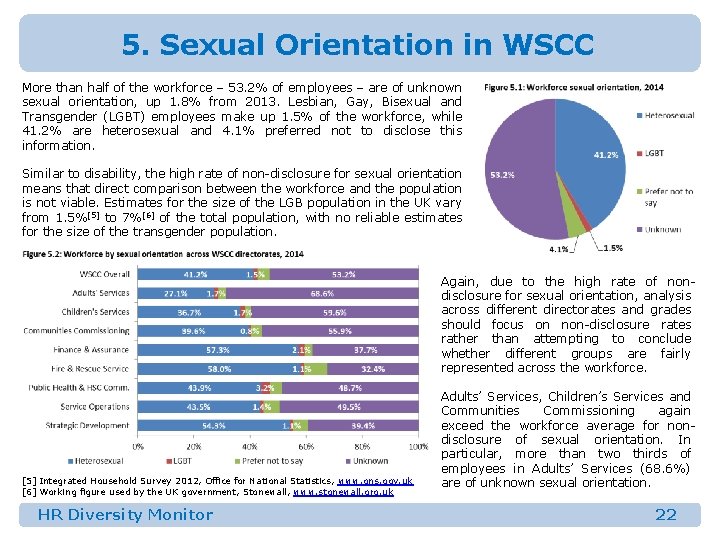
5. Sexual Orientation in WSCC More than half of the workforce – 53. 2% of employees – are of unknown sexual orientation, up 1. 8% from 2013. Lesbian, Gay, Bisexual and Transgender (LGBT) employees make up 1. 5% of the workforce, while 41. 2% are heterosexual and 4. 1% preferred not to disclose this information. Similar to disability, the high rate of non-disclosure for sexual orientation means that direct comparison between the workforce and the population is not viable. Estimates for the size of the LGB population in the UK vary from 1. 5%[5] to 7%[6] of the total population, with no reliable estimates for the size of the transgender population. Again, due to the high rate of nondisclosure for sexual orientation, analysis across different directorates and grades should focus on non-disclosure rates rather than attempting to conclude whether different groups are fairly represented across the workforce. [5] Integrated Household Survey 2012, Office for National Statistics, www. ons. gov. uk [6] Working figure used by the UK government, Stonewall, www. stonewall. org. uk HR Diversity Monitor Adults’ Services, Children’s Services and Communities Commissioning again exceed the workforce average for nondisclosure of sexual orientation. In particular, more than two thirds of employees in Adults’ Services (68. 6%) are of unknown sexual orientation. 22
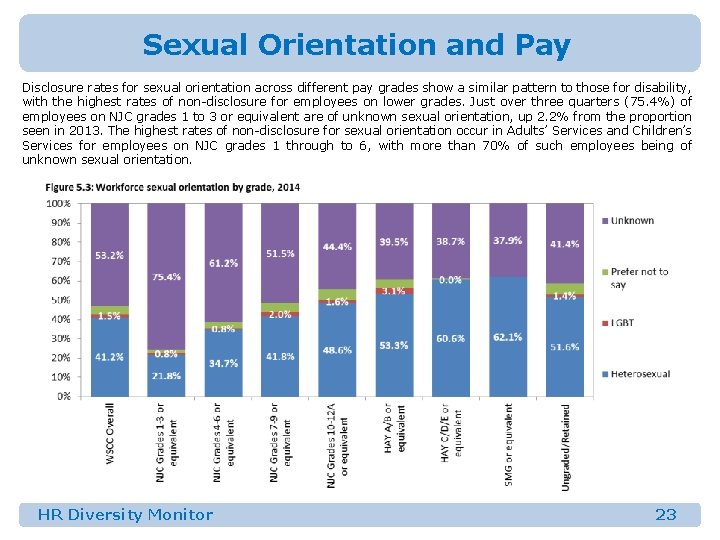
Sexual Orientation and Pay Disclosure rates for sexual orientation across different pay grades show a similar pattern to those for disability, with the highest rates of non-disclosure for employees on lower grades. Just over three quarters (75. 4%) of employees on NJC grades 1 to 3 or equivalent are of unknown sexual orientation, up 2. 2% from the proportion seen in 2013. The highest rates of non-disclosure for sexual orientation occur in Adults’ Services and Children’s Services for employees on NJC grades 1 through to 6, with more than 70% of such employees being of unknown sexual orientation. HR Diversity Monitor 23
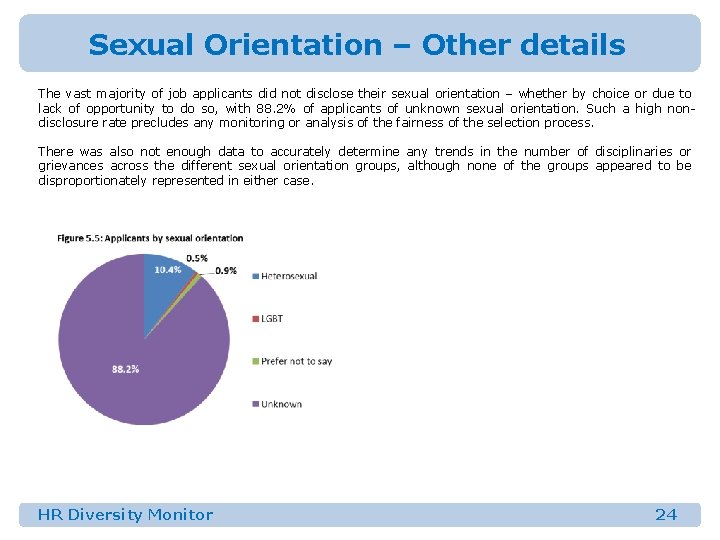
Sexual Orientation – Other details The vast majority of job applicants did not disclose their sexual orientation – whether by choice or due to lack of opportunity to do so, with 88. 2% of applicants of unknown sexual orientation. Such a high nondisclosure rate precludes any monitoring or analysis of the fairness of the selection process. There was also not enough data to accurately determine any trends in the number of disciplinaries or grievances across the different sexual orientation groups, although none of the groups appeared to be disproportionately represented in either case. HR Diversity Monitor 24
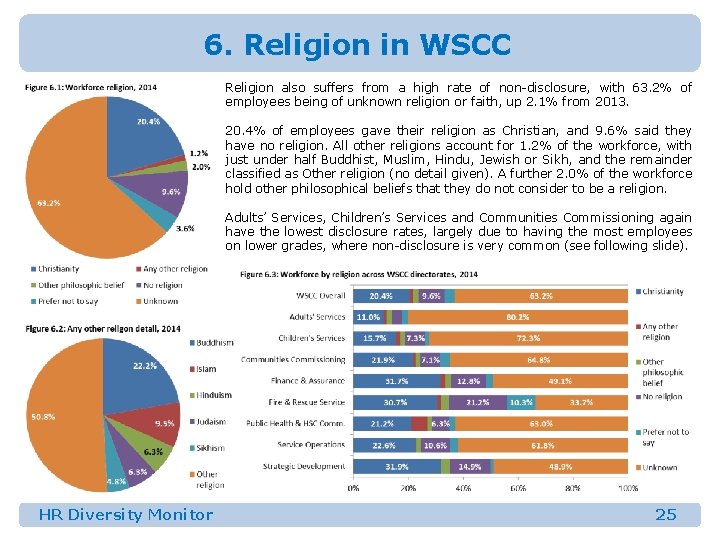
6. Religion in WSCC Religion also suffers from a high rate of non-disclosure, with 63. 2% of employees being of unknown religion or faith, up 2. 1% from 2013. 20. 4% of employees gave their religion as Christian, and 9. 6% said they have no religion. All other religions account for 1. 2% of the workforce, with just under half Buddhist, Muslim, Hindu, Jewish or Sikh, and the remainder classified as Other religion (no detail given). A further 2. 0% of the workforce hold other philosophical beliefs that they do not consider to be a religion. Adults’ Services, Children’s Services and Communities Commissioning again have the lowest disclosure rates, largely due to having the most employees on lower grades, where non-disclosure is very common (see following slide). HR Diversity Monitor 25
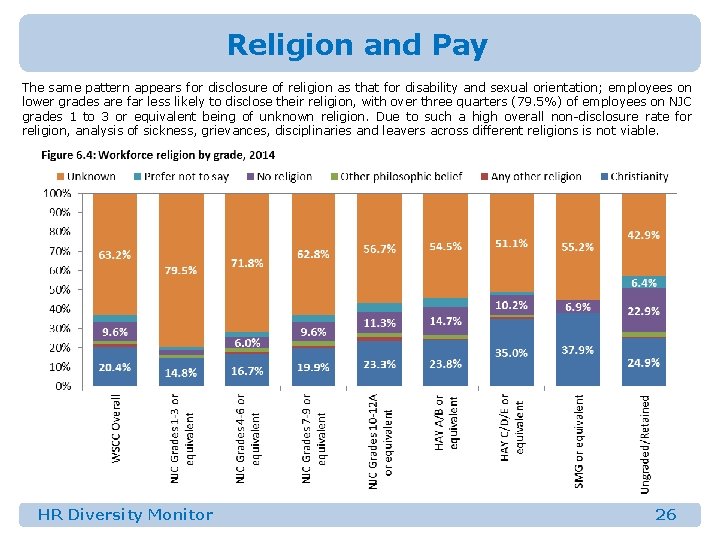
Religion and Pay The same pattern appears for disclosure of religion as that for disability and sexual orientation; employees on lower grades are far less likely to disclose their religion, with over three quarters (79. 5%) of employees on NJC grades 1 to 3 or equivalent being of unknown religion. Due to such a high overall non-disclosure rate for religion, analysis of sickness, grievances, disciplinaries and leavers across different religions is not viable. HR Diversity Monitor 26
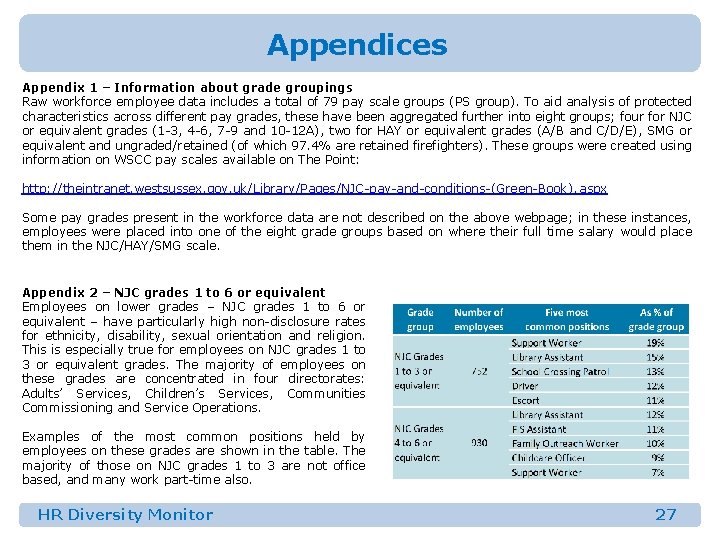
Appendices Appendix 1 – Information about grade groupings Raw workforce employee data includes a total of 79 pay scale groups (PS group). To aid analysis of protected characteristics across different pay grades, these have been aggregated further into eight groups; four for NJC or equivalent grades (1 -3, 4 -6, 7 -9 and 10 -12 A), two for HAY or equivalent grades (A/B and C/D/E), SMG or equivalent and ungraded/retained (of which 97. 4% are retained firefighters). These groups were created using information on WSCC pay scales available on The Point: http: //theintranet. westsussex. gov. uk/Library/Pages/NJC-pay-and-conditions-(Green-Book). aspx Some pay grades present in the workforce data are not described on the above webpage; in these instances, employees were placed into one of the eight grade groups based on where their full time salary would place them in the NJC/HAY/SMG scale. Appendix 2 – NJC grades 1 to 6 or equivalent Employees on lower grades – NJC grades 1 to 6 or equivalent – have particularly high non-disclosure rates for ethnicity, disability, sexual orientation and religion. This is especially true for employees on NJC grades 1 to 3 or equivalent grades. The majority of employees on these grades are concentrated in four directorates: Adults’ Services, Children’s Services, Communities Commissioning and Service Operations. Examples of the most common positions held by employees on these grades are shown in the table. The majority of those on NJC grades 1 to 3 are not office based, and many work part-time also. HR Diversity Monitor 27
- Slides: 27