
Appendicitis in children A review of the current
![Natural History o o o Inflammation 2° to luminal obstruction[4] Fecalith, lymphoid tissue, parasites,](https://slidetodoc.com/presentation_image_h/ebcb0b697080a4364b27eba4b5e3d4eb/image-3.jpg "Natural History o o o Inflammation 2° to luminal obstruction[4] Fecalith, lymphoid tissue, parasites,")
![o o o o Relapsing /chronic appendicitis[6] Acute inflammation -› perforation -› abscess Definition](https://slidetodoc.com/presentation_image_h/ebcb0b697080a4364b27eba4b5e3d4eb/image-4.jpg "o o o o Relapsing /chronic appendicitis[6] Acute inflammation -› perforation -› abscess Definition")
![Antibiotic regimens o o Triple therapy (ampicillin, gentamycin, metronidazole) Piptaz as effective as triples[17]](https://slidetodoc.com/presentation_image_h/ebcb0b697080a4364b27eba4b5e3d4eb/image-10.jpg "Antibiotic regimens o o Triple therapy (ampicillin, gentamycin, metronidazole) Piptaz as effective as triples[17]")
![Laparoscopic Appendicectomy o o o Substantially lower complication rate in obese patients[37] Shorter duration](https://slidetodoc.com/presentation_image_h/ebcb0b697080a4364b27eba4b5e3d4eb/image-18.jpg "Laparoscopic Appendicectomy o o o Substantially lower complication rate in obese patients[37] Shorter duration")

- Slides: 25
Appendicitis in children A review of the current literature Richard Wood Paediatric Surgery Registrar Red Cross Children’s Hospital
Demographics o o o Most common acute surgical condition Life-time risk: 8. 7% in boys; 6. 7% in girls[1] Age specific risk: extremely low neonates to peak 12 -18 years Higher family risk in children under 6 years[2] Rupture rate significantly increased in poorer children[3] 1/Addiss D. G. , Shaffer N. , Fowler B. S. , et al: The epidemiology of appendicitis and appendectomy in the United States. Am J Epidemiol 1990; 132: 910 -924. 2/Brender J. D. , Marcuse E. K. , Weiss N. S. , et al: Is childhood appendicitis familial? . Am J Dis Child 1985; 139: 338 -340. 3/Jablonski K. A. , Guagliardo M. F. : Pediatric appendicitis rupture rate: A national indicator of disparities in healthcare access. Popul Health Metr 2005; 3: 4.
Natural History o o o Inflammation 2° to luminal obstruction[4] Fecalith, lymphoid tissue, parasites, foreign body Fecaliths related to dietary fiber content[5] Post obstruction mucous accumulation and contained bacterial proliferation Pressure leads to lymphatic, venous & arterial occlusion. Pressure necrosis and perforation 4/Wangensteen O. H. , Dennis C. : Experimental proof of obstructive origin of appendicitis. Ann Surg 1939; 110: 629 -647. 5/Jones B. A. , Demetriades D. , Segal I. : The prevalence of appendiceal fecoliths in patients with and without appendicitis: A comparative study from Canada and South Africa. Ann Surg 1985; 202: 80 -82.
o o o o Relapsing /chronic appendicitis[6] Acute inflammation -› perforation -› abscess Definition of perforation controversial <5 years perforation 82% <1 year perforation +/- 100% [7] Wide range for perforation in literature 20 -76% in 30 paediatric hospitals in the US 6/Mattei P. , Sola J. E. , Yeo C. J. : Chronic and recurrent appendicitis are uncommon entities often misdiagnosed. J Am Coll Surg 1994; 178: 385 -389. 7/Nance M. L. , Adamson W. T. , Hedrick H. L. : Appendicitis in the young child: A continuing diagnostic challenge. Pediatr Emerg Care 2000; 16: 160 -162
Diagnosis o o o Classic Triad WBC 11 -16000/mm³ significantly higher in cases of perforation[8] RBC’s, WBC’s and protein common in urine No evidence CRP superior to WBC count in children – unnecessary expence[9] Normal WBC and CRP doesn’t exclude Dx [10] 8/Guraya S. Y. , Al-Tuwaijri T. A. , Khairy G. A. , et al: Validity of leukocyte count to predict the severity of acute appendicitis. Saudi Med J 2005; 26: 1945 -1947. 9/Rodríguez-Sanjuán J. C. , Martín-Parra J. I. , Seco I. , et al: C-reactive protein and leukocyte count in the diagnosis of acute appendicitis in children. Dis Colon Rectum 1999; 42: 1325 -1329. 10/Gronroos J. M. : Do normal leukocyte count and C-reactive protein value exclude acute appendicitis in children? . Acta Pediatr 2001; 90: 649 -651.
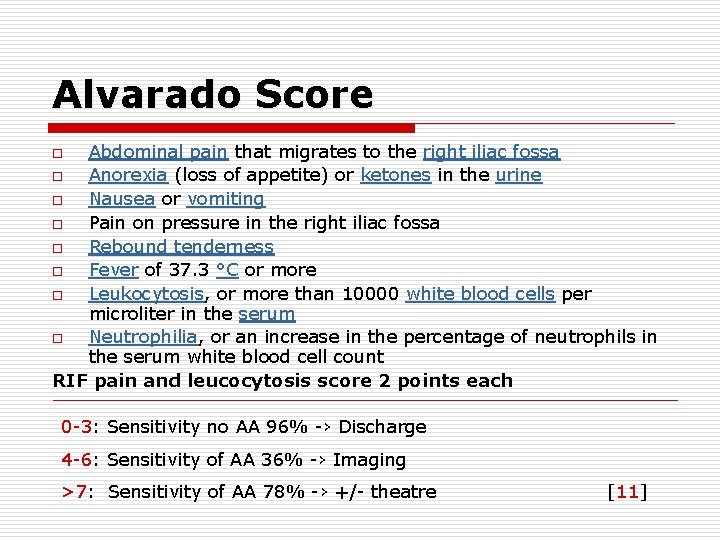
o o o Scoring systems may be of use Stratify patients into 3 groups Surgery (high score) Imaging (intermediate score) Discharge (low score) [11] 11/Mc. Kay R. , Shepherd J. : The use of the clinical scoring system by Alvarado in the decision to perform computed tomography for acute appendicitis in the ED. Am J Emerg Med 2007; 25: 489 -493.
Alvarado Score Abdominal pain that migrates to the right iliac fossa o Anorexia (loss of appetite) or ketones in the urine o Nausea or vomiting o Pain on pressure in the right iliac fossa o Rebound tenderness o Fever of 37. 3 °C or more o Leukocytosis, or more than 10000 white blood cells per microliter in the serum o Neutrophilia, or an increase in the percentage of neutrophils in the serum white blood cell count RIF pain and leucocytosis score 2 points each o 0 -3: Sensitivity no AA 96% -› Discharge 4 -6: Sensitivity of AA 36% -› Imaging >7: Sensitivity of AA 78% -› +/- theatre [11]
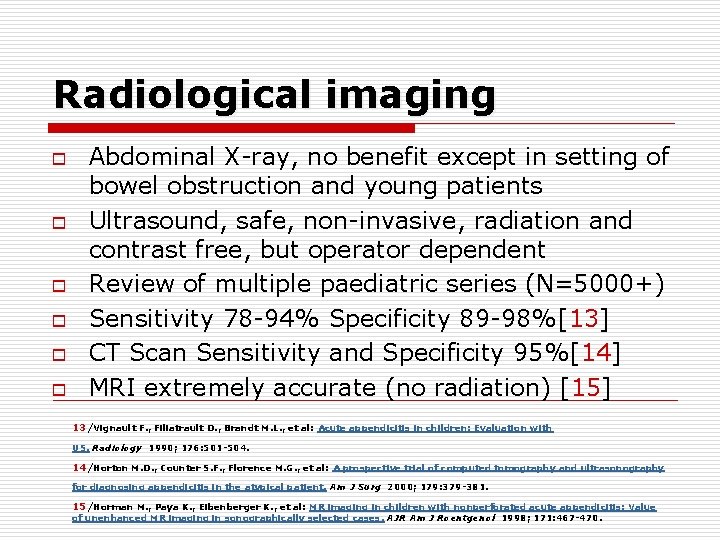
Radiological imaging o o o Abdominal X-ray, no benefit except in setting of bowel obstruction and young patients Ultrasound, safe, non-invasive, radiation and contrast free, but operator dependent Review of multiple paediatric series (N=5000+) Sensitivity 78 -94% Specificity 89 -98%[13] CT Scan Sensitivity and Specificity 95%[14] MRI extremely accurate (no radiation) [15] 13/Vignault F. , Filiatrault D. , Brandt M. L. , et al: Acute appendicitis in children: Evaluation with US. Radiology 1990; 176: 501 -504. 14/Horton M. D. , Counter S. F. , Florence M. G. , et al: A prospective trial of computed tomography and ultrasonography for diagnosing appendicitis in the atypical patient. Am J Surg 2000; 179: 379 -381. 15/Horman M. , Paya K. , Eibenberger K. , et al: MR imaging in children with nonperforated acute appendicitis: Value of unenhanced MR imaging in sonographically selected cases. AJR Am J Roentgenol 1998; 171: 467 -470.
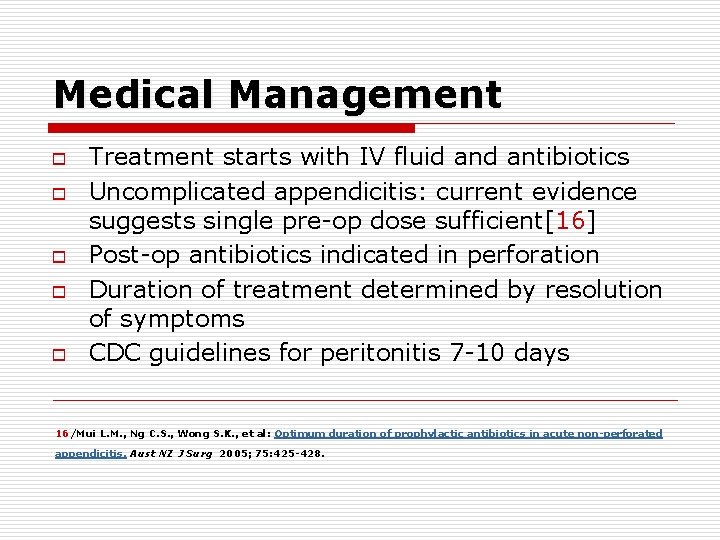
Medical Management o o o Treatment starts with IV fluid antibiotics Uncomplicated appendicitis: current evidence suggests single pre-op dose sufficient[16] Post-op antibiotics indicated in perforation Duration of treatment determined by resolution of symptoms CDC guidelines for peritonitis 7 -10 days 16/Mui L. M. , Ng C. S. , Wong S. K. , et al: Optimum duration of prophylactic antibiotics in acute non-perforated appendicitis. Aust NZ J Surg 2005; 75: 425 -428.
Antibiotic regimens o o Triple therapy (ampicillin, gentamycin, metronidazole) Piptaz as effective as triples[17] Ceftriaxone and metronidazole daily as effective as triples (cost and time benefit)[18] Early transition to oral antibiotics as effective as prolonged IV’s [19] 17/Nadler E. P. , Reblock K. K. , Ford H. R. , et al: Monotherapy versus multi-drug therapy for the treatment of perforated appendicitis in children. Surg Infect (Larchmt) 2003; 4: 327 -333 . 18/St Peter S. D. , Little D. C. , Calkins C. M. , et al: A simple and more cost-effective antibiotic regimen for perforated appendicitis. J Pediatr Surg 2006; 41: 1020 -1024. 19/Adibe O. O. , Barnaby K. , Dobies J. , et al: Postoperative antibiotic therapy for children with perforated appendicitis: Long course of intravenous antibiotics versus early conversion to an oral regimen. Am J Surg 2008; 195: 141 -143.
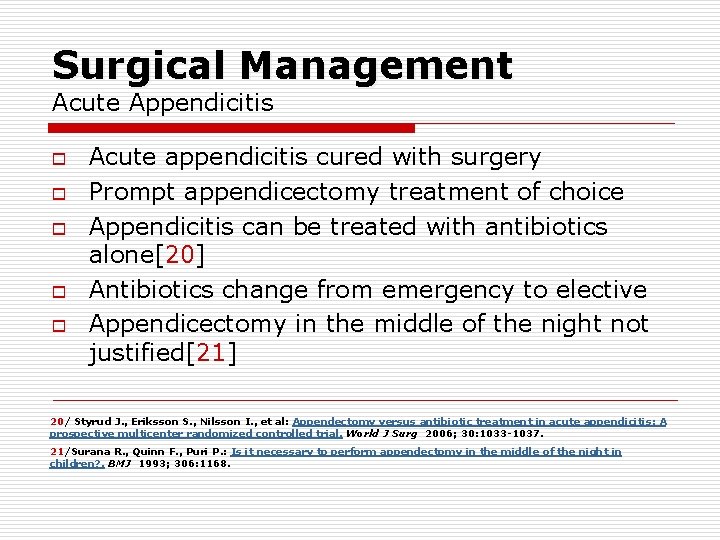
Surgical Management Acute Appendicitis o o o Acute appendicitis cured with surgery Prompt appendicectomy treatment of choice Appendicitis can be treated with antibiotics alone[20] Antibiotics change from emergency to elective Appendicectomy in the middle of the night not justified[21] 20/ Styrud J. , Eriksson S. , Nilsson I. , et al: Appendectomy versus antibiotic treatment in acute appendicitis: A prospective multicenter randomized controlled trial. World J Surg 2006; 30: 1033 -1037. 21/Surana R. , Quinn F. , Puri P. : Is it necessary to perform appendectomy in the middle of the night in children? . BMJ 1993; 306: 1168.
Surgical Management Perforated Appendicitis o o Appendicectomy in the presence of known perforation is controversial Antibiotics alone; Antibiotics and interval appendicectomy; Appendicectomy at presentation Recurrent appendicitis(8 -14%) short term [22] APSA 86% responders perform interval appendicectomy[23] 22/ Puapong D. , Lee S. L. , Haigh P. I. , et al: Routine interval appendectomy in children is not indicated. J Pediatr Surg 2007; 42: 1500 -1503. 23/ Chen C. , Botelho C. , Cooper A. , et al: Current practice patterns in the treatment of perforated appendicitis in children. J Am Coll Surg 2003; 196: 212 -221.
Surgical Management Perforated Appendicitis o 1. 2. 3. o o Causes of failure of nonoperative management Band count >15% at presentation[24] Appendicolith present on imaging[25] Contamination beyond RIF on imaging[26] Experienced surgeon should be able to deal with situation at presentation APSA survey: Senior surgeons base practice on personal preference 24/Kogut K. A. , Blakely M. L. , Schropp K. P. , et al: The association of elevated percent bands on admission with failure and complications of interval appendectomy. J Pediatr Surg 2001; 36: 165 -168. 25/Aprahamian C. J. , Barnhart D. C. , Bledsoe S. E. , et al: Failure in the nonoperative management of pediatric ruptured appendicitis: Predictors and consequences. J Pediatr Surg 2007; 42: 934 -938. 26/Levin T. , Whyte C. , Borzykowski R. , et al: Nonoperative management of perforated appendicitis in children: Can CT predict outcome? . Pediatr Radiol 2007; 37: 251 -255.
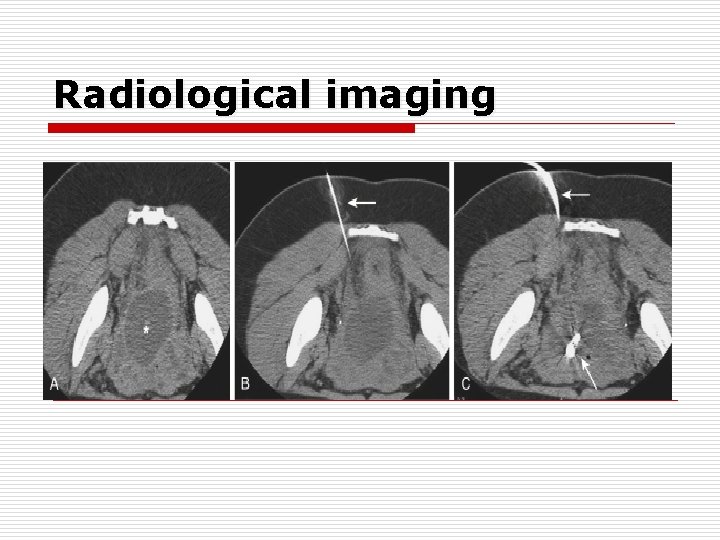
Surgical Management Abscess at presentation o o Open surgery high morbidity Percutaneous drainage and interval appendicectomy[27] Long course of treatment, cost burden[28] Prospective trial currently in progress comparing early laparoscopic surgery with percutaneous drain and delayed surgery[29] 27/Chen C. , Botelho C. , Cooper A. , et al: Current practice patterns in the treatment of perforated appendicitis in children. J Am Coll Surg 2003; 196: 212 -221. 28/Keckler S. J. , St Peter S. D. , Tsao K. , et al: Resource utilization and outcomes from percutaneous drainage and interval appendectomy for perforated appendicitis. J Pediatr Surg 2008; 43: 977 -980. 29/ National Institutes of Health: Early versus delayed operation for perforated appendicitis. Available at www. clinicaltrials. gov—NCT# 00414375
Surgical Management Abscess at presentation o o o Regardless of route of drainage cultures not of benefit[30] One study showed that changing according to cultures had a worse outcome (N=308)[31] Lavage with saline or antibiotic solution not shown to be of benefit[32] Post-op intra-peritoneal AB’s may benefit (48 h) Drains only useful in walled off collections[33] 30/Bilik R. , Burnweit C. , Shandling B. : Is abdominal cavity culture of any value in appendicitis? . Am J Surg 1998; 175: 267 -270. 31/Kokoska E. R. , Silen M. L. , Tracy T. F. , et al: The impact of intraoperative culture on treatment and outcome in children with perforated appendicitis. J Pediatr Surg 1999; 34: 749 -753. 32/Sherman J. O. , Luck S. R. , Borger J. A. : Irrigation of the peritoneal cavity for appendicitis in children: A double blind study. J Pediatr Surg 1976; 11: 371 -374. 33/Kokoska E. R. , Silen M. L. , Tracy T. F. , et al: Perforated appendicitis in children: Risk factors for the development of complications. Surgery 1998; 124: 619 -625.
Radiological imaging
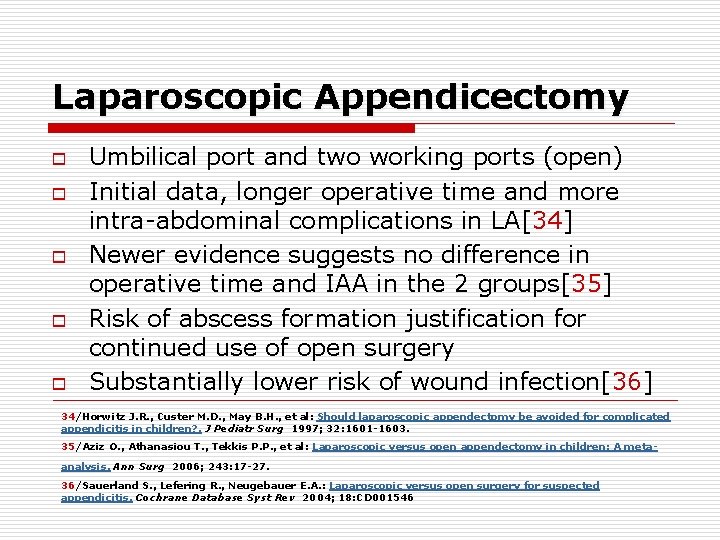
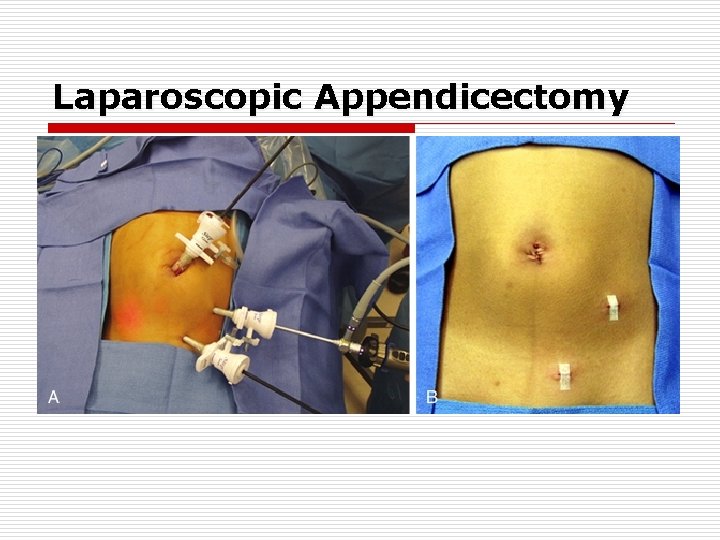
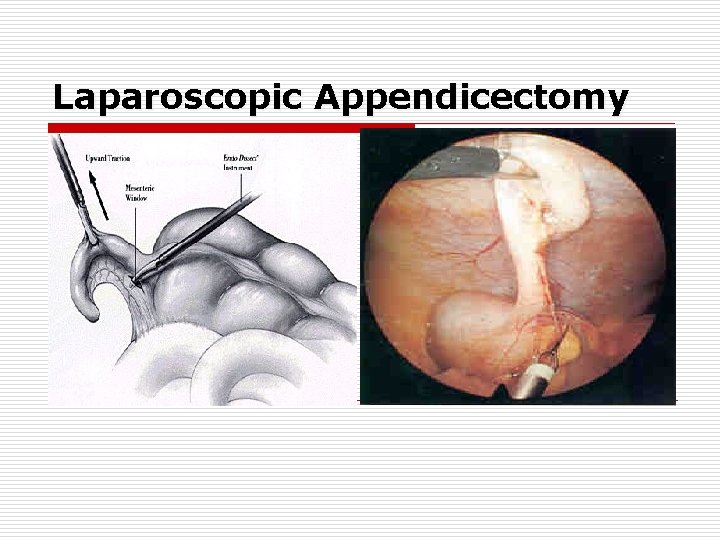
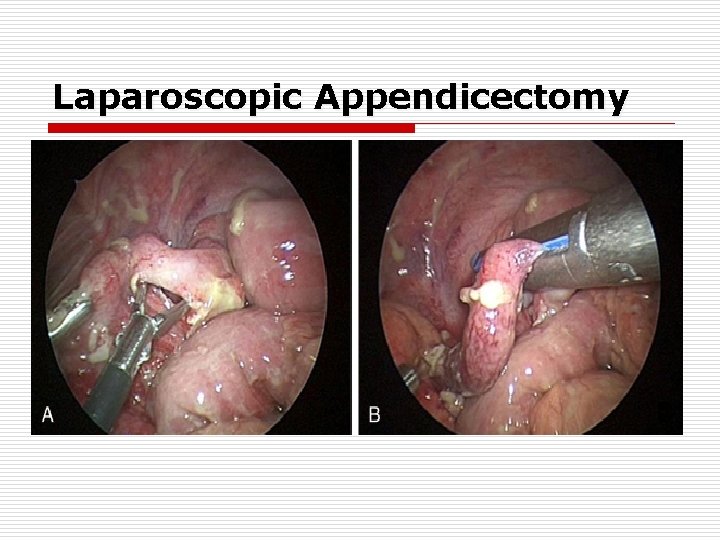
Laparoscopic Appendicectomy o o o Umbilical port and two working ports (open) Initial data, longer operative time and more intra-abdominal complications in LA[34] Newer evidence suggests no difference in operative time and IAA in the 2 groups[35] Risk of abscess formation justification for continued use of open surgery Substantially lower risk of wound infection[36] 34/Horwitz J. R. , Custer M. D. , May B. H. , et al: Should laparoscopic appendectomy be avoided for complicated appendicitis in children? . J Pediatr Surg 1997; 32: 1601 -1603. 35/Aziz O. , Athanasiou T. , Tekkis P. P. , et al: Laparoscopic versus open appendectomy in children: A metaanalysis. Ann Surg 2006; 243: 17 -27. 36/Sauerland S. , Lefering R. , Neugebauer E. A. : Laparoscopic versus open surgery for suspected appendicitis. Cochrane Database Syst Rev 2004; 18: CD 001546
Laparoscopic Appendicectomy o o o Substantially lower complication rate in obese patients[37] Shorter duration of hospital stay[36] Earlier return to work and normal activity[36] Prospective RCT quality of life, GIT complication and overall complications lower for laparoscopy (N=43757)[38] Recent Cochrane review: LA 1° operation[36] 36/Sauerland S. , Lefering R. , Neugebauer E. A. : Laparoscopic versus open surgery for suspected appendicitis. Cochrane Database Syst Rev 2004; 18: CD 001546 37/Corneille M. G. , Steigelman M. B. , Myers J. G. , et al: Laparoscopic appendectomy is superior to open appendectomy in obese patients. Am J Surg 2007; 194: 877 -880. 38/Guller U. , Hervey S. , Purves H. , et al: Laparoscopic versus open appendectomy: Outcomes comparison based on a large administrative database. Ann Surg 2004; 239: 43 -52.
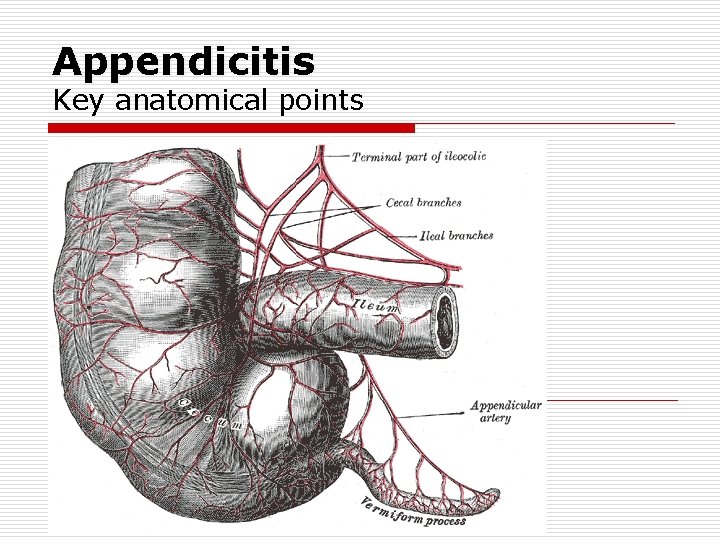
Appendicitis Key anatomical points
Appendicitis Key anatomical points
Laparoscopic Appendicectomy
Laparoscopic Appendicectomy
Laparoscopic Appendicectomy
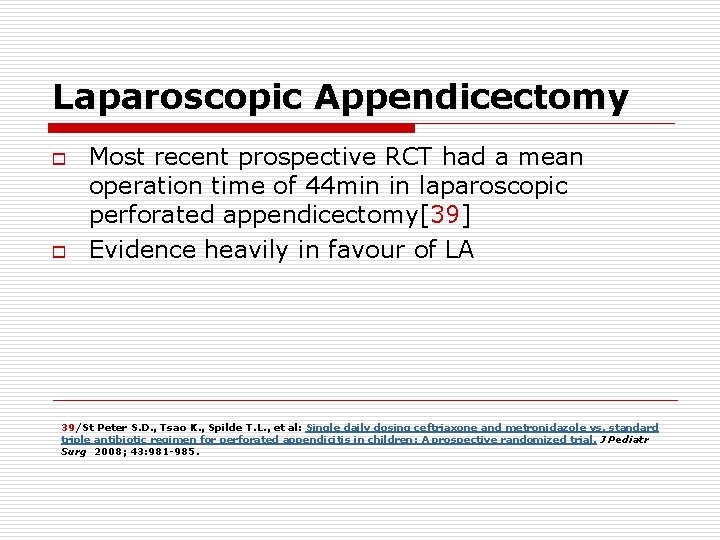
Laparoscopic Appendicectomy o o Most recent prospective RCT had a mean operation time of 44 min in laparoscopic perforated appendicectomy[39] Evidence heavily in favour of LA 39/St Peter S. D. , Tsao K. , Spilde T. L. , et al: Single daily dosing ceftriaxone and metronidazole vs. standard triple antibiotic regimen for perforated appendicitis in children: A prospective randomized trial. J Pediatr Surg 2008; 43: 981 -985.
Open Appendicectomy o o Transverse incision Protect wound Swab out pelvis Muscle cutting laparotomy in presence of peritonitis