
Appeasement Appeasement is the policy of settling international
- Slides: 27
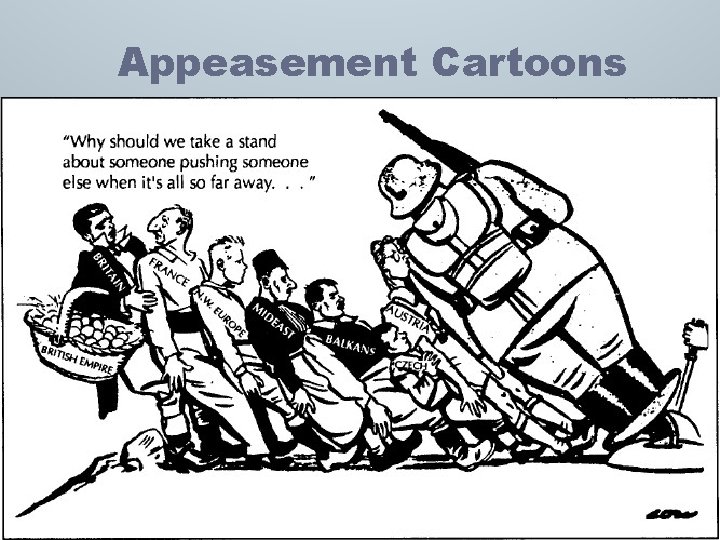
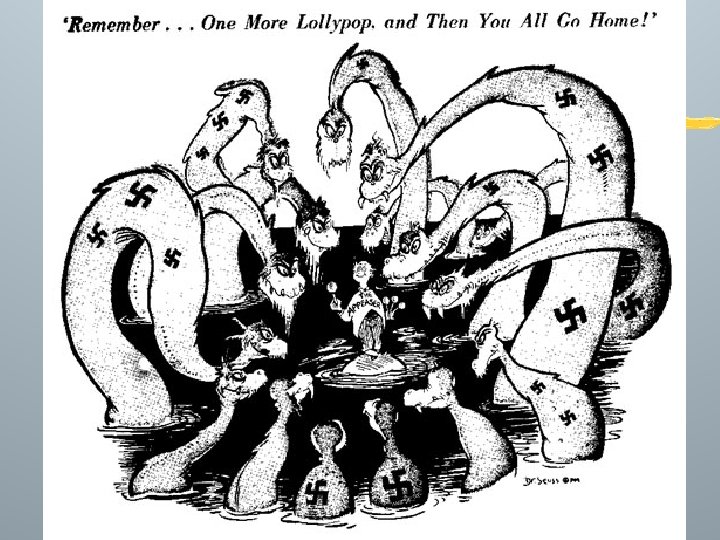
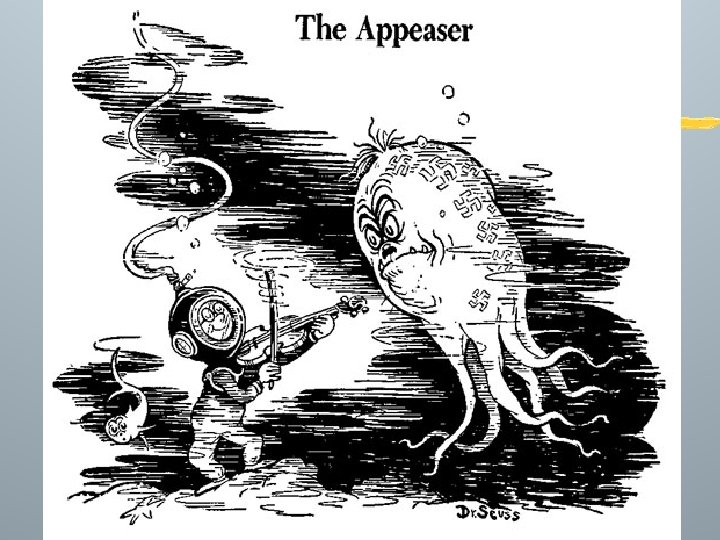
Appeasement ¢ Appeasement is “the policy of settling international quarrels by admitting and satisfying grievances through rational negotiation and compromise, thereby avoiding the resort to an armed conflict which would be expensive, bloody, and possibly dangerous. ” ¢ Giving in to (German) desires in order to maintain peace ¾“Give Hitler what he wants and he’ll eventually be satisfied and we won’t have to go to war with him”
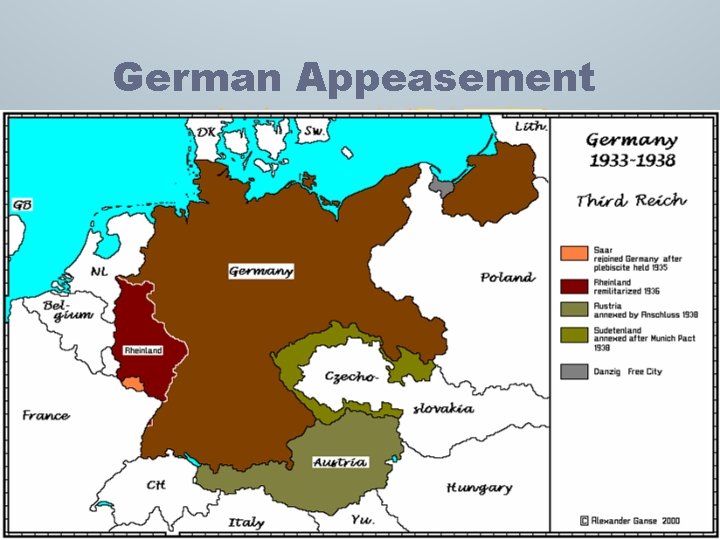
Appeasement in the late 1930 s ¢ 1935: German re-armament ¾ Creates an Air Force and announces plans for military conscription. ¢ ¢ ¢ March 1936: Occupation of the Rhineland March 1938: Annexation of Austria October 1938: Annexation of the Sudentenland March 1939: Occupation of Czechoslovakia Summer 1939: Threats against Poland
German Appeasement
Appeasement Cartoons
German-Soviet Non. Aggression Pact ¢ Hitler and Joseph Stalin, leader of the Soviet Union, agreed not to fight each other if one of them went to war ¢ They also agreed to divide Poland between them
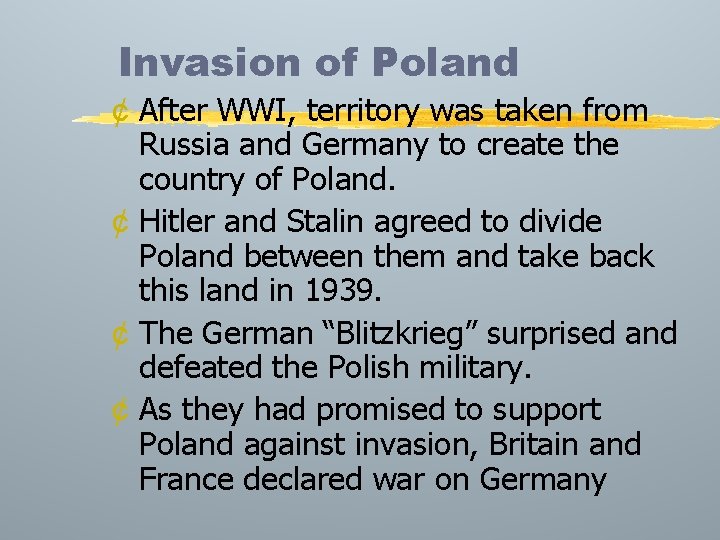
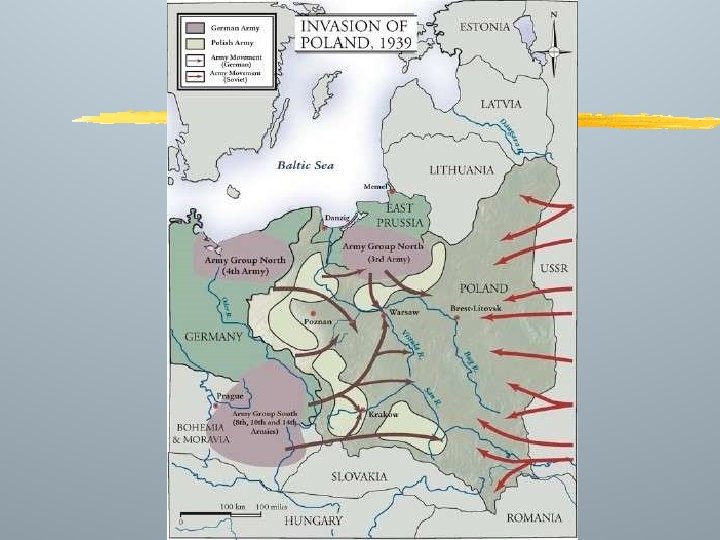
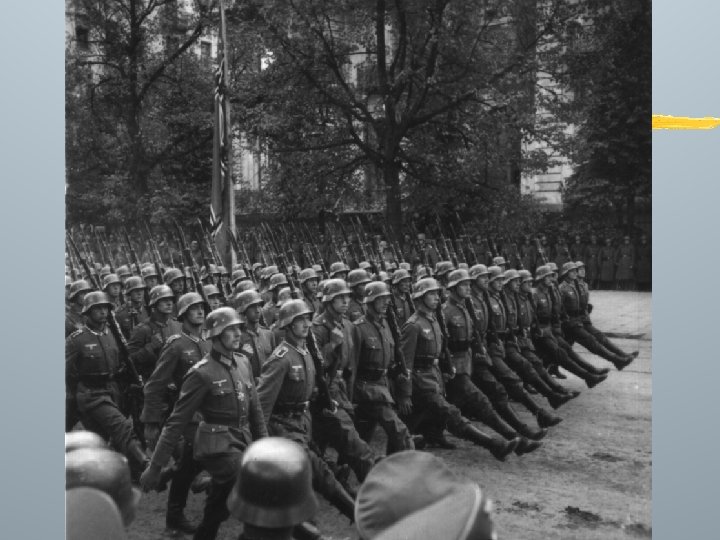
Invasion of Poland ¢ After WWI, territory was taken from Russia and Germany to create the country of Poland. ¢ Hitler and Stalin agreed to divide Poland between them and take back this land in 1939. ¢ The German “Blitzkrieg” surprised and defeated the Polish military. ¢ As they had promised to support Poland against invasion, Britain and France declared war on Germany
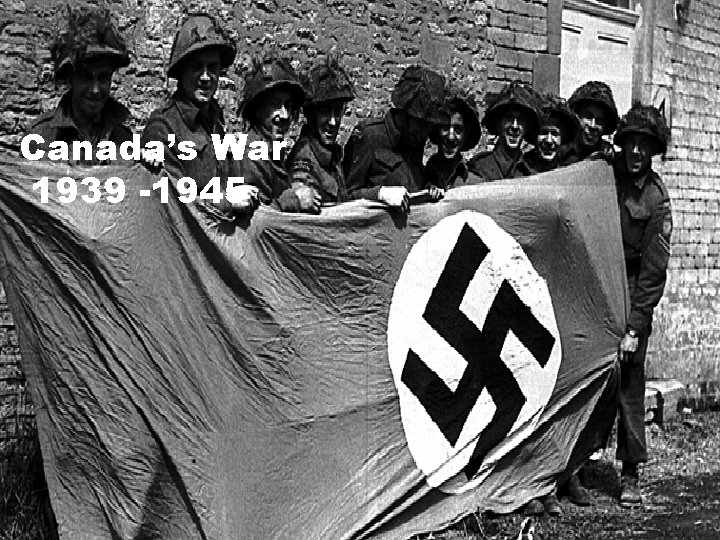
Canada’s War 1939 -1945
Canada and the World 1932 - 1939 ¢ Canada’s Prime Minister, Mackenzie King, realized by 1937 that war was very possible. ¢ He also knew that he would be under strong pressure to back Great Britain in any future conflict. ¢ Some rearmament was undertaken after 1937 but Mackenzie King focused on avoiding war.
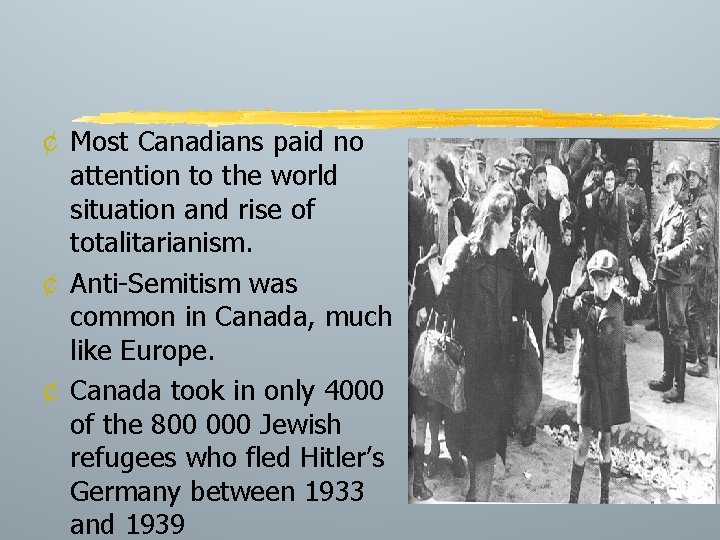
¢ Most Canadians paid no attention to the world situation and rise of totalitarianism. ¢ Anti-Semitism was common in Canada, much like Europe. ¢ Canada took in only 4000 of the 800 000 Jewish refugees who fled Hitler’s Germany between 1933 and 1939
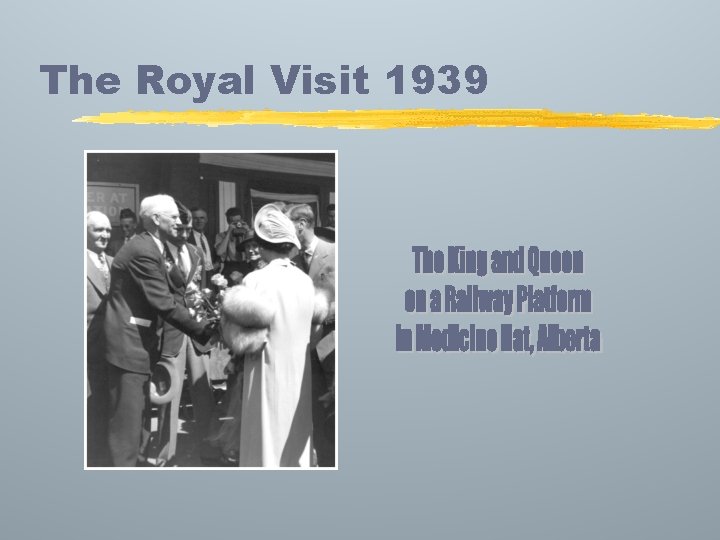
Canada and The United States PRE WW 2 ¢ King turned increasingly to the United States and was pleased with the American “Good Neighbor Policy. ” ¢ Trade with the Americans was expanded. ¢ In 1938 President Roosevelt promised American support in the event Canada was threatened. ¢ The royal visit of 1939 was, however; a strong reminder of ties to Great Britain.
The Royal Visit 1939
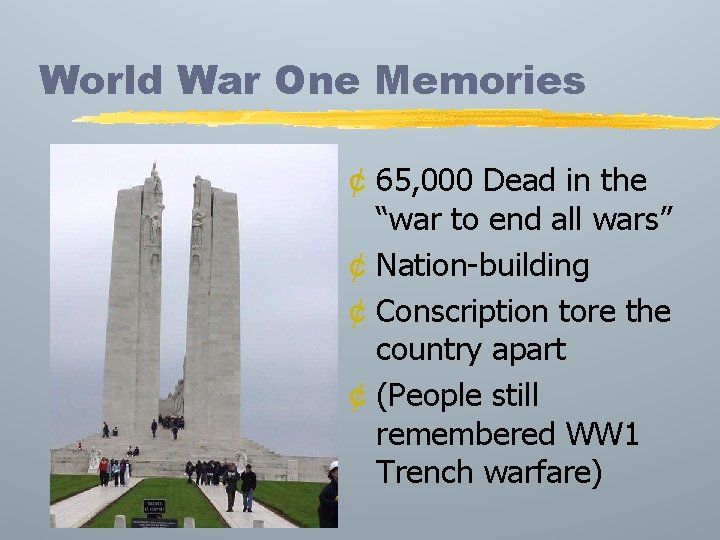
World War One Memories ¢ 65, 000 Dead in the “war to end all wars” ¢ Nation-building ¢ Conscription tore the country apart ¢ (People still remembered WW 1 Trench warfare)
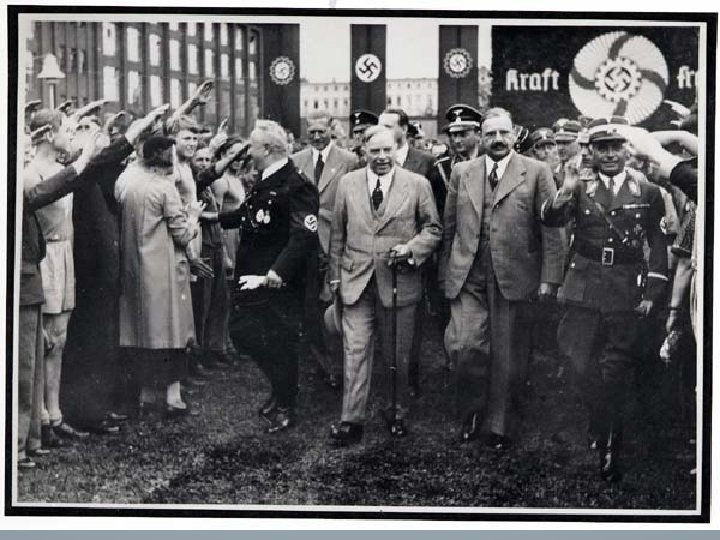
Canada’s Reaction ¢ ISOLATIONISTS - Canada remained isolationist in the late 1930’s. ¢ PACIFISTS - moral belief against war ¢ The horrors of WW 1 were not yet forgotten. ¢ The effects of the Depression were still being felt. ¢ PM King decides to visit Germany himself
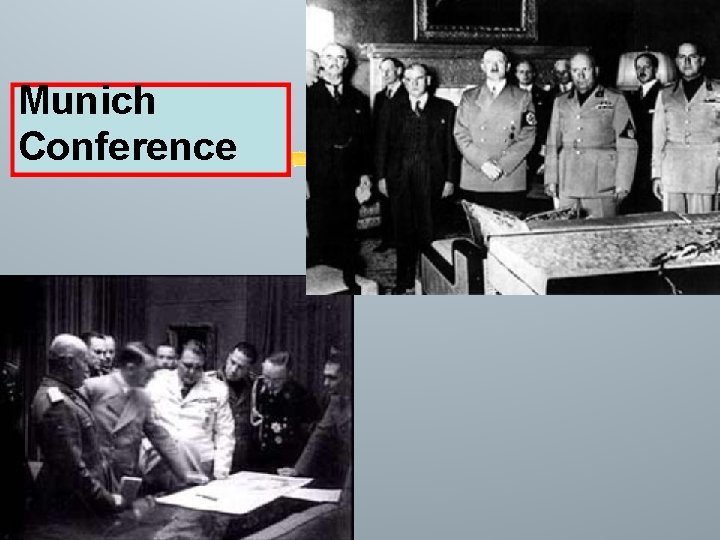
Munich Conference
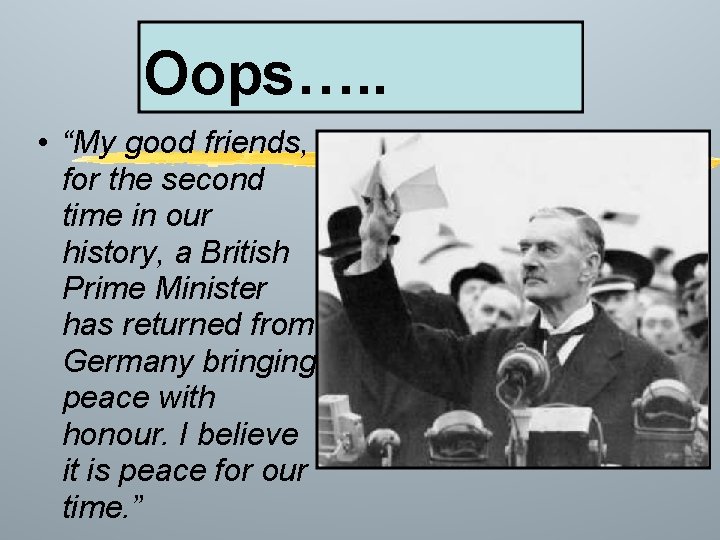
Oops…. . • “My good friends, for the second time in our history, a British Prime Minister has returned from Germany bringing peace with honour. I believe it is peace for our time. ”
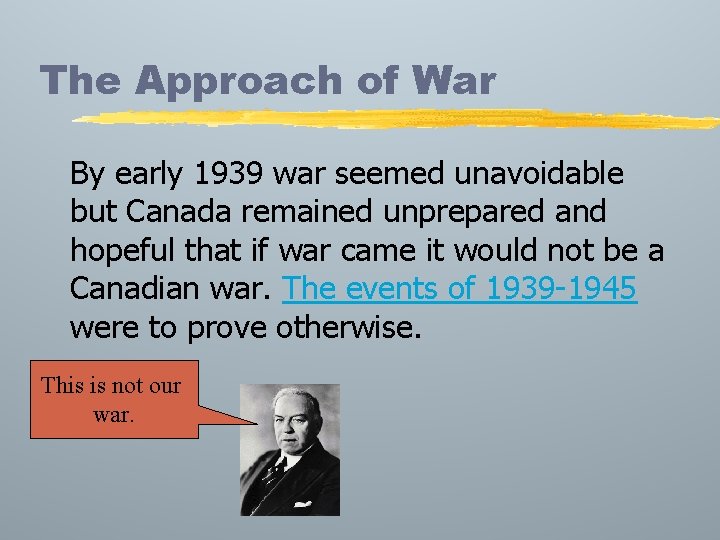
The Approach of War By early 1939 war seemed unavoidable but Canada remained unprepared and hopeful that if war came it would not be a Canadian war. The events of 1939 -1945 were to prove otherwise. This is not our war.
Canada Arms. . . AGAIN. . . ¢ When Hitler invaded Czechoslovakia in March 1939, King finally began to prepare Canada for War ¢ Canadians still remembered the controversy over conscription ¢ KING: “So long as this government is in power, no such measure shall be enacted” (conscription)
The Road to War. . ¢ September 1, 1939 German invades Poland (British Allie) ¢ September 3, 1939 France and Britain declare war on Germany *** September 7, 1939 Canada traded isolationism for involvement. . Declares WAR on GERMANY What is the significance of Canada waiting a week to join the war? ? ? ? ?
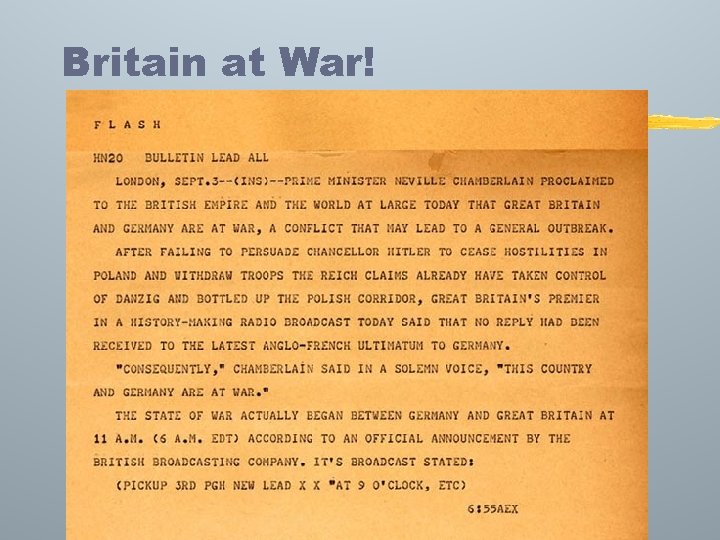
Britain at War!
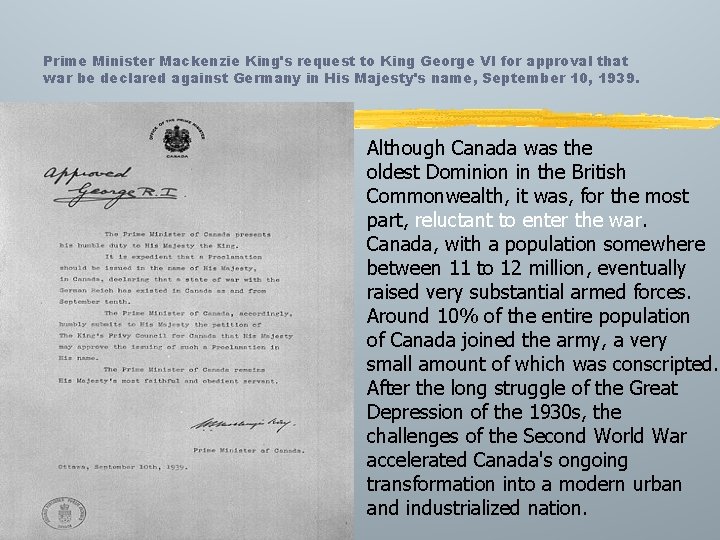
Prime Minister Mackenzie King's request to King George VI for approval that war be declared against Germany in His Majesty's name, September 10, 1939. Although Canada was the oldest Dominion in the British Commonwealth, it was, for the most part, reluctant to enter the war. Canada, with a population somewhere between 11 to 12 million, eventually raised very substantial armed forces. Around 10% of the entire population of Canada joined the army, a very small amount of which was conscripted. After the long struggle of the Great Depression of the 1930 s, the challenges of the Second World War accelerated Canada's ongoing transformation into a modern urban and industrialized nation.
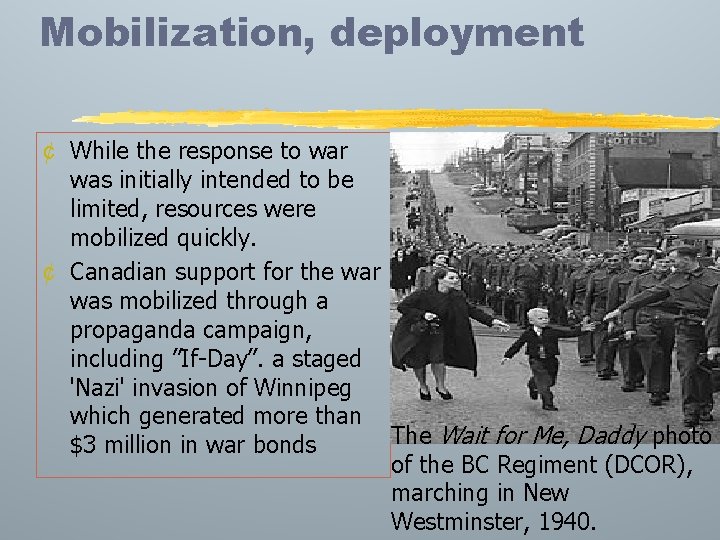
Mobilization, deployment ¢ While the response to war was initially intended to be limited, resources were mobilized quickly. ¢ Canadian support for the war was mobilized through a propaganda campaign, including ”If-Day”. a staged 'Nazi' invasion of Winnipeg which generated more than The Wait for Me, Daddy photo $3 million in war bonds of the BC Regiment (DCOR), marching in New Westminster, 1940.