
Appeasement A fatal mistake LO To explain the
- Slides: 22
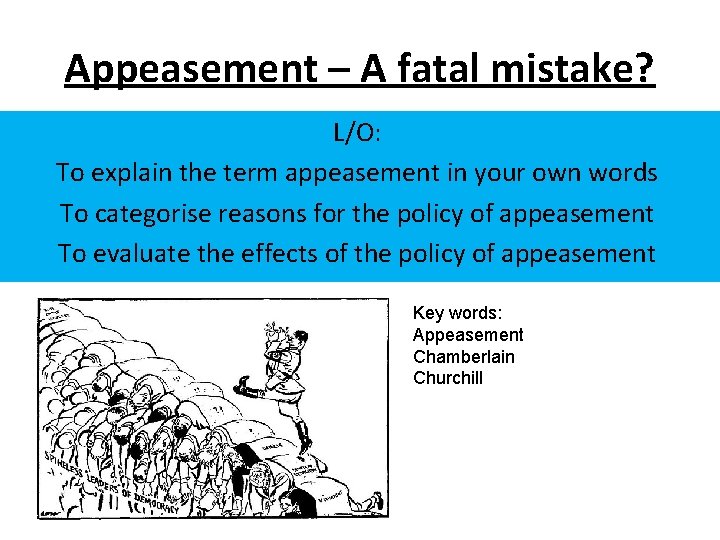
Appeasement – A fatal mistake? L/O: To explain the term appeasement in your own words To categorise reasons for the policy of appeasement To evaluate the effects of the policy of appeasement Key words: Appeasement Chamberlain Churchill
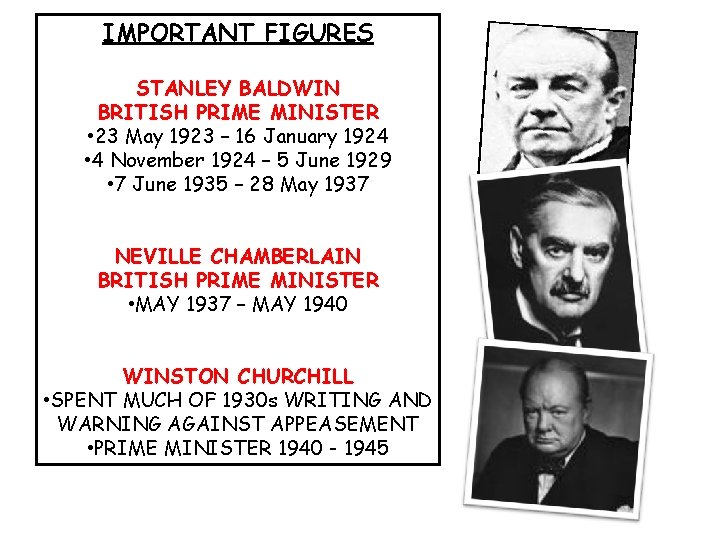
IMPORTANT FIGURES STANLEY BALDWIN BRITISH PRIME MINISTER • 23 May 1923 – 16 January 1924 • 4 November 1924 – 5 June 1929 • 7 June 1935 – 28 May 1937 NEVILLE CHAMBERLAIN BRITISH PRIME MINISTER • MAY 1937 – MAY 1940 WINSTON CHURCHILL • SPENT MUCH OF 1930 s WRITING AND WARNING AGAINST APPEASEMENT • PRIME MINISTER 1940 - 1945
APPEASEMENT – WHAT DOES IT MEAN? ho w e n o s i r se a e p p a n A it “ g n i p o h le i d o c o r c a ill h feeds c r u h C ” st a l m i h t a e will f “The exercise o friendliness and o t g n i d n a t s r e d un clear up all gh u o r h t s e c n e r e f dif t u o h t i w n o i s s u disc armed conflict. ” “Definition of appeasement: The soothing of threatening enemies by giving way to their demands. ” – Cuthbert , historian.
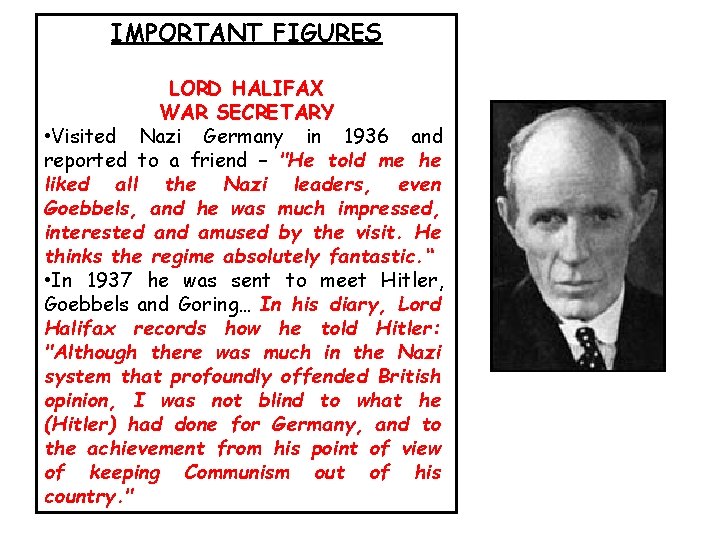
IMPORTANT FIGURES LORD HALIFAX WAR SECRETARY • Visited Nazi Germany in 1936 and reported to a friend – "He told me he liked all the Nazi leaders, even Goebbels, and he was much impressed, interested and amused by the visit. He thinks the regime absolutely fantastic. “ • In 1937 he was sent to meet Hitler, Goebbels and Goring… In his diary, Lord Halifax records how he told Hitler: "Although there was much in the Nazi system that profoundly offended British opinion, I was not blind to what he (Hitler) had done for Germany, and to the achievement from his point of view of keeping Communism out of his country. "
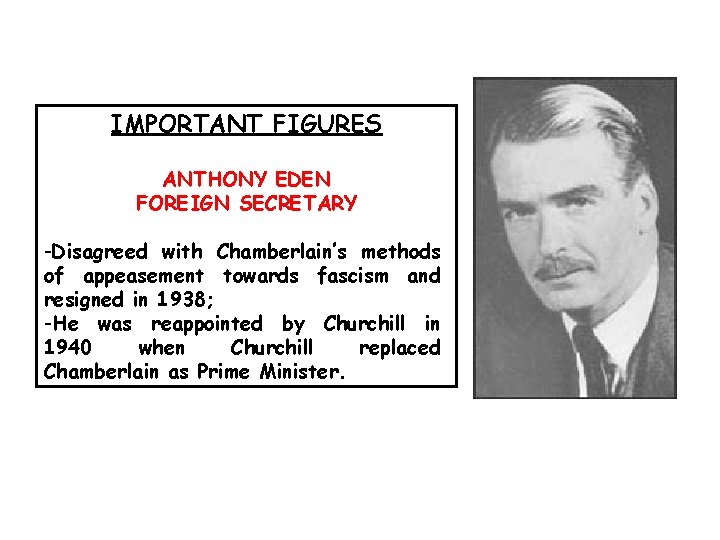
IMPORTANT FIGURES ANTHONY EDEN FOREIGN SECRETARY -Disagreed with Chamberlain’s methods of appeasement towards fascism and resigned in 1938; -He was reappointed by Churchill in 1940 when Churchill replaced Chamberlain as Prime Minister.
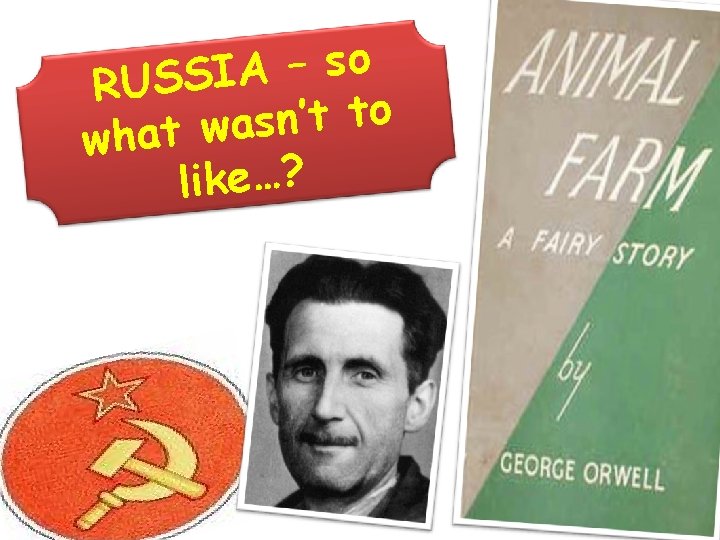
o s – A RUSSI o t t ’ n s a what w like…?
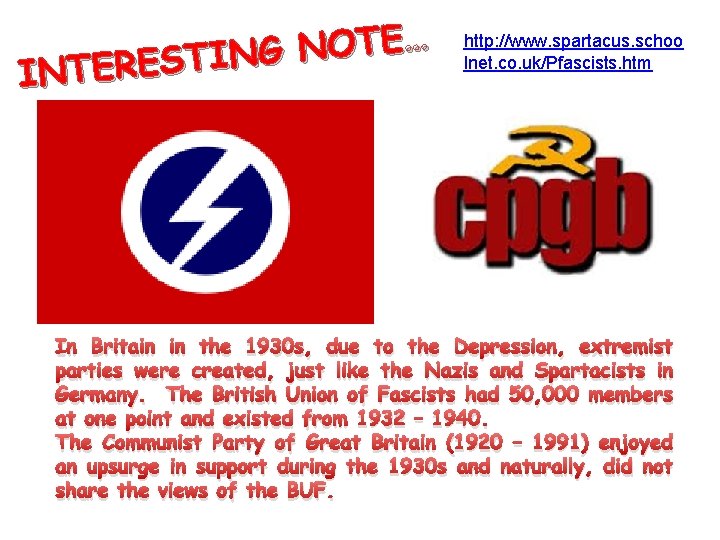
… E… E T O N G N I T S E R E INT http: //www. spartacus. schoo lnet. co. uk/Pfascists. htm In Britain in the 1930 s, due to the Depression, extremist parties were created, just like the Nazis and Spartacists in Germany. The British Union of Fascists had 50, 000 members at one point and existed from 1932 – 1940. The Communist Party of Great Britain (1920 – 1991) enjoyed an upsurge in support during the 1930 s and naturally, did not share the views of the BUF.
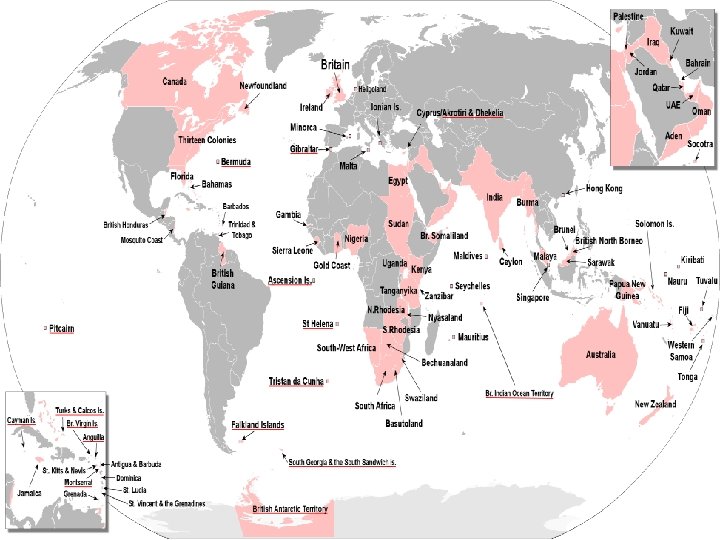
E R I P EM What is an Empire? ? ?
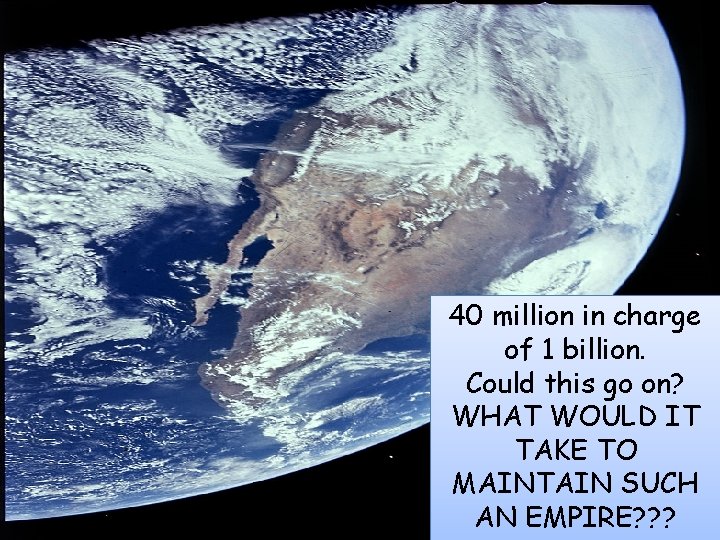
40 million in charge of 1 billion. Could this go on? WHAT WOULD IT TAKE TO MAINTAIN SUCH AN EMPIRE? ? ?
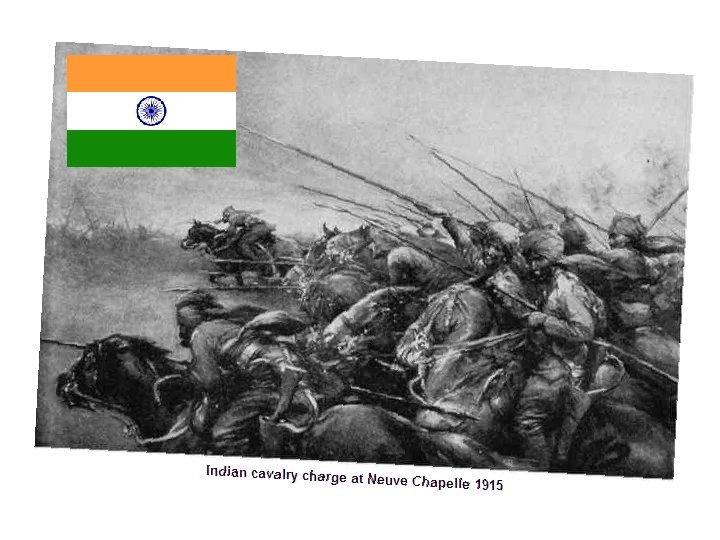
KEY POINT d e v i v r u s e v a h t Britain may no n e e b t o n t i d a h I and won WW m o r f s r e i d l o s f o for the help … e r i p m E h s i t i r colonies of the B
KEY POINT n i a t i r B I W W r e Before and aft t s i l a n o i t a n l a r faced seve r e h n i h t i w m o r f movements Empire…
CO$T THE 1929 Wall Street Crash had left Britain economically weak. One of the reasons the government followed a policy of appeasement was that they could not afford to fight a war and felt they would be better to spend money on creating jobs.
IMPORTANT IDEA At the end of WWI Britain had the largest navy in the world, a brand new air force, and an army that had greatly increased its skill and experience during the war. Between 1919 and 1934 Britain went from having a very strong armed forces to one she could not rely on to go to war with.
Morton (Historian) from Britain's Military Weakness 1918 -1939, published 2010: If you do not have the might, then you cannot fight.
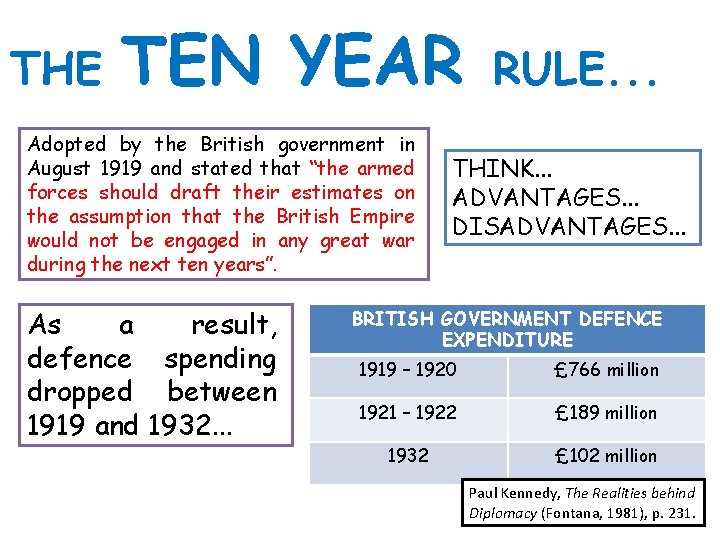
THE TEN YEAR Adopted by the British government in August 1919 and stated that “the armed forces should draft their estimates on the assumption that the British Empire would not be engaged in any great war during the next ten years”. As a result, defence spending dropped between 1919 and 1932. . . RULE. . . THINK. . . ADVANTAGES. . . DISADVANTAGES. . . BRITISH GOVERNMENT DEFENCE EXPENDITURE 1919 – 1920 £ 766 million 1921 – 1922 £ 189 million 1932 £ 102 million Paul Kennedy, The Realities behind Diplomacy (Fontana, 1981), p. 231.
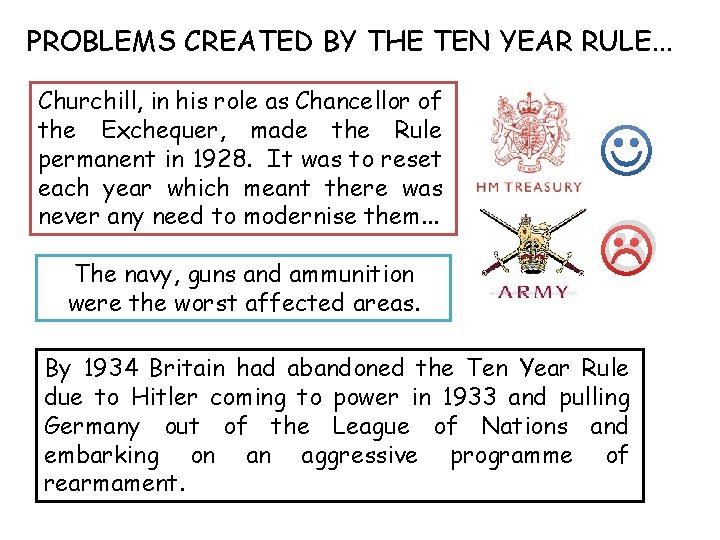
PROBLEMS CREATED BY THE TEN YEAR RULE. . . Churchill, in his role as Chancellor of the Exchequer, made the Rule permanent in 1928. It was to reset each year which meant there was never any need to modernise them. . . The navy, guns and ammunition were the worst affected areas. By 1934 Britain had abandoned the Ten Year Rule due to Hitler coming to power in 1933 and pulling Germany out of the League of Nations and embarking on an aggressive programme of rearmament.
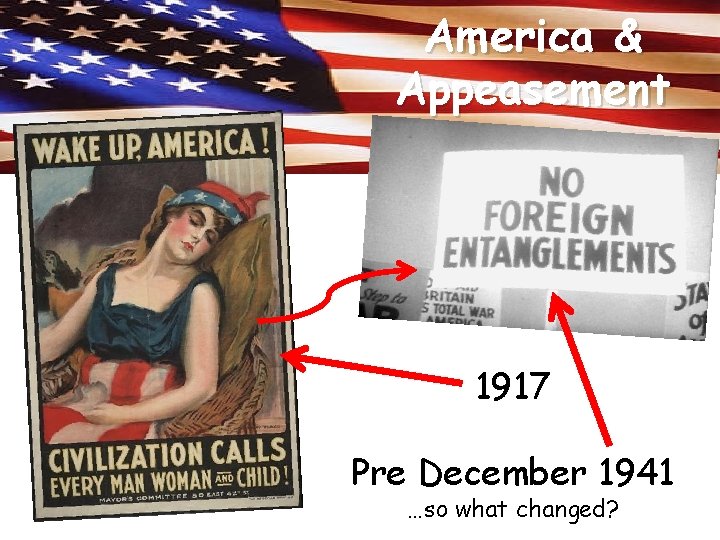
America & Appeasement 1917 Pre December 1941 …so what changed?
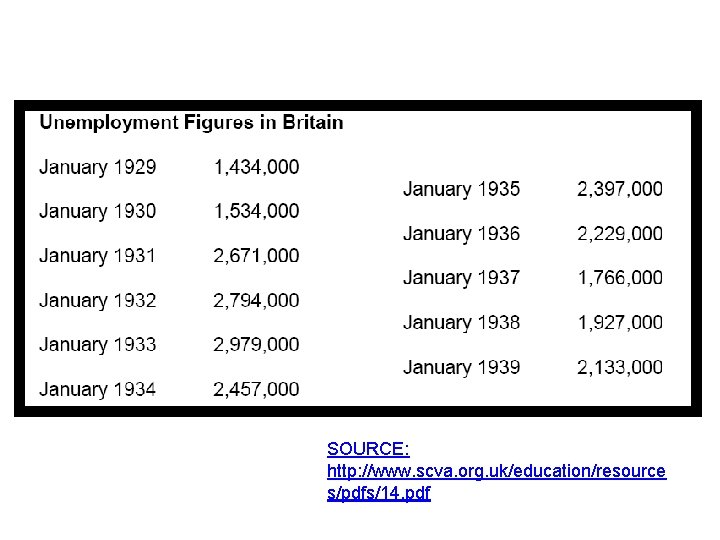
SOURCE: http: //www. scva. org. uk/education/resource s/pdfs/14. pdf
Cost Summary Economic difficulties: • impact of 1929 -32 economic crisis and depression • reluctance to further damage international trade and commerce. • Public wanted butter not guns – homes fit for heroes, social improvements. Military weakness: • Run-down state of armed forces following WW 1: Army: conscription ended post WW 1, scaled right down in size. Navy: not so run-down but not fully maintained and many obsolete ships. Air Force: lack of adequate air defences and fear of aerial bombing. • Multiple threats – Japan in the East, Italy in the Mediterranean and North Africa, Germany in Central Europe. • Warnings of Chiefs-of-Staff. • Exaggerated assessments of German military strength.
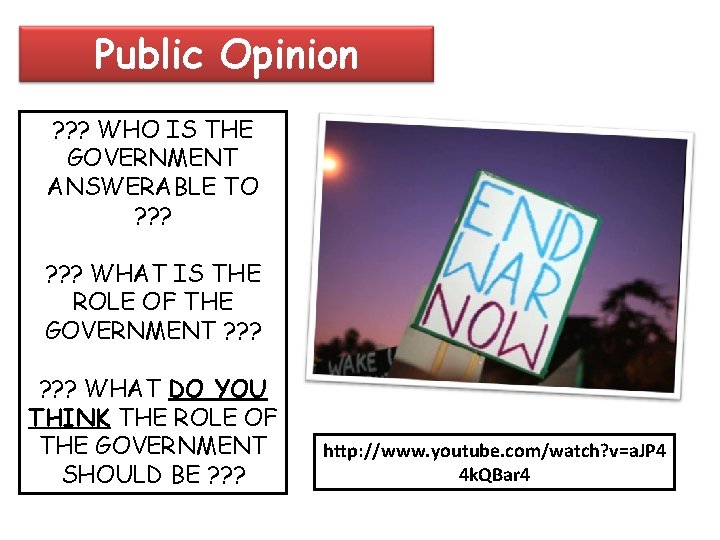
Public Opinion ? ? ? WHO IS THE GOVERNMENT ANSWERABLE TO ? ? ? WHAT IS THE ROLE OF THE GOVERNMENT ? ? ? WHAT DO YOU THINK THE ROLE OF THE GOVERNMENT SHOULD BE ? ? ? http: //www. youtube. com/watch? v=a. JP 4 4 k. QBar 4