
Apollo and Artemis Children of Zeus and Leto
- Slides: 33
Apollo and Artemis • Children of Zeus and Leto • Apollo god of prophecy and healing, referred to as Phoebus (=who shines? ) • Roman name for Artemis-Diana • Leto was a Titaness, daughter of Coeus and Phoebe. • Birth of the twins. Leto persecuted by Hera. Apollo born on Delos and Artemis on Ortygia, floating islands. Then islands anchored.
Apollo of the Hymn to Apollo • Late 6 th century • Two major parts> PART 1: “Delian” part -Apollo’s birth on island of Delos PART 2: “Pythian” part -Apollo’s arrival in Delphiestablishment of cult
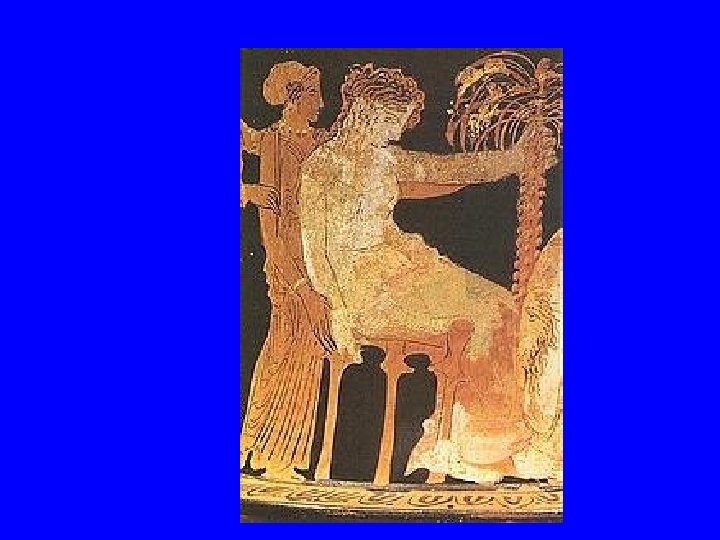
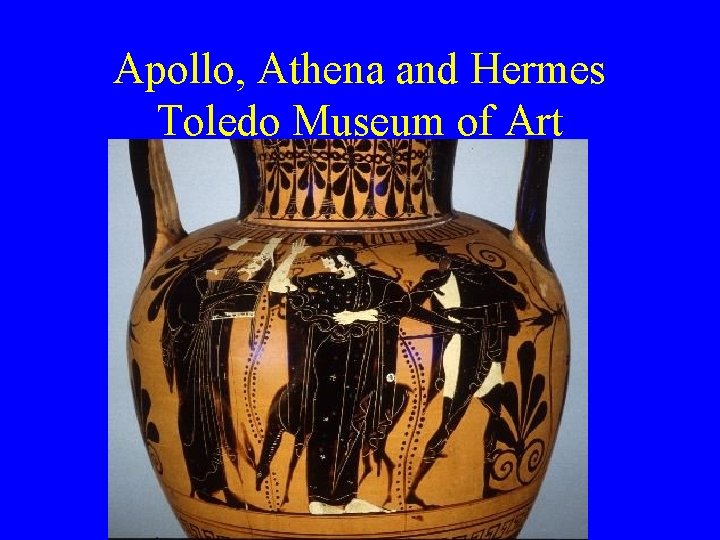
“DELIAN” PART • Leto wanders to find a place to give birth to her children. Why? • Dialogue between Leto and Delos. Leto’s oath • DELOS: “I welcome the birth of the lord who shoots from afar. • Leto/childbirth motif/description of Apollo’s birth. Was Leto alone? NO, list of goddesses in line 94 ff Homeric Hymn to Apollo (page 26). Eileithyia, daughter of Zeus and Hera, came after receiving the gift, a necklace (see in vase).
• Apollo’s cult on Delos • Delight with music and dances. Long-robed Ionians with their children and wives. Delian maidens (DELIADES) sing in memory of men and women of old time, know how to mimic voices and rhythms of all men. • Apollo to Olympus
Why wandering? • What does wandering signify? -gradual establishment of the myth. Also the idea of the island taking credit for welcoming the god>it became the center for ancient Greek religion. . The wandering then means that how rules and regulations and cult was formally established. Wandering from the point of view of poetics: wandering Leto, wandering gods, wandering POETS. READING THE HOMERIC HYMN to Apollo as a way of understanding performances of epic and lyric poetry.
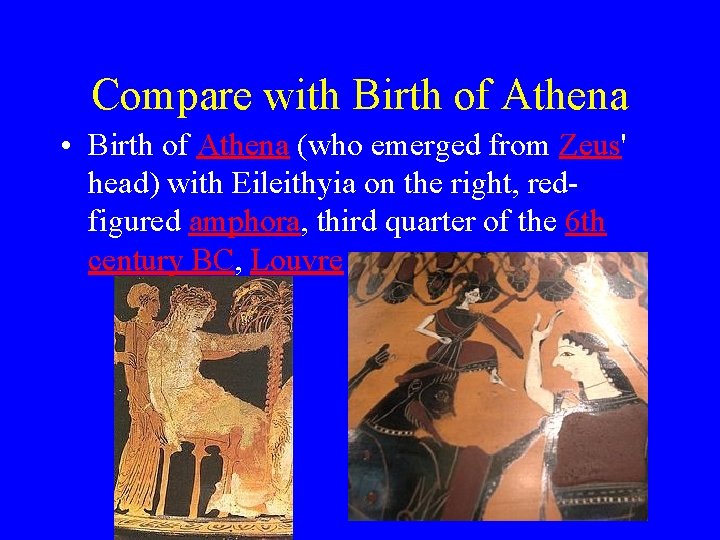
Compare with Birth of Athena • Birth of Athena (who emerged from Zeus' head) with Eileithyia on the right, redfigured amphora, third quarter of the 6 th century BC, Louvre
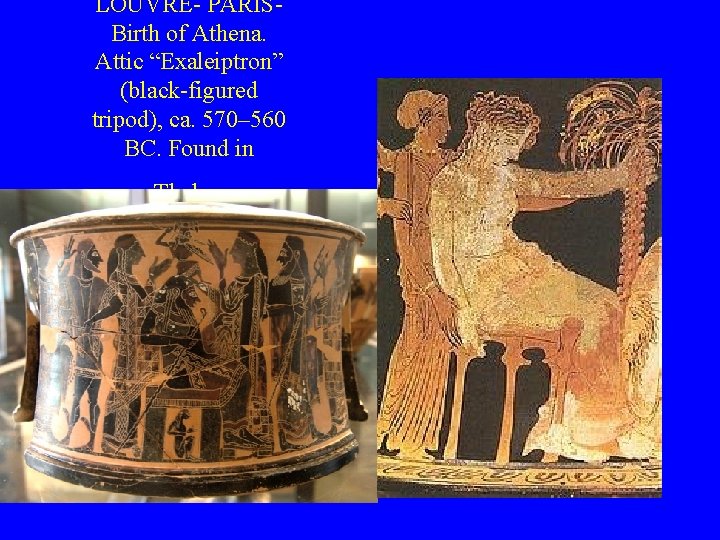
LOUVRE- PARISBirth of Athena. Attic “Exaleiptron” (black-figured tripod), ca. 570– 560 BC. Found in Thebes
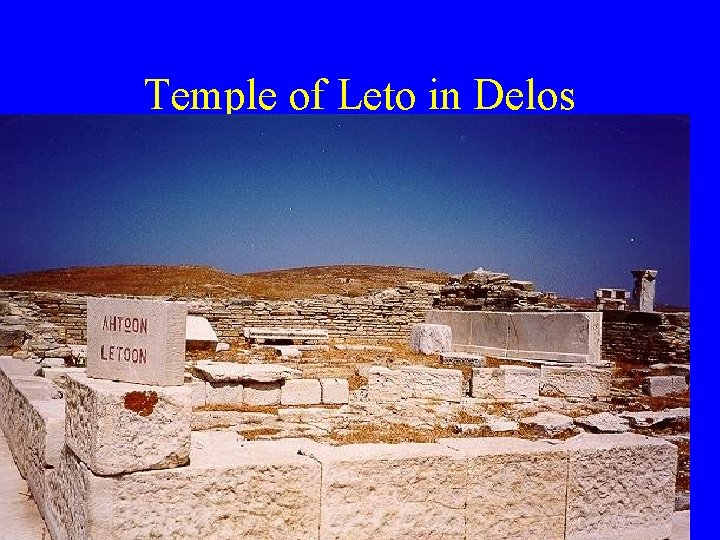
Temple of Leto in Delos
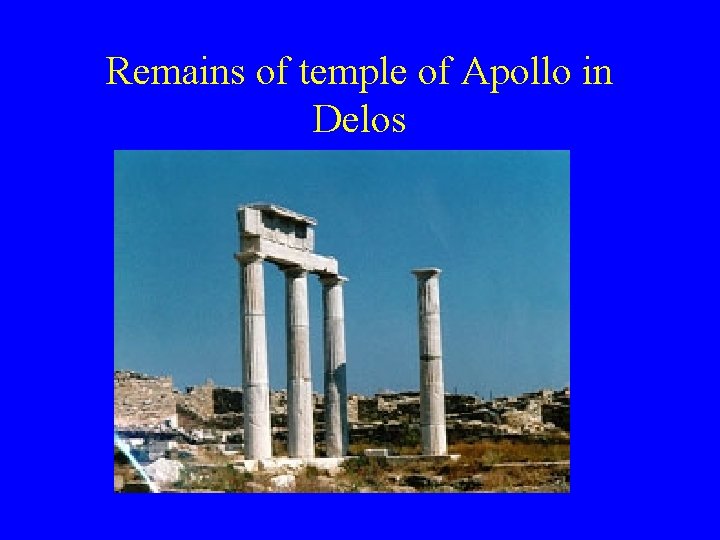
Remains of temple of Apollo in Delos
DELPHIAN PART The making of an Olympian God • • New quest where to make the temple • Dialogue between Apollo and Telphousa (a nymph of a spring in Boiotia, central Greece, north of Athens). Telphousa’s trick on the god. Over sovereignty? Urged him to go to Delphi • Temple-oracle • Pytho- monster. When Apollo decided to establish his temple at Delphi he found near a spring a dragon called Pytho (or Python in other sources). • Hera gave birth to TYPHAON, on her own, in anger for Athena’s birth by Zeus. Typhaon was brought up by Pytho. IMPORTANCE OF BIRTH STORIES IN HOMERIC HYMN • Feminist reading of this part. Dragon/Dragoness • Pytho a child of Gaia, could pronounce oracles>rival to Apollo - Apollo killed Pytho.
• Pythian Apollo, from name of place Pytho, after the dragon. Motif of heroism (triumph over monsters becomes part of heroic identity) • Punishment of Telphousa • Finding priests • Cretan ship- Dialogue with the god • Note: “dancing in his train the Cretans followed him to Pytho, they were chanting paeans.
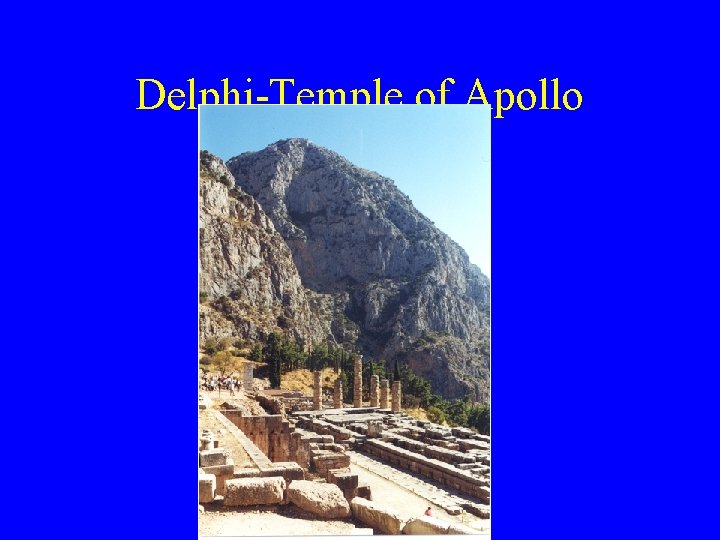
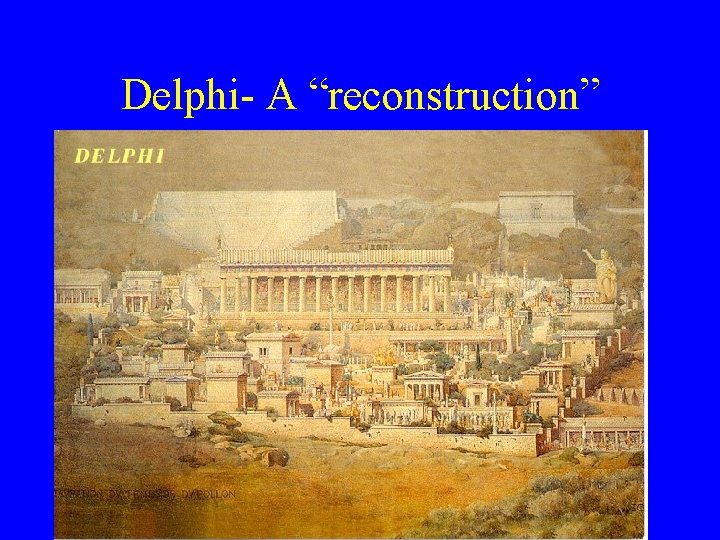
Delphi-Temple of Apollo
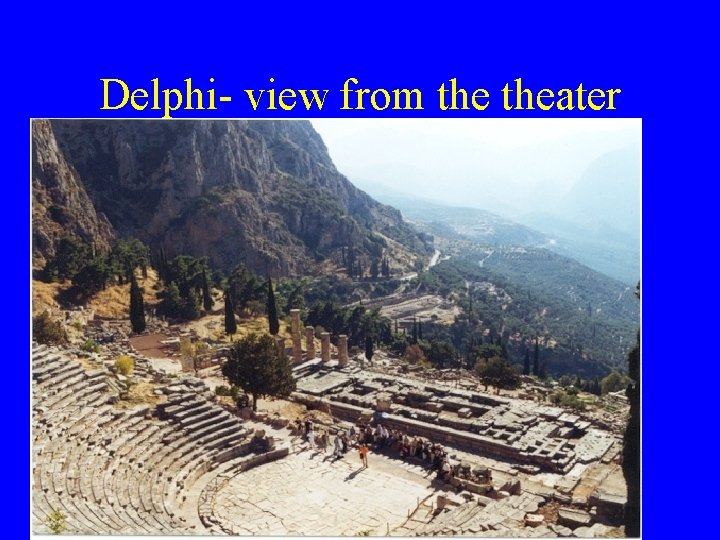
Delphi- view from theater
Delphi- A “reconstruction”
Apollo, Athena and Hermes Toledo Museum of Art
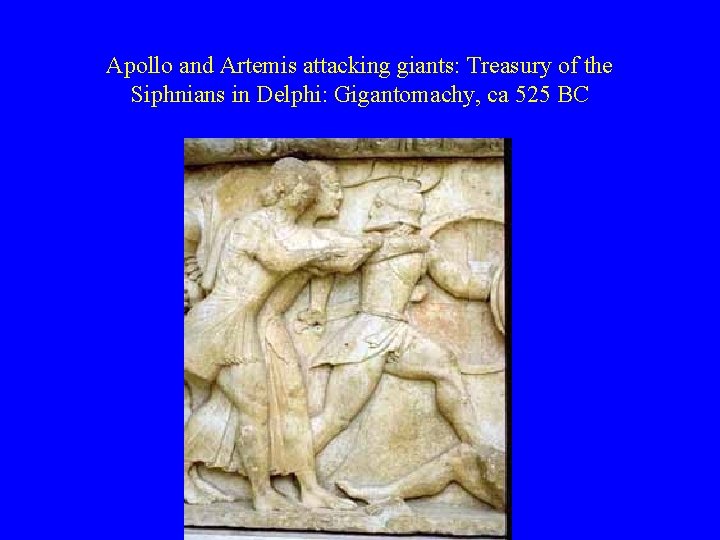
Apollo and Artemis attacking giants: Treasury of the Siphnians in Delphi: Gigantomachy, ca 525 BC
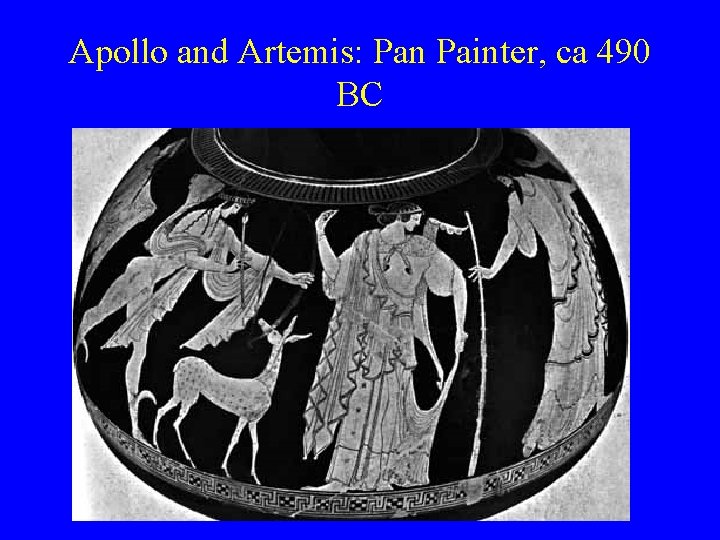
Apollo and Artemis: Pan Painter, ca 490 BC
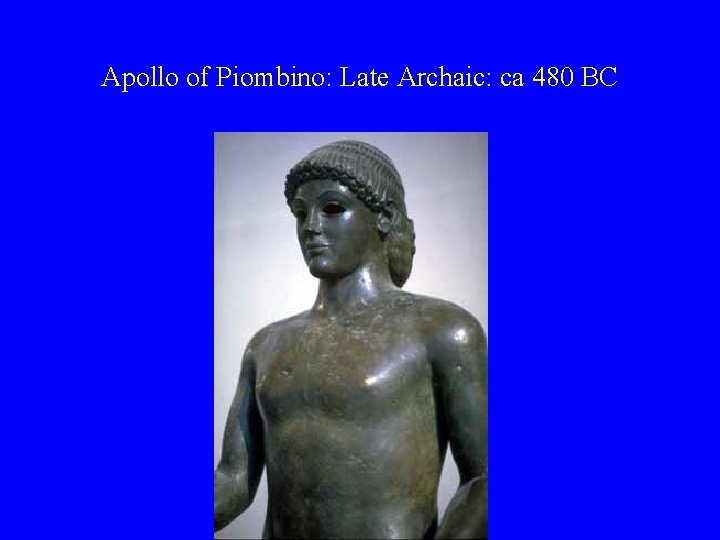
Apollo of Piombino: Late Archaic: ca 480 BC
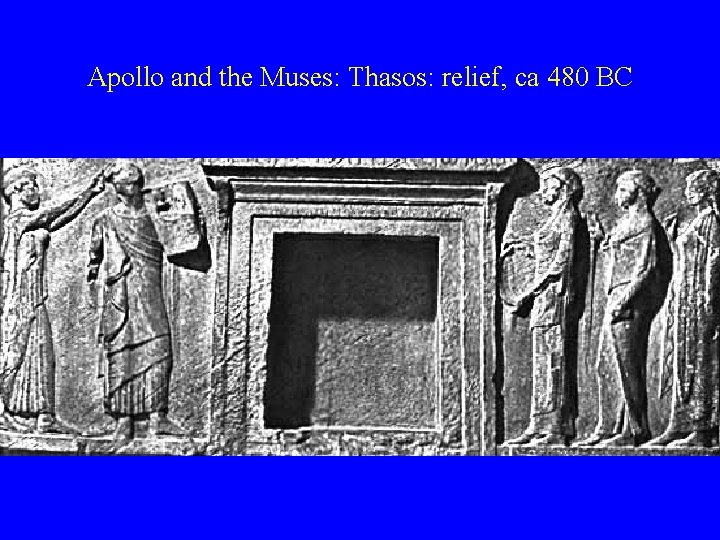
Apollo and the Muses: Thasos: relief, ca 480 BC
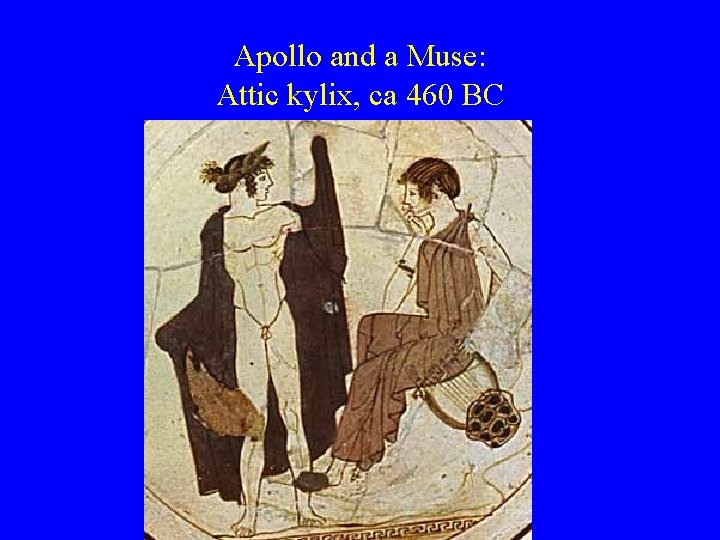
Apollo and a Muse: Attic kylix, ca 460 BC
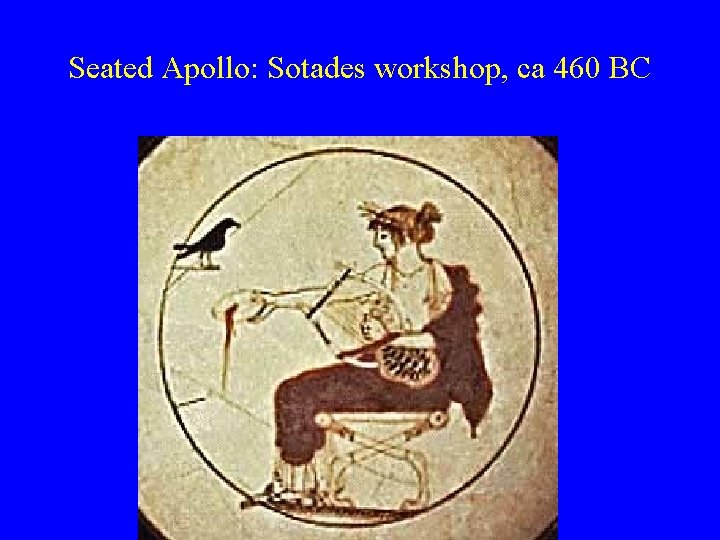
Seated Apollo: Sotades workshop, ca 460 BC
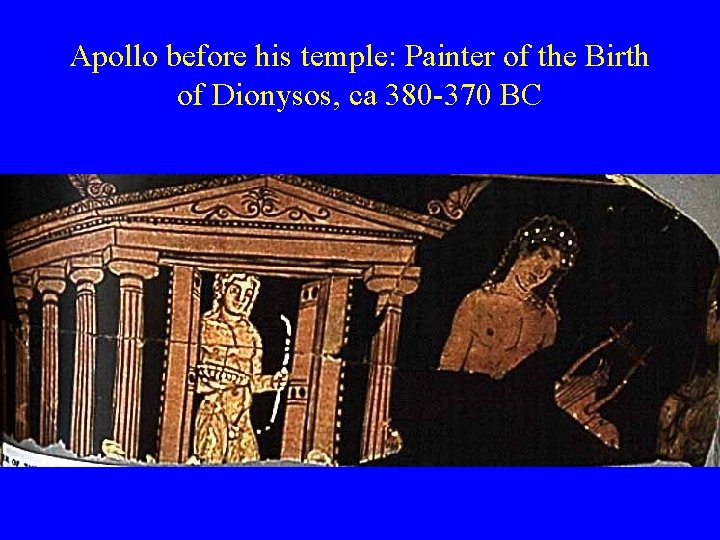
Apollo before his temple: Painter of the Birth of Dionysos, ca 380 -370 BC
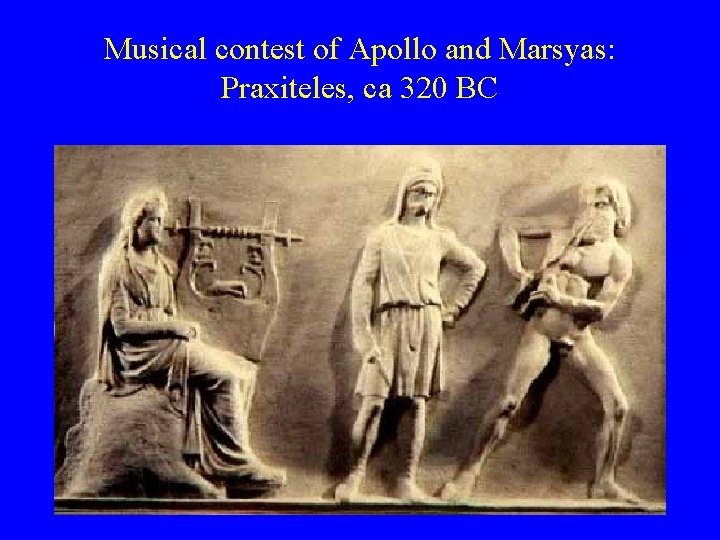
Musical contest of Apollo and Marsyas: Praxiteles, ca 320 BC
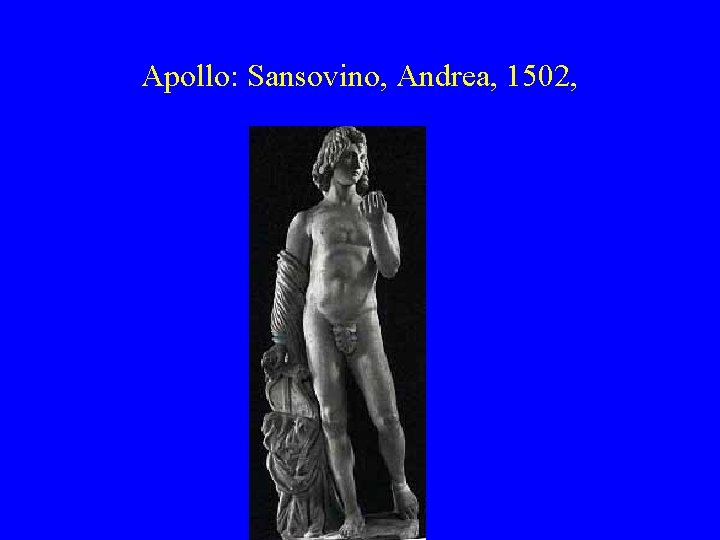
Apollo: Sansovino, Andrea, 1502,
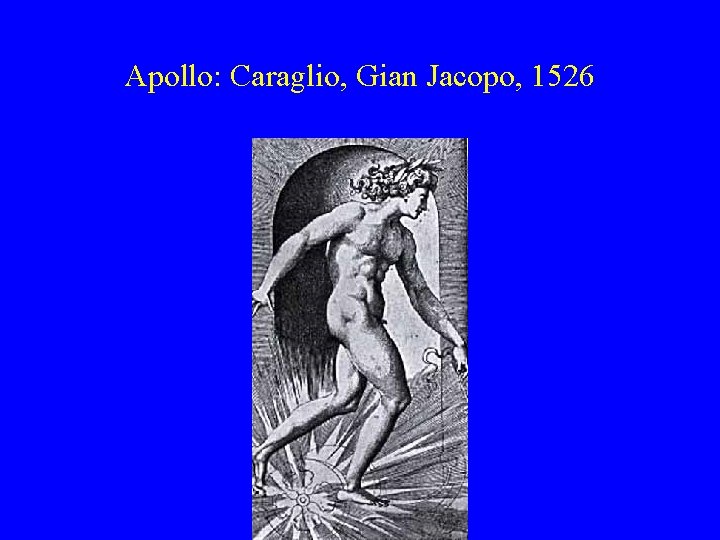
Apollo: Caraglio, Gian Jacopo, 1526
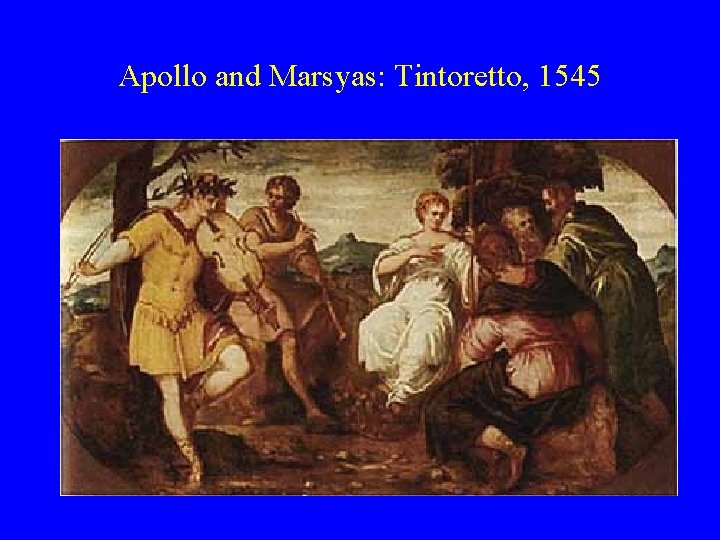
Apollo and Marsyas: Tintoretto, 1545
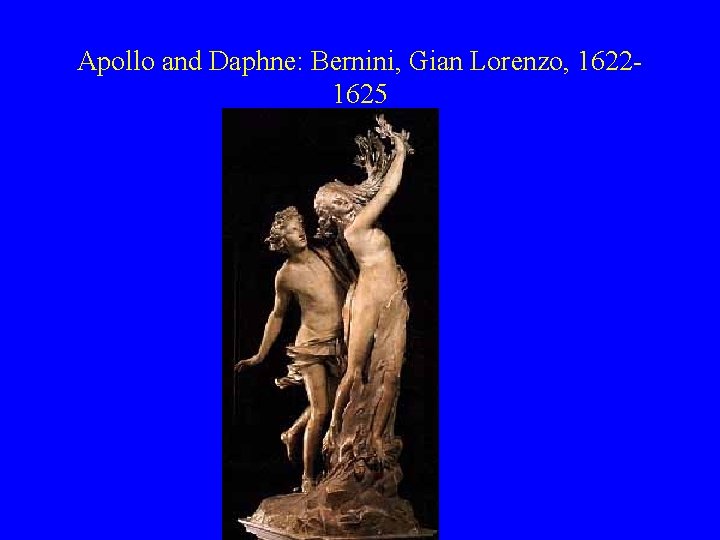
Apollo and Daphne: Bernini, Gian Lorenzo, 16221625
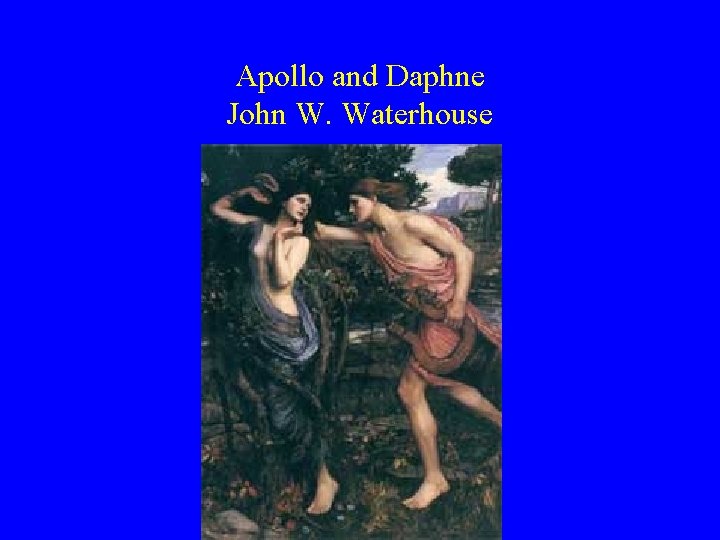
Apollo and Daphne John W. Waterhouse
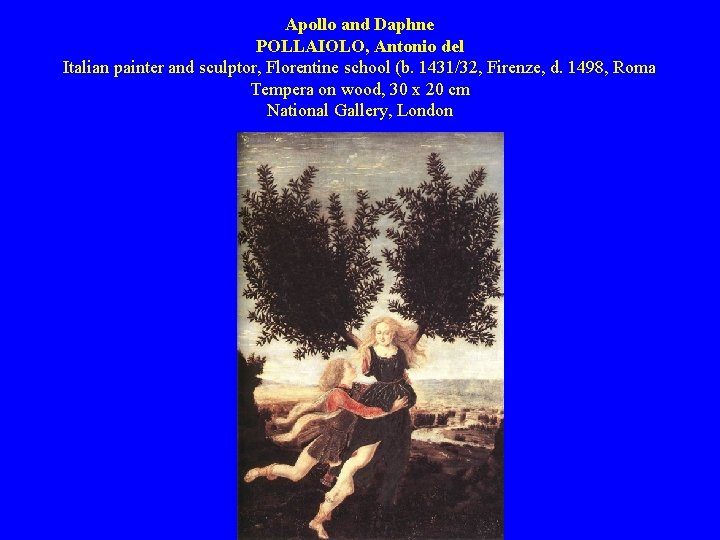
Apollo and Daphne POLLAIOLO, Antonio del Italian painter and sculptor, Florentine school (b. 1431/32, Firenze, d. 1498, Roma Tempera on wood, 30 x 20 cm National Gallery, London
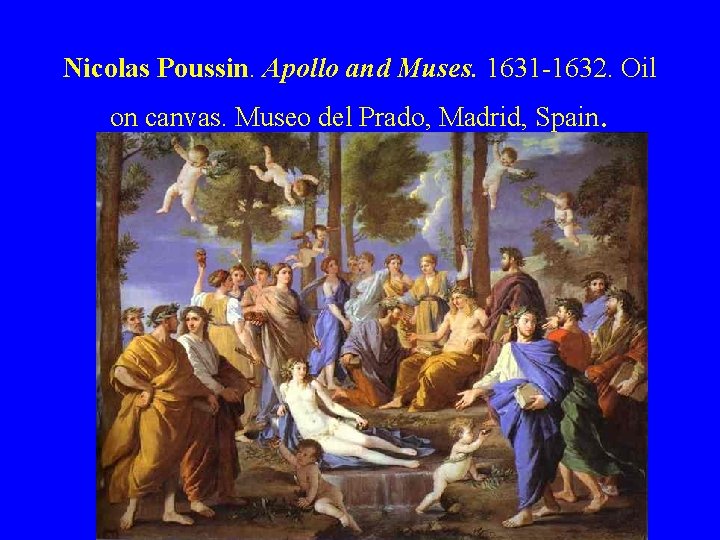
Nicolas Poussin. Apollo and Muses. 1631 -1632. Oil on canvas. Museo del Prado, Madrid, Spain.