
Apogee High point of its orbit Perigee Low
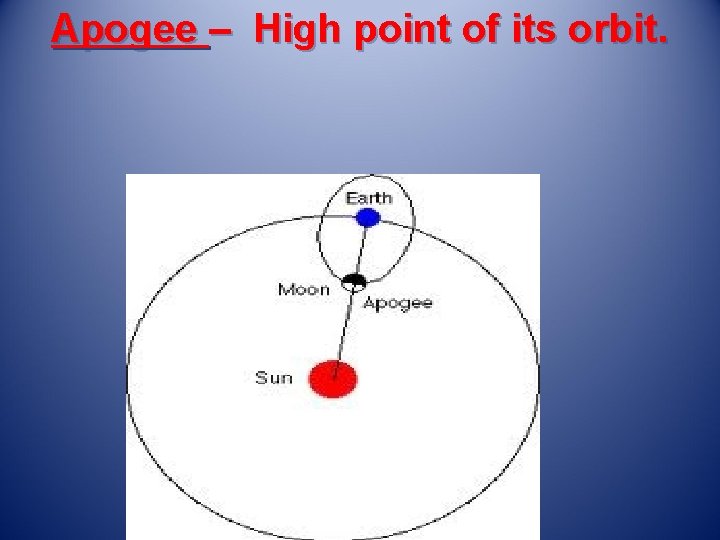
Apogee – High point of its orbit.

Perigee – Low point of its orbit.
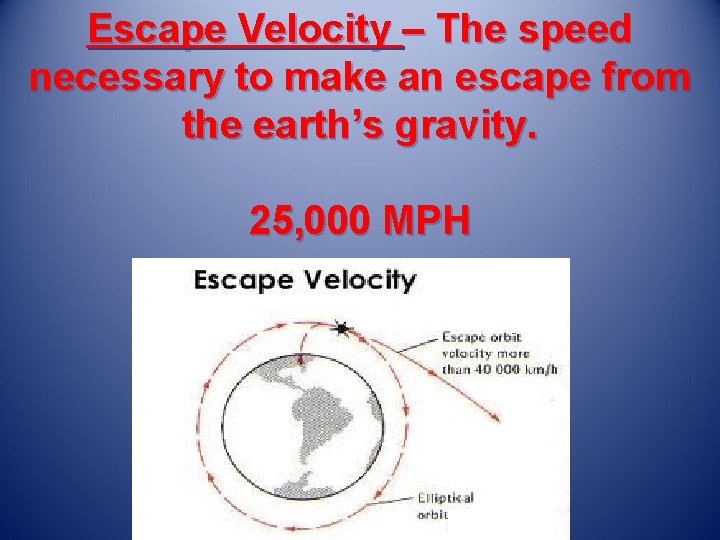
Escape Velocity – The speed necessary to make an escape from the earth’s gravity. 25, 000 MPH
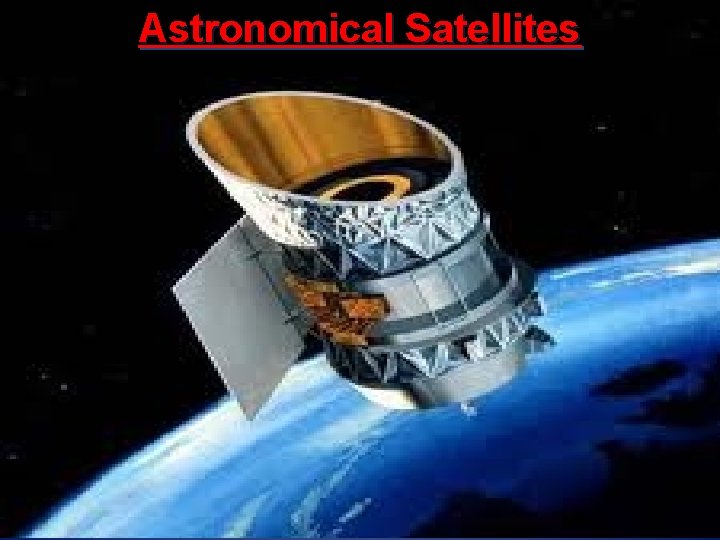
Astronomical Satellites
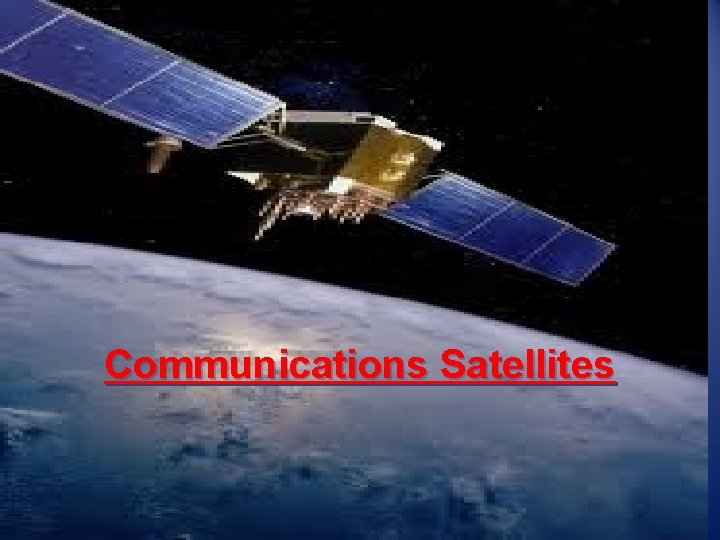
Communications Satellites
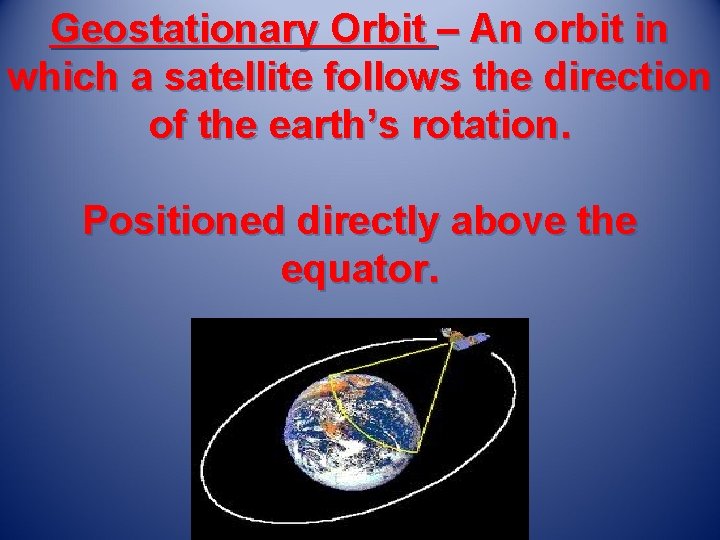
Geostationary Orbit – An orbit in which a satellite follows the direction of the earth’s rotation. Positioned directly above the equator.
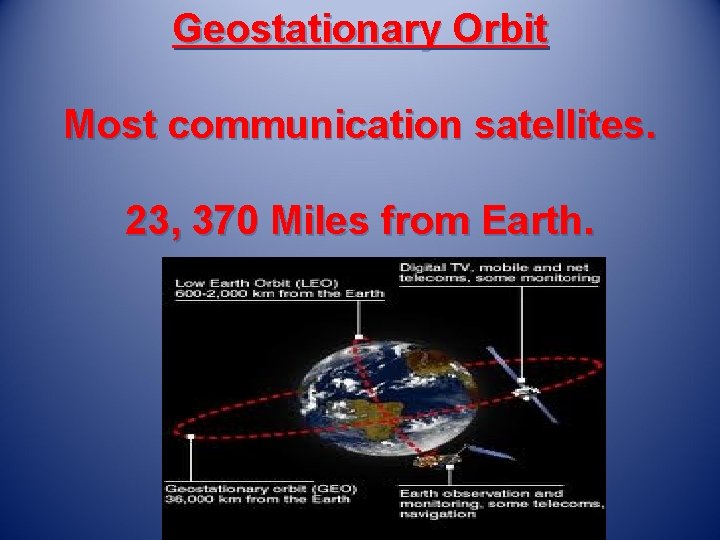
Geostationary Orbit Most communication satellites. 23, 370 Miles from Earth.
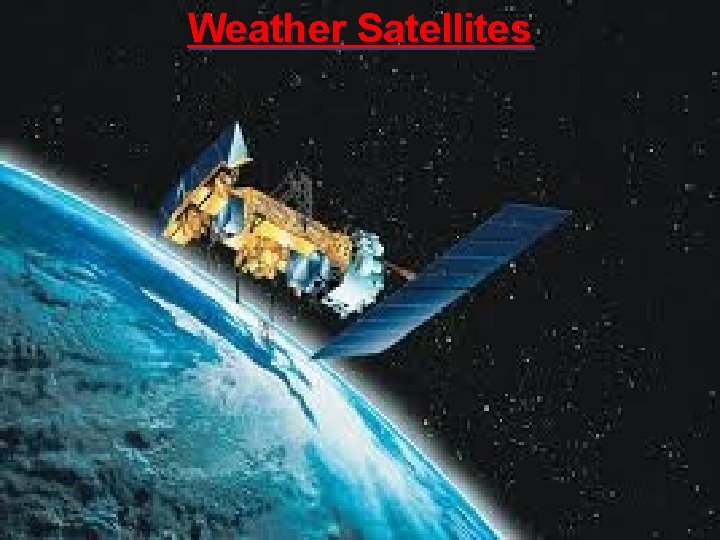
Weather Satellites
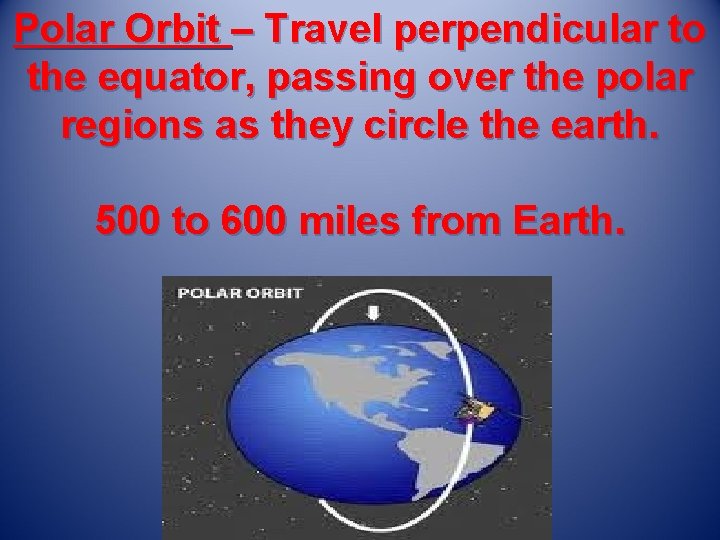
Polar Orbit – Travel perpendicular to the equator, passing over the polar regions as they circle the earth. 500 to 600 miles from Earth.
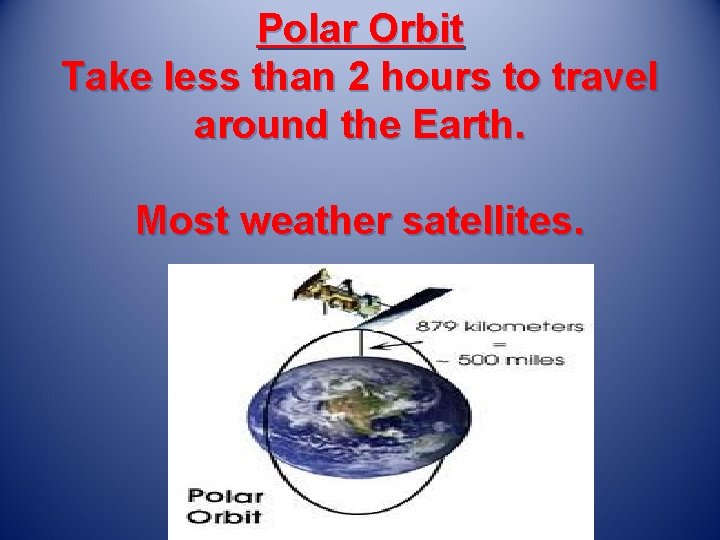
Polar Orbit Take less than 2 hours to travel around the Earth. Most weather satellites.
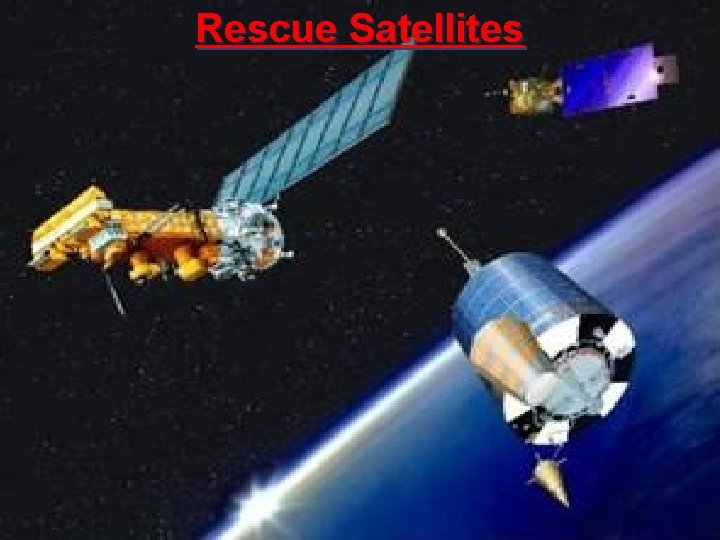
Rescue Satellites
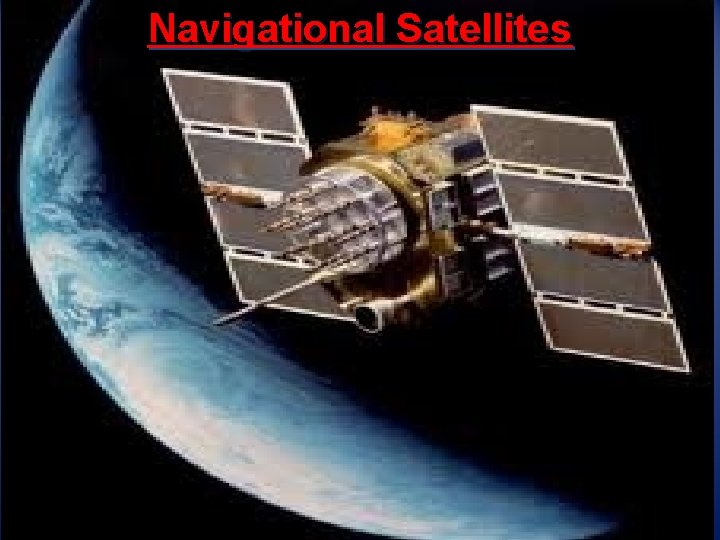
Navigational Satellites
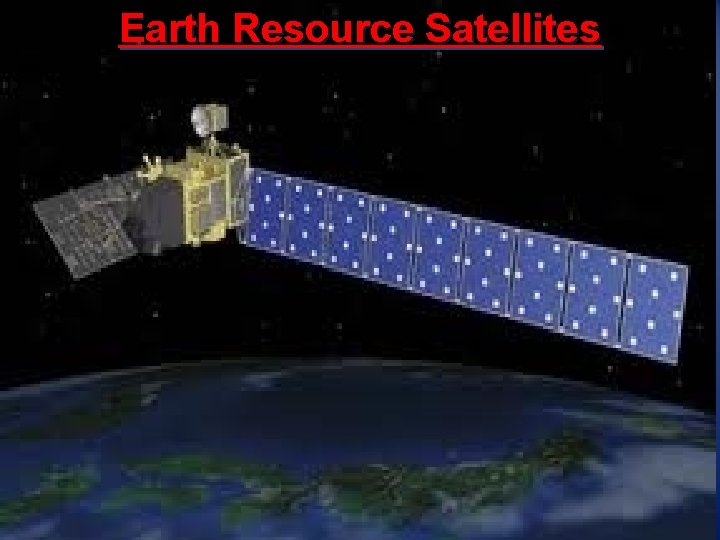
Earth Resource Satellites
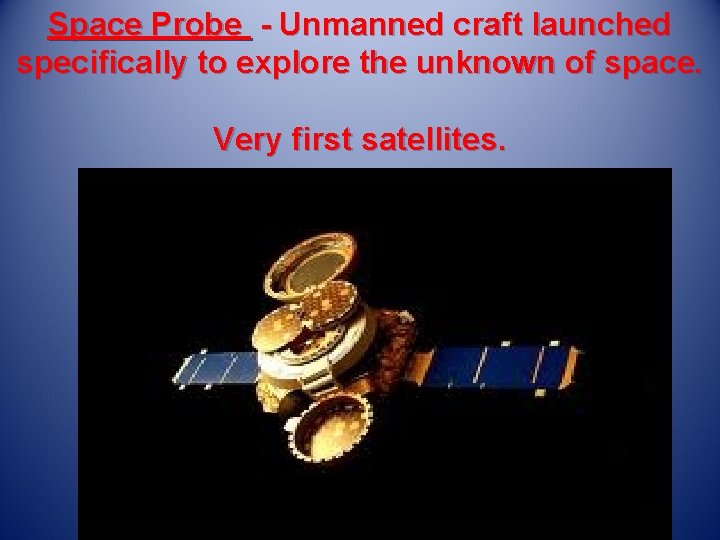
Space Probe - Unmanned craft launched specifically to explore the unknown of space. Very first satellites.
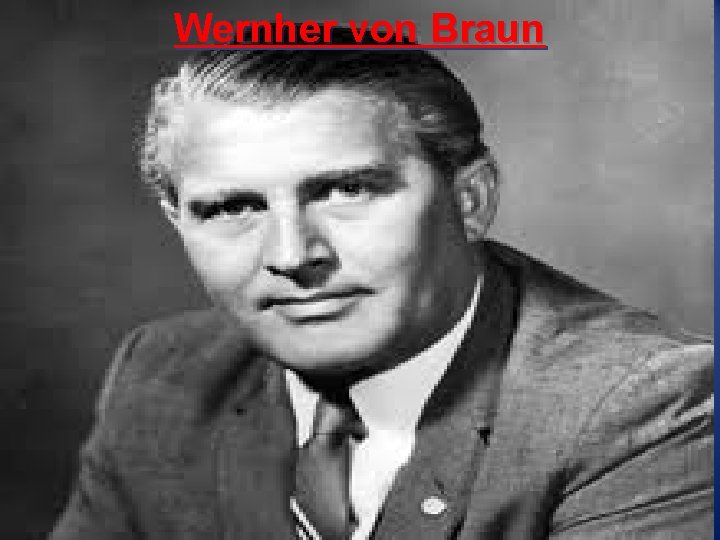
Wernher von Braun
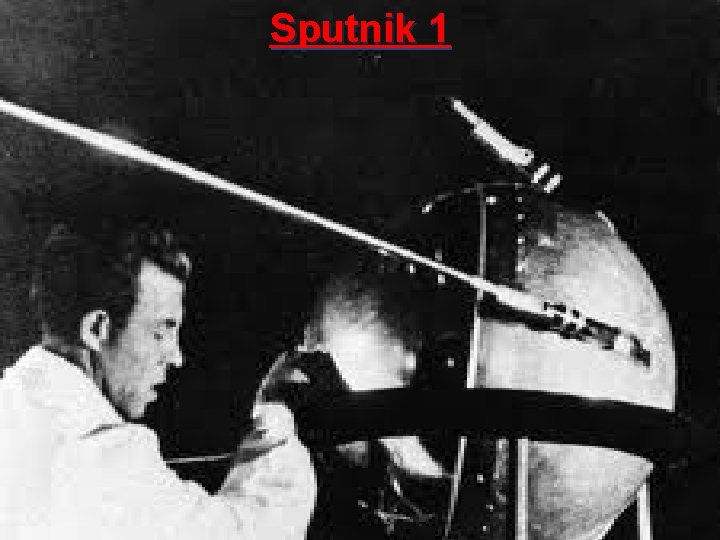
Sputnik 1
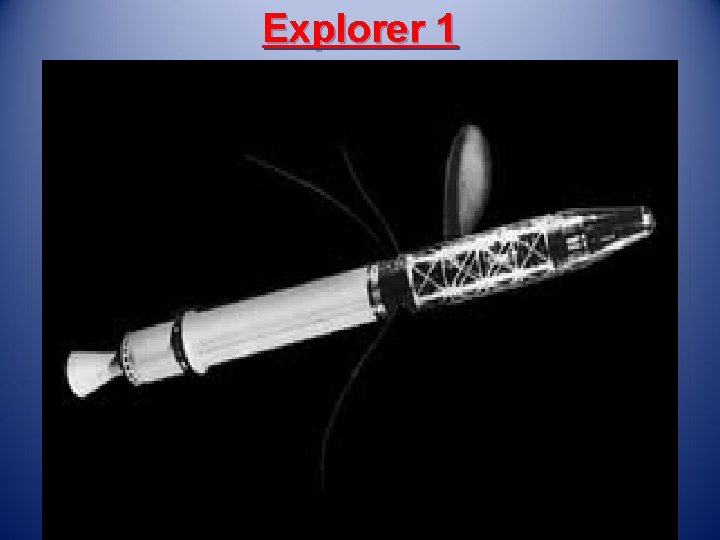
Explorer 1
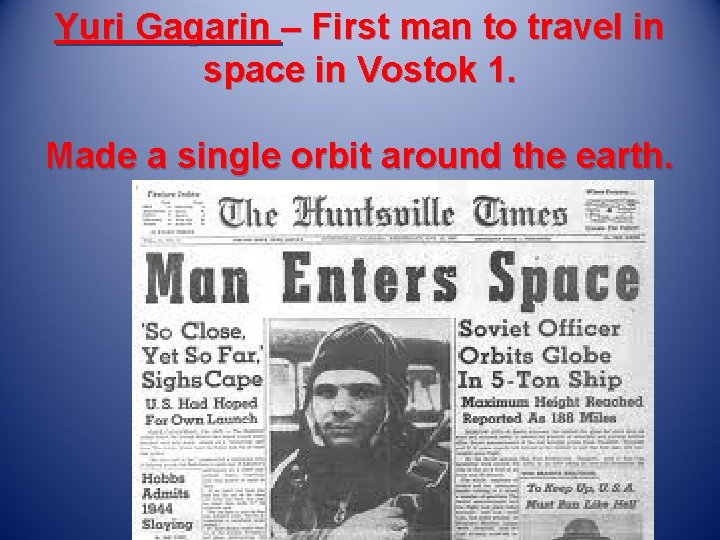
Yuri Gagarin – First man to travel in space in Vostok 1. Made a single orbit around the earth.
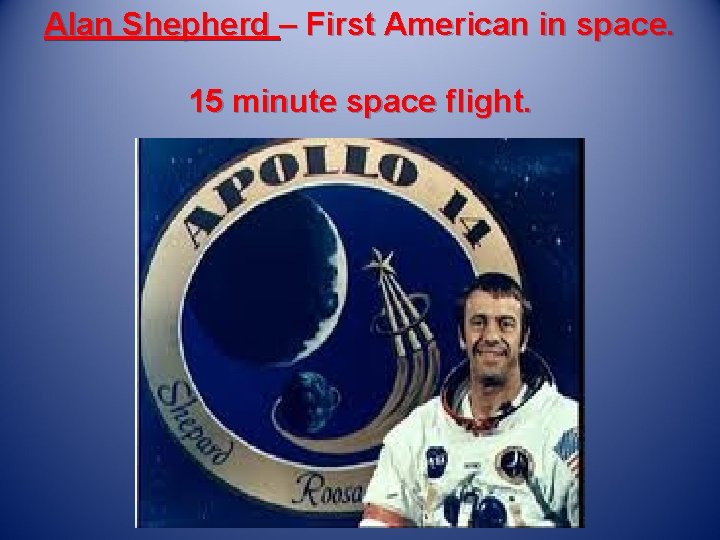
Alan Shepherd – First American in space. 15 minute space flight.

John Glenn – First American to orbit the Earth.
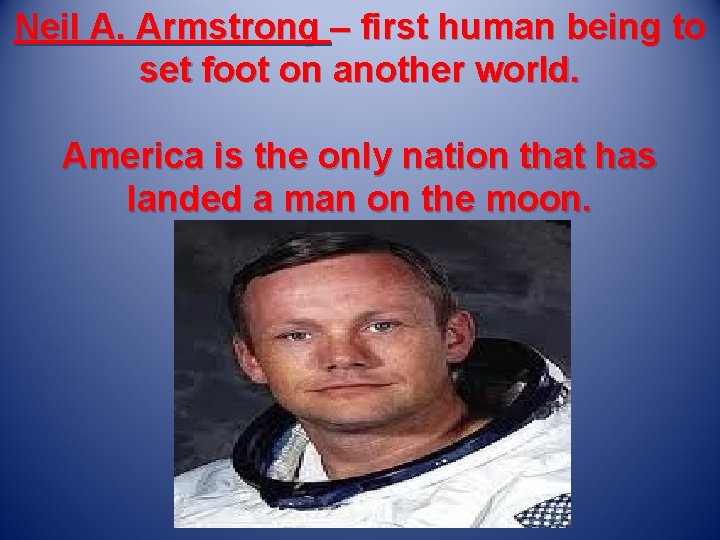
Neil A. Armstrong – first human being to set foot on another world. America is the only nation that has landed a man on the moon.
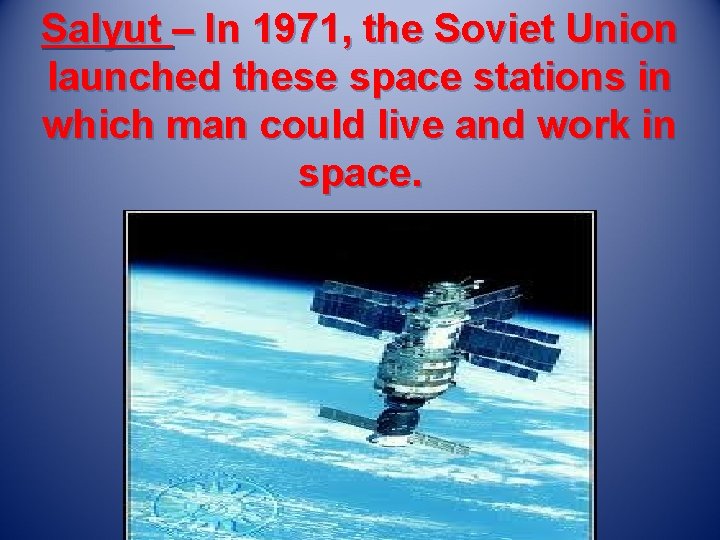
Salyut – In 1971, the Soviet Union launched these space stations in which man could live and work in space.
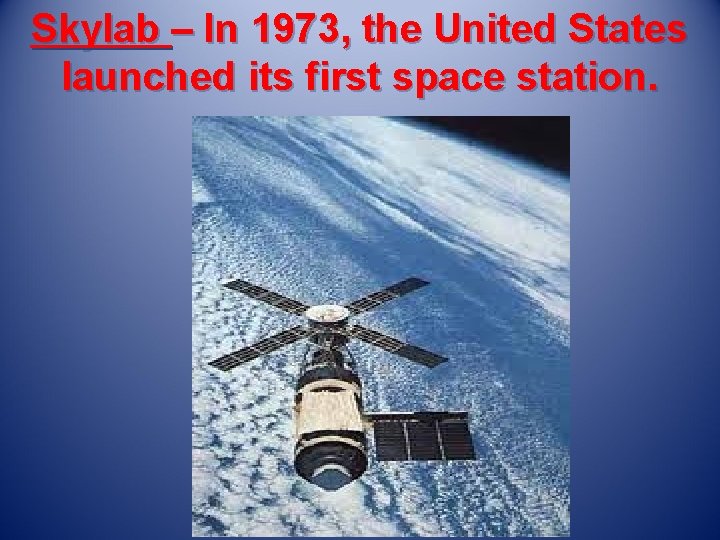
Skylab – In 1973, the United States launched its first space station.
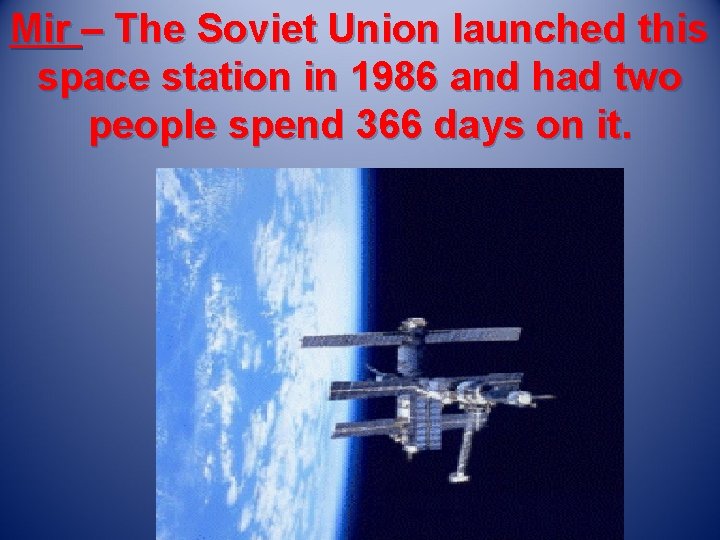
Mir – The Soviet Union launched this space station in 1986 and had two people spend 366 days on it.
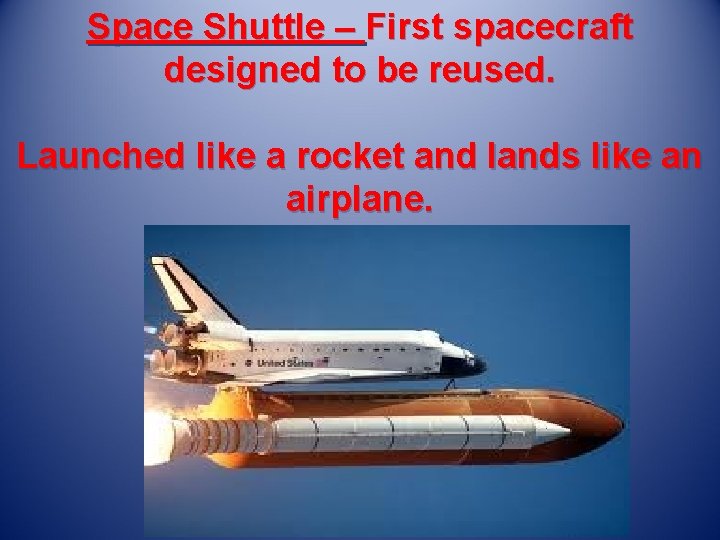
Space Shuttle – First spacecraft designed to be reused. Launched like a rocket and lands like an airplane.
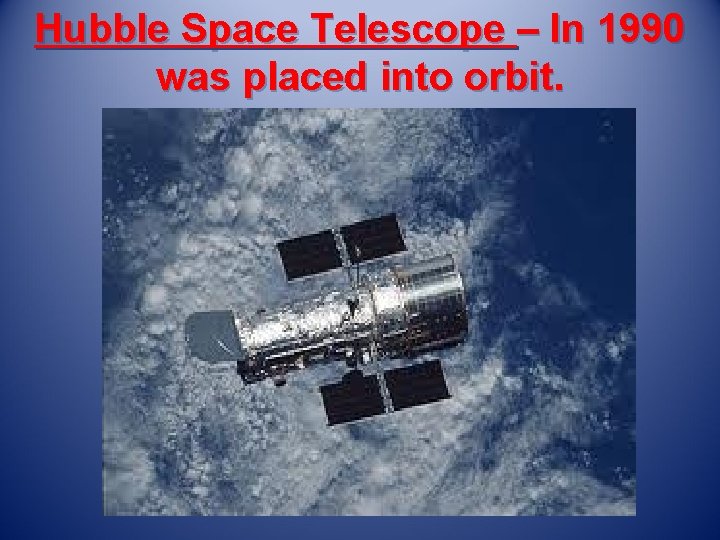
Hubble Space Telescope – In 1990 was placed into orbit.
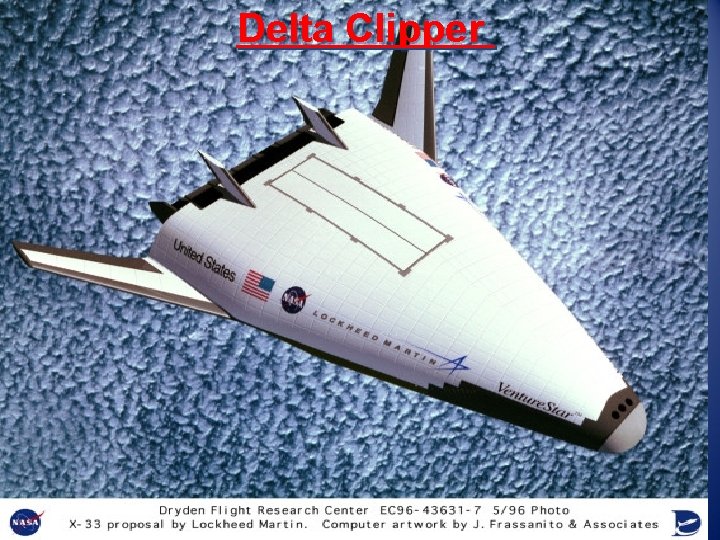
Delta Clipper
- Slides: 27