
APICULTURE PRESENTED BY DR M GAYATHRI ASSISTANT PROFESSOR
APICULTURE PRESENTED BY DR. M. GAYATHRI ASSISTANT PROFESSOR DEPARTMENT OF BOTANY BON SECOURS COLLEGEFOR WOMEN THANJAVUR
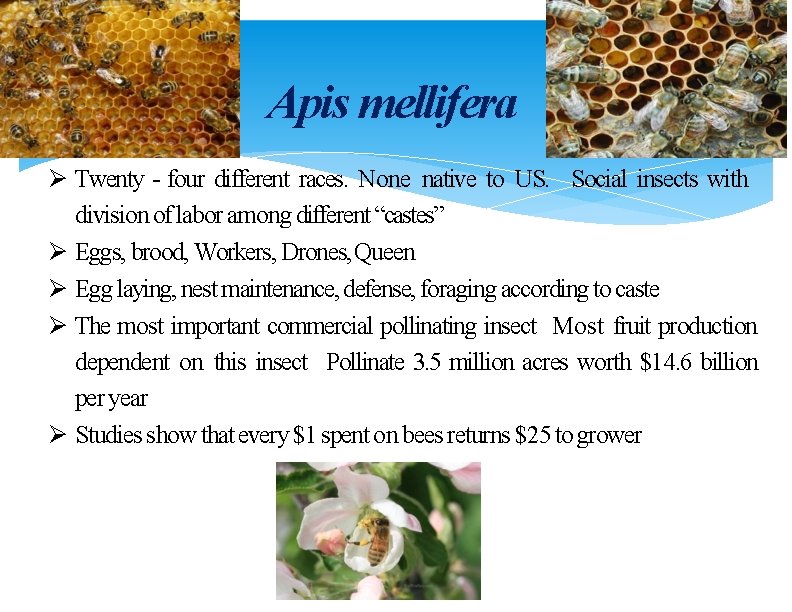
Apis mellifera Ø Twenty‐four different races. None native to US. Social insects with division of labor among different “castes” Ø Eggs, brood, Workers, Drones, Queen Ø Egg laying, nest maintenance, defense, foraging according to caste Ø The most important commercial pollinating insect Most fruit production dependent on this insect Pollinate 3. 5 million acres worth $14. 6 billion per year Ø Studies show that every $1 spent on bees returns $25 to grower
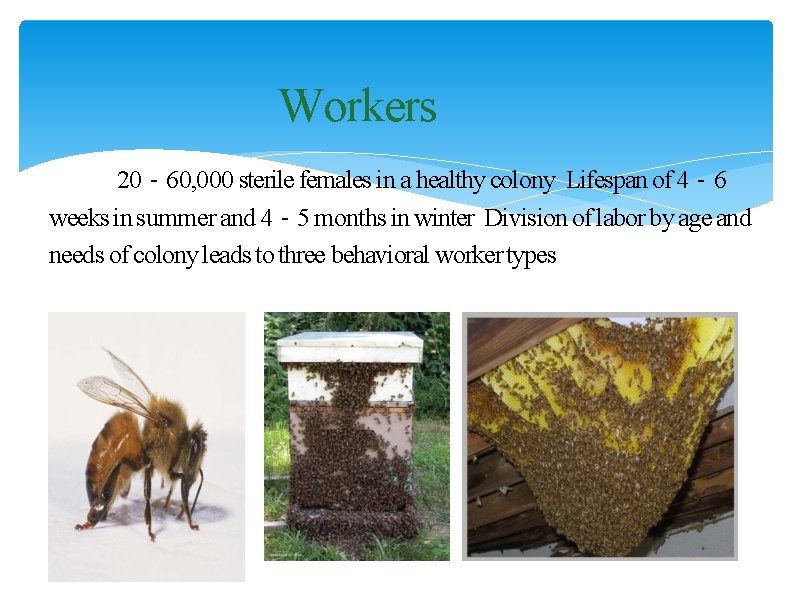
Workers 20‐ 60, 000 sterile females in a healthy colony Lifespan of 4‐ 6 weeks in summer and 4‐ 5 months in winter Division of labor by age and needs of colony leads to three behavioral worker types
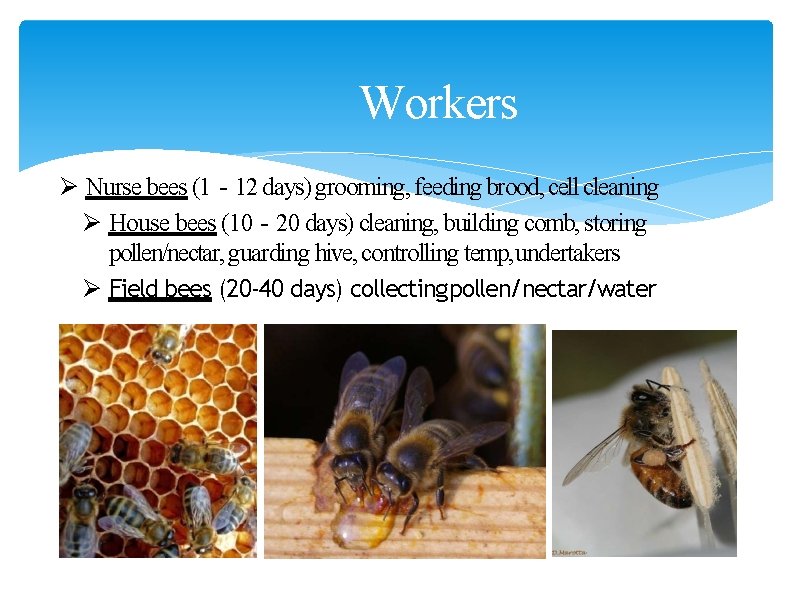
Workers Ø Nurse bees (1‐ 12 days) grooming, feeding brood, cell cleaning Ø House bees (10‐ 20 days) cleaning, building comb, storing pollen/nectar, guarding hive, controlling temp, undertakers Ø Field bees (20‐ 40 days) collecting pollen/nectar/water
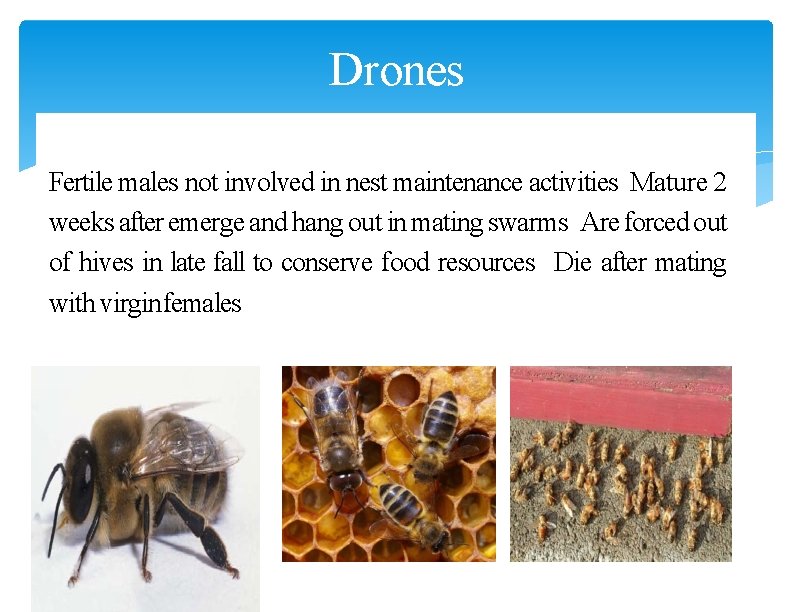
Drones Fertile males not involved in nest maintenance activities Mature 2 weeks after emerge and hang out in mating swarms Are forced out of hives in late fall to conserve food resources Die after mating with virginfemales
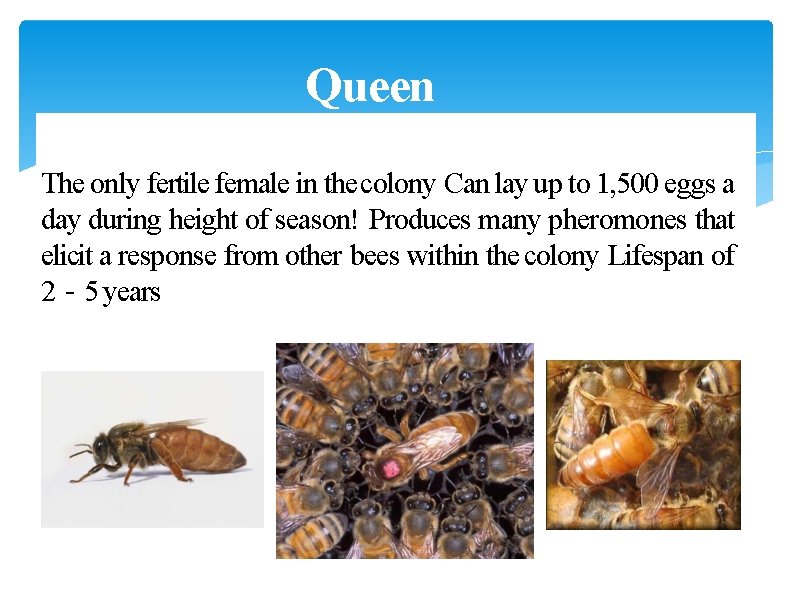
Queen The only fertile female in the colony Can lay up to 1, 500 eggs a day during height of season! Produces many pheromones that elicit a response from other bees within the colony Lifespan of 2‐ 5 years
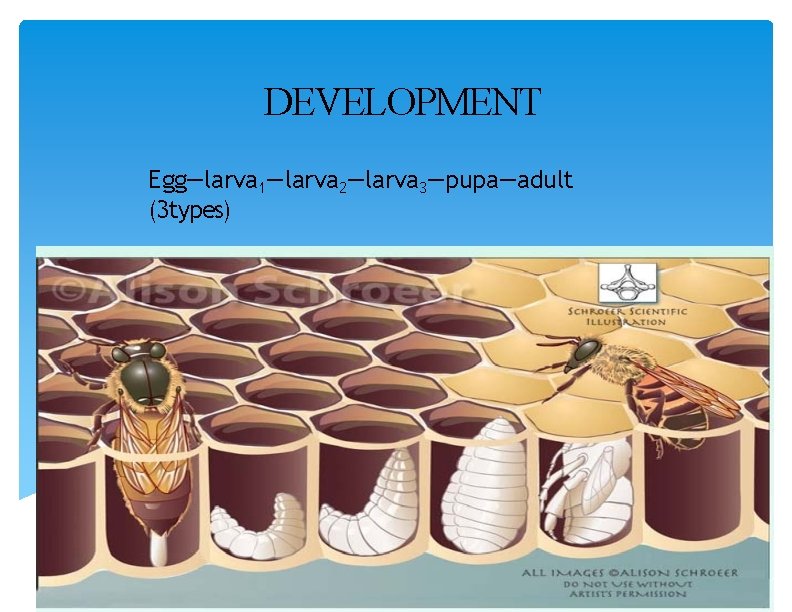
DEVELOPMENT Egg—larva 1—larva 2—larva 3—pupa—adult (3 types)
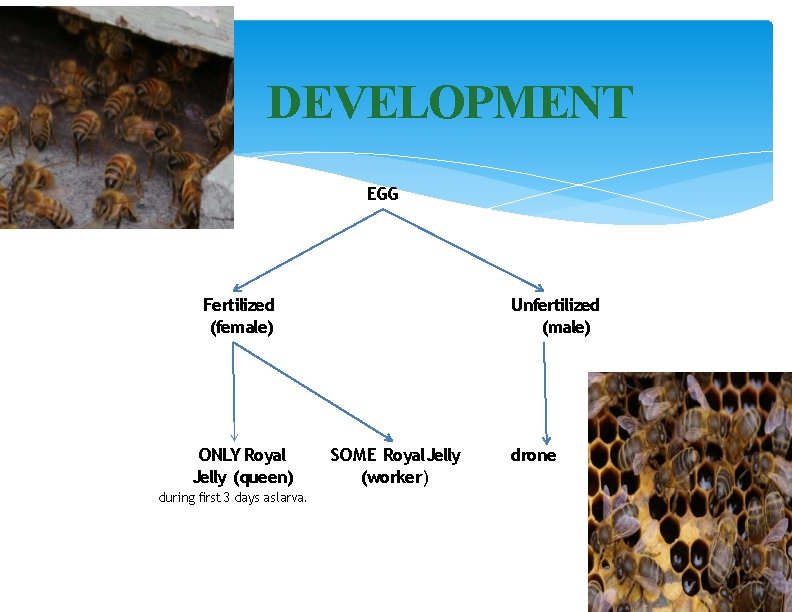
DEVELOPMENT EGG Fertilized (female) ONLY Royal Jelly (queen) during first 3 days as larva. Unfertilized (male) SOME Royal Jelly (worker) drone
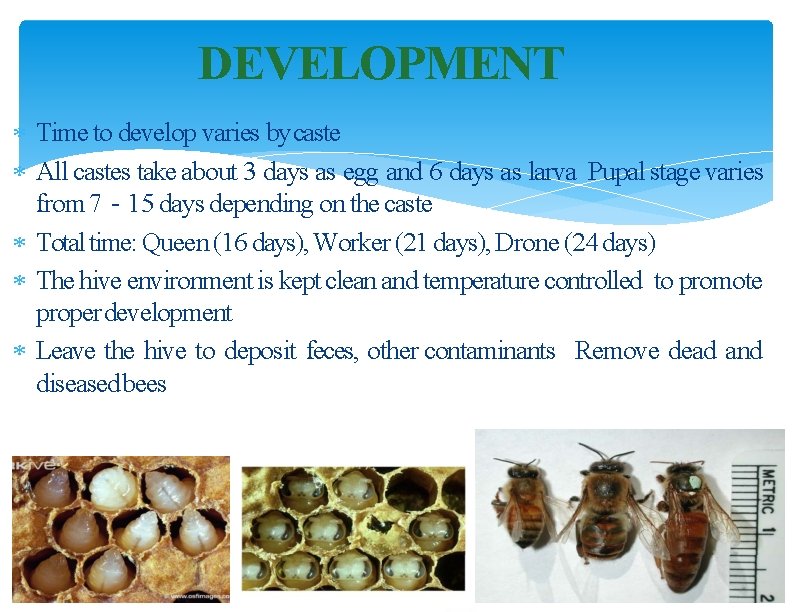
DEVELOPMENT Time to develop varies by caste All castes take about 3 days as egg and 6 days as larva Pupal stage varies from 7‐ 15 days depending on the caste Total time: Queen (16 days), Worker (21 days), Drone (24 days) The hive environment is kept clean and temperature controlled to promote proper development Leave the hive to deposit feces, other contaminants Remove dead and diseased bees
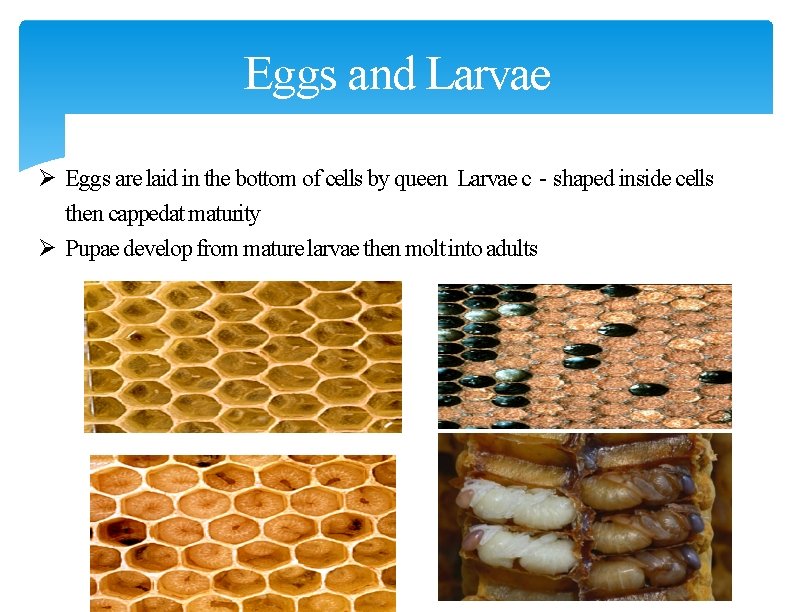
Eggs and Larvae (Brood) Ø Eggs are laid in the bottom of cells by queen Larvae c‐shaped inside cells then cappedat maturity Ø Pupae develop from mature larvae then molt into adults
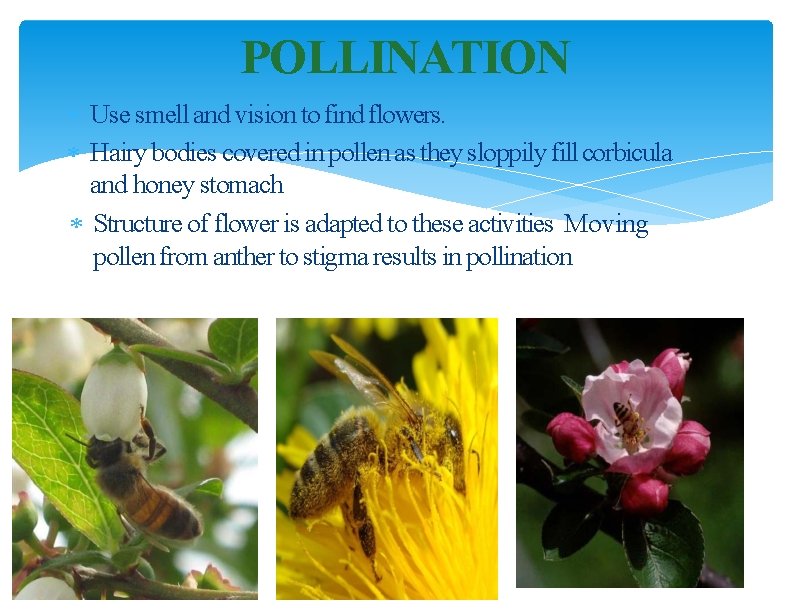
POLLINATION Use smell and vision to find flowers. Hairy bodies covered in pollen as they sloppily fill corbicula and honey stomach Structure of flower is adapted to these activities Moving pollen from anther to stigma results in pollination
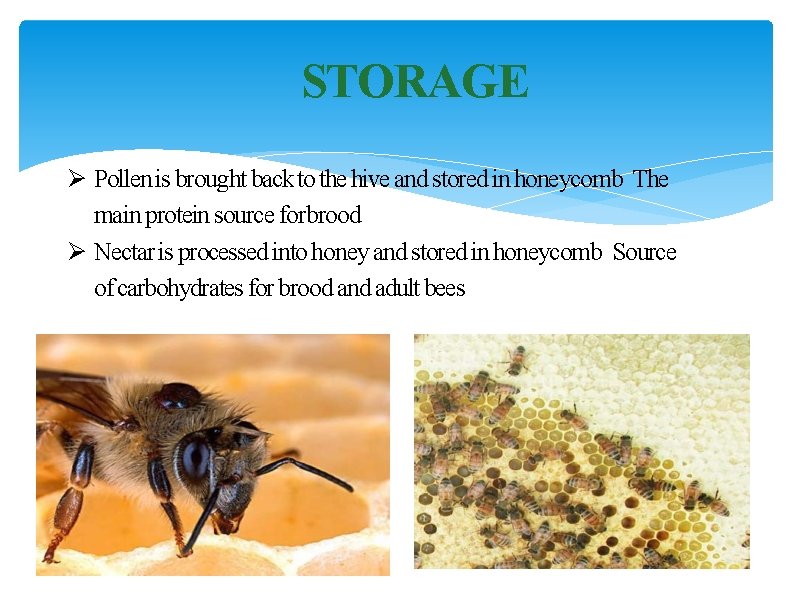
STORAGE Ø Pollen is brought back to the hive and stored in honeycomb The main protein source forbrood Ø Nectar is processed into honey and stored in honeycomb Source of carbohydrates for brood and adult bees
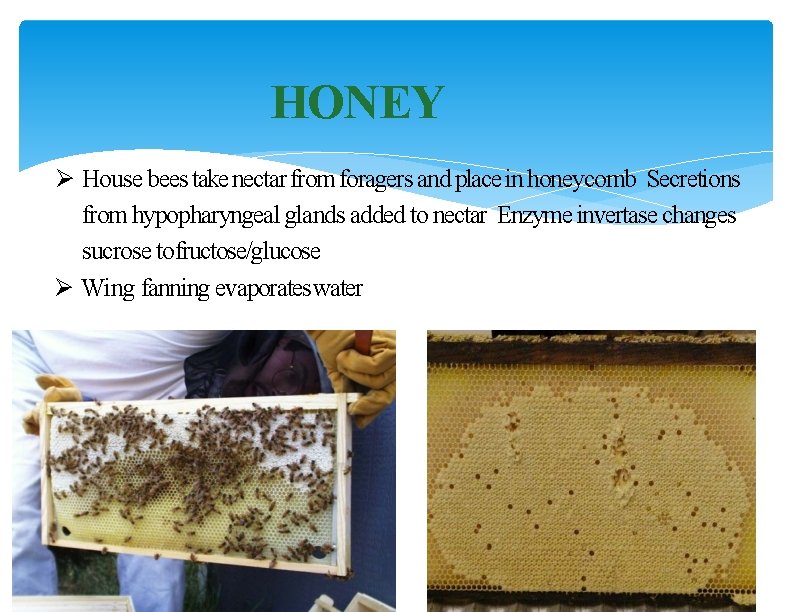
HONEY Ø House bees take nectar from foragers and place in honeycomb Secretions from hypopharyngeal glands added to nectar Enzyme invertase changes sucrose tofructose/glucose Ø Wing fanning evaporates water
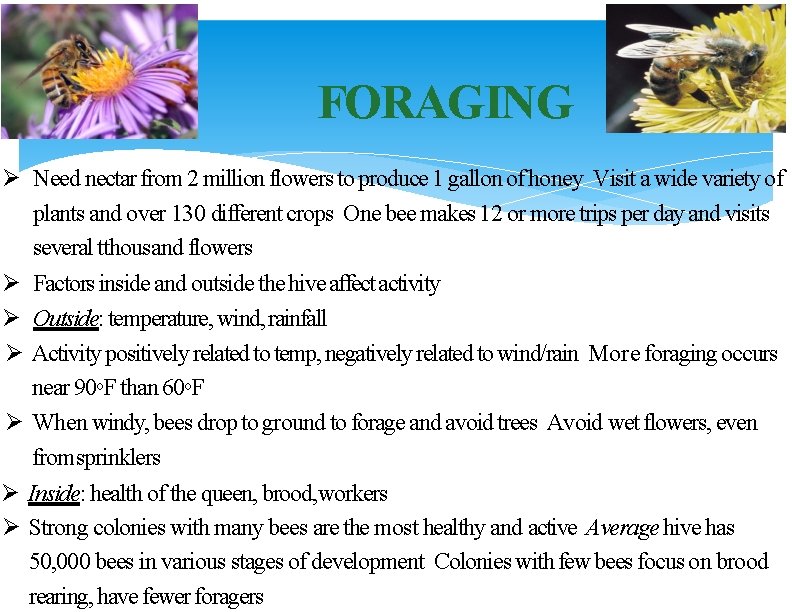
FORAGING Ø Need nectar from 2 million flowers to produce 1 gallon of honey Visit a wide variety of plants and over 130 different crops One bee makes 12 or more trips per day and visits several tthousand flowers Ø Factors inside and outside the hive affect activity Ø Outside: temperature, wind, rainfall Ø Activity positively related to temp, negatively related to wind/rain More foraging occurs near 90 o. F than 60 o. F Ø When windy, bees drop to ground to forage and avoid trees Avoid wet flowers, even fromsprinklers Ø Inside: health of the queen, brood, workers Ø Strong colonies with many bees are the most healthy and active Average hive has 50, 000 bees in various stages of development Colonies with few bees focus on brood rearing, have fewer foragers
THANK YOU
- Slides: 15