
API Standard 6 A 718 Inclusion of Additional



- Slides: 18
API Standard 6 A 718 Inclusion of Additional Alloy 718 Strength Classes Acceptance of alloy 718 at 140 ksi min yield strength Rashmi Bhavsar Global Materials Métier Manager Schlumberger Feb 2012
Agenda • • Background Inclusion of 718 -140 QC, heat treatment and microstructure Corrosion testing
Inclusion of Additional Alloy 718 Strength Classes Background • API Standard 6 A 718, 1 st and 2 nd Editions, have included only one strength class: 120 K • A 120 KSI min yield strength is what has been historically required
Inclusion of Additional Alloy 718 Strength Classes Background – Continued • API 6 A 718 at higher strength level used for other types of oil and gas production equipment, such as down-hole safety valves • The manufacturers of down-hole safety valves specify Alloy 718 with minimum yield strengths of: – 120 KSI – 135 KSI – 140 KSI
Inclusion of Additional Alloy 718 Strength Classes • Background – Continued • The 135 and 140 KSI grades typically need to be precipitation hardened at a lower temperature range than permitted by API 6 A 718, thereby rendering material heat treated in this manner out of API 6 A compliance. Or • hand picked to meet minimum yield strength – not practical
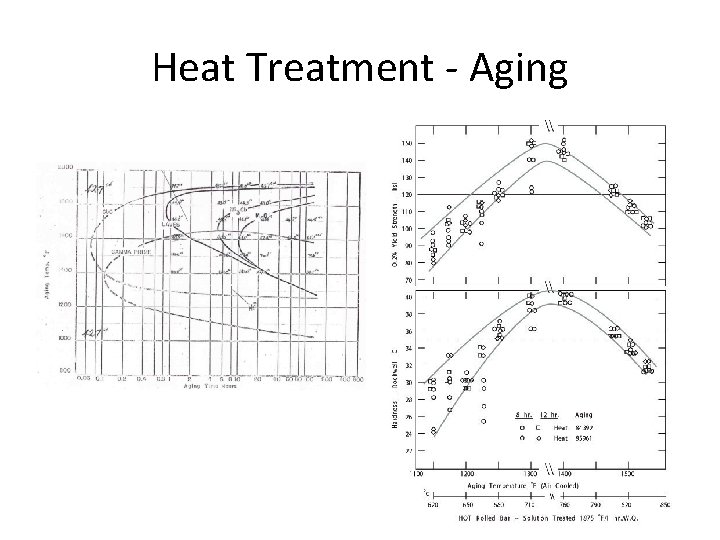
Inclusion of Additional Alloy 718 Strength Classes • The 130 KSI strength class could simply be added as another strength class without having to make any other changes. • The 135 KSI and 140 KSI strength classes cannot simply be added in this manner. • It will require aging temperature to be changed to 1400 to 1475 F instead 1425 to 1475 F for 140 grade • The yield strength range will be 140 to 150 ksi. (the current spec limits yield strength to 145 ksi max for 120 grade)
Quality Control and Specification Requirements Early failures were related to • Poor quality - several macros with inclusions • Chemistry control and Melt practices • Lower annealing temperatures • Poor microstructure - secondary phases and uneven grain size • Cold working for higher strength Hence API 6 A -718 spec was generated
Mechanical Properties
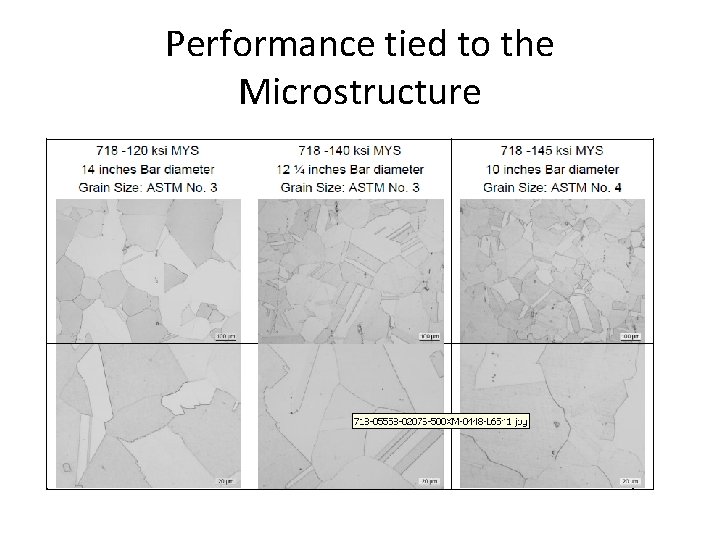
Performance tied to the Microstructure
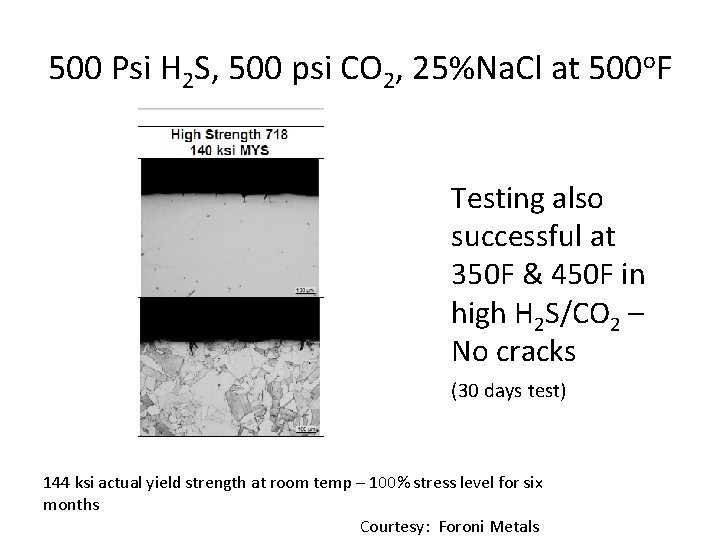
500 Psi H 2 S, 500 psi CO 2, 25%Na. Cl at 500 o. F Testing also successful at 350 F & 450 F in high H 2 S/CO 2 – No cracks (30 days test) 144 ksi actual yield strength at room temp – 100% stress level for six months Courtesy: Foroni Metals
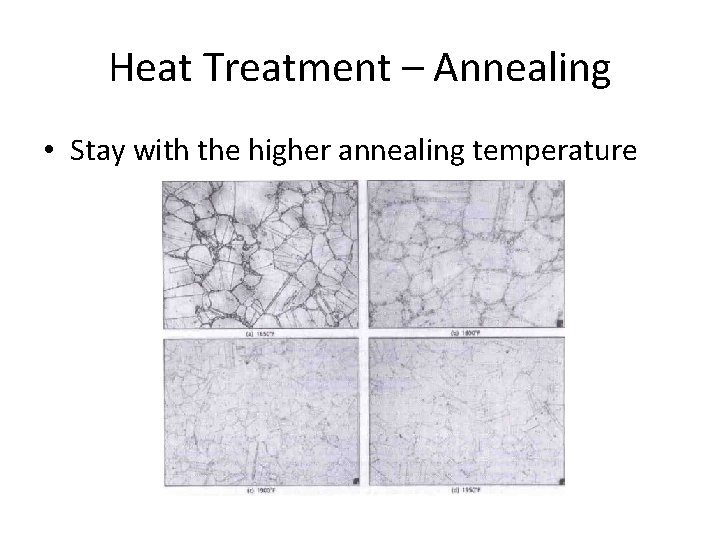
Suggested Change to Allow Higher Strength Alloy 718 Heat Treatment: • Leave the annealing temp and time as is • Change the aging temperature range from 1425 to 1475 F to 1400 to 1475 F. • Leave the aging time of 6 to 8 Hrs. The check is in the microstructure examination
Heat Treatment – Annealing • Stay with the higher annealing temperature
Heat Treatment - Aging
Suggested Change to Allow Higher Strength Alloy 718 Mechanical Properties: • Allow maximum yield strength to be 150 ksi • Keep the maximum hardness to 40 HRc. • Keep the Charpy toughness values the same for all strength levels. The check is in Charpy values
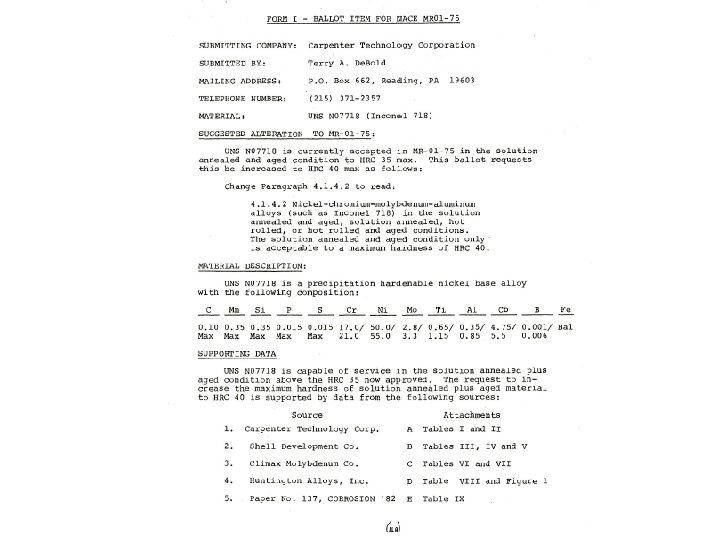
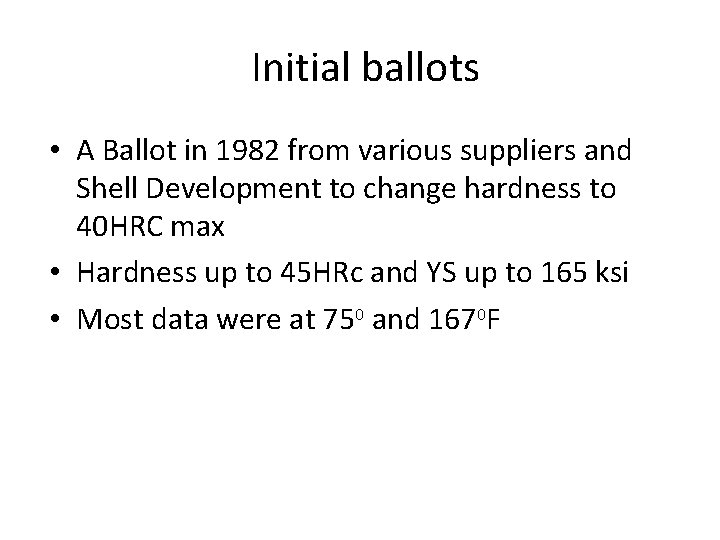
Initial ballots • A Ballot in 1982 from various suppliers and Shell Development to change hardness to 40 HRC max • Hardness up to 45 HRc and YS up to 165 ksi • Most data were at 750 and 1670 F
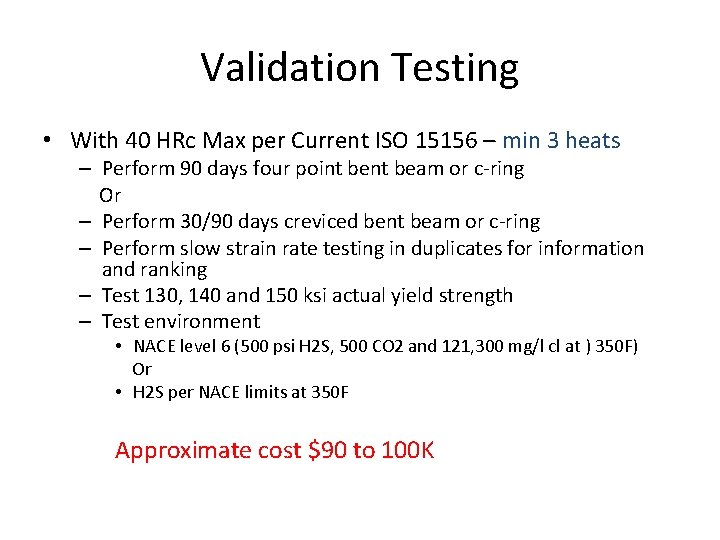
Validation Testing • With 40 HRc Max per Current ISO 15156 – min 3 heats – Perform 90 days four point beam or c-ring Or – Perform 30/90 days creviced bent beam or c-ring – Perform slow strain rate testing in duplicates for information and ranking – Test 130, 140 and 150 ksi actual yield strength – Test environment • NACE level 6 (500 psi H 2 S, 500 CO 2 and 121, 300 mg/l cl at ) 350 F) Or • H 2 S per NACE limits at 350 F Approximate cost $90 to 100 K
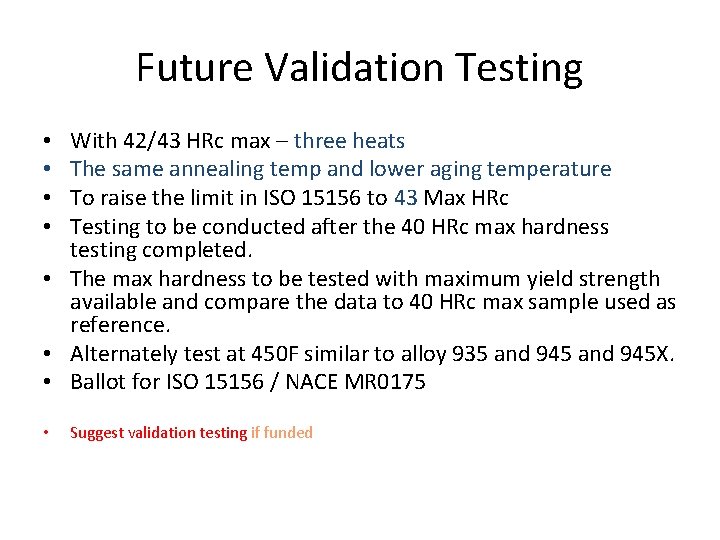
Future Validation Testing With 42/43 HRc max – three heats The same annealing temp and lower aging temperature To raise the limit in ISO 15156 to 43 Max HRc Testing to be conducted after the 40 HRc max hardness testing completed. • The max hardness to be tested with maximum yield strength available and compare the data to 40 HRc max sample used as reference. • Alternately test at 450 F similar to alloy 935 and 945 X. • Ballot for ISO 15156 / NACE MR 0175 • • • Suggest validation testing if funded