
APHG Unit 1 Review The Nature and Perspectives
- Slides: 43
APHG Unit 1 Review The Nature and Perspectives of Geography
Historical Foundations of Geography • What is geography? – A description of the Earth’s surface and the people and processes that shape its landscapes – It is a science and an art – Grandfather of all social sciences – “Geography is the stage upon which history is set” -Dr. Jeff – “Geography is where it’s at”-Chuck Norris
The Greeks • The Greeks were the first people to study Geography as a science • Classical Greek literature like the Odyssey are filled with Geographic accounts • Eratosthenes: the Father of Geography – First used the term “geography” – Determined Earth’s circumference using the angle of the sun and two points on Earth – 99. 5% accurate
The Age of Exploration • Marco Polo’s travels in the 14 th century inspired Europeans to explore the world • Cartography: the art of creating maps
The Modern Period • In 1888, the National Geographic Society was formed • Around that time, different schools of geography came about • Environmental Determinism: cultures are a direct result of where they exist – Warmer climates cause people to be lazy – Europeans were motivated, intelligent, and advanced because of the temperate climate – Prejudiced and embarrassing theory
Possibilism • Humans are not a product of their environment, but can modify the environment to meet their needs – Terraced farming – Air conditioning
Geography Today • If you want to make money in geography, go into the field of Geographical Technology • GPS: uses latitudinal and longitudinal coordinates to determine an exact location – Uses satellite technology • GIS: uses geographic information and layers it into a new map showing geographic data – Google Earth
Maps • A map is a representation of the Earth’s surface • Scale: the relationship of the size of the map to the amount of area it represents on the planet – The smaller the scale, the less detail is on the map – Large scale maps show more detail – A world map has the smallest scale
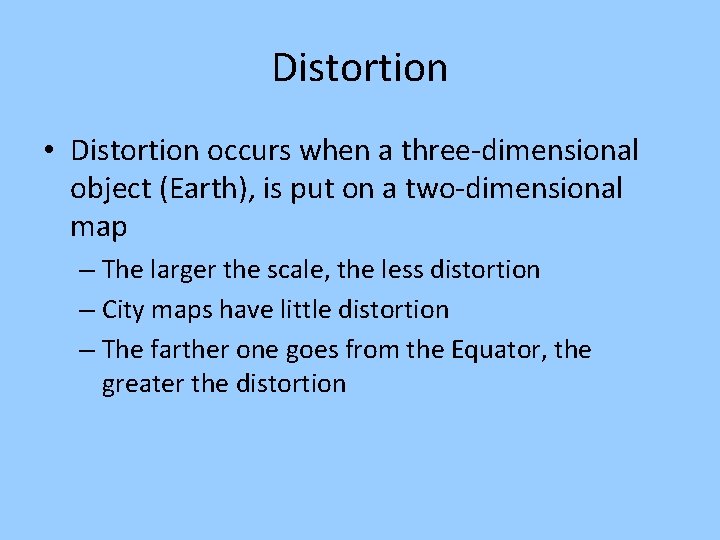
Distortion • Distortion occurs when a three-dimensional object (Earth), is put on a two-dimensional map – The larger the scale, the less distortion – City maps have little distortion – The farther one goes from the Equator, the greater the distortion
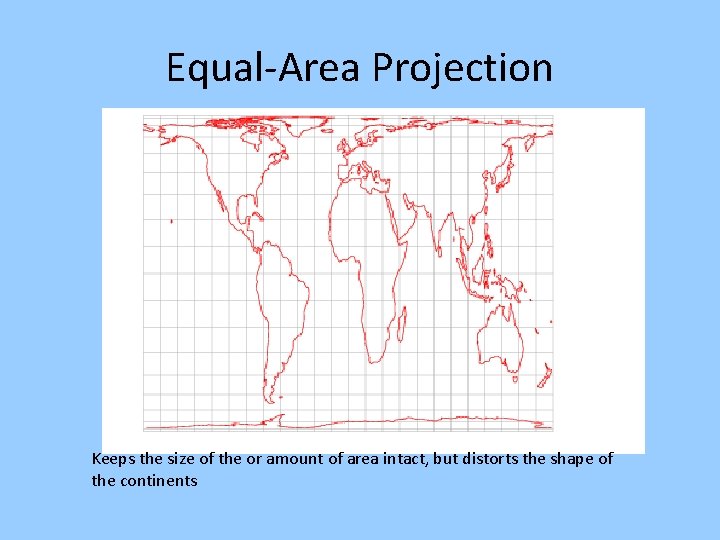
Equal-Area Projection Keeps the size of the or amount of area intact, but distorts the shape of the continents
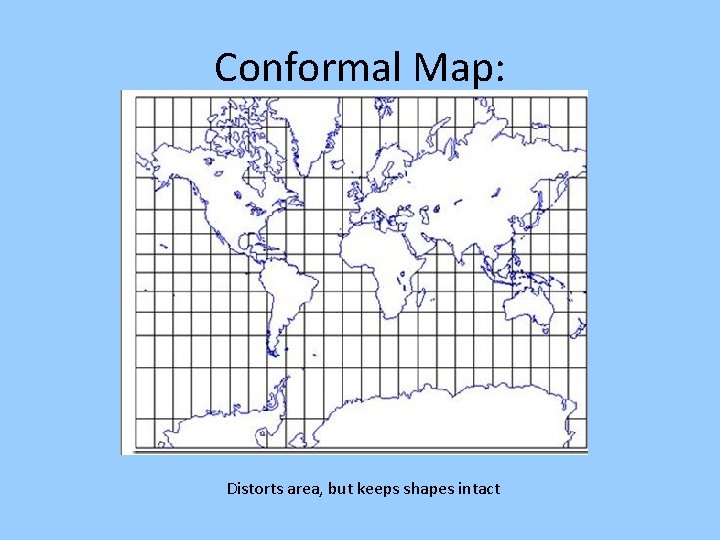
Conformal Map: Distorts area, but keeps shapes intact
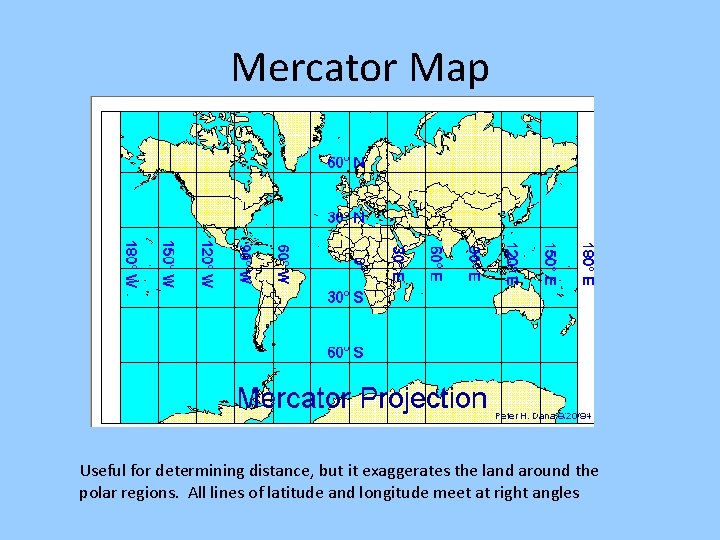
Mercator Map Useful for determining distance, but it exaggerates the land around the polar regions. All lines of latitude and longitude meet at right angles
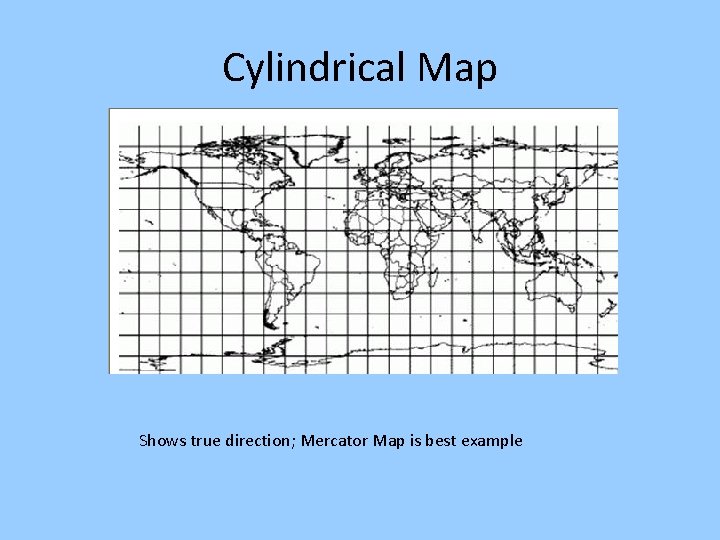
Cylindrical Map Shows true direction; Mercator Map is best example
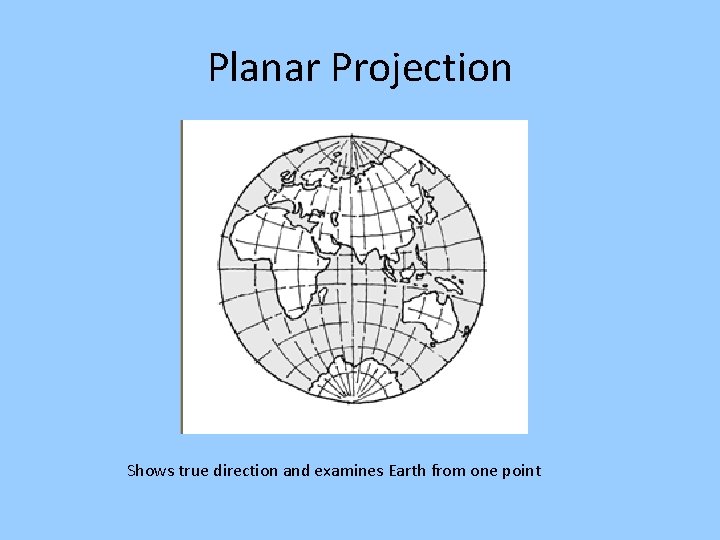
Planar Projection Shows true direction and examines Earth from one point
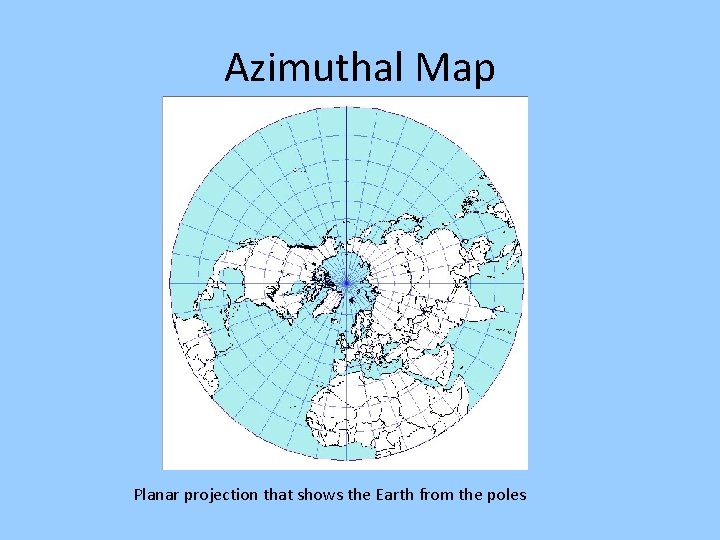
Azimuthal Map Planar projection that shows the Earth from the poles
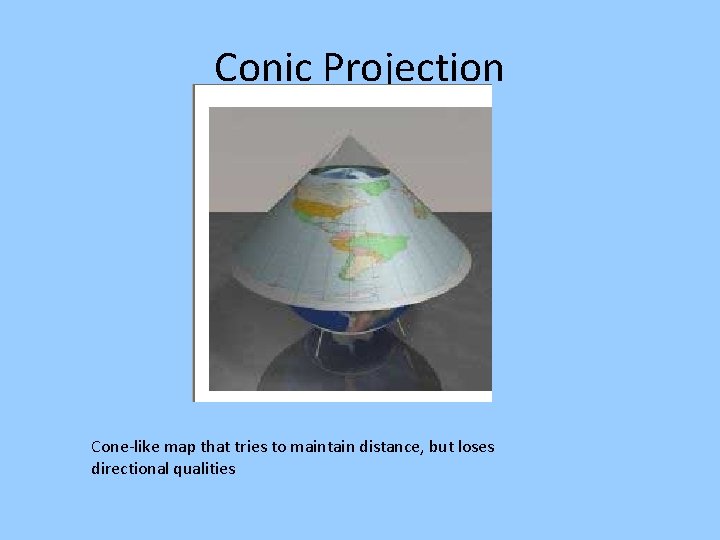
Conic Projection Cone-like map that tries to maintain distance, but loses directional qualities
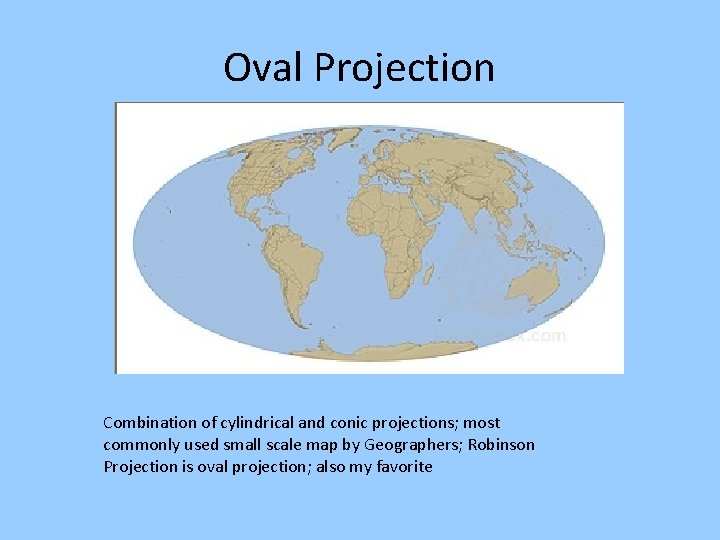
Oval Projection Combination of cylindrical and conic projections; most commonly used small scale map by Geographers; Robinson Projection is oval projection; also my favorite
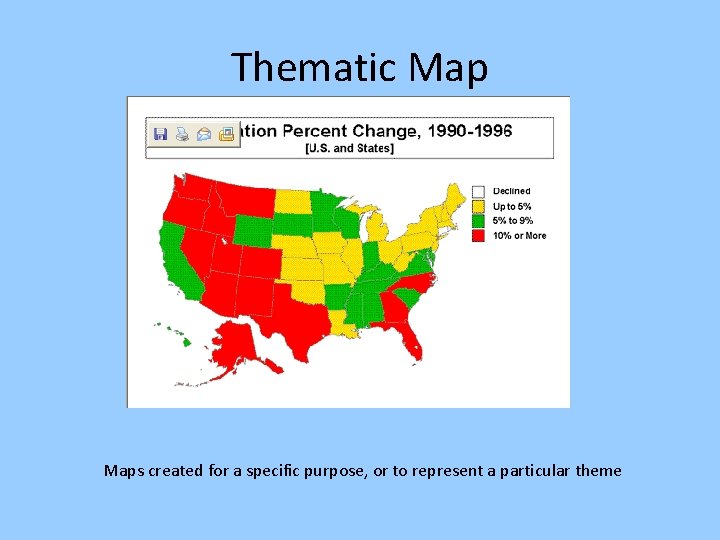
Thematic Maps created for a specific purpose, or to represent a particular theme
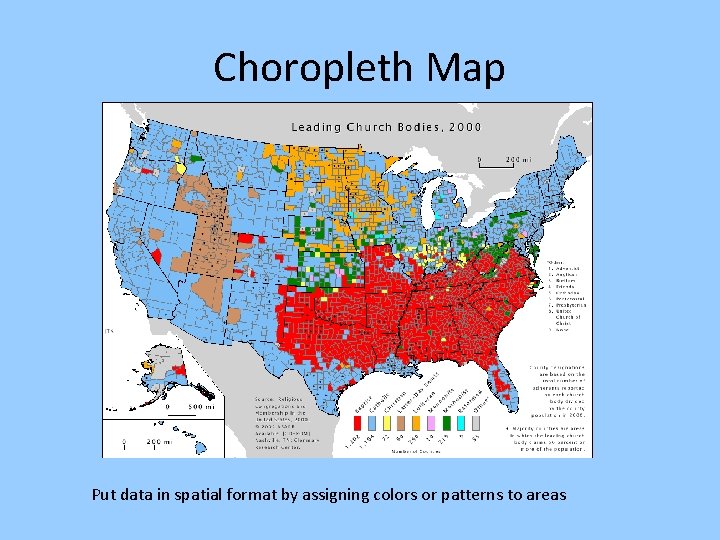
Choropleth Map Put data in spatial format by assigning colors or patterns to areas
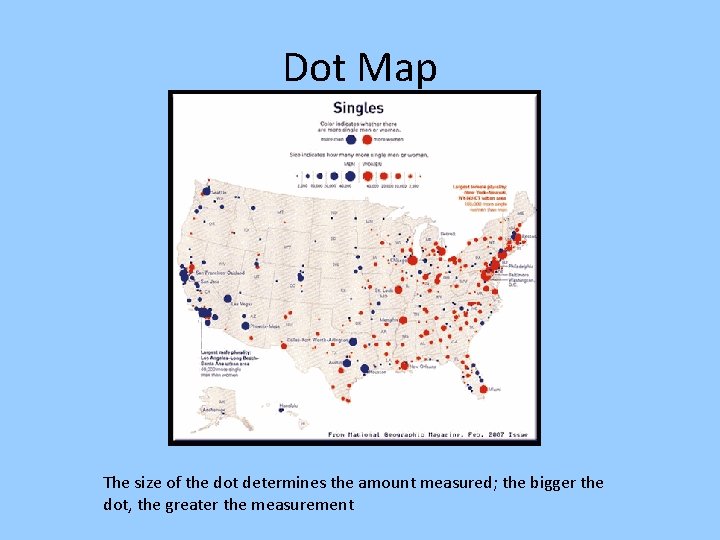
Dot Map The size of the dot determines the amount measured; the bigger the dot, the greater the measurement
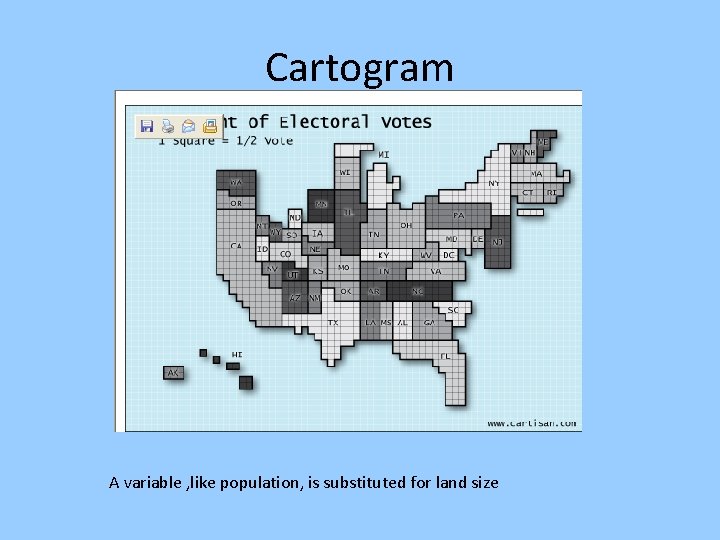
Cartogram A variable , like population, is substituted for land size
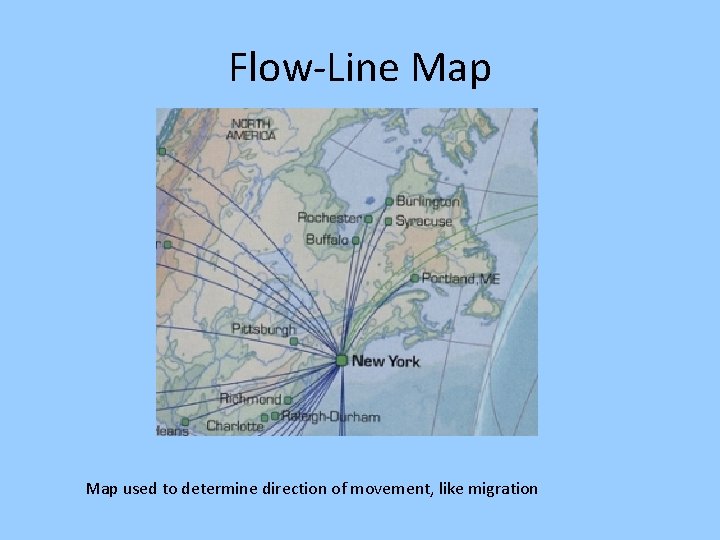
Flow-Line Map used to determine direction of movement, like migration
Toponym • Place names on maps – Quebec uses religious toponyms – Sometimes the color or the size of the writing indicates importance of the place
Five Themes of Geography • Geographers have divided the field into two subjects: Physical Geography and Human Geography – Physical Geography examines the physical features on the Earth like landforms, climate, and vegetation – Human Geography is the study of human characteristics on the landscape • What impact have humans made on the Earth’s surface?
Place • Place is the description of what and how we see and experience a certain aspect of the Earth’s surface • Place describes what a location is like – Physical characteristics include climate, landforms, and vegetation – Human characteristics include culture, cities, and other changes to the environment
Region • Region links places together using any parameter a geographer chooses • A region is an area that displays a coherent unity in terms of the government, language, or possibly the landform or situation • Regions can range in size from a single place up to a global area – Examples: Midwest, Bible Belt, Anglo-America, Europe
Formal Region • Formal Regions are those defined by governmental or administrative boundaries • Because most governments and geographers agree on the definitions, they are unlikely to be disputed • Physical regions fall under this category – Example: The Rocky Mountains, The United States, Houston
Functional Regions • Functional regions are those defined by a function • If the function ceases to exist, the region also ceases to exist • Usually centered around a point or node – The further one moves from the point, the less one will feel the influence • Distance Decay – Examples: Newspaper route, school attendance zone, radio stations, malls
Perceptual/Vernacular Regions • Vernacular regions are those loosely defined by people's perception or feelings • Example: The South, Midwest, Middle East
Location • Location answers the question, “where? ” • Absolute location uses latitude and longitude or a street address to determine exact location • Relative location gives location in reference to another location – Described by landmarks, time, direction or distance from one place to another
Site and Situation • Site refers to the internal, physical characteristics of a place that are unlikely to change • Situation is defined as the location of a place relative to its surroundings and other places – Factors included in an area's situation include the accessibility of the location, the extent of a place's connections with another, and how close an area may be to raw materials if they are not located specifically on the site
Latitude and Longitude • Latitude lines are parallel lines that run east-west on the surface of the Earth – They are measured in degrees North or South of the Equator – When giving coordinates, latitude is used first • Longitude lines are parallel lines that run north-south on the surface of the Earth – They are measured in degrees East or West of the Prime Meridian – The Prime Meridian runs through Greenwich, England
Human-Environmental Interaction • Human-Environmental Interaction describes how people modify or alter the environment to meet their needs • Humans usually do not live in the five toos: too hot, too cold, too wet, too dry, or two hilly – Examples: terraced farming, housing, roads, cities, air conditioning, dams
Movement • Movement, or spatial interaction, looks at how people, goods, and ideas move across the Earth’s surface – Migration: people moving – Trade: goods moving – Ideas: diffusion or communication
Diffusion • Diffusion is the movement of any characteristic – Diffusion relates to the movement theme of Geography • A hearth is where the characteristic began
Relocation Diffusion • Relocation Diffusion is the physical spread of cultures, ideas, and diseases through people • Usually occurs with migration – Examples: Bubonic Plague, colonization of North America, religion and language in South America • Migration diffusion: a particular type of relocation diffusion associated with the movement of people
Expansion Diffusion • Expansion Diffusion is the spread of a characteristic from a central node or hearth through various means • Hierarchical Diffusion: the idea that a phenomenon spreads by the social elite, and then filters down through the masses – Example: Fashion, AIDS • Reverse Hierarchical Diffusion: when a phenomenon spreads first through the masses, and works up to the social elite – Example: Nascar, Walmart, Rap Music
Contagious Diffusion • Contagious Diffusion is a type of expansion diffusion usually associated with a disease • The phenomenon spreads without regard to race, social status, or family status – Examples: the plague, or the Internet – AIDS is not contagious diffusion
Stimulus Diffusion • Stimulus Diffusion is a type of expansion diffusion where part of an idea spreads and creates an innovative product – Example: technology, Mc. Donald’s in India
Distribution • Everything on the Earth’s surface has a physical location and is organized in space • This is called distribution • The three types of distribution are: density, concentration, and pattern
Density • Density is how often an object occurs within a given area or space • Population Density: looks at how many people occupy a given amount of space • Physiological Density: refers to the number of people divided by the arable (farmable) land • Arithmetic Density: calculates the density using all land in a given area
Concentration • Concentration refers to the proximity of a particular phenomenon over the area in which it is spread • To rank concentration, a person must count the same number of objects in different areas – Objects are considered clustered or agglomerated if they are close together – Objects are considered dispersed or scattered if they are spread out
Pattern • Pattern relates to how objects are organized in their space • Patterns are described using geometric shapes – Hexagon is the best shape • Linear pattern: the objects are along a single line – Example: gas stations along a highway • Centralized: the objects are clustered together – Example: Ethnic neighborhoods, flower district • Random Distribution: lack of pattern on the landscape