
APGAR Test Child Development What is the APGAR
- Slides: 12
APGAR Test Child Development
What is the APGAR Test? • The APGAR test is an assessment given to newborns to assess how they are doing at birth. • This determines if they are ready for the world or if they may need some additional medical assistance. It is given by the doctor at 1 minute and 5 minutes after birth. • The test was developed by an anesthesiologist Virginia Apgar in 1952.
What does APGAR stand for? • • • A – appearance P – Pulse G – Grimace A – Activity R – Respiration
Why is it used? • The 1 minute determines how the baby tolerated birth. • The 5 minute score determines how baby is doing outside the womb.
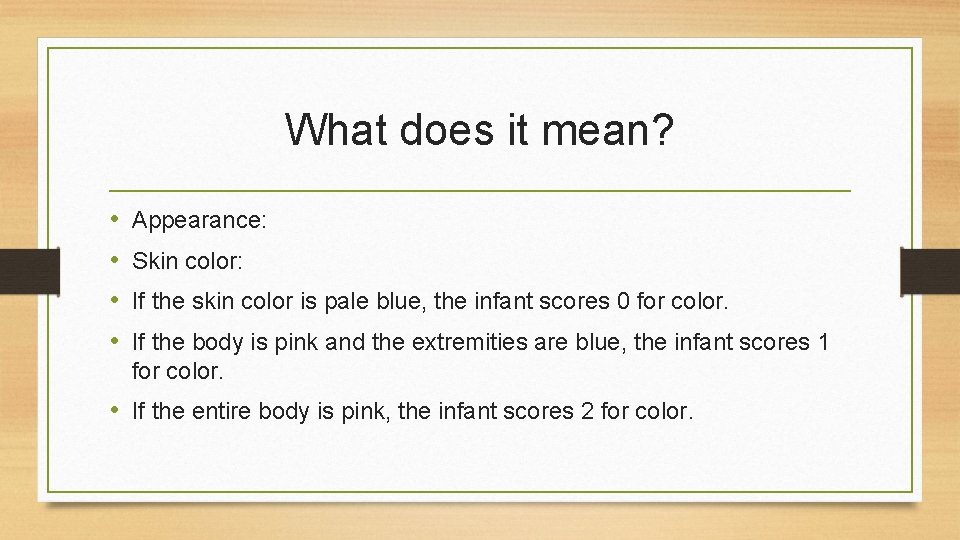
What does it mean? • • Appearance: Skin color: If the skin color is pale blue, the infant scores 0 for color. If the body is pink and the extremities are blue, the infant scores 1 for color. • If the entire body is pink, the infant scores 2 for color.
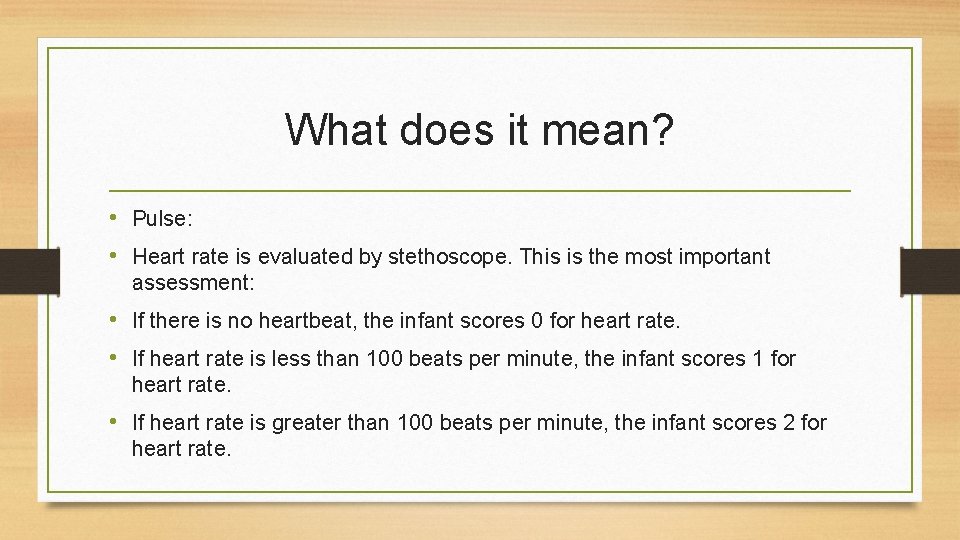
What does it mean? • Pulse: • Heart rate is evaluated by stethoscope. This is the most important assessment: • If there is no heartbeat, the infant scores 0 for heart rate. • If heart rate is less than 100 beats per minute, the infant scores 1 for heart rate. • If heart rate is greater than 100 beats per minute, the infant scores 2 for heart rate.
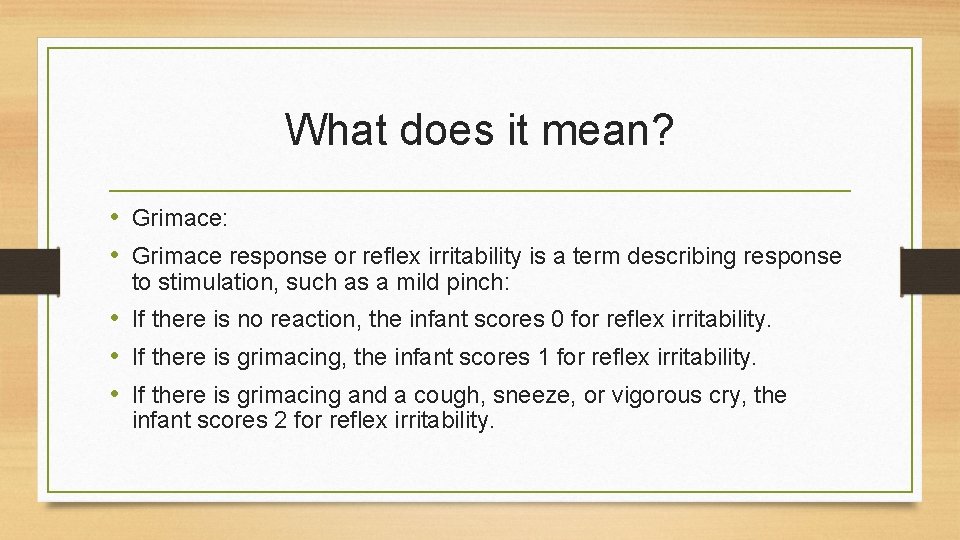
What does it mean? • Grimace: • Grimace response or reflex irritability is a term describing response to stimulation, such as a mild pinch: • If there is no reaction, the infant scores 0 for reflex irritability. • If there is grimacing, the infant scores 1 for reflex irritability. • If there is grimacing and a cough, sneeze, or vigorous cry, the infant scores 2 for reflex irritability.
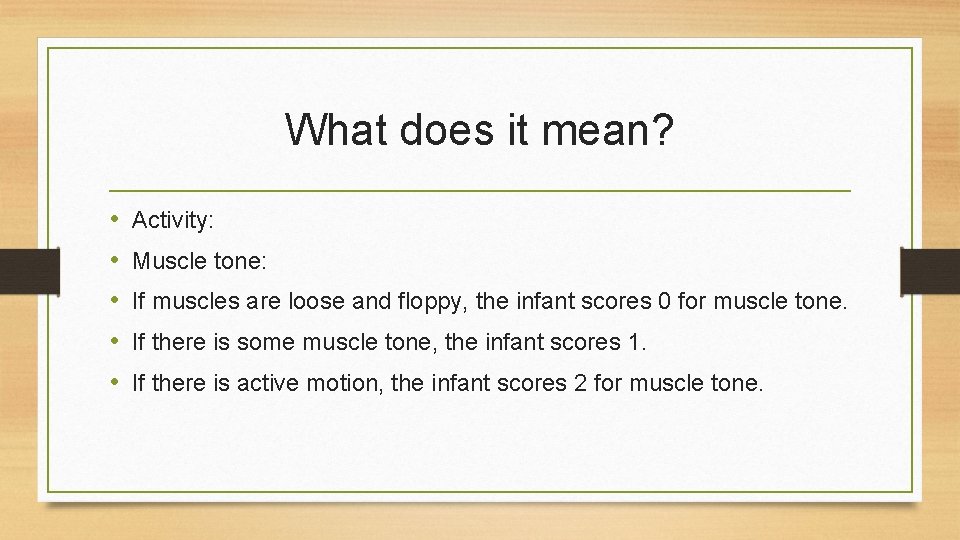
What does it mean? • • • Activity: Muscle tone: If muscles are loose and floppy, the infant scores 0 for muscle tone. If there is some muscle tone, the infant scores 1. If there is active motion, the infant scores 2 for muscle tone.
What does it mean? • • Respiration: Breathing effort: If the infant is not breathing, the respiratory score is 0. If the respirations are slow or irregular, the infant scores 1 for respiratory effort. • If the infant cries well, the respiratory score is 2.
How is it scored and what does it mean? • Each category is scored with 0, 1, or 2, depending on the observed condition. • The Apgar score is based on a total score of 1 to 10. The higher the score, the better the baby is doing after birth. • A score of 7, 8, or 9 is normal and is a sign that the newborn is in good health. A score of 10 is very unusual, since almost all newborns lose 1 point for blue hands and feet, which is normal for after birth.
What does it mean? Cont. • Any score lower than 7 is a sign that the baby needs medical attention. The lower the score, the more help the baby needs to adjust outside the mother's womb. • • • Most of the time a low Apgar score is caused by: Difficult birth C-section Fluid in the baby's airway A baby with a low Apgar score may need: Oxygen and clearing out the airway to help with breathing Physical stimulation to get the heart beating at a healthy rate Most of the time, a low score at 1 minute is near-normal by 5 minutes. A lower Apgar score does not mean a child will have serious or long-term health problems. The Apgar score is not designed to predict the future health of the child.
What does it mean cont. • • A baby with a low Apgar score may need: Oxygen and clearing out the airway to help with breathing Physical stimulation to get the heart beating at a healthy rate Most of the time, a low score at 1 minute is near-normal by 5 minutes. • A lower Apgar score does not mean a child will have serious or long -term health problems. The Apgar score is not designed to predict the future health of the child.