
APES Evolution and Biodiversity Chapter 4 I Understanding
APES: Evolution and Biodiversity Chapter 4
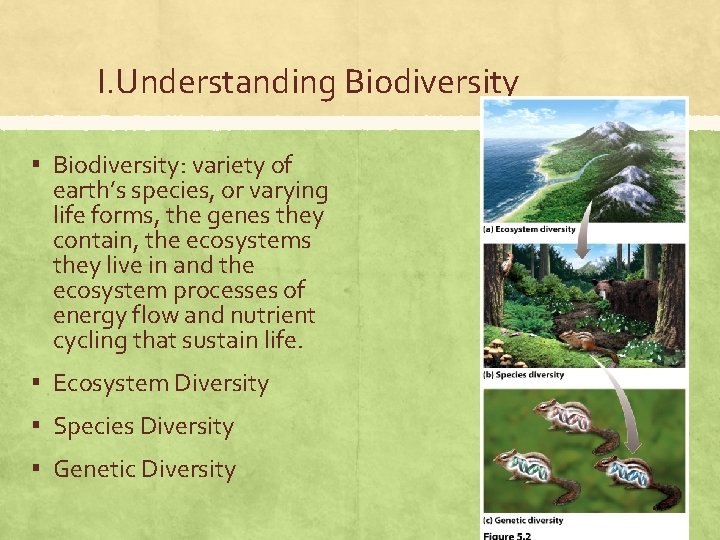
I. Understanding Biodiversity ▪ Biodiversity: variety of earth’s species, or varying life forms, the genes they contain, the ecosystems they live in and the ecosystem processes of energy flow and nutrient cycling that sustain life. ▪ Ecosystem Diversity ▪ Species Diversity ▪ Genetic Diversity
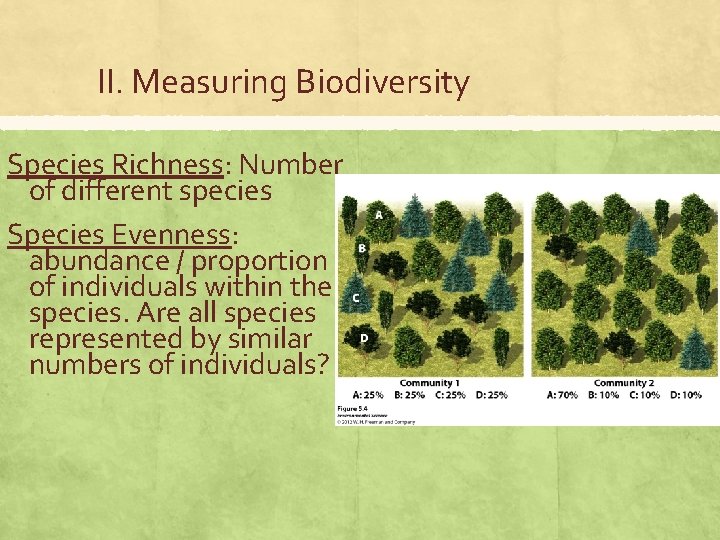
II. Measuring Biodiversity Species Richness: Number of different species Species Evenness: abundance / proportion of individuals within the species. Are all species represented by similar numbers of individuals?
▪ Species Richness Influenced by many factors ▪ Latitude: richness declines as we move from equator toward North or South Pole. ▪ Time: Longer a habitat exists, the more colonization and speciation ▪ Theory of Island Biogeography: Influence of SIZE of habitat an d DISTANCE ▪ D: MediaLITE_15 ePower. Lectureschapter 7Animationsspe cies_equilibrium. html ▪ Conservation: Should we establish several small reserves or a single large reserve?
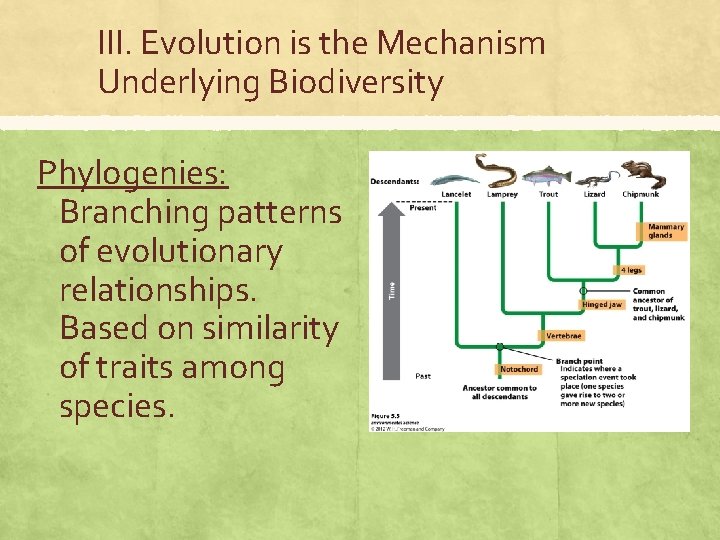
III. Evolution is the Mechanism Underlying Biodiversity Phylogenies: Branching patterns of evolutionary relationships. Based on similarity of traits among species.
▪ Evolution: Change in genetic composition of a population over time ▪ population: all individuals of the same species occupying the same area. ▪ gene: unit of heritable information -usually associated (at the molecular level) with a specific region located on the chromosome. ▪ allele: - one of two or more slightly different forms, or "variants" of a given gene. ▪ genotype: a selection of the genes that make up an individual. ▪ phenotype: the consequence(s) of all the allelic interactions that give rise to a visibly determinable "type".
▪ gene pool: all the genotypes within a population. ▪ Mutation: mistake in copying of genetic code; if mutation in sex cells it is inherited. ▪ Recombination: during cell division part of one chromosome breaks off and attaches to another, which leads to new gene combinations and thus genetic diversity ▪ Evolution by Artificial Selection: Breeding dogs, horses, pea plants ▪ Unintended consequence of agricultural breeding is pesticide/herbicide resistance
IV. Evolution by Natural Selection ▪ Biological Evolution: the process whereby earth’s life changes over time through changes in genetic characteristics of populations. All species descended from earlier, ancestral species. ▪ Proposed by Charles Darwin-On the Origin of Species by Means of Natural Selection. Change in populations (not individuals) genetic makeup over successive generations. Major driving force of adaptation
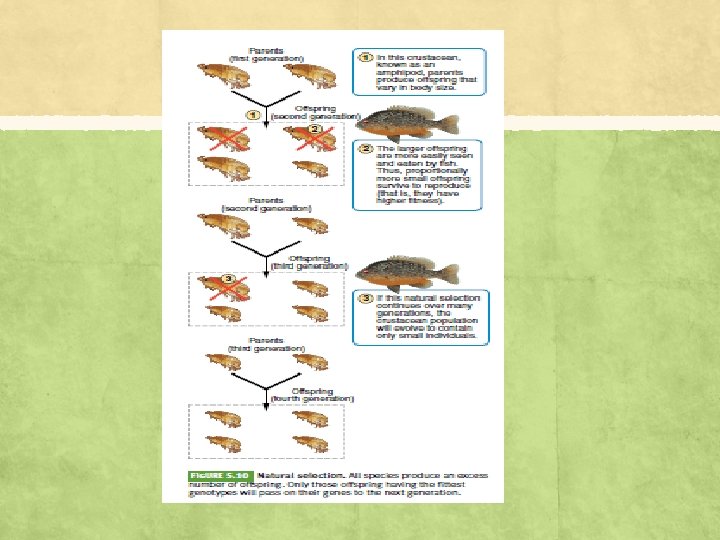
Darwin’s Theory ▪ ▪ Individuals produce an excess of offspring Not all offspring can survive Individual differ in their traits (Genetic Variability ) Differences in traits can be passed from parent – offspring (differential reproduction) ▪ Natural Selection: environmental conditions favor some individuals over others ▪ Fitness: Ability to survive and reproduce ▪ Adaptation/Adaptive Traits: any heritable trait that improves the ability of an individual organism to survive and to reproduce at a higher rate than other individuals in a population under prevailing environmental conditions.

▪ Differential reproduction: individuals with the trait are able to survive and reproduce at a higher rate than other individuals in the population ▪ Natural Selection at work: Genetic Resistance=ability of one or more organisms in a population to tolerate a chemical designed to kill it. Antibiotic Resistance/Pesticide Resistance ▪ Limitations to adaptation through natural selection ▪ Change in enviro condition can lead to adaptation only for genetic traits already present in a population’s gene pool or for traits resulting from mutations, which occur randomly ▪ Ability to adapt limited by reproductive capacity ▪ Natural Selection acts on individuals but occurs in populations
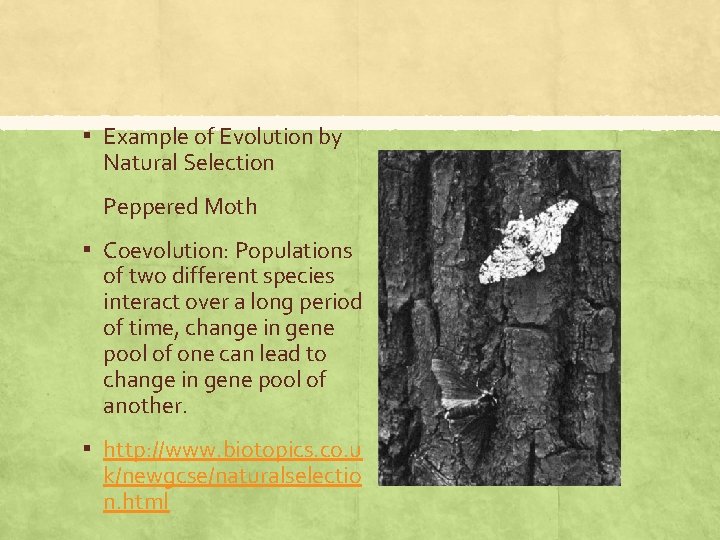
▪ Example of Evolution by Natural Selection Peppered Moth ▪ Coevolution: Populations of two different species interact over a long period of time, change in gene pool of one can lead to change in gene pool of another. ▪ http: //www. biotopics. co. u k/newgcse/naturalselectio n. html
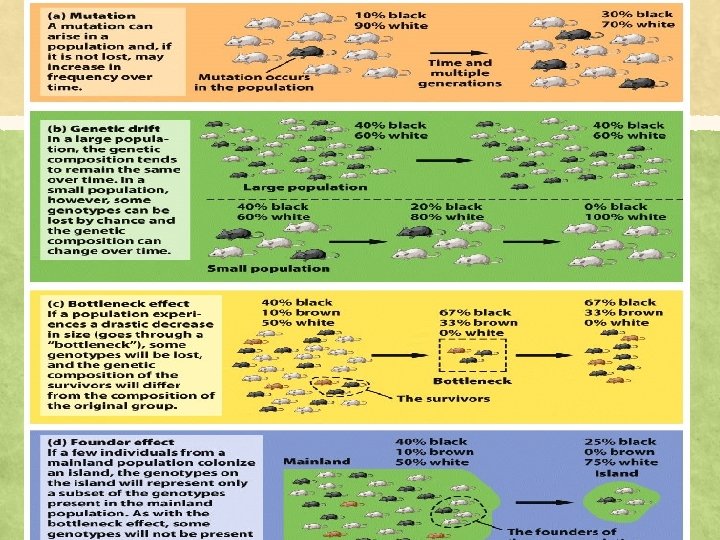
V. Evolution by Random Processes ▪ Genetic Drift: Change in allele frequency in a population due to random sampling. Some organisms, by chance, leave behind more offspring ▪ genetic drift with marbles ▪ Population Bottleneck: an evolutionary event in which a significant percentage of a population or species is killed or otherwise prevented from reproducing; some genotypes will be lost and genetic composition of survivors will differ from original group
Founder Effect ▪ The founder effect is a special case of a population bottleneck, occurring when a small group in a population splinters off from the original population and forms a new one, taking with it only limited alleles from the original population
Summary ▪ Earth’s biodiversity is the product of evolution, a change in the genetic composition of a population over time ▪ Evolution below the species level is microevolution-variety of apples or potatoes ▪ Genetic changes that give rise to new genera, families, classes in macroevolution ▪ Extinction and speciation are what leads to biodiversity
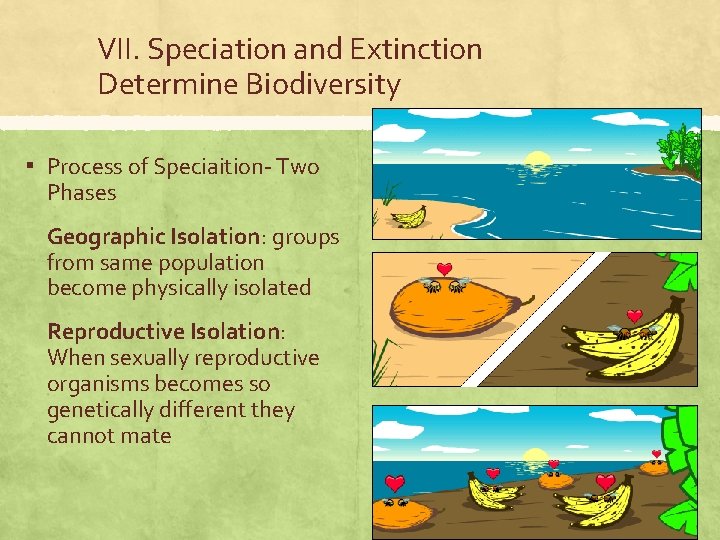
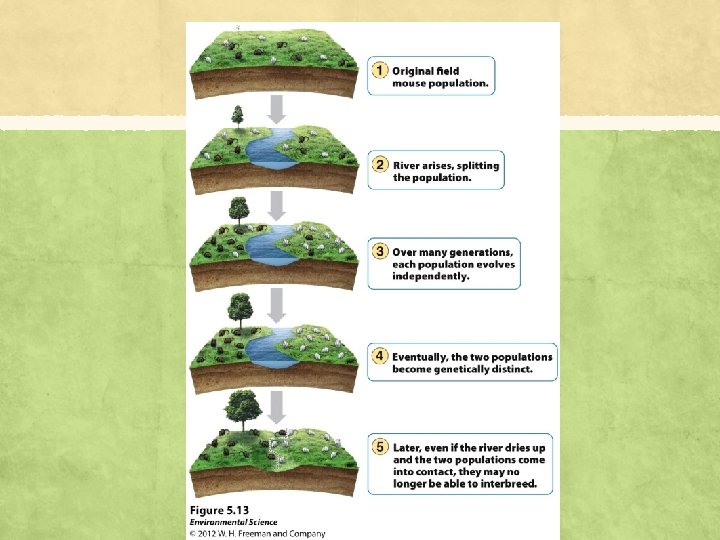
VII. Speciation and Extinction Determine Biodiversity ▪ Process of Speciaition- Two Phases Geographic Isolation: groups from same population become physically isolated Reproductive Isolation: When sexually reproductive organisms becomes so genetically different they cannot mate
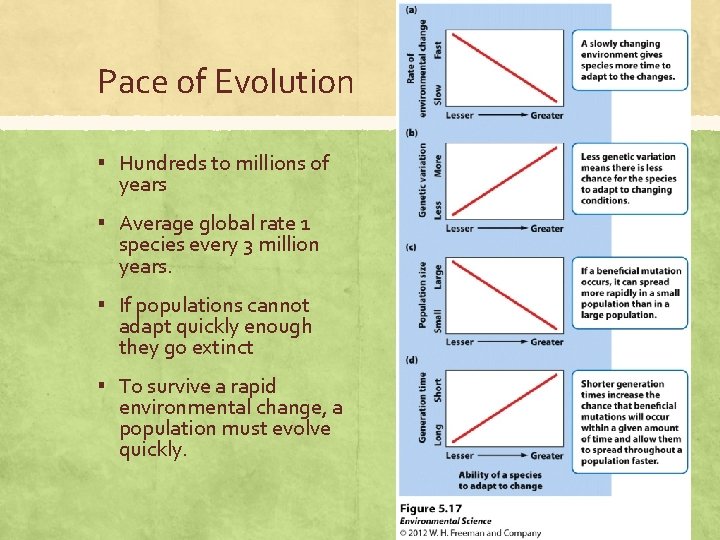
Pace of Evolution ▪ Hundreds to millions of years ▪ Average global rate 1 species every 3 million years. ▪ If populations cannot adapt quickly enough they go extinct ▪ To survive a rapid environmental change, a population must evolve quickly.
VII. What Role Do Species Play in an Ecosystem? ▪ Ecological Niche: role of an organism in ecosystem; its way of life ▪ Niche includes adaptations acquired through evolution, range of tolerance, types and amounts of resources the species uses and interactions with other organisms. Competition limits niche ▪ Limits to Adaptation-ability to adapt limited to gene pool and how fast it can reproduce.
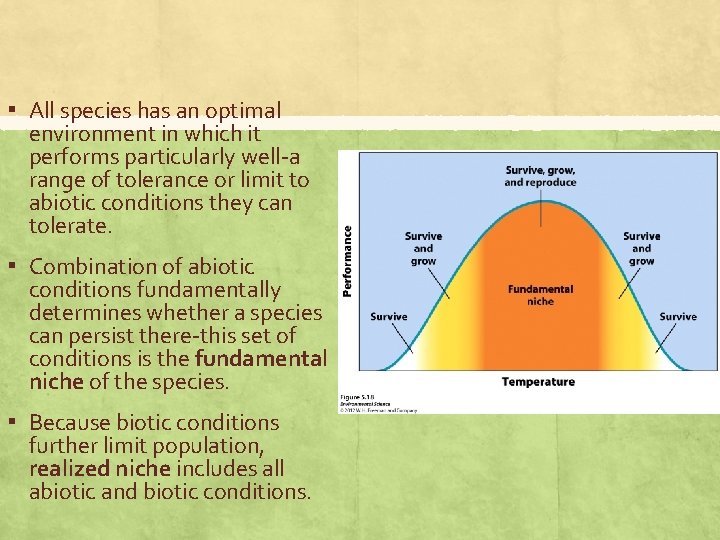
▪ All species has an optimal environment in which it performs particularly well-a range of tolerance or limit to abiotic conditions they can tolerate. ▪ Combination of abiotic conditions fundamentally determines whether a species can persist there-this set of conditions is the fundamental niche of the species. ▪ Because biotic conditions further limit population, realized niche includes all abiotic and biotic conditions.
▪ A generalist species: Broad Niches able to thrive in a wide variety of environmental conditions and can make use of a variety of different resources ▪ A specialist species: Narrow Niches can only thrive in a narrow range of environmental conditions or has a limited diet. Often prone to extinction. ▪ Most organisms do not all fit neatly into either group
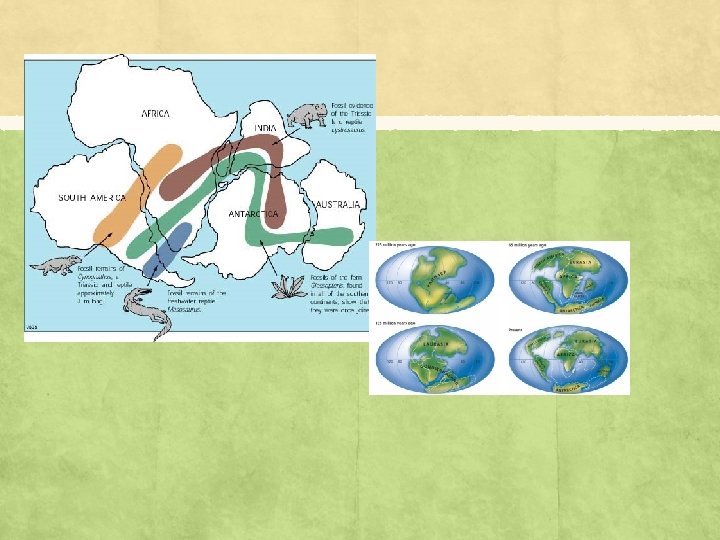
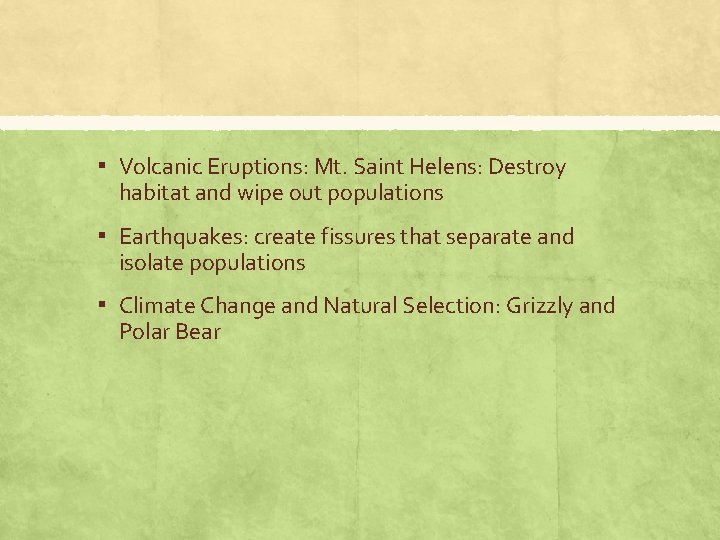
IX. Environmental Changes-Physical Evolution ▪ Movement of tectonic plates has determined location of continents and ocean basins ▪ Location/latitude of continents determines climate and thus where plants and animals live ▪ Movement of continents has allowed species to move, adapt to new environments and form new species. ▪ Movement of tectonic plates has allowed species to move, adapt to new climates and form new species
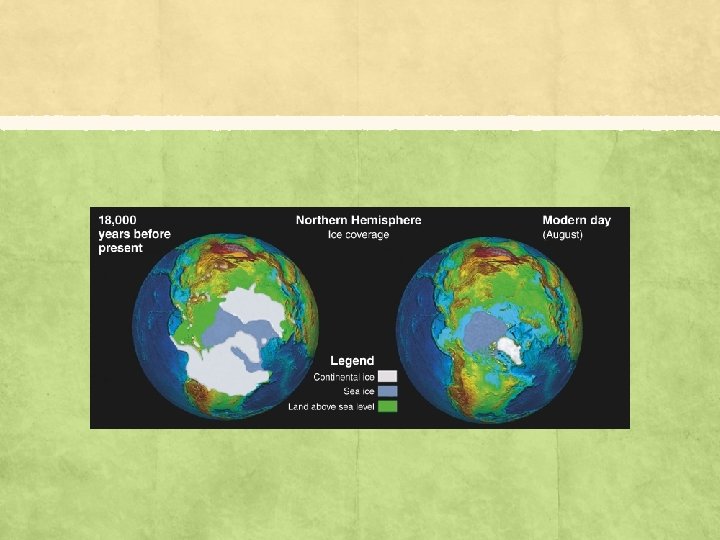
▪ Volcanic Eruptions: Mt. Saint Helens: Destroy habitat and wipe out populations ▪ Earthquakes: create fissures that separate and isolate populations ▪ Climate Change and Natural Selection: Grizzly and Polar Bear
▪ Divergence: One species becomes two ▪ Convergence: The evolution of species from different taxonomic groups toward a similar form. ▪ Extinction: Species ceases to exist. They can be ecologically extinct-number are so small they cannot fulfill their role. Over 99 % of all species that have ever lived are now extinct.
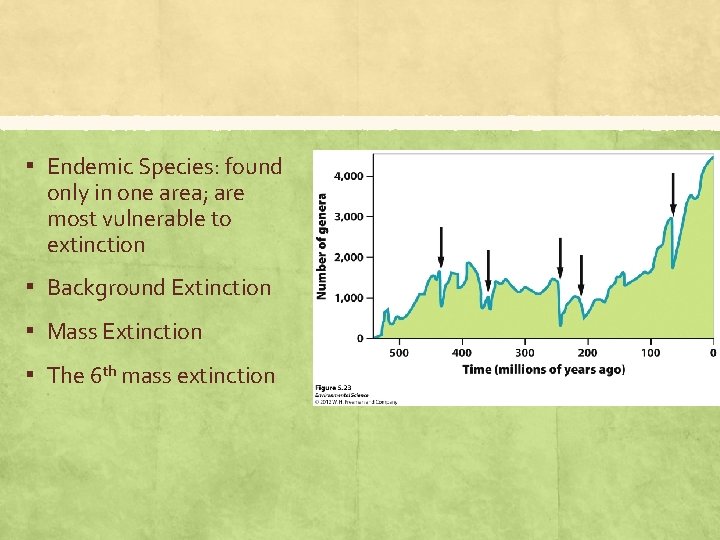
▪ Endemic Species: found only in one area; are most vulnerable to extinction ▪ Background Extinction ▪ Mass Extinction ▪ The 6 th mass extinction
Keystone species ▪ a species on which other species in an ecosystem largely depend, such that if it were removed the ecosystem would change drastically. ▪ https: //www. youtube. com/watch? v=JGc. Ip 4 YEKrc
- Slides: 29