
Aperture Arrays for the SKA The optimal solution
- Slides: 24
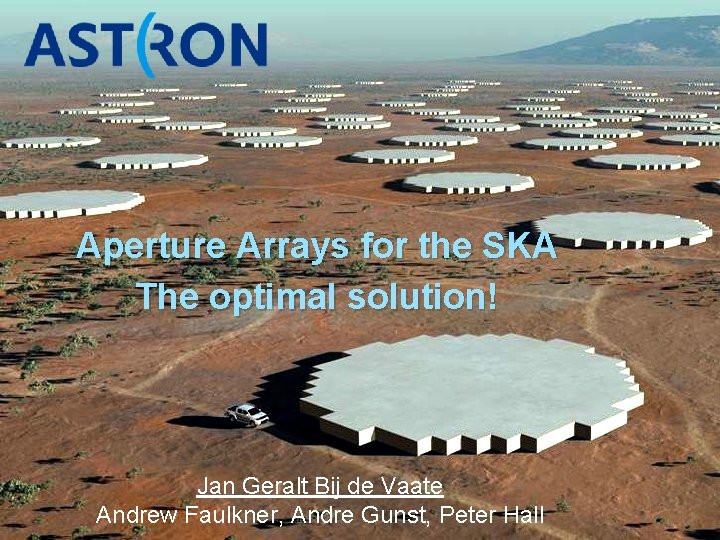
Aperture Arrays for the SKA The optimal solution! Jan Geralt Bij de Vaate Andrew Faulkner, Andre Gunst, Peter Hall SKA Introduction
Overview • The SKA • Why Aperture (phased) Arrays • AA pathfinders/pre-cursors • Development path towards SKA
The next step: SKA • Square Kilometre Array • 100 times larger in collecting area • 10. 000 more power full in survey speed • Unprecedented instrument! W 20 : Recent Developments in Phased Array Radar
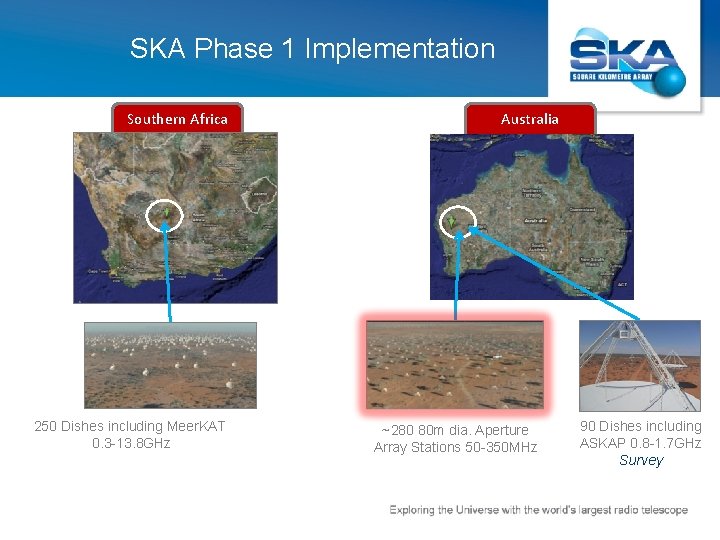
SKA Phase 1 Implementation Southern Africa 250 Dishes including Meer. KAT 0. 3 -13. 8 GHz Australia ~280 80 m dia. Aperture Array Stations 50 -350 MHz 90 Dishes including ASKAP 0. 8 -1. 7 GHz Survey
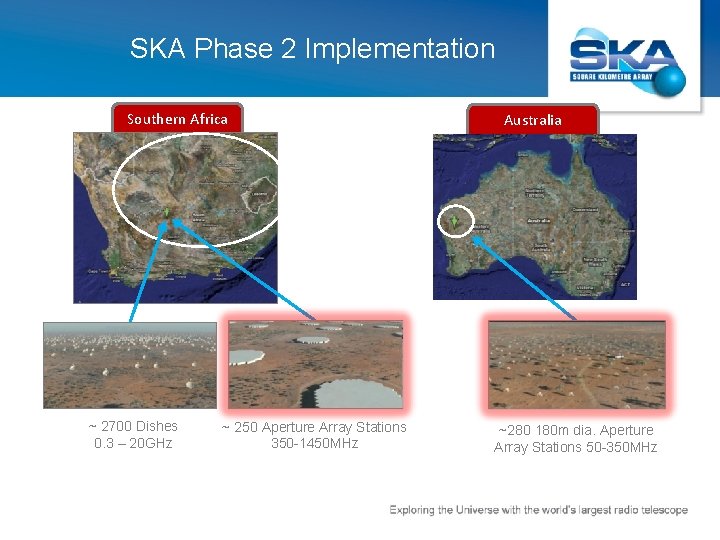
SKA Phase 2 Implementation Southern Africa ~ 2700 Dishes 0. 3 – 20 GHz ~ 250 Aperture Array Stations 350 -1450 MHz Australia ~280 180 m dia. Aperture Array Stations 50 -350 MHz
Why aperture arrays? • Low frequency operation • Survey speed • The ability to create multiple beams for a very large Field of View • Extremely flexible in observational parameters • Multiple experiments can be run concurrently ICT based: AAs provide many new opportunities
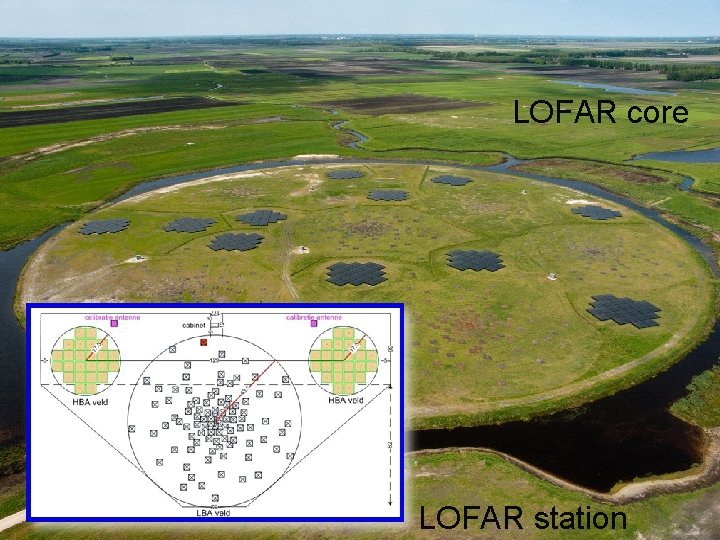
v LOFAR core URSI GA Istanbul 2011 LOFAR station LOFAR Lessons 7
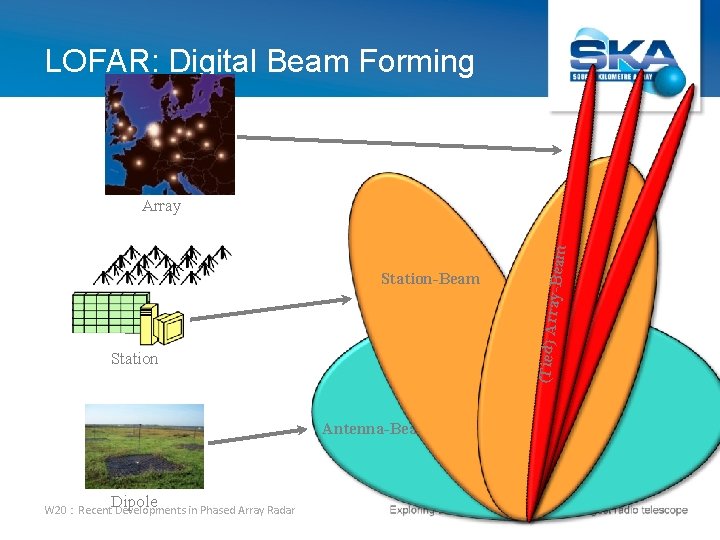
LOFAR: Digital Beam Forming (Tied) Arr Station-Beam Station Antenna-Beam Dipole W 20 : Recent Developments in Phased Array Radar ay-Beam Array
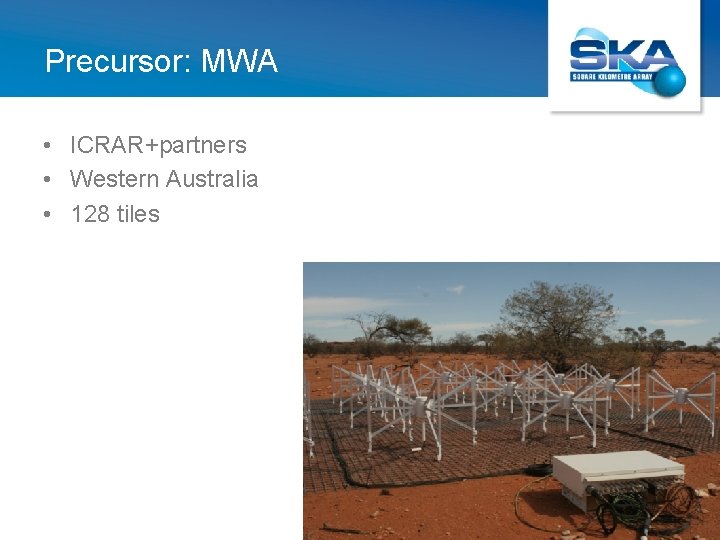
Precursor: MWA • ICRAR+partners • Western Australia • 128 tiles
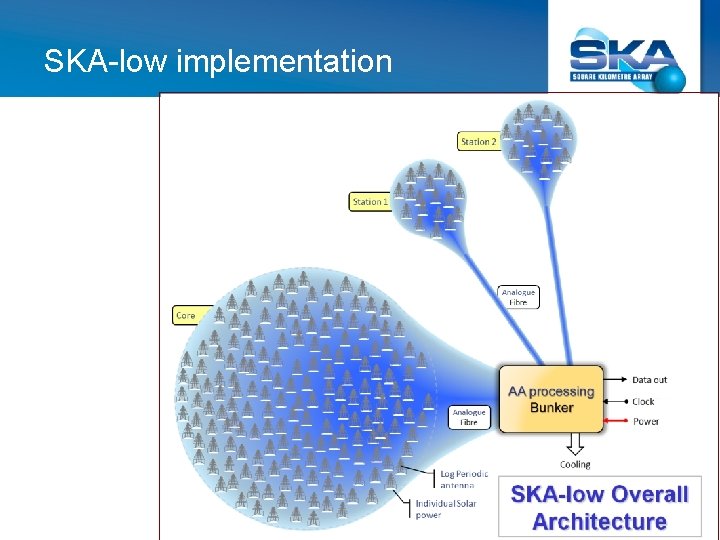
SKA-low implementation
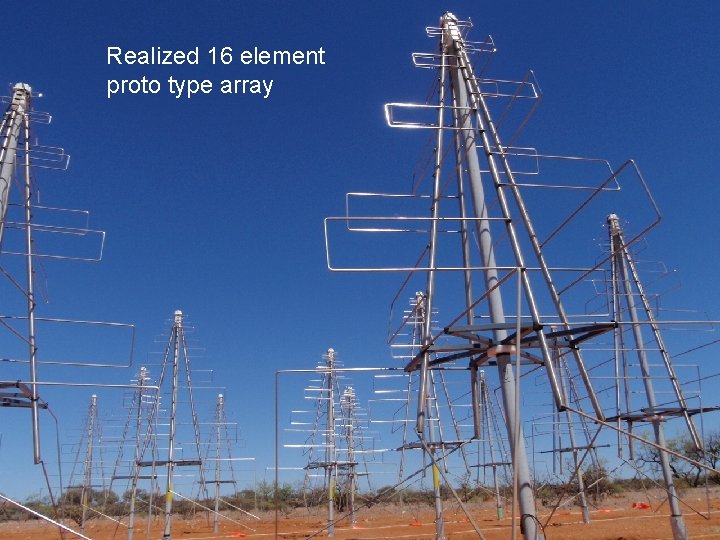
b • h Realized 16 element proto type array
SKA-AADC consortium 1. 2. 3. 4. 5. 6. ASTRON ICRAR Australia INAF Italy University of Cambridge University of Oxford KLAASA (China) 7. – – – Associate members: JIVE University of Manchester University of Malta GLOW (German low frequency consortium) MIT Management, system, processing Site, verification systems Receiver System, antenna+LNA Signal processing
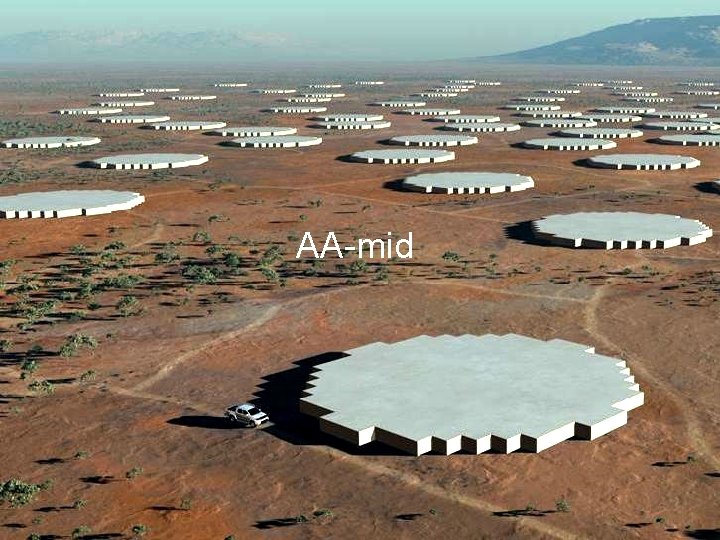
AA-mid
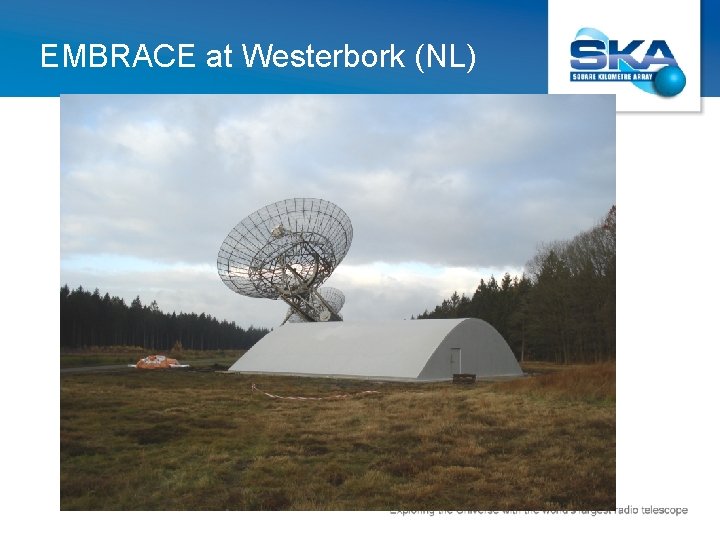
EMBRACE at Westerbork (NL)
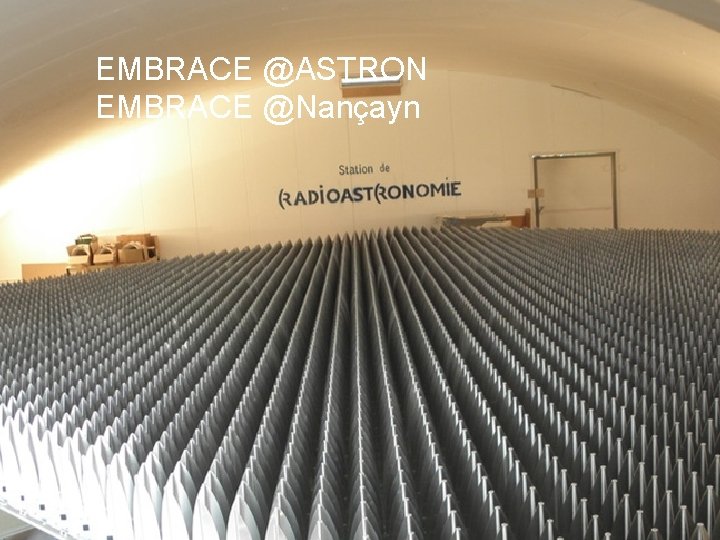
EMBRACE @ASTRON EMBRACE @Nançayn
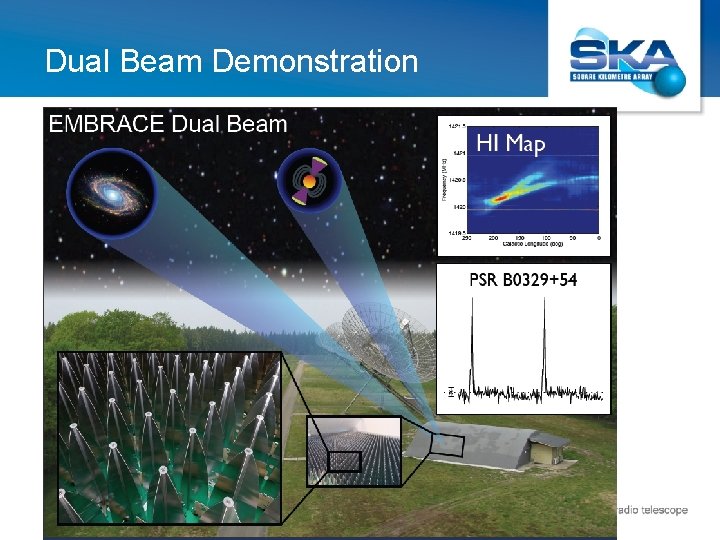
Dual Beam Demonstration
From EMBRACE to SKA-mid • Issues to be resolved; – Power consumption – Cost – Performance, calibratebility, noise • SKA 2 requirements not clear • SKA 2 timescale ?
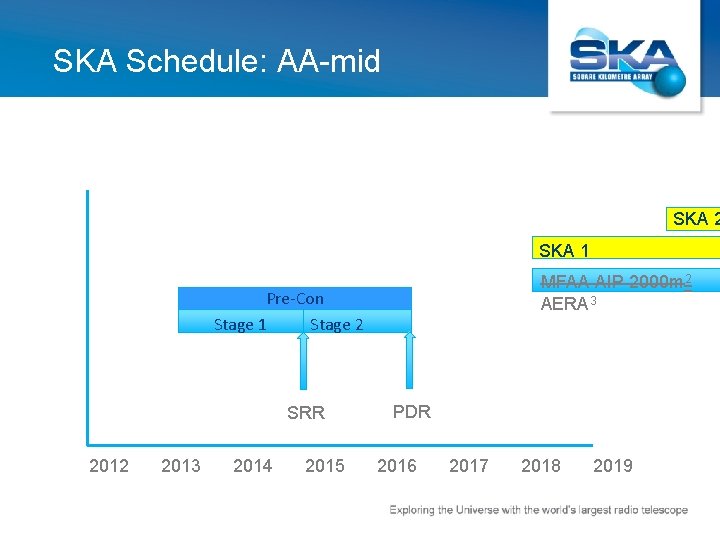
SKA Schedule: AA-mid SKA 2 SKA 1 MFAA AIP 2000 m 2 AERA 3 Pre-Con Stage 1 Stage 2 SRR 2012 2013 2014 2015 PDR 2016 2017 2018 2019
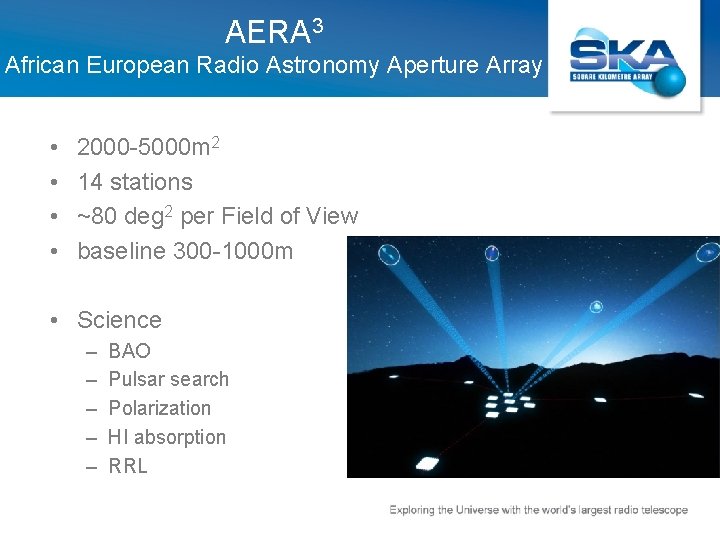
AERA 3 African European Radio Astronomy Aperture Array • • 2000 -5000 m 2 14 stations ~80 deg 2 per Field of View baseline 300 -1000 m • Science – – – BAO Pulsar search Polarization HI absorption RRL
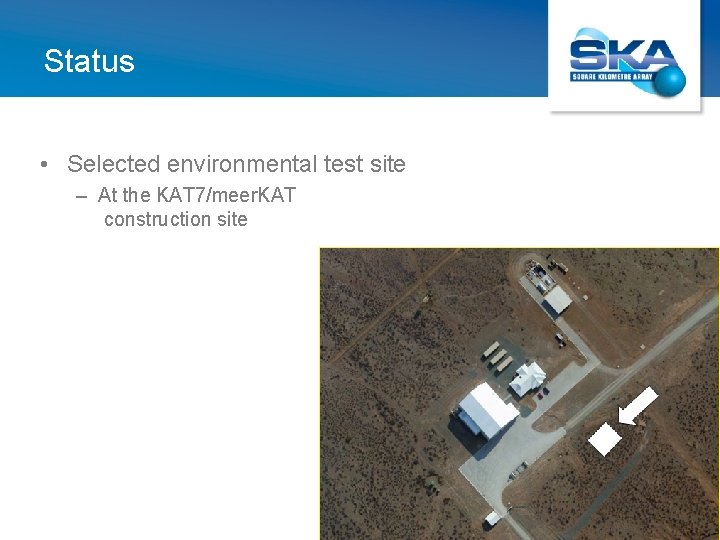
Status • Selected environmental test site – At the KAT 7/meer. KAT construction site
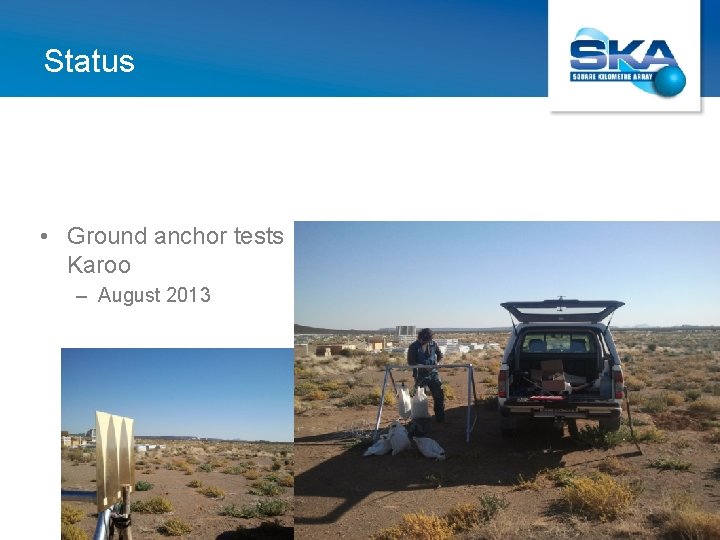
Status • Ground anchor tests Karoo – August 2013
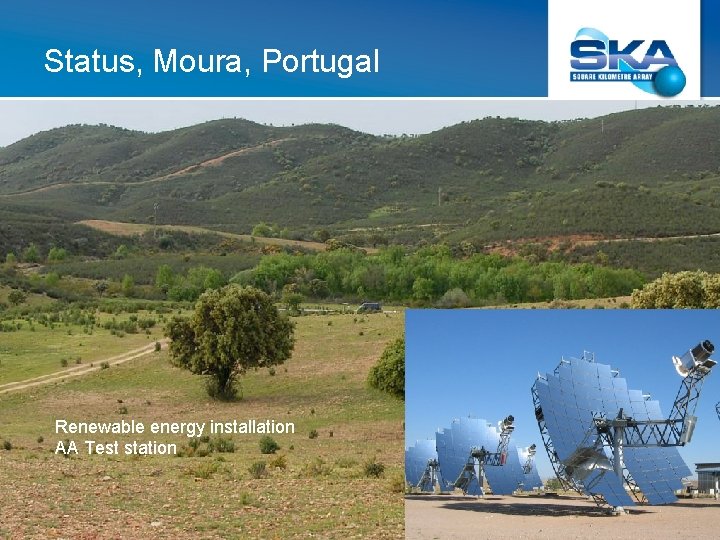
Status, Moura, Portugal Renewable energy installation AA Test station
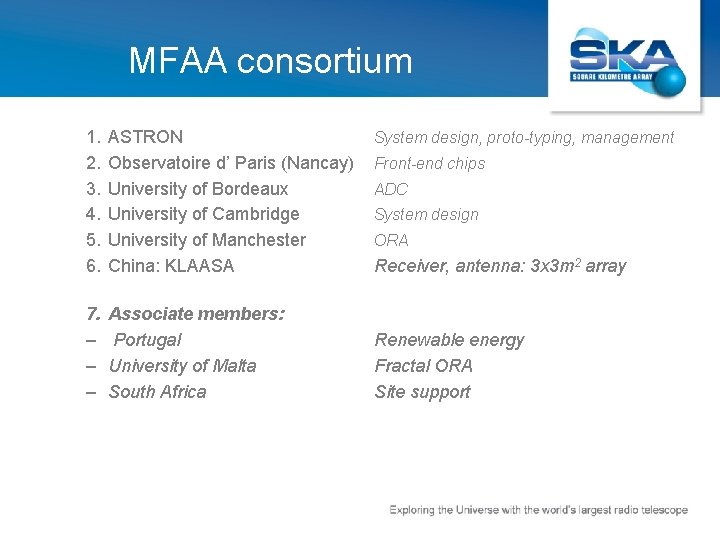
MFAA consortium 1. 2. 3. 4. 5. 6. ASTRON Observatoire d’ Paris (Nancay) University of Bordeaux University of Cambridge University of Manchester China: KLAASA 7. – – – Associate members: Portugal University of Malta South Africa System design, proto-typing, management Front-end chips ADC System design ORA Receiver, antenna: 3 x 3 m 2 array Renewable energy Fractal ORA Site support
Conclusion • Phased arrays open a new era in radio astronomy • Surveys limited only by computing power – Very much an IT telescope • Cost and power to be reduced in order to realize 100 million element system W 20 : Recent Developments in Phased Array Radar