
APBI Update 10 Year APBIIMRTFlorence Trial Results Radiation
APBI Update – 10 Year APBI-IMRT-Florence Trial Results Radiation Oncology Journal Club January 12, 2021 Dr. Jordan Stosky, MD, FRCPC
Objectives Review methodology and 10 year results from APBI-IMRTFlorence Trial Compare methodology and results to ACCEL and other APBI Trials Compare results to those of UK Fast Forward
No conflict of interest to disclose Disclosures Would love to visit Florence (and Cinque Terre) one day post COVID Apologies to non-breast ROs. Hopefully you still find engaging and intellectually stimulating No apologies to the breast ROs – reopening APBI discussion

Background

Accelerated partial breast irradiation What is APBI? Higher dose, conformal to seroma cavity post operative radiotherapy in lower risk breast cancer patients Often done in 5 treatments with external beam, instead of 3+ weeks of conventional of hypofractionated whole breast radiation Intraoperative, brachytherapy techniques also have been studied
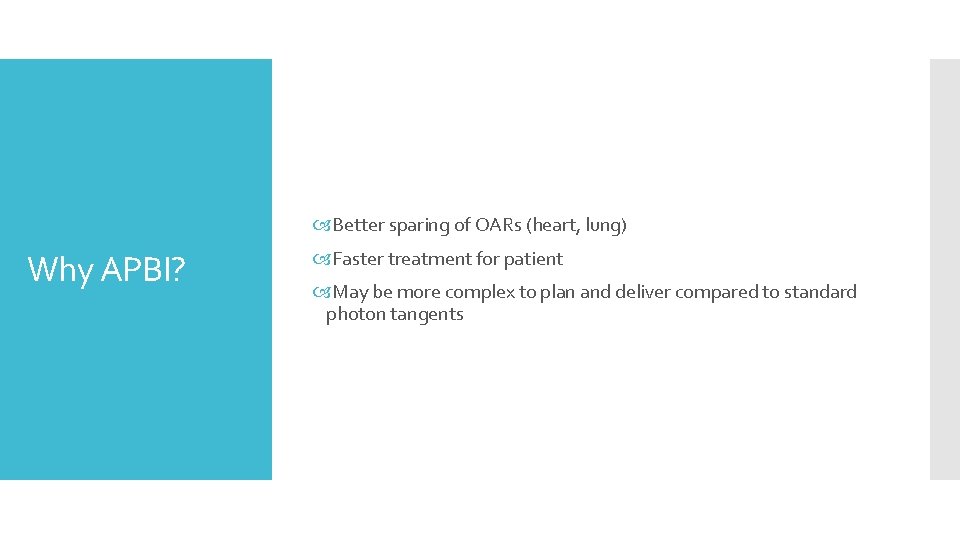
Better sparing of OARs (heart, lung) Why APBI? Faster treatment for patient May be more complex to plan and deliver compared to standard photon tangents
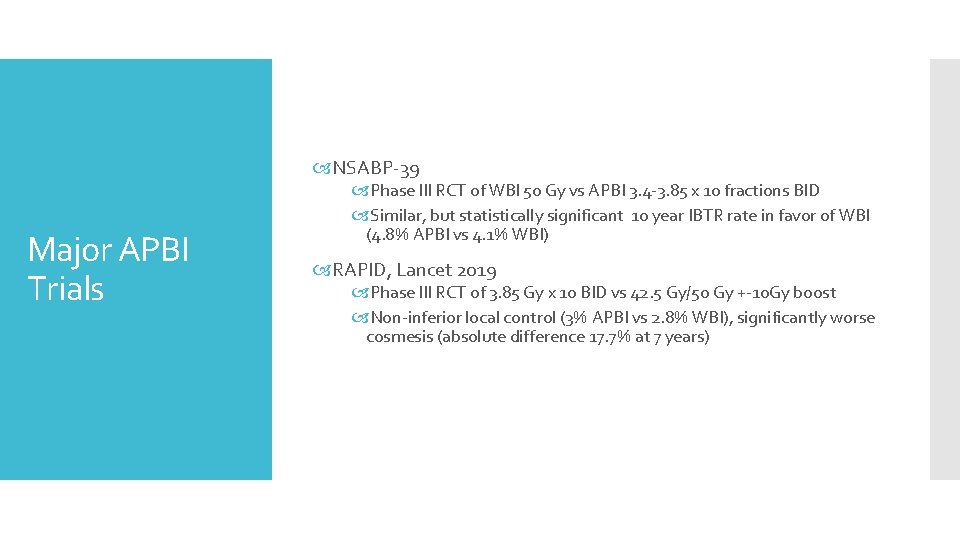
NSABP-39 Major APBI Trials Phase III RCT of WBI 50 Gy vs APBI 3. 4 -3. 85 x 10 fractions BID Similar, but statistically significant 10 year IBTR rate in favor of WBI (4. 8% APBI vs 4. 1% WBI) RAPID, Lancet 2019 Phase III RCT of 3. 85 Gy x 10 BID vs 42. 5 Gy/50 Gy +-10 Gy boost Non-inferior local control (3% APBI vs 2. 8% WBI), significantly worse cosmesis (absolute difference 17. 7% at 7 years)
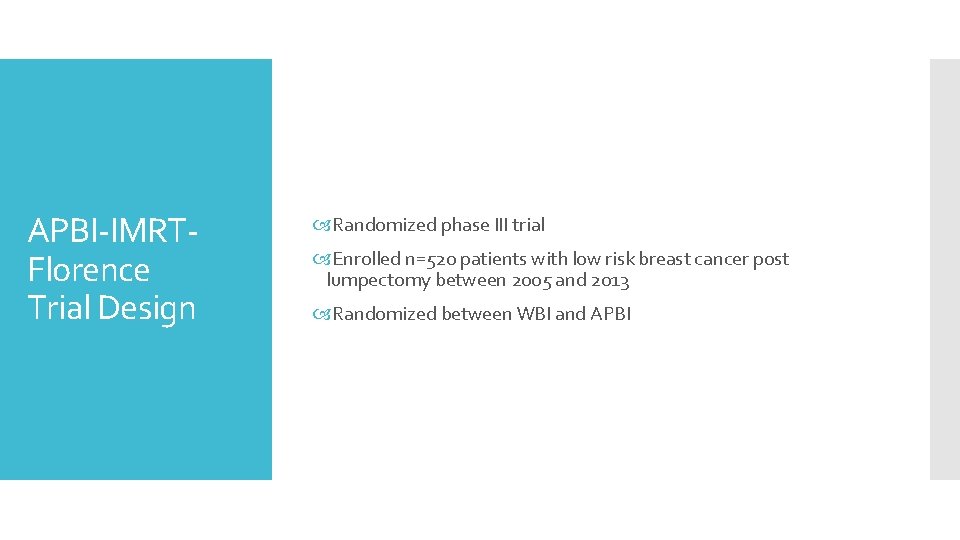
APBI-IMRTFlorence Trial Design Randomized phase III trial Enrolled n=520 patients with low risk breast cancer post lumpectomy between 2005 and 2013 Randomized between WBI and APBI
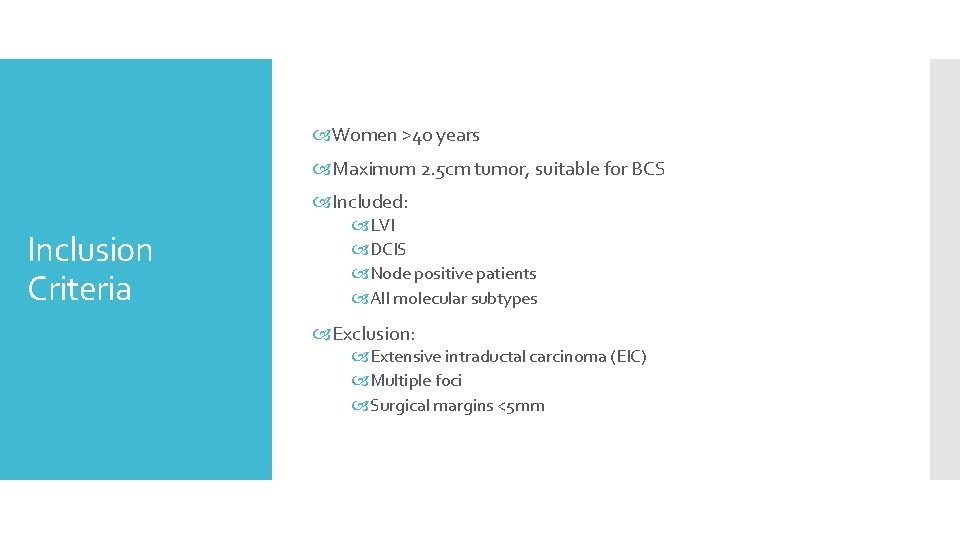
Women >40 years Maximum 2. 5 cm tumor, suitable for BCS Included: Inclusion Criteria LVI DCIS Node positive patients All molecular subtypes Exclusion: Extensive intraductal carcinoma (EIC) Multiple foci Surgical margins <5 mm
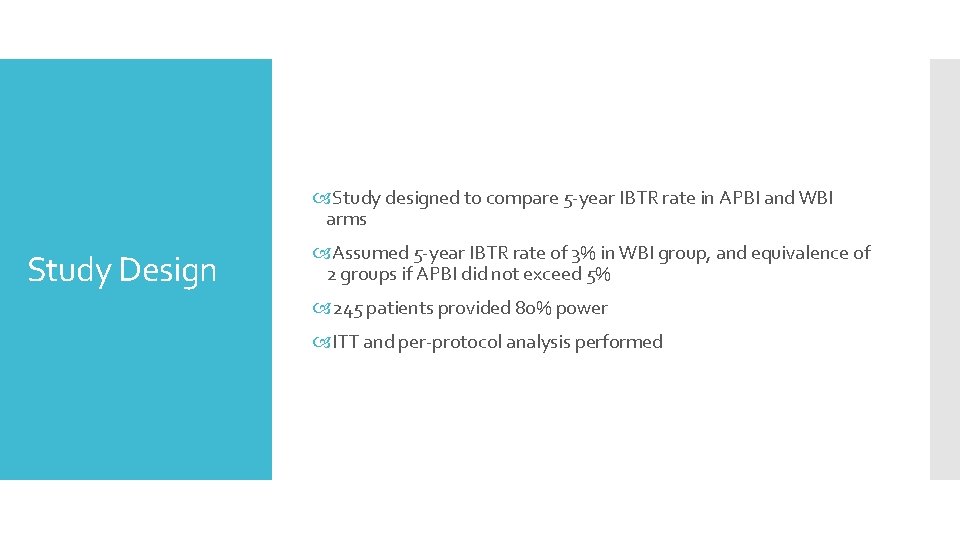
Study designed to compare 5 -year IBTR rate in APBI and WBI arms Study Design Assumed 5 -year IBTR rate of 3% in WBI group, and equivalence of 2 groups if APBI did not exceed 5% 245 patients provided 80% power ITT and per-protocol analysis performed
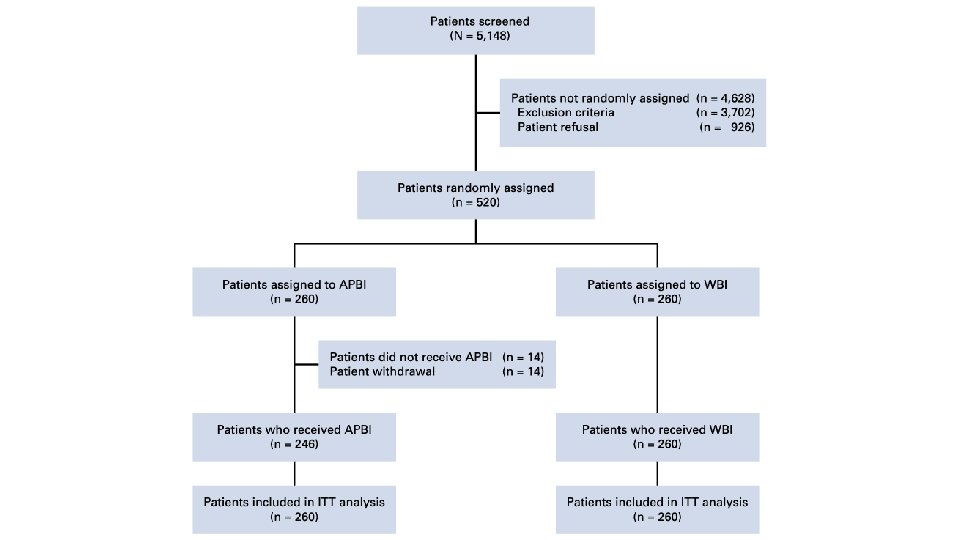
Patients randomized to WBI or APBI using IMRT in 1: 1 ratio Study Treatments Surgeons asked to place minimum 4 clips at the borders of the surgical bed CT simulation within 4 weeks after surgery with 0. 3 cm axial slice thickness
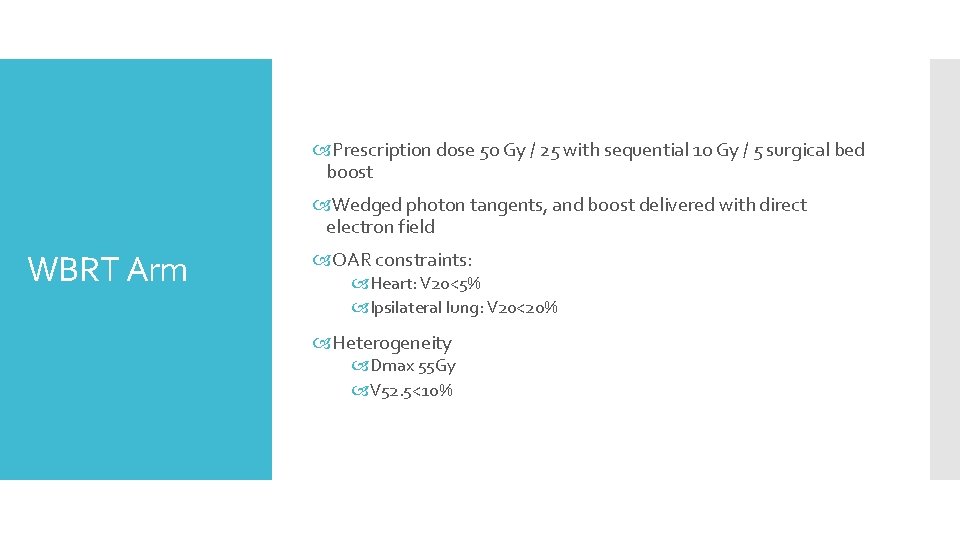
Prescription dose 50 Gy / 25 with sequential 10 Gy / 5 surgical bed boost Wedged photon tangents, and boost delivered with direct electron field WBRT Arm OAR constraints: Heart: V 20<5% Ipsilateral lung: V 20<20% Heterogeneity Dmax 55 Gy V 52. 5<10%
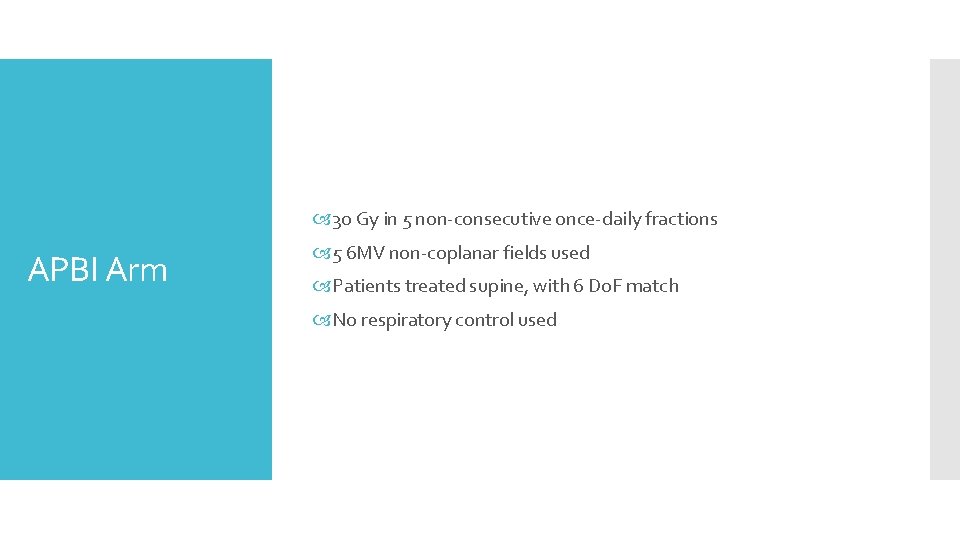
30 Gy in 5 non-consecutive once-daily fractions APBI Arm 5 6 MV non-coplanar fields used Patients treated supine, with 6 Do. F match No respiratory control used
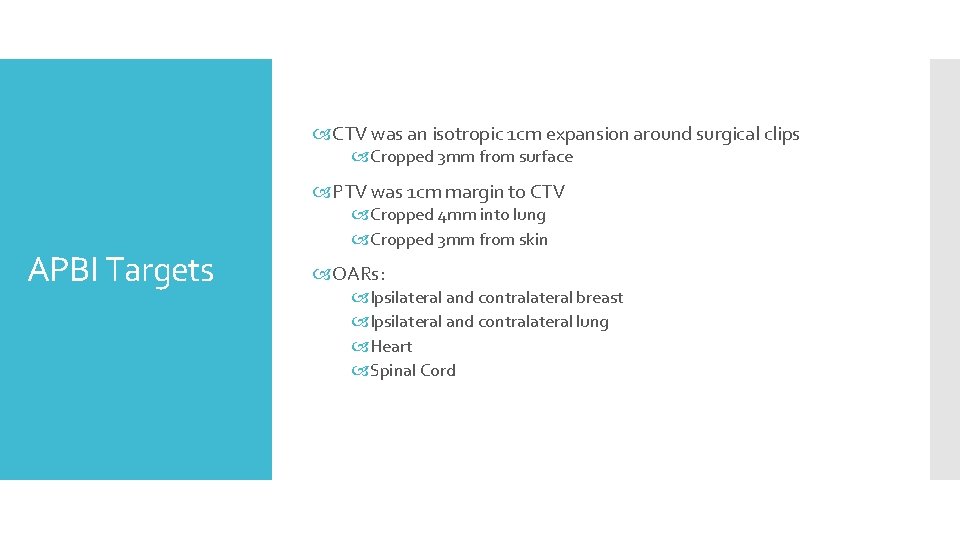
CTV was an isotropic 1 cm expansion around surgical clips Cropped 3 mm from surface PTV was 1 cm margin to CTV APBI Targets Cropped 4 mm into lung Cropped 3 mm from skin OARs: Ipsilateral and contralateral breast Ipsilateral and contralateral lung Heart Spinal Cord
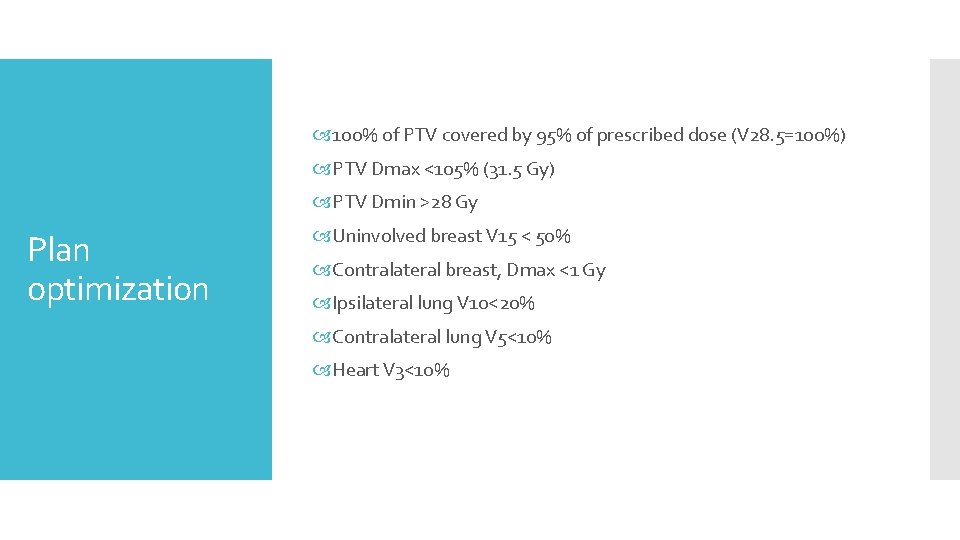
100% of PTV covered by 95% of prescribed dose (V 28. 5=100%) PTV Dmax <105% (31. 5 Gy) PTV Dmin >28 Gy Plan optimization Uninvolved breast V 15 < 50% Contralateral breast, Dmax <1 Gy Ipsilateral lung V 10<20% Contralateral lung V 5<10% Heart V 3<10%
Quality Assurance Dose verification for WBI NOT performed pretreatment as only static fields used 1 out of 5 APBI plans verified pretreatment Pathology QA based on local assessment, consistent with 12 th St Gallen International Expert Guidelines
Patients followed up monthly for first 3 months Follow-up Every four months for 2 years Every 6 months at years 2+ Clinical exam at each followup Mammogram annually
Primary end point was IBTR rate Secondary end points: End Points LRR DM Contralateral BC rates BCSS OS Acute/late treatment toxicity Cosmetic outcomes
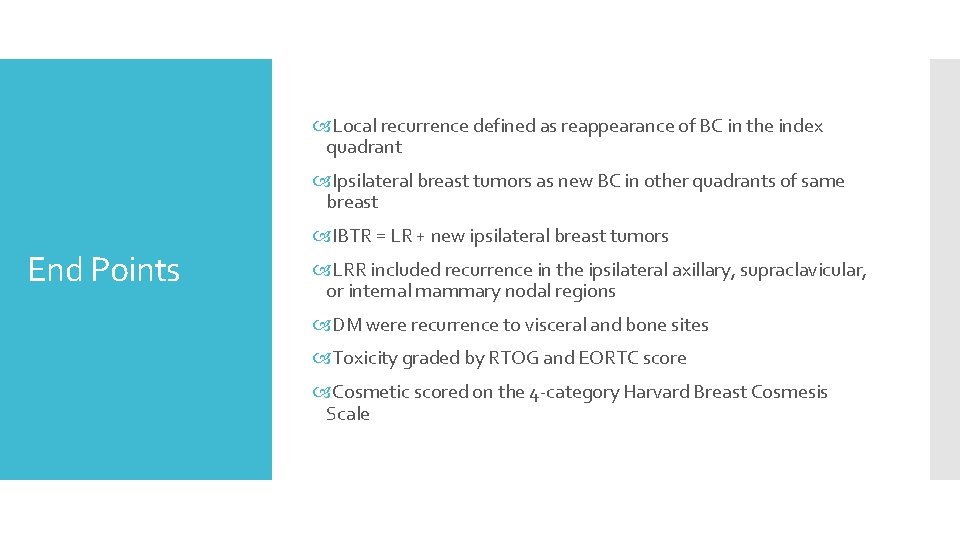
Local recurrence defined as reappearance of BC in the index quadrant Ipsilateral breast tumors as new BC in other quadrants of same breast End Points IBTR = LR + new ipsilateral breast tumors LRR included recurrence in the ipsilateral axillary, supraclavicular, or internal mammary nodal regions DM were recurrence to visceral and bone sites Toxicity graded by RTOG and EORTC score Cosmetic scored on the 4 -category Harvard Breast Cosmesis Scale
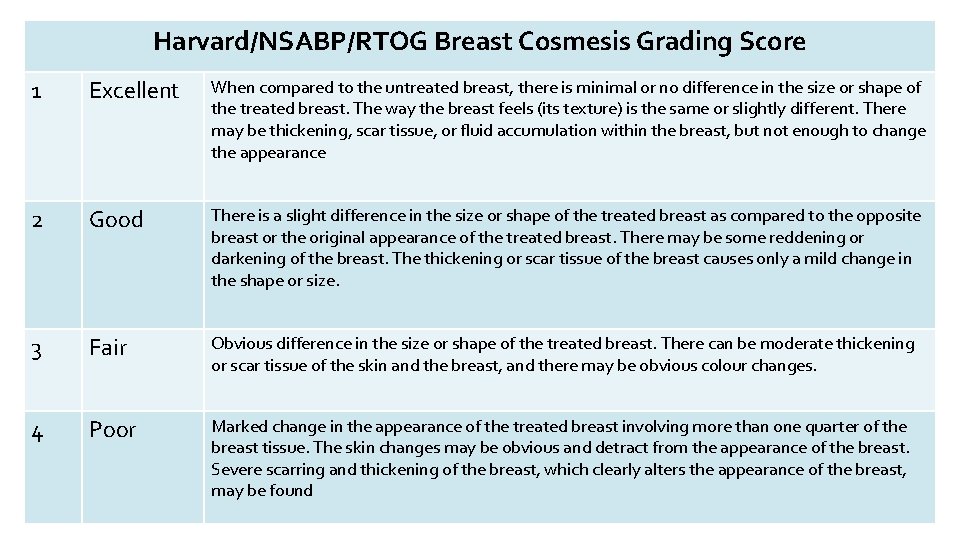
Harvard/NSABP/RTOG Breast Cosmesis Grading Score 1 Excellent When compared to the untreated breast, there is minimal or no difference in the size or shape of the treated breast. The way the breast feels (its texture) is the same or slightly different. There may be thickening, scar tissue, or fluid accumulation within the breast, but not enough to change the appearance There is a slight difference in the size or shape of the treated breast as compared to the opposite Harvard/NSAB 2 Good breast or the original appearance of the treated breast. There may be some reddening or P/RTOG Breastdarkening of the breast. The thickening or scar tissue of the breast causes only a mild change in the shape or size. Cosmesis Grading Scale Obvious difference in the size or shape of the treated breast. There can be moderate thickening 3 Fair or scar tissue of the skin and the breast, and there may be obvious colour changes. 4 Poor Marked change in the appearance of the treated breast involving more than one quarter of the breast tissue. The skin changes may be obvious and detract from the appearance of the breast. Severe scarring and thickening of the breast, which clearly alters the appearance of the breast, may be found

Results
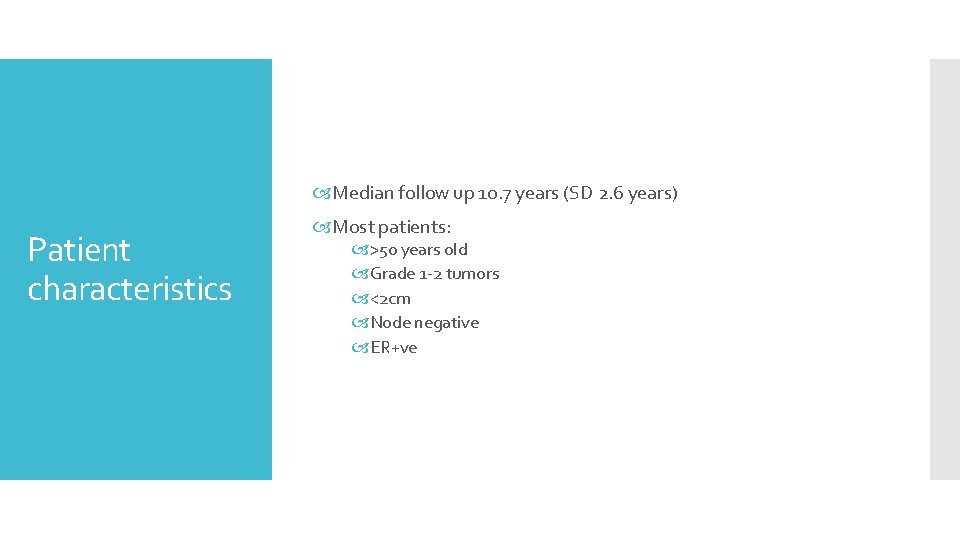
Median follow up 10. 7 years (SD 2. 6 years) Patient characteristics Most patients: >50 years old Grade 1 -2 tumors <2 cm Node negative ER+ve
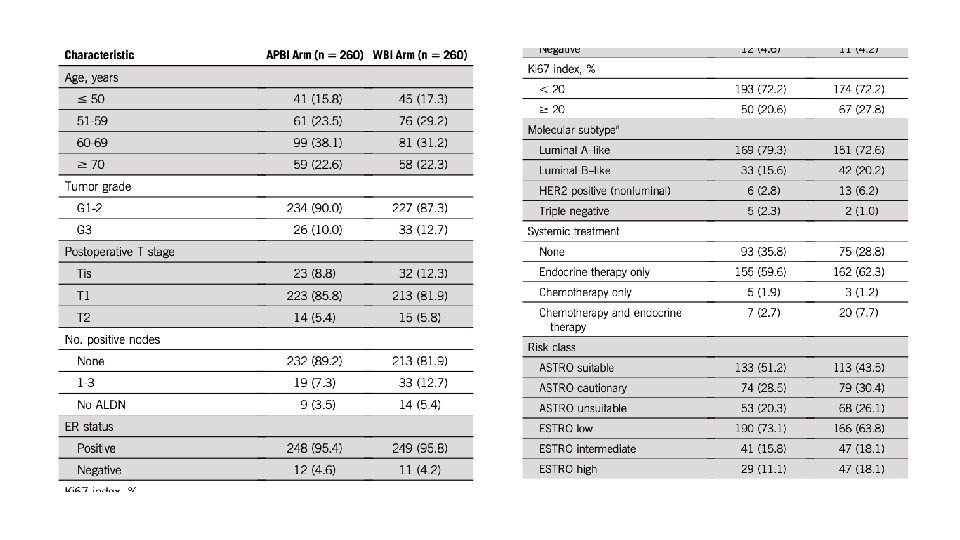
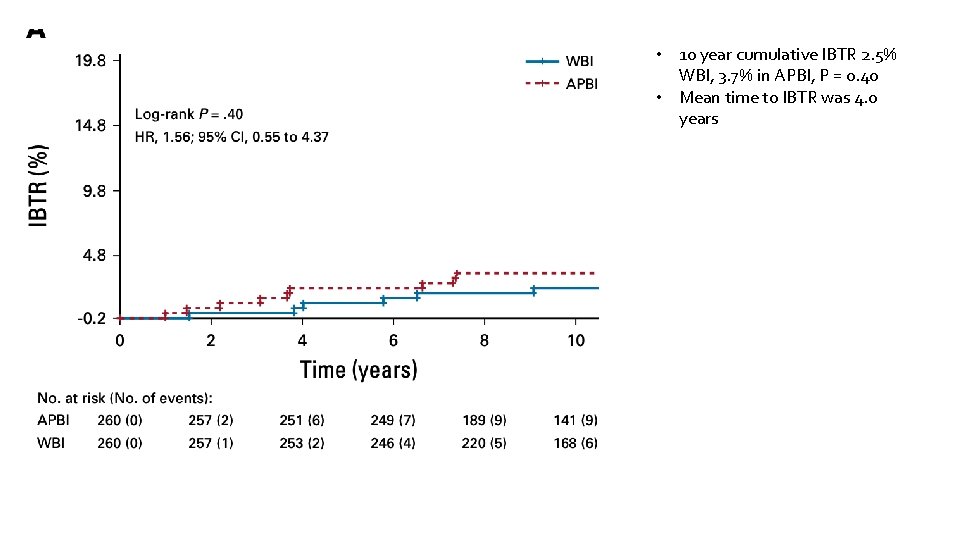
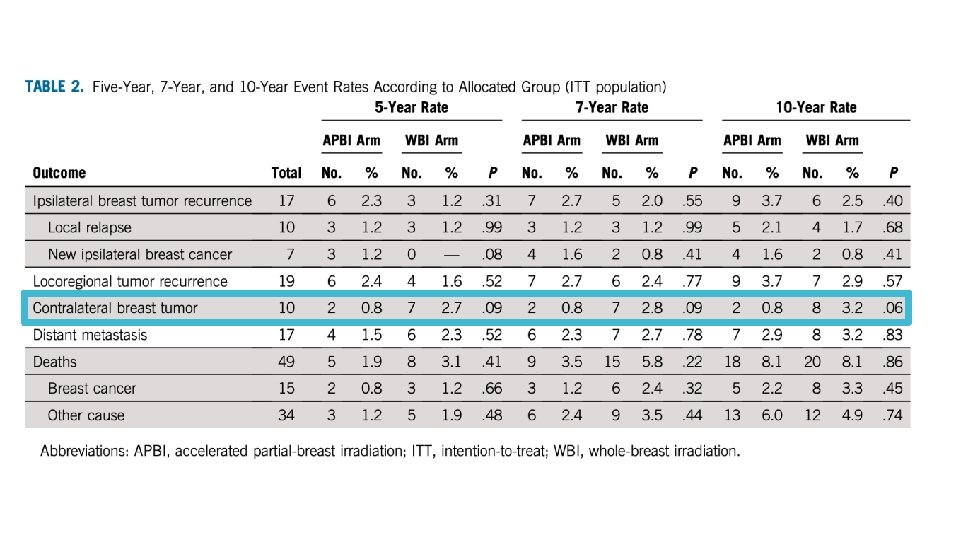
• 10 year cumulative IBTR 2. 5% WBI, 3. 7% in APBI, P = 0. 40 • Mean time to IBTR was 4. 0 years
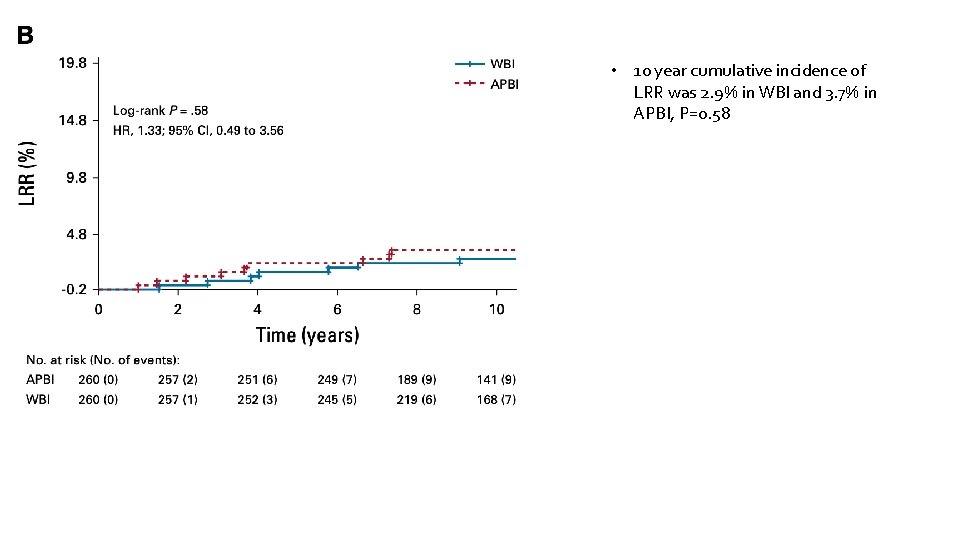
• 10 year cumulative incidence of LRR was 2. 9% in WBI and 3. 7% in APBI, P=0. 58
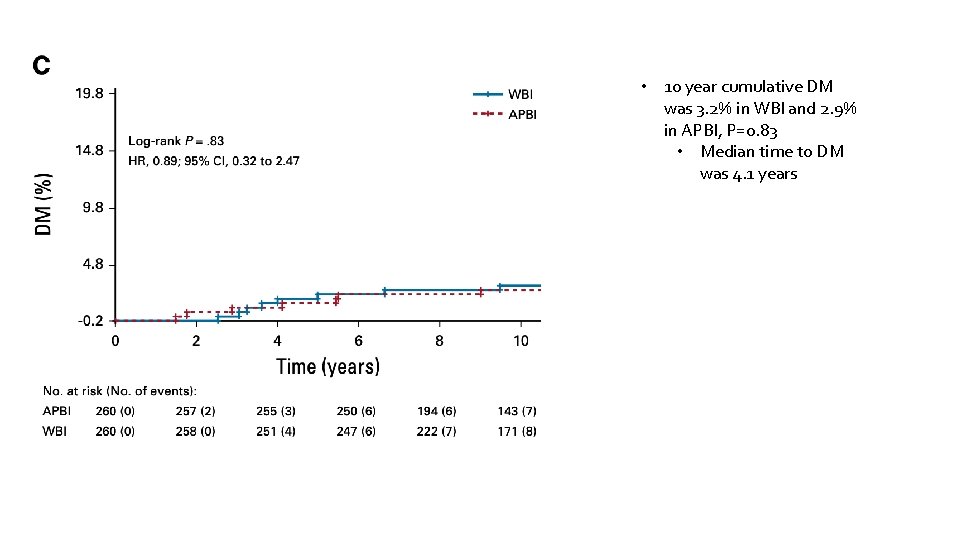
• 10 year cumulative DM was 3. 2% in WBI and 2. 9% in APBI, P=0. 83 • Median time to DM was 4. 1 years
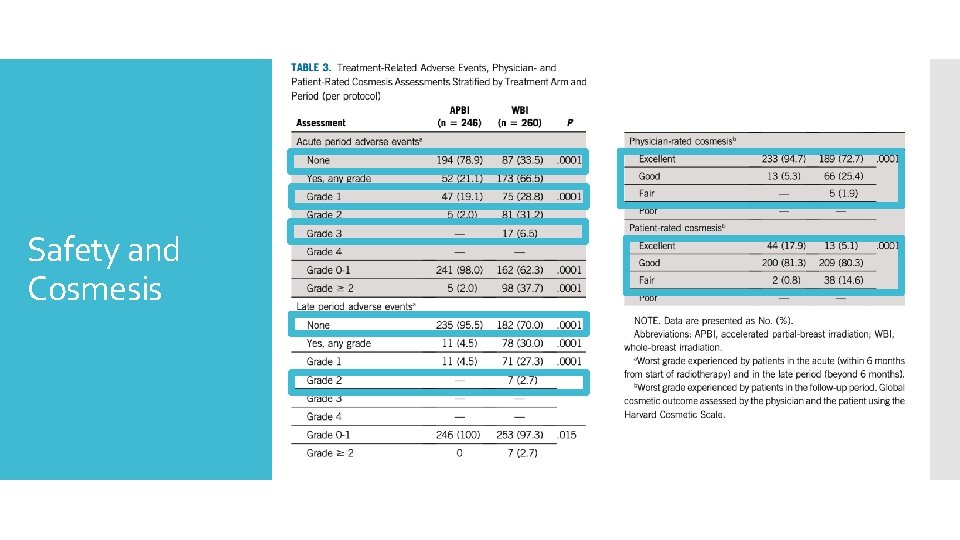
Safety and Cosmesis
Discussion
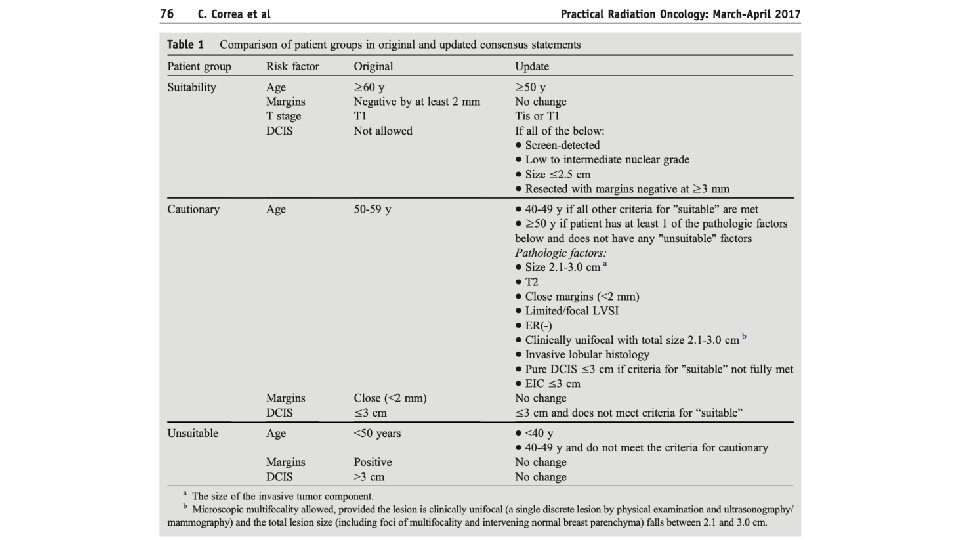
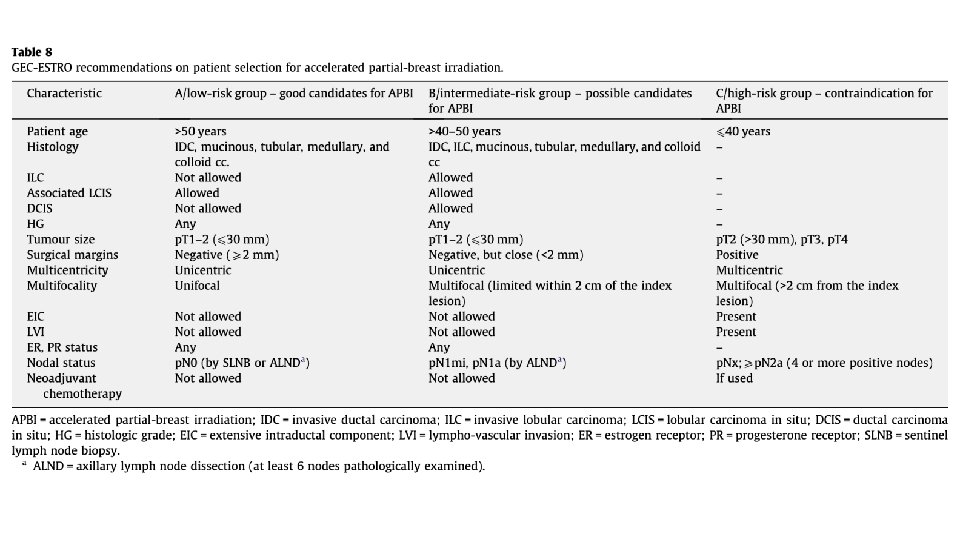
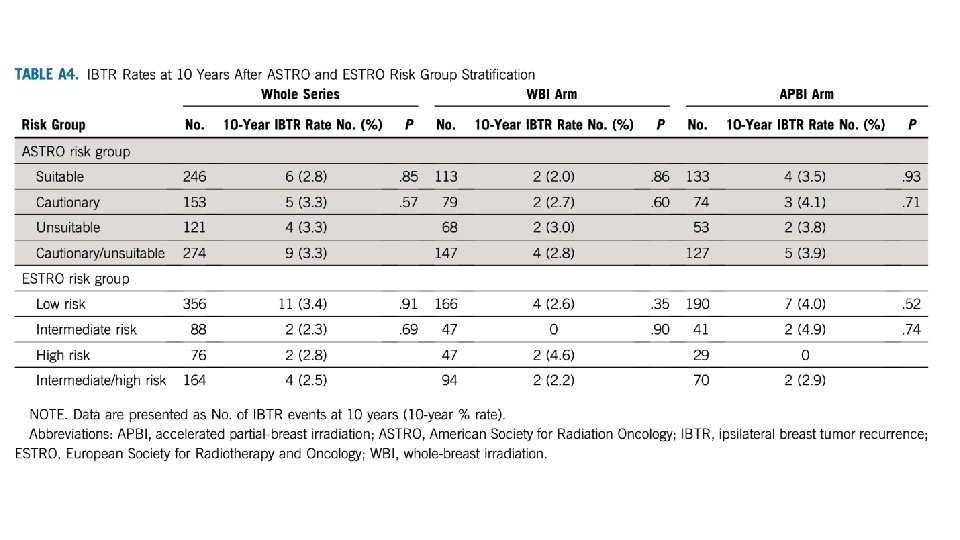
Inclusion Patient inclusion criteria was practical, and generally reflected ASTRO and ESTRO guidelines Similar to ACCEL inclusion locally (ACCEL restricted one of G 3 or LVI, not both)
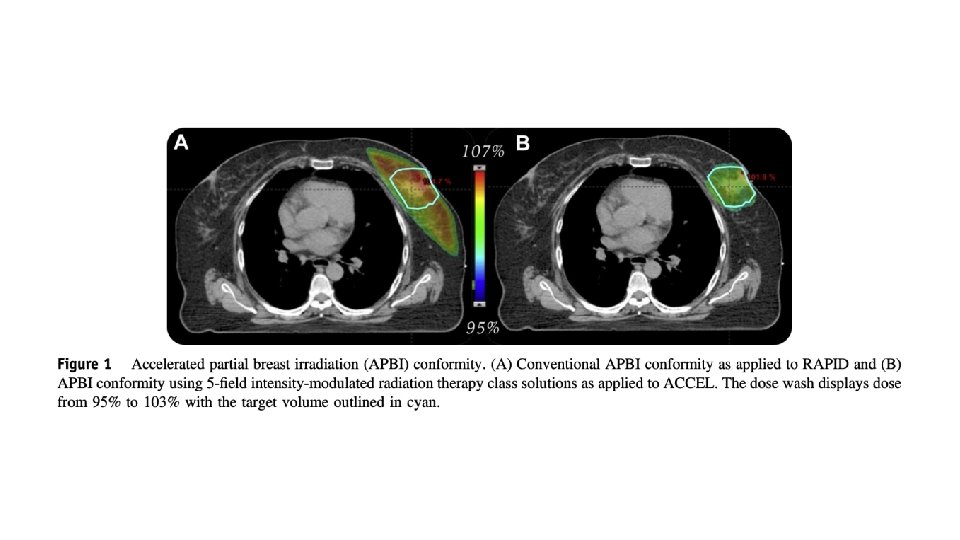
Intervention – does it make sense? 5 field non-coplanar IMRT similarly planned as ACCEL Probably not meaningfully different than VMAT, though not tested, and provides more thoughtful tissue sparing from low dose wash
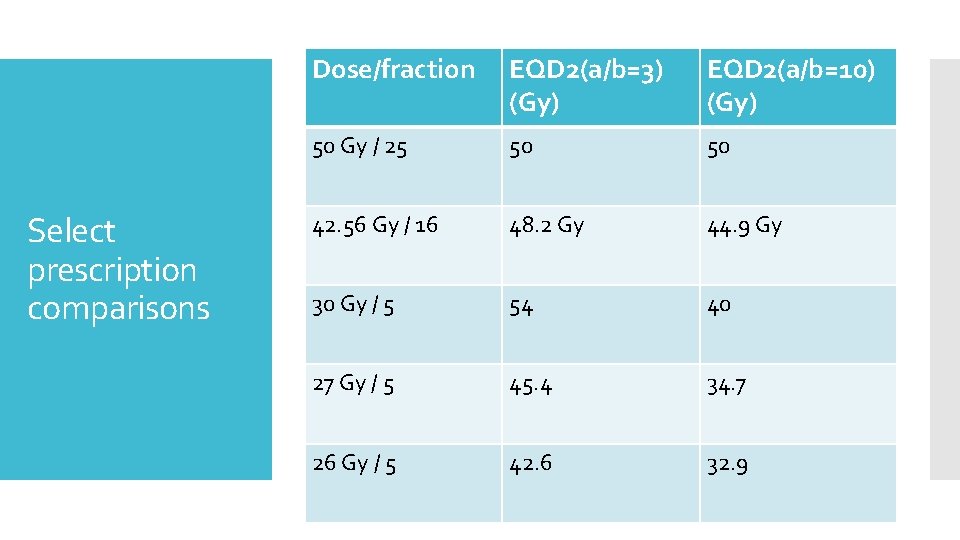
Select prescription comparisons Dose/fraction EQD 2(a/b=3) (Gy) EQD 2(a/b=10) (Gy) 50 Gy / 25 50 50 42. 56 Gy / 16 48. 2 Gy 44. 9 Gy 30 Gy / 5 54 40 27 Gy / 5 45. 4 34. 7 26 Gy / 5 42. 6 32. 9
Concerns raised for late toxicity with RAPID that 6 h BID fractionation may not be entirely enough for normal tissue repair Why non-daily fractionation? Does it make a difference? Tumor repopulation? Breast cancer slow growing, and treatment time is prolonged by only 5 days, this is double than if performed over 1 week ( 10 days vs 5) Extrapolating from SBRT literature Better local control with lung SBRT with nonconsecutive fractionation, thought due to improved reoxygenation, Alite et al, Radiother Oncol 2016 Other data is nonconclusive Less fatigue with nonconsecutive fractionation with liver SBRT, Hasan et al, PRO, 2018
50 Gy in 2 Gy / fraction is not standard of care in Canada, and transitioning out of standard of care in USA Does the control arm make sense? Older techniques used: Wedged tangents Direct electron field Not more modern field-in-field or IMRT Most patients would probably not have required boost per authors, and so toxicity also overrepresented in this arm compared to AB patients
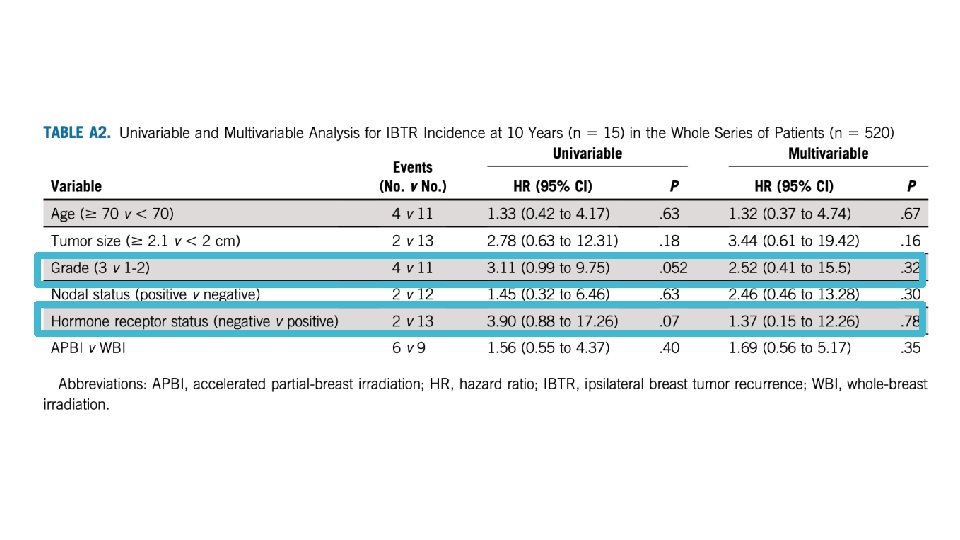
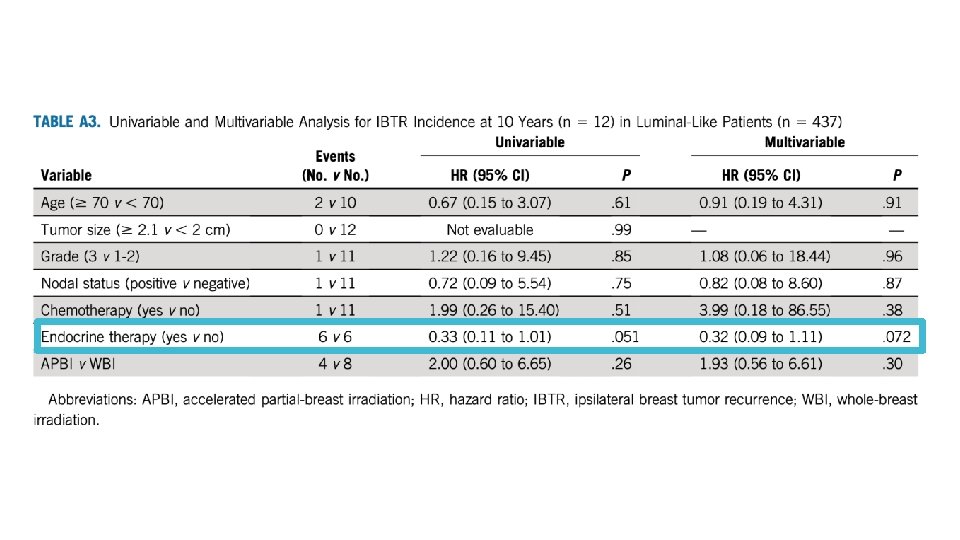
Can we learn from tumor biology? Nothing significant on univariate or multivariate analysis Grade and hormone status came close, but may be underpowered for any signal No significant differences noted in suitability criteria

Contralateral breast dose – is IMRT better?
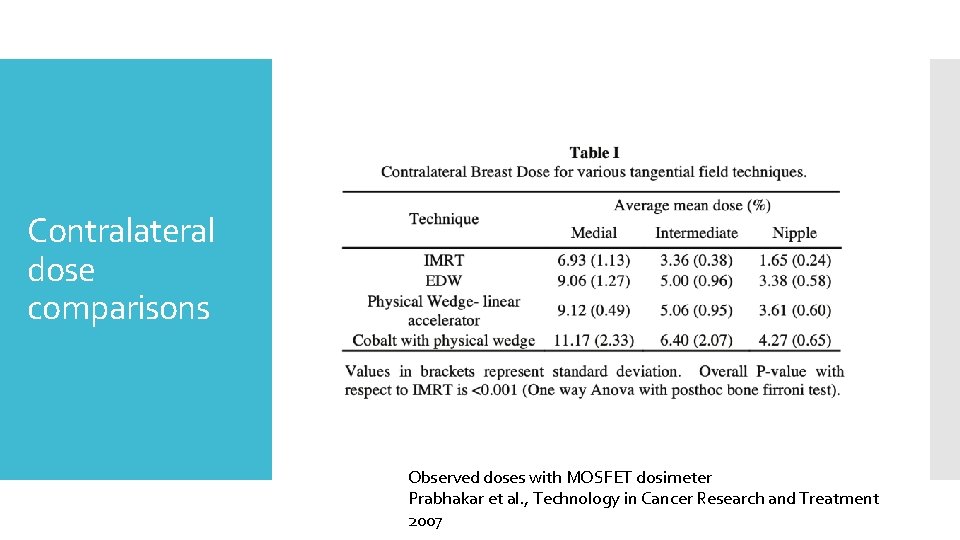
Contralateral dose comparisons Observed doses with MOSFET dosimeter Prabhakar et al. , Technology in Cancer Research and Treatment 2007
Trial conclusions 10 year IBTR rate with external beam IMRT-APBI is low, not significantly different from conventionally fractionated WBI Comparable outcomes observed Favourable acute and late toxicity and cosmesis in APBI arm IMRT-APBI 30 Gy / 5 is ‘attractive’ option with low-risk early BC
APBI How does this compare?
Compared to RAPID Dosing strategy opposite of RAPID – instead of BID, dosing nonconsecutive days IMRT much more conformal than RAPID plans (90% 3 D) Much more favourable toxicity
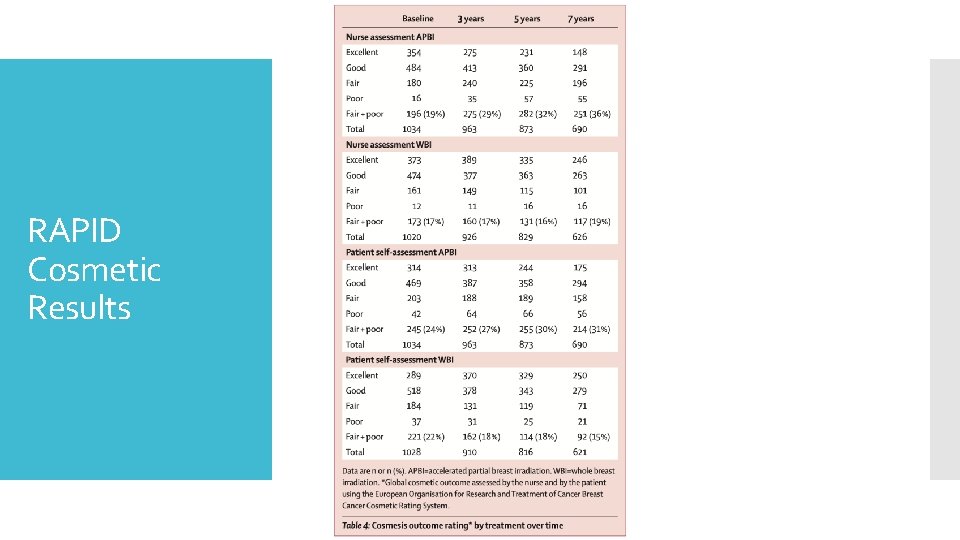
RAPID Cosmetic Results
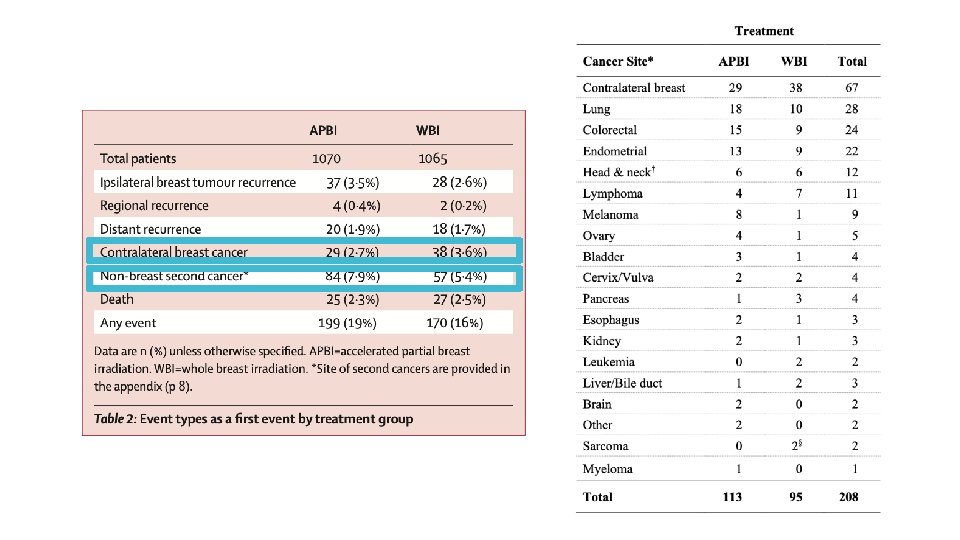
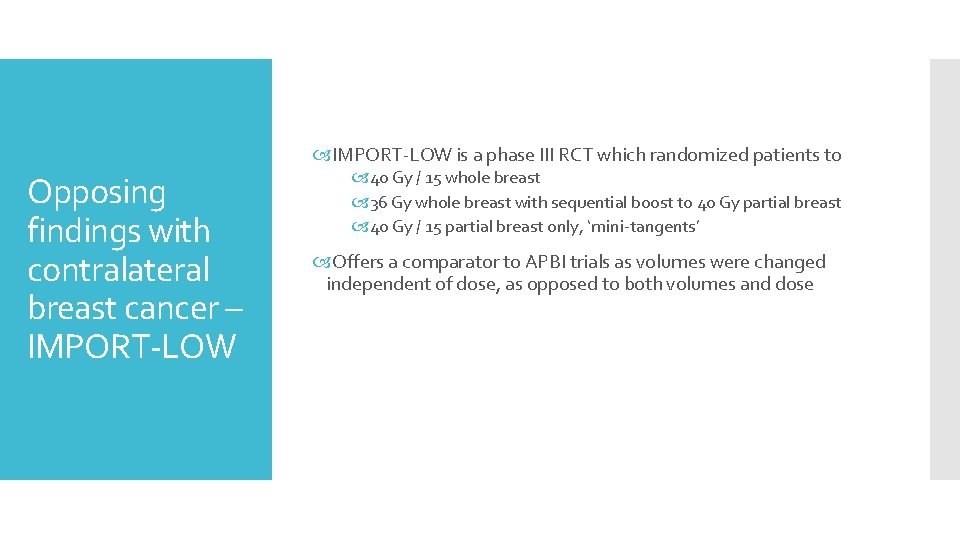
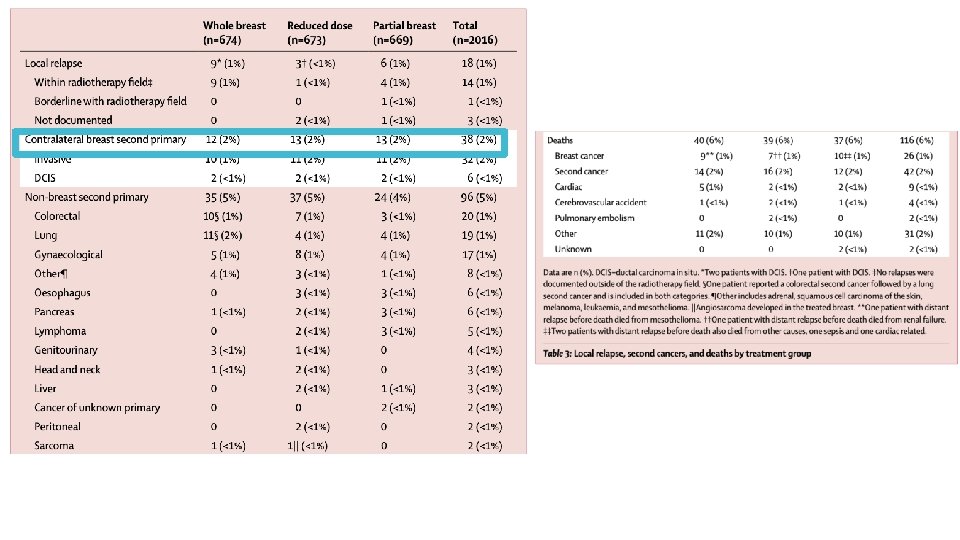
IMPORT-LOW is a phase III RCT which randomized patients to Opposing findings with contralateral breast cancer – IMPORT-LOW 40 Gy / 15 whole breast 36 Gy whole breast with sequential boost to 40 Gy partial breast 40 Gy / 15 partial breast only, ‘mini-tangents’ Offers a comparator to APBI trials as volumes were changed independent of dose, as opposed to both volumes and dose
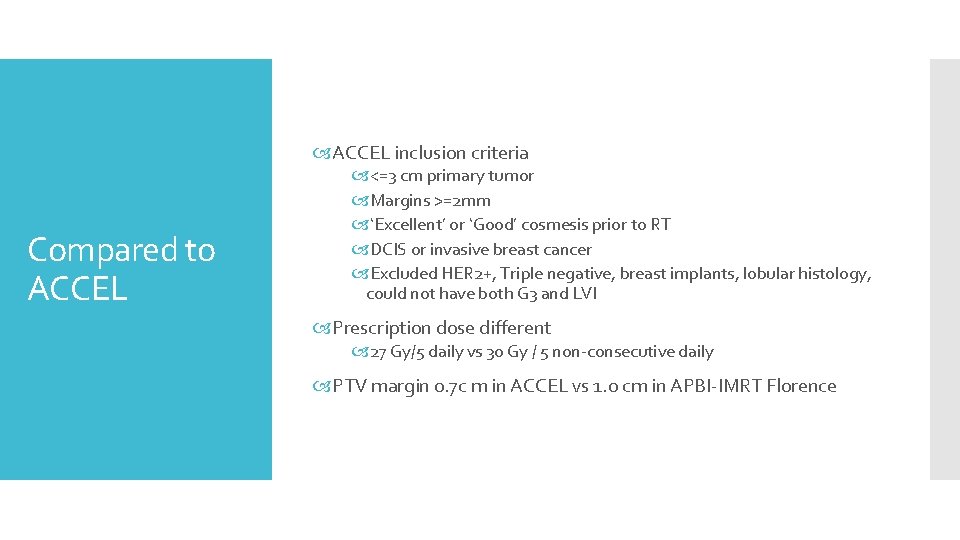
ACCEL inclusion criteria Compared to ACCEL <=3 cm primary tumor Margins >=2 mm ‘Excellent’ or ‘Good’ cosmesis prior to RT DCIS or invasive breast cancer Excluded HER 2+, Triple negative, breast implants, lobular histology, could not have both G 3 and LVI Prescription dose different 27 Gy/5 daily vs 30 Gy / 5 non-consecutive daily PTV margin 0. 7 c m in ACCEL vs 1. 0 cm in APBI-IMRT Florence
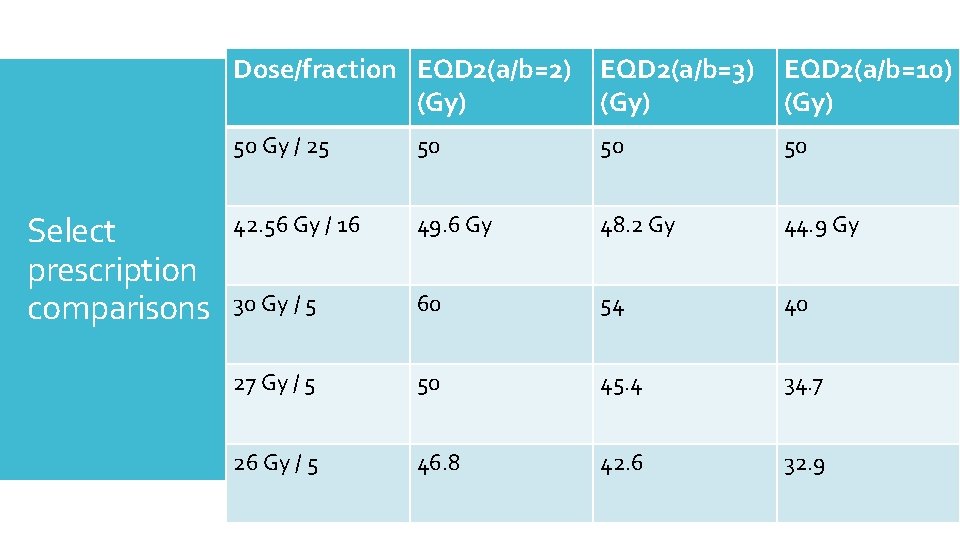
Select prescription comparisons Dose/fraction EQD 2(a/b=2) (Gy) EQD 2(a/b=3) (Gy) EQD 2(a/b=10) (Gy) 50 Gy / 25 50 50 50 42. 56 Gy / 16 49. 6 Gy 48. 2 Gy 44. 9 Gy 30 Gy / 5 60 54 40 27 Gy / 5 50 45. 4 34. 7 26 Gy / 5 46. 8 42. 6 32. 9
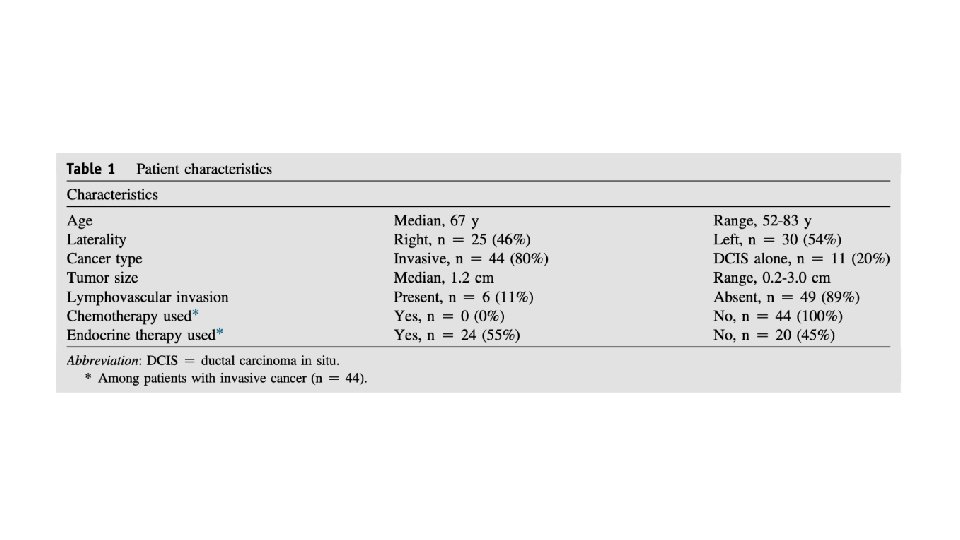
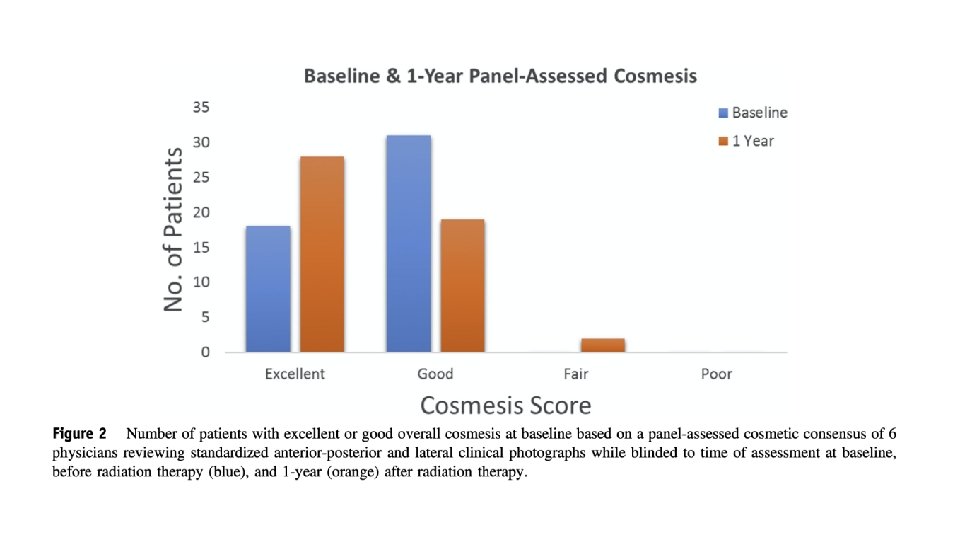
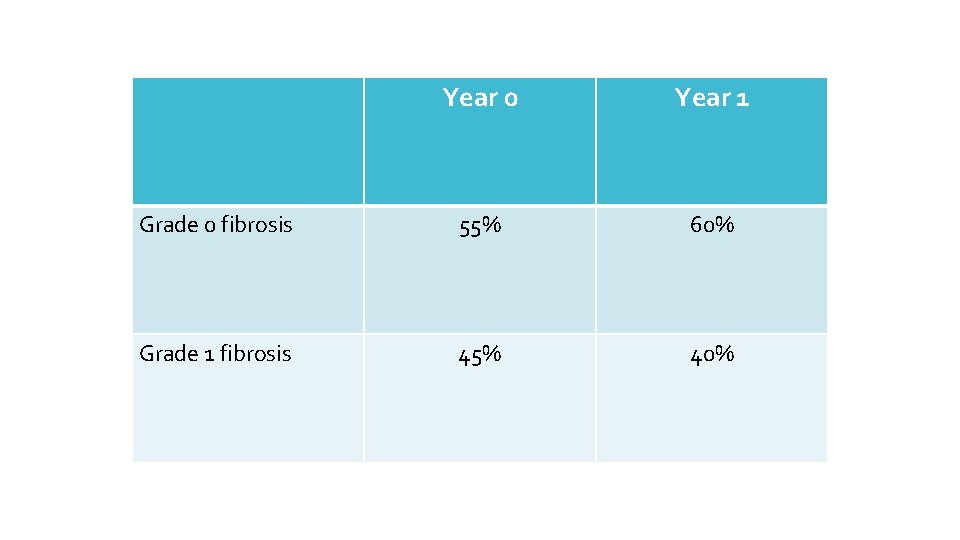
Year 0 Year 1 Grade 0 fibrosis 55% 60% Grade 1 fibrosis 45% 40%
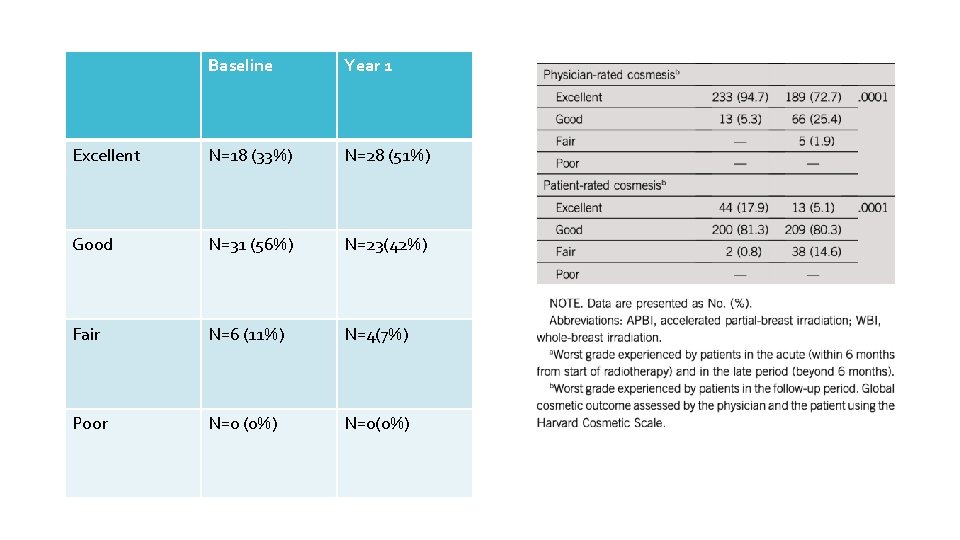
Baseline Year 1 Excellent N=18 (33%) N=28 (51%) Good N=31 (56%) N=23(42%) Fair N=6 (11%) N=4(7%) Poor N=0 (0%) N=0(0%)
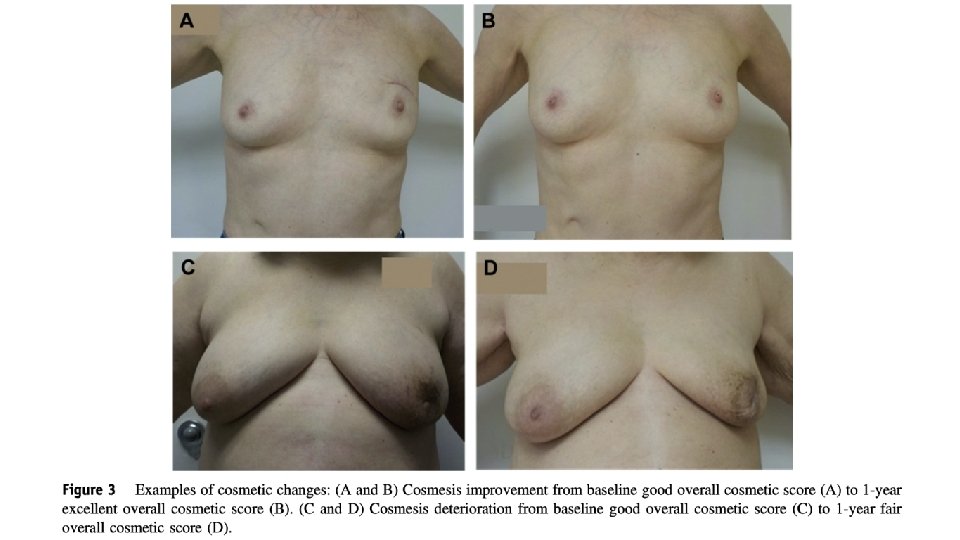
Choice of fractionation (daily vs non-consecutive days) Largest differences Given difference in methodologies, no convincing evidence of cosmesis difference LC not yet reported for ACCEL, no direct comparison arm My personal pre-test probability is that likely are comparable, though impossible to formally evaluate
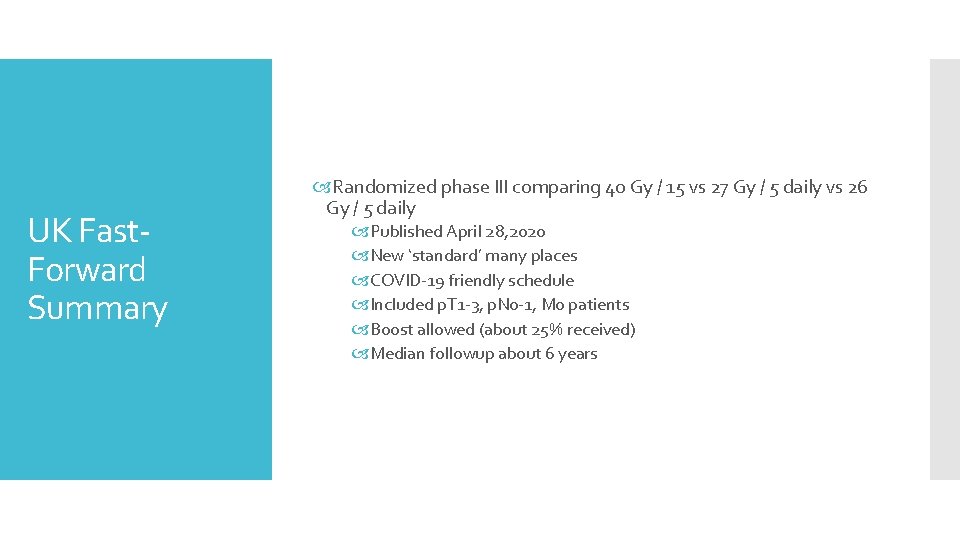
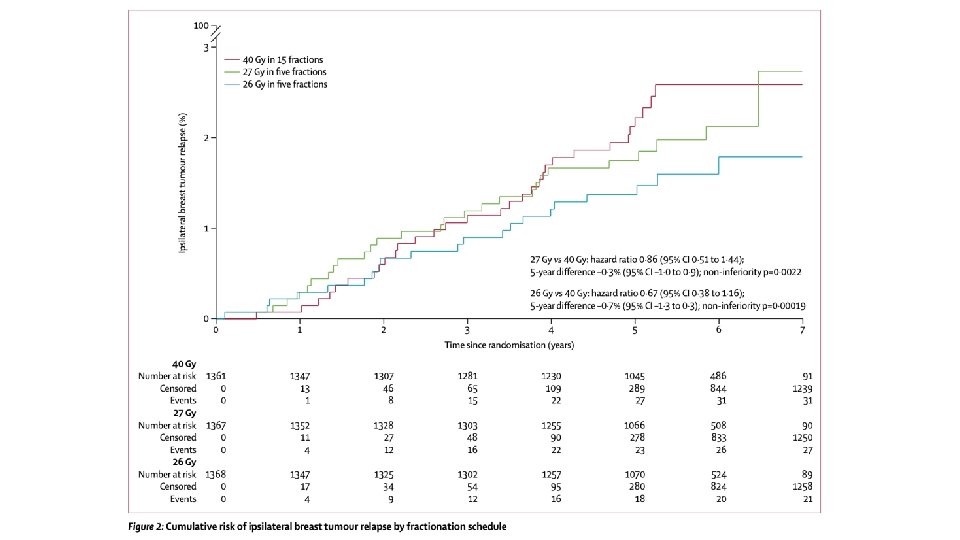
UK Fast. Forward Summary Randomized phase III comparing 40 Gy / 15 vs 27 Gy / 5 daily vs 26 Gy / 5 daily Published April 28, 2020 New ‘standard’ many places COVID-19 friendly schedule Included p. T 1 -3, p. N 0 -1, M 0 patients Boost allowed (about 25% received) Median followup about 6 years
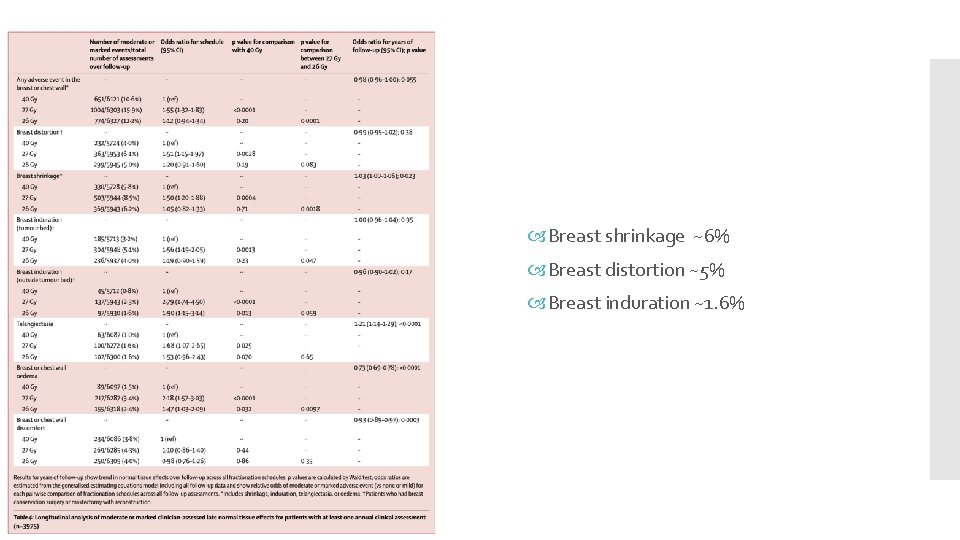
Breast shrinkage ~6% Breast distortion ~5% Breast induration ~1. 6%
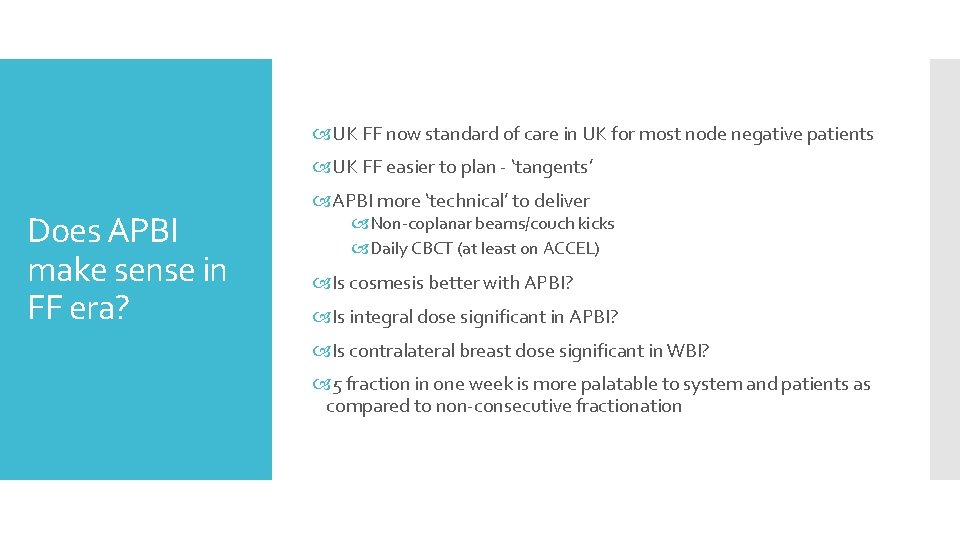
UK FF now standard of care in UK for most node negative patients UK FF easier to plan - ‘tangents’ Does APBI make sense in FF era? APBI more ‘technical’ to deliver Non-coplanar beams/couch kicks Daily CBCT (at least on ACCEL) Is cosmesis better with APBI? Is integral dose significant in APBI? Is contralateral breast dose significant in WBI? 5 fraction in one week is more palatable to system and patients as compared to non-consecutive fractionation
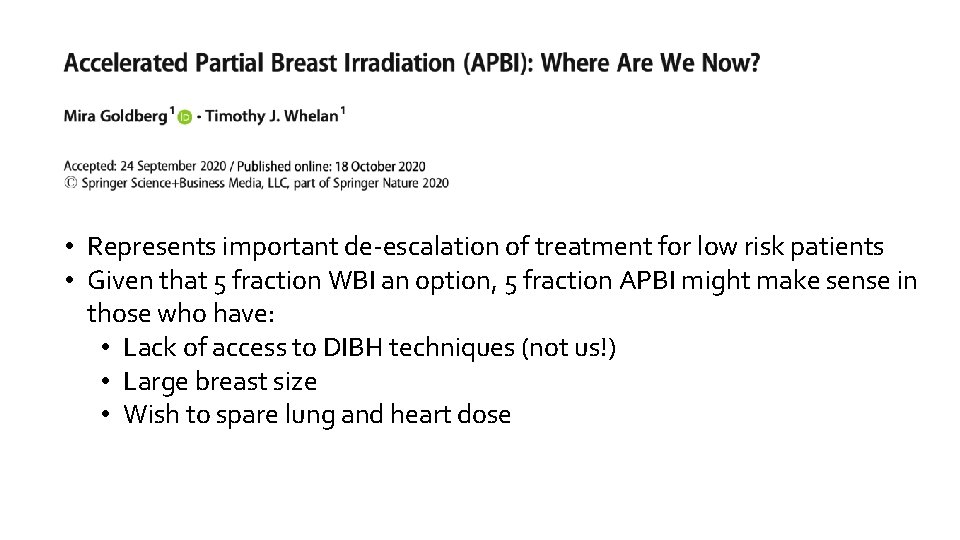
• Represents important de-escalation of treatment for low risk patients • Given that 5 fraction WBI an option, 5 fraction APBI might make sense in those who have: • Lack of access to DIBH techniques (not us!) • Large breast size • Wish to spare lung and heart dose
Discussion
Special Thanks Dr Grendarova and ACCEL trial team

Fini
- Slides: 69