
APA Format Basics Margins are already set Use
APA Format

Basics • Margins are already set • Use Times New Roman size 12 font • Double-spaced throughout
You will need: • A title page • An abstract page • Body of paper (section headings optional) • Reference list
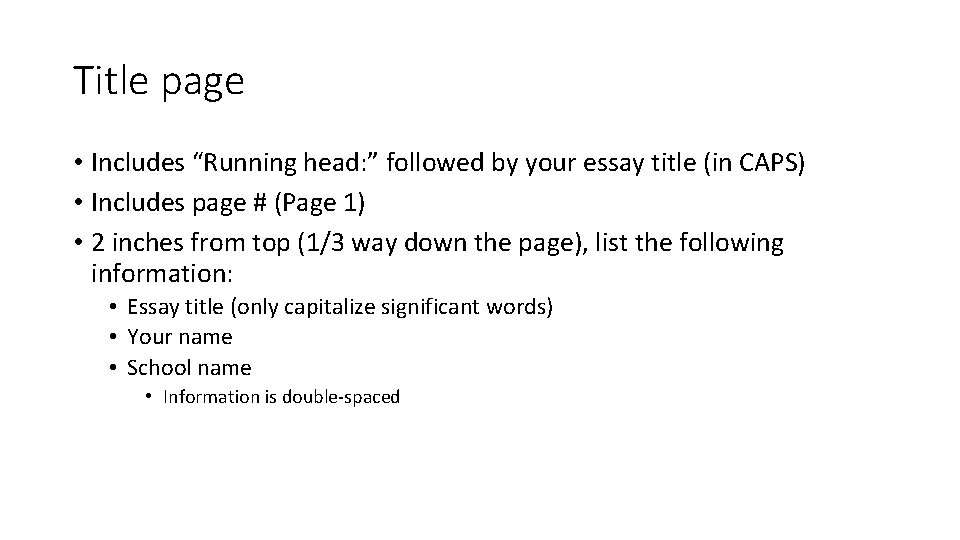
Title page • Includes “Running head: ” followed by your essay title (in CAPS) • Includes page # (Page 1) • 2 inches from top (1/3 way down the page), list the following information: • Essay title (only capitalize significant words) • Your name • School name • Information is double-spaced

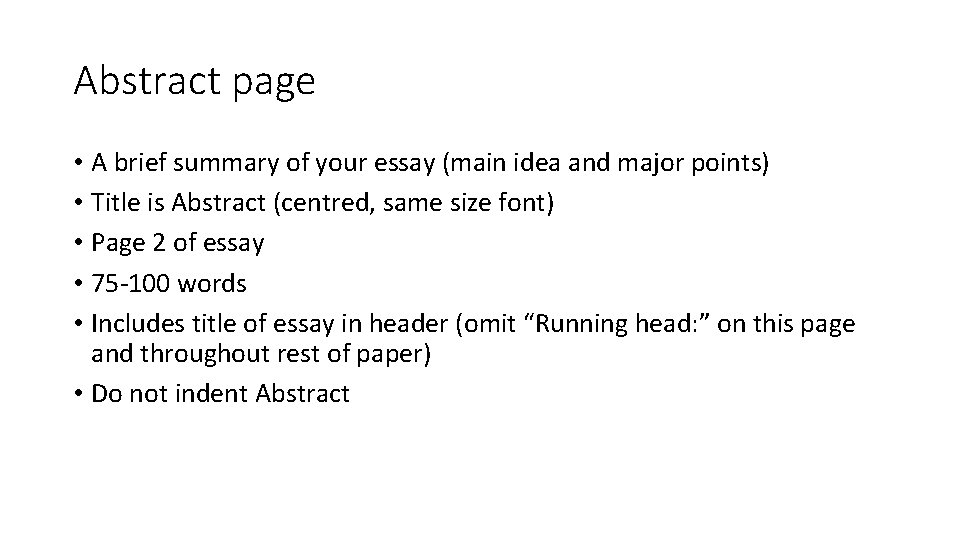
Abstract page • A brief summary of your essay (main idea and major points) • Title is Abstract (centred, same size font) • Page 2 of essay • 75 -100 words • Includes title of essay in header (omit “Running head: ” on this page and throughout rest of paper) • Do not indent Abstract
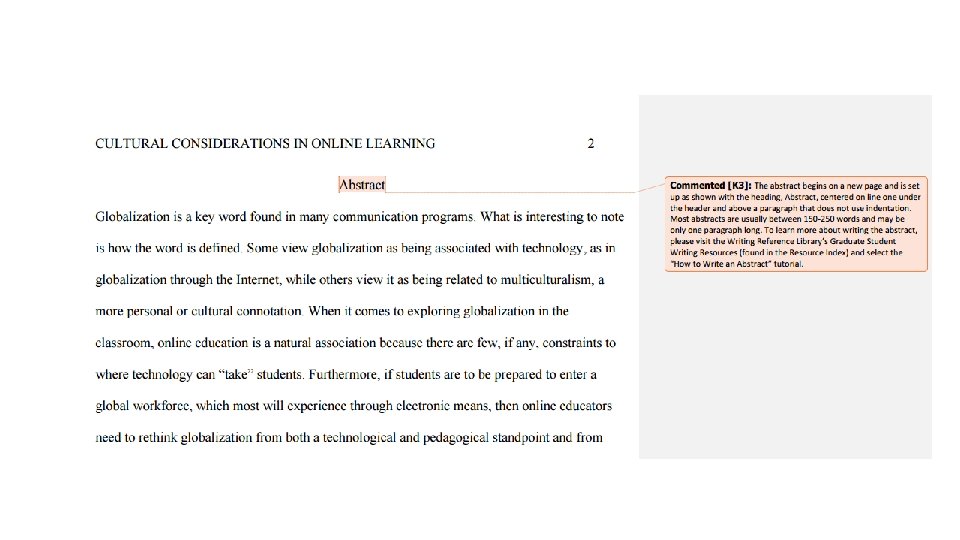
Body • Begins on page 3 • Centre essay title (upper/lowercase letters) on top of page • Begin with your introduction and indent all paragraphs • You will focus on 3 main points for this essay (may include more if you wish) • Your thesis will appear at the end of your introduction • Thesis statement can be direct (introduce 3 main points) • Thesis statement can also generally introduce the point of your paper

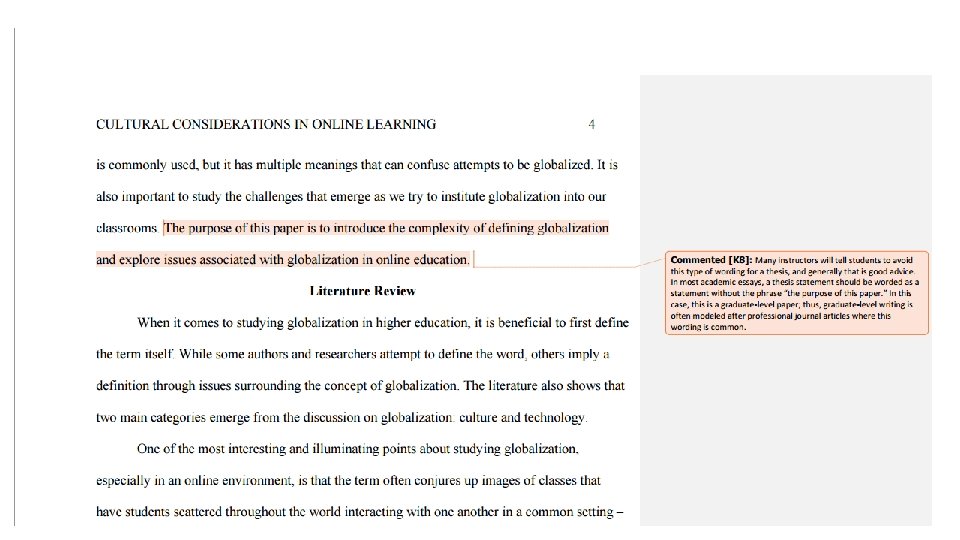
Body • Present your main points with supporting evidence • Use different paragraphs for each main point • Use transitions and concluding sentences at the beginning/end of paragraphs • Headings are optional if you wish to split your paper up into different sections (ex. Work, Production, Distribution and Debt) • Headings help organize your paper and draw attention to important sections • Centred and bolded
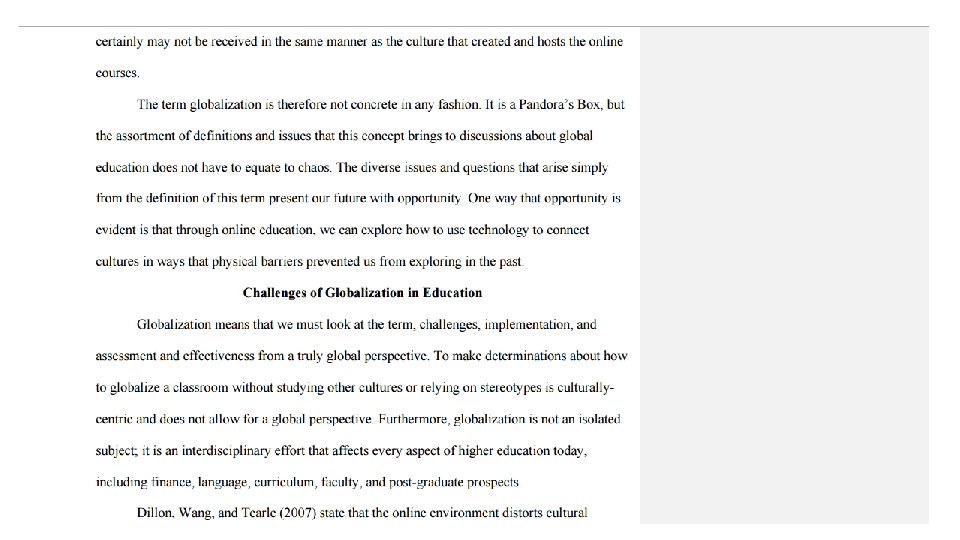
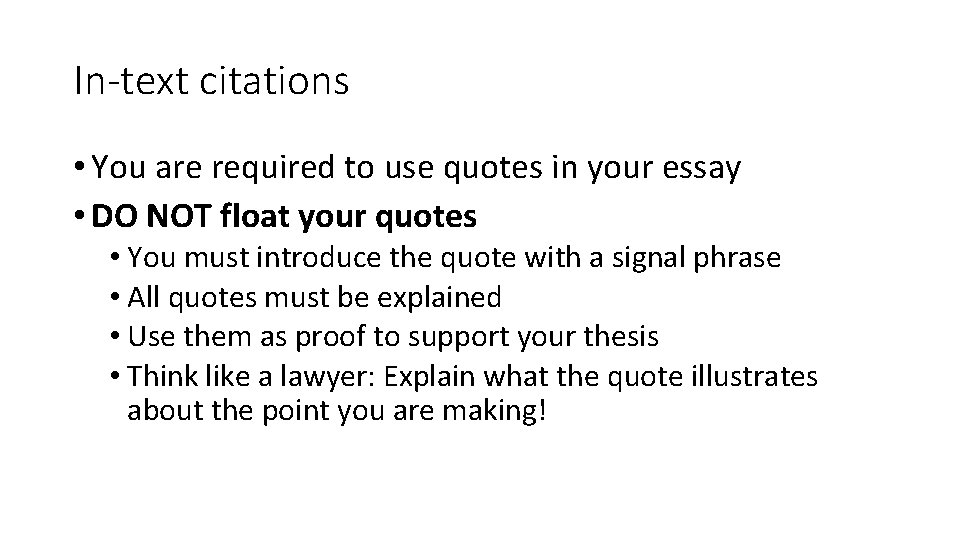
In-text citations • You are required to use quotes in your essay • DO NOT float your quotes • You must introduce the quote with a signal phrase • All quotes must be explained • Use them as proof to support your thesis • Think like a lawyer: Explain what the quote illustrates about the point you are making!
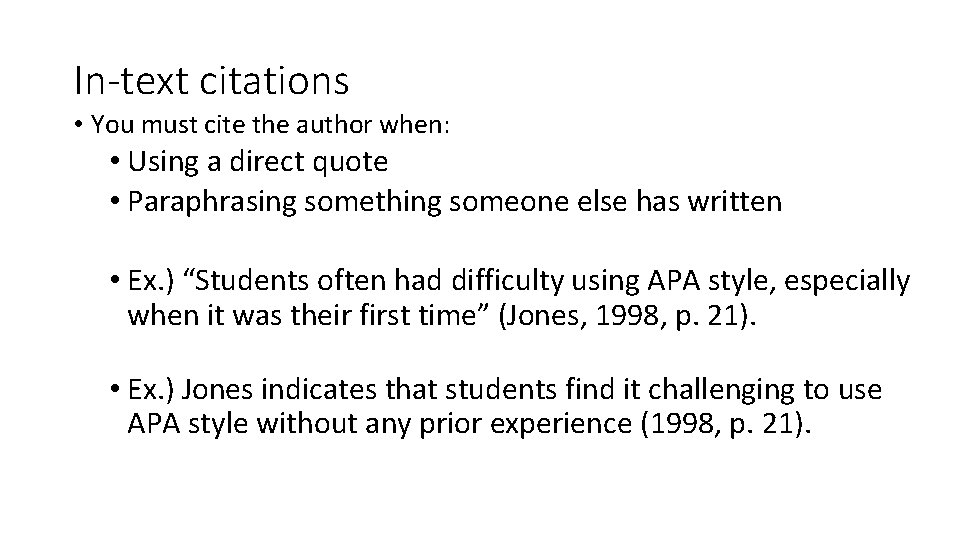
In-text citations • You must cite the author when: • Using a direct quote • Paraphrasing something someone else has written • Ex. ) “Students often had difficulty using APA style, especially when it was their first time” (Jones, 1998, p. 21). • Ex. ) Jones indicates that students find it challenging to use APA style without any prior experience (1998, p. 21).
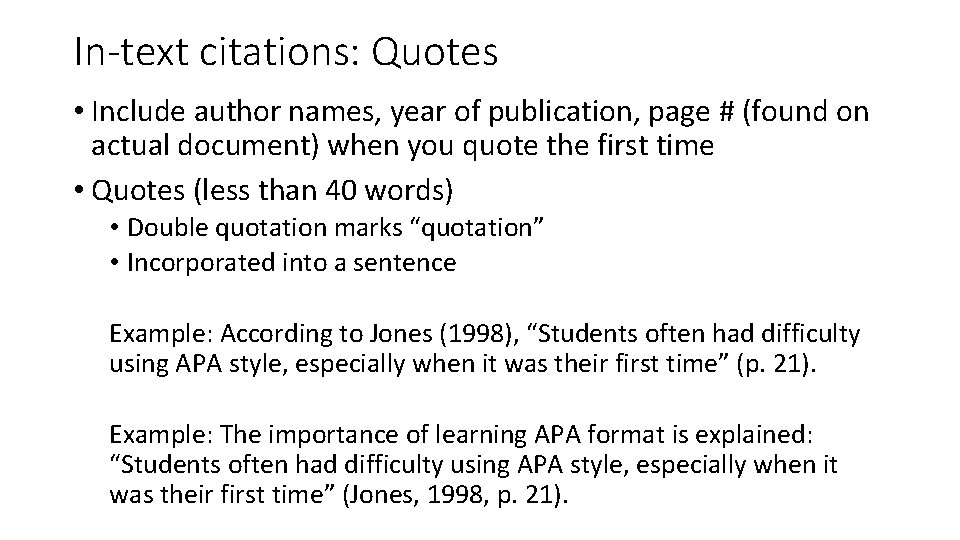
In-text citations: Quotes • Include author names, year of publication, page # (found on actual document) when you quote the first time • Quotes (less than 40 words) • Double quotation marks “quotation” • Incorporated into a sentence Example: According to Jones (1998), “Students often had difficulty using APA style, especially when it was their first time” (p. 21). Example: The importance of learning APA format is explained: “Students often had difficulty using APA style, especially when it was their first time” (Jones, 1998, p. 21).
In-text citations: Quotes • We are only working with 1 source • When using a quote in a new paragraph, you will only reference the author and the page # • If you use 2 quotes in the same paragraph, you do not reference the year in the second quote (just page #) • In the body of your essay, authors name are connected with “and” • In parenthetical citations, use “&”
In-text citations: Block Quotes • If quoting more than 40 words, you must use a block quote • Block quotes don’t use quotation marks • The signal phrase (how you introduce the quote) must end with a colon (: ) • You will mention the author and include the page # at the end in parentheses • Punctuation to end the quote included before the page #
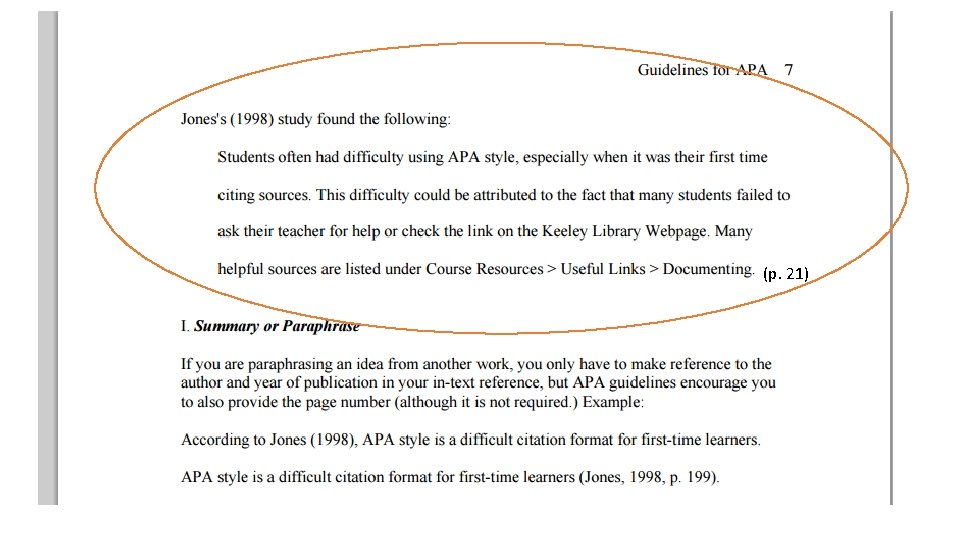
(p. 21)
Conclusion • Summarize main points • End with a statement that leaves the reader thinking, makes impact • “So what? ? ? ” Why does this matter?
References • Appears at the end of your paper • Title is References and is centred • When referencing 2 authors, connect their names with & • Last name of authors come first • Only use the first initials for their first names • Indent anything after the first line • Double-spaced
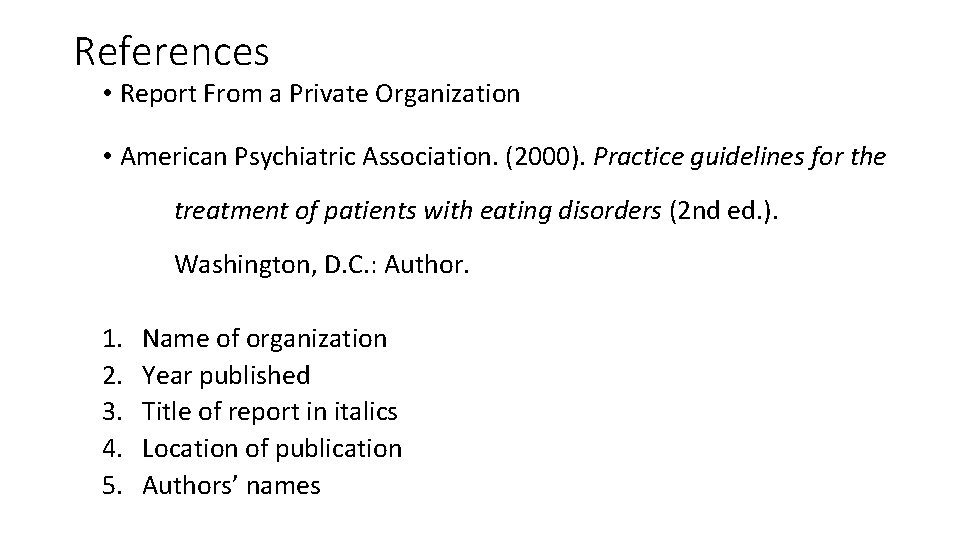
References • Report From a Private Organization • American Psychiatric Association. (2000). Practice guidelines for the treatment of patients with eating disorders (2 nd ed. ). Washington, D. C. : Author. 1. 2. 3. 4. 5. Name of organization Year published Title of report in italics Location of publication Authors’ names
- Slides: 21