
AP WORLD REVIEW TIME PERIOD CHARACTERIZATIONS AP WORLD
- Slides: 29
AP WORLD REVIEW: TIME PERIOD CHARACTERIZATIONS
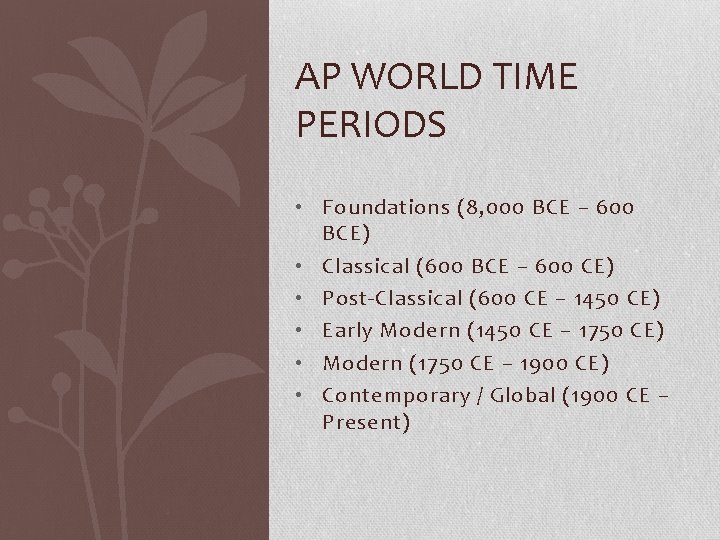
AP WORLD TIME PERIODS • Foundations (8, 000 BCE – 600 BCE) • Classical (600 BCE – 600 CE) • Post-Classical (600 CE – 1450 CE) • Early Modern (1450 CE – 1750 CE) • Modern (1750 CE – 1900 CE) • Contemporary / Global (1900 CE – Present)
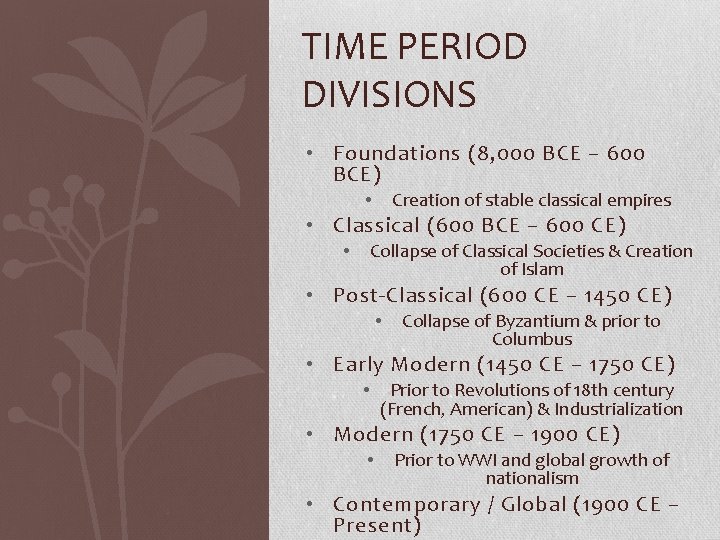
TIME PERIOD DIVISIONS • Foundations (8, 000 BCE – 600 BCE) Creation of stable classical empires • • Classical (600 BCE – 600 CE) Collapse of Classical Societies & Creation of Islam • • Post-Classical (600 CE – 1450 CE) • Collapse of Byzantium & prior to Columbus • Early Modern (1450 CE – 1750 CE) • Prior to Revolutions of 18 th century (French, American) & Industrialization • Modern (1750 CE – 1900 CE) • Prior to WWI and global growth of nationalism • Contemporary / Global (1900 CE – Present)
FOUNDATIONS 8000 BCE – 600 BCE • Human Prehistory and Early Civilizations
Foundations: Major Themes • Hunter-gatherers (disadvantages) • Neolithic Revolution + agriculture (advantages) • Civilization • Characteristics • River Valley Civilizations • Egypt • Mesopotamia • Sumer • Babylon • Indus River Valley • Harappa and Mohenjo-Daro • Huang He River Valley • Xia (fictional? ), Shang • Little to no expansion • Limited interaction if living outside major civs
CLASSICAL 600 BCE – 600 CE • • Classical China India Greece and Rome Declines
Classical Period: Major Themes • China: Zhou, Qin, Han • India: Mauryan, Gupta • Mediterranean: Greece, Etruscans, Rome • Similarities: • Major religions/ideologies develop • Massive territorial expansion • Integrate new territories (ex: China and Rome) • Iron tools and weapons • Connection occurs through trade primarily (Silk Road) • Exception: • Alexander the Great and Bactria (Mauryan India) • China and entrance of Indian Buddhism
Classical Period: Major Themes • Late Classical Period • Collapse of empires • Turn to religion or ideology in time of chaos • Buddhism (Siddhartha Gautama) • Hinduism (Vedic texts) • Christianity (Bible) • Confucianism (Confucius, Analects of Confucius) • Legalism (Shi Huangdi) • Daoism (Lao Tzu)
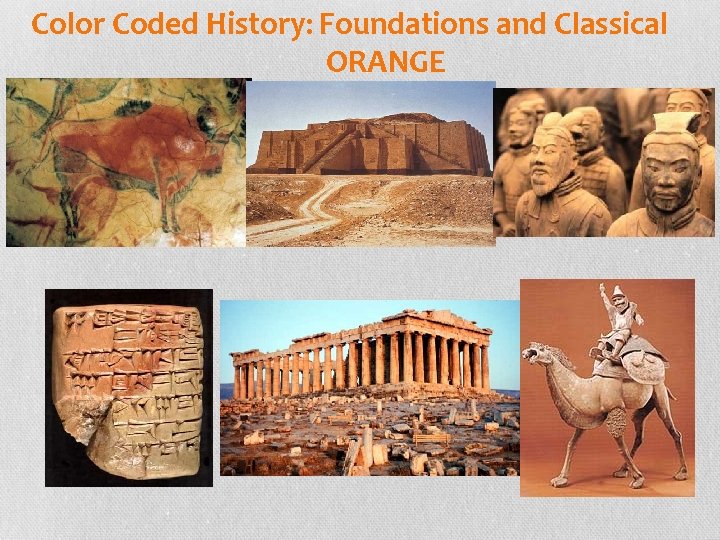
Color Coded History: Foundations and Classical ORANGE
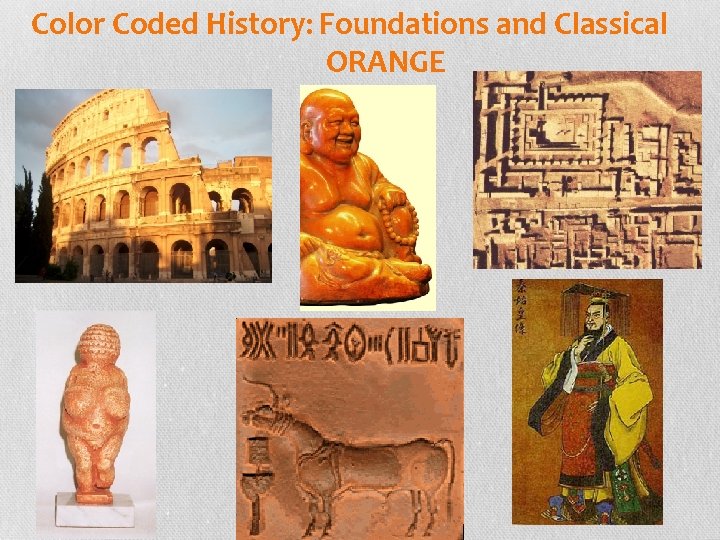
Color Coded History: Foundations and Classical ORANGE
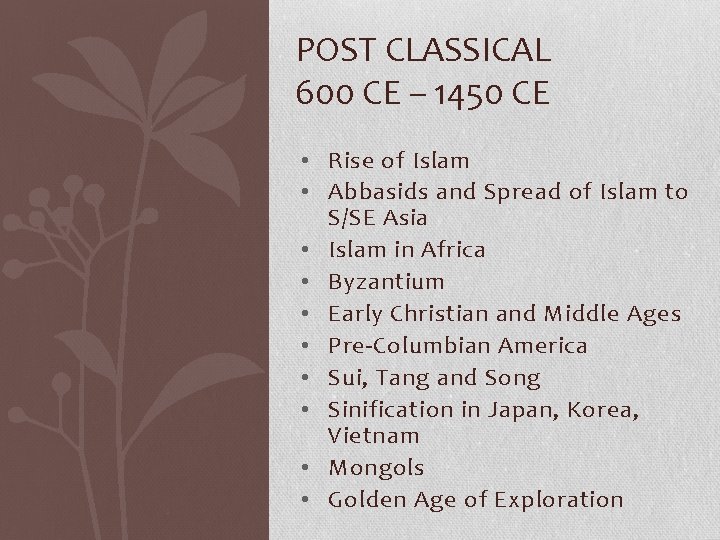
POST CLASSICAL 600 CE – 1450 CE • Rise of Islam • Abbasids and Spread of Islam to S/SE Asia • Islam in Africa • Byzantium • Early Christian and Middle Ages • Pre-Columbian America • Sui, Tang and Song • Sinification in Japan, Korea, Vietnam • Mongols • Golden Age of Exploration
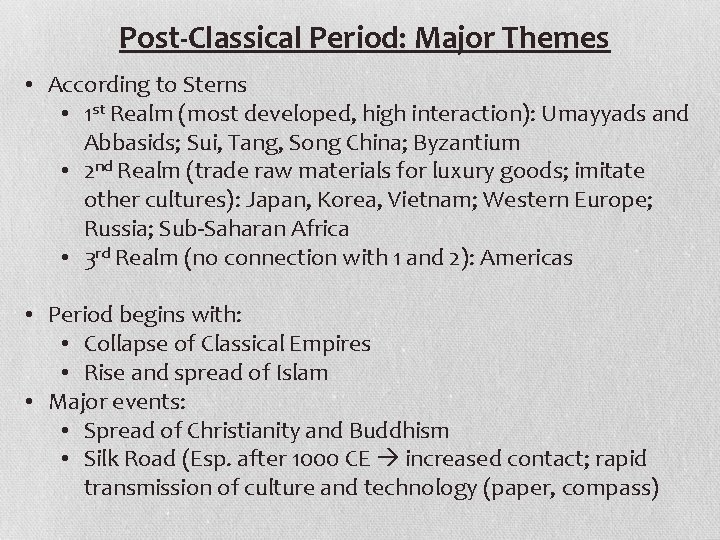
Post-Classical Period: Major Themes • According to Sterns • 1 st Realm (most developed, high interaction): Umayyads and Abbasids; Sui, Tang, Song China; Byzantium • 2 nd Realm (trade raw materials for luxury goods; imitate other cultures): Japan, Korea, Vietnam; Western Europe; Russia; Sub-Saharan Africa • 3 rd Realm (no connection with 1 and 2): Americas • Period begins with: • Collapse of Classical Empires • Rise and spread of Islam • Major events: • Spread of Christianity and Buddhism • Silk Road (Esp. after 1000 CE increased contact; rapid transmission of culture and technology (paper, compass)
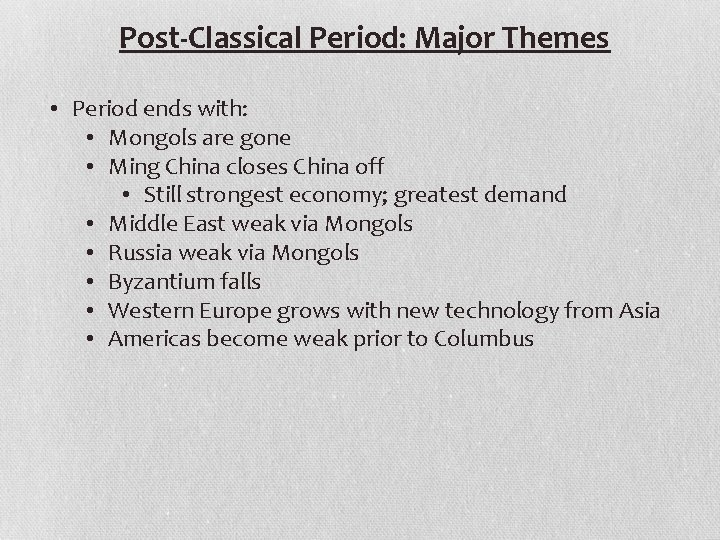
Post-Classical Period: Major Themes • Period ends with: • Mongols are gone • Ming China closes China off • Still strongest economy; greatest demand • Middle East weak via Mongols • Russia weak via Mongols • Byzantium falls • Western Europe grows with new technology from Asia • Americas become weak prior to Columbus
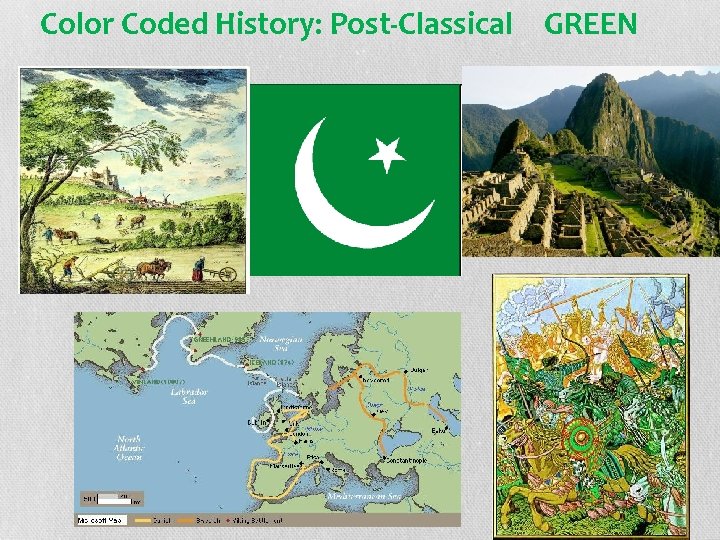
Color Coded History: Post-Classical GREEN
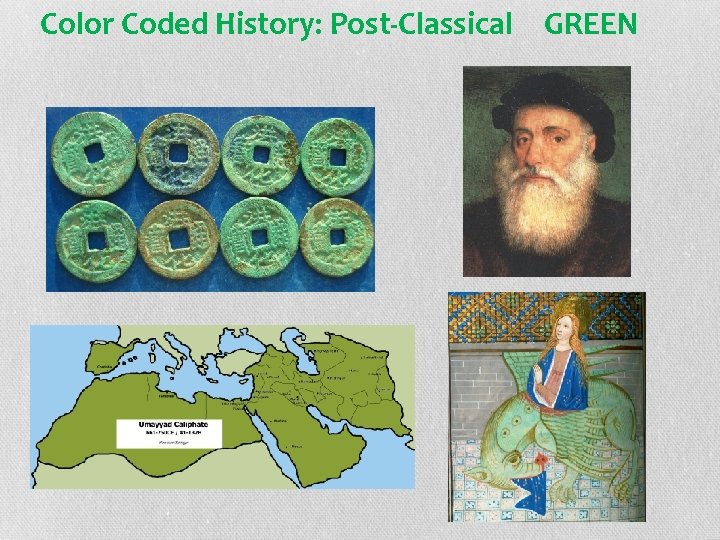
Color Coded History: Post-Classical GREEN
EARLY MODERN 1450 CE – 1750 CE • The World Economy • Renaissance and 17 th -century Europe • Rise of Russia • Early Latin America • Atlantic Slave Trade • Ottomans; Mughals; Safavids • Ming China and Tokugawa Japan
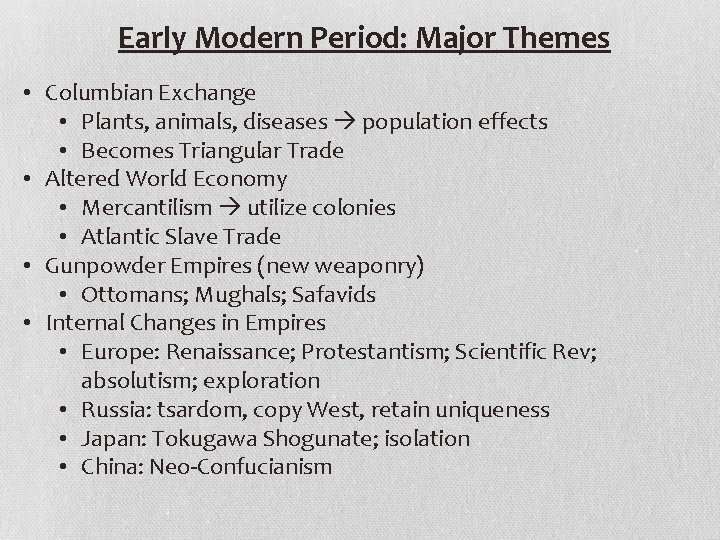
Early Modern Period: Major Themes • Columbian Exchange • Plants, animals, diseases population effects • Becomes Triangular Trade • Altered World Economy • Mercantilism utilize colonies • Atlantic Slave Trade • Gunpowder Empires (new weaponry) • Ottomans; Mughals; Safavids • Internal Changes in Empires • Europe: Renaissance; Protestantism; Scientific Rev; absolutism; exploration • Russia: tsardom, copy West, retain uniqueness • Japan: Tokugawa Shogunate; isolation • China: Neo-Confucianism
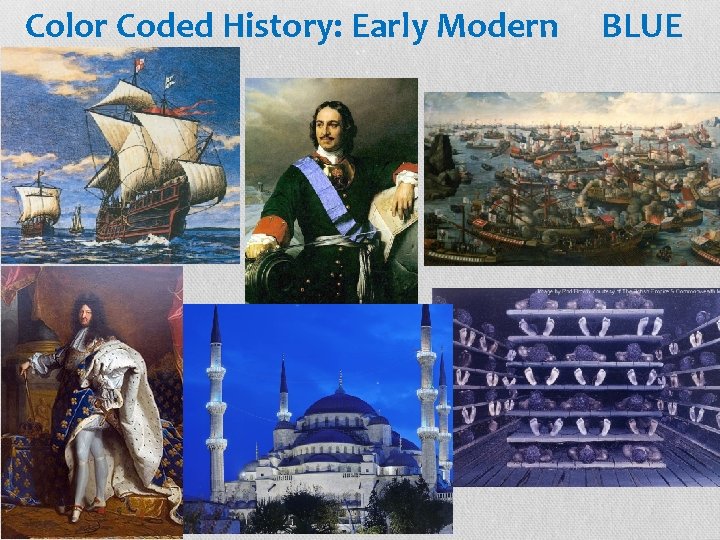
Color Coded History: Early Modern BLUE
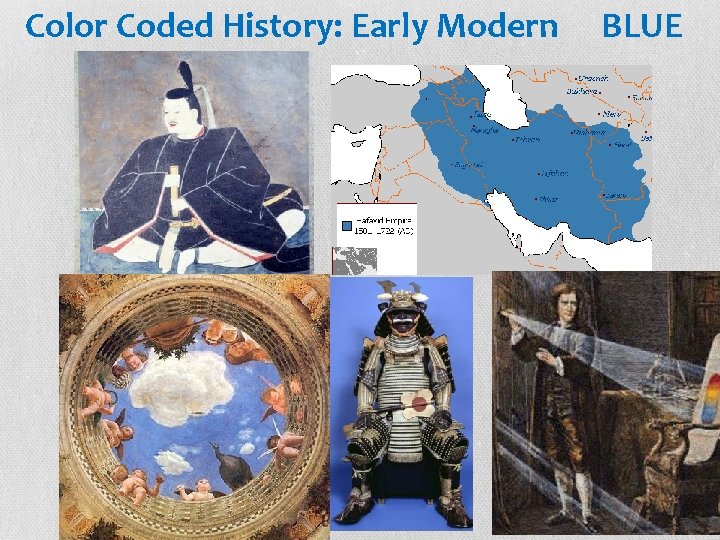
Color Coded History: Early Modern BLUE
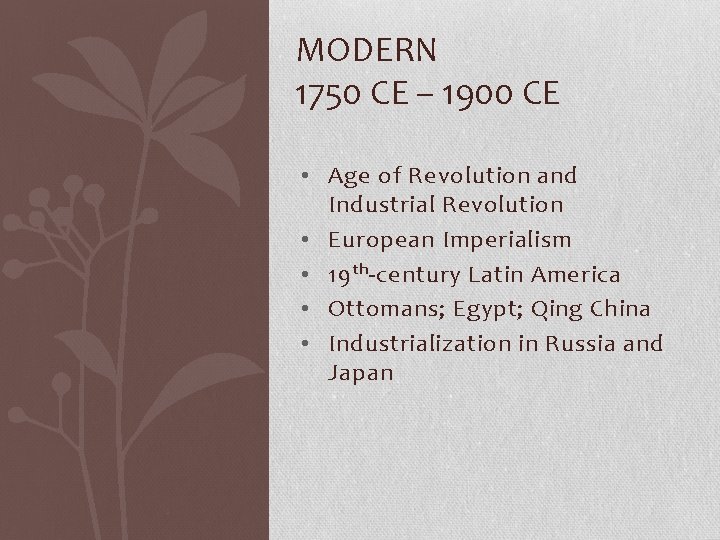
MODERN 1750 CE – 1900 CE • Age of Revolution and Industrial Revolution • European Imperialism • 19 th -century Latin America • Ottomans; Egypt; Qing China • Industrialization in Russia and Japan
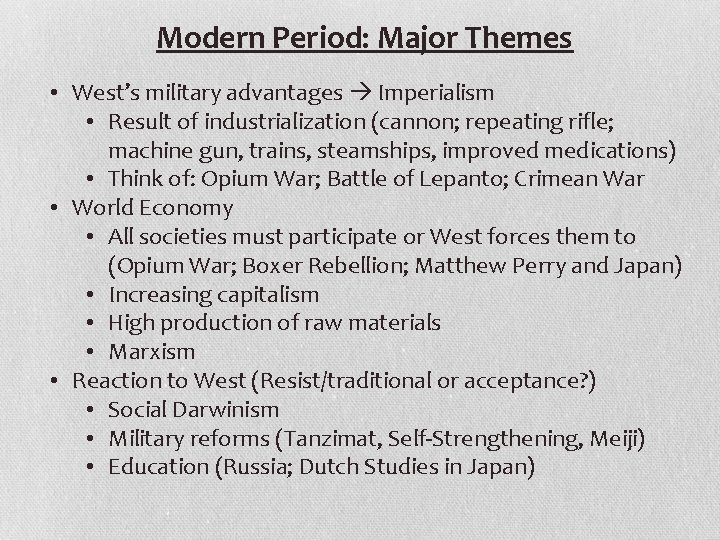
Modern Period: Major Themes • West’s military advantages Imperialism • Result of industrialization (cannon; repeating rifle; machine gun, trains, steamships, improved medications) • Think of: Opium War; Battle of Lepanto; Crimean War • World Economy • All societies must participate or West forces them to (Opium War; Boxer Rebellion; Matthew Perry and Japan) • Increasing capitalism • High production of raw materials • Marxism • Reaction to West (Resist/traditional or acceptance? ) • Social Darwinism • Military reforms (Tanzimat, Self-Strengthening, Meiji) • Education (Russia; Dutch Studies in Japan)
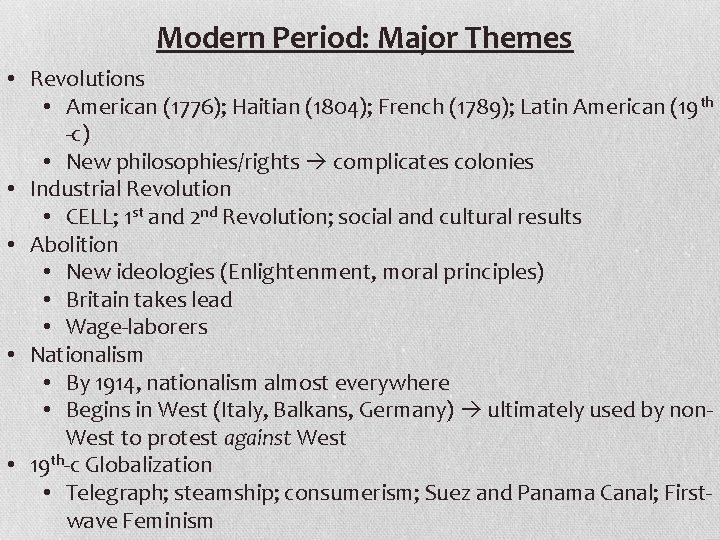
Modern Period: Major Themes • Revolutions • American (1776); Haitian (1804); French (1789); Latin American (19 th -c) • New philosophies/rights complicates colonies • Industrial Revolution • CELL; 1 st and 2 nd Revolution; social and cultural results • Abolition • New ideologies (Enlightenment, moral principles) • Britain takes lead • Wage-laborers • Nationalism • By 1914, nationalism almost everywhere • Begins in West (Italy, Balkans, Germany) ultimately used by non. West to protest against West • 19 th-c Globalization • Telegraph; steamship; consumerism; Suez and Panama Canal; Firstwave Feminism
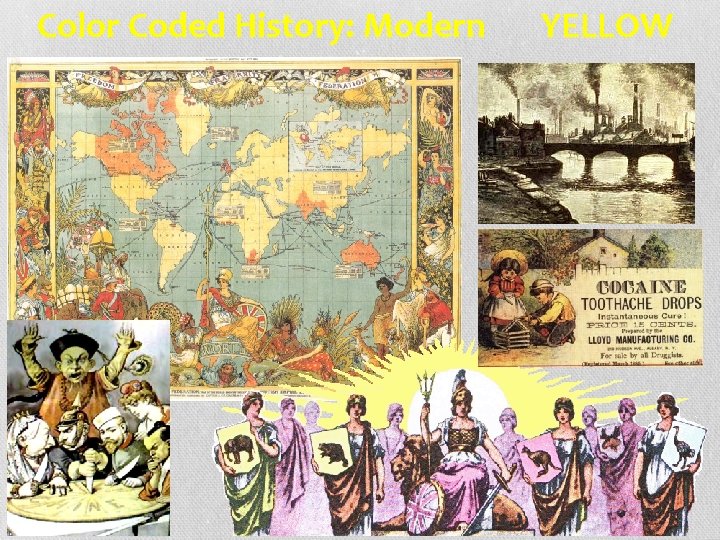
Color Coded History: Modern YELLOW
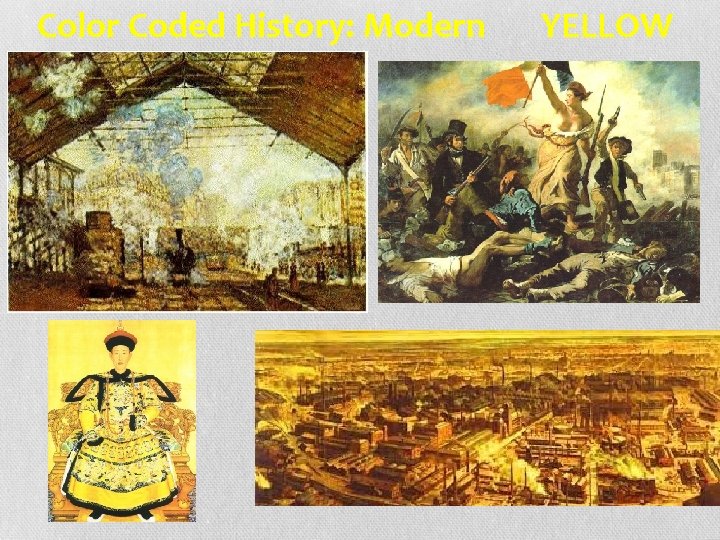
Color Coded History: Modern YELLOW
GLOBAL 1900 CE - PRESENT WWI Interwar Period WWII Cold War 20 th /21 st c. Latin America Independence in Asia, Africa, Middle East • Mao’s China and the Pacific Rim • End of Cold War • Globalization • • •
Global Period: Major Themes • Decline of West’s Power • Decolonization • Complicated World Economy • Neocolonialism (Danger of single-export) • War over resources: Iran-Iraq War; Persian Gulf War • Communism vs. Capitalism • China; Pacific Rim; Sub-Saharan Africa added • Population Growth • 1914 to present: 3 x • Struggle to provide resources; public health; food • Technology • Radio; telephone; cell phone; satellite; air travel; internet
Global Period: Major Themes • Wars • WWI; WWII; Chinese Civil War; Vietnam War; Korean War • Revolutions • Social upheaval: growing middle class • Chinese Rev (1911); Mexican Rev (1910); Russian Rev (1917) • Empire and Monarchies end • Fascism; authoritarianism Democratization in 70 s/80 s • Cultural Change • Consumerism; Coca-cola-nization • Rejection: Religious fundamentalism • Gender • Traditions remain: Birth control • Second-wave Feminism; constitutional equality • Globalization
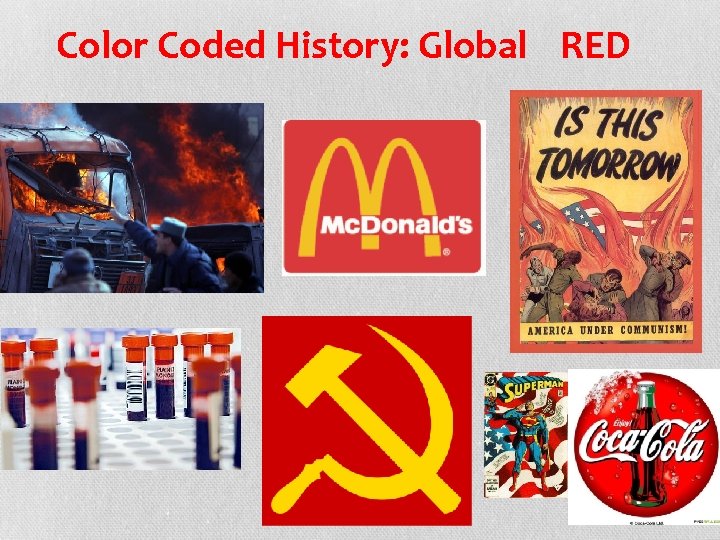
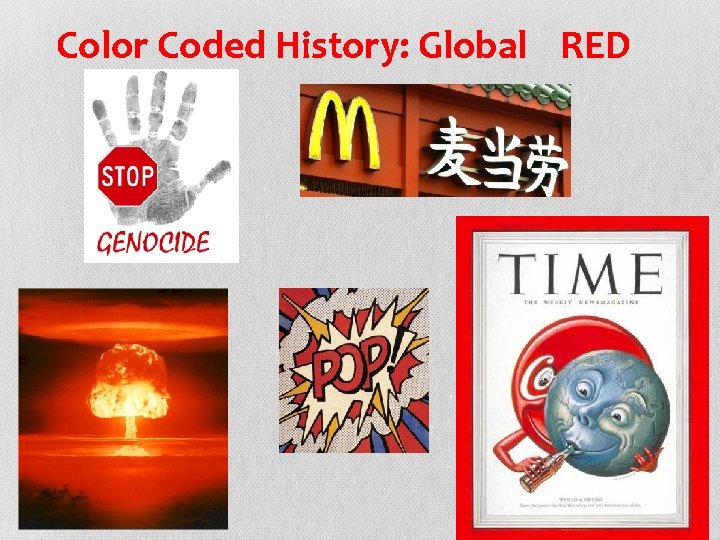
Color Coded History: Global RED
Color Coded History: Global RED