
AP WORLD HISTORY PERIOD 2 CHAPTER 1 EXPLORATION
- Slides: 32
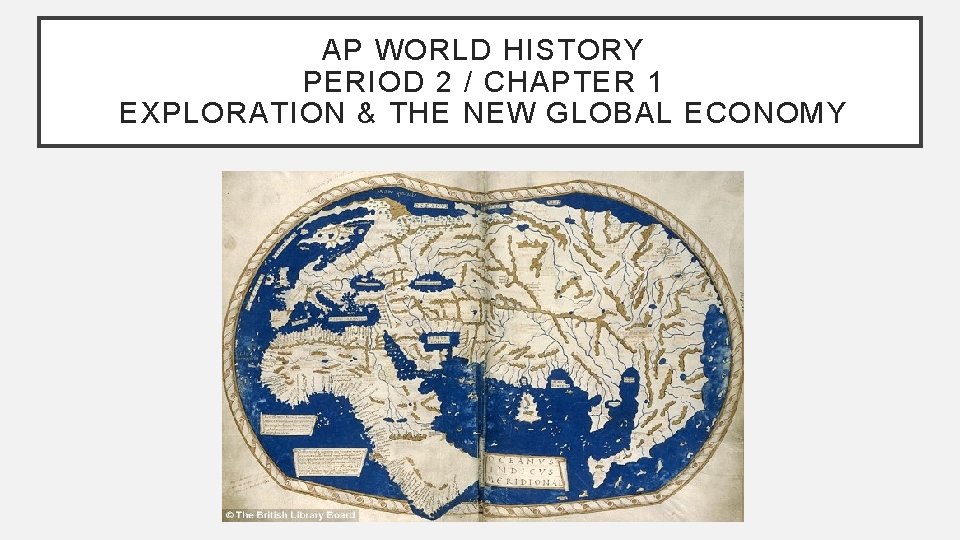
AP WORLD HISTORY PERIOD 2 / CHAPTER 1 EXPLORATION & THE NEW GLOBAL ECONOMY
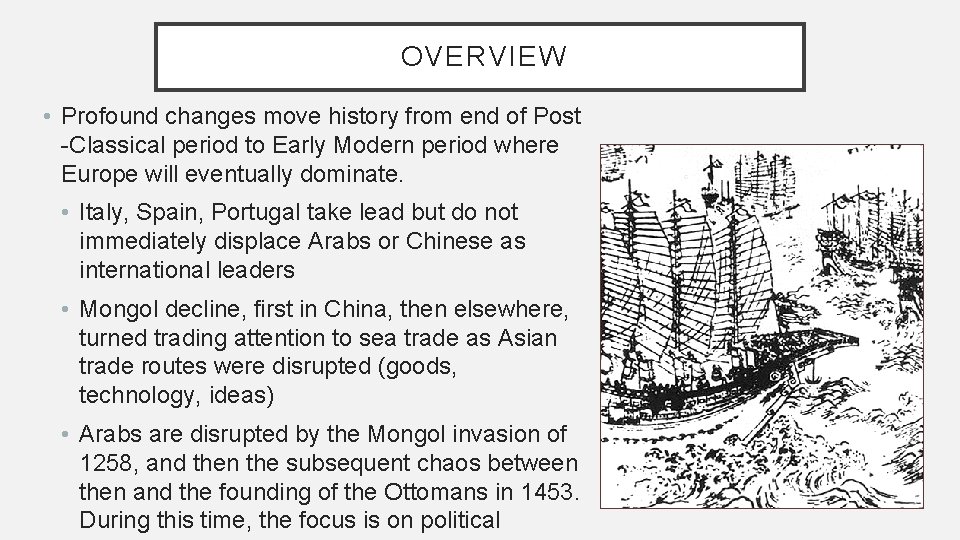
OVERVIEW • Profound changes move history from end of Post -Classical period to Early Modern period where Europe will eventually dominate. • Italy, Spain, Portugal take lead but do not immediately displace Arabs or Chinese as international leaders • Mongol decline, first in China, then elsewhere, turned trading attention to sea trade as Asian trade routes were disrupted (goods, technology, ideas) • Arabs are disrupted by the Mongol invasion of 1258, and then the subsequent chaos between then and the founding of the Ottomans in 1453. During this time, the focus is on political
THE RISE OF THE WEST: ERA OF CHANGE • Medieval institutions decline (knights; power of Church) • Strengthening of feudalism larger monarchies and regional governments • Hundred Years’ War new military and technological advancements; strengthens power of English and French kings • Acceptance of capitalism and interest in trade • Silk Roads had provided increasing access to Asian knowledge and technology • West had become used to Asian luxury goods (cinnamon, nutmeg, silk, sugar, perfume, jewels) but only had crude items to offer (wool, tin, copper, honey, salt) which almost never equaled the value of Asian goods; they had to make up for this in gold
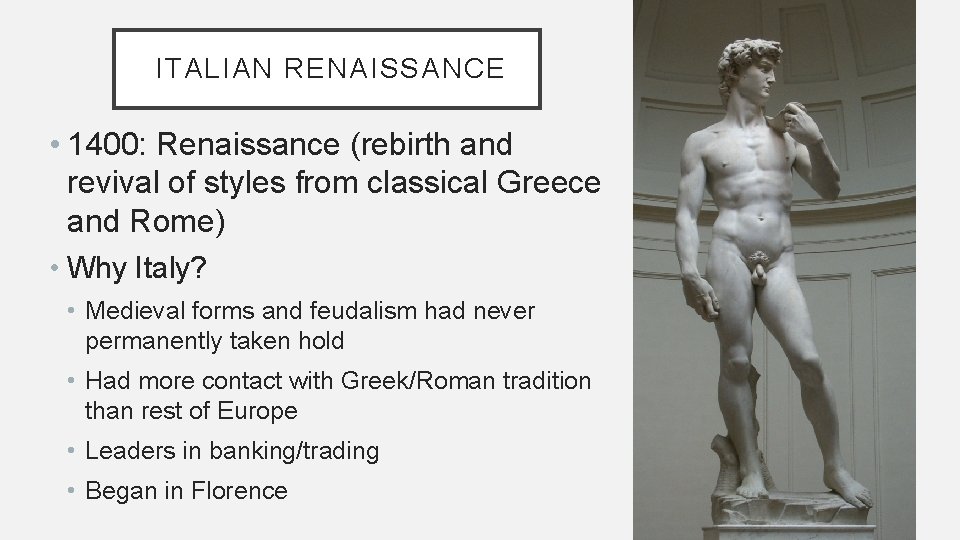
ITALIAN RENAISSANCE • 1400: Renaissance (rebirth and revival of styles from classical Greece and Rome) • Why Italy? • Medieval forms and feudalism had never permanently taken hold • Had more contact with Greek/Roman tradition than rest of Europe • Leaders in banking/trading • Began in Florence
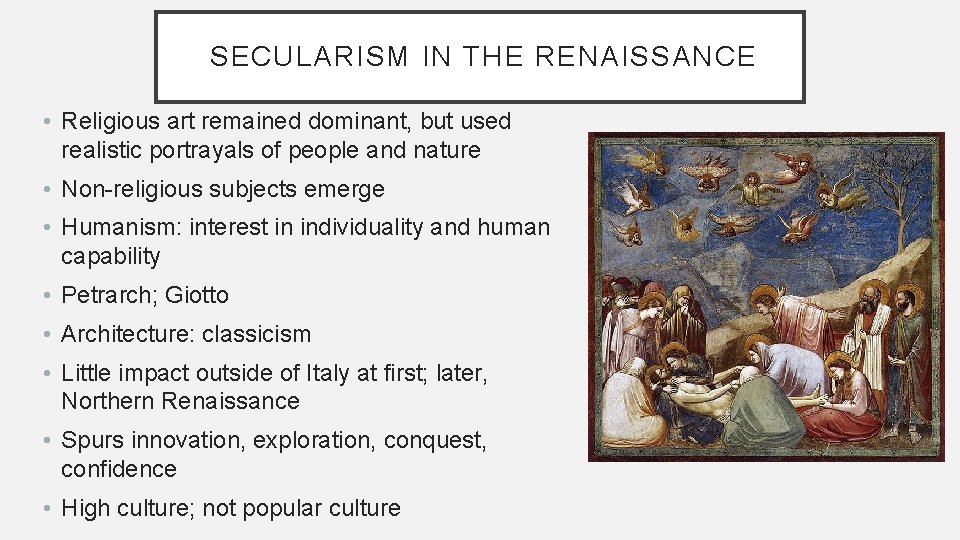
SECULARISM IN THE RENAISSANCE • Religious art remained dominant, but used realistic portrayals of people and nature • Non-religious subjects emerge • Humanism: interest in individuality and human capability • Petrarch; Giotto • Architecture: classicism • Little impact outside of Italy at first; later, Northern Renaissance • Spurs innovation, exploration, conquest, confidence • High culture; not popular culture
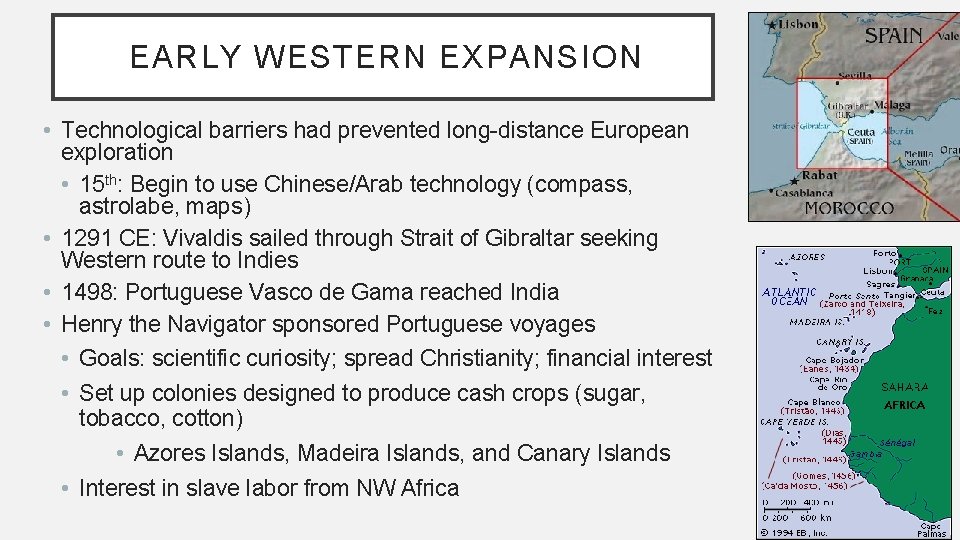
EARLY WESTERN EXPANSION • Technological barriers had prevented long-distance European exploration • 15 th: Begin to use Chinese/Arab technology (compass, astrolabe, maps) • 1291 CE: Vivaldis sailed through Strait of Gibraltar seeking Western route to Indies • 1498: Portuguese Vasco de Gama reached India • Henry the Navigator sponsored Portuguese voyages • Goals: scientific curiosity; spread Christianity; financial interest • Set up colonies designed to produce cash crops (sugar, tobacco, cotton) • Azores Islands, Madeira Islands, and Canary Islands • Interest in slave labor from NW Africa
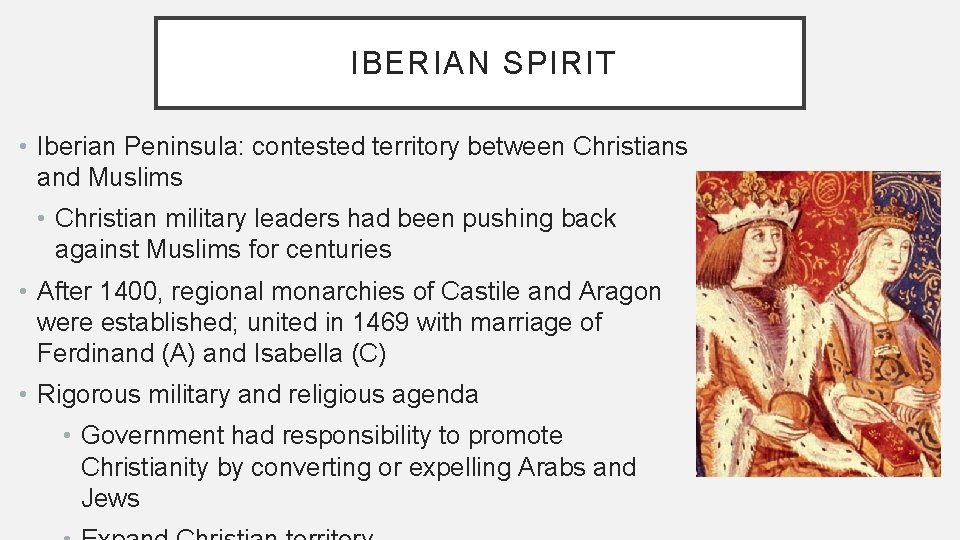
IBERIAN SPIRIT • Iberian Peninsula: contested territory between Christians and Muslims • Christian military leaders had been pushing back against Muslims for centuries • After 1400, regional monarchies of Castile and Aragon were established; united in 1469 with marriage of Ferdinand (A) and Isabella (C) • Rigorous military and religious agenda • Government had responsibility to promote Christianity by converting or expelling Arabs and Jews
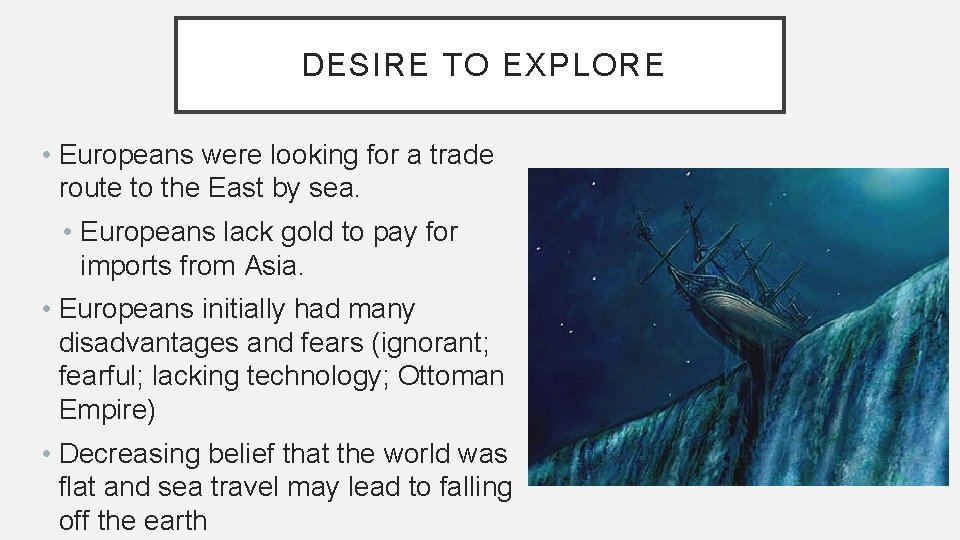
DESIRE TO EXPLORE • Europeans were looking for a trade route to the East by sea. • Europeans lack gold to pay for imports from Asia. • Europeans initially had many disadvantages and fears (ignorant; fearful; lacking technology; Ottoman Empire) • Decreasing belief that the world was flat and sea travel may lead to falling off the earth
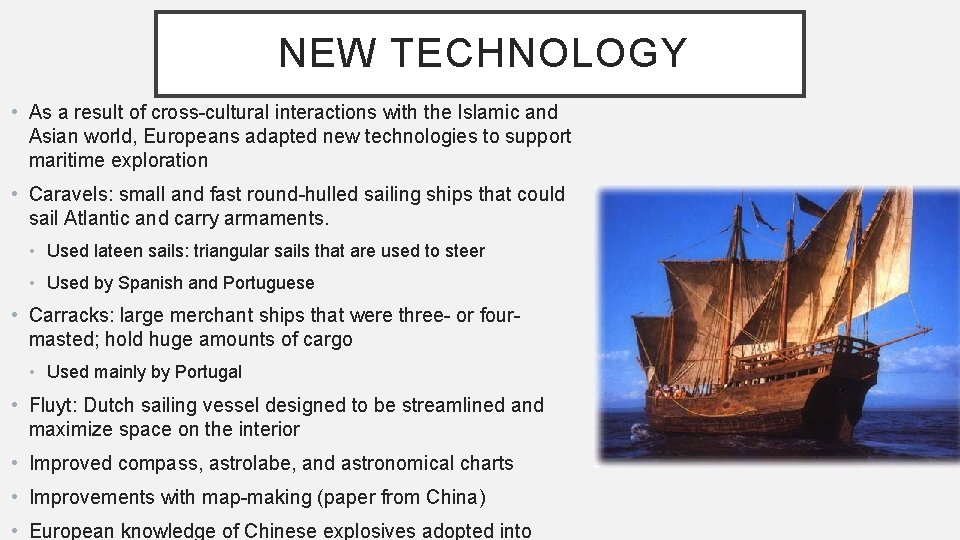
NEW TECHNOLOGY • As a result of cross-cultural interactions with the Islamic and Asian world, Europeans adapted new technologies to support maritime exploration • Caravels: small and fast round-hulled sailing ships that could sail Atlantic and carry armaments. • Used lateen sails: triangular sails that are used to steer • Used by Spanish and Portuguese • Carracks: large merchant ships that were three- or fourmasted; hold huge amounts of cargo • Used mainly by Portugal • Fluyt: Dutch sailing vessel designed to be streamlined and maximize space on the interior • Improved compass, astrolabe, and astronomical charts • Improvements with map-making (paper from China) • European knowledge of Chinese explosives adopted into
QUICK REVIEW QUESTION • What are some factors that account for growing power and confidence in Western Europe?
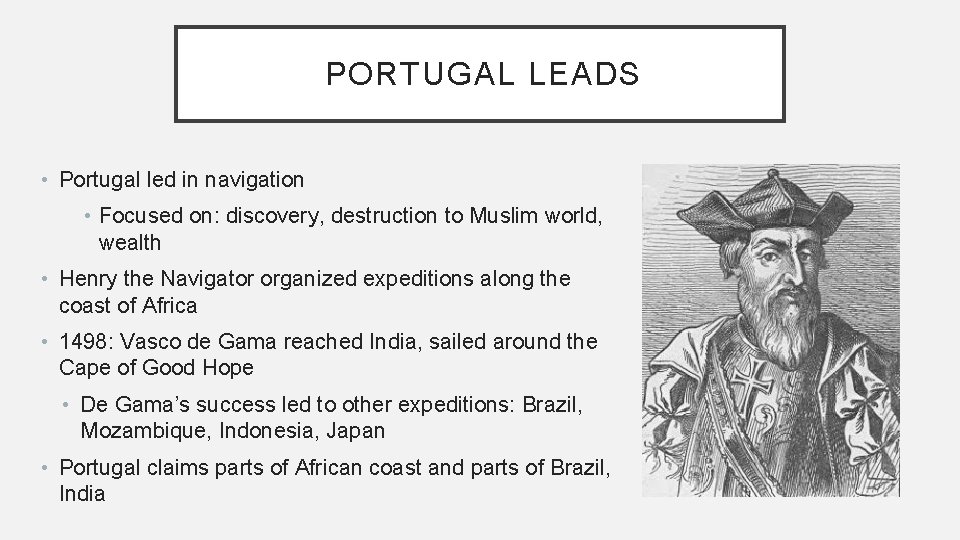
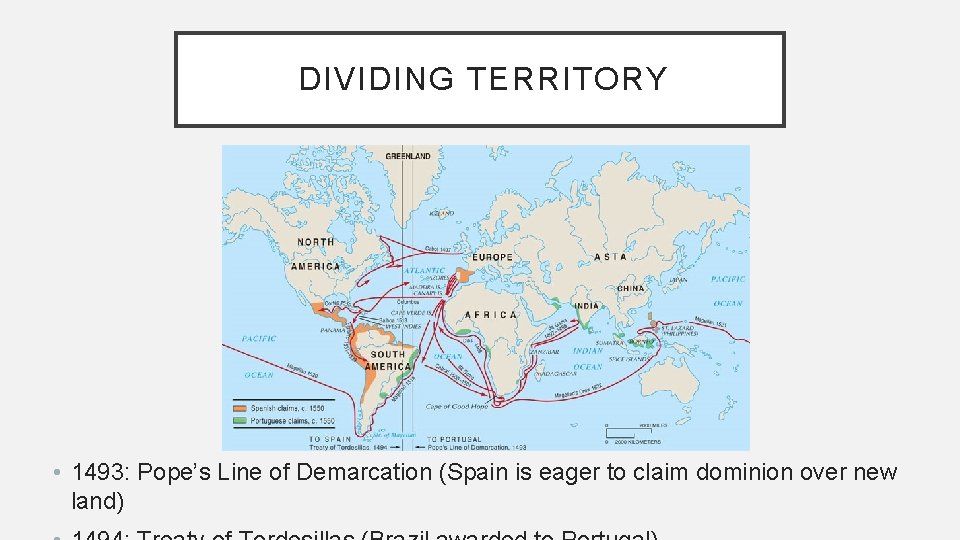
PORTUGAL LEADS • Portugal led in navigation • Focused on: discovery, destruction to Muslim world, wealth • Henry the Navigator organized expeditions along the coast of Africa • 1498: Vasco de Gama reached India, sailed around the Cape of Good Hope • De Gama’s success led to other expeditions: Brazil, Mozambique, Indonesia, Japan • Portugal claims parts of African coast and parts of Brazil, India
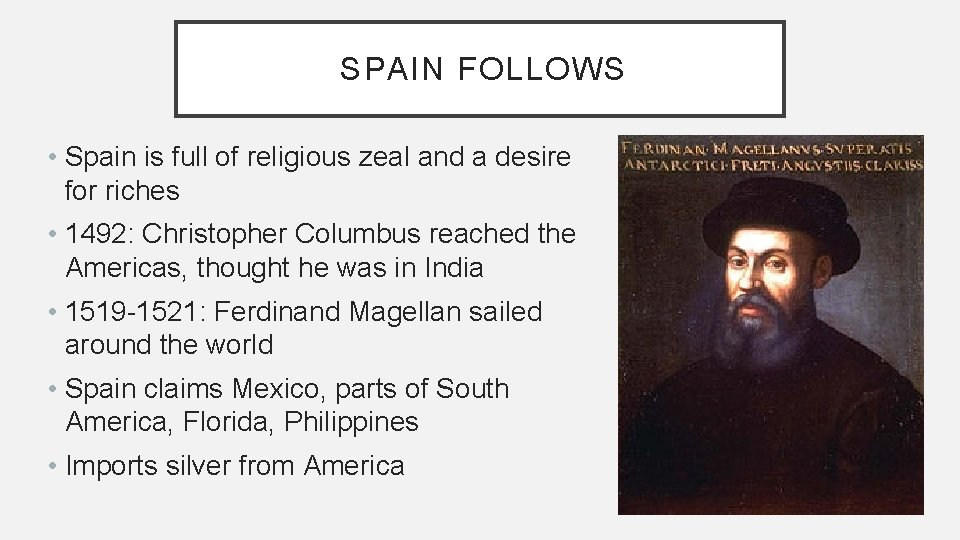
SPAIN FOLLOWS • Spain is full of religious zeal and a desire for riches • 1492: Christopher Columbus reached the Americas, thought he was in India • 1519 -1521: Ferdinand Magellan sailed around the world • Spain claims Mexico, parts of South America, Florida, Philippines • Imports silver from America
DIVIDING TERRITORY • 1493: Pope’s Line of Demarcation (Spain is eager to claim dominion over new land)
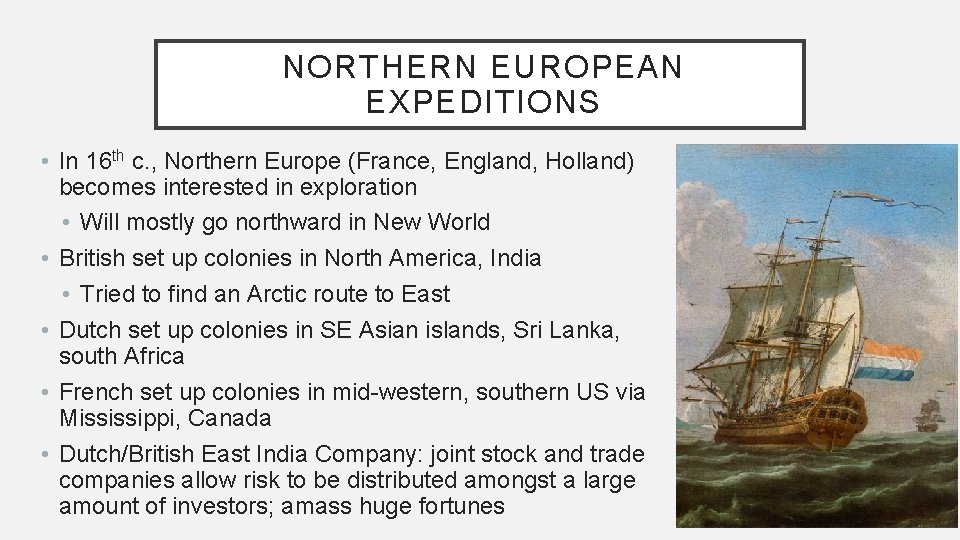
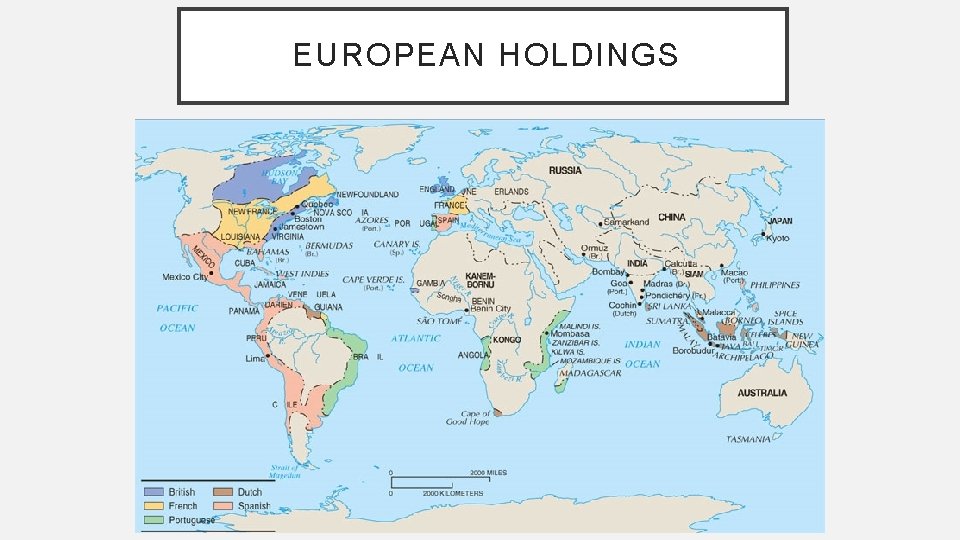
NORTHERN EUROPEAN EXPEDITIONS • In 16 th c. , Northern Europe (France, England, Holland) becomes interested in exploration • Will mostly go northward in New World • British set up colonies in North America, India • Tried to find an Arctic route to East • Dutch set up colonies in SE Asian islands, Sri Lanka, south Africa • French set up colonies in mid-western, southern US via Mississippi, Canada • Dutch/British East India Company: joint stock and trade companies allow risk to be distributed amongst a large amount of investors; amass huge fortunes
EUROPEAN HOLDINGS
• What was the purpose of the Pope’s Line of Demarcation? QUICK REVIEW QUESTION • What alteration is made to that line?
COLUMBIAN EXCHANGE • Exchange between New World and Old World as a result of Columbus’s contacts • Food/Plants • New Old World: potatoes, tomatoes, corn, vanilla, rubber, cacao, avocado, tobacco, pumpkin, peanut, cashews • New Old World: peas, tea, rice, sugarcane, wheat, lettuce, oat, coffee, citrus, apples, bananas, garlic, onion, opium • Animals • New Old World : turkey, llama, alpaca, guinea pig • New Old World : horses, goat, pig, sheep, cattle, chicken, camel • Disease • New Old World : syphilis, hepatitis • New Old World : plague, chicken pox, cholera, flu, leprosy, malaria, measles, smallpox, typhoid, yellow fever • Concerns: American food spread plague, not condoned in Bible
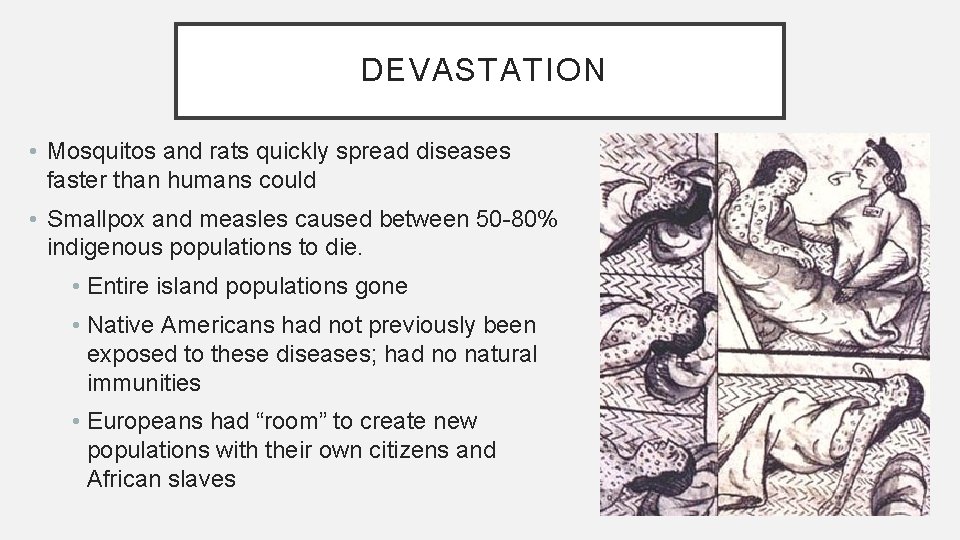
DEVASTATION • Mosquitos and rats quickly spread diseases faster than humans could • Smallpox and measles caused between 50 -80% indigenous populations to die. • Entire island populations gone • Native Americans had not previously been exposed to these diseases; had no natural immunities • Europeans had “room” to create new populations with their own citizens and African slaves
COLONIAL EXPANSION • European guns, horses, and iron offered advantages, especially where political chaos and population losses had occurred. • Spain colonized the Americas first. • Hispaniola, Cuba, Jamaica, Puerto Rico • 1509 CE: Vasco de Balboa establishes a colony in Panama in search of gold • 1528 CE: Francisco Pizarro attacked the divided Incan empire, founded Lima • Early colonies: • Loose colonial administrations led by gold-hungry Europeans
• What are some of the advantages European invaders have over indigenous tribes? QUICK REVIEW QUESTION
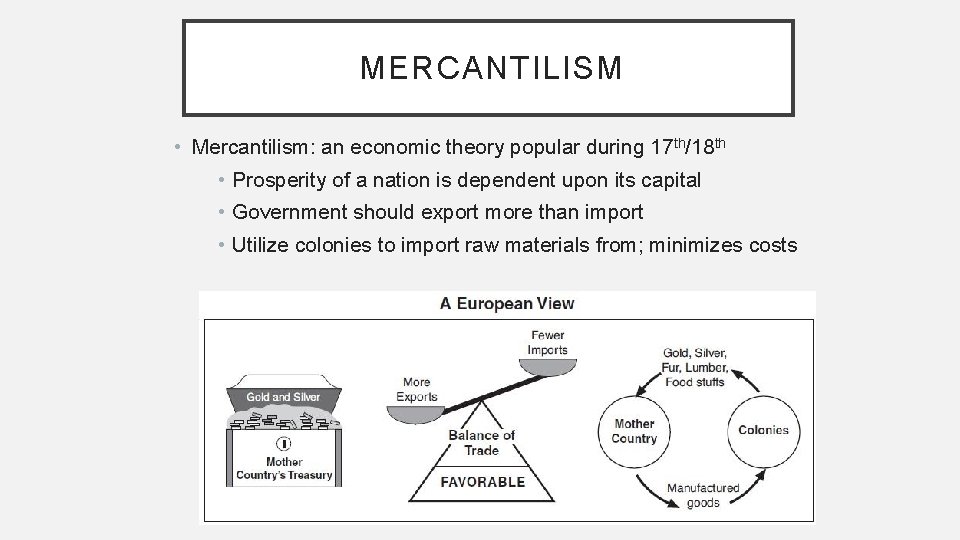
MERCANTILISM • Mercantilism: an economic theory popular during 17 th/18 th • Prosperity of a nation is dependent upon its capital • Government should export more than import • Utilize colonies to import raw materials from; minimizes costs
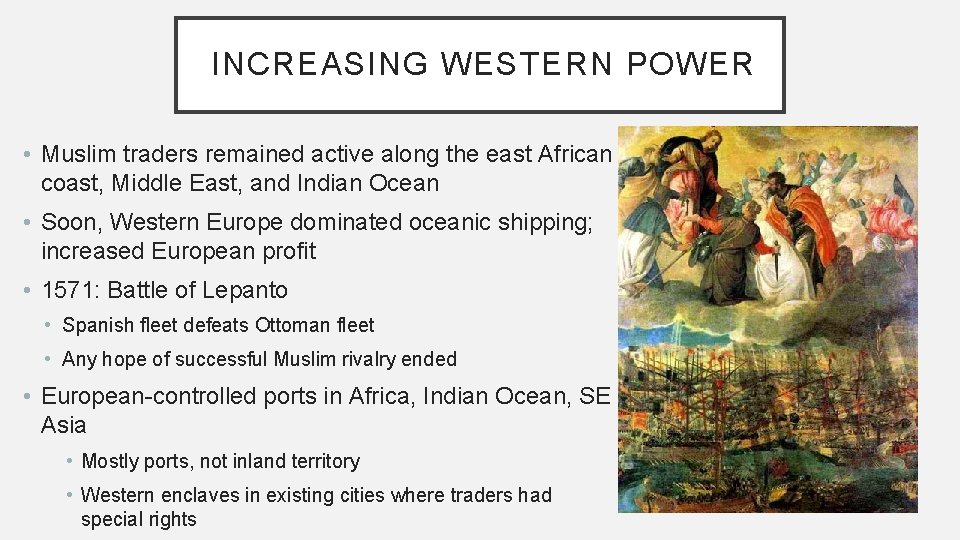
INCREASING WESTERN POWER • Muslim traders remained active along the east African coast, Middle East, and Indian Ocean • Soon, Western Europe dominated oceanic shipping; increased European profit • 1571: Battle of Lepanto • Spanish fleet defeats Ottoman fleet • Any hope of successful Muslim rivalry ended • European-controlled ports in Africa, Indian Ocean, SE Asia • Mostly ports, not inland territory • Western enclaves in existing cities where traders had special rights
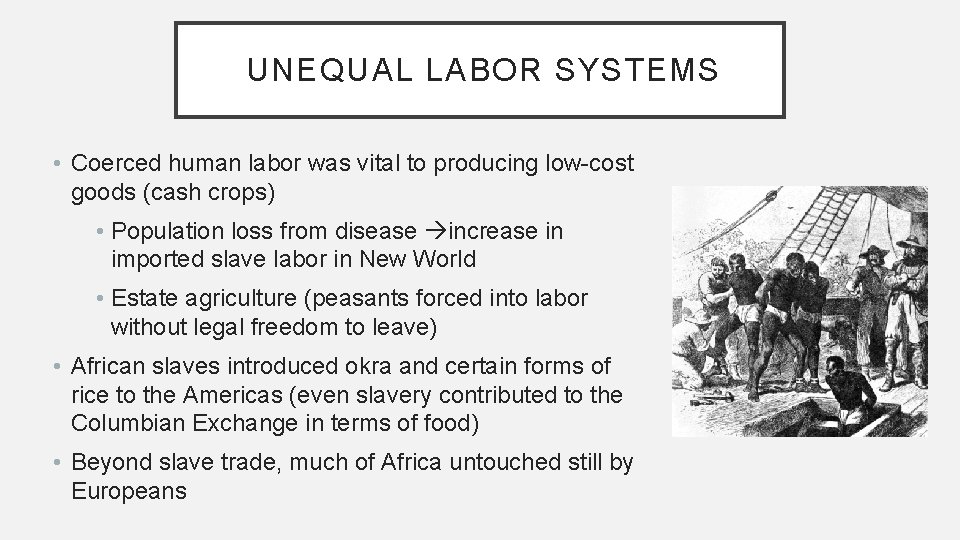
UNEQUAL LABOR SYSTEMS • Coerced human labor was vital to producing low-cost goods (cash crops) • Population loss from disease increase in imported slave labor in New World • Estate agriculture (peasants forced into labor without legal freedom to leave) • African slaves introduced okra and certain forms of rice to the Americas (even slavery contributed to the Columbian Exchange in terms of food) • Beyond slave trade, much of Africa untouched still by Europeans
• What are three tenets of Mercantilism? QUICK REVIEW QUESTION • Why is the Battle of Lepanto significant?
ASIAN INVOLVEMENT • China renounced pursuing international trade in 1433 • Most European trade occurred through Macao (a Portuguese colony) • Europeans frustrated that Chinese cling to tradition and avoid European developments • Europeans send American silver to China to pay for goods • Japan turns to isolationism in 16 th century • But, interested in Western gunnery • Ultimately, threatens samurai dominance and aggravates feudal wars • India’s Mughal Empire • Encourage small port enclaves • Sell textiles and spices for New World silver • Ultimately, world trade is not a major interest for Indians • Same for Ottomans, Safavids, and Russians
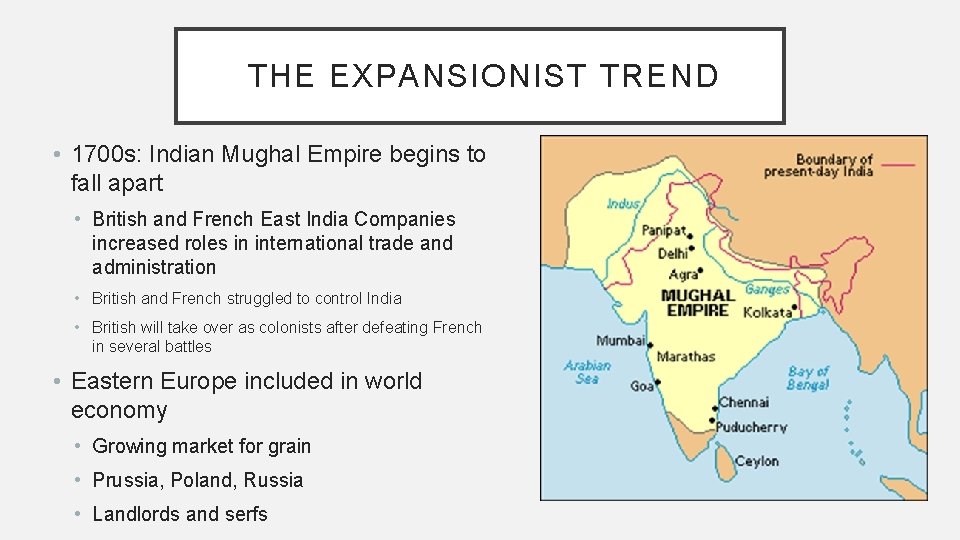
THE EXPANSIONIST TREND • 1700 s: Indian Mughal Empire begins to fall apart • British and French East India Companies increased roles in international trade and administration • British and French struggled to control India • British will take over as colonists after defeating French in several battles • Eastern Europe included in world economy • Growing market for grain • Prussia, Poland, Russia • Landlords and serfs
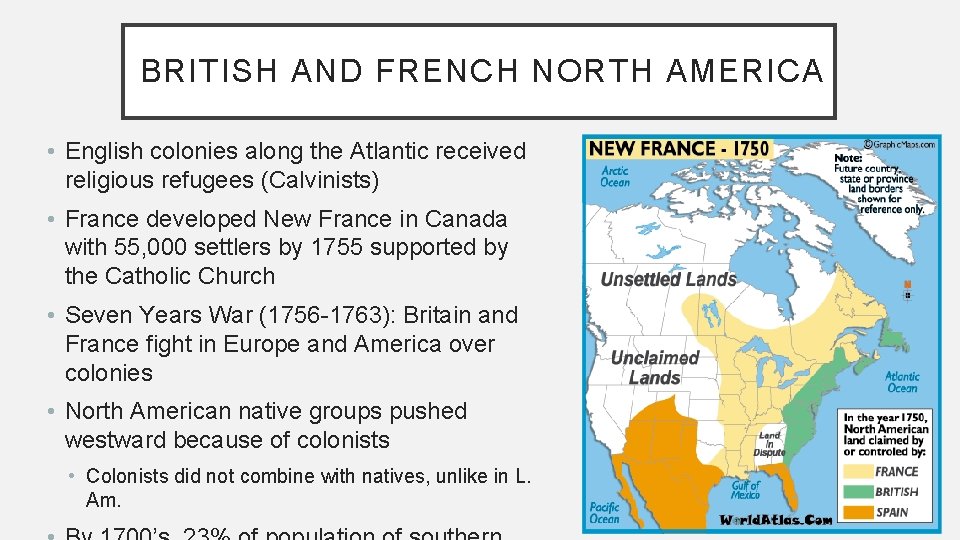
BRITISH AND FRENCH NORTH AMERICA • English colonies along the Atlantic received religious refugees (Calvinists) • France developed New France in Canada with 55, 000 settlers by 1755 supported by the Catholic Church • Seven Years War (1756 -1763): Britain and France fight in Europe and America over colonies • North American native groups pushed westward because of colonists • Colonists did not combine with natives, unlike in L. Am.
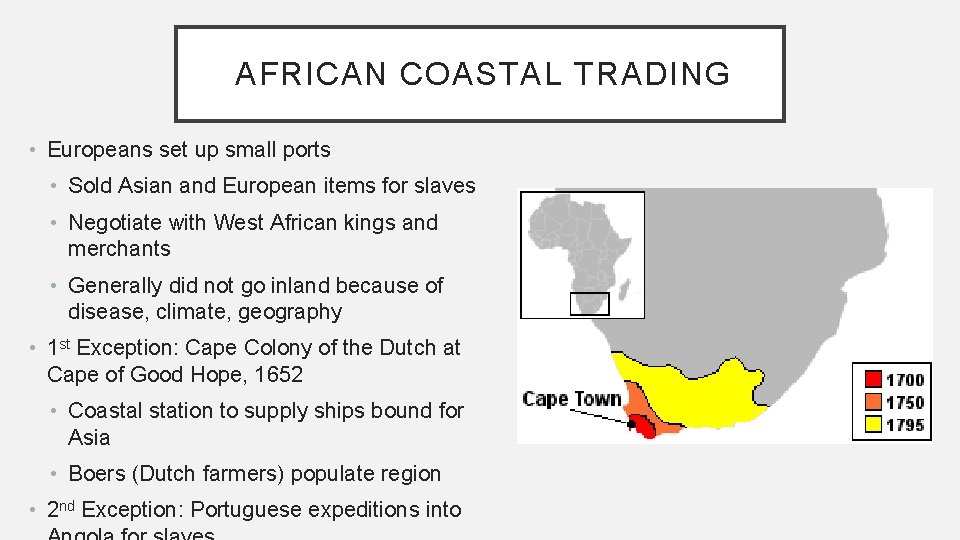
AFRICAN COASTAL TRADING • Europeans set up small ports • Sold Asian and European items for slaves • Negotiate with West African kings and merchants • Generally did not go inland because of disease, climate, geography • 1 st Exception: Cape Colony of the Dutch at Cape of Good Hope, 1652 • Coastal station to supply ships bound for Asia • Boers (Dutch farmers) populate region • 2 nd Exception: Portuguese expeditions into
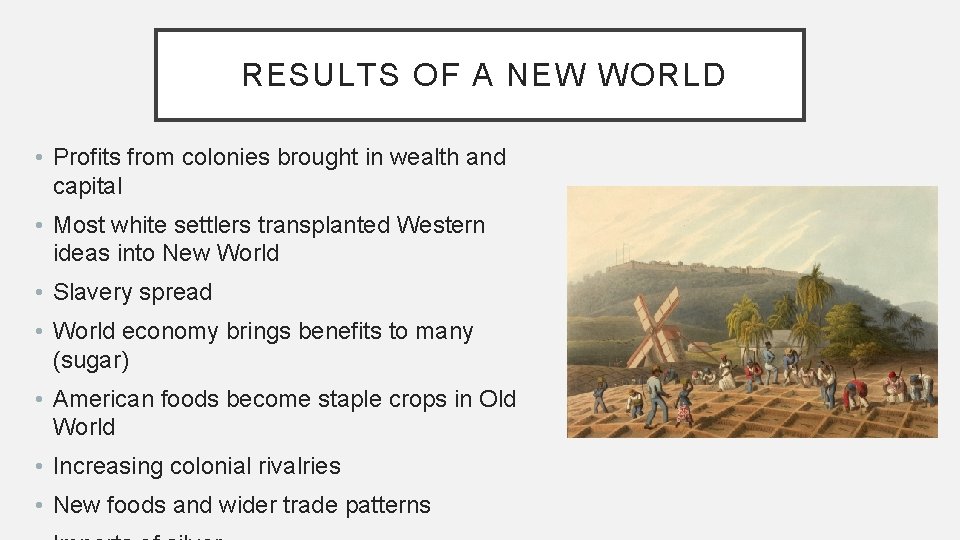
RESULTS OF A NEW WORLD • Profits from colonies brought in wealth and capital • Most white settlers transplanted Western ideas into New World • Slavery spread • World economy brings benefits to many (sugar) • American foods become staple crops in Old World • Increasing colonial rivalries • New foods and wider trade patterns
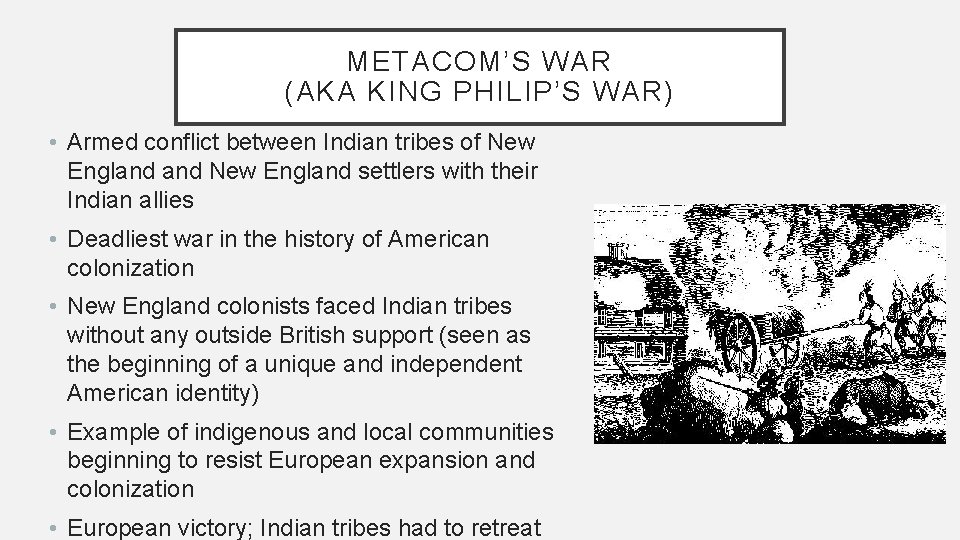
METACOM’S WAR (AKA KING PHILIP’S WAR) • Armed conflict between Indian tribes of New England settlers with their Indian allies • Deadliest war in the history of American colonization • New England colonists faced Indian tribes without any outside British support (seen as the beginning of a unique and independent American identity) • Example of indigenous and local communities beginning to resist European expansion and colonization • European victory; Indian tribes had to retreat
QUICK REVIEW QUESTION • Describe how global Asian involvement changes during this period. • What was the Seven Years’ War? Why is it important?
SUMMATIVE GROUP ACTIVITY • Draw your own illustration of the three tenets of Mercantilism • Mercantilism: • Have gold and silver on hand • Government should export more than import • Utilize colonies to import raw materials from; minimizes costs