
AP World History Chapter 26 The Interwar Years

- Slides: 56
AP World History Chapter 26 The Interwar Years 1919 -1939
Post War Depression and the Rise of Fascism
International Economic Collapse • Instability as a result of WWI • Dislocation of basic industries after war and unemployment • International depression among agricultural industries • International economic interdependence and growing trade barriers
International Economic Collapse (cont) • Currency inflation, e. g. Deutschmark • Excessive borrowing and purchasing of credit • False belief in prosperity based on heavy industry • Extraordinary stock-market speculation • Poor faith in an international monetary standard
The Financial Collapse • October 1929 – Massive wave of selling • Domino effect – rest of economy fell • Spread to European stock markets and economies • Improved communications meant spread of doomsayers • Growing unemployment and dissatisfaction • US Loans called – hurt Germany, Britain, and France
Recovery Attempts • Government intervention including socialist programs in most countries • Basic industries rebuilt after 1930 • Government work created, e. g. CCC • Currency systems readjusted, gold standard dropped • High protective tariffs, quotas, restrictions • League of Nations and IMF efforts
Rise of Fascism • Italy – Switch from Axis to Allies during WWI – No real territorial gain as result, no financial aid – Strong nationalist movement – Expansionistic impulse shifted to NE Africa – King Victor Emmanuel II relatively powerless, figurehead – Benito Mussolini and the Fascists
Fascism • Syndicalism – control of key industries “Corporate State” • Capital and Labor controlled by state • Idea of “Collective Will” • Neutralized church • Modified Education system • Construction of National myths
Fascism in Germany • German defeat in WWI – German’s lack of understanding; not surrender, negotiated “peace” – Kaiser ousted, Weimar Republic declared – New government took blame for defeat and consequences of War Guilt, Territorial Losses, and Reparations
The Weimar Republic • Dominated by Social Democrats • Universal suffrage, democratic elections, constitution • Major weaknesses in constitution – Emergency Decree – Electoral laws created splinter parties and coalitions
Crisis in the Weimar Republic • Resistance from Right and Left – Communist uprisings, coup in Bavaria 1919 – Both sides angry over war settlement – Far right revolt in Berlin – controlled city (1920) – Right-wing assassinations of political leaders
Crisis in the Weimar Republic • German economic troubles – Massive reparations to France – Currency inflation – Indebtedness to US – Effect of Great Depression – Defaulted on reparations 1923 – France occupied Rurh – Nationalist, right-wing, militarist group known as National Socialist Party of the German Workers – 1923 – Munich “Beer Hall Putsch”
Rise of Adolph Hitler • • Wounded in WWI – Gas Attack Failed painter: denied admission to art school Worshipped Nordic race (“Aryan”) Joined NSWP and re-organized it Created armed wing – SA and SS 1930 Reichstag elections – NSWP major party By 1932 dominated Reichstag 1933 – President Von Hindenburg named Hitler Chancellor
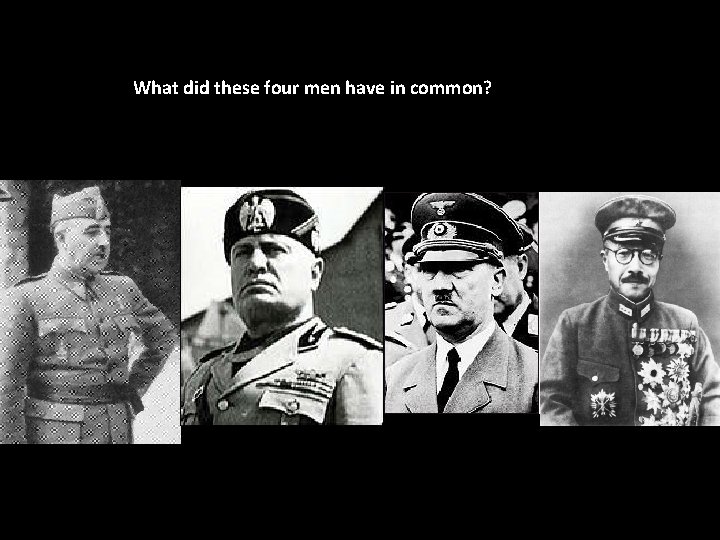
What did these four men have in common?
Guiding questions • What is fascism? • What caused or contributed to the rise of fascist powers? • What types of policies did fascists create/support?
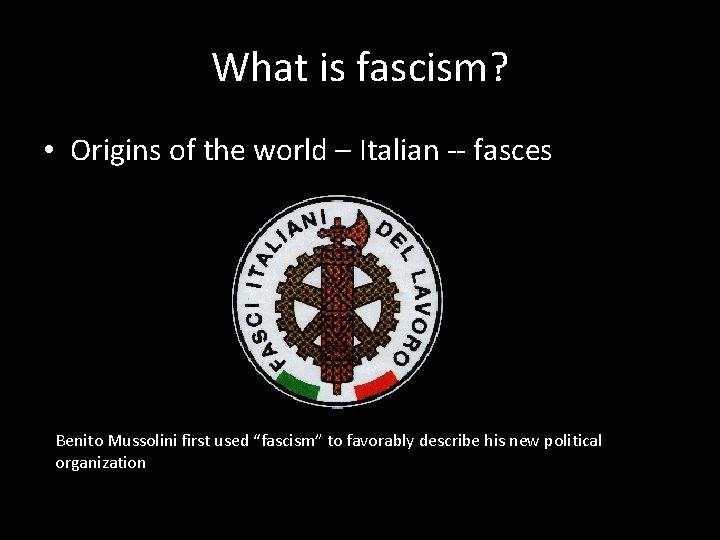
What is fascism? • Origins of the world – Italian -- fasces Benito Mussolini first used “fascism” to favorably describe his new political organization
What is fascism? • Totalitarian: state control over all aspects of life: political, social, cultural, economic --Means of Production --Nation, state, and “race” superior to individuals (anti-individual) -- “heroic mass effort” --Historical revisionism --Cult of Personality
What is fascism? • Took power legally through false or misleading “emergencies” • Neutralized all opposition, including private citizens and the church, through threats or brutal oppression • Used new media for highly effective propaganda campaigns, playing up – – Nationalism, patriotism, racism Anti-individualism Cult of personality Attack on dissenters
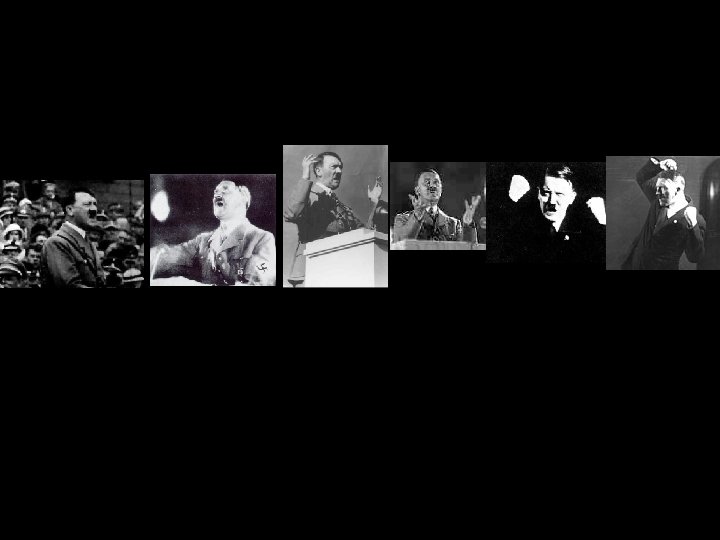
How Hitler manipulated during speeches Calm, Quiet, Low Beginning Audience impatient, anticipating Slow, imperceptible increase Audience agitated, entranced Volume, Speed, & Bodily Motion Frenetic, loud, staccato ending Audience frenzied, dionysic
What is fascism? • Opposed to Marxism, Socialism, and liberal democracy • Role of state NOT protecting individuals • Rejected idea of social classes & class conflict; replaced with other struggles: – Racial – Generational – Nationalistic
What is fascism? • Strength and power as means for legitimacy • Social Darwinist flavor • Appealed to diverse parts of the population: – – – – Big business Farmers & landowners Nationalists Reactionaries WWI veterans Some intellectuals The poor
What is fascism? • Italian Fascism – syndicalism and ultra-nationalism – State as an organic entity reflecting “will of the people “channeled” by leader – State represented both labor and capital – Church neutralized, kept from interfering – Armament & invasion of Albania and Ethopia
What is fascism? • German fascism – Artificial Aryan “Race” exalted – Use of violent political organizations and fear – German ethnic identity beyond borders – “New Roman Empire” – Suppression of minority groups, opinions, and the church – Treatment of Jews: scapegoating, stigmatizing, ghettoes, death camps – Militarization – Corporatist control of economy
What caused the rise of fascist powers in Germany, Italy, Spain, and Japan?
Causes of fascism • Anger and resentment over settlement of WWI • Frustration over perceived weaknesses of liberal democracy • Anxiety of post-modernity (i. e. alienation) • Philosophies exalting primacy of human will (e. g. Nietzsche) • Psychological need to be part of a group; appeal of historical movements
Causes of fascism • Fear of communist revolution • Flawed constitutions containing loopholes • Failure of existing political parties to hold power • Failure of the world economy; the Great Depression • Desire to blame someone for economic and social troubles (scapegoating)
What kind of policies did fascists promote?
Corporatist and syndicalist Policies • Didn’t support Marxist ideas of government control of the means for production, BUT • Controlled production to express the “will of the people”; also controlled labor, etc.
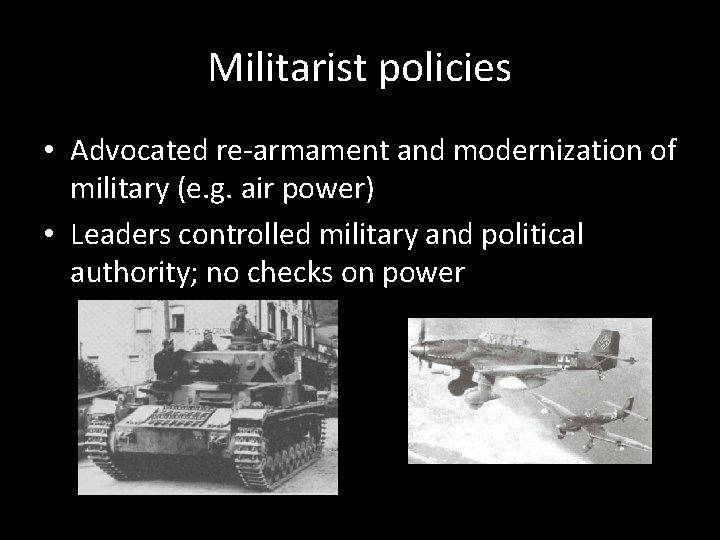
Militarist policies • Advocated re-armament and modernization of military (e. g. air power) • Leaders controlled military and political authority; no checks on power
Social • Racial element – played up racial identity as part of ultra-nationalism • Blamed minority peoples for problems • Justified imperialistic expansion through depicting themselves as naturally superior (social Darwinism) • Sacrifice of individuals for good of nation, esp. civil rights but sometimes life
Political policies Dissent not allowed; dissenters murdered or exiled • Dishonest foreign policies; blatantly lied to allies and betrayed other foreign powers • Populist: used propaganda to convince “the masses” to follow
Assessment • What is fascism? • What caused or contributed to the rise of fascist powers? • What types of policies did fascists create/support?
The Interwar Years
Introductory Question • How much of what people do is within their control? • Do you ever see evidence that humans do not have control over all of their thinking?
WWI had a dramatic impact on human society Status of women Ideas about god and the universe The human as rational animal The modern-era conception of control over nature • Social stratification • Neo-colonialism • •
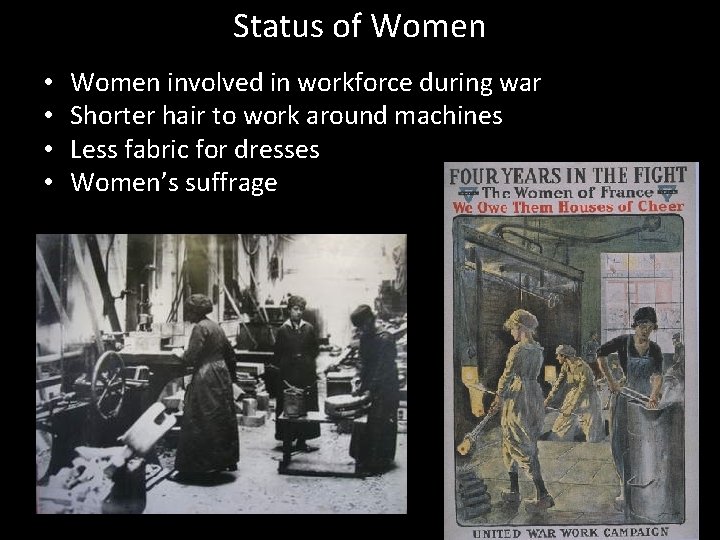
Status of Women • • Women involved in workforce during war Shorter hair to work around machines Less fabric for dresses Women’s suffrage
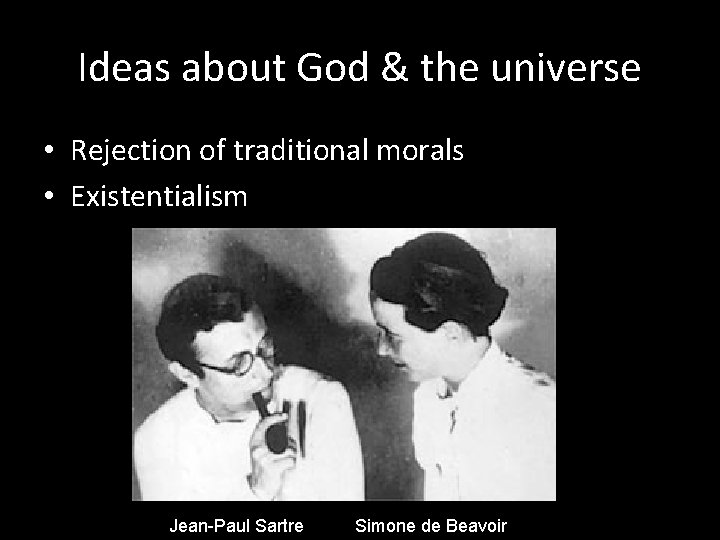
Ideas about God & the universe • Rejection of traditional morals • Existentialism Jean-Paul Sartre Simone de Beavoir
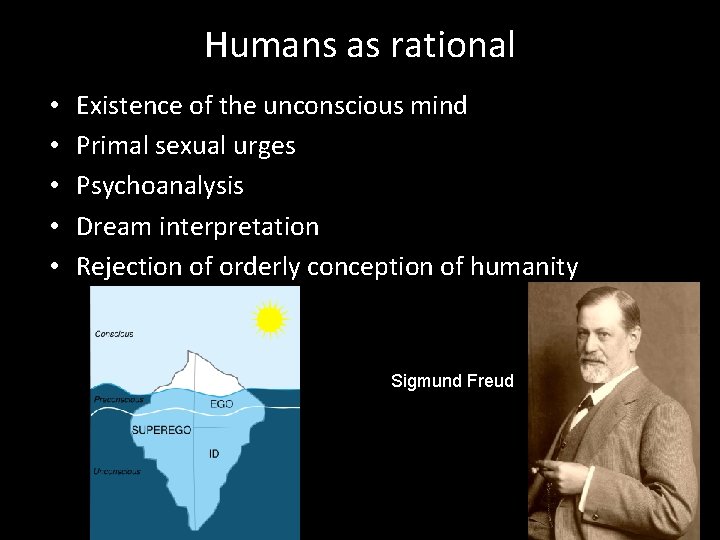
Humans as rational • • • Existence of the unconscious mind Primal sexual urges Psychoanalysis Dream interpretation Rejection of orderly conception of humanity Sigmund Freud
Social stratification • Death of nobles erased old social barriers • Esprit de corps & nationalism replaced old divisions • Continued stratification between westerners and colonized areas
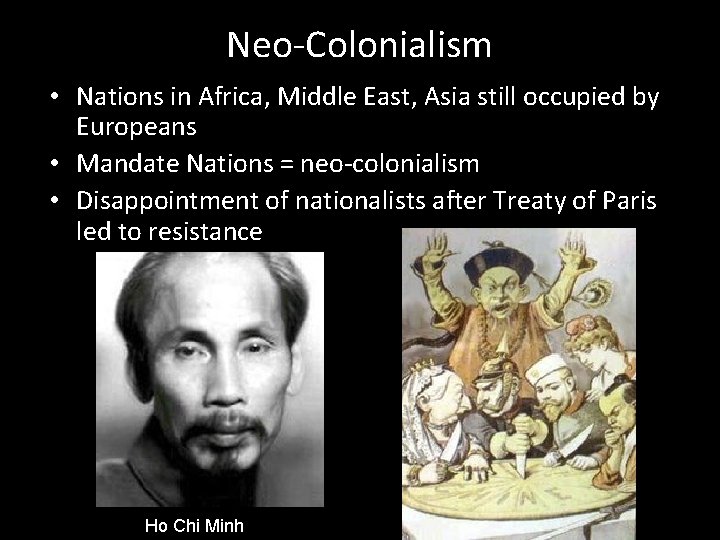
Neo-Colonialism • Nations in Africa, Middle East, Asia still occupied by Europeans • Mandate Nations = neo-colonialism • Disappointment of nationalists after Treaty of Paris led to resistance Ho Chi Minh
Post War Depression and the Rise of Fascism
International Economic Collapse • Instability as a result of WWI • Dislocation of basic industries after war and unemployment • International depression among agricultural industries • International economic interdependence and growing trade barriers
International Economic Collapse (cont) • Currency inflation, e. g. Deutschmark • Excessive borrowing and purchasing of credit • False belief in prosperity based on heavy industry • Extraordinary stock-market speculation • Poor faith in an international monetary standard
The Financial Collapse • October 1929 – Massive wave of selling • Domino effect – rest of economy fell • Spread to European stock markets and economies • Improved communications meant spread of doomsayers • Growing unemployment and dissatisfaction • US Loans called – hurt Germany, Britain, and France
Rise of Fascism • Italy – Switch from Axis to Allies during WWI – No real territorial gain as result, no financial aid – Strong nationalist movement – Expansionistic impulse shifted to NE Africa – King Victor Emmanuel II relatively powerless, figurehead – Benito Mussolini and the Fascists
Fascism • Syndicalism – control of key industries “Corporate State” • Capital and Labor controlled by state • Idea of “Collective Will” • Neutralized church • Modified Education system • Construction of National myths
Fascism in Germany • German defeat in WWI – German’s lack of understanding; not surrender, negotiated “peace” – Kaiser ousted, Weimar Republic declared – New government took blame for defeat and consequences of War Guilt, Territorial Losses, and Reparations
The Weimar Republic • Dominated by Social Democrats • Universal suffrage, democratic elections, constitution • Major weaknesses in constitution – Emergency Decree – Electoral laws created splinter parties and coalitions
Crisis in the Weimar Republic • Resistance from Right and Left – Communist uprisings, coup in Bavaria 1919 – Both sides angry over war settlement – Far right revolt in Berlin – controlled city (1920) – Right-wing assassinations of political leaders
Crisis in the Weimar Republic • German economic troubles – Massive reparations to France – Currency inflation – Indebtedness to US – Effect of Great Depression – Defaulted on reparations 1923 – France occupied Rurh – Nationalist, right-wing, militarist group known as National Socialist Party of the German Workers – 1923 – Munich “Beer Hall Putsch”
Rise of Adolph Hitler • • Wounded in WWI – Gas Attack Failed painter: denied admission to art school Worshipped Nordic race (“Aryan”) Joined NSWP and re-organized it Created armed wing – SA and SS 1930 Reichstag elections – NSWP major party By 1932 dominated Reichstag 1933 – President Von Hindenburg named Hitler Chancellor