
AP World History chapter 16 supplement Enlightenment and
- Slides: 25
AP World History: chapter 16 supplement Enlightenment and American Revolution Vocabulary Terms Review
Enlightenment �a time of optimism and possibility from the late 1600 s to the late 1700 s; also called the Age of Reason.
Natural law �rules of conduct discoverable by reason; used by Enlightenment thinkers to better understand social, economic, and political problems used to study human behavior and solve the problems of society.
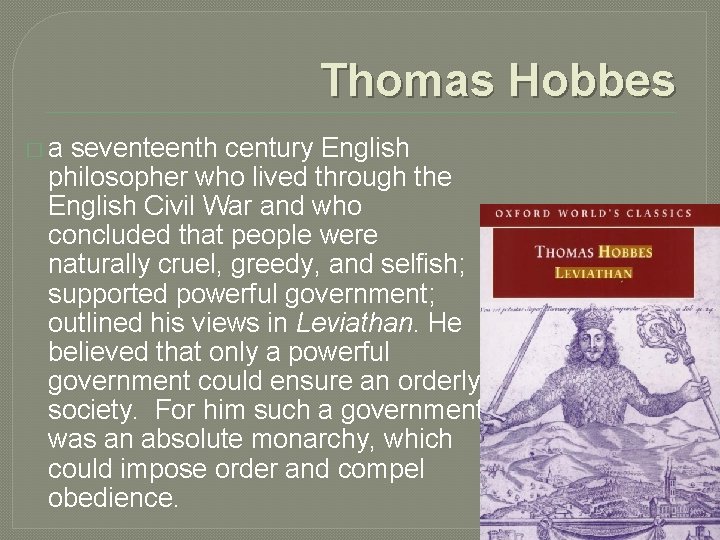
Thomas Hobbes �a seventeenth century English philosopher who lived through the English Civil War and who concluded that people were naturally cruel, greedy, and selfish; supported powerful government; outlined his views in Leviathan. He believed that only a powerful government could ensure an orderly society. For him such a government was an absolute monarchy, which could impose order and compel obedience.
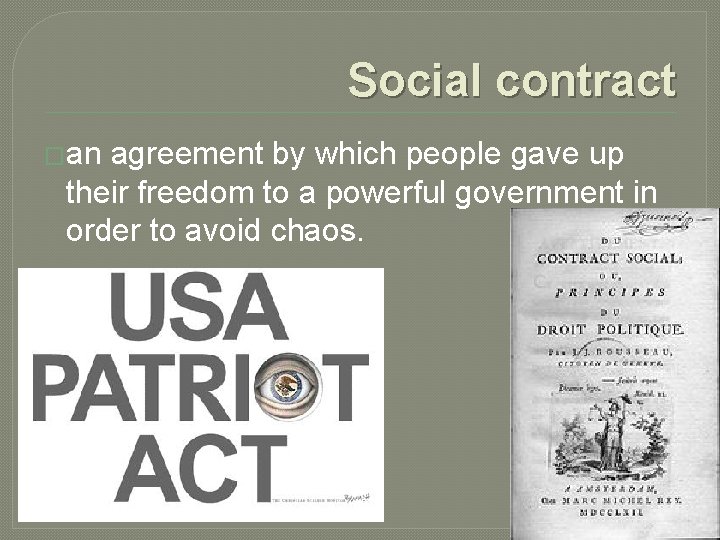
Social contract �an agreement by which people gave up their freedom to a powerful government in order to avoid chaos.
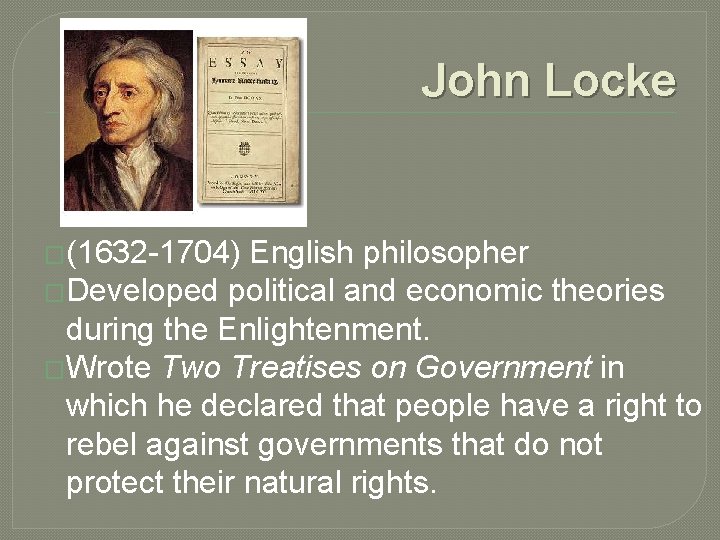
John Locke �(1632 -1704) English philosopher �Developed political and economic theories during the Enlightenment. �Wrote Two Treatises on Government in which he declared that people have a right to rebel against governments that do not protect their natural rights.
Natural right �right that belongs to all humans from birth, such as life, liberty, and property.
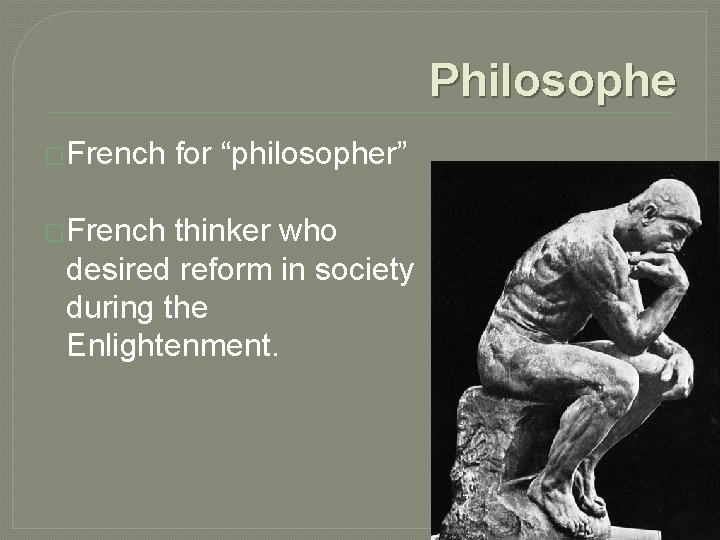
Philosophe �French for “philosopher” thinker who desired reform in society during the Enlightenment.
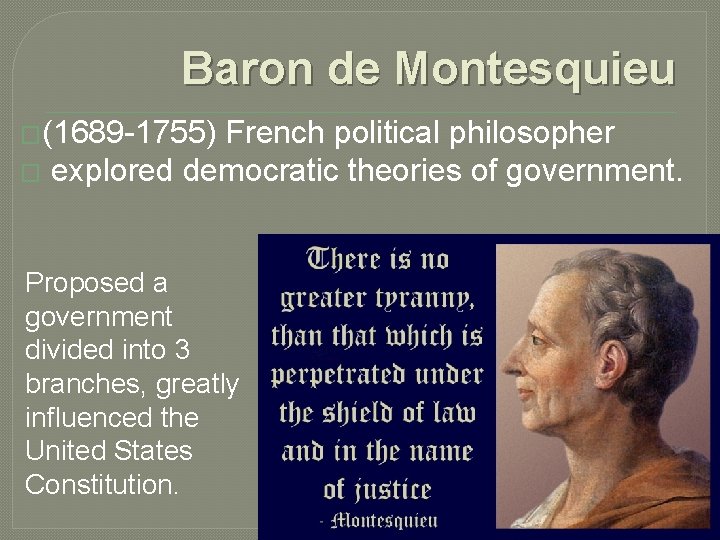
Baron de Montesquieu �(1689 -1755) French political philosopher � explored democratic theories of government. Proposed a government divided into 3 branches, greatly influenced the United States Constitution.
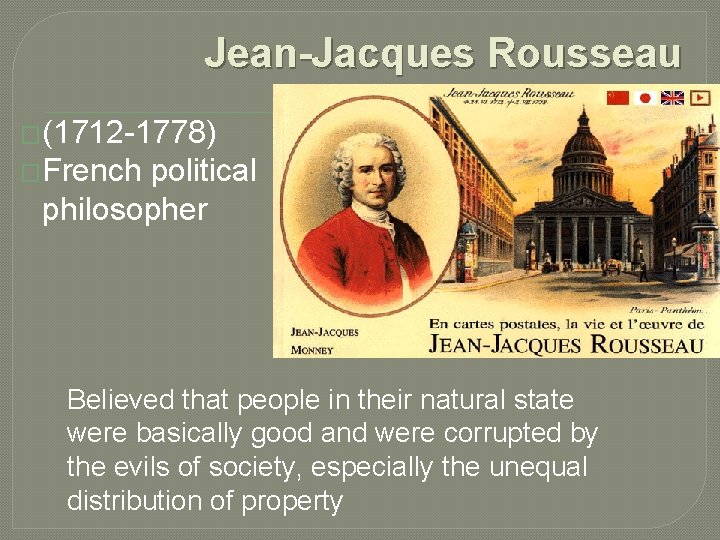
Jean-Jacques Rousseau �(1712 -1778) �French political philosopher Believed that people in their natural state were basically good and were corrupted by the evils of society, especially the unequal distribution of property
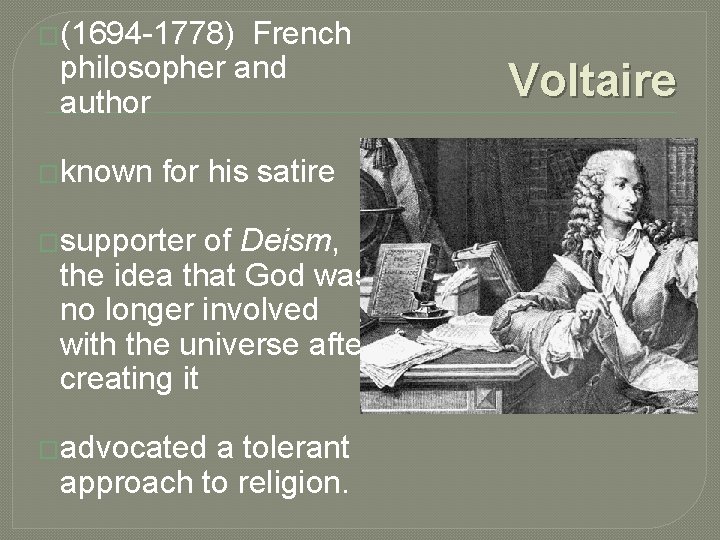
�(1694 -1778) French philosopher and author �known for his satire �supporter of Deism, the idea that God was no longer involved with the universe after creating it �advocated a tolerant approach to religion. Voltaire
Laissez-faire �policy allowing business to operate with little or no government interference.
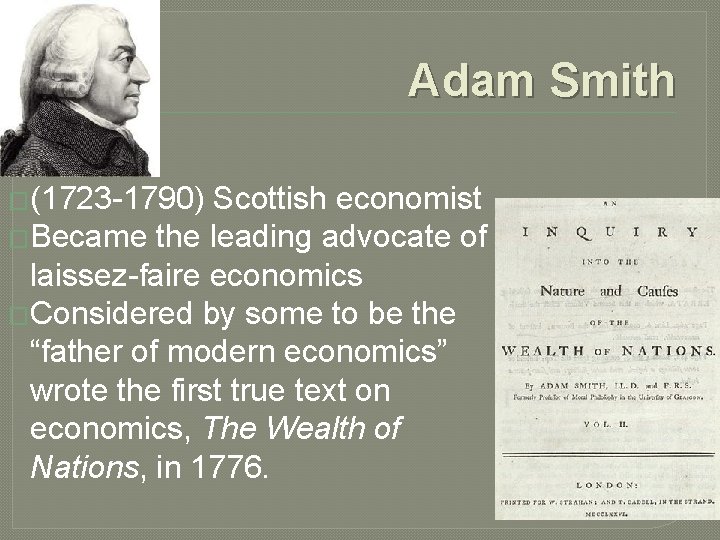
Adam Smith �(1723 -1790) Scottish economist �Became the leading advocate of laissez-faire economics �Considered by some to be the “father of modern economics” wrote the first true text on economics, The Wealth of Nations, in 1776.
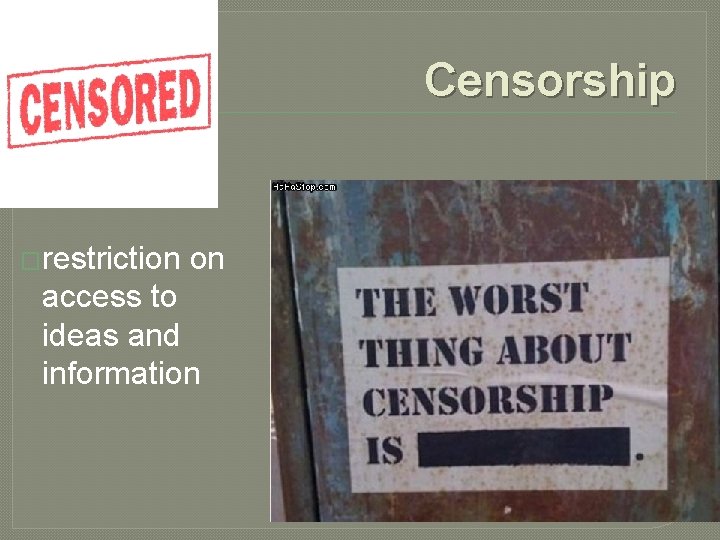
Censorship �restriction on access to ideas and information
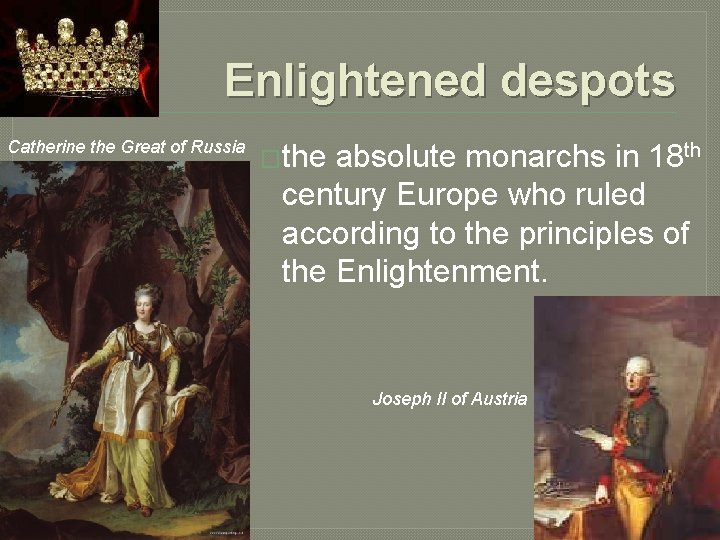
Enlightened despots Catherine the Great of Russia �the absolute monarchs in 18 th century Europe who ruled according to the principles of the Enlightenment. Joseph II of Austria
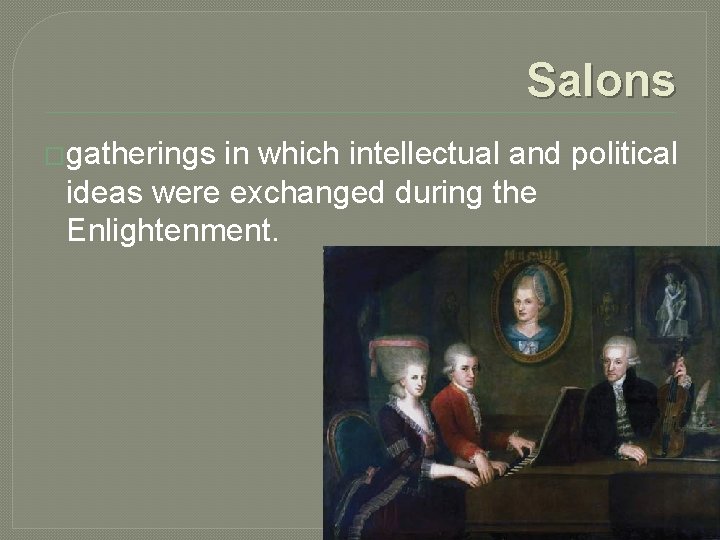
Salons �gatherings in which intellectual and political ideas were exchanged during the Enlightenment.
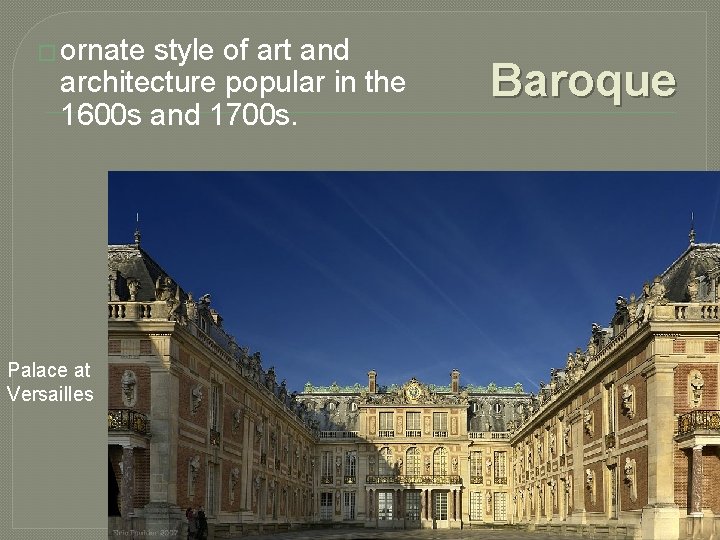
� ornate style of art and architecture popular in the 1600 s and 1700 s. Palace at Versailles Baroque
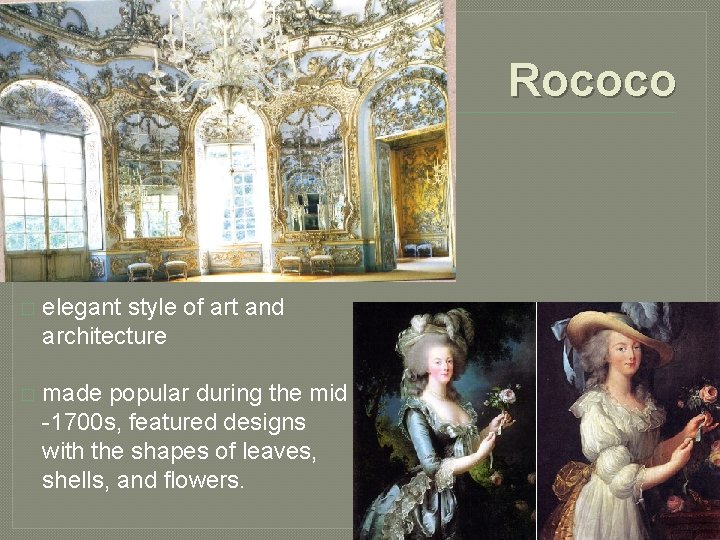
Rococo � elegant style of art and architecture � made popular during the mid -1700 s, featured designs with the shapes of leaves, shells, and flowers.
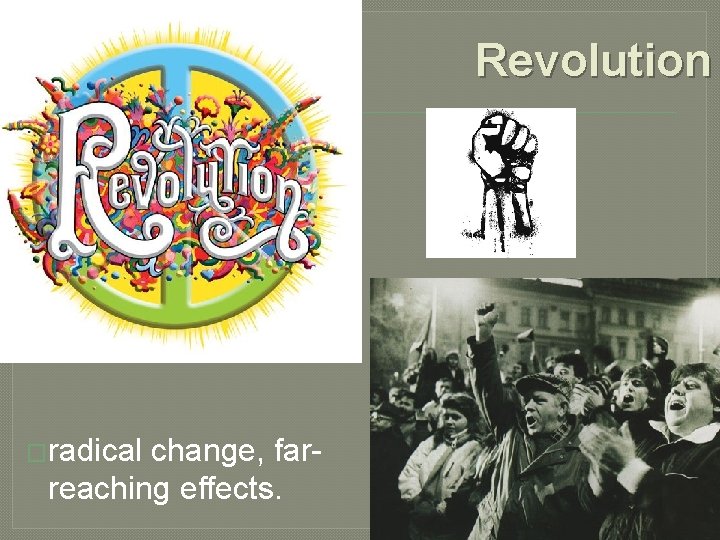
Revolution �radical change, farreaching effects.
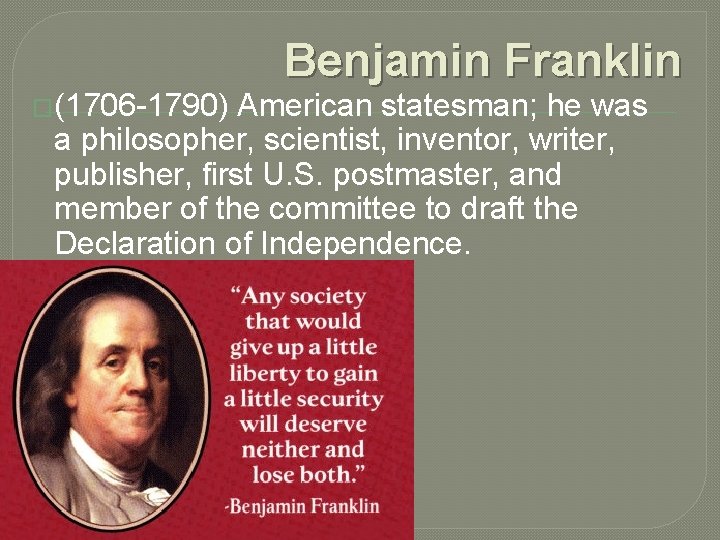
�(1706 -1790) Benjamin Franklin American statesman; he was a philosopher, scientist, inventor, writer, publisher, first U. S. postmaster, and member of the committee to draft the Declaration of Independence.
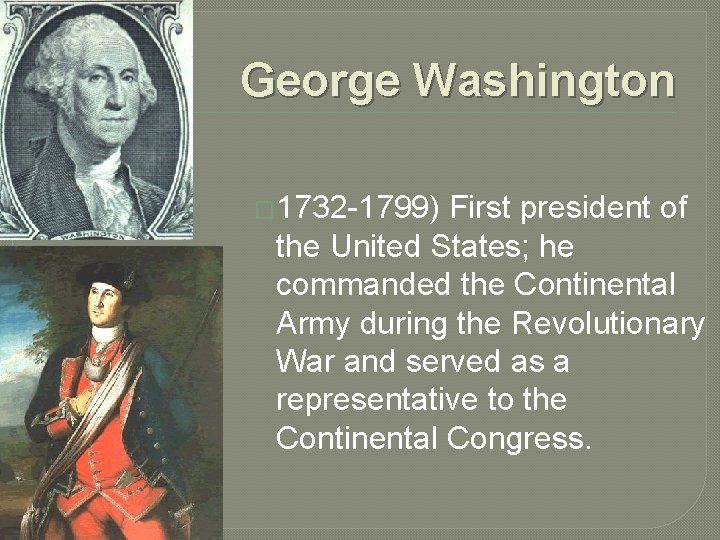
George Washington � 1732 -1799) First president of the United States; he commanded the Continental Army during the Revolutionary War and served as a representative to the Continental Congress.
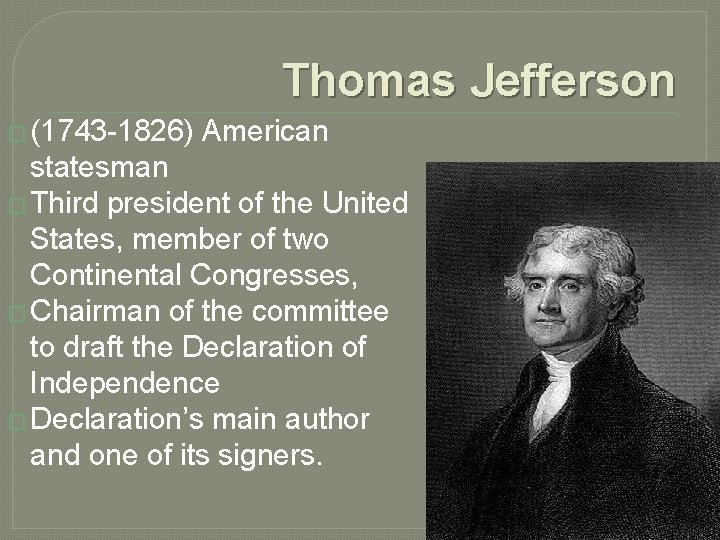
Thomas Jefferson � (1743 -1826) American statesman � Third president of the United States, member of two Continental Congresses, � Chairman of the committee to draft the Declaration of Independence � Declaration’s main author and one of its signers.
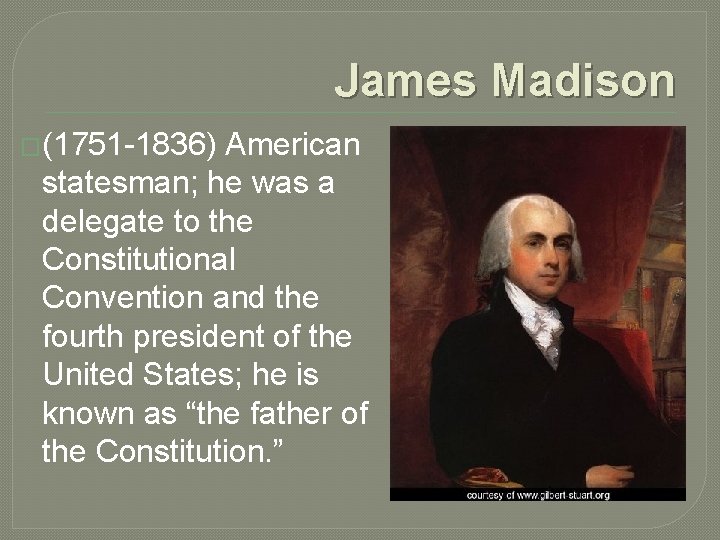
James Madison �(1751 -1836) American statesman; he was a delegate to the Constitutional Convention and the fourth president of the United States; he is known as “the father of the Constitution. ”
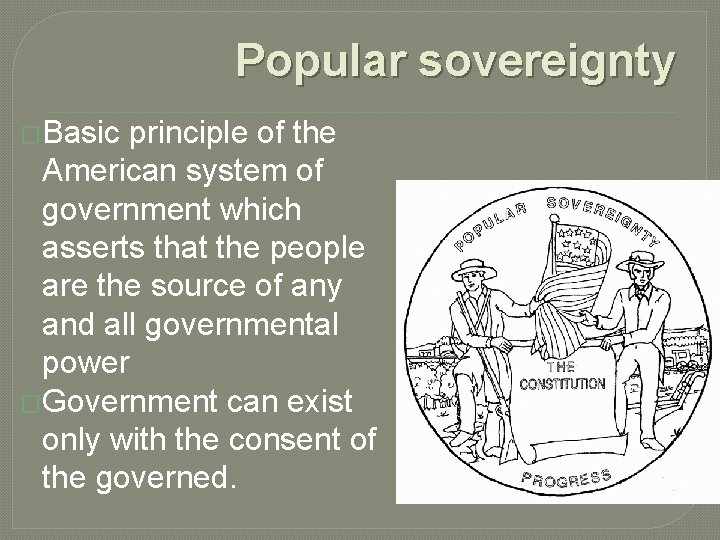
Popular sovereignty �Basic principle of the American system of government which asserts that the people are the source of any and all governmental power �Government can exist only with the consent of the governed.
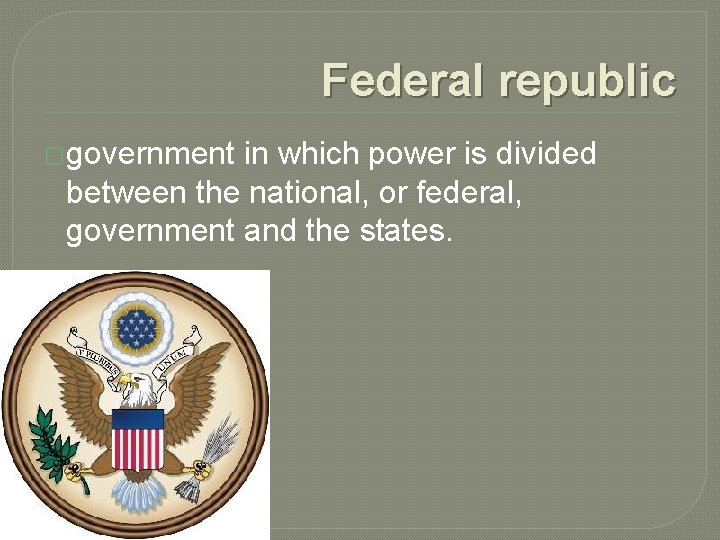
Federal republic �government in which power is divided between the national, or federal, government and the states.