
AP World History 1750 1914 Overview Periodization Question
- Slides: 30
AP World History 1750 – 1914 Overview (Periodization Question: Why 1750 – 1914? )
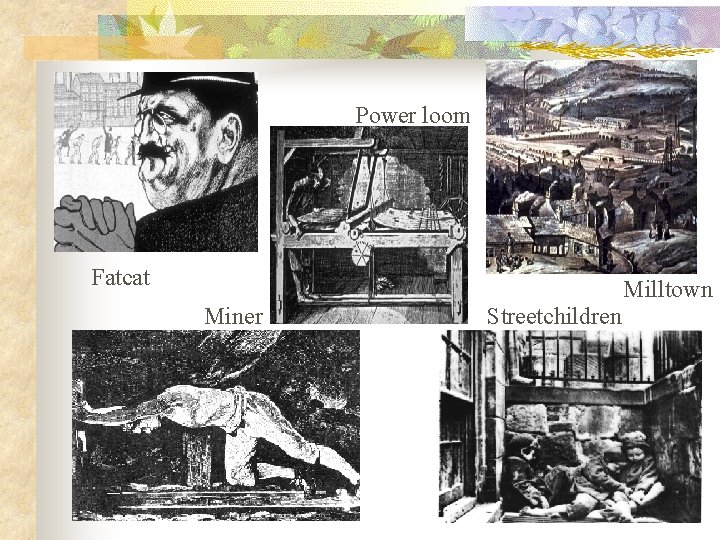
Industrialization changed Production n Britain was the center ( geography, distribution of coal and iron, demographic changes/urbanization, B. entrepreneurialism access to foreign resources through colonialism, capitalism) n n Factories and fossil fuel-based machines Colonialism = search for raw materials & markets – new patterns of trade, capitalism and “New Imperialism” (China, India) IR contributed to decline of agriculturallybased economies Mining imp – gold/silver/diamonds ( S. Africa, )
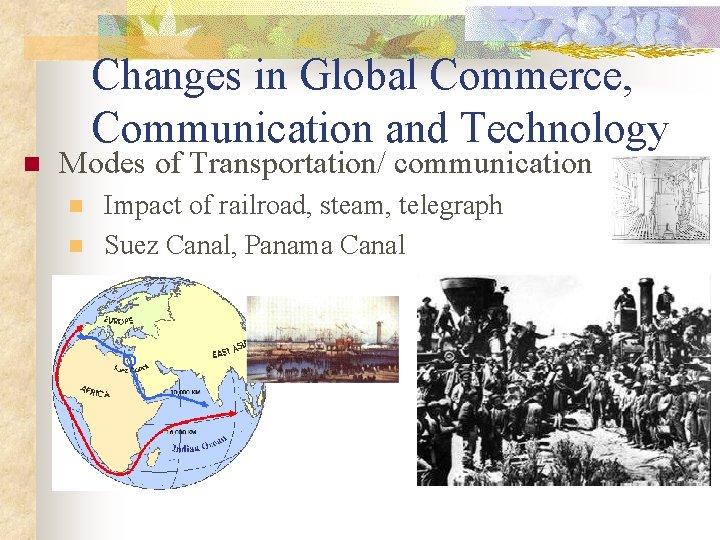
n Changes in Global Commerce, Communication and Technology Modes of Transportation/ communication n n Impact of railroad, steam, telegraph Suez Canal, Panama Canal
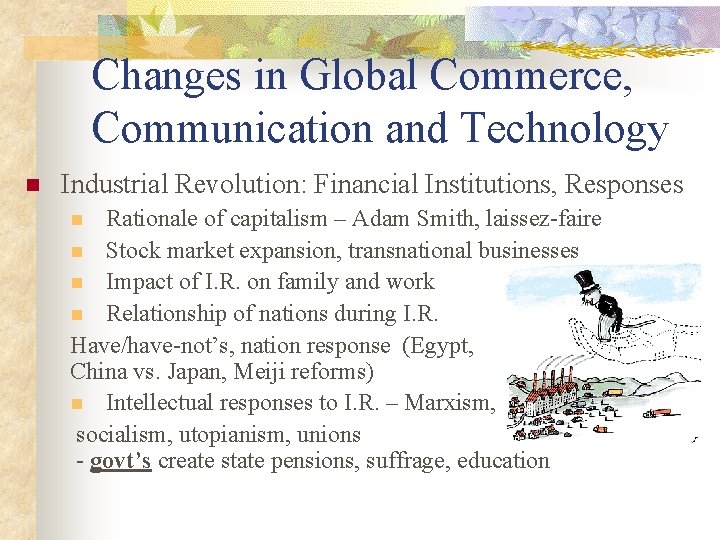
Changes in Global Commerce, Communication and Technology n Industrial Revolution: Financial Institutions, Responses Rationale of capitalism – Adam Smith, laissez-faire n Stock market expansion, transnational businesses n Impact of I. R. on family and work n Relationship of nations during I. R. Have/have-not’s, nation response (Egypt, China vs. Japan, Meiji reforms) n Intellectual responses to I. R. – Marxism, socialism, utopianism, unions - govt’s create state pensions, suffrage, education n
Power loom Fatcat Milltown Miner Streetchildren
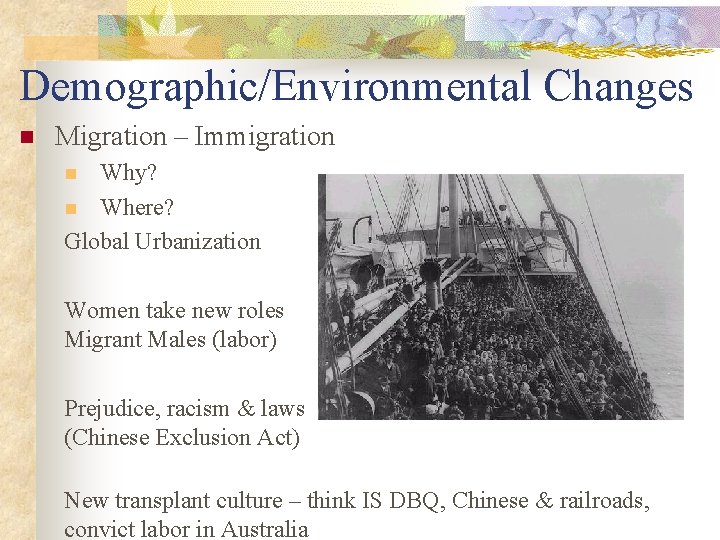
Demographic/Environmental Changes n Migration – Immigration Why? n Where? Global Urbanization n Women take new roles Migrant Males (labor) Prejudice, racism & laws (Chinese Exclusion Act) New transplant culture – think IS DBQ, Chinese & railroads, convict labor in Australia
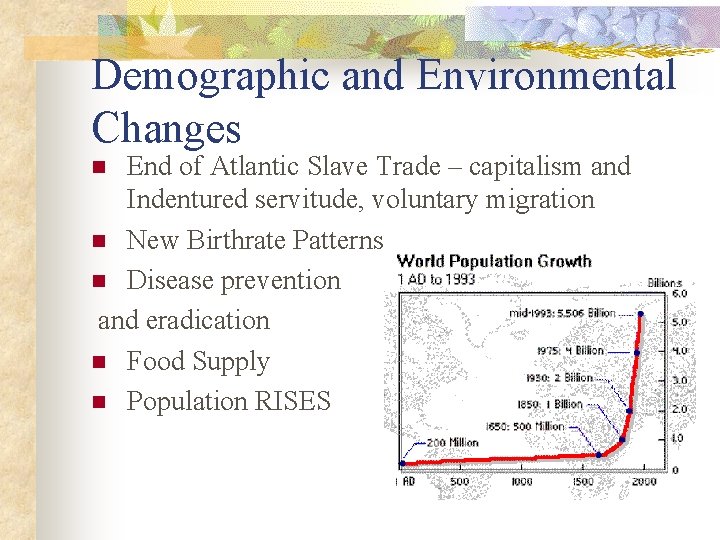
Demographic and Environmental Changes End of Atlantic Slave Trade – capitalism and Indentured servitude, voluntary migration n New Birthrate Patterns n Disease prevention and eradication n Food Supply n Population RISES n
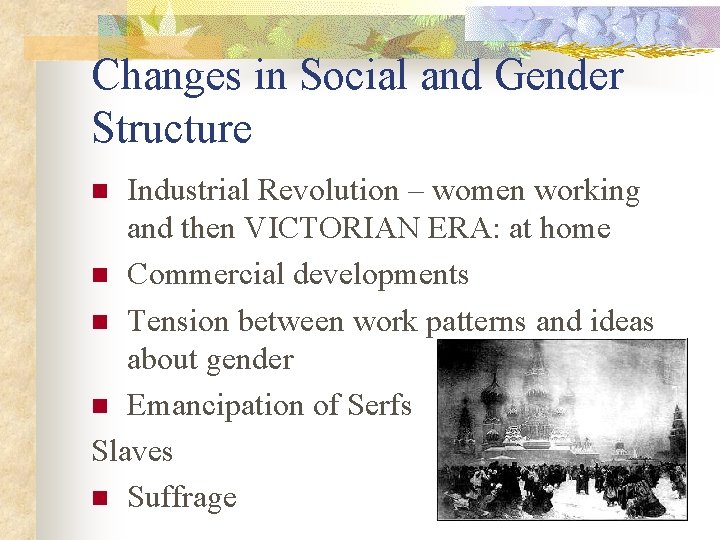
Changes in Social and Gender Structure Industrial Revolution – women working and then VICTORIAN ERA: at home n Commercial developments n Tension between work patterns and ideas about gender n Emancipation of Serfs Slaves n Suffrage n
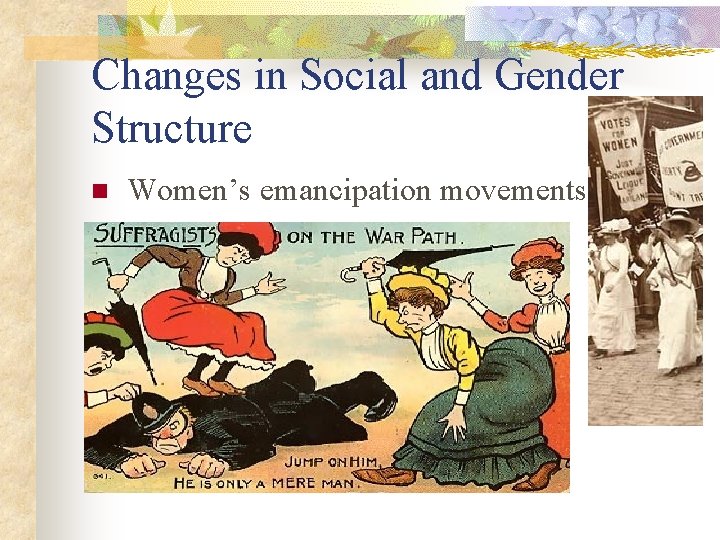
Changes in Social and Gender Structure n Women’s emancipation movements
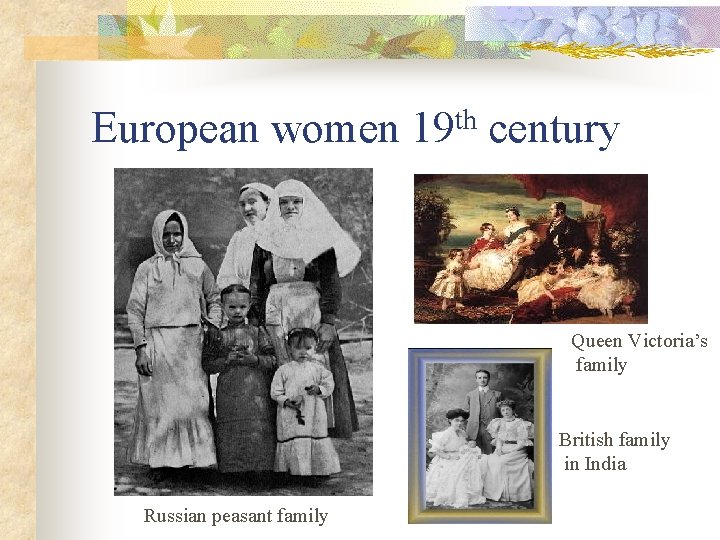
European women 19 th century Queen Victoria’s family British family in India Russian peasant family
Nationalism, Revolution, Reform n n n n Enlightenment thought – political & individual rights & freedoms (Voltaire, Rousseau, Locke, Montesquieu) – REVOLUTIONS! New documents (Declaration of Independence, Declaration of Rights of Man) Abolition of slavery, expanded suffrage Development of nationalism (language, religion, culture, tdentiity byt erritory) Revolutions in Americas led to New Imperialism Anti-colonial movements (Boxer Rebellion) led to reforms (Tanzimat, Self-strengthening movements) and new ideologies (socialism, communism) Europeans “self-superiority” – conservatism, new imperialism, social darwinism Women’s Rights (Seneca Falls, Declaration of the Rights of Women, Wollstonecraft)
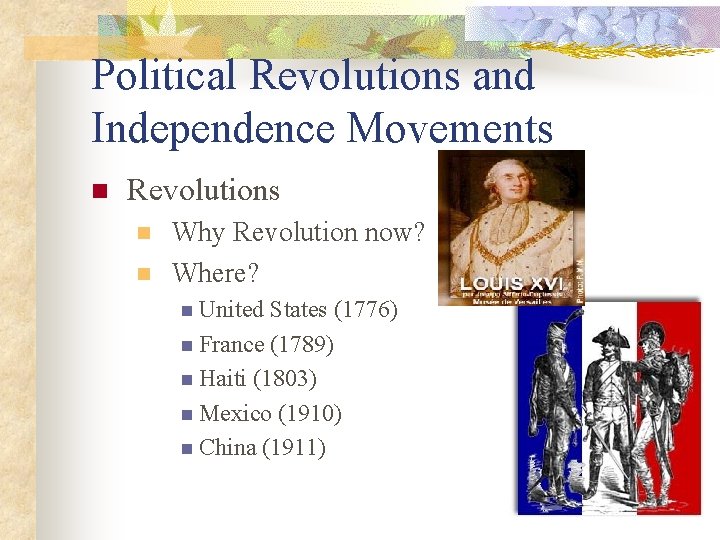
Political Revolutions and Independence Movements n Revolutions n n Why Revolution now? Where? n United States (1776) n France (1789) n Haiti (1803) n Mexico (1910) n China (1911)
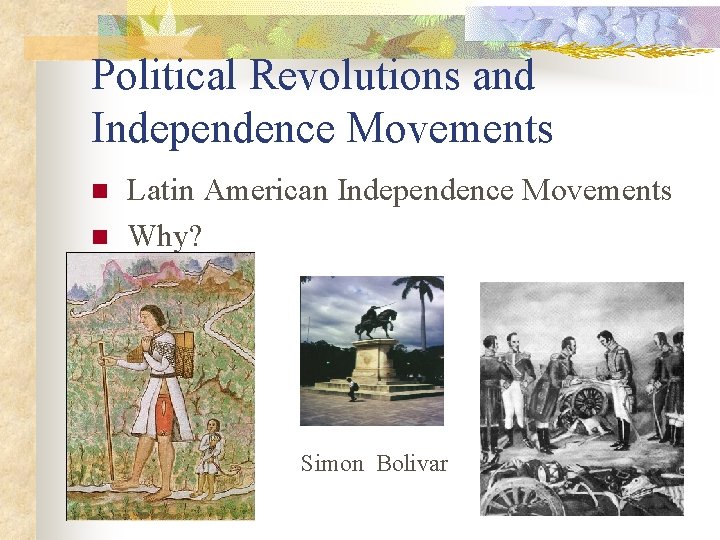
Political Revolutions and Independence Movements n n Latin American Independence Movements Why? Simon Bolivar
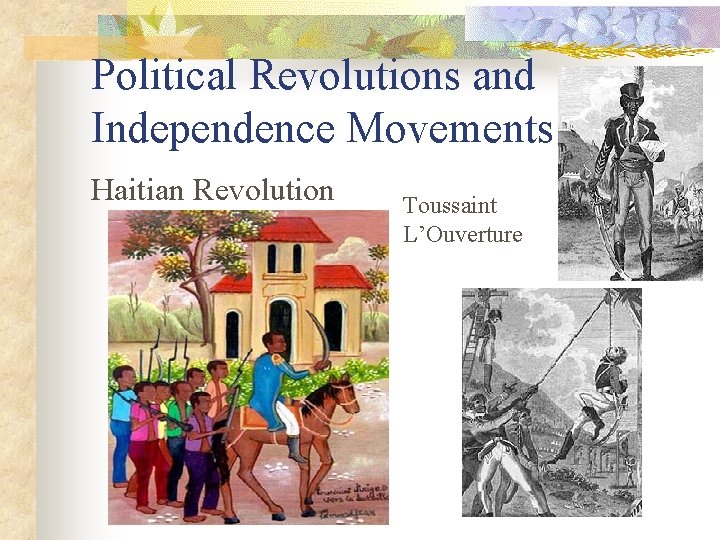
Political Revolutions and Independence Movements Haitian Revolution Toussaint L’Ouverture
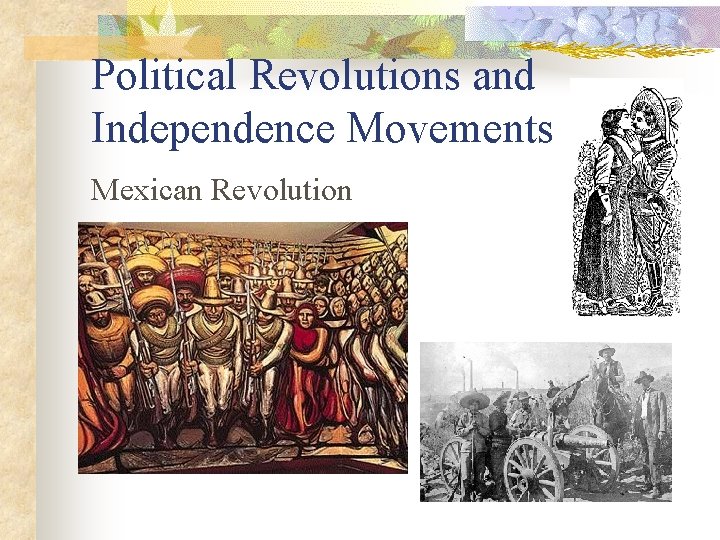
Political Revolutions and Independence Movements Mexican Revolution
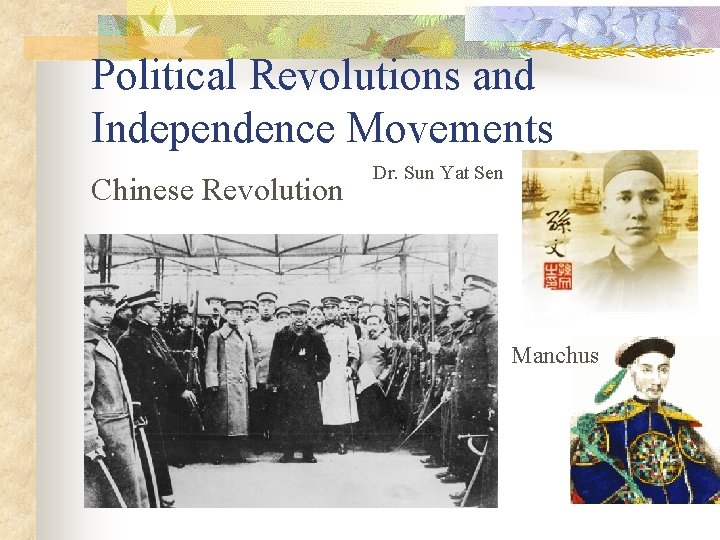
Political Revolutions and Independence Movements Chinese Revolution Dr. Sun Yat Sen Manchus
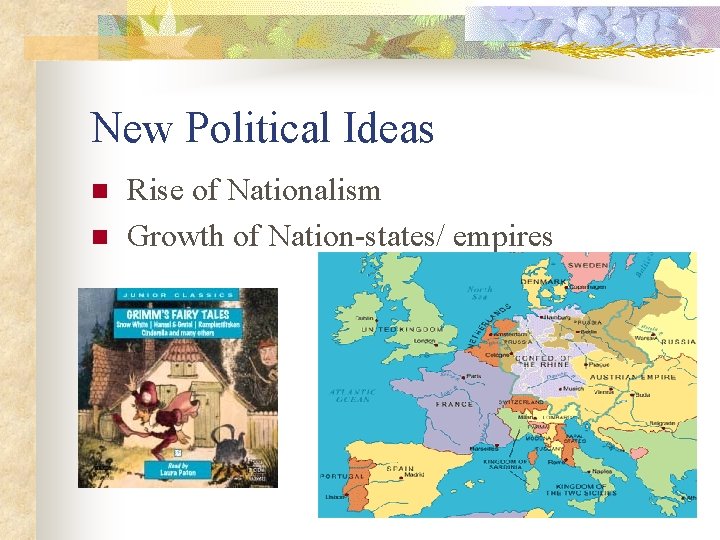
New Political Ideas n n Rise of Nationalism Growth of Nation-states/ empires
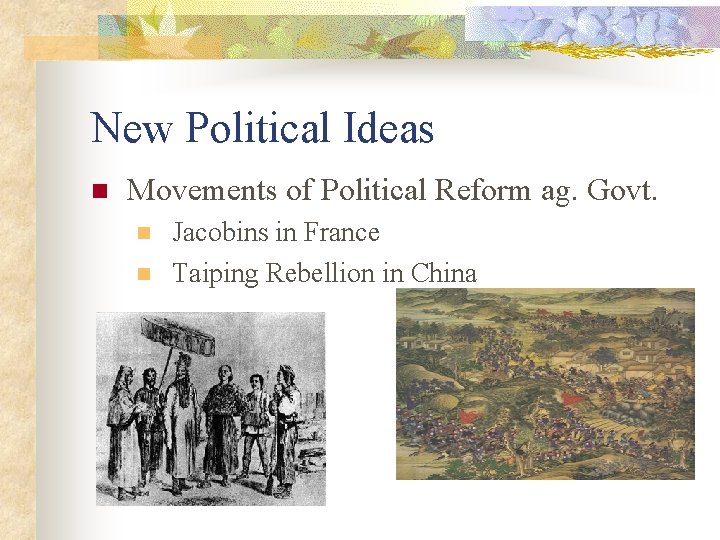
New Political Ideas n Movements of Political Reform ag. Govt. n n Jacobins in France Taiping Rebellion in China
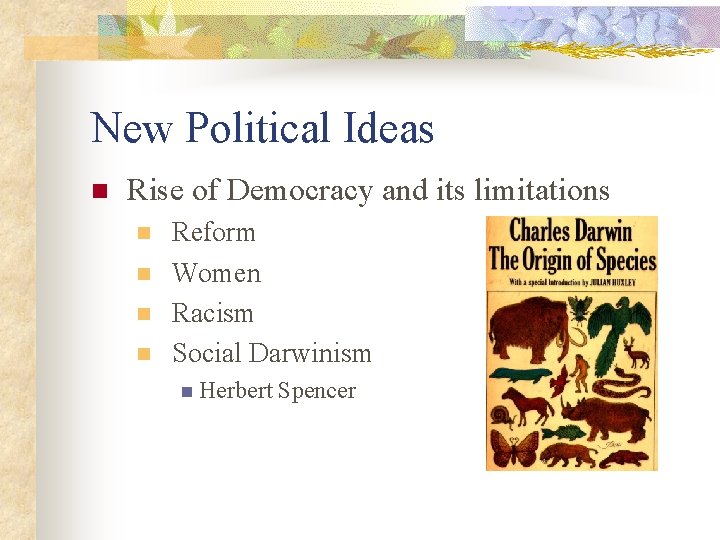
New Political Ideas n Rise of Democracy and its limitations n n Reform Women Racism Social Darwinism n Herbert Spencer
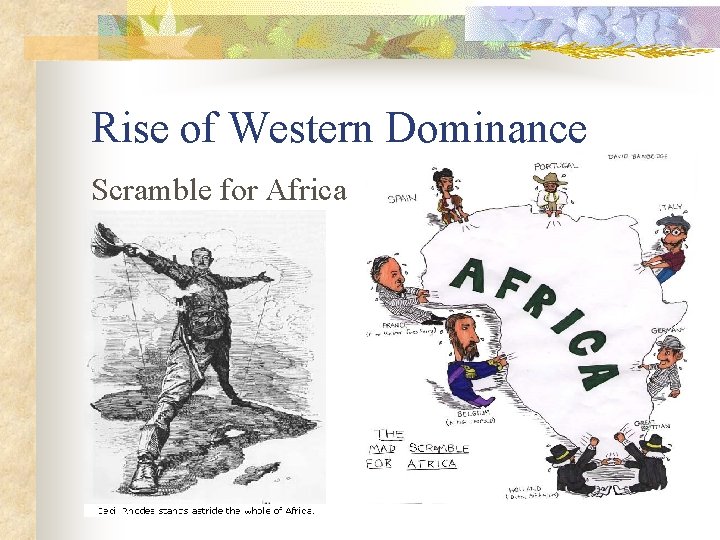
Rise of Western Dominance, New Imperialism & Nation-States Imperialism/Colonialism: WHY: 3 G’s; economic, national pride, social just. HOW: Use of force, technology, cures, take advantage of African rivalries Changes: “Old” (colonialism) to New Imperialism ie. African continent, much of Asia, and Oceania n n Ethiopia, countries Liberia and Siam are the only independent
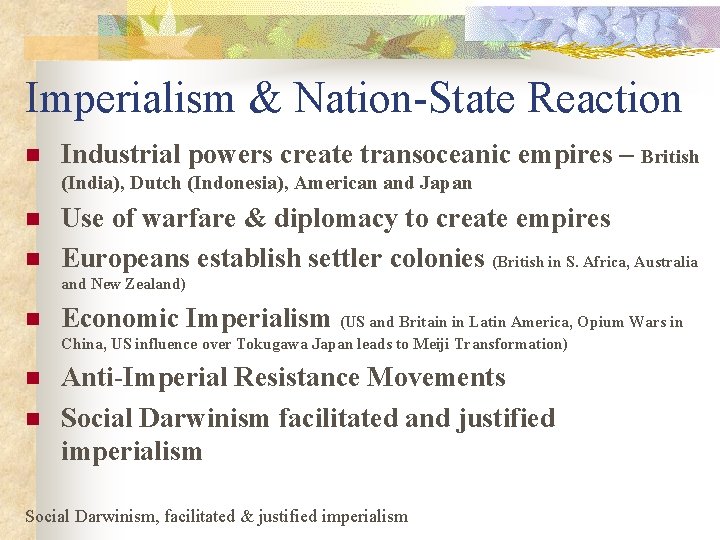
Imperialism & Nation-State Reaction n Industrial powers create transoceanic empires – British (India), Dutch (Indonesia), American and Japan n n Use of warfare & diplomacy to create empires Europeans establish settler colonies (British in S. Africa, Australia and New Zealand) n Economic Imperialism (US and Britain in Latin America, Opium Wars in China, US influence over Tokugawa Japan leads to Meiji Transformation) n n Anti-Imperial Resistance Movements Social Darwinism facilitated and justified imperialism Social Darwinism, facilitated & justified imperialism
Rise of Western Dominance Scramble for Africa
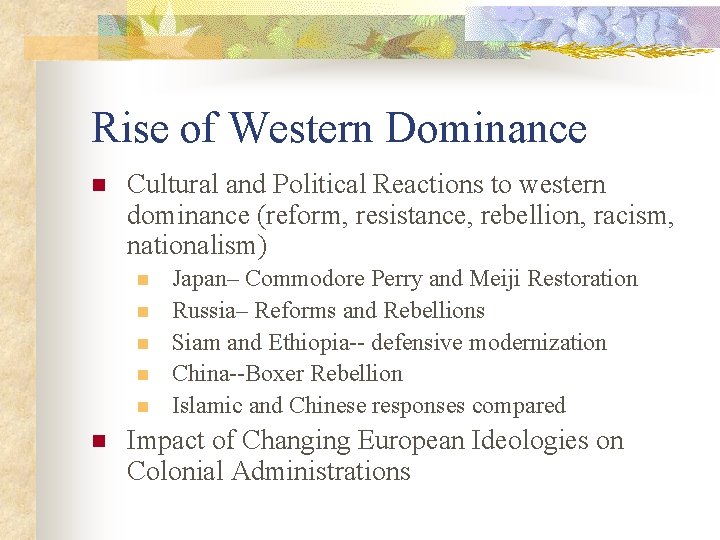
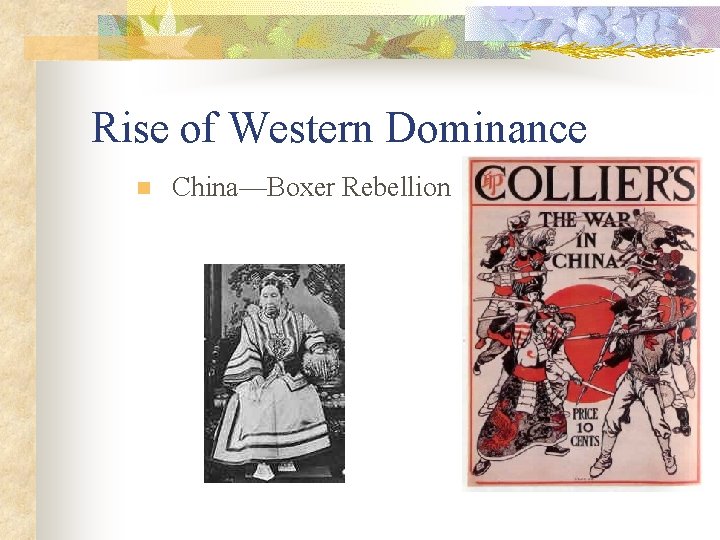
Rise of Western Dominance n Cultural and Political Reactions to western dominance (reform, resistance, rebellion, racism, nationalism) n n n Japan– Commodore Perry and Meiji Restoration Russia– Reforms and Rebellions Siam and Ethiopia-- defensive modernization China--Boxer Rebellion Islamic and Chinese responses compared Impact of Changing European Ideologies on Colonial Administrations
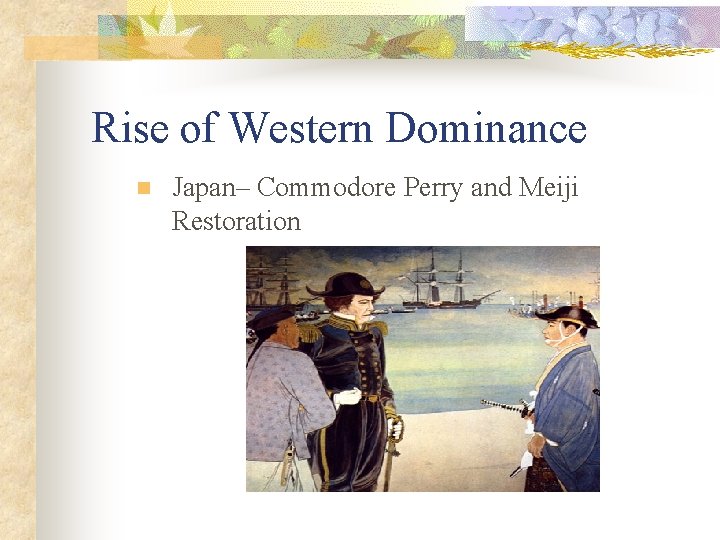
Rise of Western Dominance n Japan– Commodore Perry and Meiji Restoration
Rise of Western Dominance n China—Boxer Rebellion
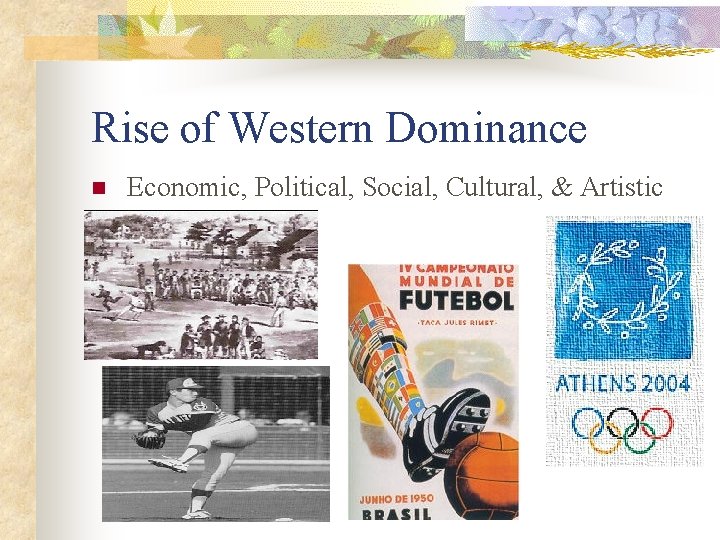
Rise of Western Dominance n Economic, Political, Social, Cultural, & Artistic
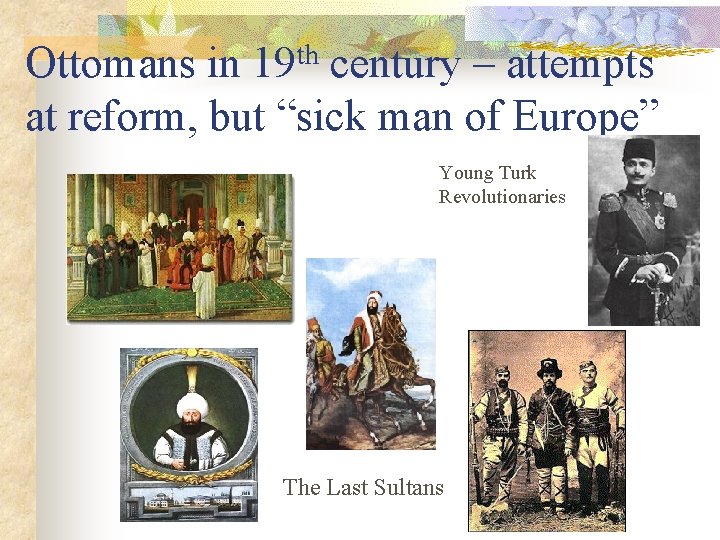
Ottomans in 19 th century – attempts at reform, but “sick man of Europe” Young Turk Revolutionaries The Last Sultans
CCOT and C&C ideas n n n Industrial revolution in western Europe and Japan (causes and early phases) Revolutions (American, French, Haitian, Mexican, and Chinese) Reaction to foreign domination in Ottomans empire, China, India and Japan.
Comparisons and CCOT n Nationalism – changes/continuities over time; compare between regions n Difference in forms of intervention in 19 th century Latin America and Africa n Roles and conditions of upper/ middle versus working/ peasant class women in western Europe
Conclusions n n n What are the global processes that are at play? Which have intensified? Diminished? Predict how the events of the 19 th century are a natural culmination of earlier developments. Speculate what historical events in the 19 th century would have most surprised historians of earlier eras.