
AP US Government Exam Review Materials Congress Federalism
- Slides: 87
AP US Government Exam Review Materials
Congress Federalism Courts Executive Branch Political Parties Foundations
Participation Public Opinion Interest Groups Campaigns and Elections
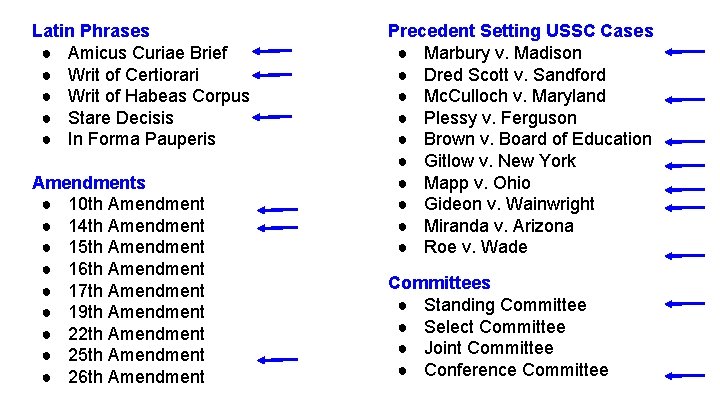
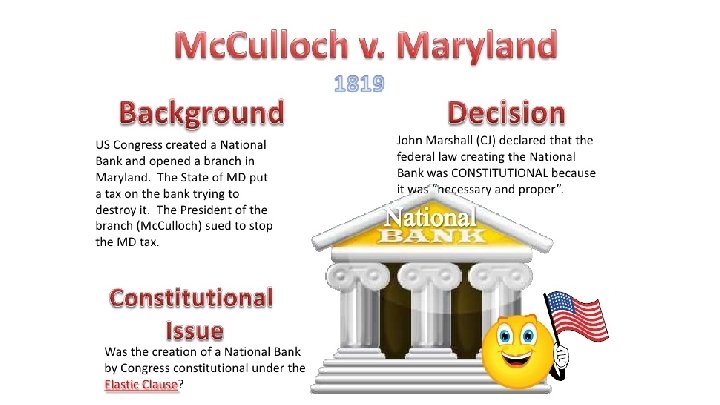
Latin Phrases ● Amicus Curiae Brief ● Writ of Certiorari ● Writ of Habeas Corpus ● Stare Decisis ● In Forma Pauperis Amendments ● 10 th Amendment ● 14 th Amendment ● 15 th Amendment ● 16 th Amendment ● 17 th Amendment ● 19 th Amendment ● 22 th Amendment ● 25 th Amendment ● 26 th Amendment Precedent Setting USSC Cases ● Marbury v. Madison ● Dred Scott v. Sandford ● Mc. Culloch v. Maryland ● Plessy v. Ferguson ● Brown v. Board of Education ● Gitlow v. New York ● Mapp v. Ohio ● Gideon v. Wainwright ● Miranda v. Arizona ● Roe v. Wade Committees ● Standing Committee ● Select Committee ● Joint Committee ● Conference Committee
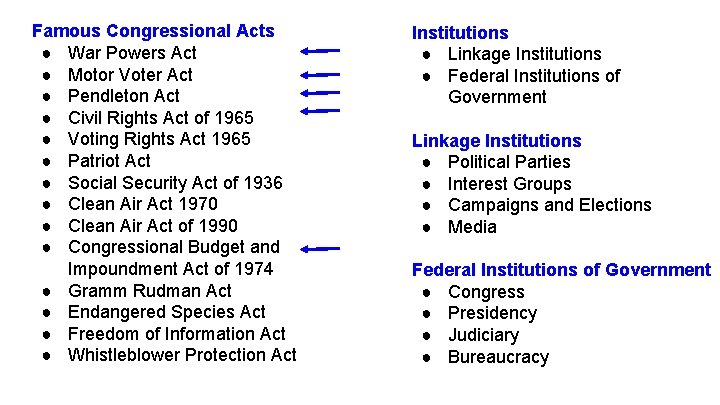
Famous Congressional Acts ● War Powers Act ● Motor Voter Act ● Pendleton Act ● Civil Rights Act of 1965 ● Voting Rights Act 1965 ● Patriot Act ● Social Security Act of 1936 ● Clean Air Act 1970 ● Clean Air Act of 1990 ● Congressional Budget and Impoundment Act of 1974 ● Gramm Rudman Act ● Endangered Species Act ● Freedom of Information Act ● Whistleblower Protection Act Institutions ● Linkage Institutions ● Federal Institutions of Government Linkage Institutions ● Political Parties ● Interest Groups ● Campaigns and Elections ● Media Federal Institutions of Government ● Congress ● Presidency ● Judiciary ● Bureaucracy
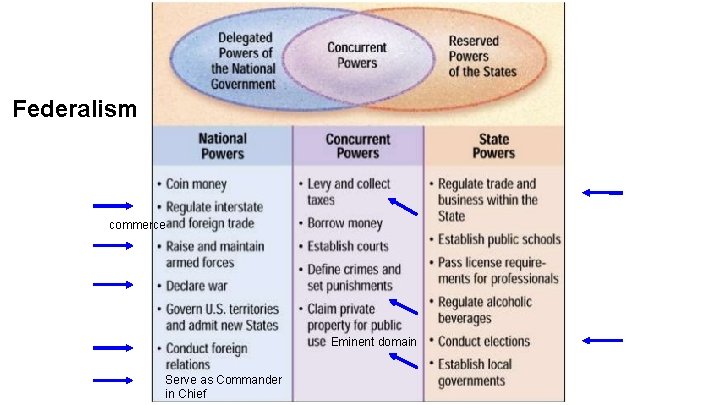
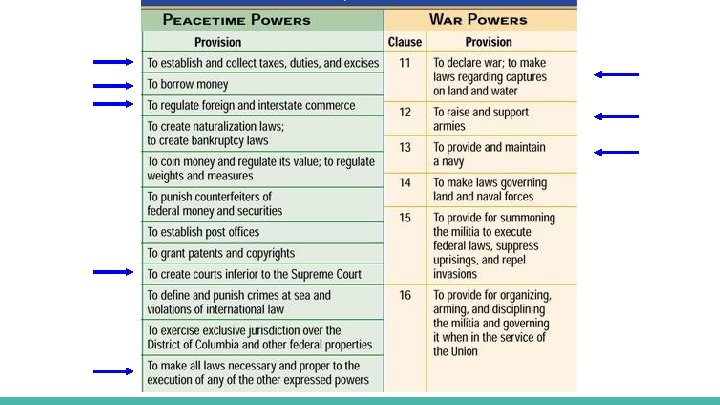
Federalism commerce Eminent domain Serve as Commander in Chief
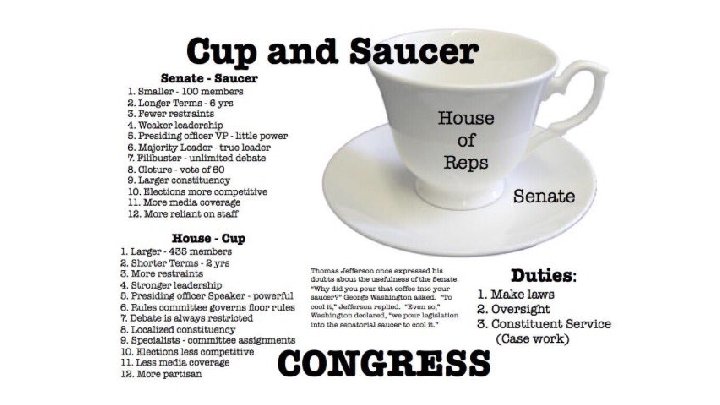
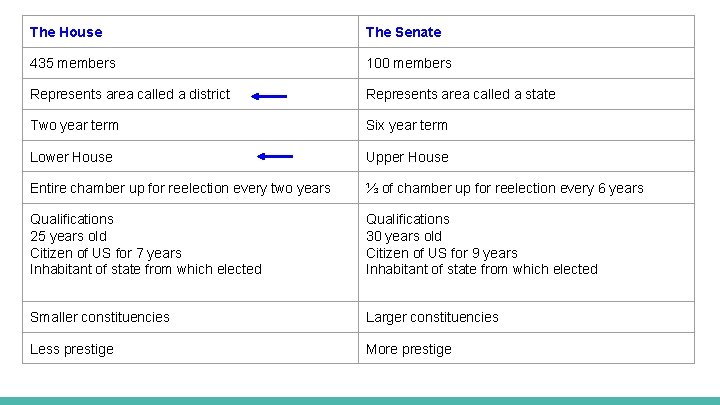
The House The Senate 435 members 100 members Represents area called a district Represents area called a state Two year term Six year term Lower House Upper House Entire chamber up for reelection every two years ⅓ of chamber up for reelection every 6 years Qualifications 25 years old Citizen of US for 7 years Inhabitant of state from which elected Qualifications 30 years old Citizen of US for 9 years Inhabitant of state from which elected Smaller constituencies Larger constituencies Less prestige More prestige
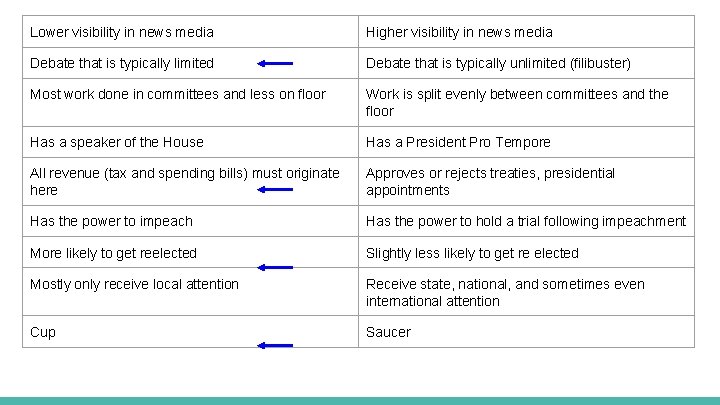
Lower visibility in news media Higher visibility in news media Debate that is typically limited Debate that is typically unlimited (filibuster) Most work done in committees and less on floor Work is split evenly between committees and the floor Has a speaker of the House Has a President Pro Tempore All revenue (tax and spending bills) must originate here Approves or rejects treaties, presidential appointments Has the power to impeach Has the power to hold a trial following impeachment More likely to get reelected Slightly less likely to get re elected Mostly only receive local attention Receive state, national, and sometimes even international attention Cup Saucer
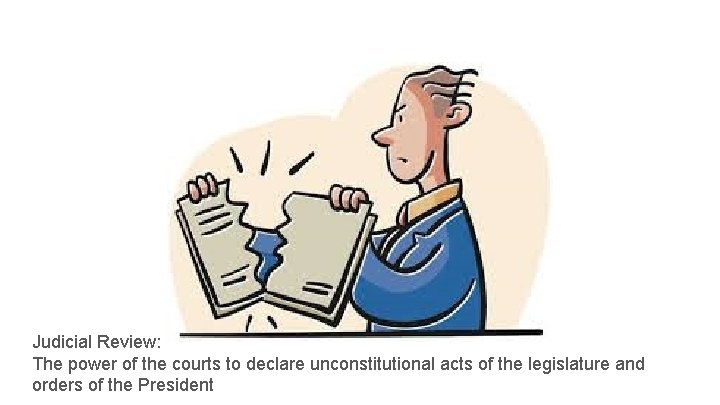
Judicial Review: The power of the courts to declare unconstitutional acts of the legislature and orders of the President
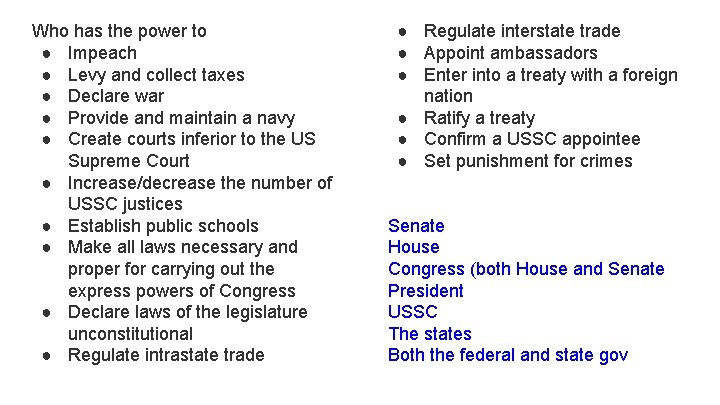
Who has the power to ● Impeach ● Levy and collect taxes ● Declare war ● Provide and maintain a navy ● Create courts inferior to the US Supreme Court ● Increase/decrease the number of USSC justices ● Establish public schools ● Make all laws necessary and proper for carrying out the express powers of Congress ● Declare laws of the legislature unconstitutional ● Regulate intrastate trade ● Regulate interstate trade ● Appoint ambassadors ● Enter into a treaty with a foreign nation ● Ratify a treaty ● Confirm a USSC appointee ● Set punishment for crimes Senate House Congress (both House and Senate President USSC The states Both the federal and state gov
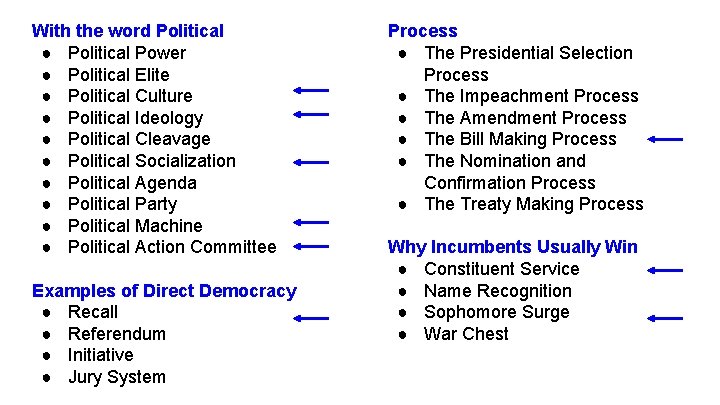
With the word Political ● Political Power ● Political Elite ● Political Culture ● Political Ideology ● Political Cleavage ● Political Socialization ● Political Agenda ● Political Party ● Political Machine ● Political Action Committee Examples of Direct Democracy ● Recall ● Referendum ● Initiative ● Jury System Process ● The Presidential Selection Process ● The Impeachment Process ● The Amendment Process ● The Bill Making Process ● The Nomination and Confirmation Process ● The Treaty Making Process Why Incumbents Usually Win ● Constituent Service ● Name Recognition ● Sophomore Surge ● War Chest
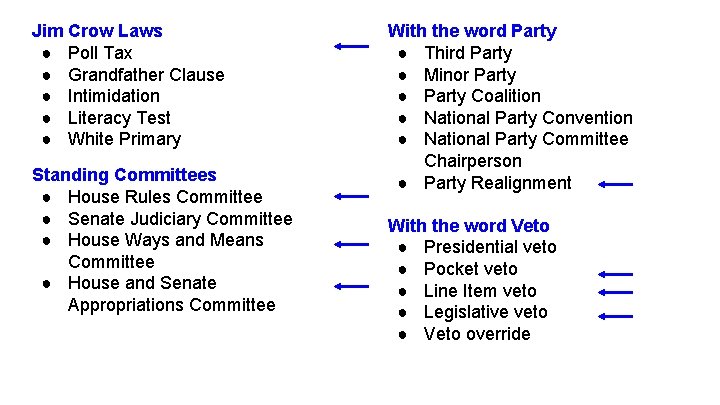
Jim Crow Laws ● Poll Tax ● Grandfather Clause ● Intimidation ● Literacy Test ● White Primary Standing Committees ● House Rules Committee ● Senate Judiciary Committee ● House Ways and Means Committee ● House and Senate Appropriations Committee With the word Party ● Third Party ● Minor Party ● Party Coalition ● National Party Convention ● National Party Committee Chairperson ● Party Realignment With the word Veto ● Presidential veto ● Pocket veto ● Line Item veto ● Legislative veto ● Veto override
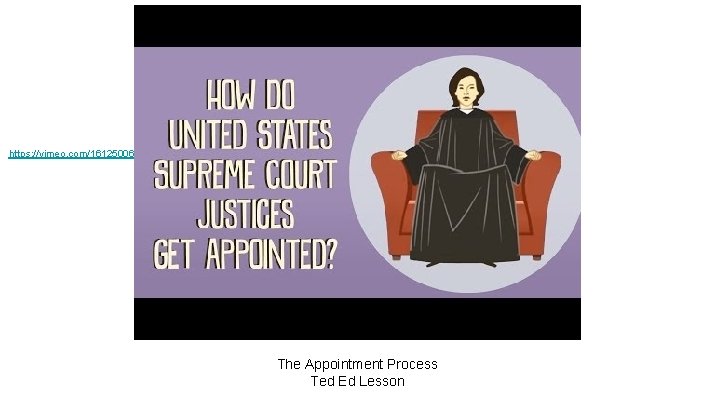
https: //vimeo. com/161250066 Password sprinkles The Appointment Process Ted Ed Lesson
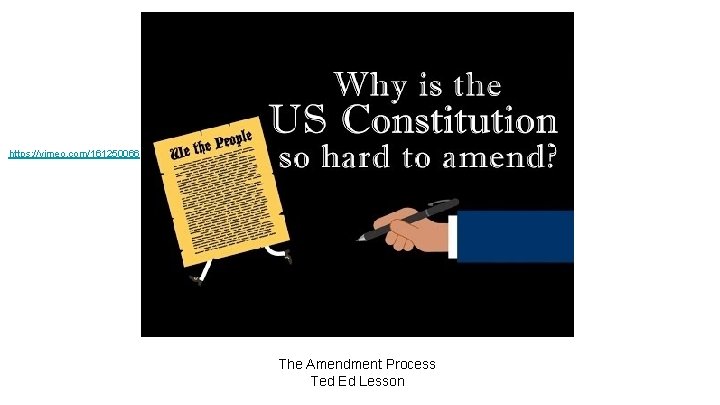
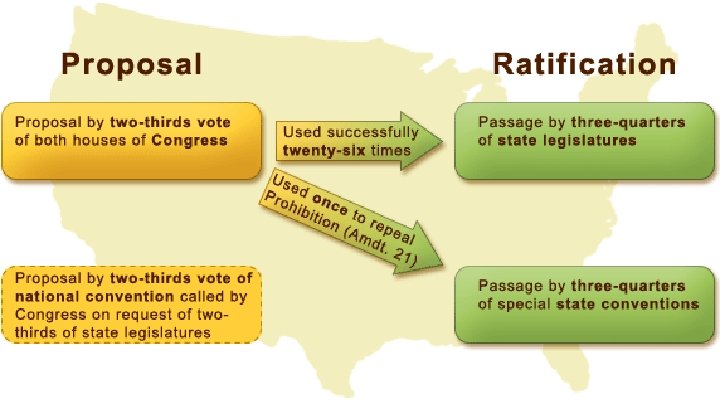
https: //vimeo. com/161250066 Password sprinkles The Amendment Process Ted Ed Lesson
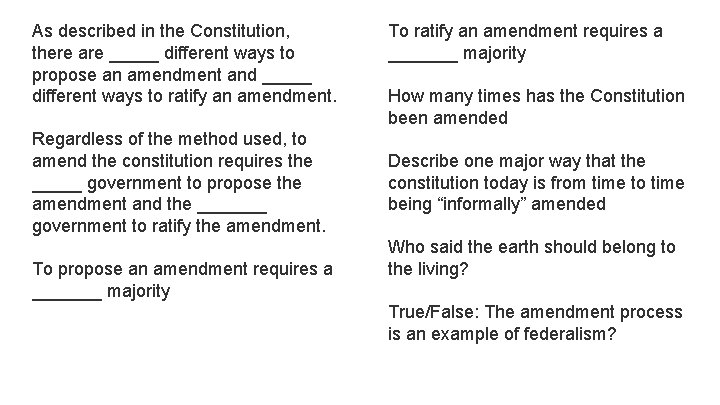
As described in the Constitution, there are _____ different ways to propose an amendment and _____ different ways to ratify an amendment. Regardless of the method used, to amend the constitution requires the _____ government to propose the amendment and the _______ government to ratify the amendment. To propose an amendment requires a _______ majority To ratify an amendment requires a _______ majority How many times has the Constitution been amended Describe one major way that the constitution today is from time to time being “informally” amended Who said the earth should belong to the living? True/False: The amendment process is an example of federalism?
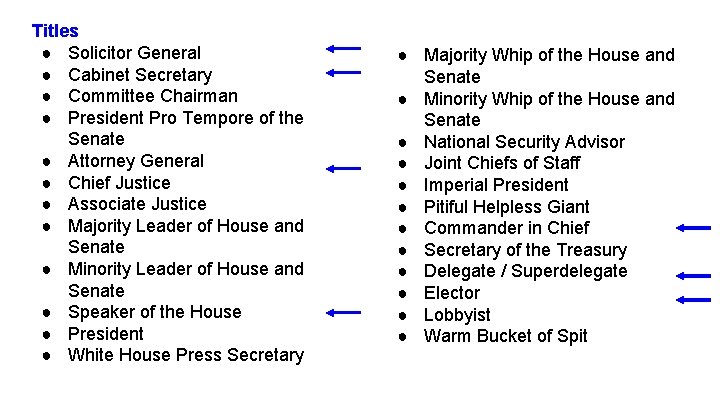
Titles ● Solicitor General ● Cabinet Secretary ● Committee Chairman ● President Pro Tempore of the Senate ● Attorney General ● Chief Justice ● Associate Justice ● Majority Leader of House and Senate ● Minority Leader of House and Senate ● Speaker of the House ● President ● White House Press Secretary ● Majority Whip of the House and Senate ● Minority Whip of the House and Senate ● National Security Advisor ● Joint Chiefs of Staff ● Imperial President ● Pitiful Helpless Giant ● Commander in Chief ● Secretary of the Treasury ● Delegate / Superdelegate ● Elector ● Lobbyist ● Warm Bucket of Spit
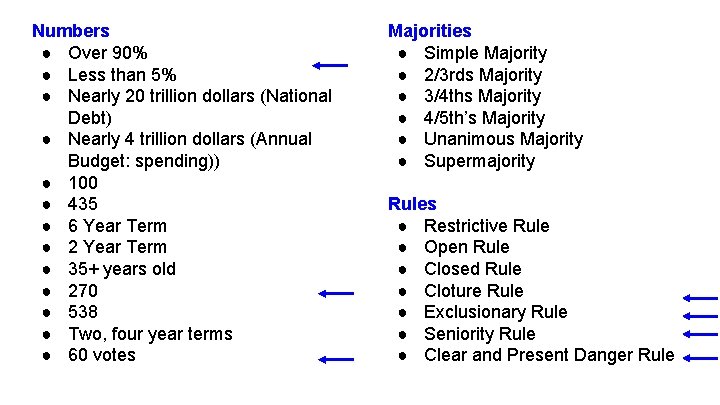
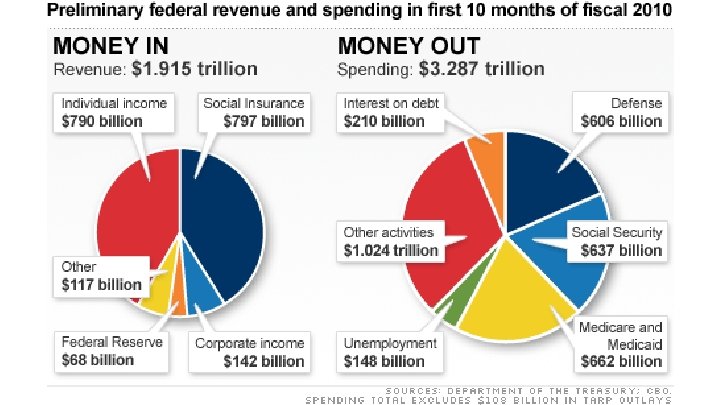
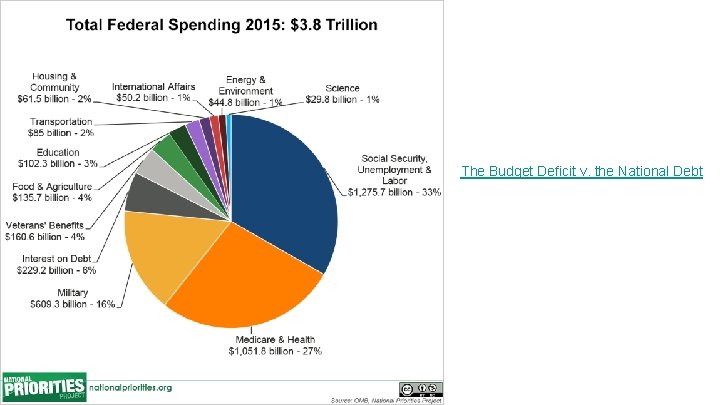
Numbers ● Over 90% ● Less than 5% ● Nearly 20 trillion dollars (National Debt) ● Nearly 4 trillion dollars (Annual Budget: spending)) ● 100 ● 435 ● 6 Year Term ● 2 Year Term ● 35+ years old ● 270 ● 538 ● Two, four year terms ● 60 votes Majorities ● Simple Majority ● 2/3 rds Majority ● 3/4 ths Majority ● 4/5 th’s Majority ● Unanimous Majority ● Supermajority Rules ● Restrictive Rule ● Open Rule ● Closed Rule ● Cloture Rule ● Exclusionary Rule ● Seniority Rule ● Clear and Present Danger Rule
The Bill of Rights Ted Ed Lesson
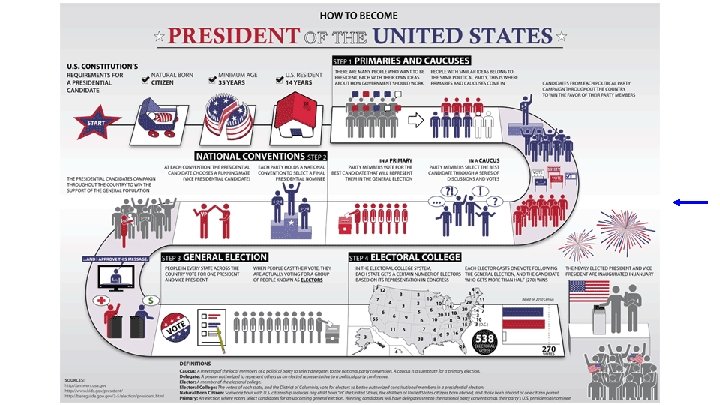
The Presidential Selection Process Common Craft
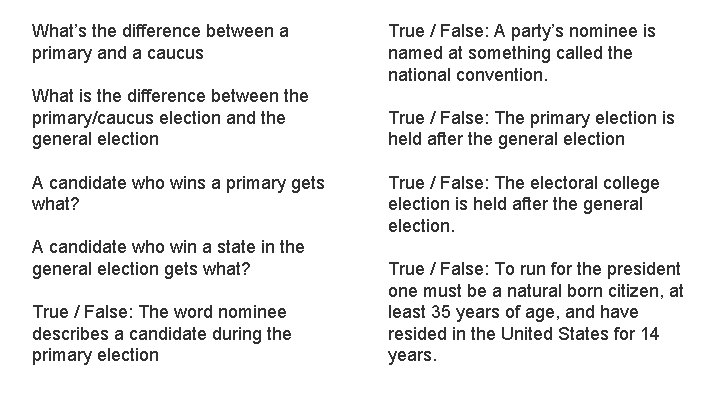
What’s the difference between a primary and a caucus What is the difference between the primary/caucus election and the general election A candidate who wins a primary gets what? A candidate who win a state in the general election gets what? True / False: The word nominee describes a candidate during the primary election True / False: A party’s nominee is named at something called the national convention. True / False: The primary election is held after the general election True / False: The electoral college election is held after the general election. True / False: To run for the president one must be a natural born citizen, at least 35 years of age, and have resided in the United States for 14 years.
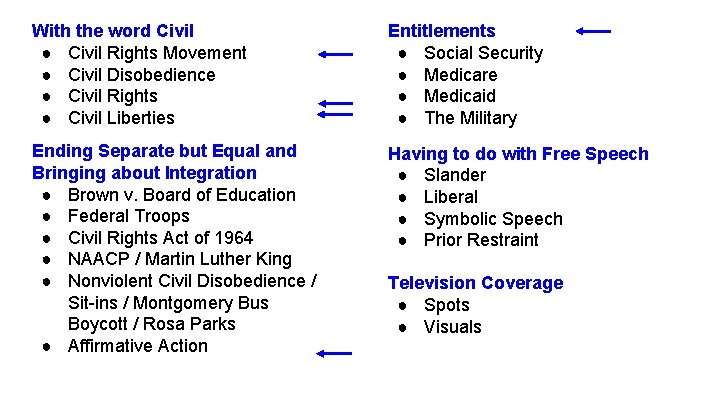
With the word Civil ● Civil Rights Movement ● Civil Disobedience ● Civil Rights ● Civil Liberties Entitlements ● Social Security ● Medicare ● Medicaid ● The Military Ending Separate but Equal and Bringing about Integration ● Brown v. Board of Education ● Federal Troops ● Civil Rights Act of 1964 ● NAACP / Martin Luther King ● Nonviolent Civil Disobedience / Sit-ins / Montgomery Bus Boycott / Rosa Parks ● Affirmative Action Having to do with Free Speech ● Slander ● Liberal ● Symbolic Speech ● Prior Restraint Television Coverage ● Spots ● Visuals
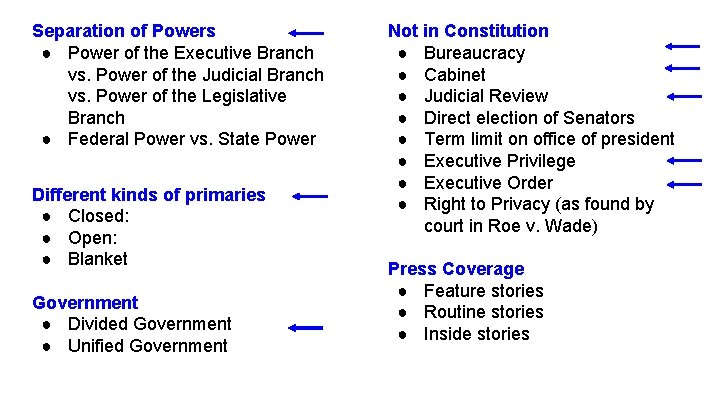
Separation of Powers ● Power of the Executive Branch vs. Power of the Judicial Branch vs. Power of the Legislative Branch ● Federal Power vs. State Power Different kinds of primaries ● Closed: ● Open: ● Blanket Government ● Divided Government ● Unified Government Not in Constitution ● Bureaucracy ● Cabinet ● Judicial Review ● Direct election of Senators ● Term limit on office of president ● Executive Privilege ● Executive Order ● Right to Privacy (as found by court in Roe v. Wade) Press Coverage ● Feature stories ● Routine stories ● Inside stories
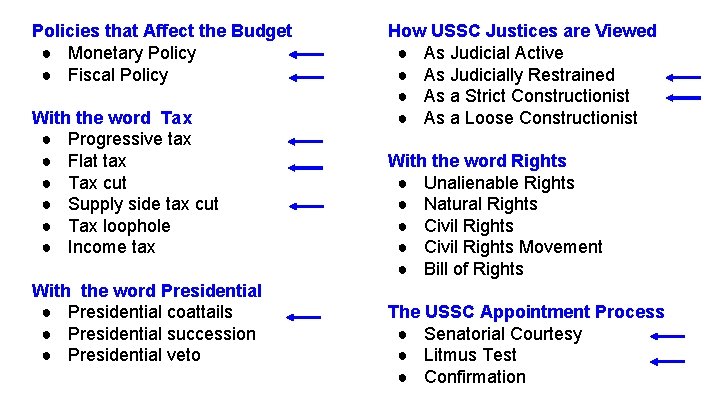
Policies that Affect the Budget ● Monetary Policy ● Fiscal Policy With the word Tax ● Progressive tax ● Flat tax ● Tax cut ● Supply side tax cut ● Tax loophole ● Income tax With the word Presidential ● Presidential coattails ● Presidential succession ● Presidential veto How USSC Justices are Viewed ● As Judicial Active ● As Judicially Restrained ● As a Strict Constructionist ● As a Loose Constructionist With the word Rights ● Unalienable Rights ● Natural Rights ● Civil Rights Movement ● Bill of Rights The USSC Appointment Process ● Senatorial Courtesy ● Litmus Test ● Confirmation
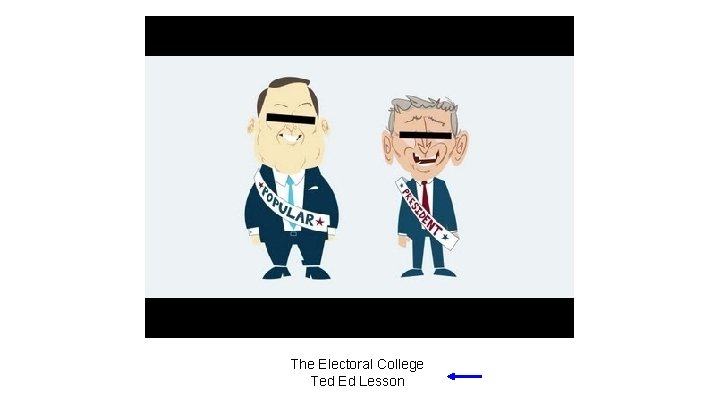
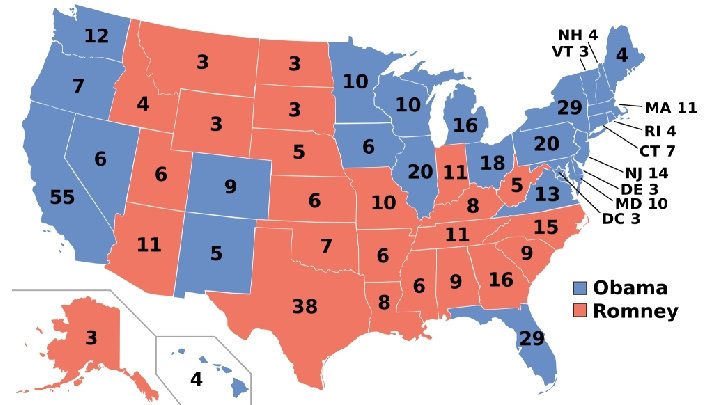
The Electoral College Ted Ed Lesson
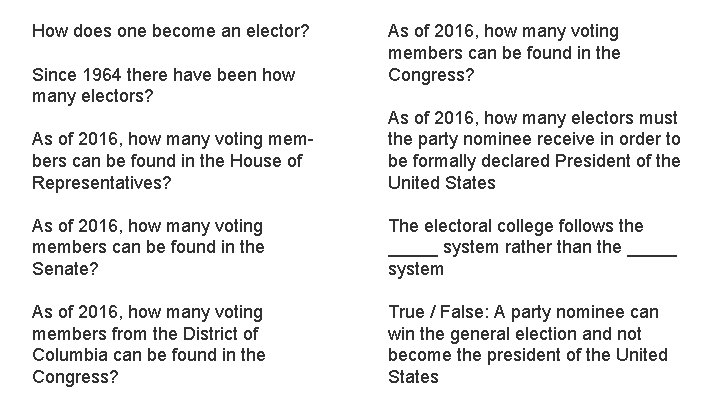
How does one become an elector? Since 1964 there have been how many electors? As of 2016, how many voting members can be found in the Congress? As of 2016, how many voting members can be found in the House of Representatives? As of 2016, how many electors must the party nominee receive in order to be formally declared President of the United States As of 2016, how many voting members can be found in the Senate? The electoral college follows the _____ system rather than the _____ system As of 2016, how many voting members from the District of Columbia can be found in the Congress? True / False: A party nominee can win the general election and not become the president of the United States
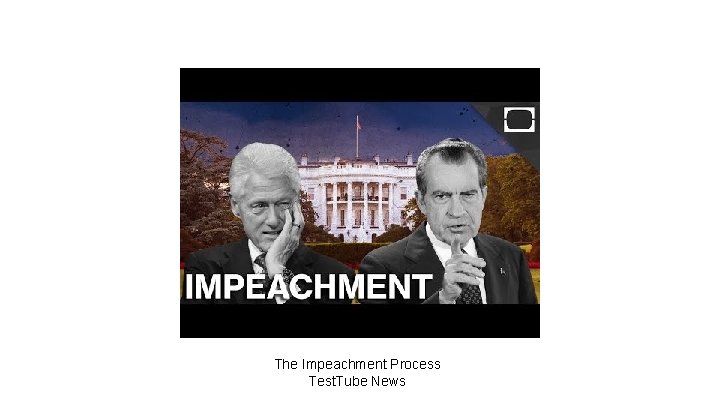
The Impeachment Process Test. Tube News
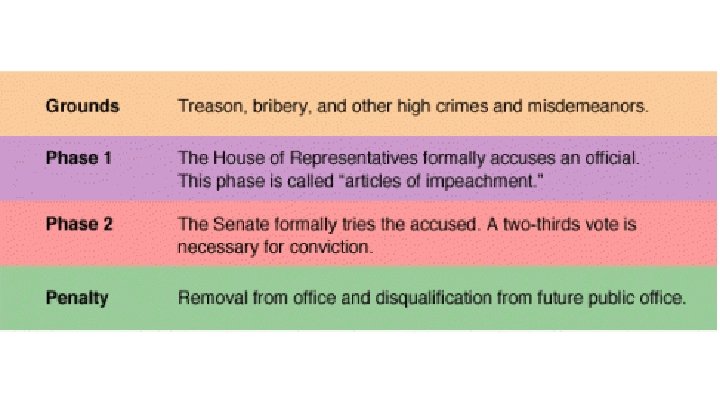
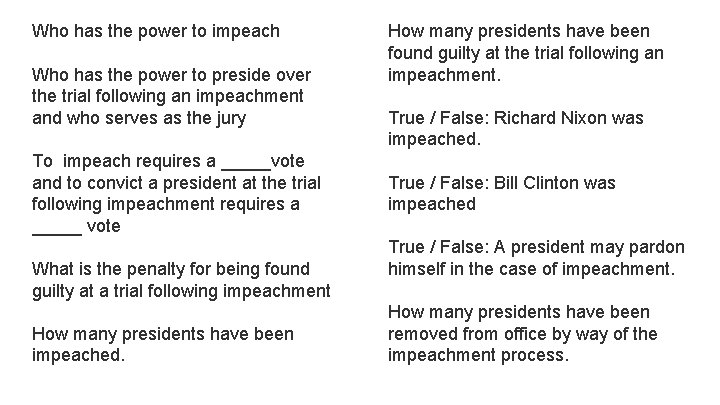
Who has the power to impeach Who has the power to preside over the trial following an impeachment and who serves as the jury To impeach requires a _____vote and to convict a president at the trial following impeachment requires a _____ vote What is the penalty for being found guilty at a trial following impeachment How many presidents have been impeached. How many presidents have been found guilty at the trial following an impeachment. True / False: Richard Nixon was impeached. True / False: Bill Clinton was impeached True / False: A president may pardon himself in the case of impeachment. How many presidents have been removed from office by way of the impeachment process.
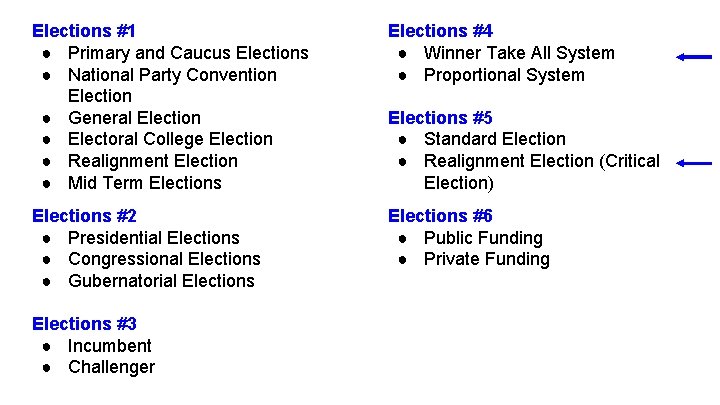
Elections #1 ● Primary and Caucus Elections ● National Party Convention Election ● General Election ● Electoral College Election ● Realignment Election ● Mid Term Elections #4 ● Winner Take All System ● Proportional System Elections #2 ● Presidential Elections ● Congressional Elections ● Gubernatorial Elections #6 ● Public Funding ● Private Funding Elections #3 ● Incumbent ● Challenger Elections #5 ● Standard Election ● Realignment Election (Critical Election)
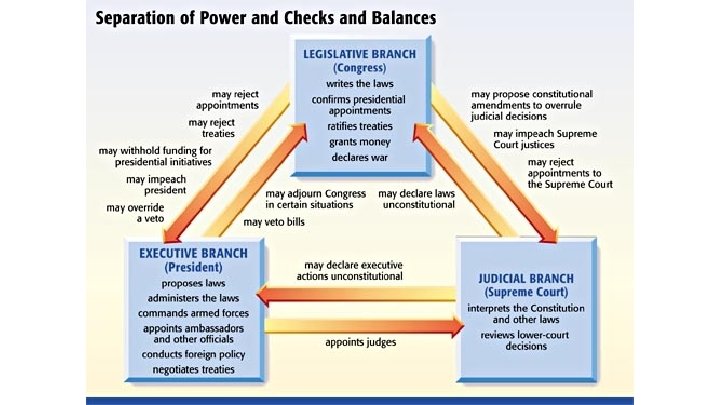
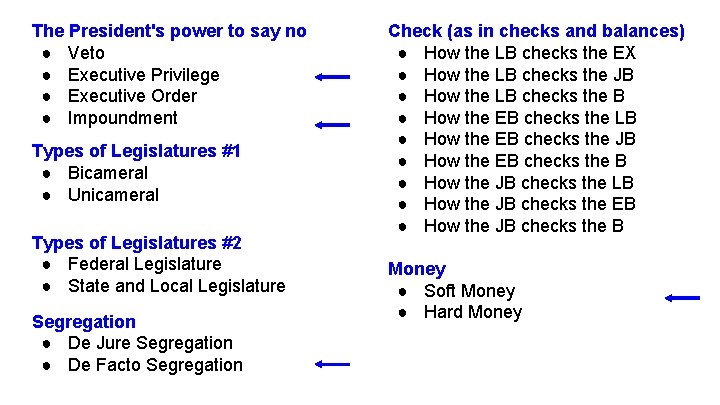
The President's power to say no ● Veto ● Executive Privilege ● Executive Order ● Impoundment Types of Legislatures #1 ● Bicameral ● Unicameral Types of Legislatures #2 ● Federal Legislature ● State and Local Legislature Segregation ● De Jure Segregation ● De Facto Segregation Check (as in checks and balances) ● How the LB checks the EX ● How the LB checks the JB ● How the LB checks the B ● How the EB checks the LB ● How the EB checks the JB ● How the EB checks the B ● How the JB checks the LB ● How the JB checks the EB ● How the JB checks the B Money ● Soft Money ● Hard Money
The Federal Budget Making Process Annimate. Educate
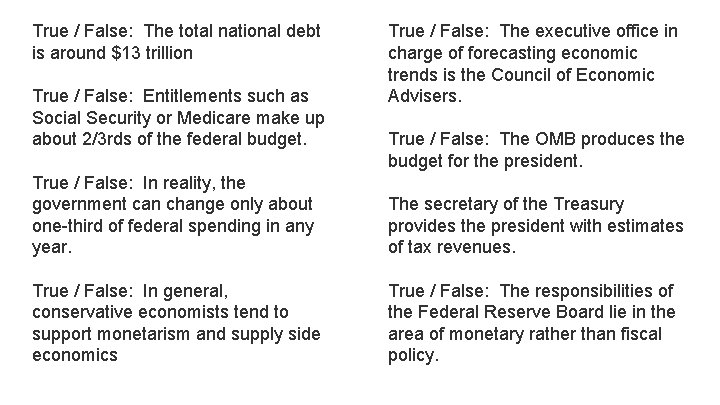
True / False: The total national debt is around $13 trillion True / False: Entitlements such as Social Security or Medicare make up about 2/3 rds of the federal budget. True / False: The executive office in charge of forecasting economic trends is the Council of Economic Advisers. True / False: The OMB produces the budget for the president. True / False: In reality, the government can change only about one-third of federal spending in any year. The secretary of the Treasury provides the president with estimates of tax revenues. True / False: In general, conservative economists tend to support monetarism and supply side economics True / False: The responsibilities of the Federal Reserve Board lie in the area of monetary rather than fiscal policy.
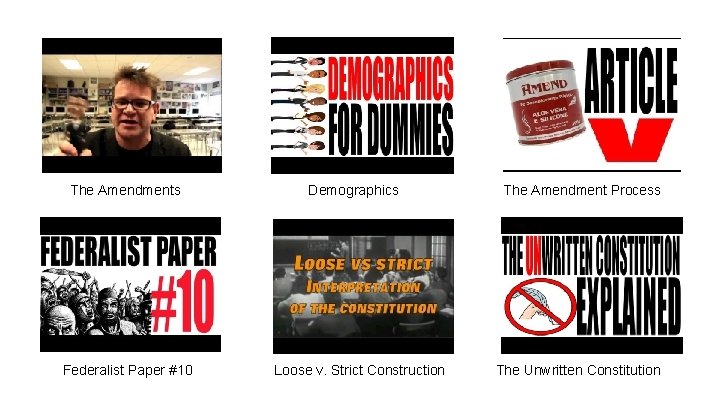
The Amendments Federalist Paper #10 Demographics Loose v. Strict Construction The Amendment Process The Unwritten Constitution
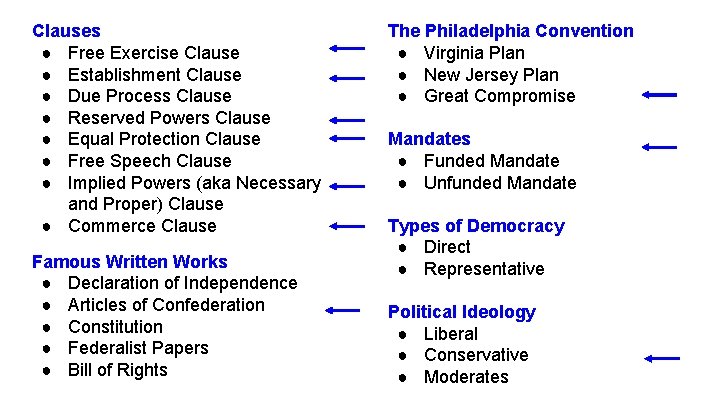
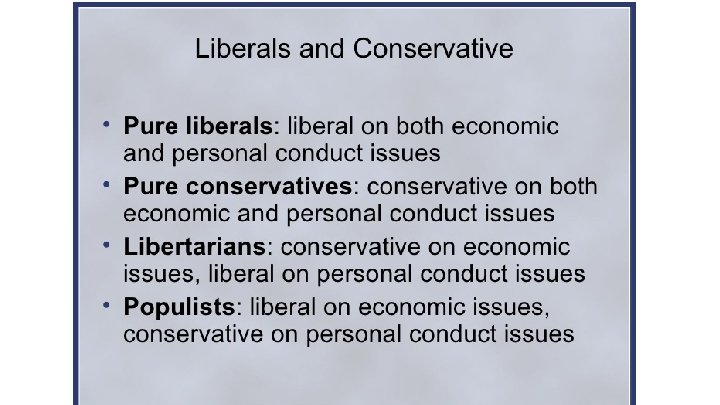
Clauses ● Free Exercise Clause ● Establishment Clause ● Due Process Clause ● Reserved Powers Clause ● Equal Protection Clause ● Free Speech Clause ● Implied Powers (aka Necessary and Proper) Clause ● Commerce Clause Famous Written Works ● Declaration of Independence ● Articles of Confederation ● Constitution ● Federalist Papers ● Bill of Rights The Philadelphia Convention ● Virginia Plan ● New Jersey Plan ● Great Compromise Mandates ● Funded Mandate ● Unfunded Mandate Types of Democracy ● Direct ● Representative Political Ideology ● Liberal ● Conservative ● Moderates
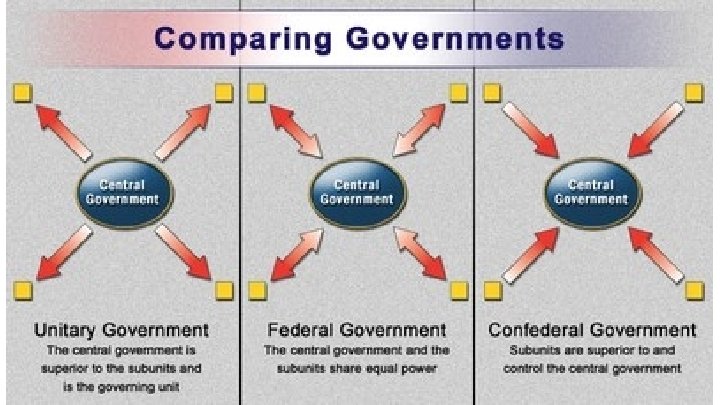
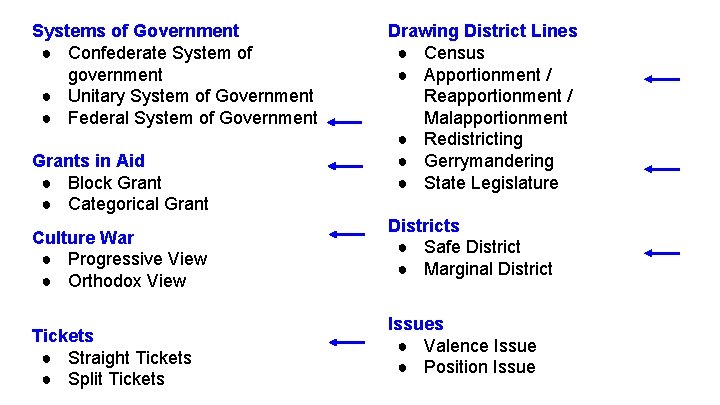
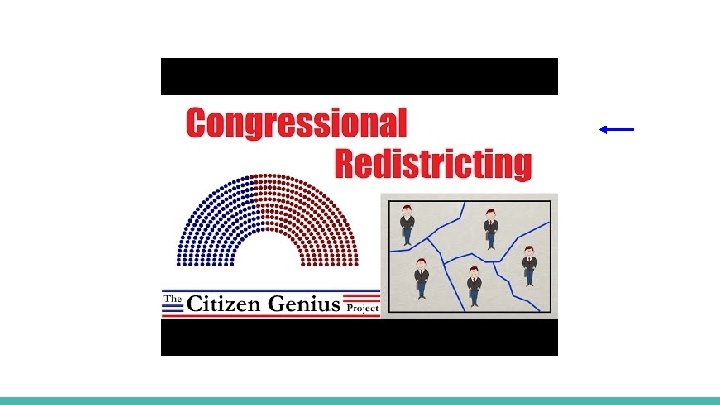
Systems of Government ● Confederate System of government ● Unitary System of Government ● Federal System of Government Grants in Aid ● Block Grant ● Categorical Grant Culture War ● Progressive View ● Orthodox View Tickets ● Straight Tickets ● Split Tickets Drawing District Lines ● Census ● Apportionment / Reapportionment / Malapportionment ● Redistricting ● Gerrymandering ● State Legislature Districts ● Safe District ● Marginal District Issues ● Valence Issue ● Position Issue
Win the White House is a game. To play the game, click on the image to the left Win the White House Icivics
Do I Have a Right is a game. To play the game, click on the image to the left Do I Have a Right Icivics
Supreme Decision is a game. To play the game, click on the image to the left Supreme Decision Icivics
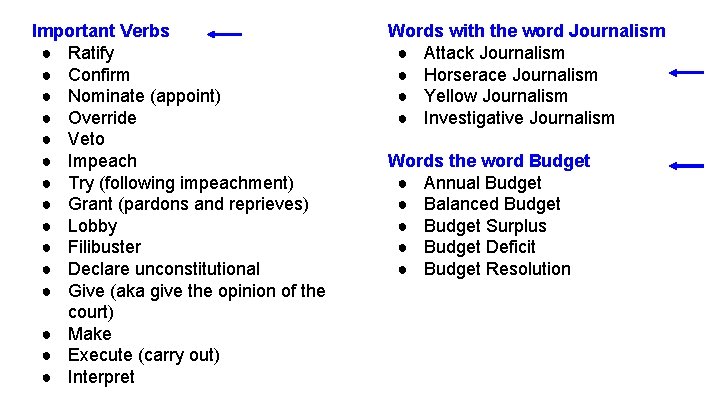
Important Verbs ● Ratify ● Confirm ● Nominate (appoint) ● Override ● Veto ● Impeach ● Try (following impeachment) ● Grant (pardons and reprieves) ● Lobby ● Filibuster ● Declare unconstitutional ● Give (aka give the opinion of the court) ● Make ● Execute (carry out) ● Interpret Words with the word Journalism ● Attack Journalism ● Horserace Journalism ● Yellow Journalism ● Investigative Journalism Words the word Budget ● Annual Budget ● Balanced Budget ● Budget Surplus ● Budget Deficit ● Budget Resolution
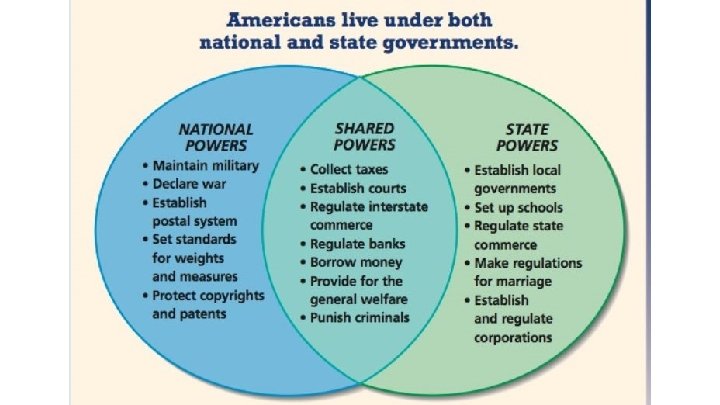
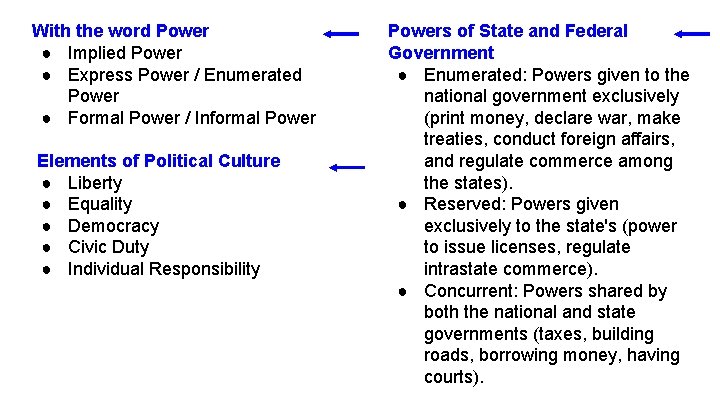
With the word Power ● Implied Power ● Express Power / Enumerated Power ● Formal Power / Informal Power Elements of Political Culture ● Liberty ● Equality ● Democracy ● Civic Duty ● Individual Responsibility Powers of State and Federal Government ● Enumerated: Powers given to the national government exclusively (print money, declare war, make treaties, conduct foreign affairs, and regulate commerce among the states). ● Reserved: Powers given exclusively to the state's (power to issue licenses, regulate intrastate commerce). ● Concurrent: Powers shared by both the national and state governments (taxes, building roads, borrowing money, having courts).
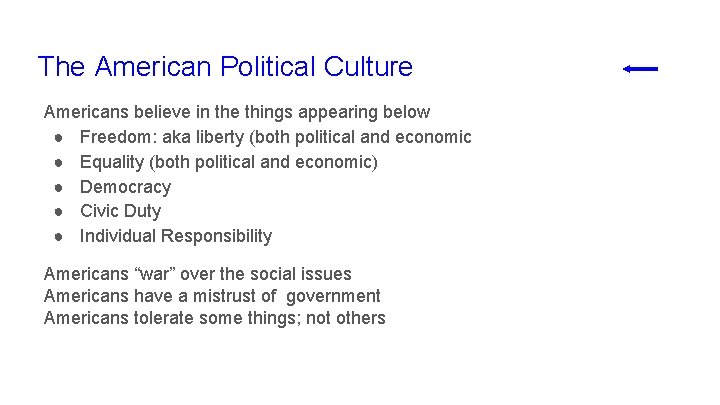
The American Political Culture Americans believe in the things appearing below ● Freedom: aka liberty (both political and economic ● Equality (both political and economic) ● Democracy ● Civic Duty ● Individual Responsibility Americans “war” over the social issues Americans have a mistrust of government Americans tolerate some things; not others
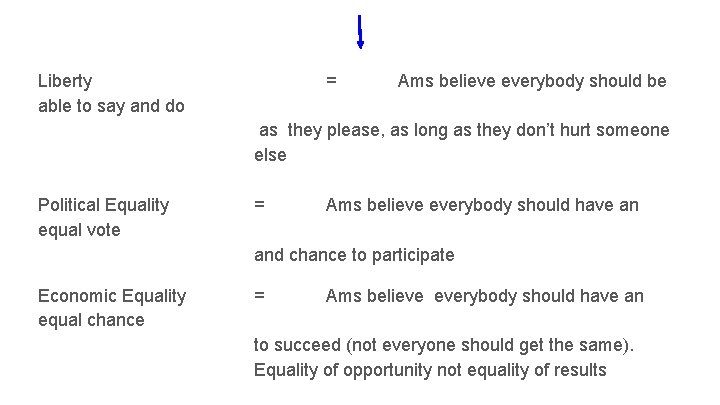
Liberty able to say and do = Ams believe everybody should be as they please, as long as they don’t hurt someone else Political Equality equal vote = Ams believe everybody should have an and chance to participate Economic Equality equal chance = Ams believe everybody should have an to succeed (not everyone should get the same). Equality of opportunity not equality of results
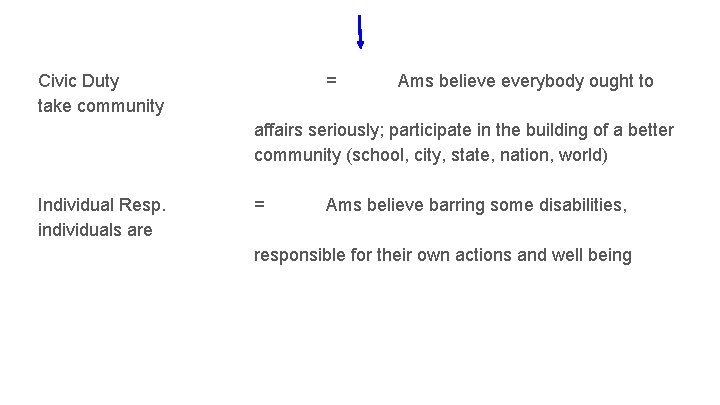
Civic Duty take community = Ams believe everybody ought to affairs seriously; participate in the building of a better community (school, city, state, nation, world) Individual Resp. individuals are = Ams believe barring some disabilities, responsible for their own actions and well being
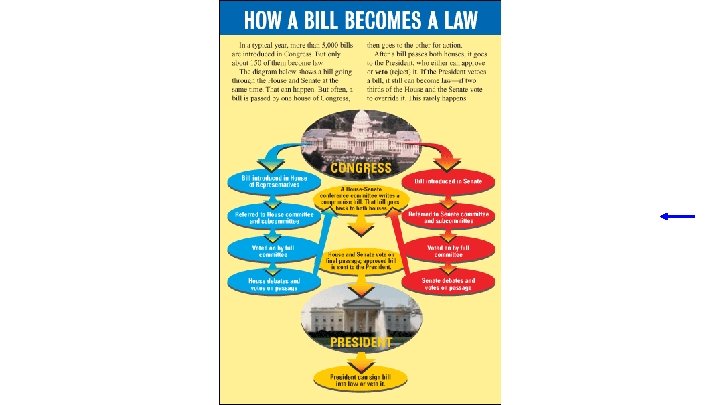
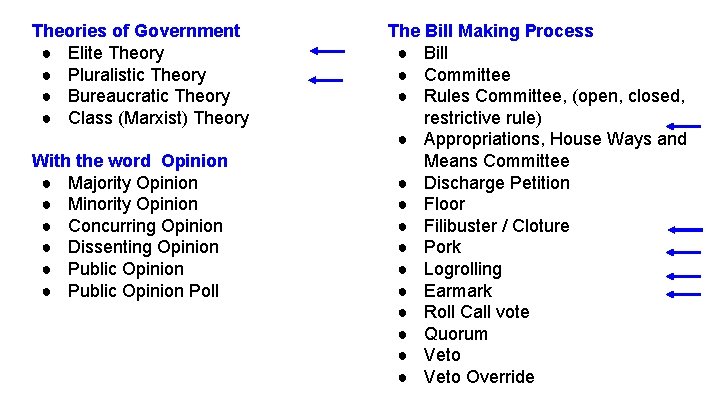
Theories of Government ● Elite Theory ● Pluralistic Theory ● Bureaucratic Theory ● Class (Marxist) Theory With the word Opinion ● Majority Opinion ● Minority Opinion ● Concurring Opinion ● Dissenting Opinion ● Public Opinion Poll The Bill Making Process ● Bill ● Committee ● Rules Committee, (open, closed, restrictive rule) ● Appropriations, House Ways and Means Committee ● Discharge Petition ● Floor ● Filibuster / Cloture ● Pork ● Logrolling ● Earmark ● Roll Call vote ● Quorum ● Veto Override
Congressional Redistricting #2
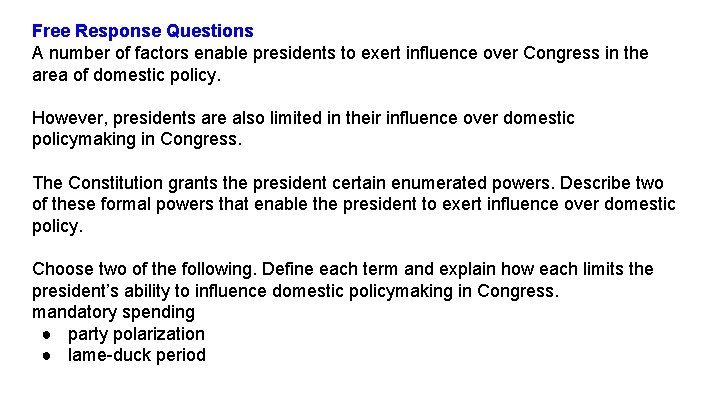
Free Response Questions A number of factors enable presidents to exert influence over Congress in the area of domestic policy. However, presidents are also limited in their influence over domestic policymaking in Congress. The Constitution grants the president certain enumerated powers. Describe two of these formal powers that enable the president to exert influence over domestic policy. Choose two of the following. Define each term and explain how each limits the president’s ability to influence domestic policymaking in Congress. mandatory spending ● party polarization ● lame-duck period
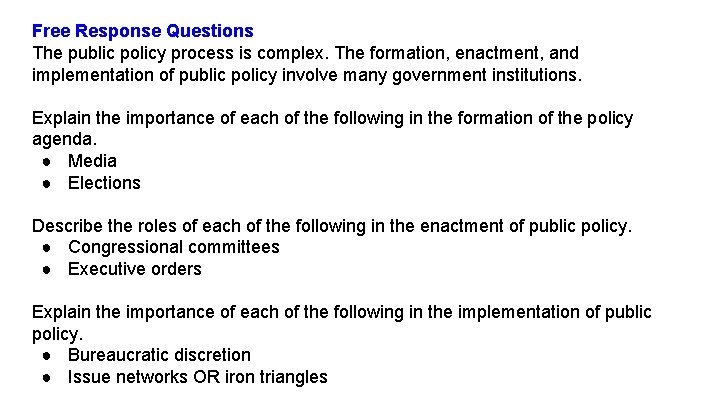
Free Response Questions The public policy process is complex. The formation, enactment, and implementation of public policy involve many government institutions. Explain the importance of each of the following in the formation of the policy agenda. ● Media ● Elections Describe the roles of each of the following in the enactment of public policy. ● Congressional committees ● Executive orders Explain the importance of each of the following in the implementation of public policy. ● Bureaucratic discretion ● Issue networks OR iron triangles
The Budget Deficit v. the National Debt
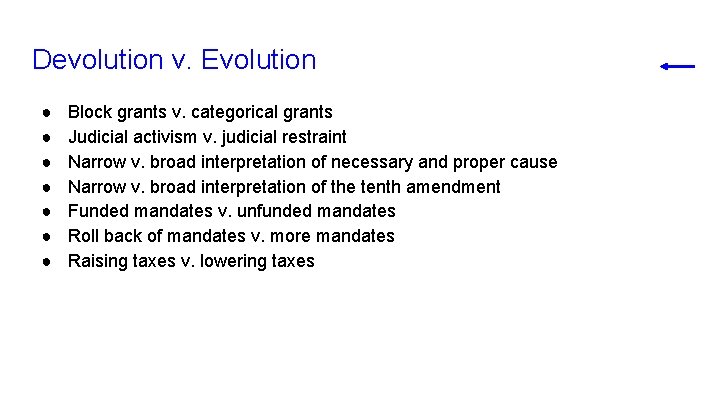
Devolution v. Evolution ● ● ● ● Block grants v. categorical grants Judicial activism v. judicial restraint Narrow v. broad interpretation of necessary and proper cause Narrow v. broad interpretation of the tenth amendment Funded mandates v. unfunded mandates Roll back of mandates v. more mandates Raising taxes v. lowering taxes
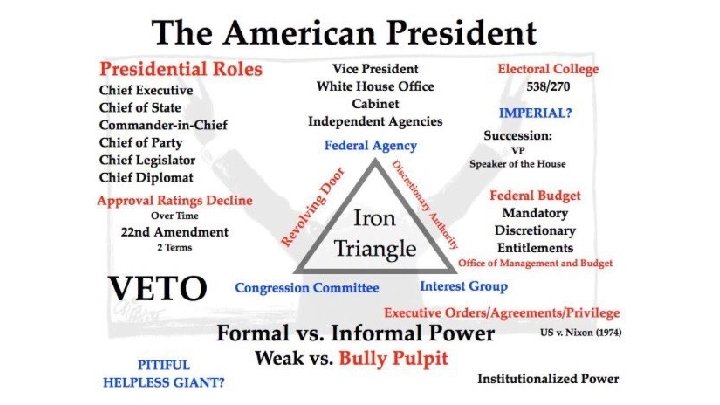
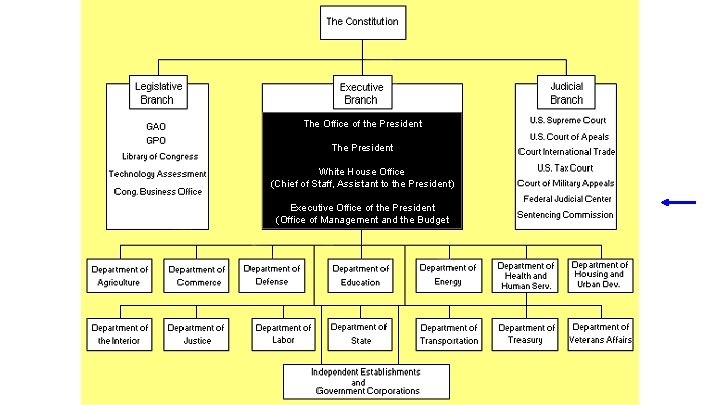
The Office of the President The President White House Office (Chief of Staff, Assistant to the President) Executive Office of the President (Office of Management and the Budget
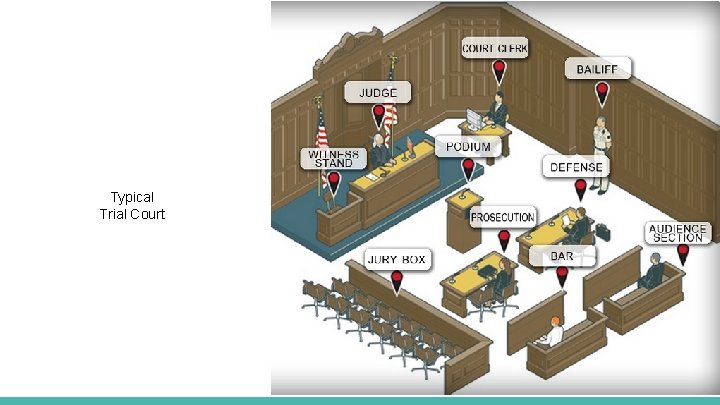
Typical Trial Court
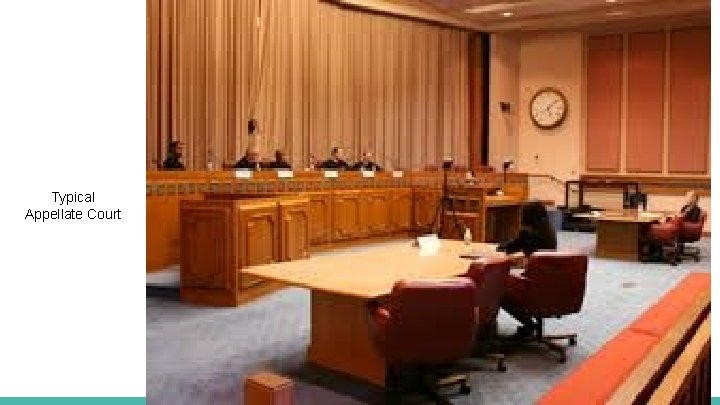
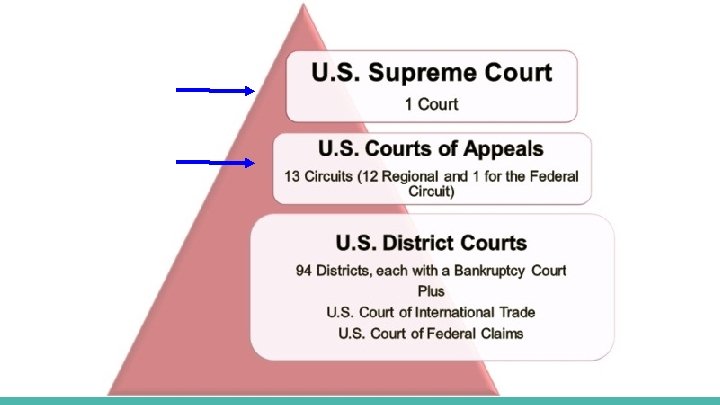
Typical Appellate Court
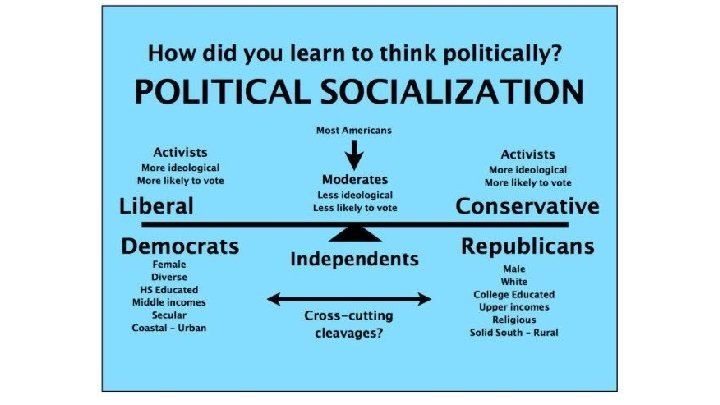
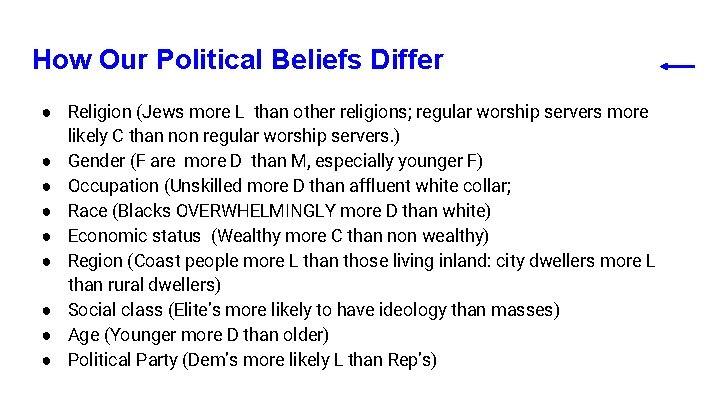
How Our Political Beliefs Differ ● Religion (Jews more L than other religions; regular worship servers more likely C than non regular worship servers. ) ● Gender (F are more D than M, especially younger F) ● Occupation (Unskilled more D than affluent white collar; ● Race (Blacks OVERWHELMINGLY more D than white) ● Economic status (Wealthy more C than non wealthy) ● Region (Coast people more L than those living inland: city dwellers more L than rural dwellers) ● Social class (Elite’s more likely to have ideology than masses) ● Age (Younger more D than older) ● Political Party (Dem’s more likely L than Rep’s)
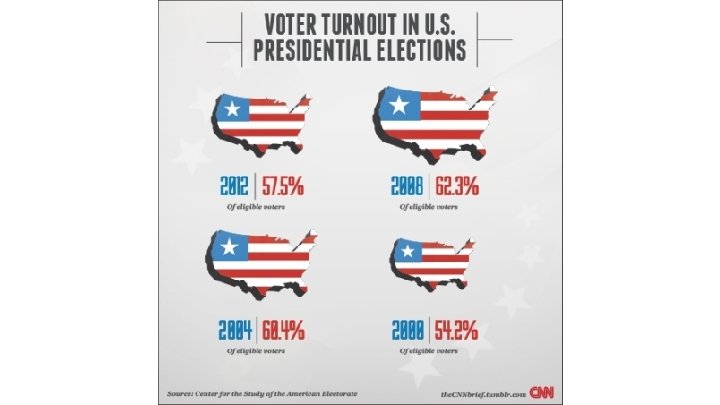
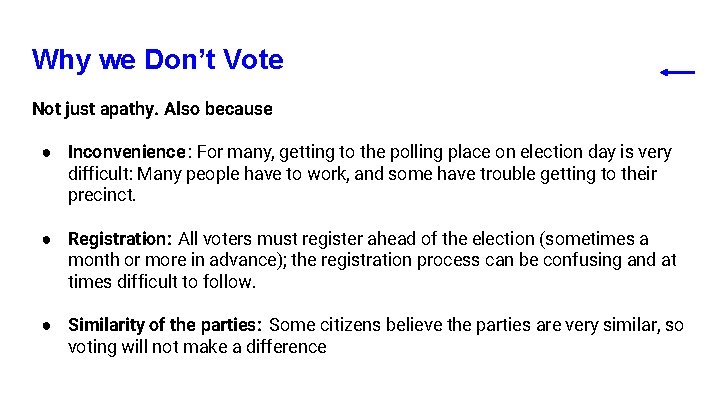
Why we Don’t Vote Not just apathy. Also because ● Inconvenience : For many, getting to the polling place on election day is very difficult: Many people have to work, and some have trouble getting to their precinct. ● Registration: All voters must register ahead of the election (sometimes a month or more in advance); the registration process can be confusing and at times difficult to follow. ● Similarity of the parties: Some citizens believe the parties are very similar, so voting will not make a difference
● Alienation: People do not vote because they feel that the government does not care about them or listen to their concerns. ● Frequency of elections: (aka Ballot Fatigue). Americans hold elections more frequently than most other democracies; voters find it difficult to vote on so many different days. ● Lack of competitiveness: Many races in the United States are very lopsided, so voters are likely to stay home, thinking the outcome is a foregone conclusion. ● Ballot Fatigue
And Don’t Forget ● Joint Chiefs of Staff ● National Security Council ● State Department ● Federal Reserve Board ● Federal Communication Commission ● Congressional Budget Office ● General Accounting Office ● Federal Election Commission ● White House Office ● Cabinet ● NASA (independent agencies ● Electoral College ● National Party Convention (aka (Nominating Convention) ● ● ● ● Primaries and caucuses Iron Triangle District Courts of Appeal Civil Service Issue Networks Unions Adversarial Press National Media Internet Popular Press Council of Economic Advisors Partisan/Non Partisan Revolving door
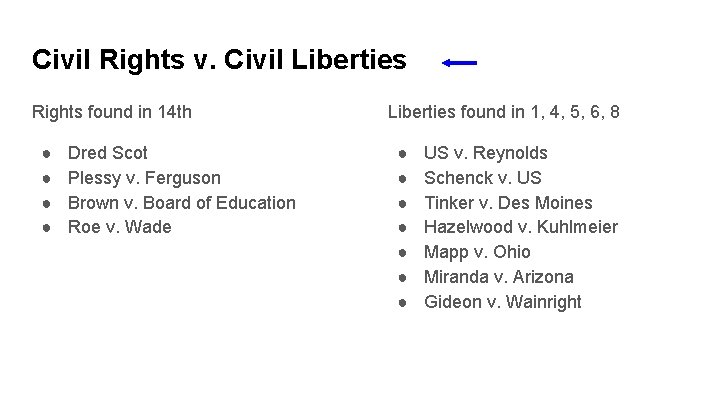
Civil Rights v. Civil Liberties Rights found in 14 th ● ● Dred Scot Plessy v. Ferguson Brown v. Board of Education Roe v. Wade Liberties found in 1, 4, 5, 6, 8 ● ● ● ● US v. Reynolds Schenck v. US Tinker v. Des Moines Hazelwood v. Kuhlmeier Mapp v. Ohio Miranda v. Arizona Gideon v. Wainright
Gideon v. Wainwright Arnold & Porter LLP
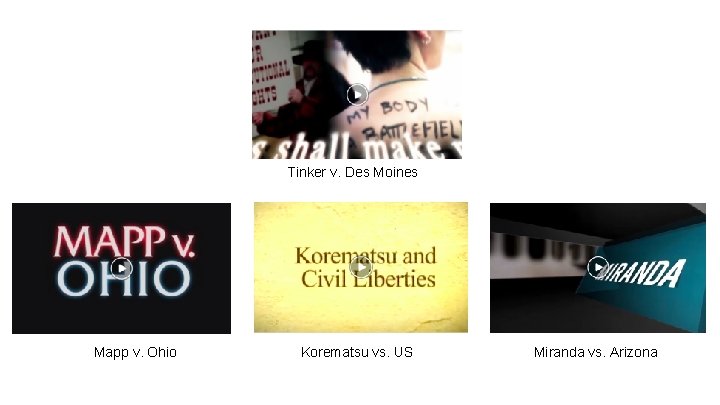
Tinker v. Des Moines Mapp v. Ohio Korematsu vs. US Miranda vs. Arizona
Selective Incorporation My Citizen U
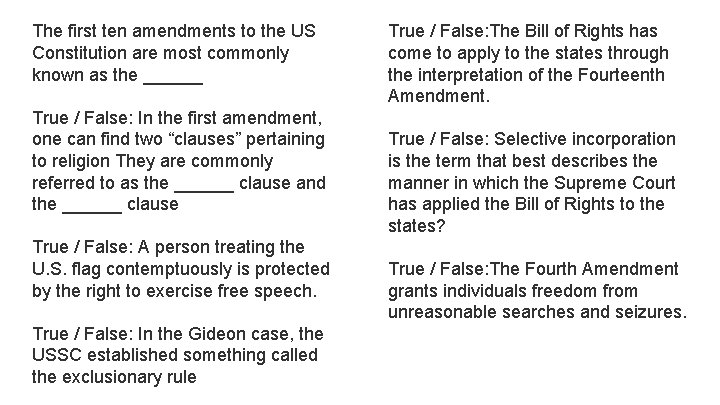
The first ten amendments to the US Constitution are most commonly known as the ______ True / False: In the first amendment, one can find two “clauses” pertaining to religion They are commonly referred to as the ______ clause and the ______ clause True / False: A person treating the U. S. flag contemptuously is protected by the right to exercise free speech. True / False: In the Gideon case, the USSC established something called the exclusionary rule True / False: The Bill of Rights has come to apply to the states through the interpretation of the Fourteenth Amendment. True / False: Selective incorporation is the term that best describes the manner in which the Supreme Court has applied the Bill of Rights to the states? True / False: The Fourth Amendment grants individuals freedom from unreasonable searches and seizures.
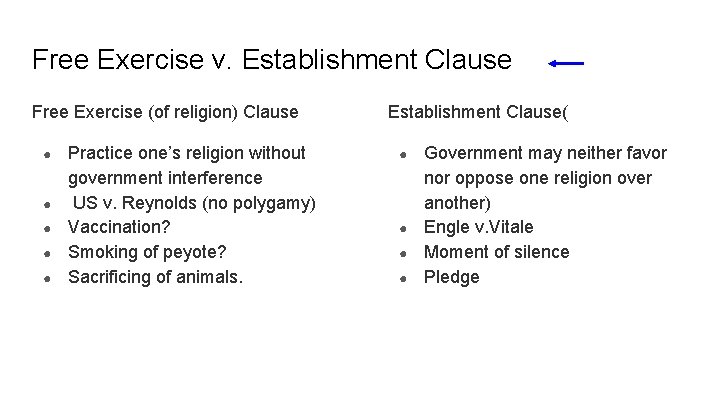
Free Exercise v. Establishment Clause Free Exercise (of religion) Clause ● ● ● Practice one’s religion without government interference US v. Reynolds (no polygamy) Vaccination? Smoking of peyote? Sacrificing of animals. Establishment Clause( ● ● Government may neither favor nor oppose one religion over another) Engle v. Vitale Moment of silence Pledge