
AP Seminar Types of Evidence Logical Fallacies Types

- Slides: 17
AP Seminar Types of Evidence & Logical Fallacies
Types of Evidence O Authorities as Evidence O Statistical Evidence O Experimental Data O Historical Context O Anecdotal Evidence (weakest)
Authorities as Evidence O Scholar or leader in the field (CEO) O Beware of vested interest (Politicians, corporations, etc. ) O A Ph. D. does not prove someone an authority—be mindful of their field of expertise!
Statistical Evidence O Data, charts, graphs, numerical trends O Author MUST contextualize this: when & where was the study produced? What was the sample size? **This information is needed to validate credibility!
Experimental Data O Must address who conducted the study! O Does the experiment show conclusive results? O Does the experiment support existing data or break new ground?
Historical Context O Must be relevant & cited to be credible. O Sometimes there is accurate historical context, but it is completely irrelevant to the issue at hand.
Anecdotal Evidence O Personal experience—told in an almost story-like form. O Not substantiated by other sources/witnesses. O ALWAYS the least credible form of evidence!
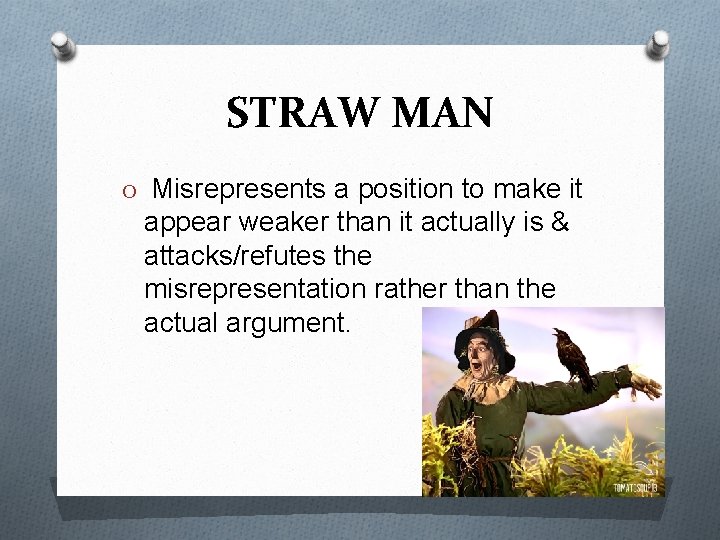
STRAW MAN O Misrepresents a position to make it appear weaker than it actually is & attacks/refutes the misrepresentation rather than the actual argument.
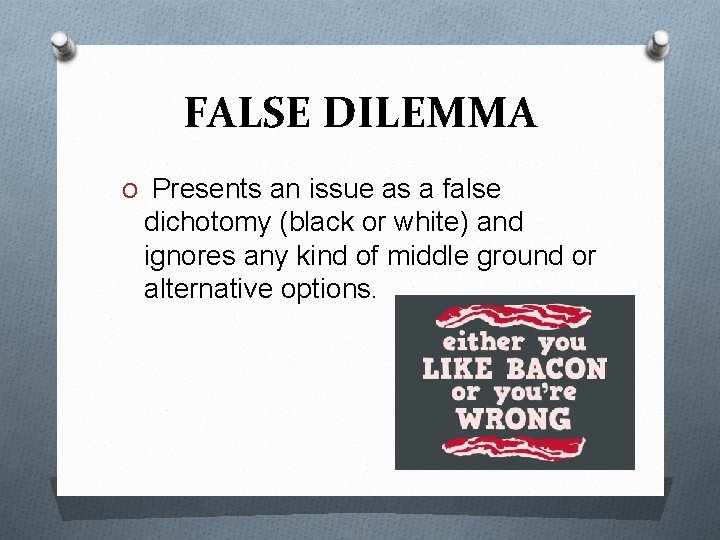
FALSE DILEMMA O Presents an issue as a false dichotomy (black or white) and ignores any kind of middle ground or alternative options.
POST HOC ERGO PROPTER HOC O (After this, therefore because of this): Since event Y followed event X, event X MUST HAVE caused event Y. Correlation without causation. False cause & effect.
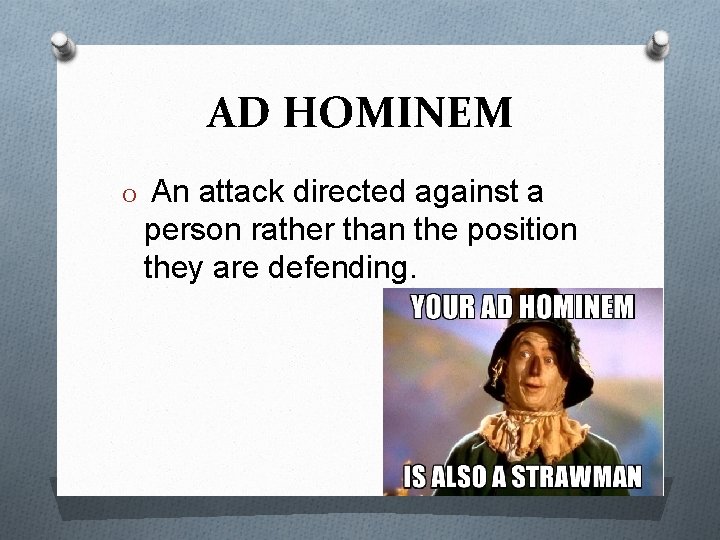
AD HOMINEM O An attack directed against a person rather than the position they are defending.
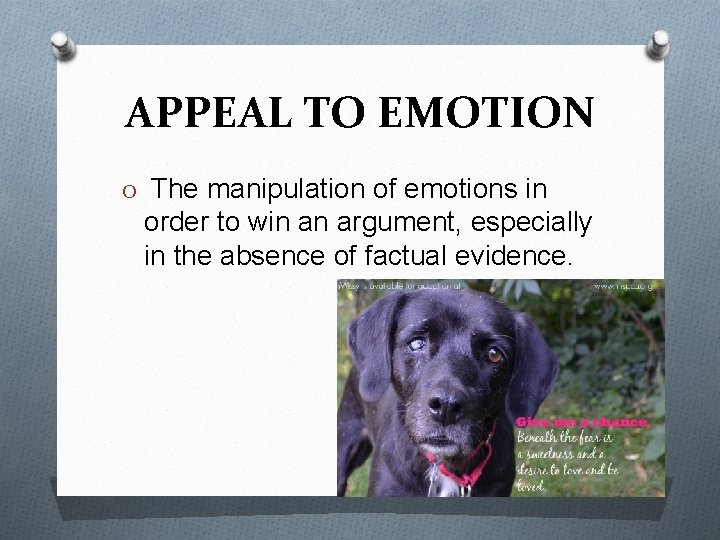
APPEAL TO EMOTION O The manipulation of emotions in order to win an argument, especially in the absence of factual evidence.
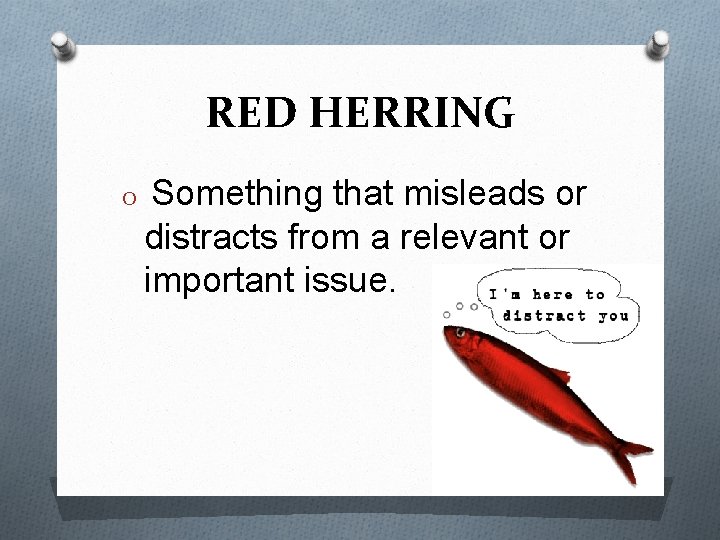
RED HERRING O Something that misleads or distracts from a relevant or important issue.
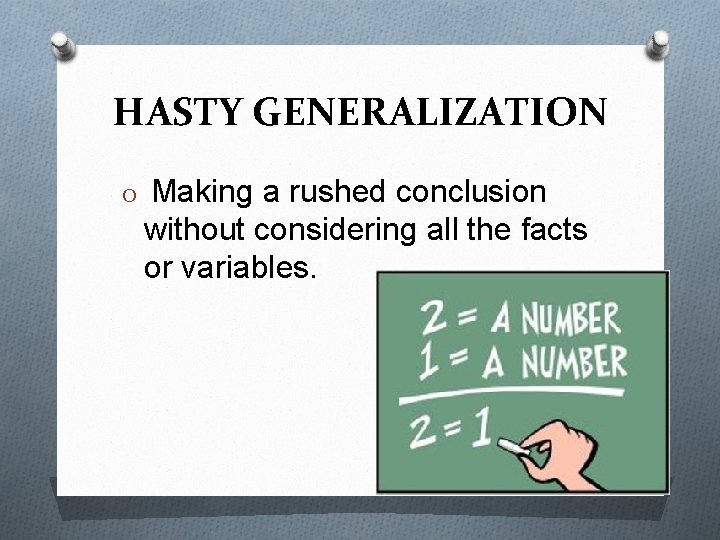
HASTY GENERALIZATION O Making a rushed conclusion without considering all the facts or variables.
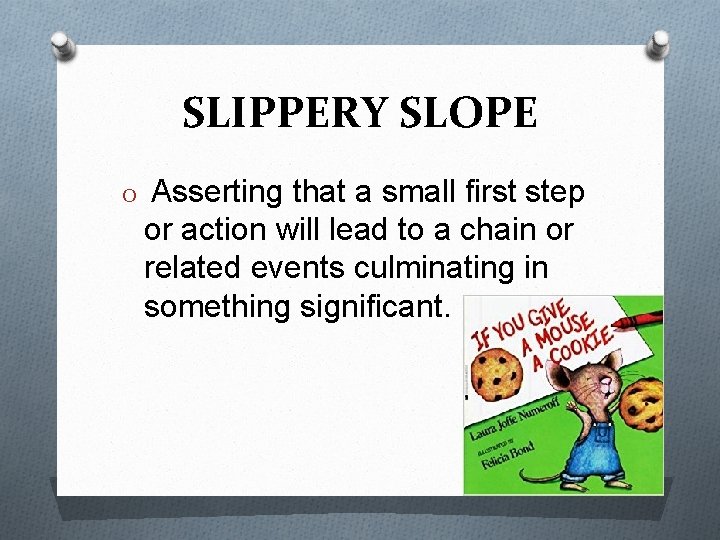
SLIPPERY SLOPE O Asserting that a small first step or action will lead to a chain or related events culminating in something significant.
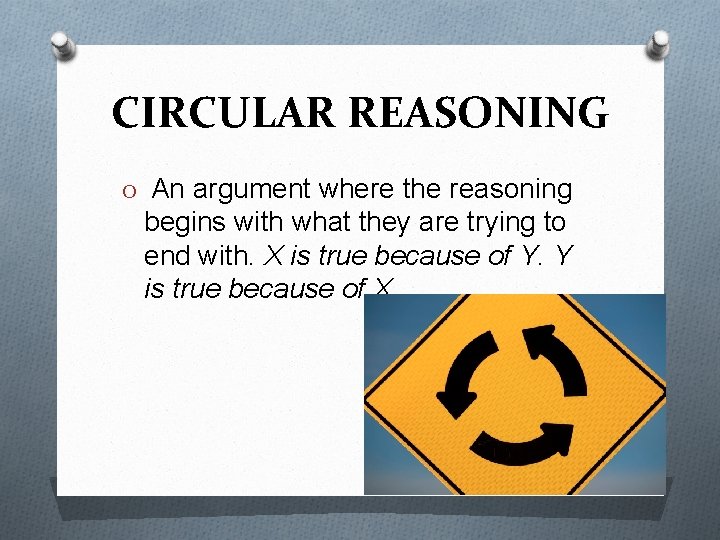
CIRCULAR REASONING O An argument where the reasoning begins with what they are trying to end with. X is true because of Y. Y is true because of X.
Questions