
AP Psychology Scientific Method Research Methods Descriptive s

- Slides: 18
AP Psychology Scientific Method Research Methods: Descriptive
? s n o i s gy, r o l e o h c m m in psy I lse h e g c n i y h t § Ps ns to some d. ) orl ctio e w n r n u o o C y ( t, or x e t r e anoth m o r f s n o i t s e u q l a c i t i r §C ? g n i d a e r e th
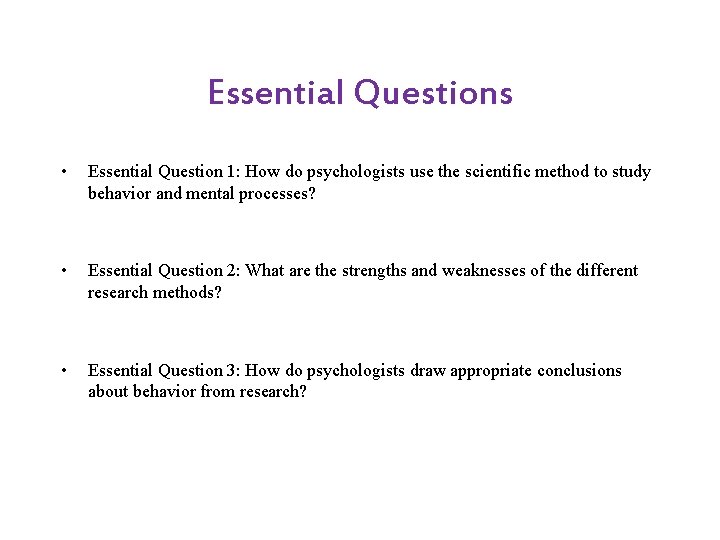
Essential Questions • Essential Question 1: How do psychologists use the scientific method to study behavior and mental processes? • Essential Question 2: What are the strengths and weaknesses of the different research methods? • Essential Question 3: How do psychologists draw appropriate conclusions about behavior from research?
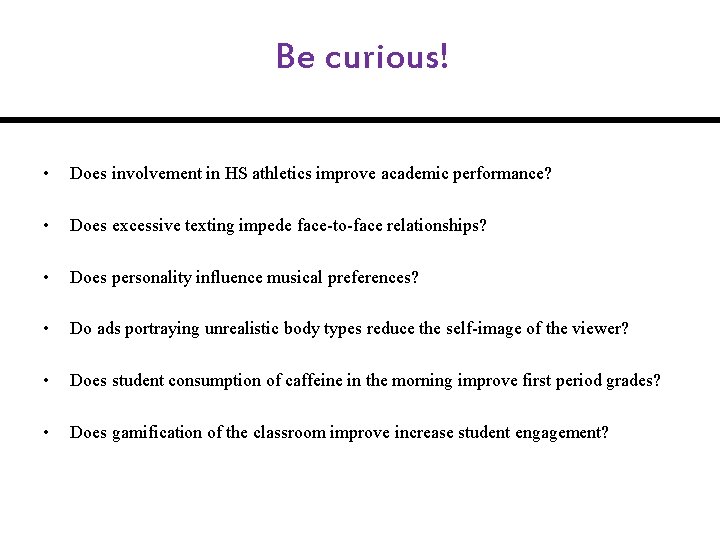
Be curious! • Does involvement in HS athletics improve academic performance? • Does excessive texting impede face-to-face relationships? • Does personality influence musical preferences? • Do ads portraying unrealistic body types reduce the self-image of the viewer? • Does student consumption of caffeine in the morning improve first period grades? • Does gamification of the classroom improve increase student engagement?
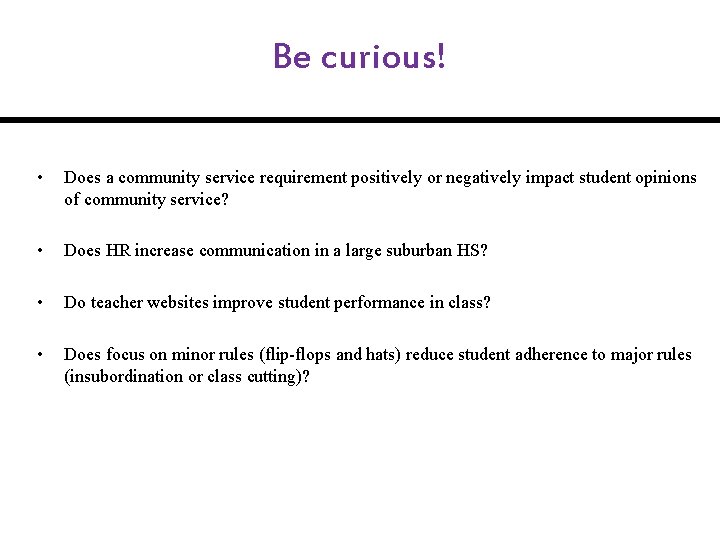
Be curious! • Does a community service requirement positively or negatively impact student opinions of community service? • Does HR increase communication in a large suburban HS? • Do teacher websites improve student performance in class? • Does focus on minor rules (flip-flops and hats) reduce student adherence to major rules (insubordination or class cutting)?
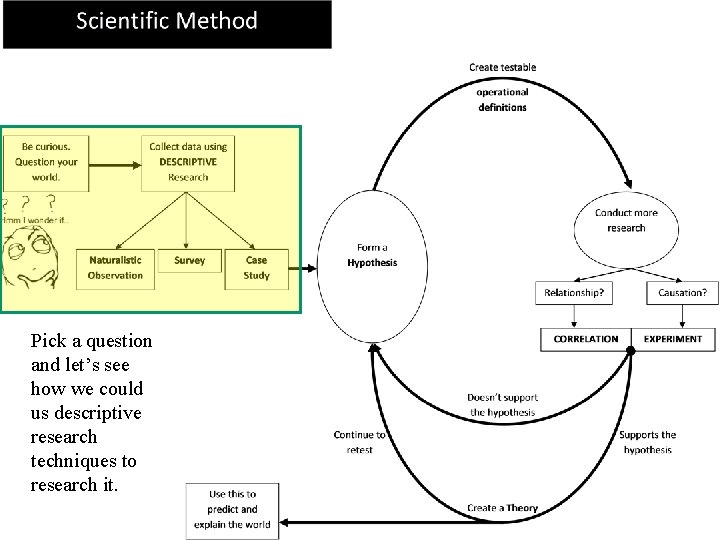
Pick a question and let’s see how we could us descriptive research techniques to research it.
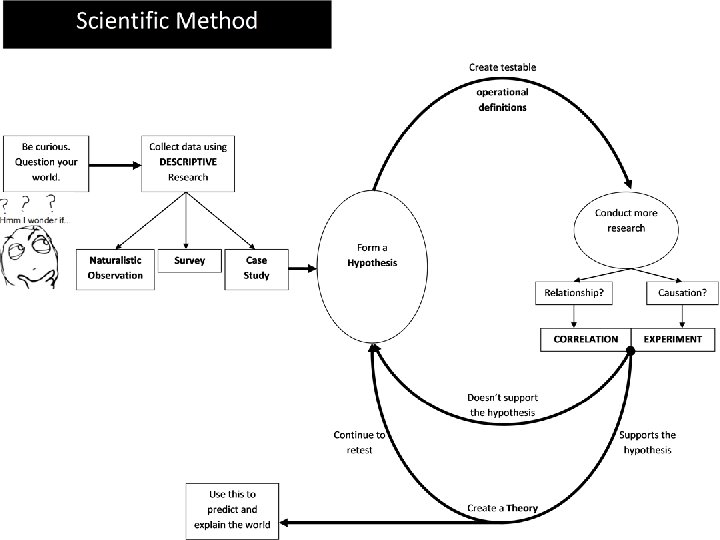
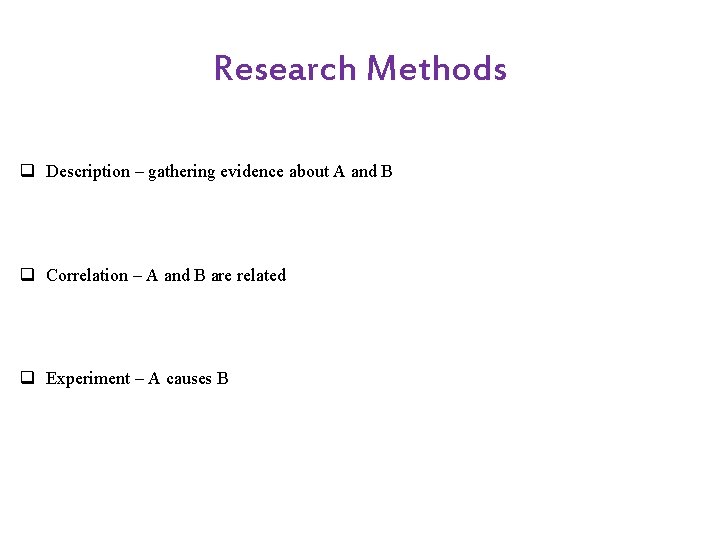
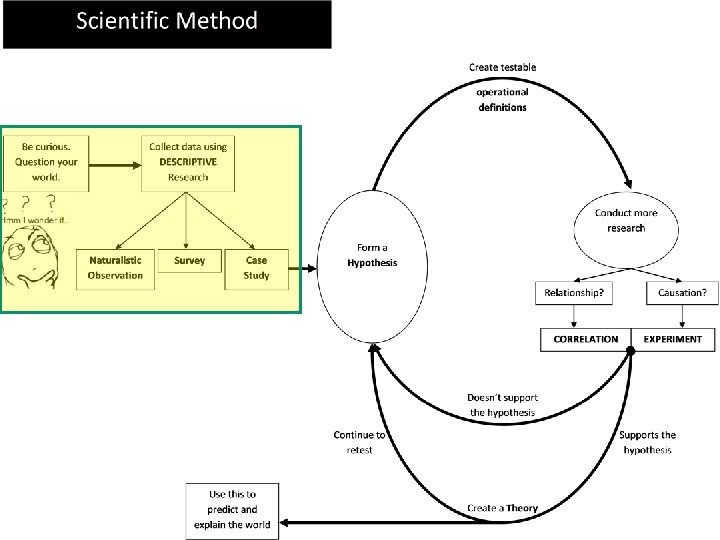
Research Methods q Description – gathering evidence about A and B q Correlation – A and B are related q Experiment – A causes B
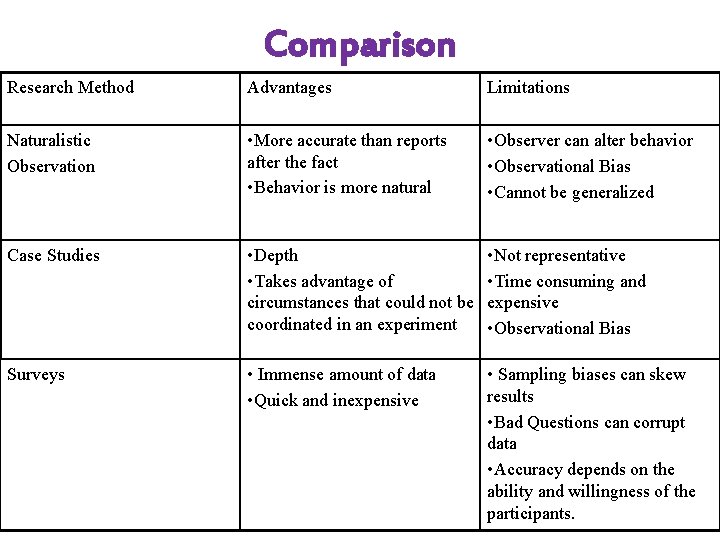
Descriptive Research Methods in Psychology • Case Studies: • Detailed in-depth description and analysis of one or a few people • Observation, scores on psychological tests, interviews etc • Prominent in psychology • Piaget used this to develop his theory of cognitive development • Takes advantage of nonreplicable situations • Observer bias is a problem • Unable to make generalizations past person being studied
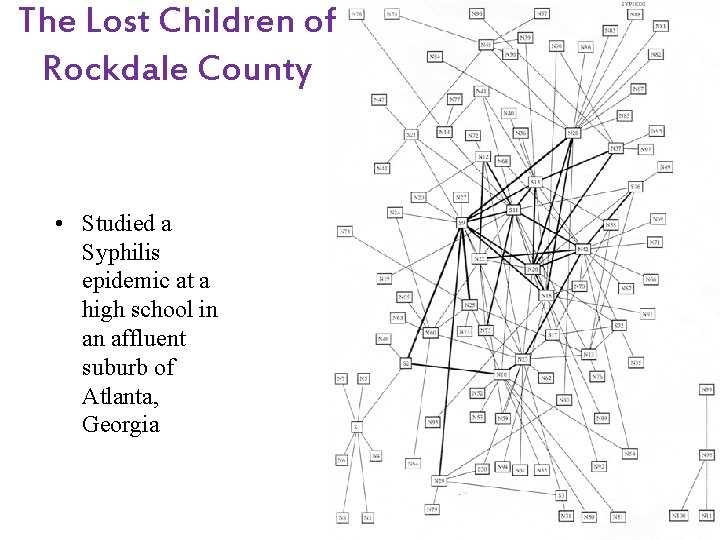
The Lost Children of Rockdale County • Studied a Syphilis epidemic at a high school in an affluent suburb of Atlanta, Georgia
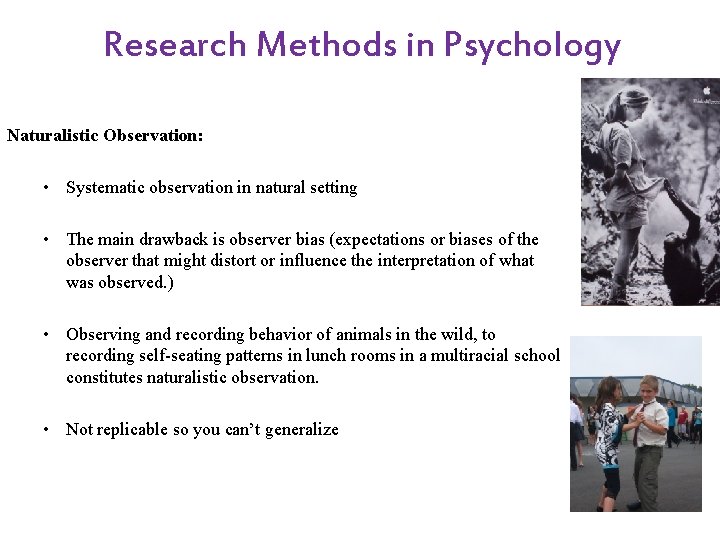
Research Methods in Psychology Naturalistic Observation: • Systematic observation in natural setting • The main drawback is observer bias (expectations or biases of the observer that might distort or influence the interpretation of what was observed. ) • Observing and recording behavior of animals in the wild, to recording self-seating patterns in lunch rooms in a multiracial school constitutes naturalistic observation. • Not replicable so you can’t generalize
Research Methods in Psychology Surveys: • A technique for ascertaining the self-reported attitudes, opinions or behaviors of people usually by questioning a representative, random sample of people. • Questionnaires or interviews, such as polls prior to an election • Can generate a lot of information for a fairly low cost • Questions must be constructed carefully so as to not elicit socially appropriate answers
Survey Wording Effect Wording can change the results of a survey. Q: Should cigarette ads and pornography be allowed on television? (not allowed vs. forbid)
Survey False Consensus Effect A tendency to overestimate the extent to which others share our beliefs and behaviors.
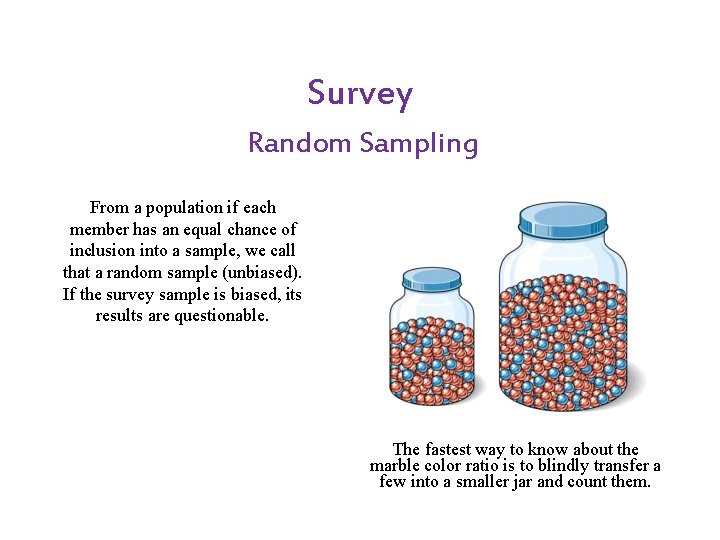
Survey Random Sampling From a population if each member has an equal chance of inclusion into a sample, we call that a random sample (unbiased). If the survey sample is biased, its results are questionable. The fastest way to know about the marble color ratio is to blindly transfer a few into a smaller jar and count them.
Comparison Research Method Advantages Limitations Naturalistic Observation • More accurate than reports after the fact • Behavior is more natural • Observer can alter behavior • Observational Bias • Cannot be generalized Case Studies • Depth • Takes advantage of circumstances that could not be coordinated in an experiment • Not representative • Time consuming and expensive • Observational Bias Surveys • Immense amount of data • Quick and inexpensive • Sampling biases can skew results • Bad Questions can corrupt data • Accuracy depends on the ability and willingness of the participants.