
AP Psychology Perception Essential Task 5 6 Discuss

- Slides: 23
AP Psychology Perception Essential Task 5 -6: Discuss how experience, context and culture can influence perceptual processes with specific attention to perceptual set, illusions, change blindness, and selective attention.
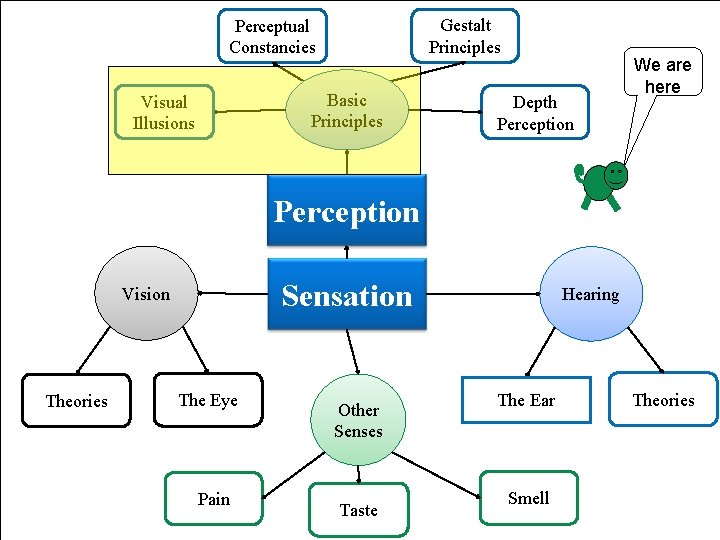
Gestalt Principles Perceptual Constancies Basic Principles Visual Illusions Depth Perception We are here Perception Sensation Vision Theories The Eye Pain Other Senses Taste Hearing The Ear Smell Theories
Essential Task 5 -6: Outline • Influences on perception – Subliminal messages? – perceptual set – illusions – Inattention blindness – change blindness
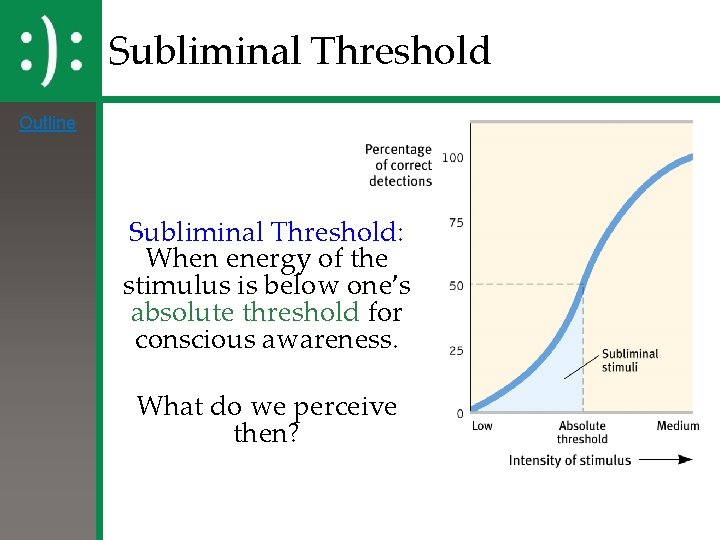
Subliminal Threshold Outline Subliminal Threshold: When energy of the stimulus is below one’s absolute threshold for conscious awareness. What do we perceive then?
Subliminal Perception: Sensation Without perception? Outline • Subliminal = stimuli that sensory system responds to, but due to short duration or subtle form, don’t reach threshold of cognition Quick Survey 1. Do you think you are influenced by subliminal messages in advertising? 2. Do you think you are influenced by everyday advertisements that you perceive consciously (e. g. laundry detergent, beverages)?
We are not obedient to Subliminal Messages Outline • Research shows that the effect only occurs in controlled laboratory studies for a short time. When flashed words to elicit these moods we see slightly: – More competitive participants – More critical participants – More supportive • Research outside the laboratory shows no significant effect of subliminal information • We don’t blindly obey! • Placebo Effect with subliminal self help tapes
Vicary’s Study Outline • New Jersey, 1957: – Over 6 weeks, 45, 699 people see subliminal ads – “Eat Popcorn” – sales up 57. 5% – “Drink Coke” – sales up 18. 1% • “Minds have been broken and entered”
Except. . Outline • The Vicary “Eat Popcorn/Drink Coke” Study’s significance: • In a 1962 interview, Vicary admitted that he had made the whole thing up!
Alleged Types of Subliminal Presentation Outline • Flashing it on the screen so quickly you can not perceive it but you still see it. Below the sensory perception threshold • Playing it backwards • Embedding it into another image • Playing it at a low-volume masked over by other music or sounds
The Most Famous Backmasking Ever? Outline • Forward • Reverse • Message - "Paul is a dead man, miss him, MISS HIM" The Beatles have vehemently denied this. Still fans of every generation have listened to this message and heard the same words.
Perceptual Set Outline • Perceptual set is a bias or readiness to perceive certain aspects of available sensory data and to ignore others. • Listeners “hear” diabolical messages in rock music because they are prepared to “discover” certain messages, and therefore they do. Vokey and Read 1985
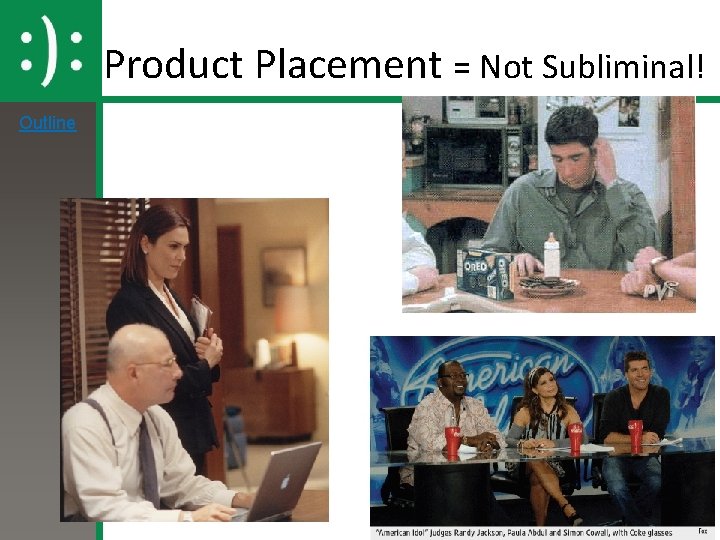
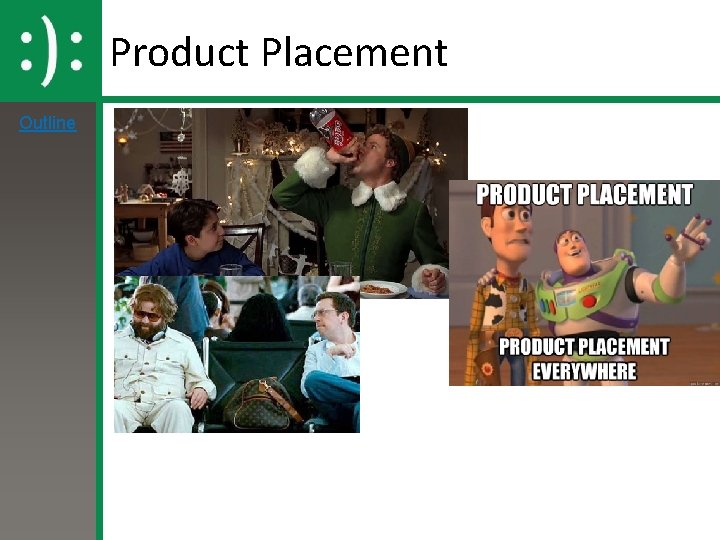
Product Placement = Not Subliminal! Outline
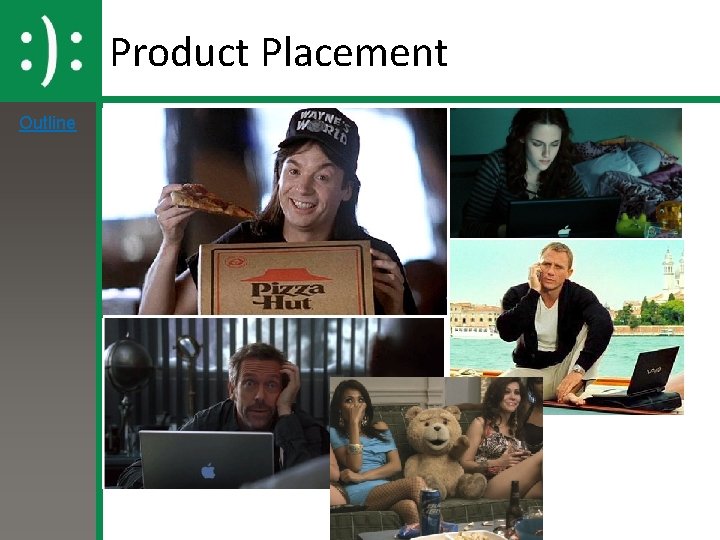
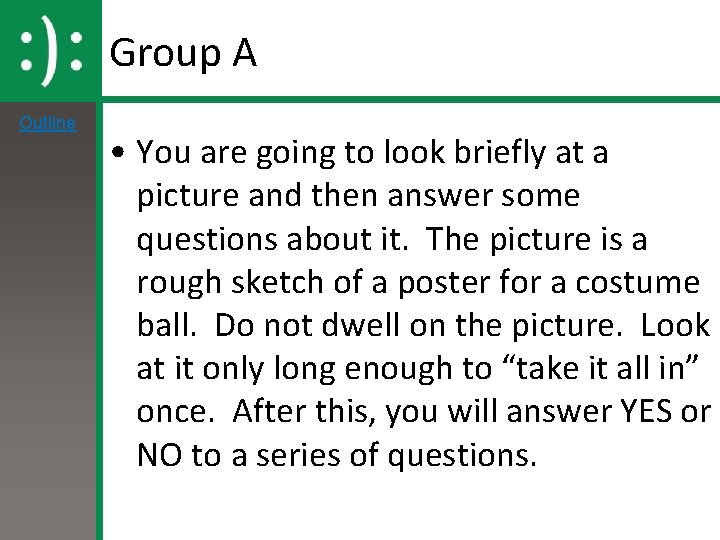
Product Placement Outline
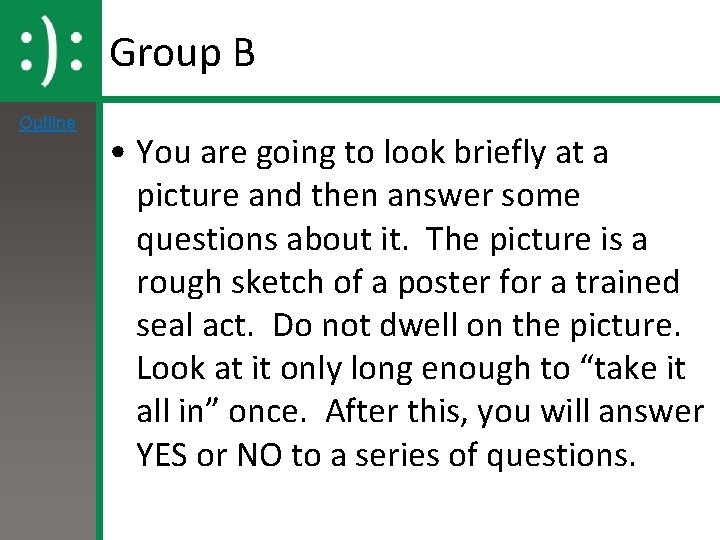
Product Placement Outline
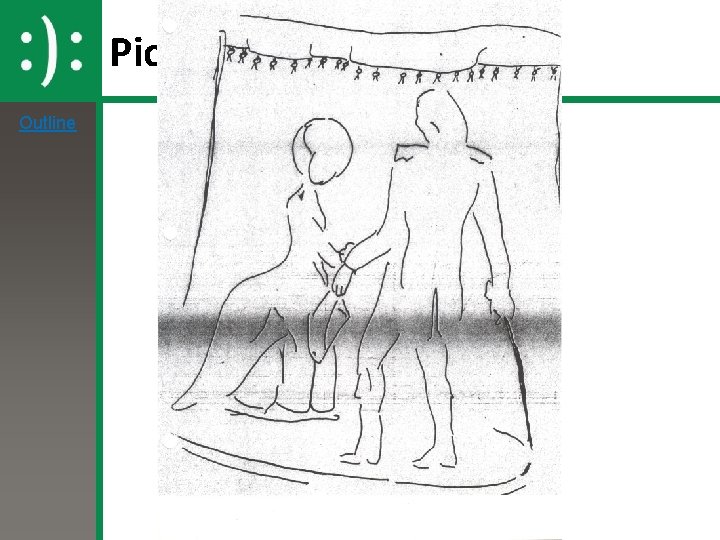
Group A Outline • You are going to look briefly at a picture and then answer some questions about it. The picture is a rough sketch of a poster for a costume ball. Do not dwell on the picture. Look at it only long enough to “take it all in” once. After this, you will answer YES or NO to a series of questions.
Group B Outline • You are going to look briefly at a picture and then answer some questions about it. The picture is a rough sketch of a poster for a trained seal act. Do not dwell on the picture. Look at it only long enough to “take it all in” once. After this, you will answer YES or NO to a series of questions.
Picture Outline
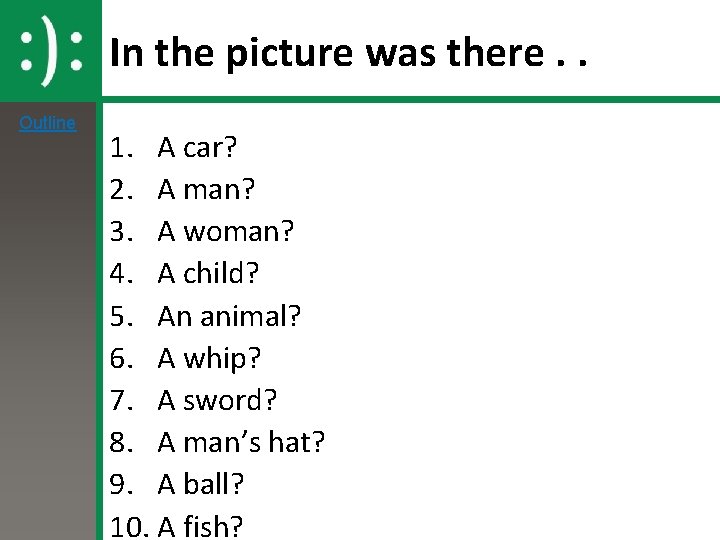
In the picture was there. . Outline 1. A car? 2. A man? 3. A woman? 4. A child? 5. An animal? 6. A whip? 7. A sword? 8. A man’s hat? 9. A ball? 10. A fish?
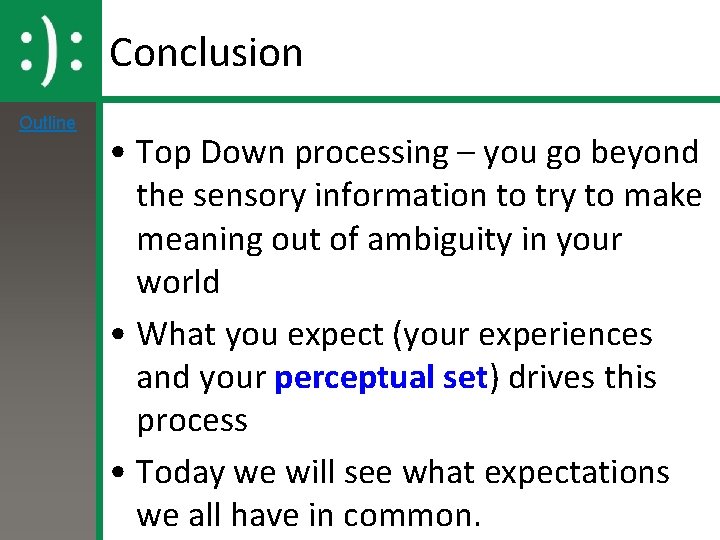
Conclusion Outline • Top Down processing – you go beyond the sensory information to try to make meaning out of ambiguity in your world • What you expect (your experiences and your perceptual set) drives this process • Today we will see what expectations we all have in common.
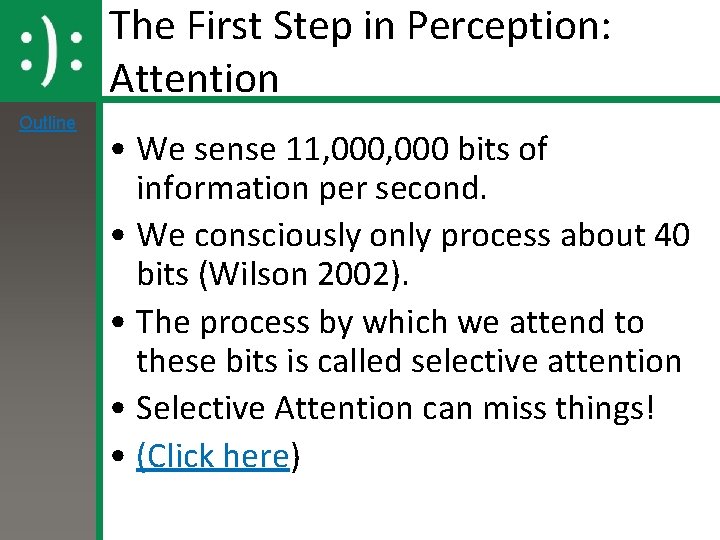
The First Step in Perception: Attention Outline • We sense 11, 000 bits of information per second. • We consciously only process about 40 bits (Wilson 2002). • The process by which we attend to these bits is called selective attention • Selective Attention can miss things! • (Click here)
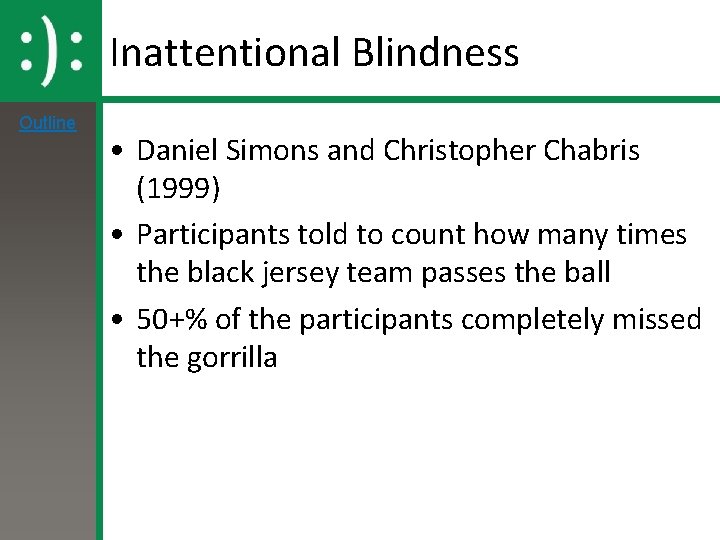
Inattentional Blindness Outline • Daniel Simons and Christopher Chabris (1999) • Participants told to count how many times the black jersey team passes the ball • 50+% of the participants completely missed the gorrilla
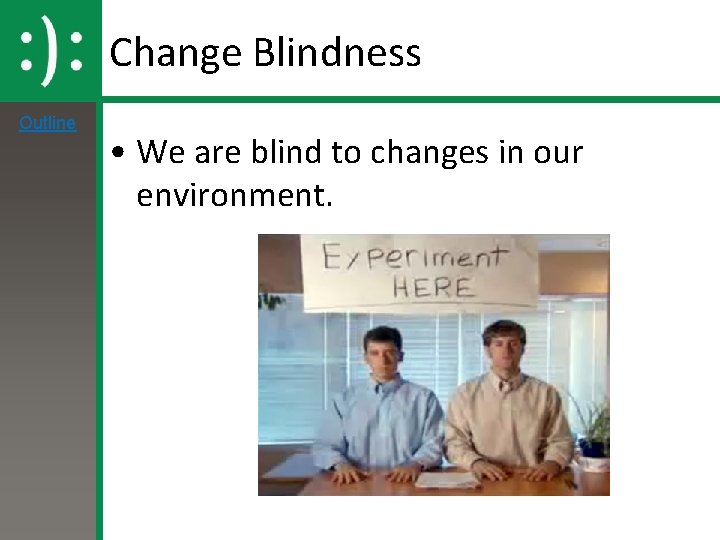
Change Blindness Outline • We are blind to changes in our environment.
Extrasensory Perception • Refers to extraordinary perception such as – Clairvoyance – awareness of an unknown object or event – Telepathy – knowledge of someone else’s thoughts or feelings – Precognition – foreknowledge of future events • Research has been unable to