
AP Psych Types of Drugs Psychoactive Drugs Psychoactive
- Slides: 12
AP Psych: Types of Drugs
Psychoactive Drugs § Psychoactive Drug: § A chemical substance that alters perceptions and moods
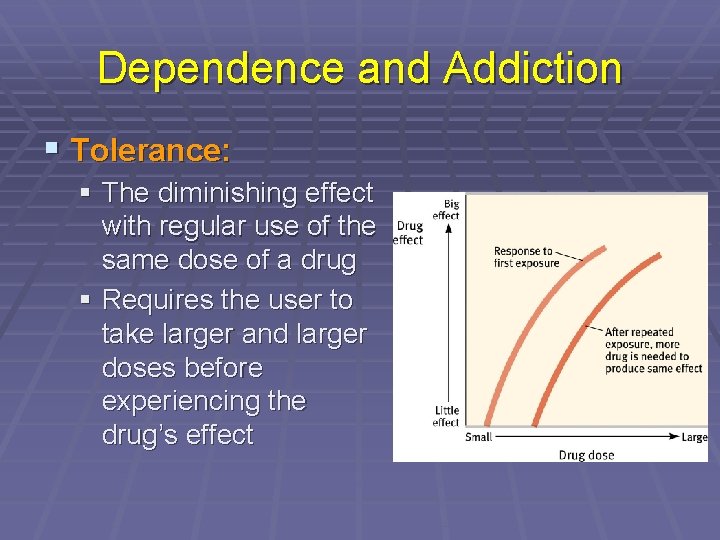
Dependence and Addiction § Tolerance: § The diminishing effect with regular use of the same dose of a drug § Requires the user to take larger and larger doses before experiencing the drug’s effect
Dependence and Addiction § Withdrawal: § The discomfort and distress that follow discontinuing the use of an addictive drug § Dependence: § The need for a drug to relieve physical pain or discomfort (physical dependence) or negative thoughts and emotions (psychological dependence)
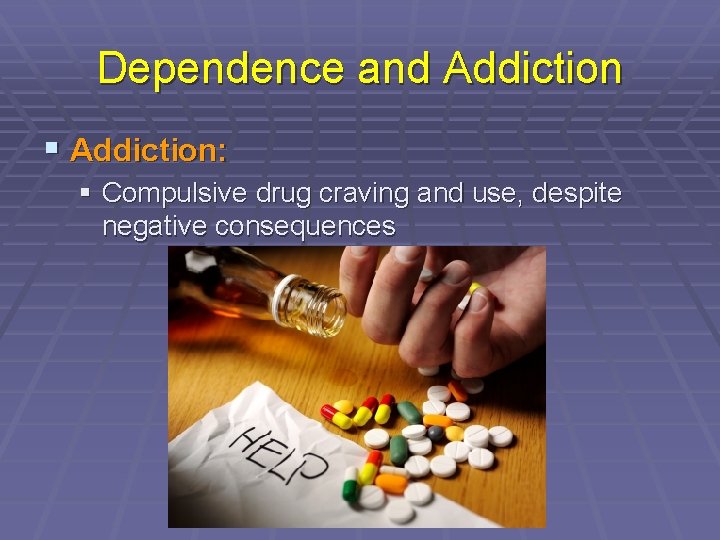
Dependence and Addiction § Addiction: § Compulsive drug craving and use, despite negative consequences
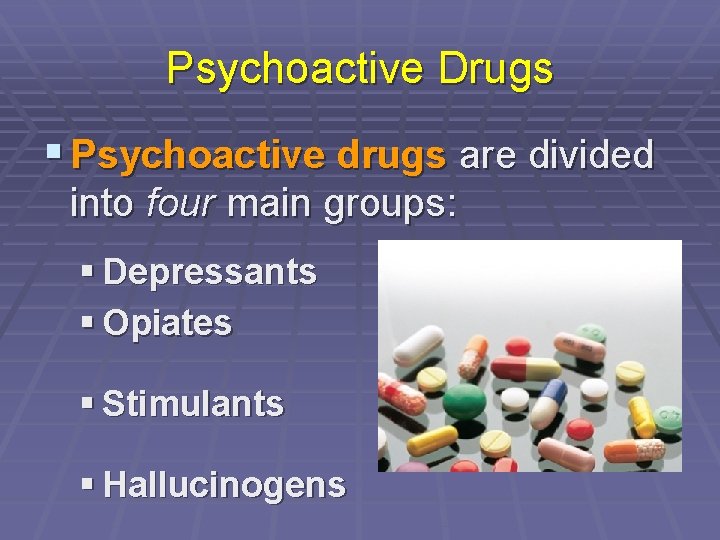
Psychoactive Drugs § Psychoactive drugs are divided into four main groups: § Depressants § Opiates § Stimulants § Hallucinogens
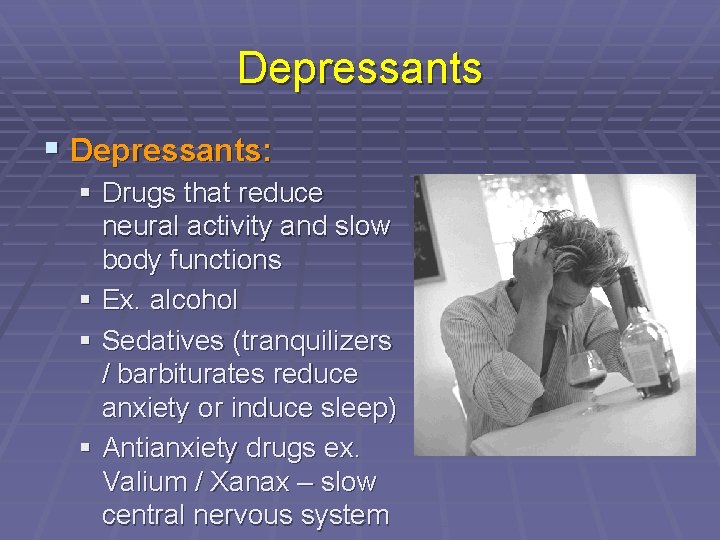
Depressants § Depressants: § Drugs that reduce neural activity and slow body functions § Ex. alcohol § Sedatives (tranquilizers / barbiturates reduce anxiety or induce sleep) § Antianxiety drugs ex. Valium / Xanax – slow central nervous system
Opiates § Temporarily lessen pain and anxiety § Highly addictive § Ex. heroin , opium, morphine, codeine, Oxy. Contin § Cause the brain to release more dopamine – creating a euphoric feeling § When this feeling ends, can experience inability to feel pleasure physically
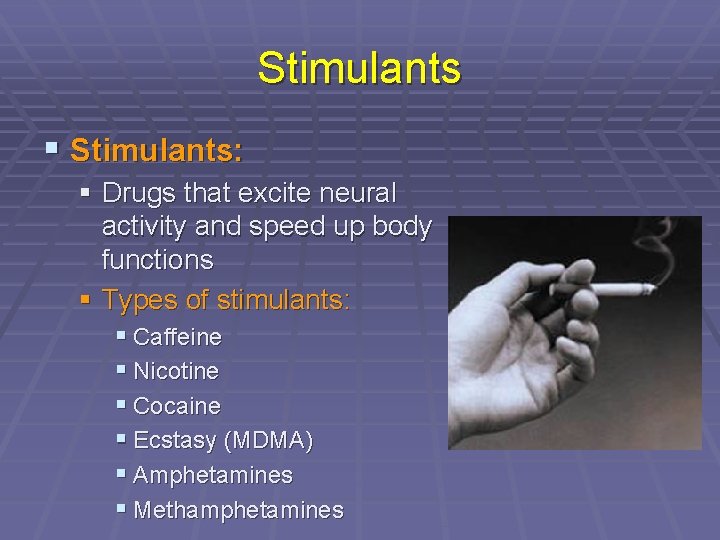
Stimulants § Stimulants: § Drugs that excite neural activity and speed up body functions § Types of stimulants: § Caffeine § Nicotine § Cocaine § Ecstasy (MDMA) § Amphetamines § Methamphetamines
Hallucinogens § Hallucinogens: § Psychedelic (“mindmanifesting”) drugs that distort perceptions of reality and evoke sensory images in the absence of sensory input § Types of hallucinogens: § LSD (Lysergic Acid Diethylamide) § Marijuana – THC is active ingredient (Delta-9 Tetrahydrocannabinol)
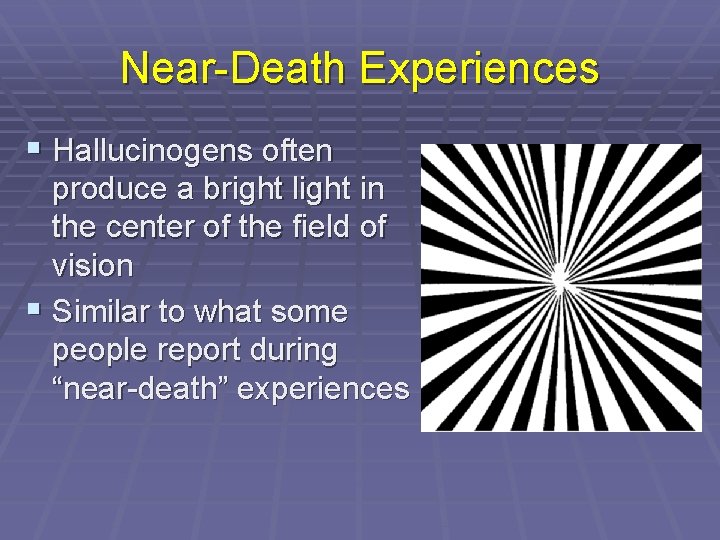
Near-Death Experiences § Hallucinogens often produce a bright light in the center of the field of vision § Similar to what some people report during “near-death” experiences
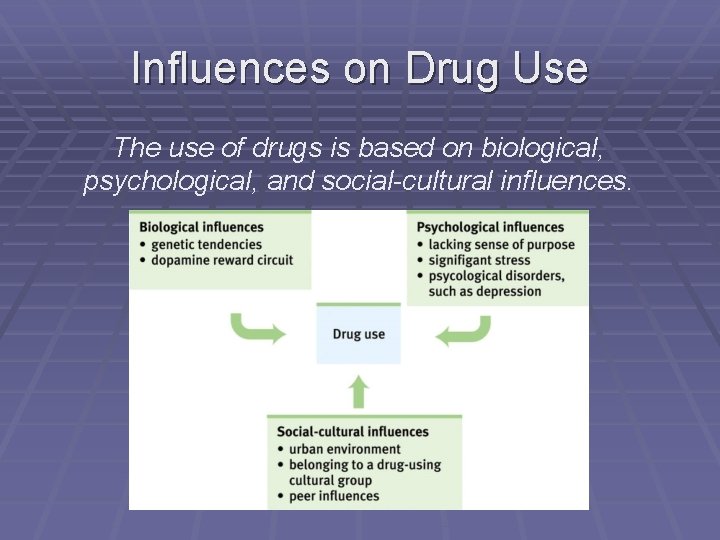
Influences on Drug Use The use of drugs is based on biological, psychological, and social-cultural influences.