
AP Physics 2 Chapter 20 Section 4 Electromagnetic
- Slides: 10
AP Physics 2 Chapter 20 Section 4
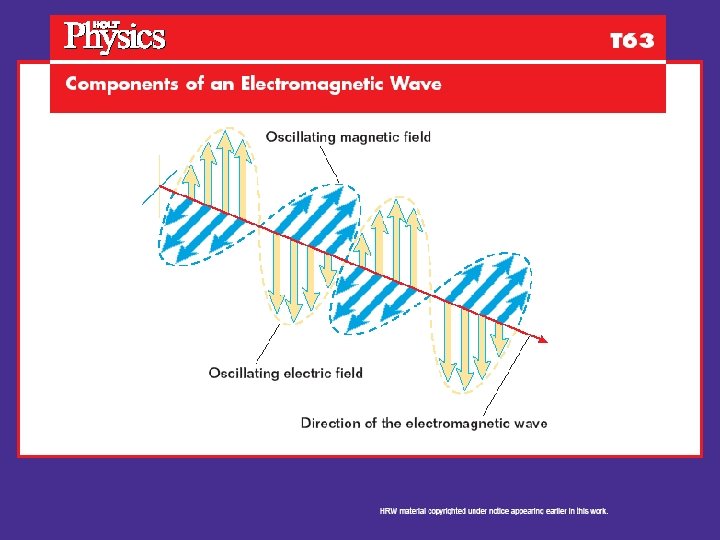
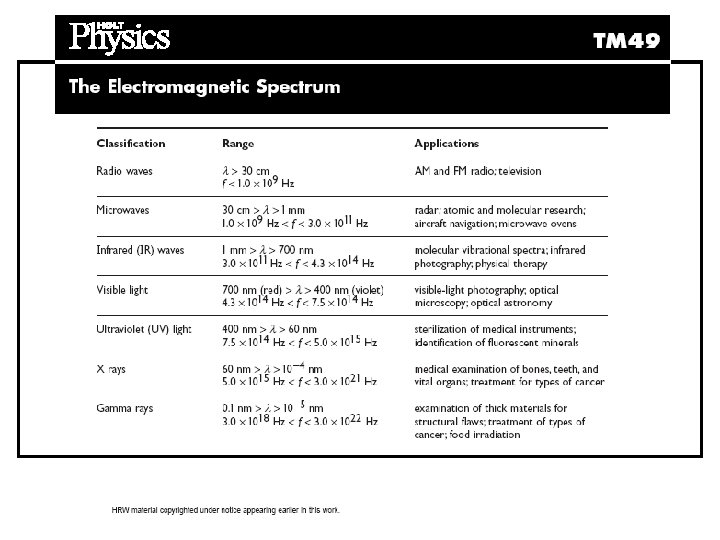
Electromagnetic Wave § Transverse wave consisting of electric and magnetic fields that can travel through a vacuum - electric and magnetic fields are always perpendicular to each other
Electromagnetic Wave
Electromagnetic Wave § Doesn’t require a medium § Moves through a vacuum at 2. 99792458 x 108 m/s or c = 3 x 10⁸ m/s § Has a frequency and wavelength related by v = f λ § Can arrange according to frequency or wavelength into the electromagnetic spectrum
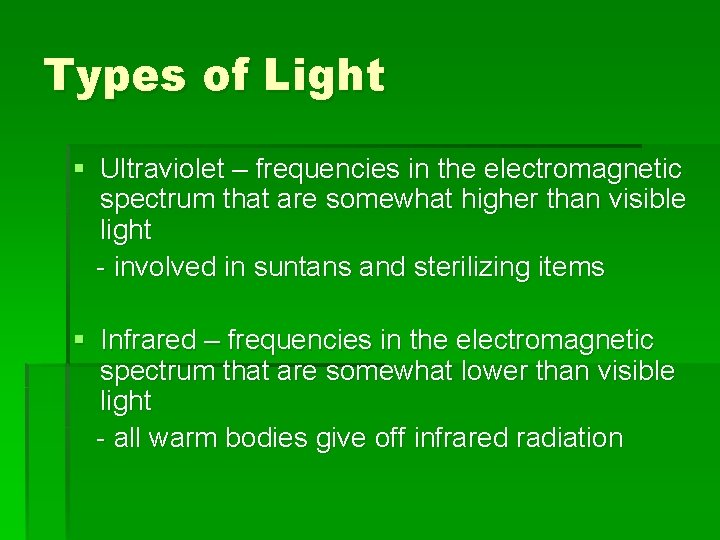
Types of Light § Ultraviolet – frequencies in the electromagnetic spectrum that are somewhat higher than visible light - involved in suntans and sterilizing items § Infrared – frequencies in the electromagnetic spectrum that are somewhat lower than visible light - all warm bodies give off infrared radiation
Sample Problem § Find the vacuum wavelength of light of frequency 4 x 10¹⁴ Hz.
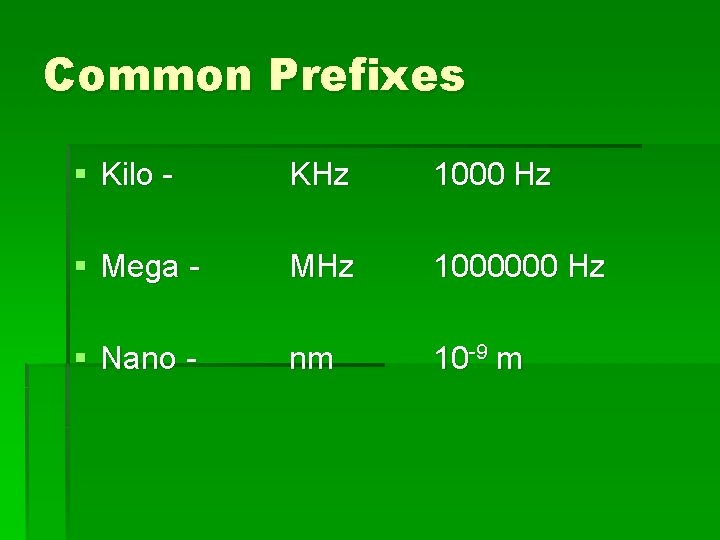
Common Prefixes § Kilo - KHz 1000 Hz § Mega - MHz 1000000 Hz § Nano - nm 10 -9 m
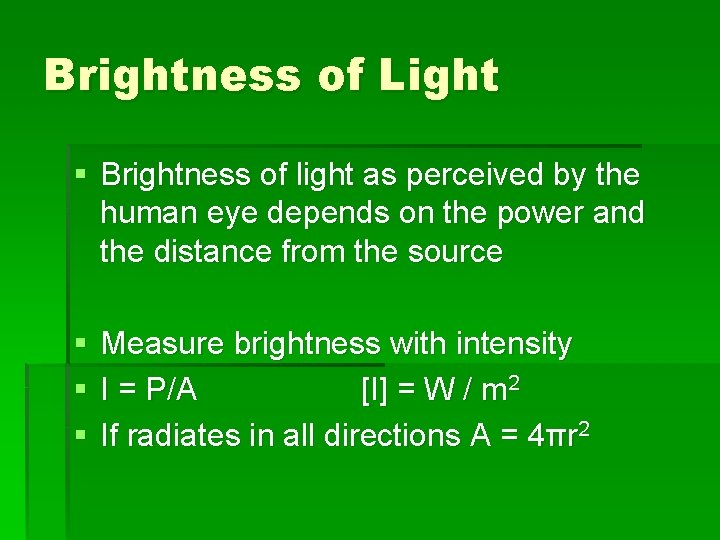
Brightness of Light § Brightness of light as perceived by the human eye depends on the power and the distance from the source § § § Measure brightness with intensity I = P/A [I] = W / m 2 If radiates in all directions A = 4πr 2
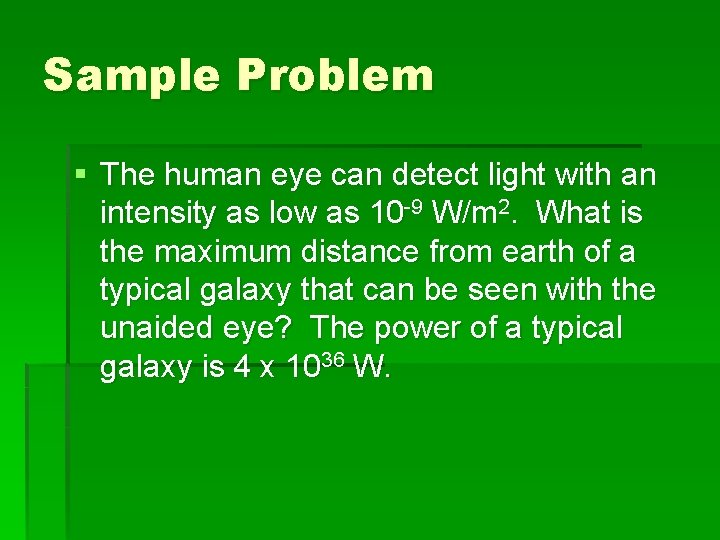
Sample Problem § The human eye can detect light with an intensity as low as 10 -9 W/m 2. What is the maximum distance from earth of a typical galaxy that can be seen with the unaided eye? The power of a typical galaxy is 4 x 1036 W.