
AP Microeconomics Unit 5 Review Last review Factor


- Slides: 16
AP Microeconomics Unit 5 Review Last review Factor Markets
Reminders • Check blog for AP Testing information • Graphing assignment is on the blog • Problems/formula practice on the blog • Practice FRQs on the blog • Watch blog in coming days for solutions to practice materials • Join your Khan Academy class from Remind, assignments posted • Cumulative micro test on AP Classroom-this is the one that counts as a test and can replace your lowest test grade too • ALL GRADED WORK IS DUE BY THE END OF THE DAY TODAY!
Unit 5: Factor Markets
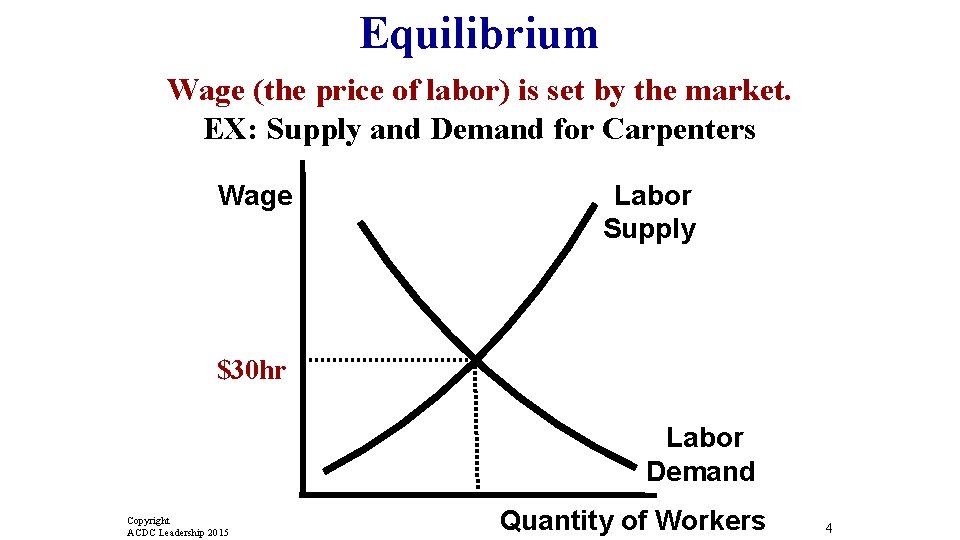
Equilibrium Wage (the price of labor) is set by the market. EX: Supply and Demand for Carpenters Wage Labor Supply $30 hr Labor Demand Copyright ACDC Leadership 2015 Quantity of Workers 4
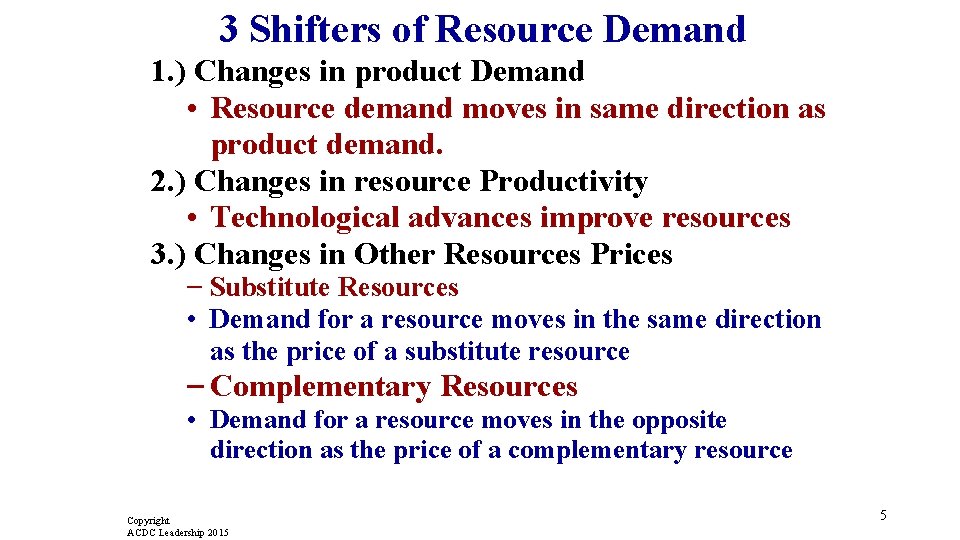
3 Shifters of Resource Demand 1. ) Changes in product Demand • Resource demand moves in same direction as product demand. 2. ) Changes in resource Productivity • Technological advances improve resources 3. ) Changes in Other Resources Prices – Substitute Resources • Demand for a resource moves in the same direction as the price of a substitute resource – Complementary Resources • Demand for a resource moves in the opposite direction as the price of a complementary resource Copyright ACDC Leadership 2015 5
Resource Supply Shifters for Labor 1. Number of qualified workers • Education, training, & abilities required 2. Government regulation/licensing Ex: What if waiters had to obtain a license to serve food? 3. Personal values regarding leisure time and societal roles. Ex: Why did the US Labor supply increase during WWII? Why do some occupations get paid more than others? Copyright ACDC Leadership 2015
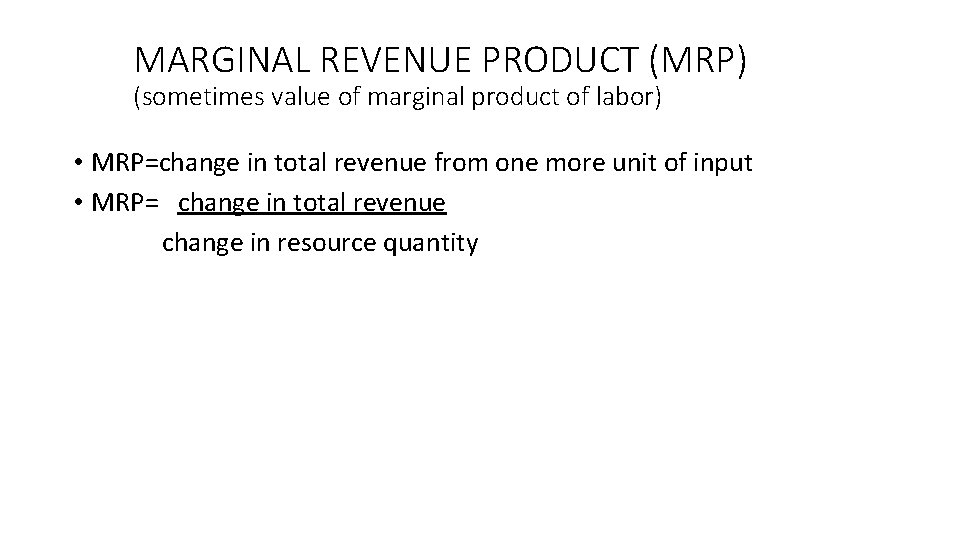
MARGINAL REVENUE PRODUCT (MRP) (sometimes value of marginal product of labor) • MRP=change in total revenue from one more unit of input • MRP= change in total revenue change in resource quantity
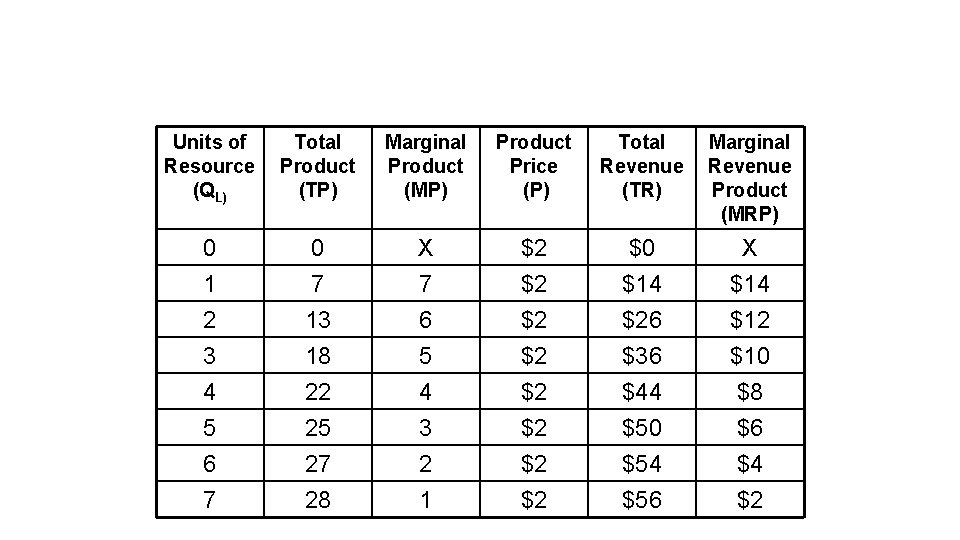
Units of Resource (QL) Total Product (TP) Marginal Product (MP) Product Price (P) Total Revenue (TR) Marginal Revenue Product (MRP) 0 0 X $2 $0 X 1 7 7 $2 $14 2 13 6 $2 $26 $12 3 18 5 $2 $36 $10 4 22 4 $2 $44 $8 5 25 3 $2 $50 $6 6 27 2 $2 $54 $4 7 28 1 $2 $56 $2
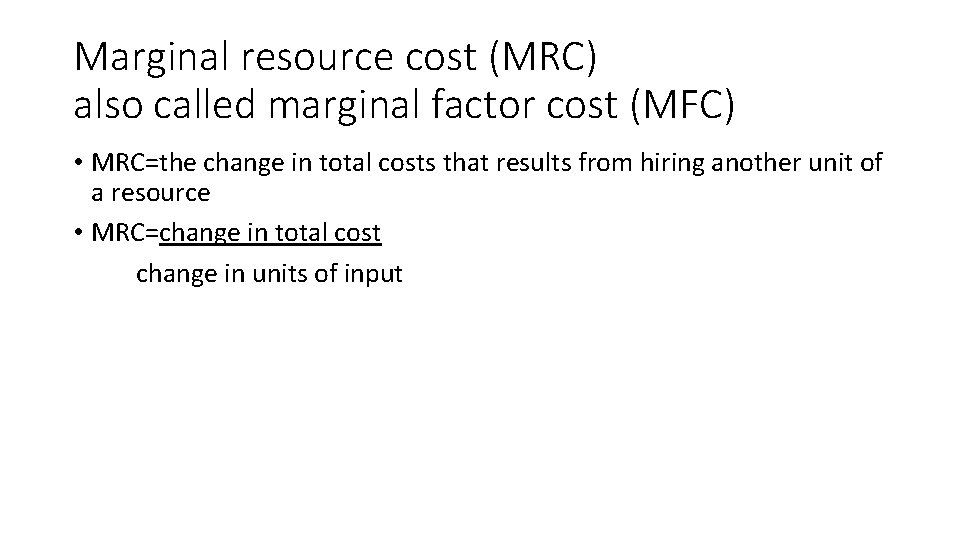
Marginal resource cost (MRC) also called marginal factor cost (MFC) • MRC=the change in total costs that results from hiring another unit of a resource • MRC=change in total cost change in units of input
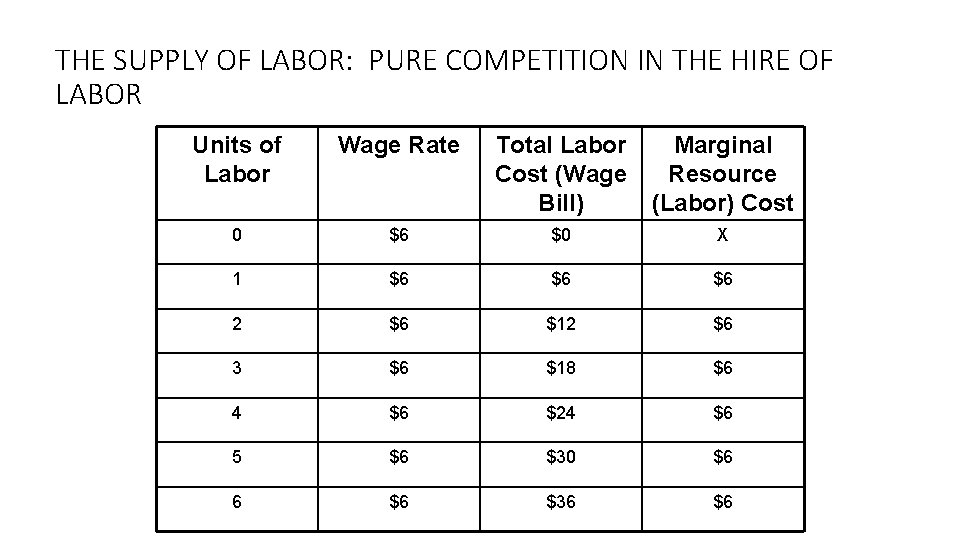
THE SUPPLY OF LABOR: PURE COMPETITION IN THE HIRE OF LABOR Units of Labor Wage Rate Total Labor Cost (Wage Bill) Marginal Resource (Labor) Cost 0 $6 $0 X 1 $6 $6 $6 2 $6 $12 $6 3 $6 $18 $6 4 $6 $24 $6 5 $6 $30 $6 6 $6 $36 $6
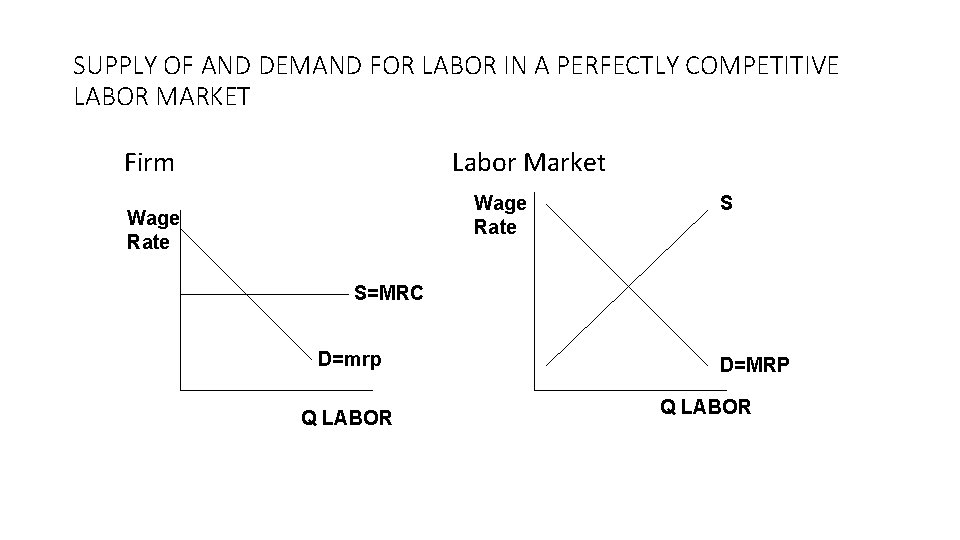
SUPPLY OF AND DEMAND FOR LABOR IN A PERFECTLY COMPETITIVE LABOR MARKET Firm Labor Market Wage Rate S S=MRC D=mrp Q LABOR D=MRP Q LABOR
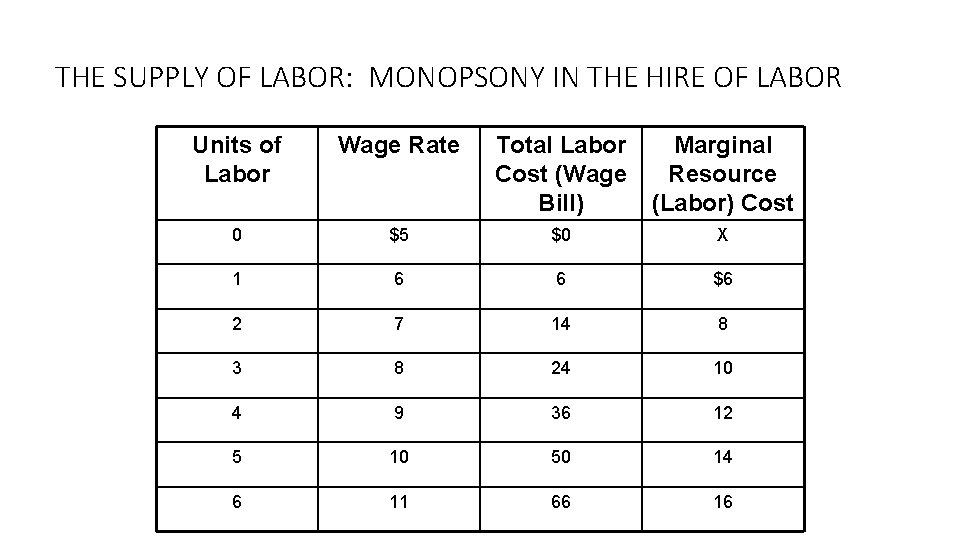
THE SUPPLY OF LABOR: MONOPSONY IN THE HIRE OF LABOR Units of Labor Wage Rate Total Labor Cost (Wage Bill) Marginal Resource (Labor) Cost 0 $5 $0 X 1 6 6 $6 2 7 14 8 3 8 24 10 4 9 36 12 5 10 50 14 6 11 66 16
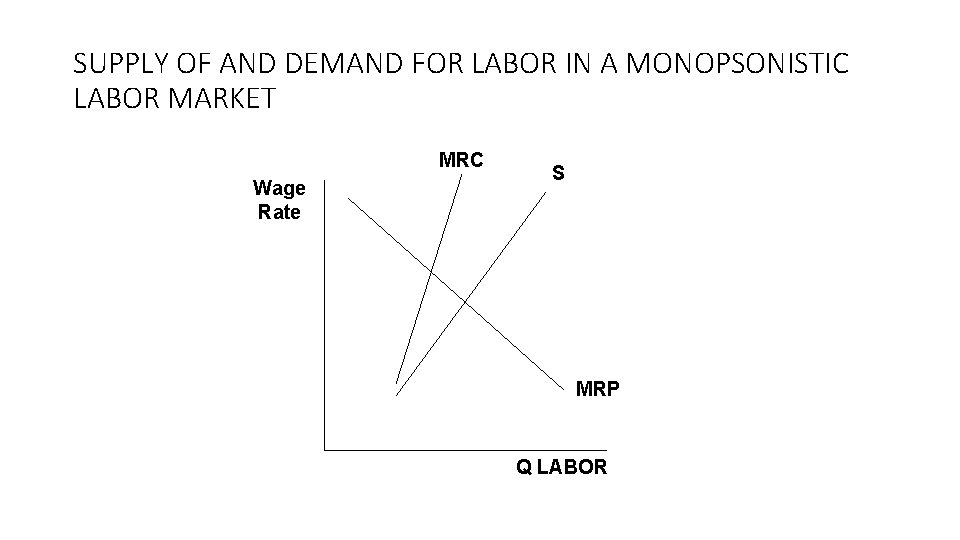
SUPPLY OF AND DEMAND FOR LABOR IN A MONOPSONISTIC LABOR MARKET MRC Wage Rate S MRP Q LABOR
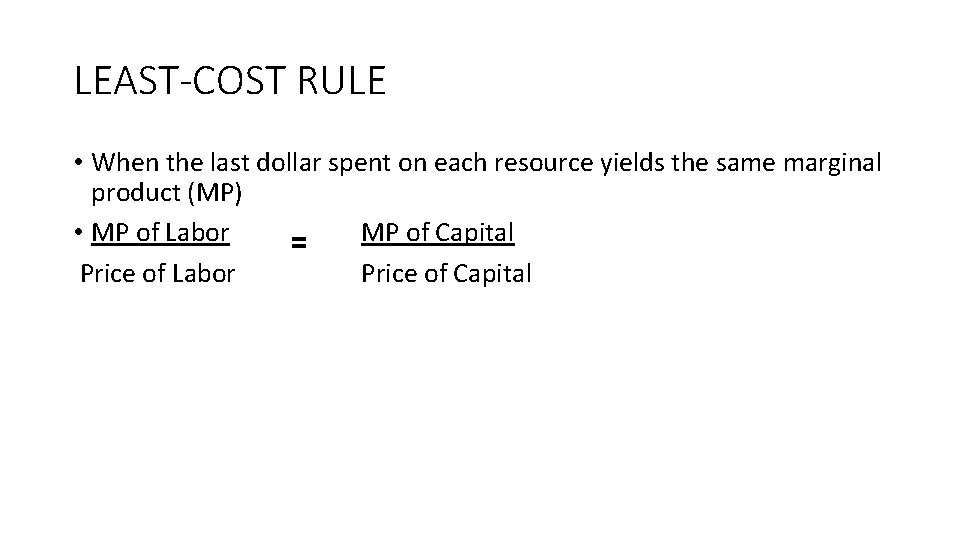
LEAST-COST RULE • When the last dollar spent on each resource yields the same marginal product (MP) • MP of Labor MP of Capital = Price of Labor Price of Capital
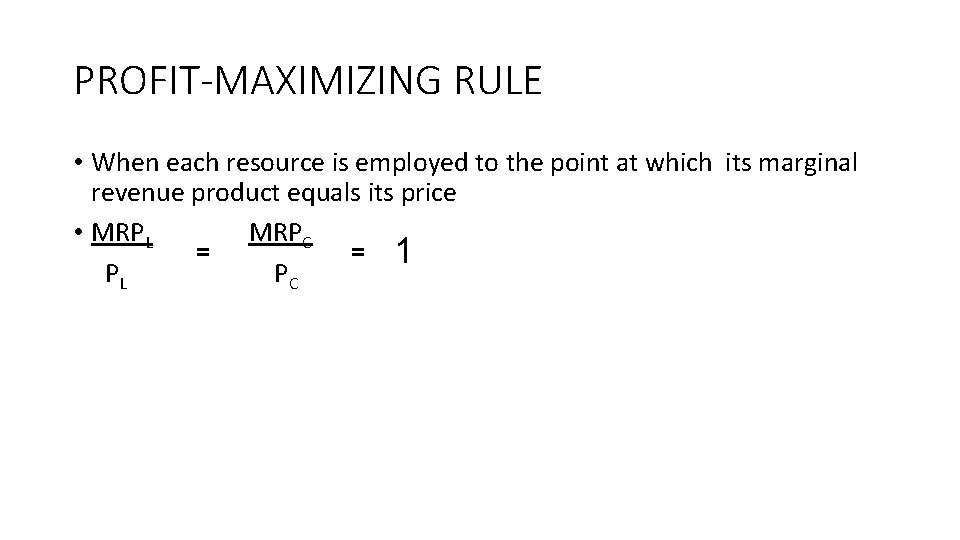
PROFIT-MAXIMIZING RULE • When each resource is employed to the point at which its marginal revenue product equals its price • MRPL MRPC = = 1 PL PC