
AP Human Geography Unit 3 Folk and Popular
- Slides: 18
AP Human Geography Unit 3 Folk and Popular Culture
Bell Ringer- 10 minutes One word is highlighted on your unit 3 vocabulary matrix. Take a notecard and do the following with your word: 1. Describe (NOT DEFINE) it 2. Give an example 3. Draw an image
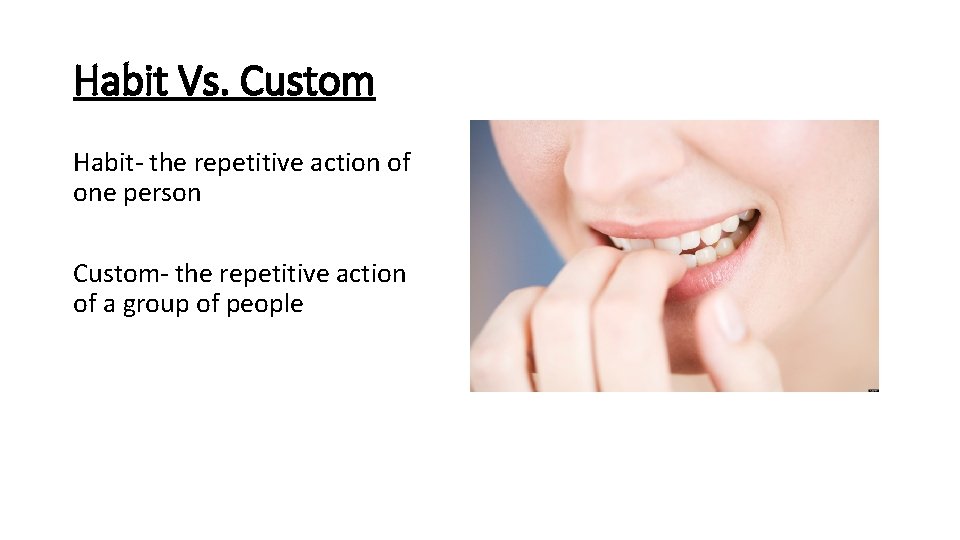
Habit Vs. Custom Habit- the repetitive action of one person Custom- the repetitive action of a group of people
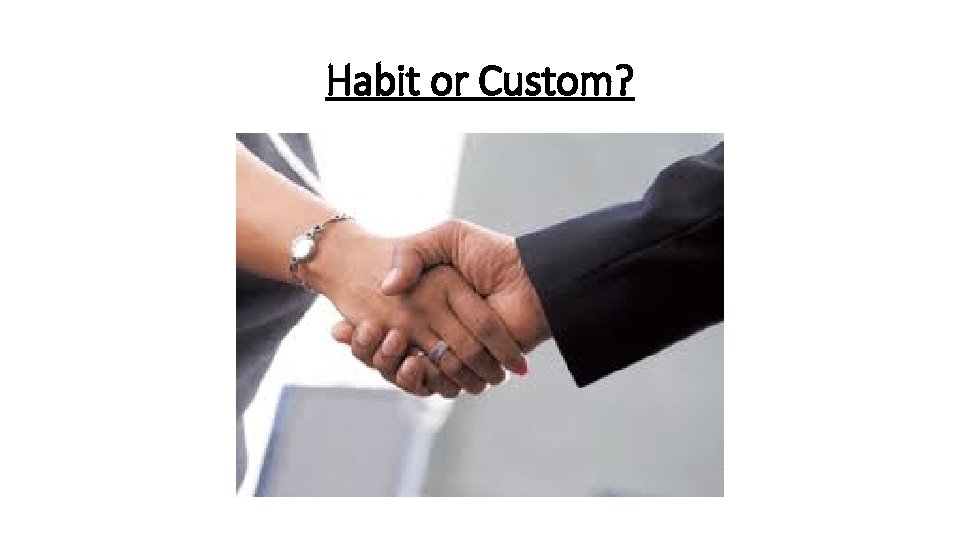
Habit or Custom?
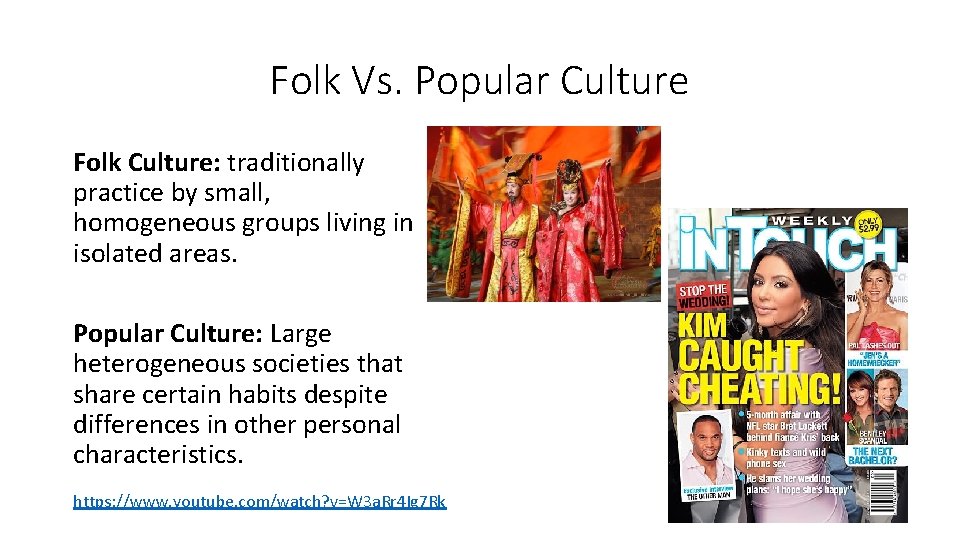
Folk Vs. Popular Culture Folk Culture: traditionally practice by small, homogeneous groups living in isolated areas. Popular Culture: Large heterogeneous societies that share certain habits despite differences in other personal characteristics. https: //www. youtube. com/watch? v=W 3 a. Rr 4 Ig 7 Rk
Folk and Popular Culture Origins: Folk- Usually originates from an unknown date and hearth, or from multiple hearths Popular- Usually from developed countries, traced to a specific origin
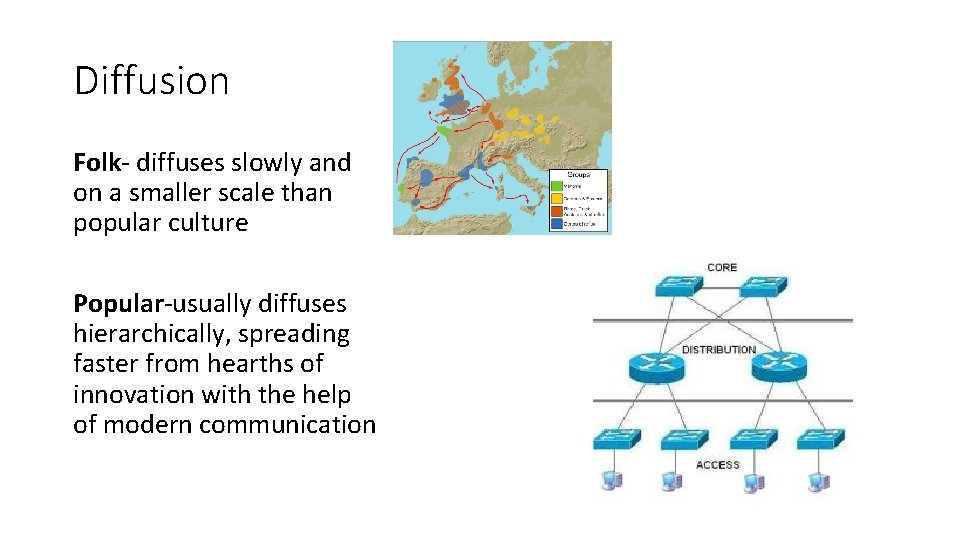
Diffusion Folk- diffuses slowly and on a smaller scale than popular culture Popular-usually diffuses hierarchically, spreading faster from hearths of innovation with the help of modern communication
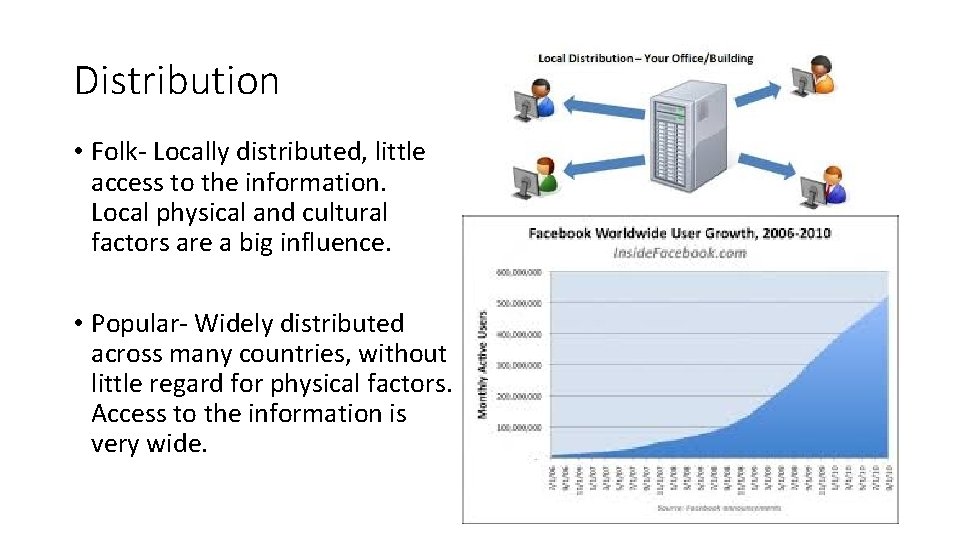
Distribution • Folk- Locally distributed, little access to the information. Local physical and cultural factors are a big influence. • Popular- Widely distributed across many countries, without little regard for physical factors. Access to the information is very wide.
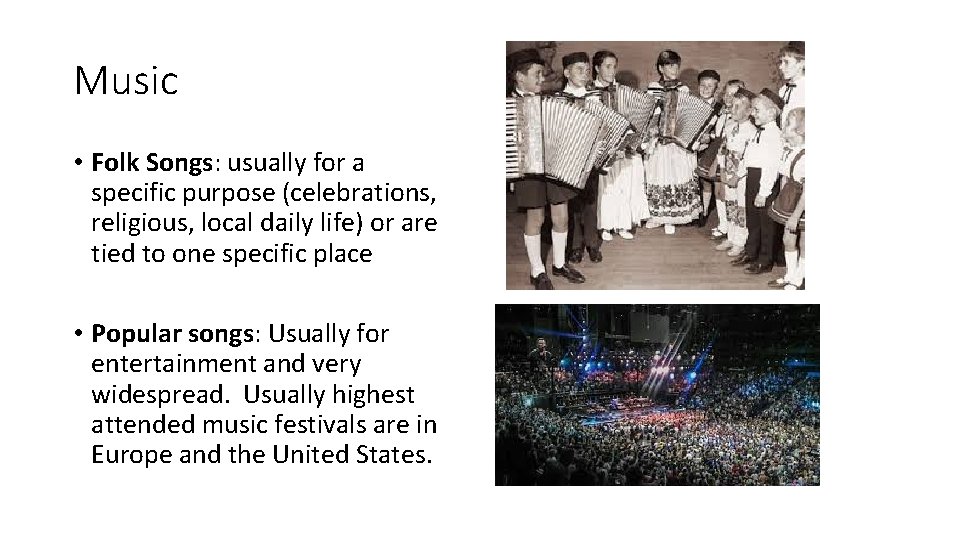
Music • Folk Songs: usually for a specific purpose (celebrations, religious, local daily life) or are tied to one specific place • Popular songs: Usually for entertainment and very widespread. Usually highest attended music festivals are in Europe and the United States.
Sports Soccer: Folk or Popular? https: //www. youtube. com/watch? v=le 2 e 0 p. Y 0 ek. A
Evidence of Soccer as Popular Culture • Standardization of rules • Common name (except in USA) • Diffusion started in the British Empire, which is a developed nation • Diffusion worldwide and emergence of the World Cup
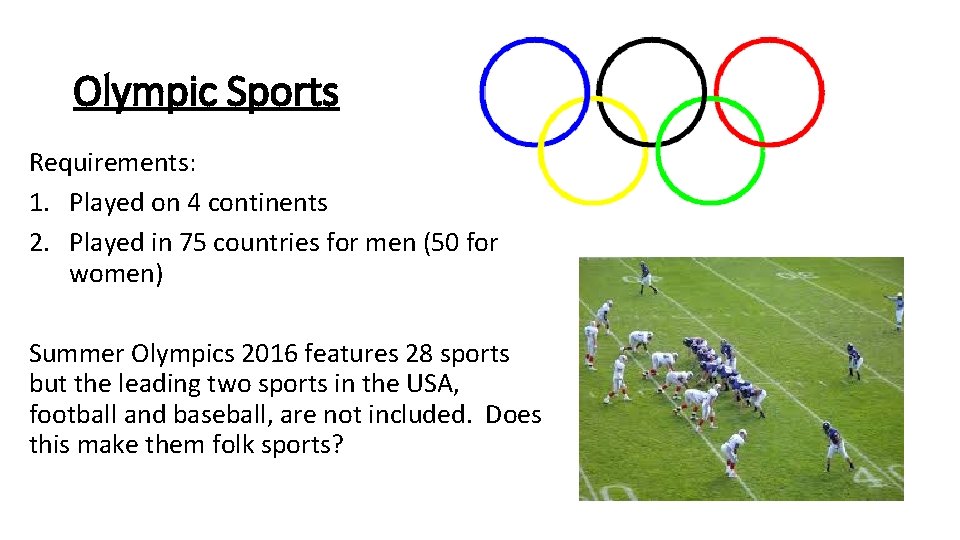
Olympic Sports Requirements: 1. Played on 4 continents 2. Played in 75 countries for men (50 for women) Summer Olympics 2016 features 28 sports but the leading two sports in the USA, football and baseball, are not included. Does this make them folk sports?
Surviving Folk Sports • Cricket- United Kingdom, South Asia, South Pacific, and Caribbean • Wushu- Martial arts in China • Baseball- Japan and North America • Football- United States and Australia While these sports might be contained to one region of the world, mass communication systems and viewership have made them spread widely throughout their respective regions.
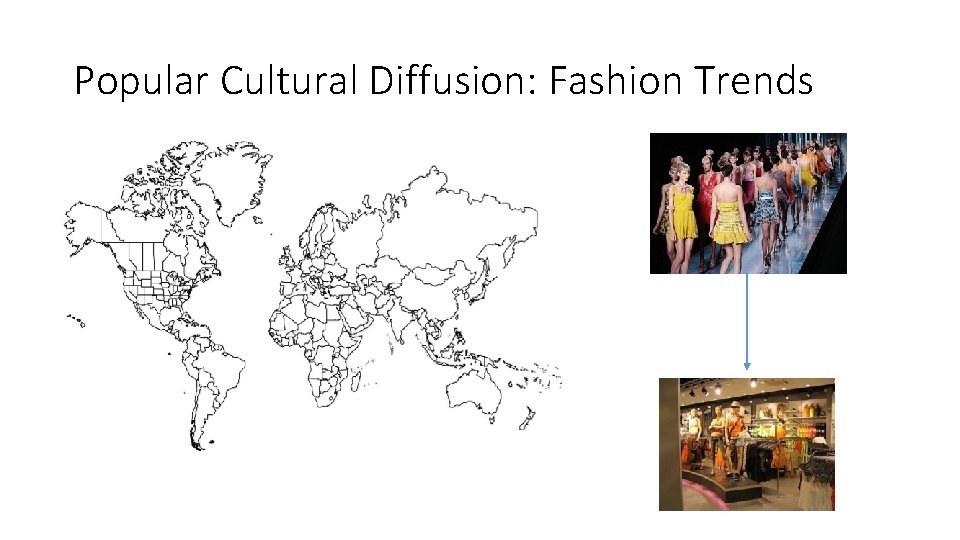
Popular Cultural Diffusion: Fashion Trends
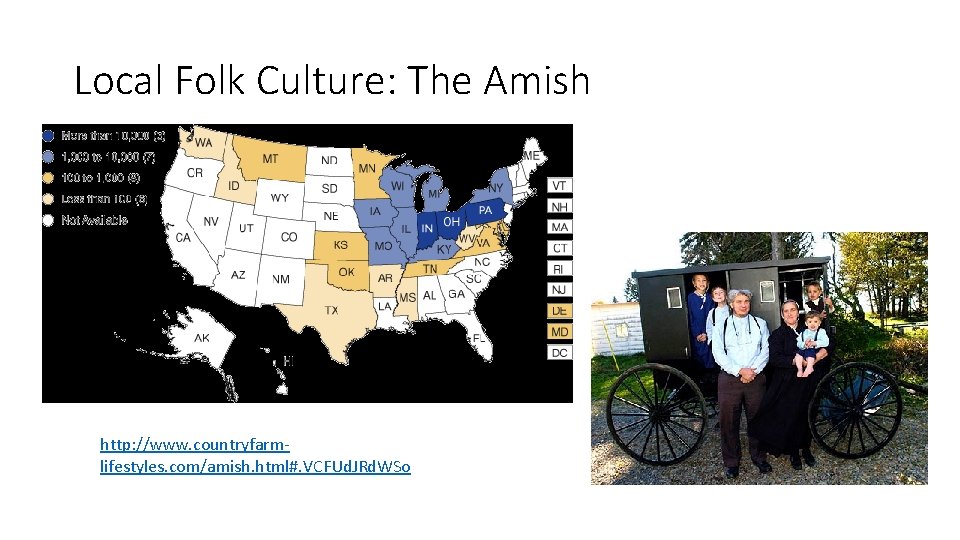
Local Folk Culture: The Amish http: //www. countryfarmlifestyles. com/amish. html#. VCFUd. JRd. WSo
Video Example Who What When Where Why
Personal Culture Body Biography: Draw follow these directions: Head- what do you believe in or think about Eyes- what do you see, what kinds of people do you see mostly? a stick figure and Hands- what do you do, what hobbies do you have, what are your leisure activities Mouth- what languages do you speak, how do you communicate? Stomach- what / where do you eat? What do you wear? Feet- what are your goals? What do you want to do? Where do you want to go? Where have you been? Then, write down if you think you are a member of popular culture of folk culture and why.
Homework 1. Interview a parent, guardian, relative, or close adult in your life on their culture. Ask them at least 5 questions. Record (on you phone) or write down exactly what they answer. 2. Sort their answers into folk or popular culture in a T chart. 3. Write 1 paragraph explaining why you think they have this particular culture and analyze your findings.