
AP Human Geography Chapter 4 Intro to Culture

- Slides: 45
AP® Human Geography Chapter 4
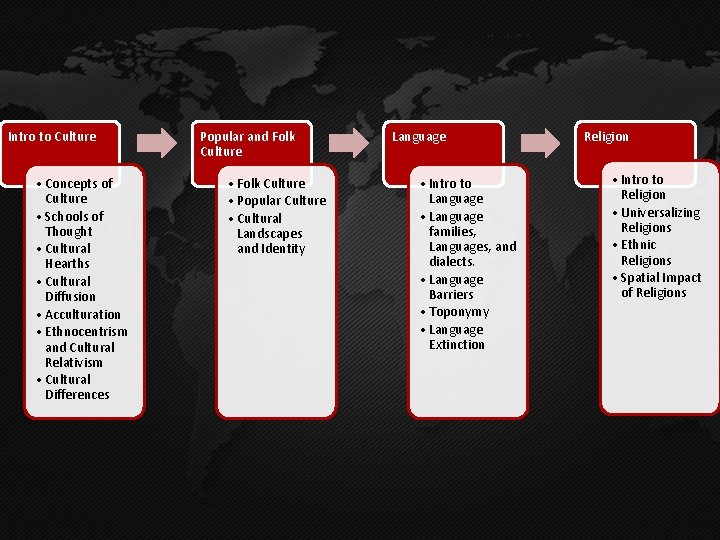
Intro to Culture • Concepts of Culture • Schools of Thought • Cultural Hearths • Cultural Diffusion • Acculturation • Ethnocentrism and Cultural Relativism • Cultural Differences Popular and Folk Culture • Folk Culture • Popular Culture • Cultural Landscapes and Identity Language • Intro to Language • Language families, Languages, and dialects. • Language Barriers • Toponymy • Language Extinction Religion • Intro to Religion • Universalizing Religions • Ethnic Religions • Spatial Impact of Religions
Part 1: Introduction to Culture
Section A: What is Culture?
Culture is the mix of values, beliefs, behaviors, and material objects that form(i. e. cultivate) a people’s way of life.
Describe the culture of your classroom, school, town, and state.
How do we study culture?
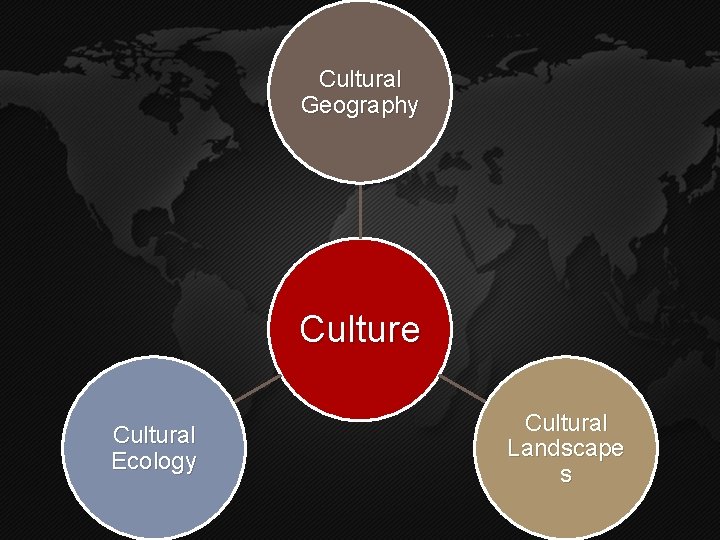
Cultural Geography Culture Cultural Ecology Cultural Landscape s
What is cultural geography?
Cultural geography is the study of how and why cultures vary over space.
What is the cultural landscape?
Cultural landscapes are places that reveal a society’s cultural identity through nature as well as through architecture and artifacts.
What is cultural ecology?
Cultural ecology studies the relationship between the natural environment and culture.
Section B: What is culture made of?
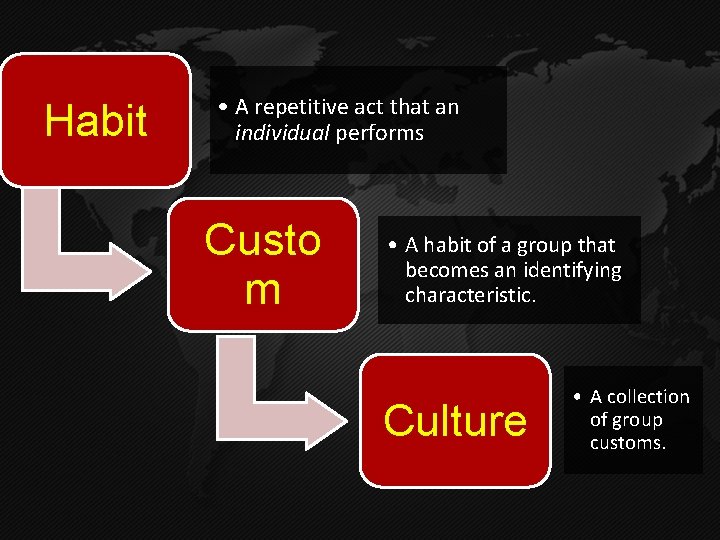
Habit • A repetitive act that an individual performs Custo m • A habit of a group that becomes an identifying characteristic. Culture • A collection of group customs.
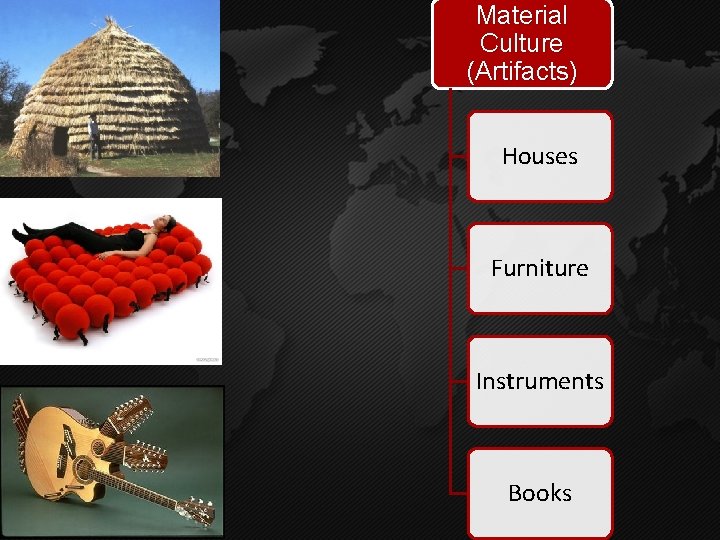
Material Culture (Artifacts) Houses Furniture Instruments Books
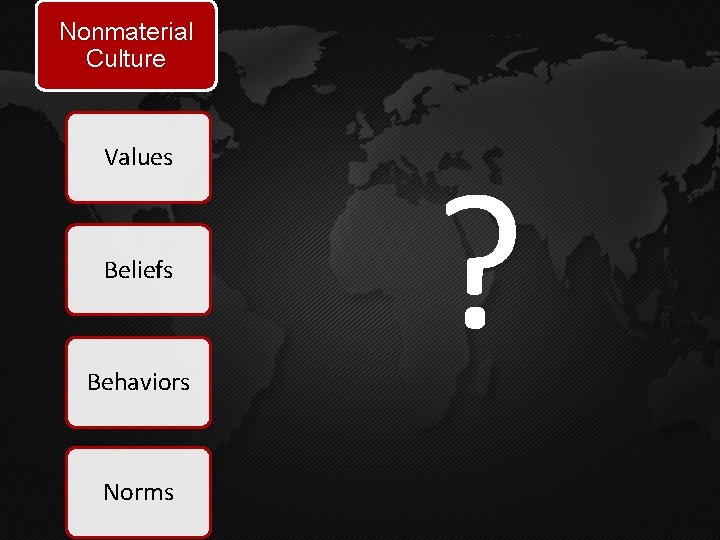
Nonmaterial Culture Values Beliefs Behaviors Norms ?
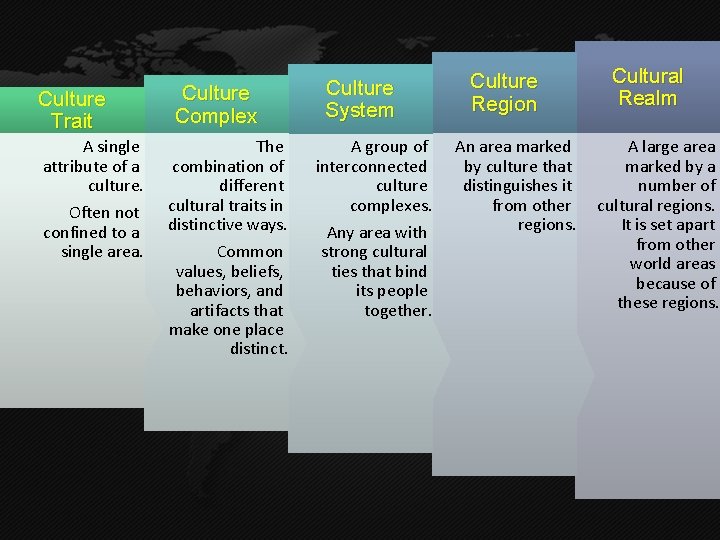
Culture Trait A single attribute of a culture. Often not confined to a single area. Culture Complex The combination of different cultural traits in distinctive ways. Common values, beliefs, behaviors, and artifacts that make one place distinct. Culture System A group of interconnected culture complexes. Any area with strong cultural ties that bind its people together. Culture Region An area marked by culture that distinguishes it from other regions. Cultural Realm A large area marked by a number of cultural regions. It is set apart from other world areas because of these regions.
What are the traits, complexes, and systems that make up your community?
Section C: Where does culture come from?
What is a cultural hearth?
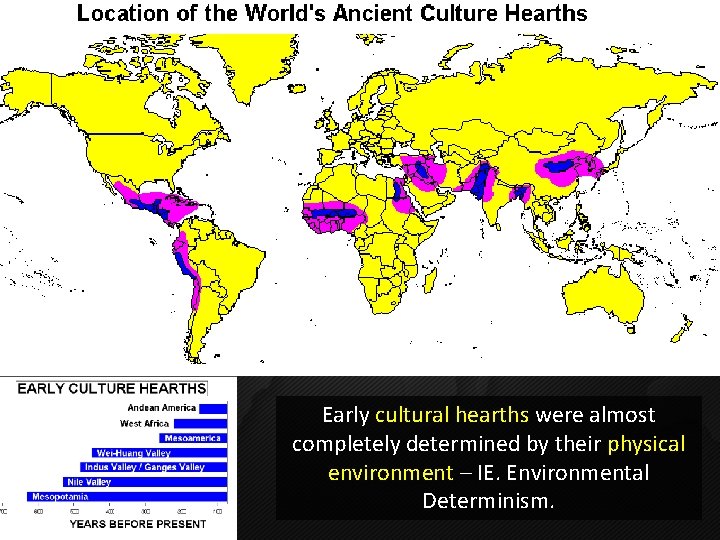
A cultural hearth is the area where a cultural trait first began.
Early cultural hearths were almost completely determined by their physical environment – IE. Environmental Determinism.
What are independent inventions?
Independent Inventions are cultural traits that develop in many hearths apart from interaction with one another.
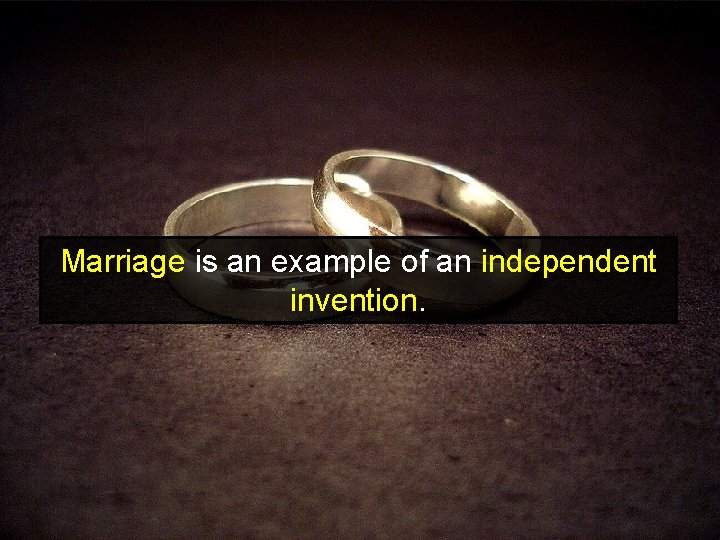
Marriage is an example of an independent invention.
Why do you think independent invention occurs?
What is cultural diffusion?
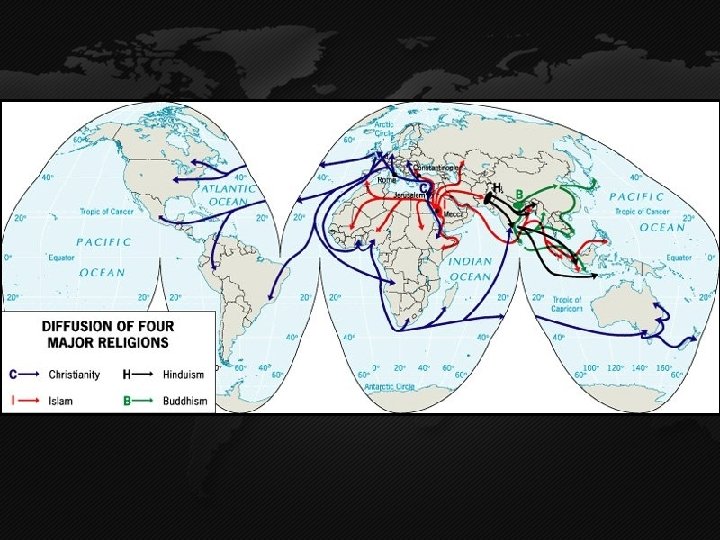
Cultural Diffusion is the spread of culture to areas surrounding the cultural hearth.
Section D: How do people adapt to culture?
What is acculturation and assimilation?
Acculturation is the process of the less dominant culture adopting the traits of the more dominant one. Assimilation is when the less dominant culture loses native customs completely.
Discuss: Does assimilation affect only the less dominant culture?
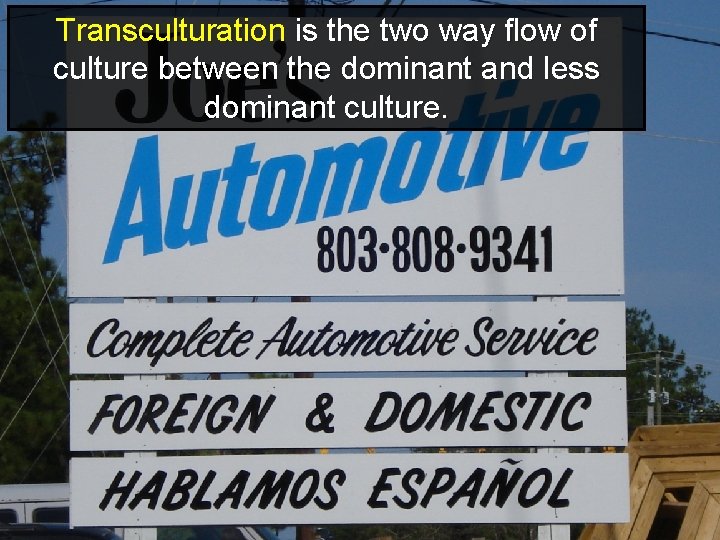
Transculturation is the two way flow of culture between the dominant and less dominant culture.
What is syncretism?
Syncretism is the combination of different cultural concepts into one.
Section E: How do we interpret culture?
What is ethnocentrism?
Ethnocentrism is the practice of judging another culture by the standards of one’s own culture.
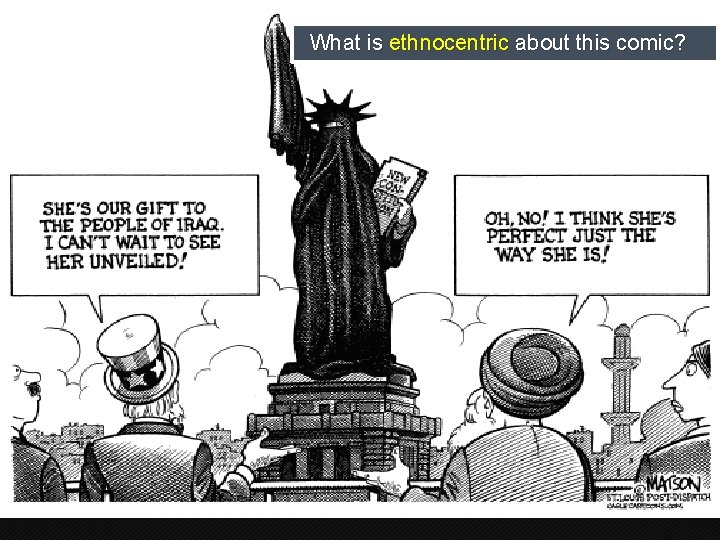
What is ethnocentric about this comic?
What is cultural relativism?
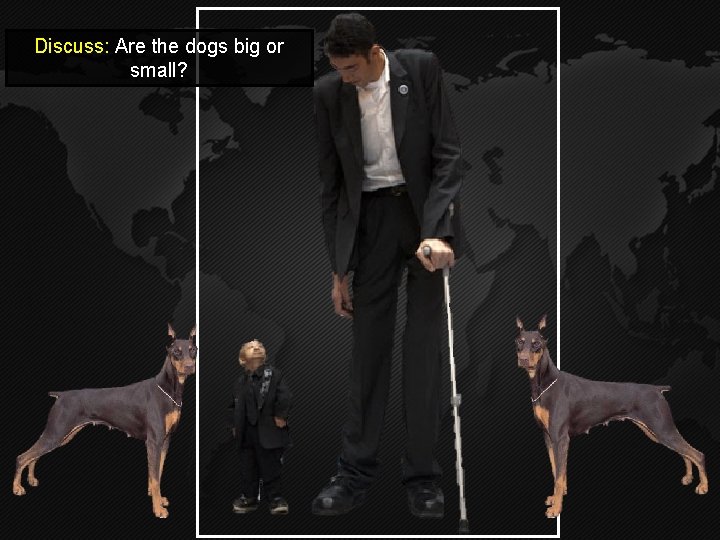
Cultural Relativism is the practice of evaluating a culture by its own standards
Discuss: Are the dogs big or small?