
AP Biology Review Chapter 11 12 13 Cell
AP Biology Review Chapter 11 & 12 & 13 Cell Communication, Feedback Loops, Mitosis & Meiosis 2019
39 Multiple Choice Questions No Short Answer Section
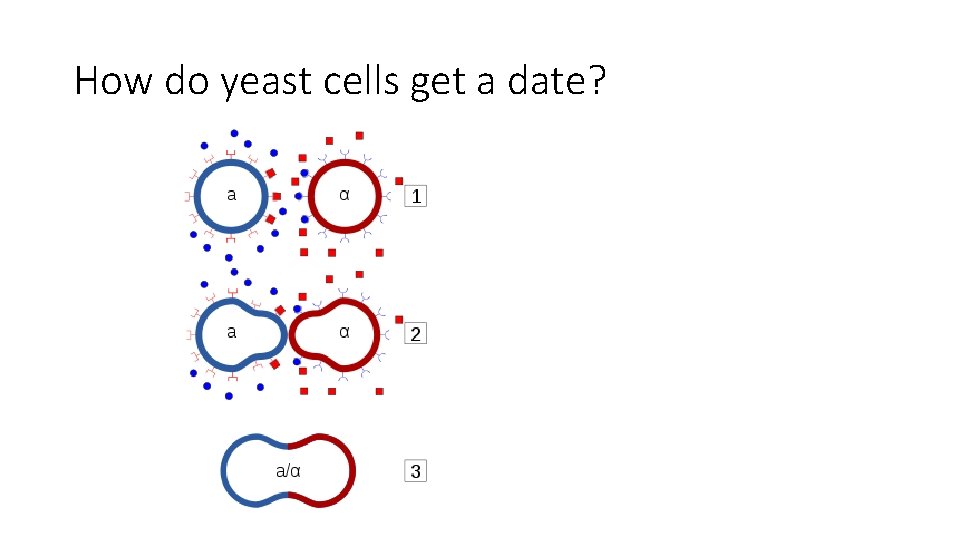
How do yeast cells get a date?
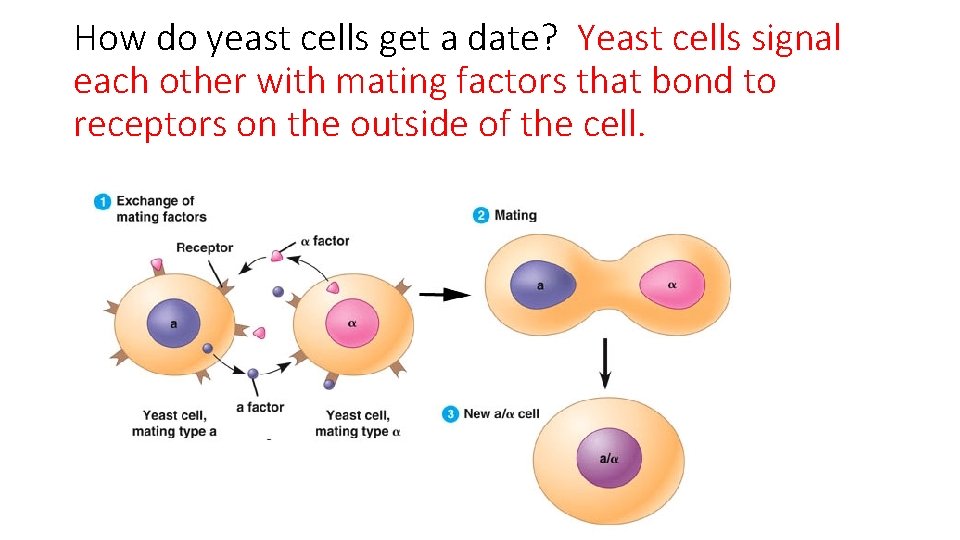
How do yeast cells get a date? Yeast cells signal each other with mating factors that bond to receptors on the outside of the cell.
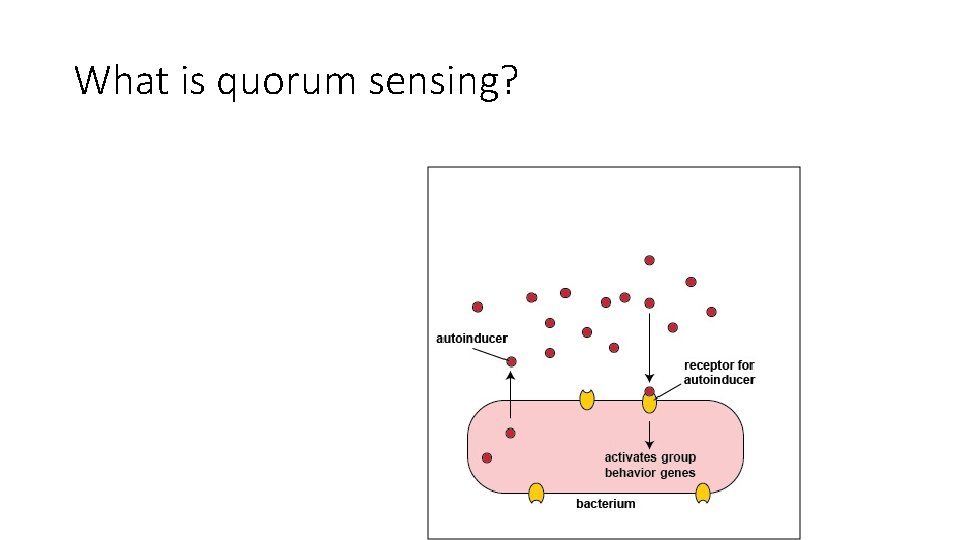
What is quorum sensing?
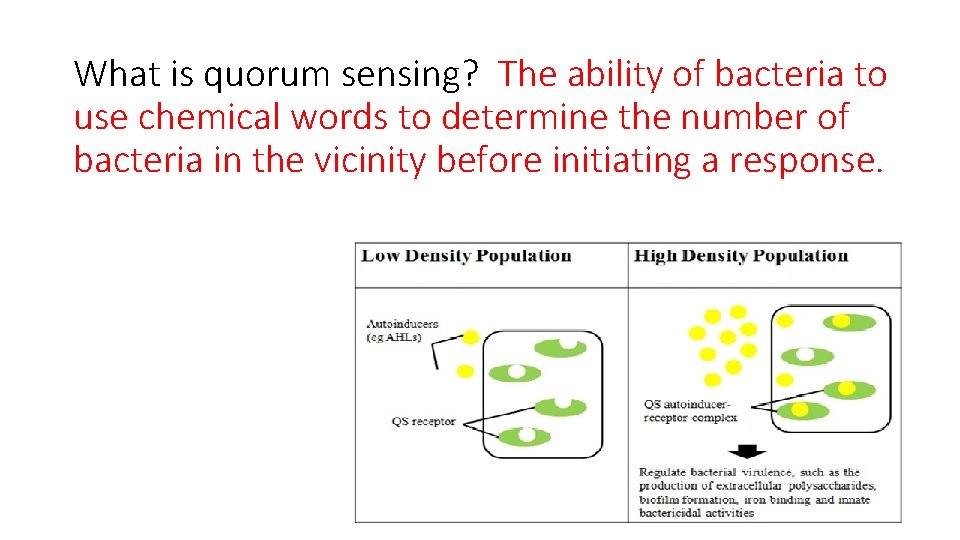
What is quorum sensing? The ability of bacteria to use chemical words to determine the number of bacteria in the vicinity before initiating a response.
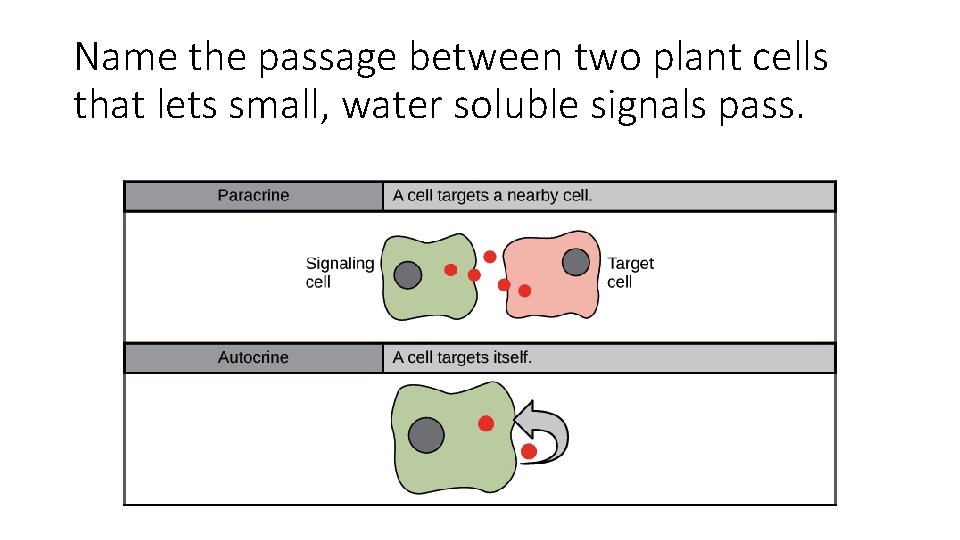
Name the passage between two plant cells that lets small, water soluble signals pass.
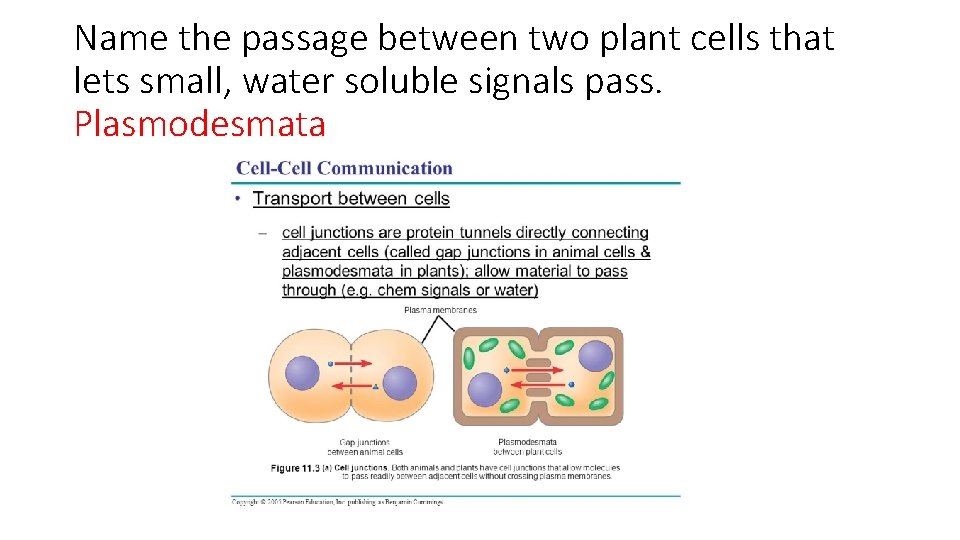
Name the passage between two plant cells that lets small, water soluble signals pass. Plasmodesmata
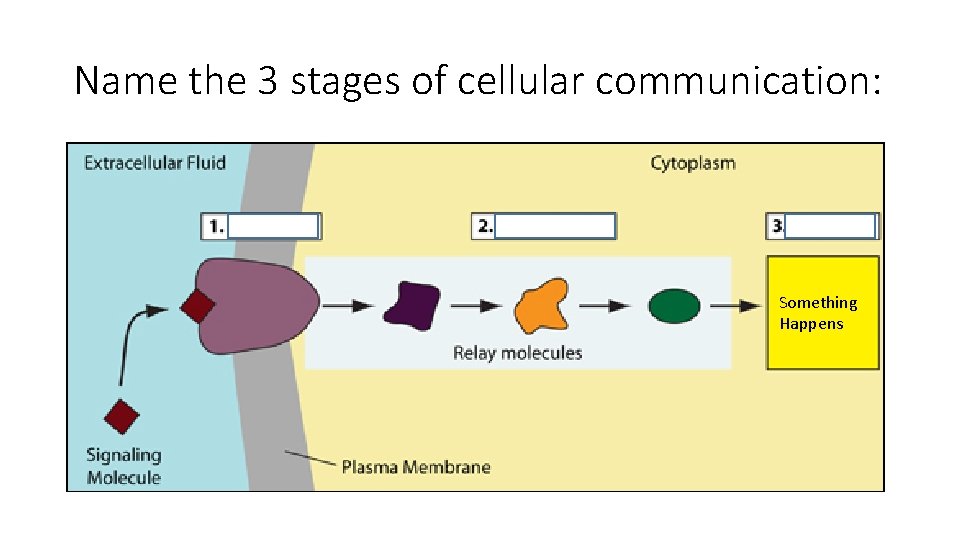
Name the 3 stages of cellular communication: Something Happens
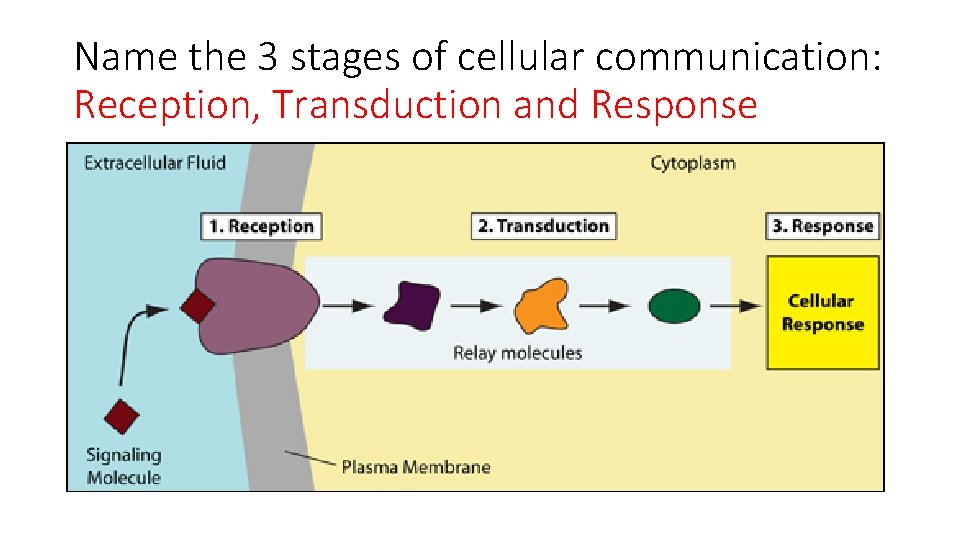
Name the 3 stages of cellular communication: Reception, Transduction and Response
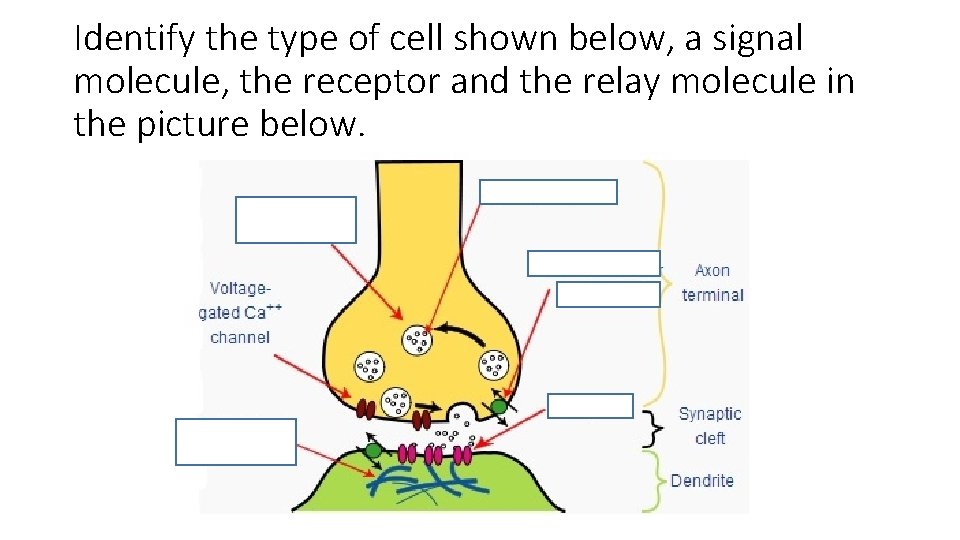
Identify the type of cell shown below, a signal molecule, the receptor and the relay molecule in the picture below.
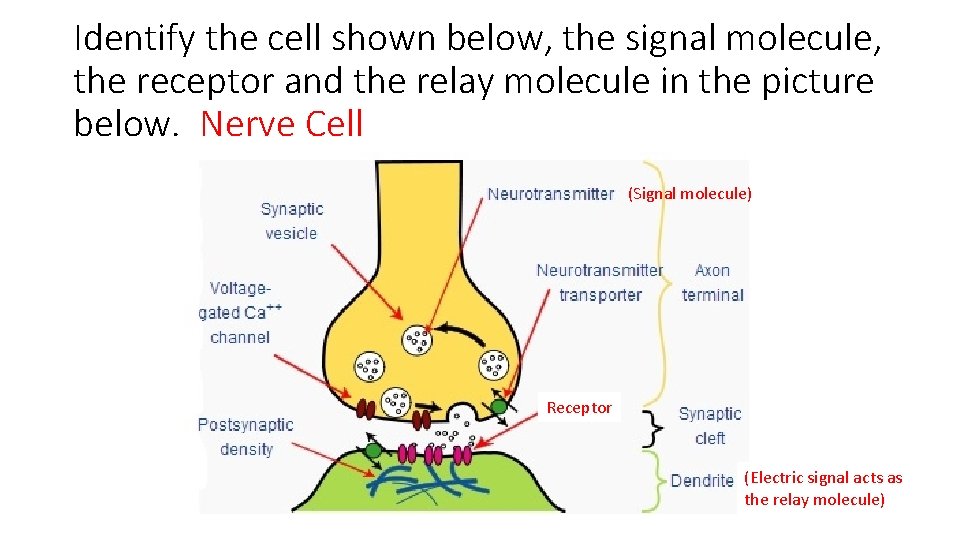
Identify the cell shown below, the signal molecule, the receptor and the relay molecule in the picture below. Nerve Cell (Signal molecule) Receptor (Electric signal acts as the relay molecule)
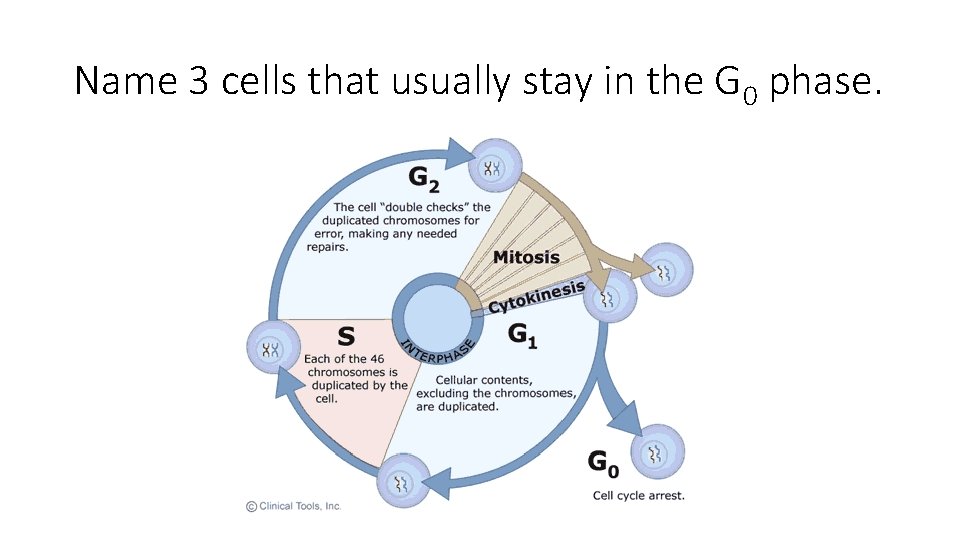
Name 3 cells that usually stay in the G 0 phase.
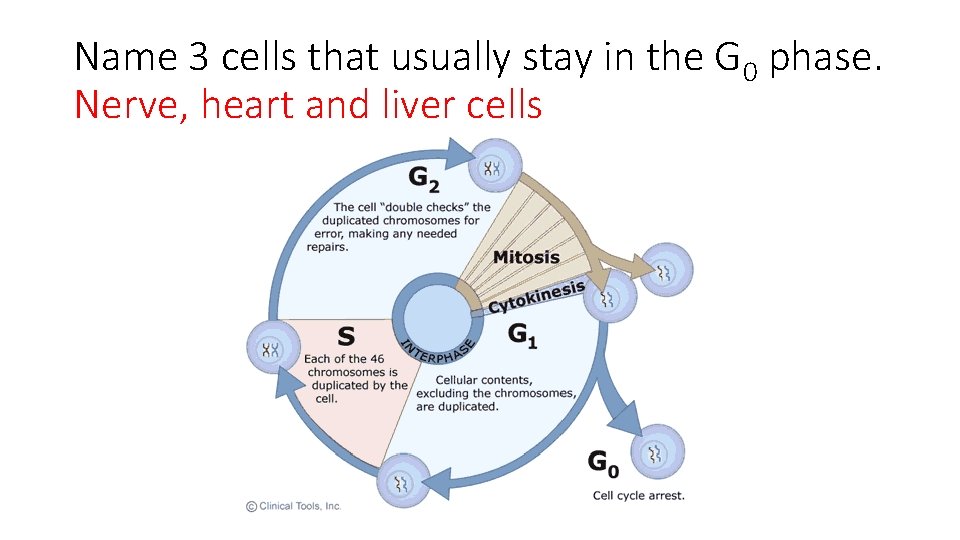
Name 3 cells that usually stay in the G 0 phase. Nerve, heart and liver cells
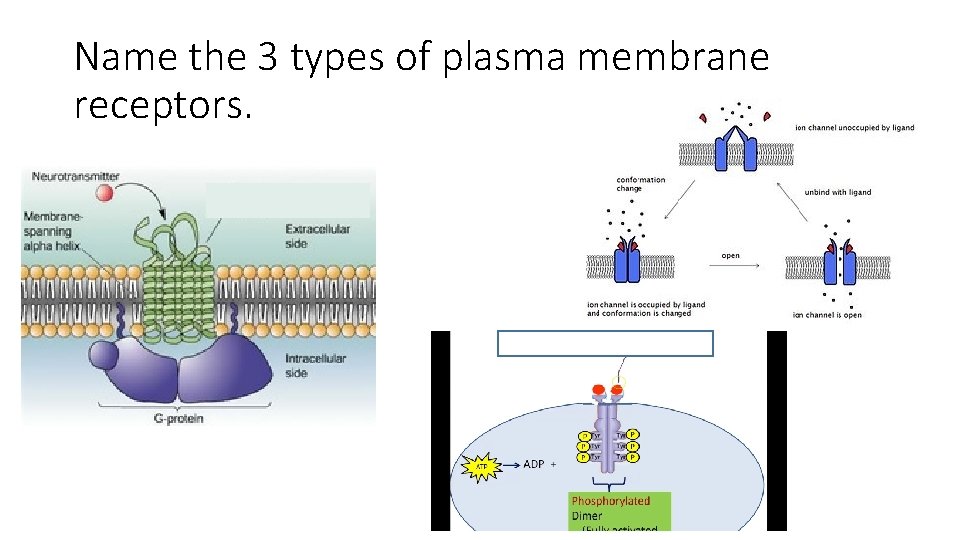
Name the 3 types of plasma membrane receptors.
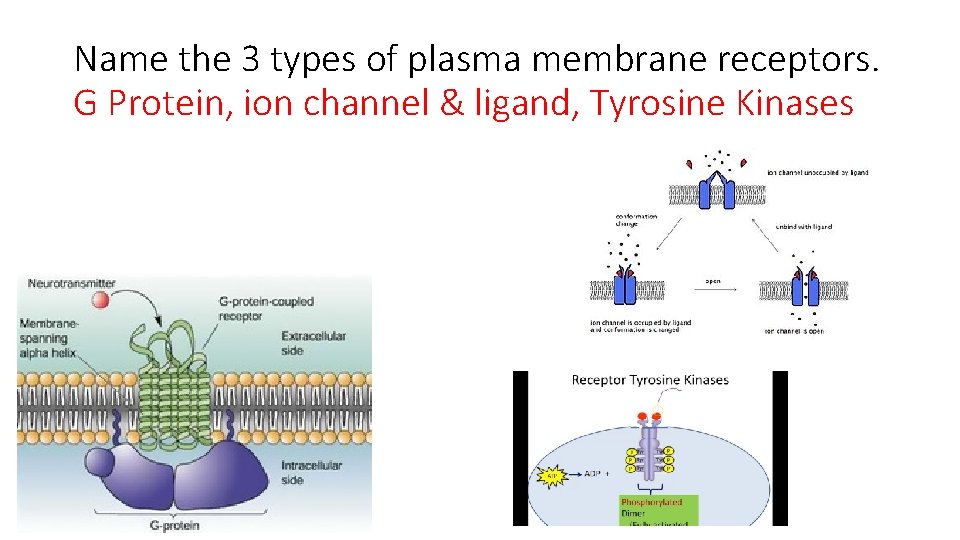
Name the 3 types of plasma membrane receptors. G Protein, ion channel & ligand, Tyrosine Kinases
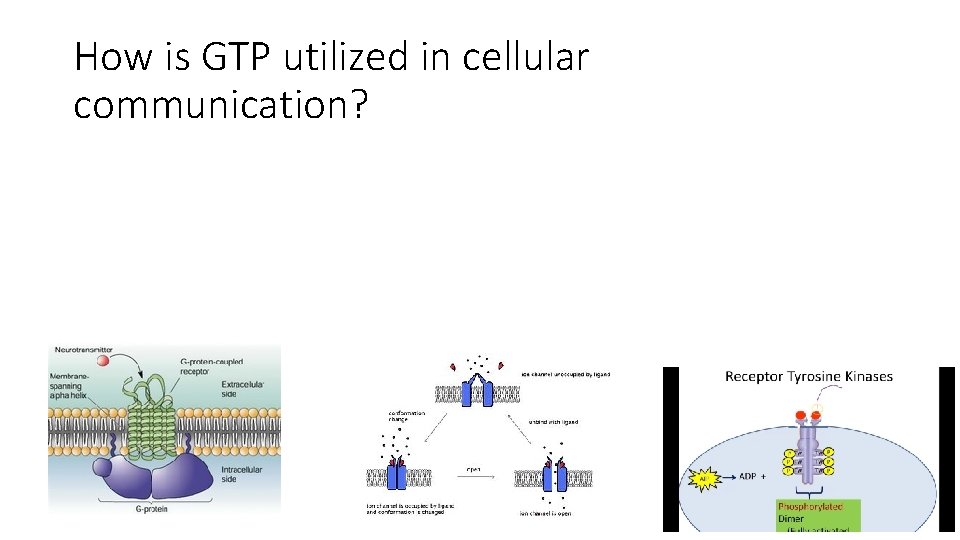
How is GTP utilized in cellular communication?
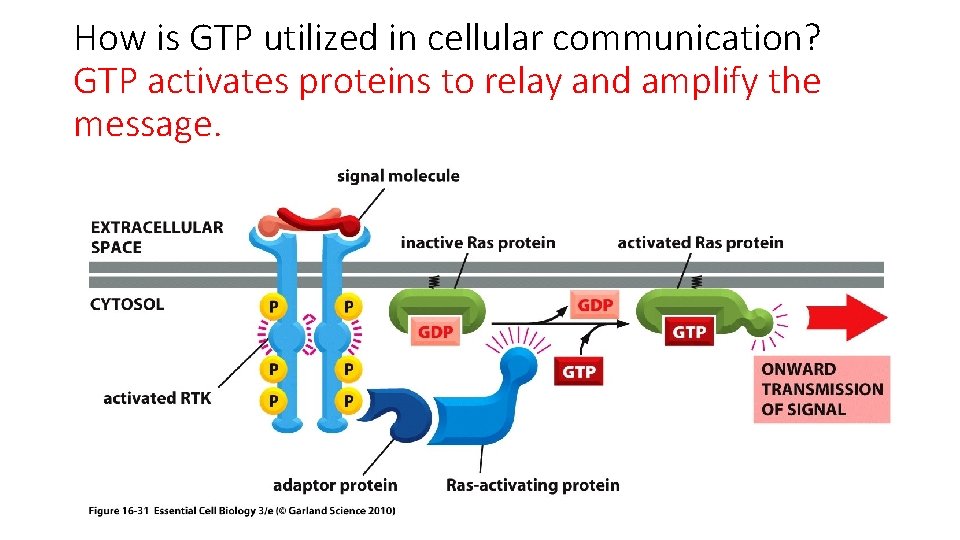
How is GTP utilized in cellular communication? GTP activates proteins to relay and amplify the message.
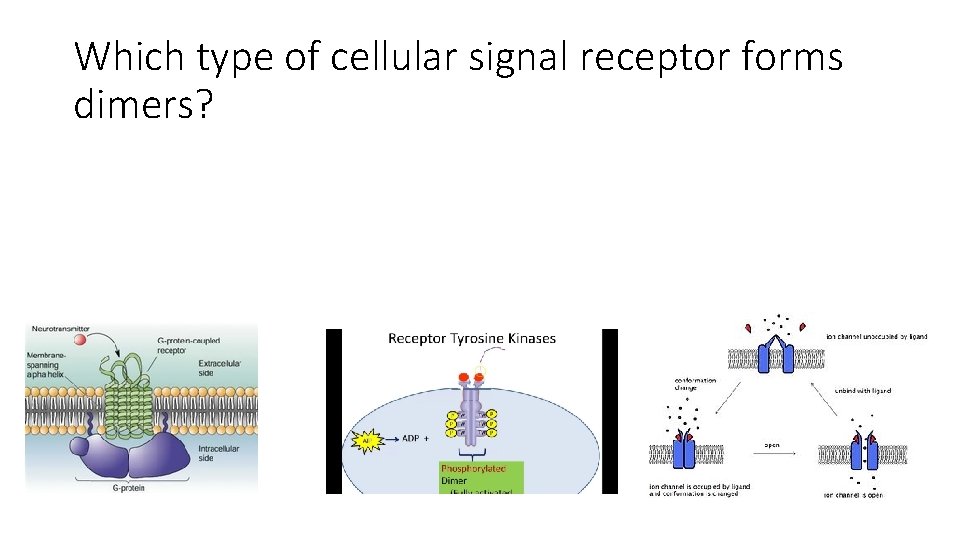
Which type of cellular signal receptor forms dimers?
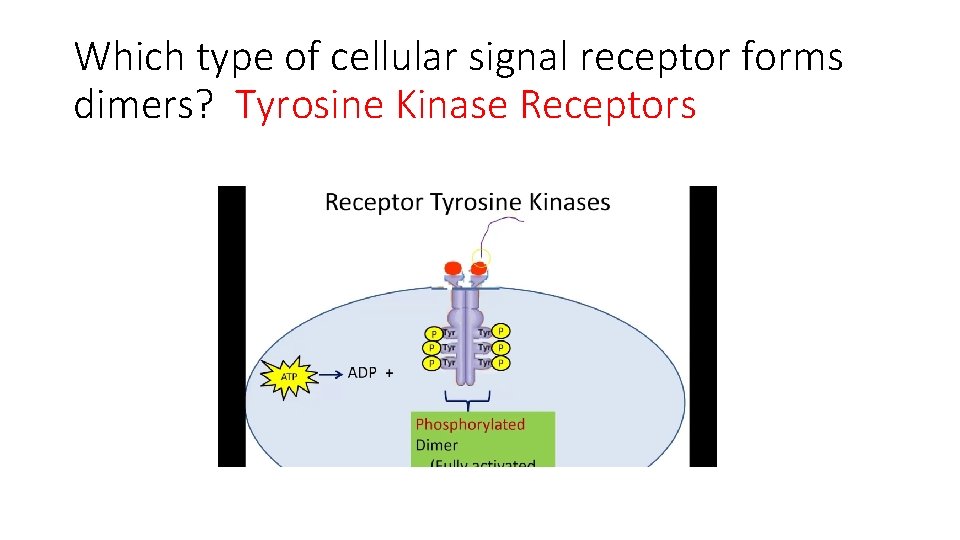
Which type of cellular signal receptor forms dimers? Tyrosine Kinase Receptors
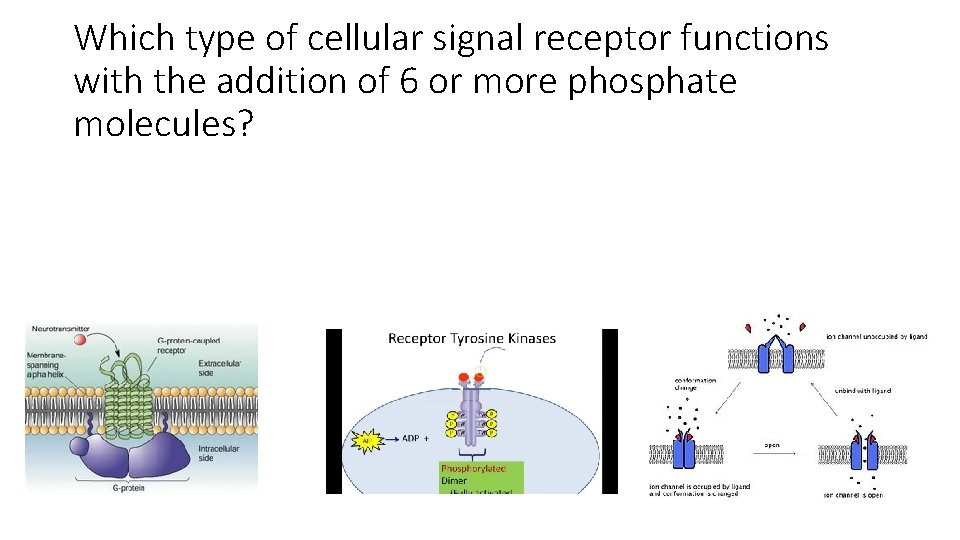
Which type of cellular signal receptor functions with the addition of 6 or more phosphate molecules?
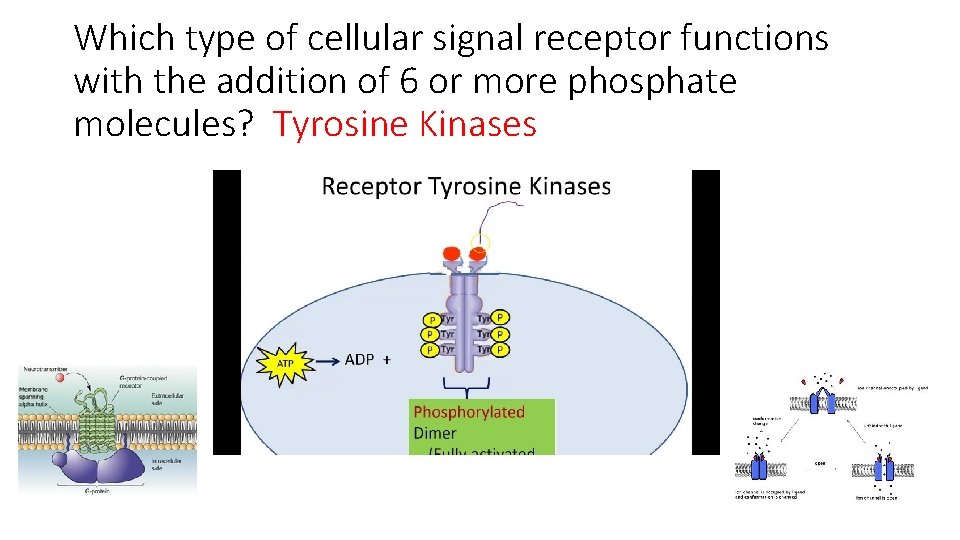
Which type of cellular signal receptor functions with the addition of 6 or more phosphate molecules? Tyrosine Kinases
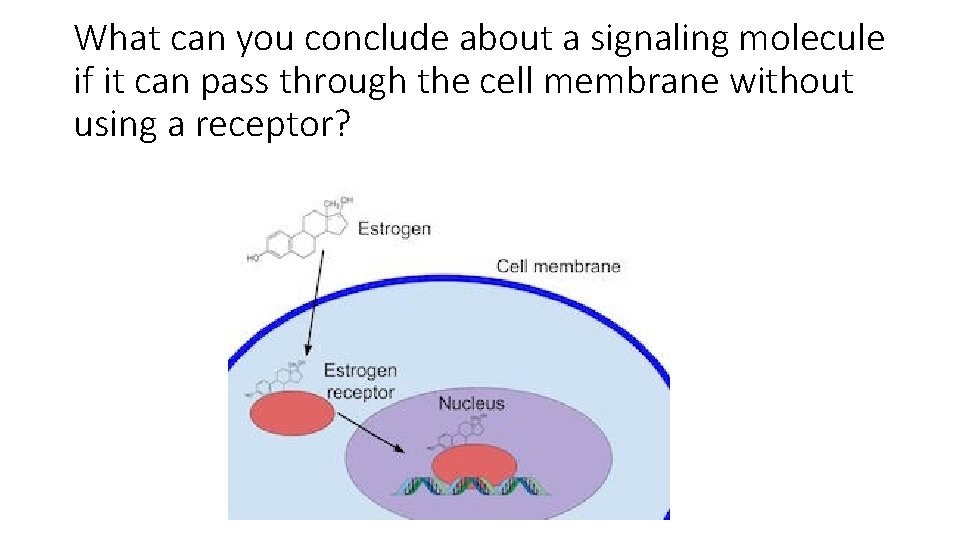
What can you conclude about a signaling molecule if it can pass through the cell membrane without using a receptor?
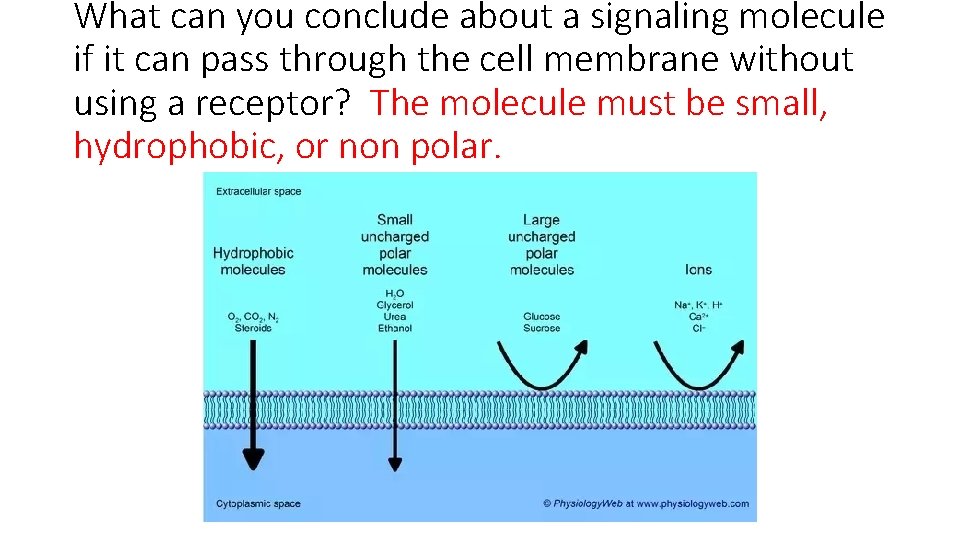
What can you conclude about a signaling molecule if it can pass through the cell membrane without using a receptor? The molecule must be small, hydrophobic, or non polar.
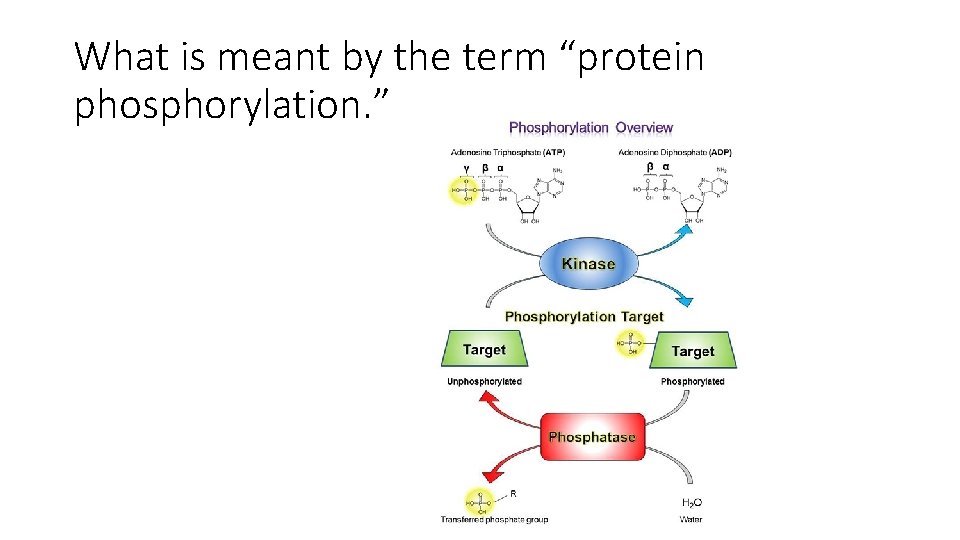
What is meant by the term “protein phosphorylation. ”
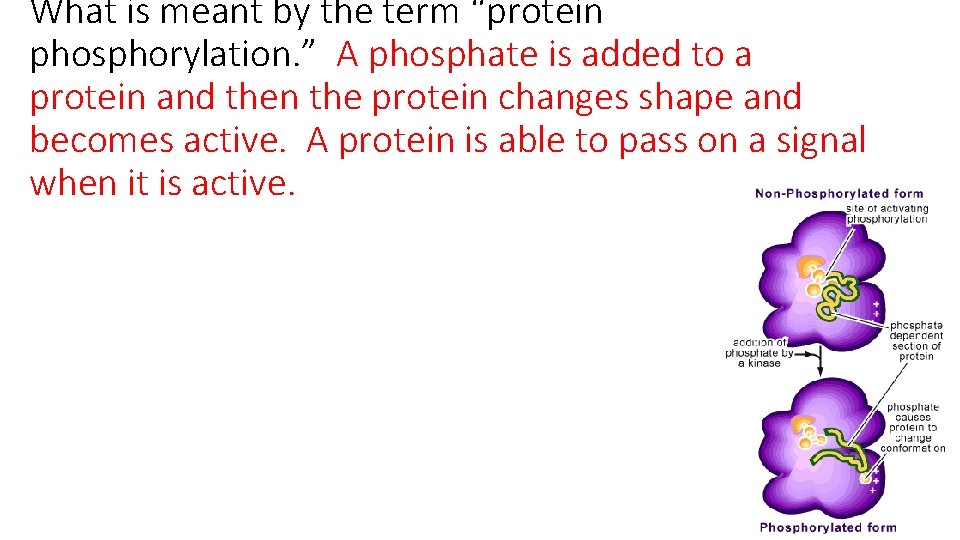
What is meant by the term “protein phosphorylation. ” A phosphate is added to a protein and then the protein changes shape and becomes active. A protein is able to pass on a signal when it is active.
Why do cells use phosphorylation in signaling?
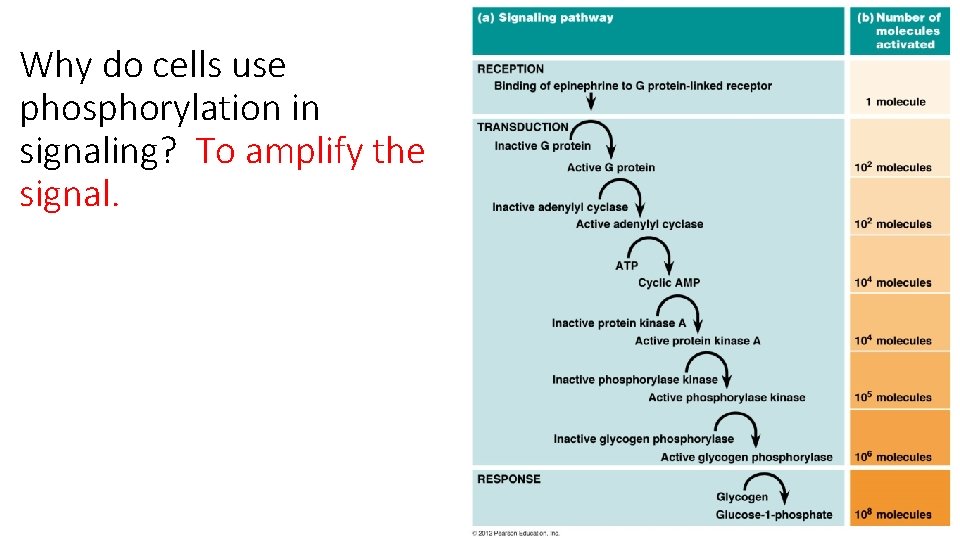
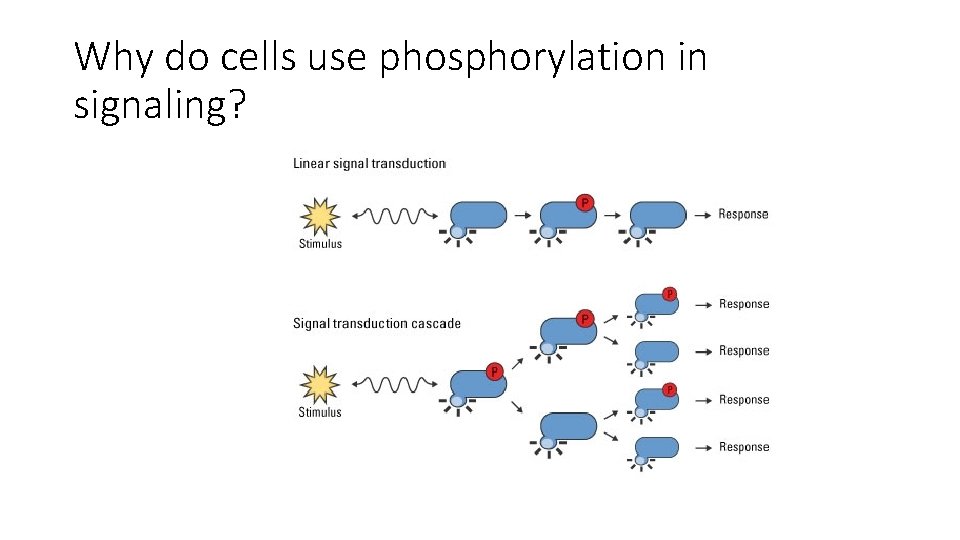
Why do cells use phosphorylation in signaling? To amplify the signal.
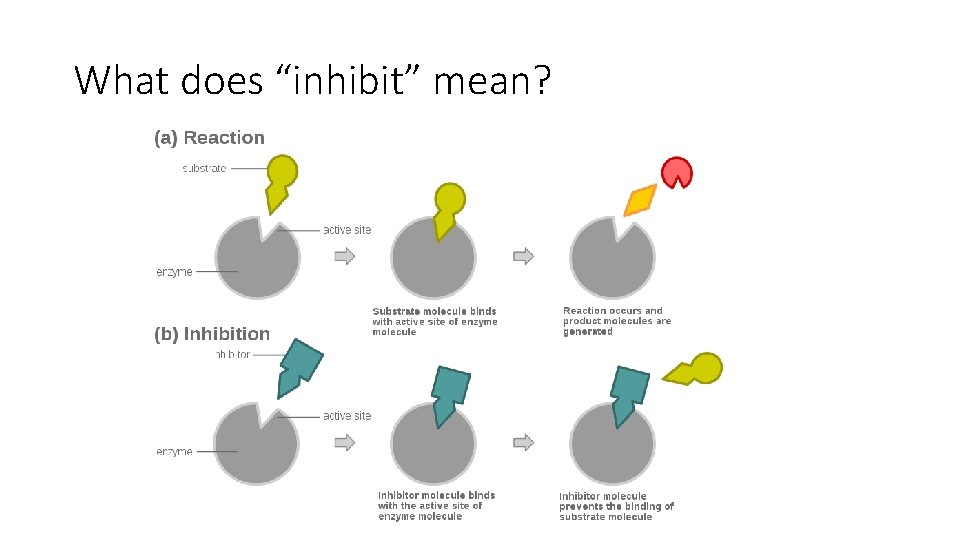
What does “inhibit” mean?
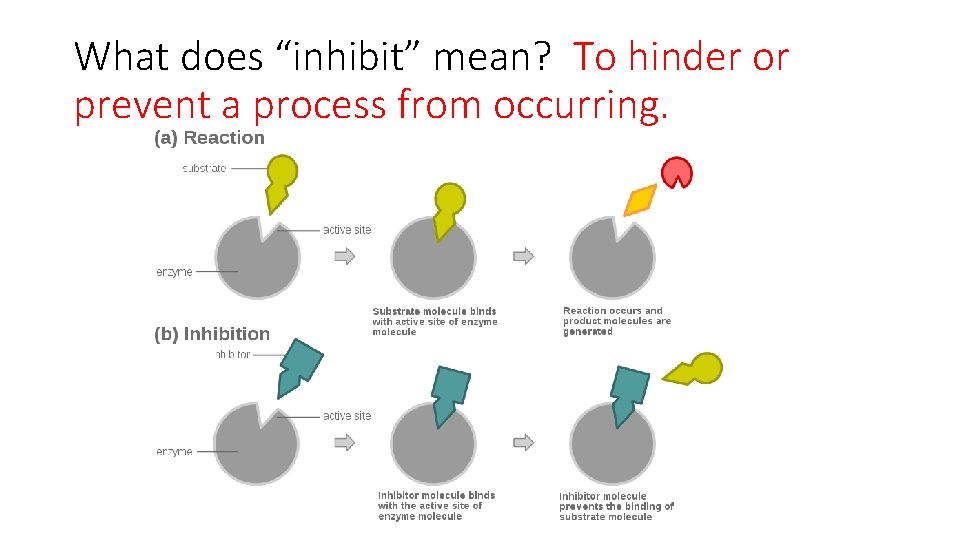
What does “inhibit” mean? To hinder or prevent a process from occurring.
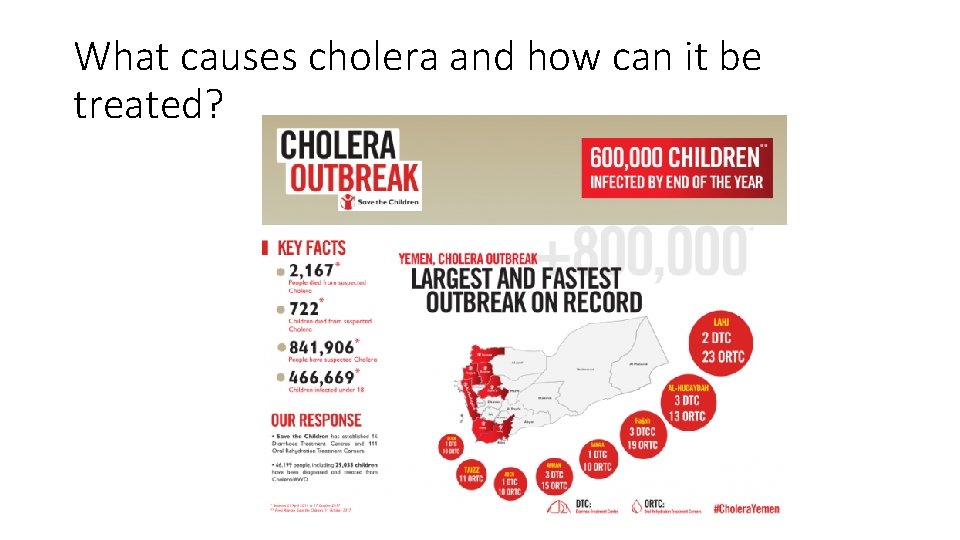
What causes cholera and how can it be treated?
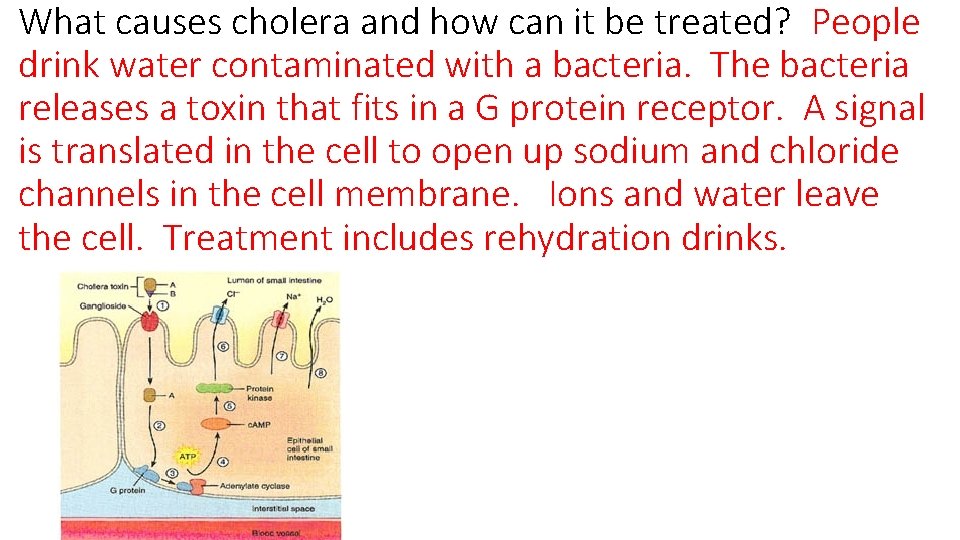
What causes cholera and how can it be treated? People drink water contaminated with a bacteria. The bacteria releases a toxin that fits in a G protein receptor. A signal is translated in the cell to open up sodium and chloride channels in the cell membrane. Ions and water leave the cell. Treatment includes rehydration drinks.
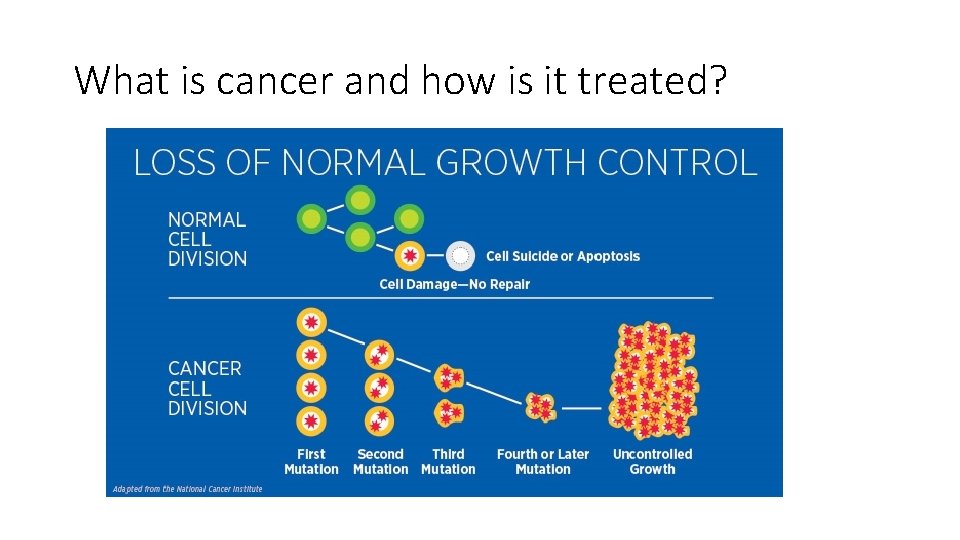
What is cancer and how is it treated?
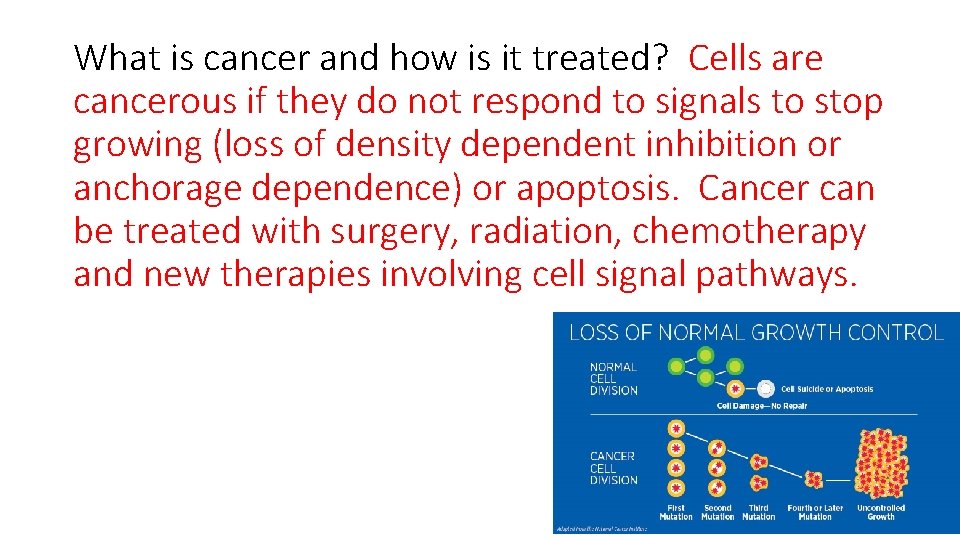
What is cancer and how is it treated? Cells are cancerous if they do not respond to signals to stop growing (loss of density dependent inhibition or anchorage dependence) or apoptosis. Cancer can be treated with surgery, radiation, chemotherapy and new therapies involving cell signal pathways.
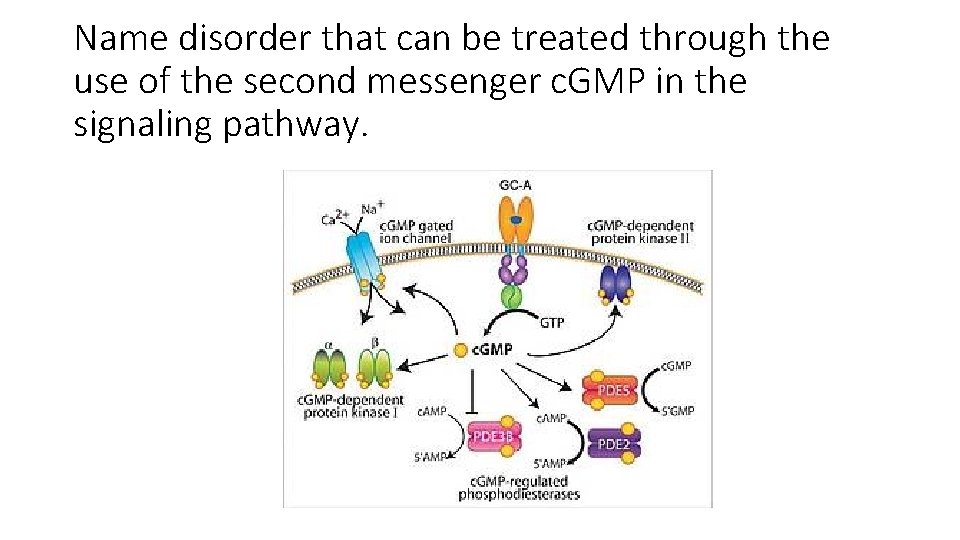
Name disorder that can be treated through the use of the second messenger c. GMP in the signaling pathway.
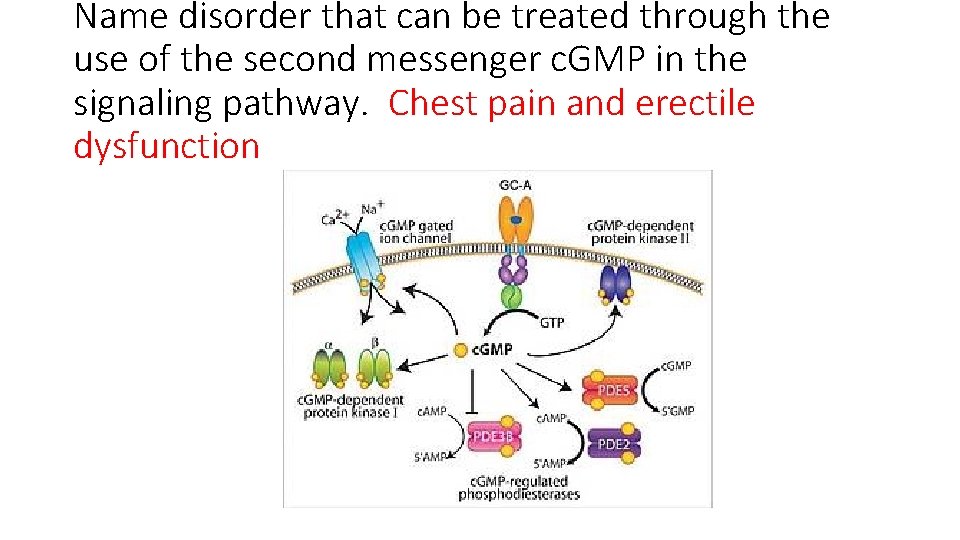
Name disorder that can be treated through the use of the second messenger c. GMP in the signaling pathway. Chest pain and erectile dysfunction
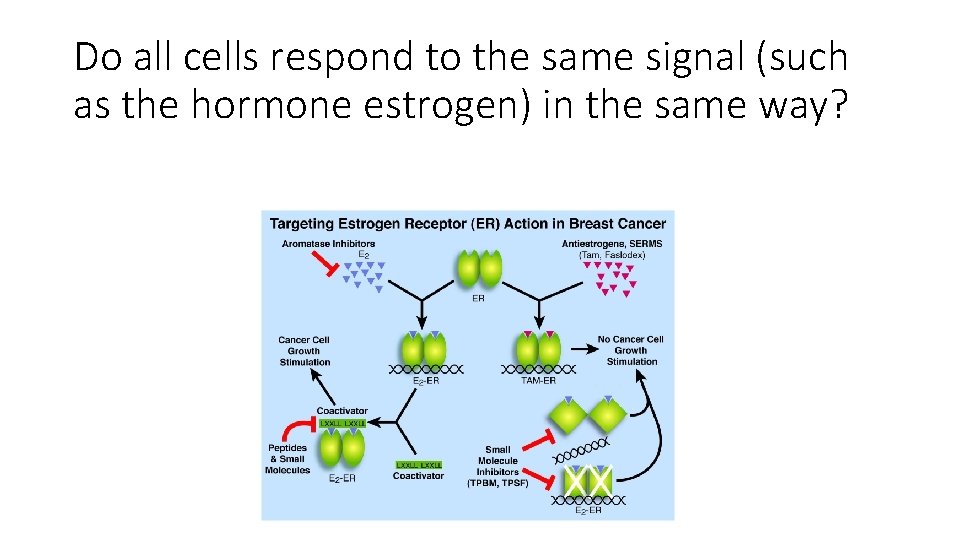
Do all cells respond to the same signal (such as the hormone estrogen) in the same way?
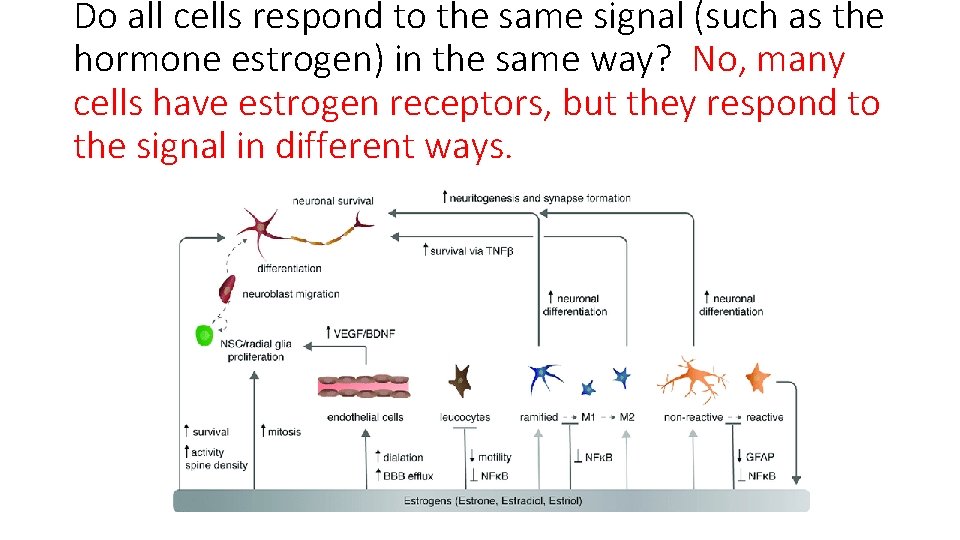
Do all cells respond to the same signal (such as the hormone estrogen) in the same way? No, many cells have estrogen receptors, but they respond to the signal in different ways.
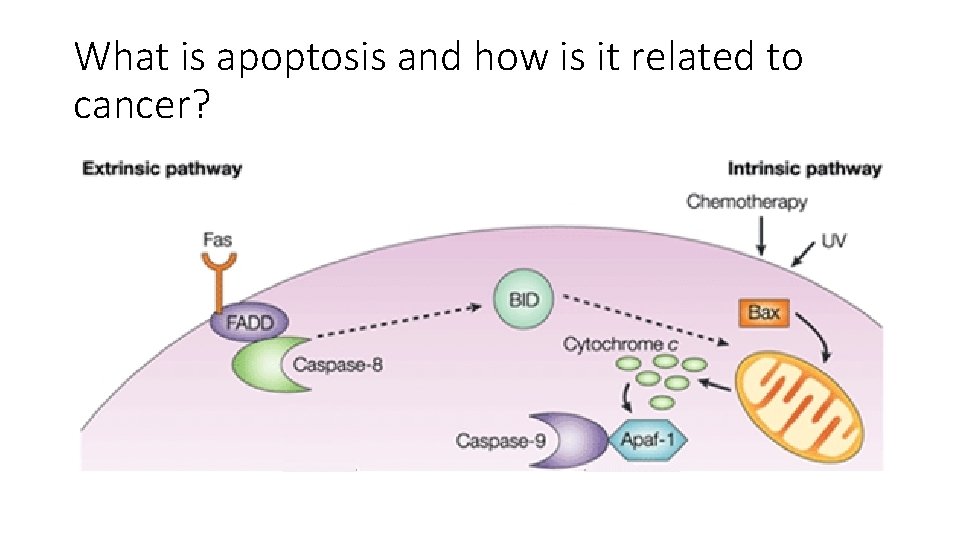
What is apoptosis and how is it related to cancer?
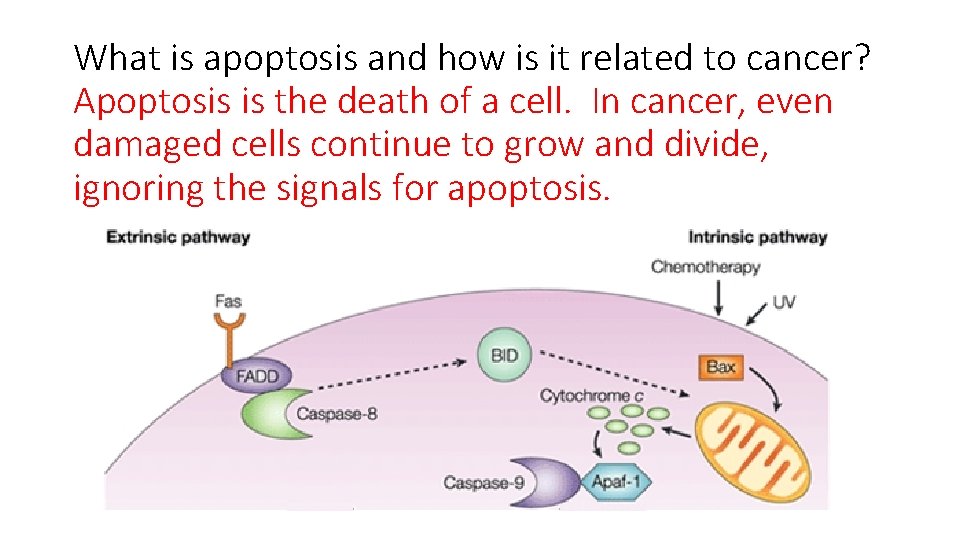
What is apoptosis and how is it related to cancer? Apoptosis is the death of a cell. In cancer, even damaged cells continue to grow and divide, ignoring the signals for apoptosis.
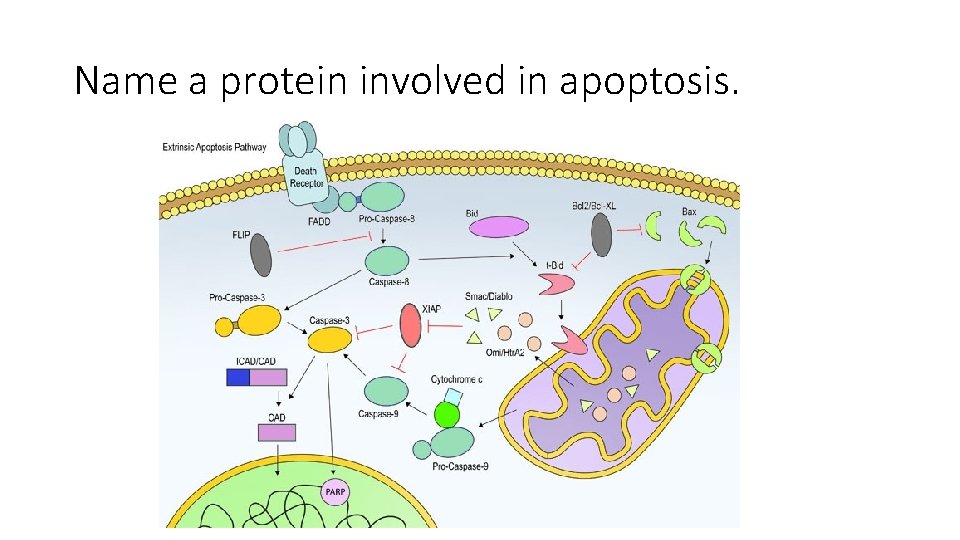
Name a protein involved in apoptosis.
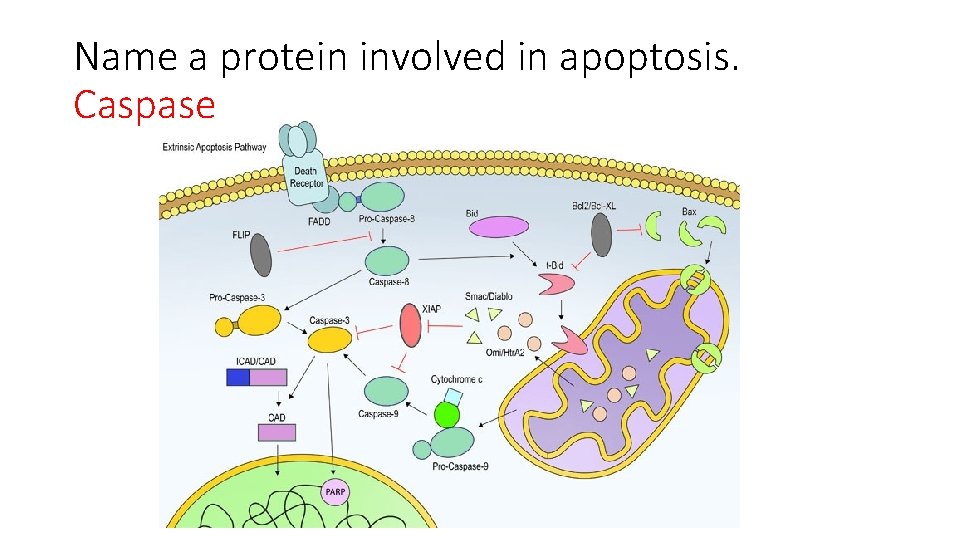
Name a protein involved in apoptosis. Caspase
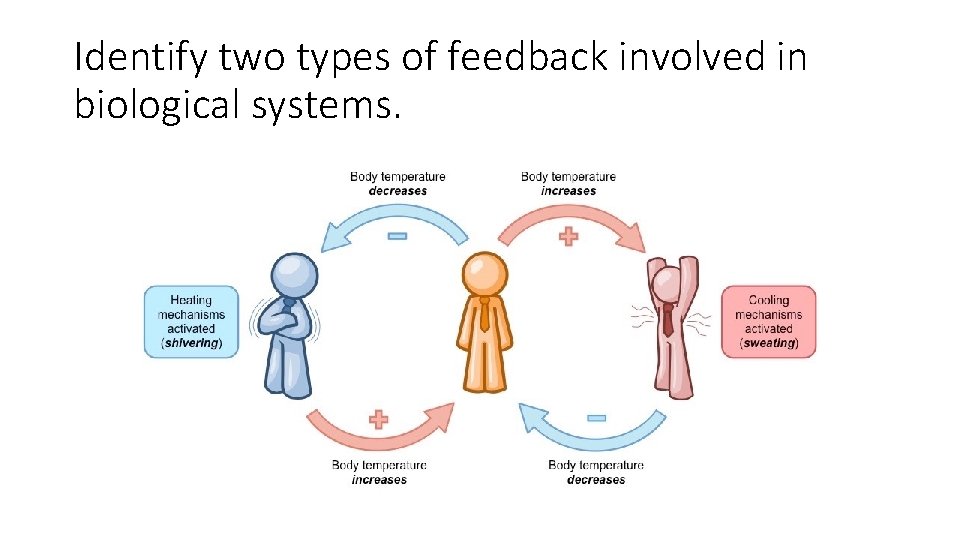
Identify two types of feedback involved in biological systems.
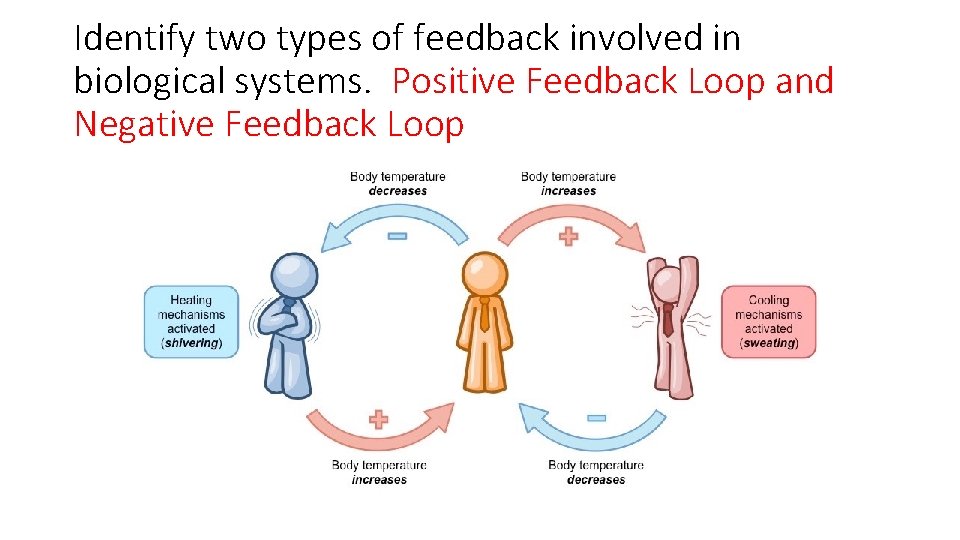
Identify two types of feedback involved in biological systems. Positive Feedback Loop and Negative Feedback Loop

Determine if the situation outlined below is a positive or negative feedback loop.
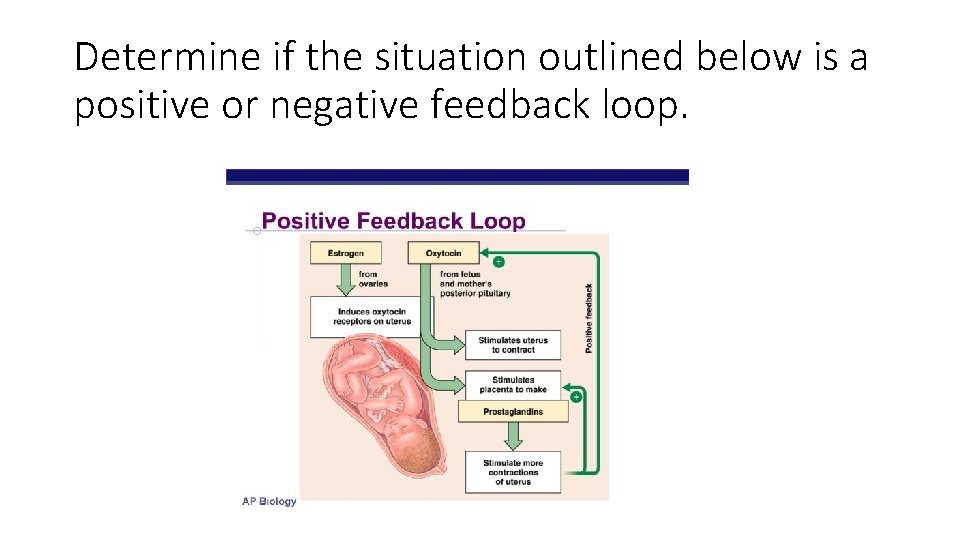
Determine if the situation outlined below is a positive or negative feedback loop.
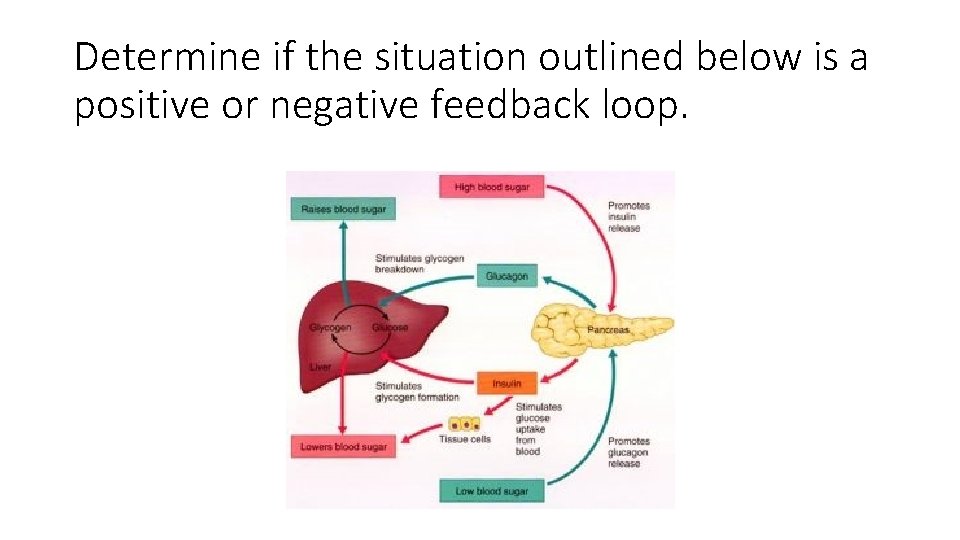
Determine if the situation outlined below is a positive or negative feedback loop.
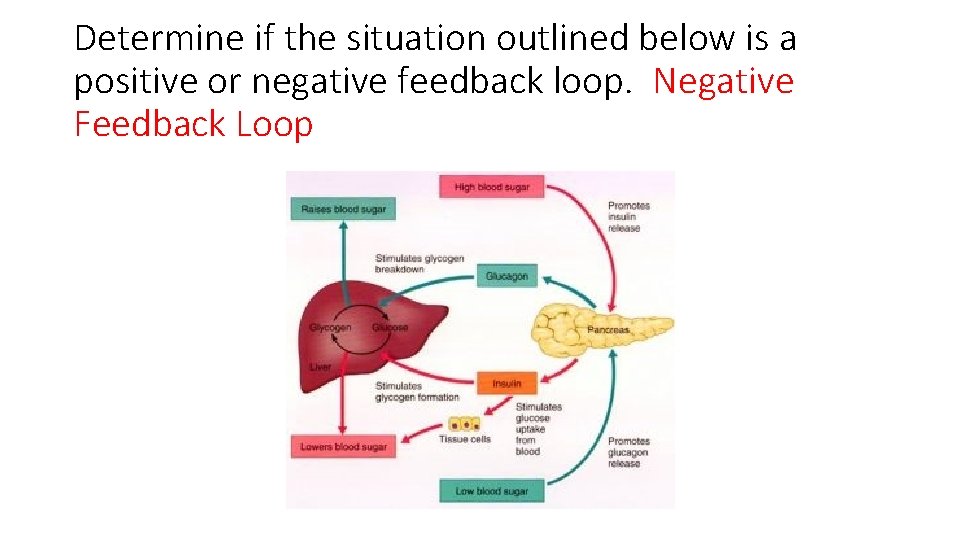
Determine if the situation outlined below is a positive or negative feedback loop. Negative Feedback Loop
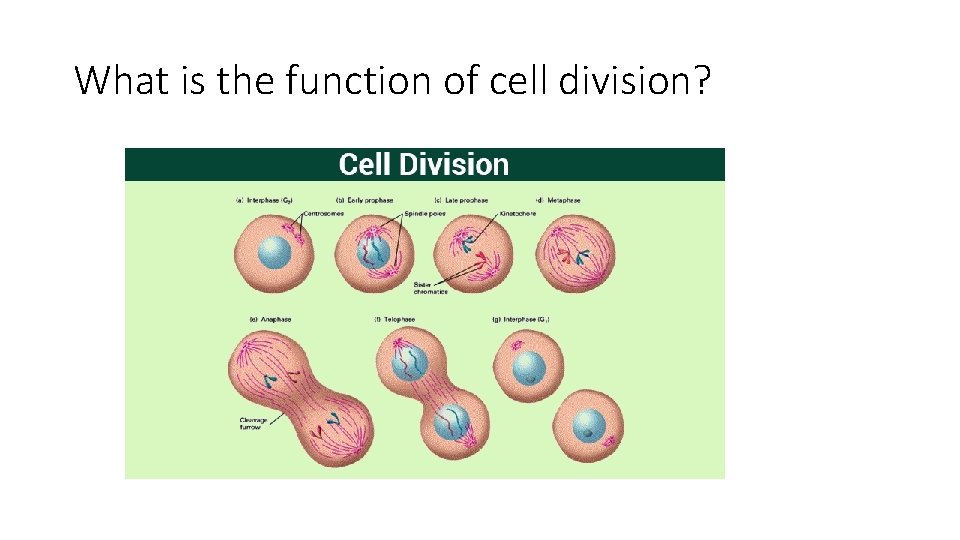
What is the function of cell division?
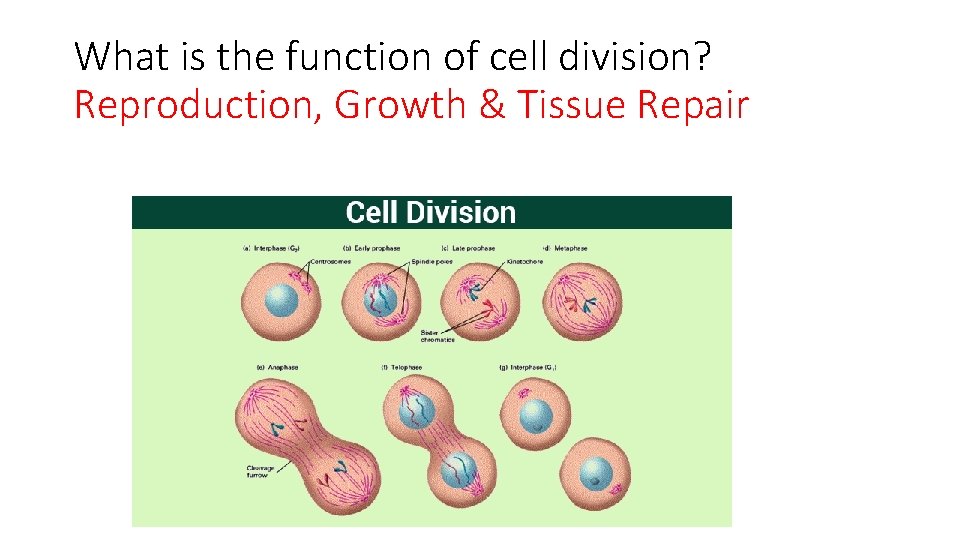
What is the function of cell division? Reproduction, Growth & Tissue Repair
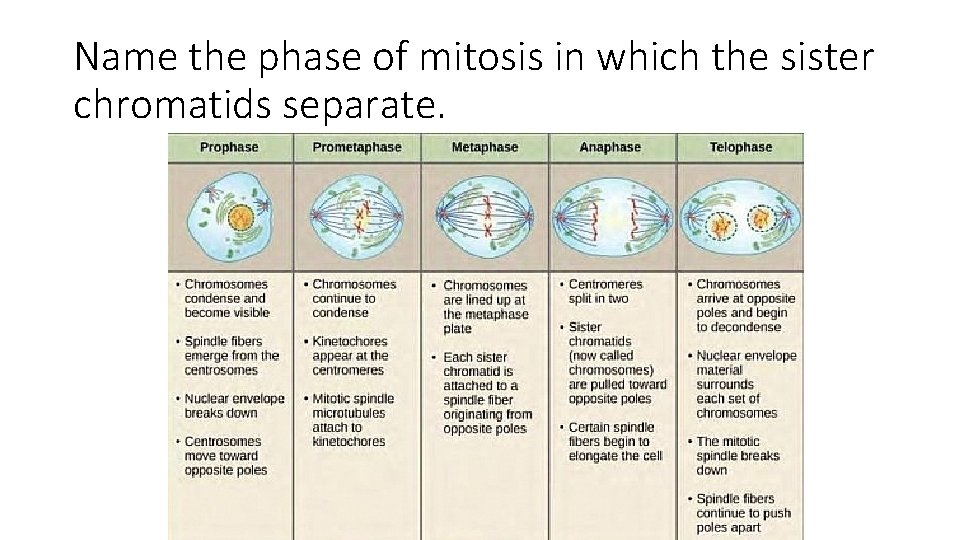
Name the phase of mitosis in which the sister chromatids separate.
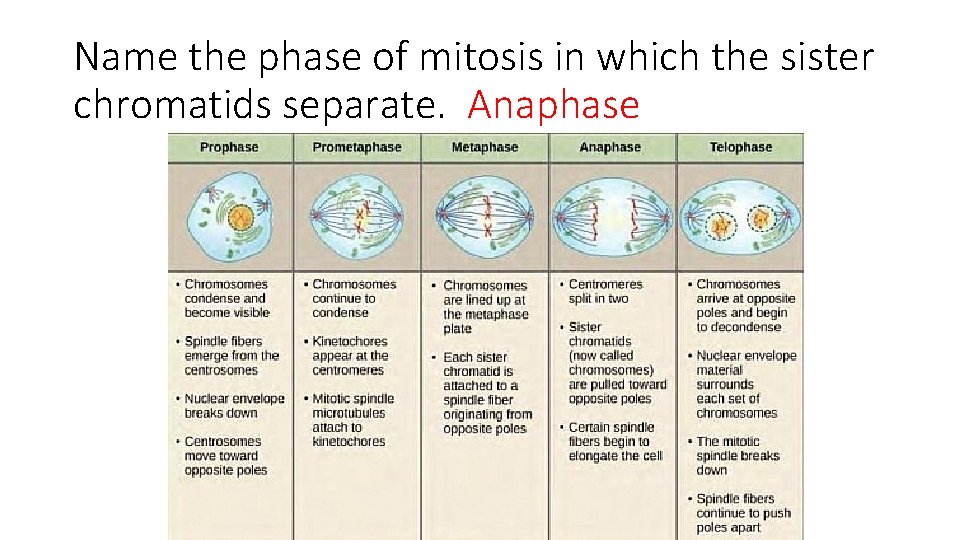
Name the phase of mitosis in which the sister chromatids separate. Anaphase
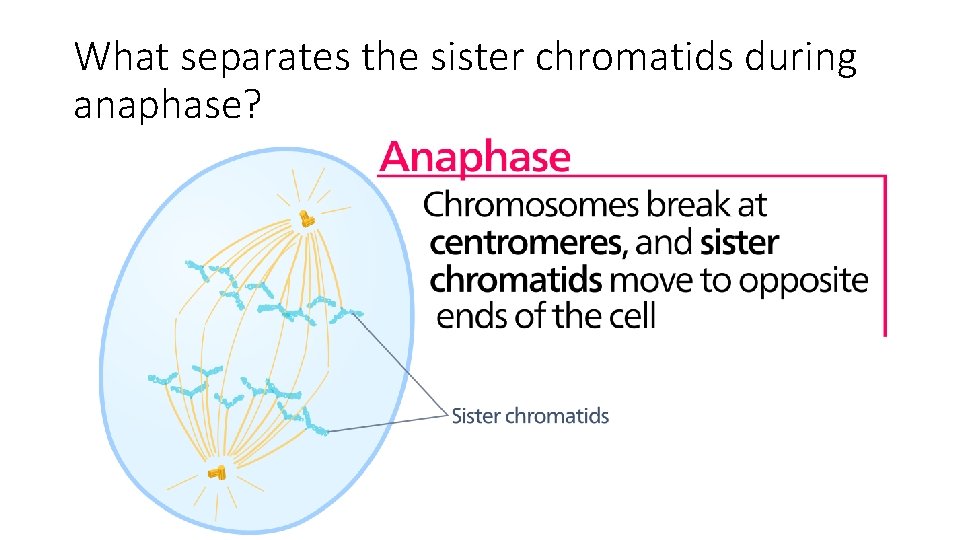
What separates the sister chromatids during anaphase?
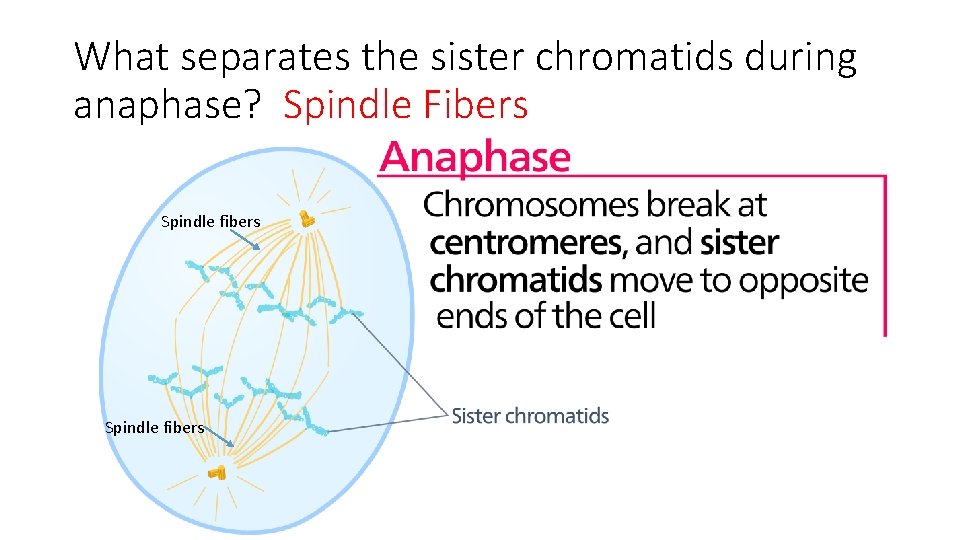
What separates the sister chromatids during anaphase? Spindle Fibers Spindle fibers
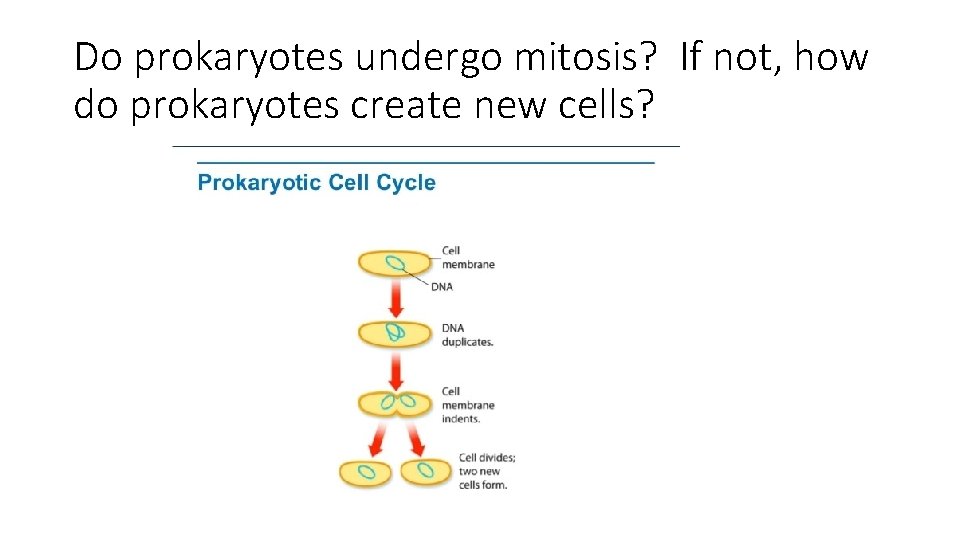
Do prokaryotes undergo mitosis? If not, how do prokaryotes create new cells?
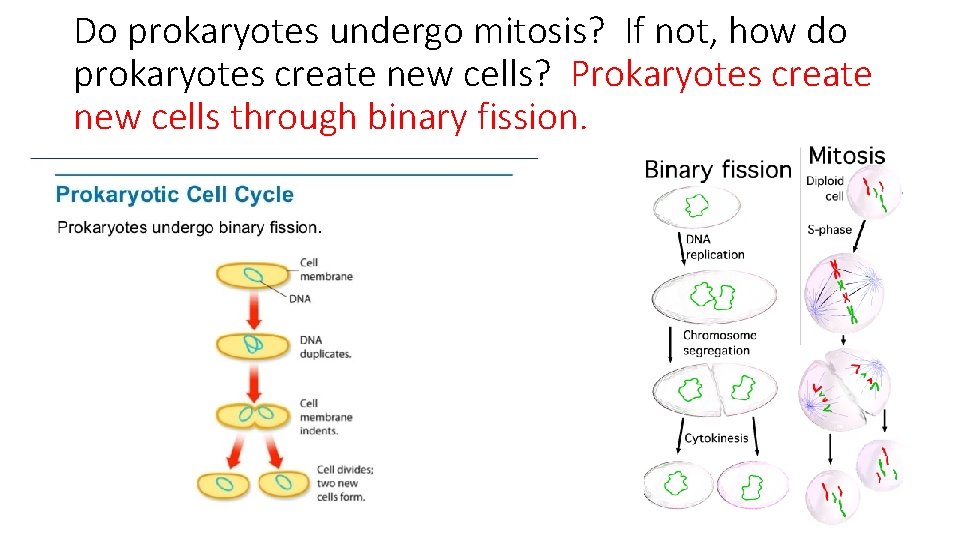
Do prokaryotes undergo mitosis? If not, how do prokaryotes create new cells? Prokaryotes create new cells through binary fission.
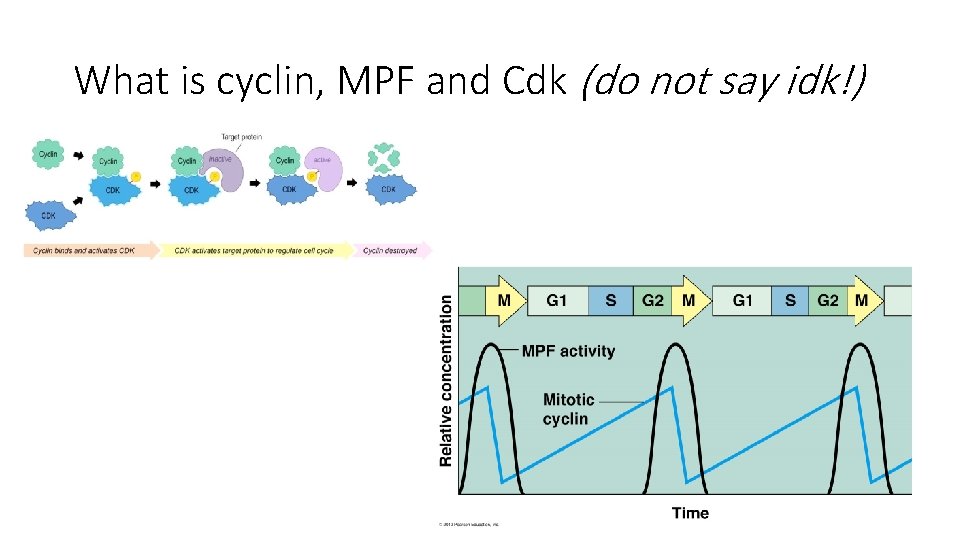
What is cyclin, MPF and Cdk (do not say idk!)
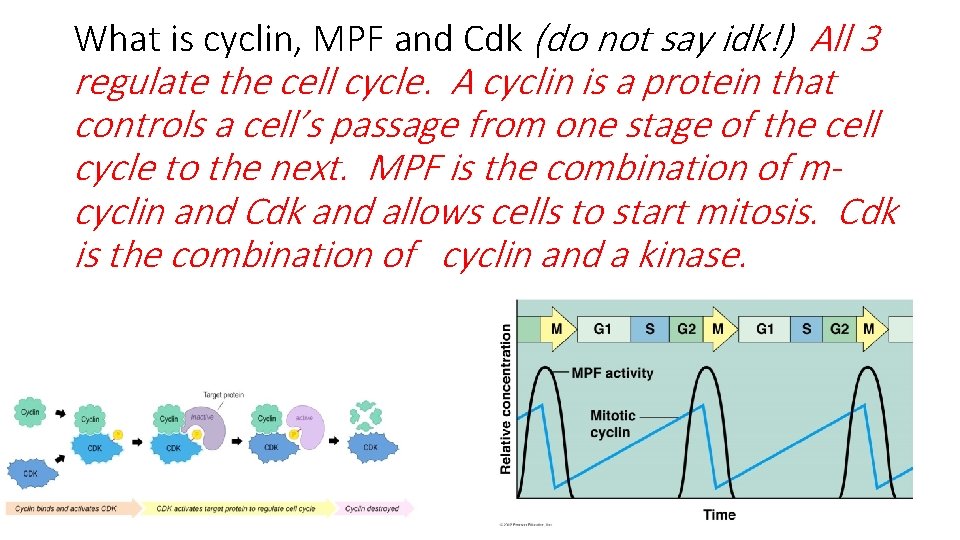
What is cyclin, MPF and Cdk (do not say idk!) All 3 regulate the cell cycle. A cyclin is a protein that controls a cell’s passage from one stage of the cell cycle to the next. MPF is the combination of mcyclin and Cdk and allows cells to start mitosis. Cdk is the combination of cyclin and a kinase.
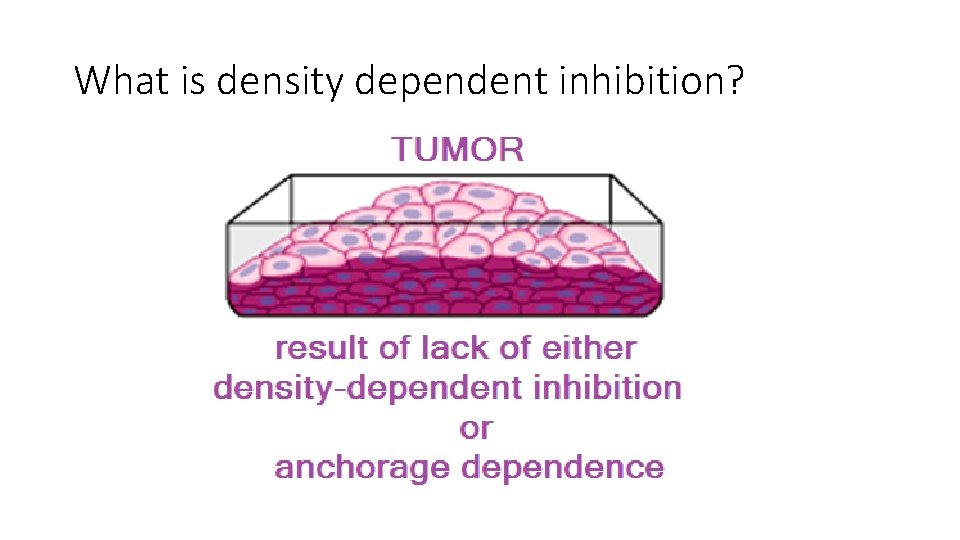
What is density dependent inhibition?
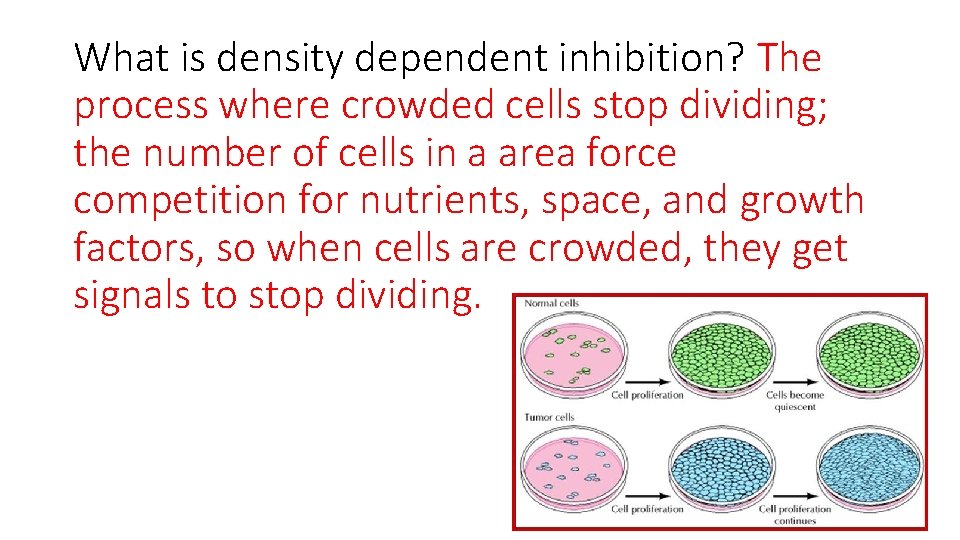
What is density dependent inhibition? The process where crowded cells stop dividing; the number of cells in a area force competition for nutrients, space, and growth factors, so when cells are crowded, they get signals to stop dividing.
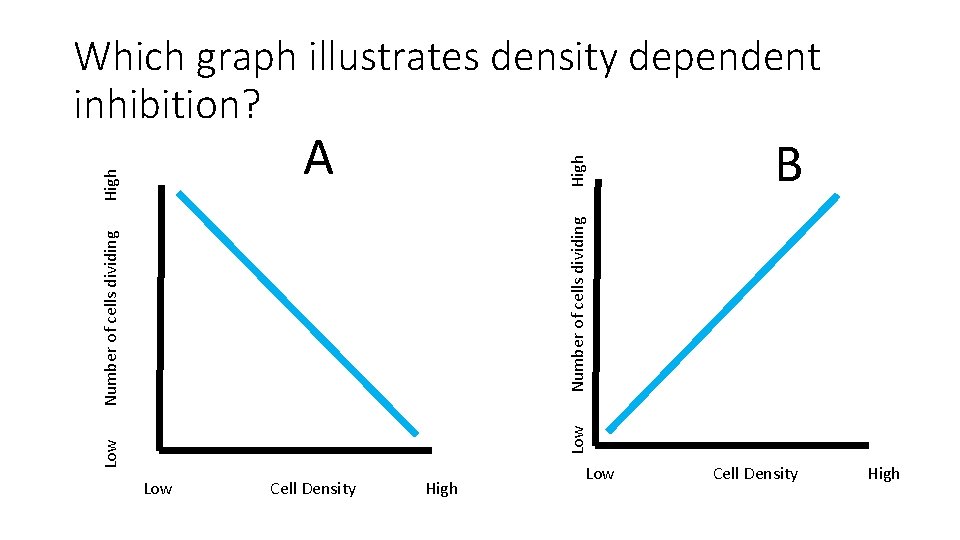
Which graph illustrates density dependent inhibition? High B Low Number of cells dividing High A Low Cell Density High
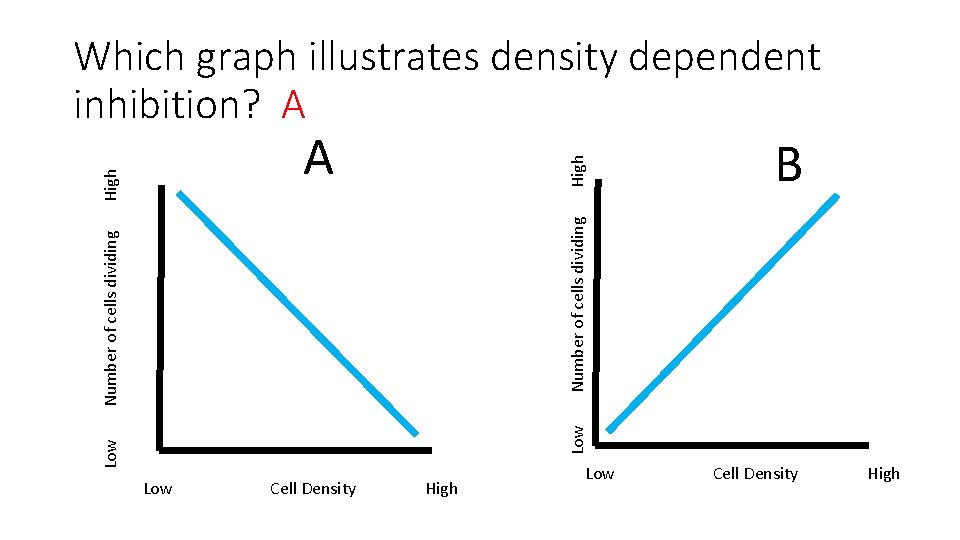
Which graph illustrates density dependent inhibition? A High B Low Number of cells dividing High A Low Cell Density High
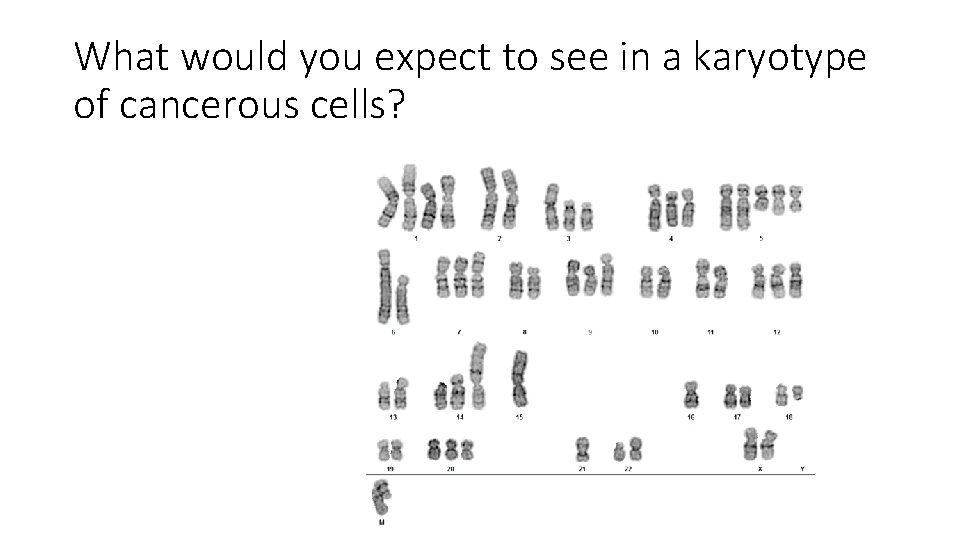
What would you expect to see in a karyotype of cancerous cells?
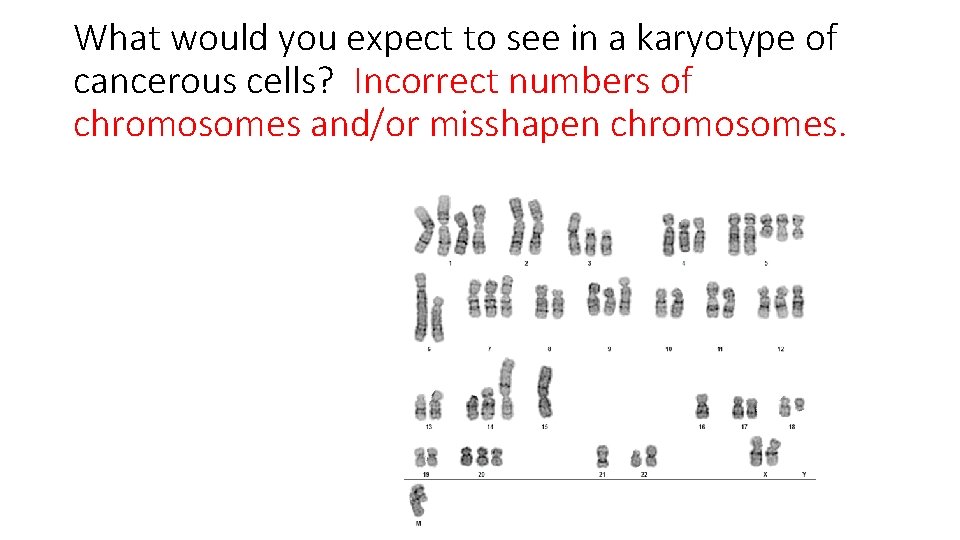
What would you expect to see in a karyotype of cancerous cells? Incorrect numbers of chromosomes and/or misshapen chromosomes.

Name two differences between plant and animal cells in terms of mitosis.

Name two differences between plant and animal cells in terms of mitosis.
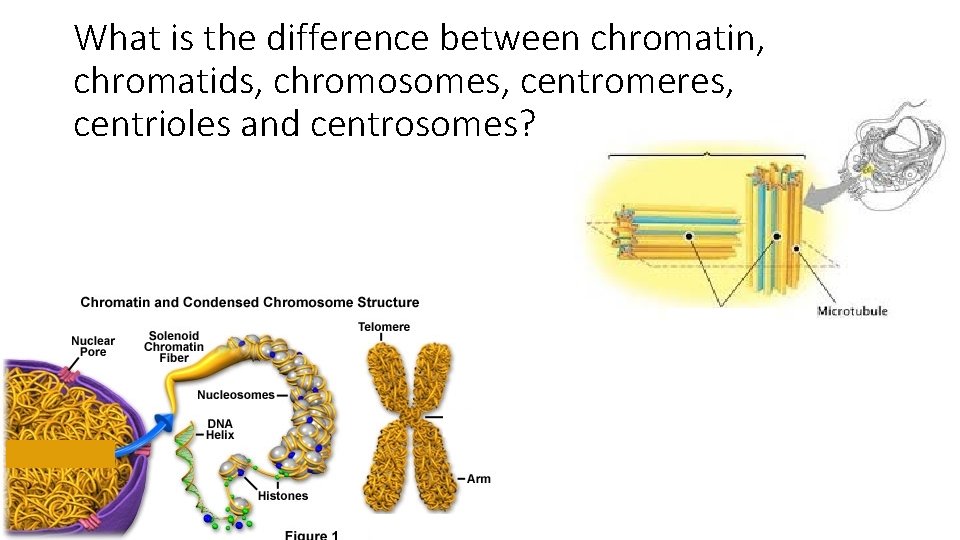
What is the difference between chromatin, chromatids, chromosomes, centromeres, centrioles and centrosomes?
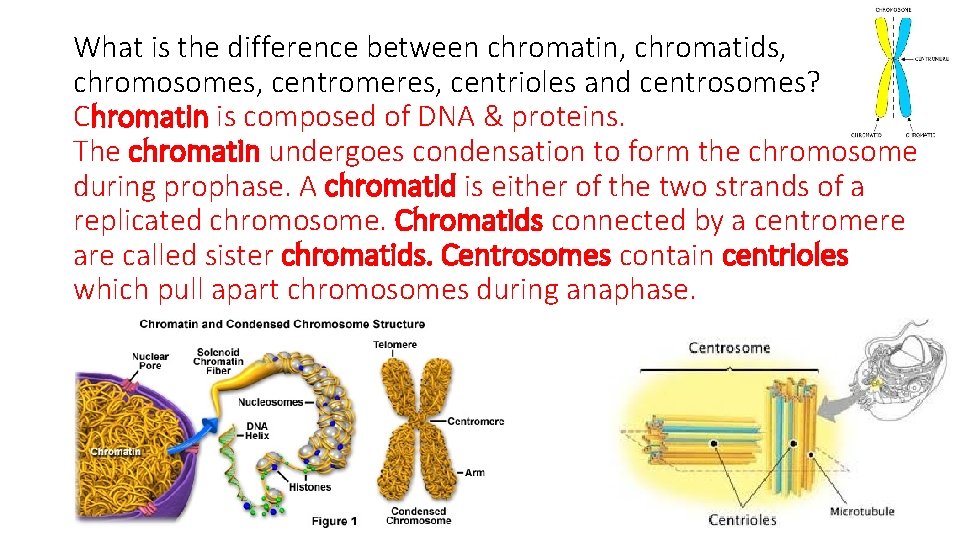
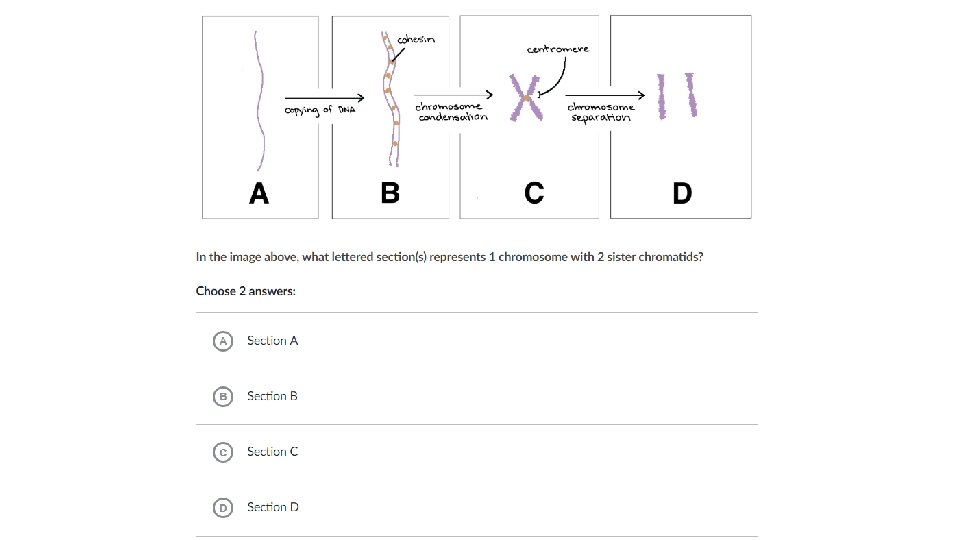
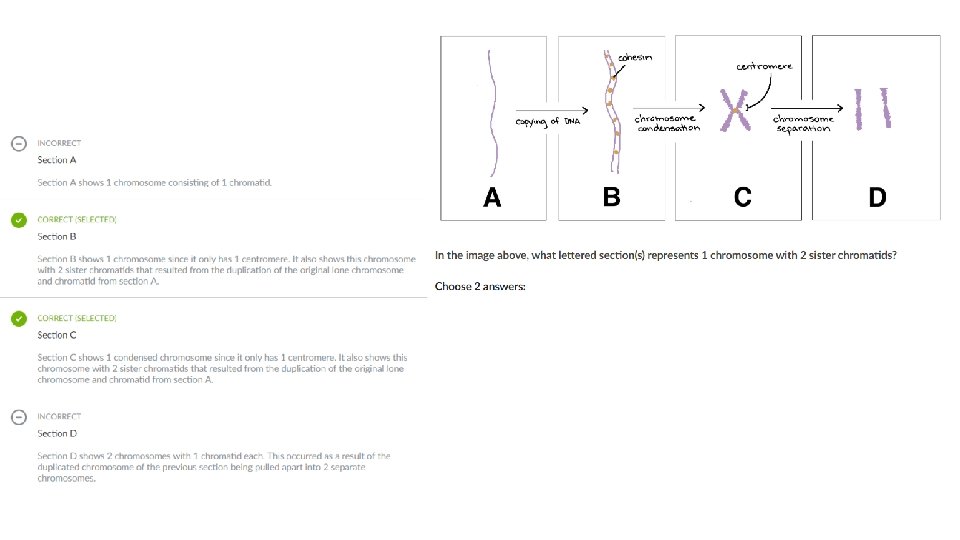
What is the difference between chromatin, chromatids, chromosomes, centromeres, centrioles and centrosomes? Chromatin is composed of DNA & proteins. The chromatin undergoes condensation to form the chromosome during prophase. A chromatid is either of the two strands of a replicated chromosome. Chromatids connected by a centromere are called sister chromatids. Centrosomes contain centrioles which pull apart chromosomes during anaphase.

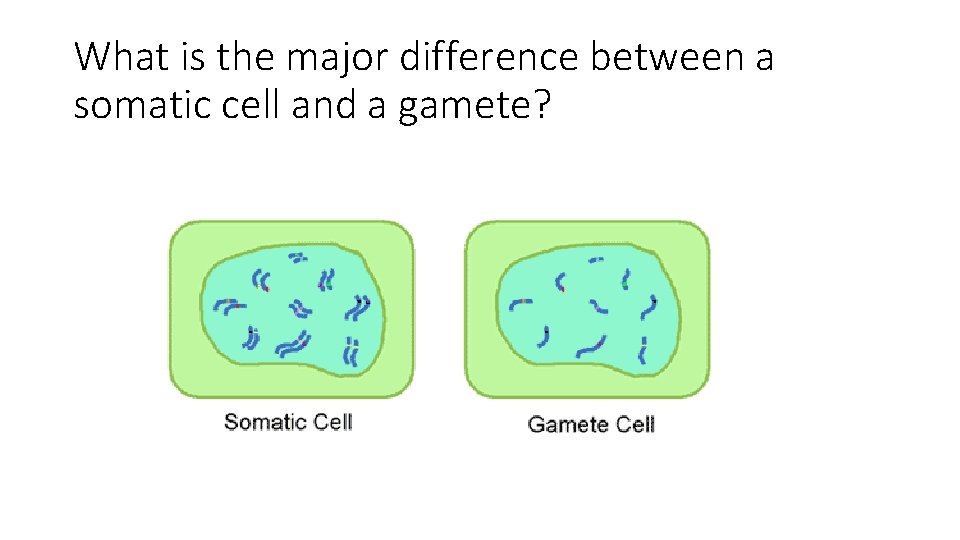
What is the major difference between a somatic cell and a gamete?
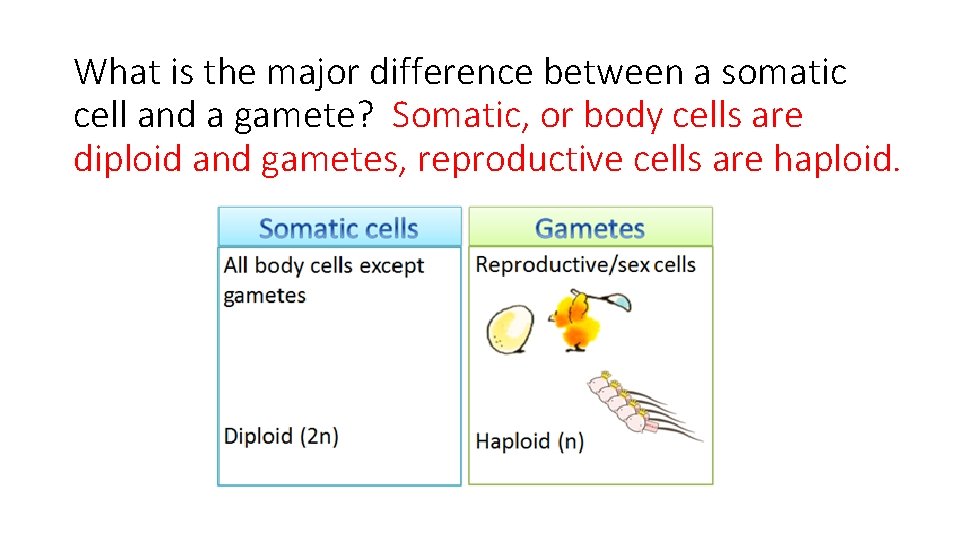
What is the major difference between a somatic cell and a gamete? Somatic, or body cells are diploid and gametes, reproductive cells are haploid.
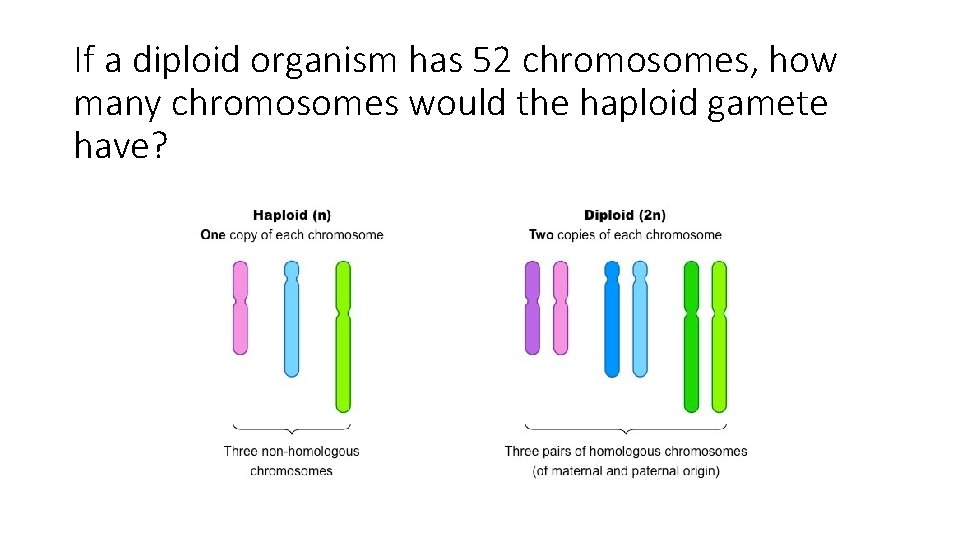
If a diploid organism has 52 chromosomes, how many chromosomes would the haploid gamete have?
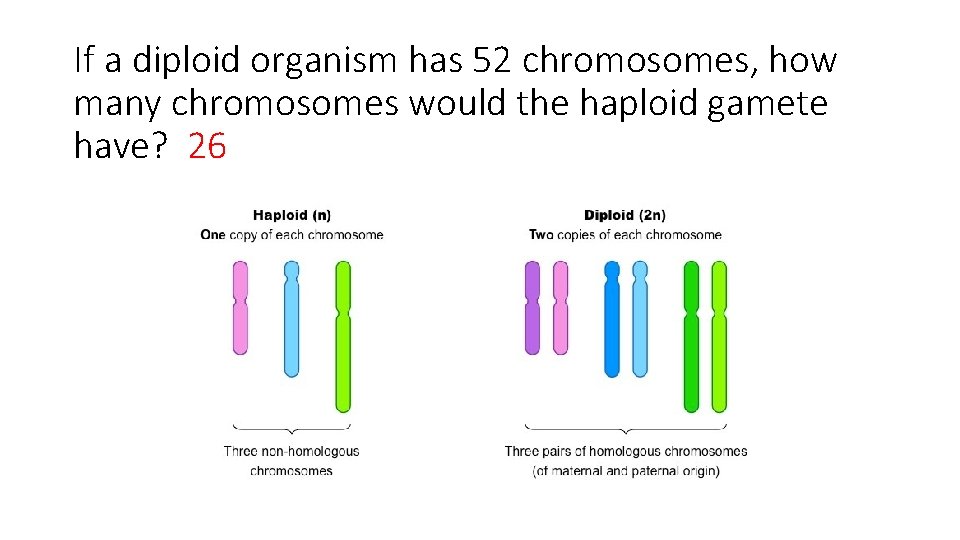
If a diploid organism has 52 chromosomes, how many chromosomes would the haploid gamete have? 26
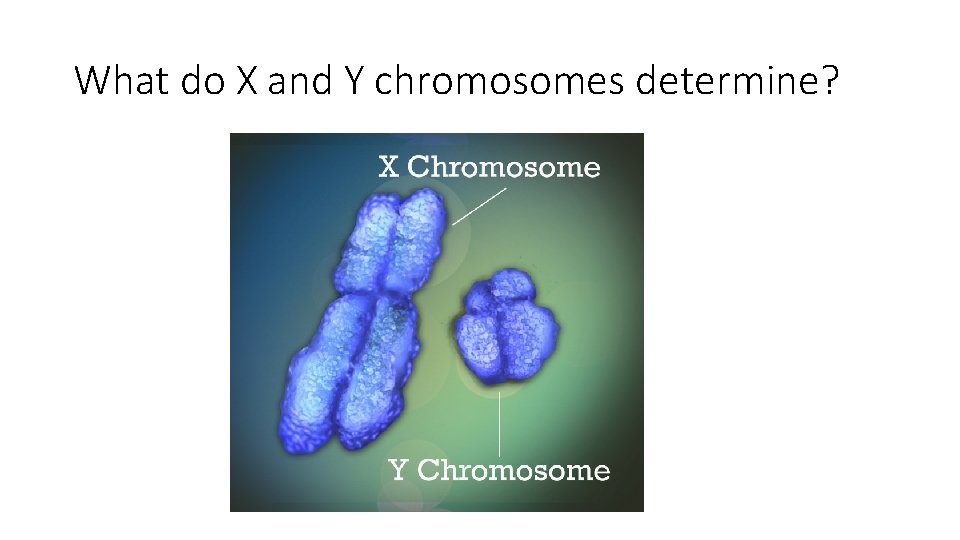
What do X and Y chromosomes determine?
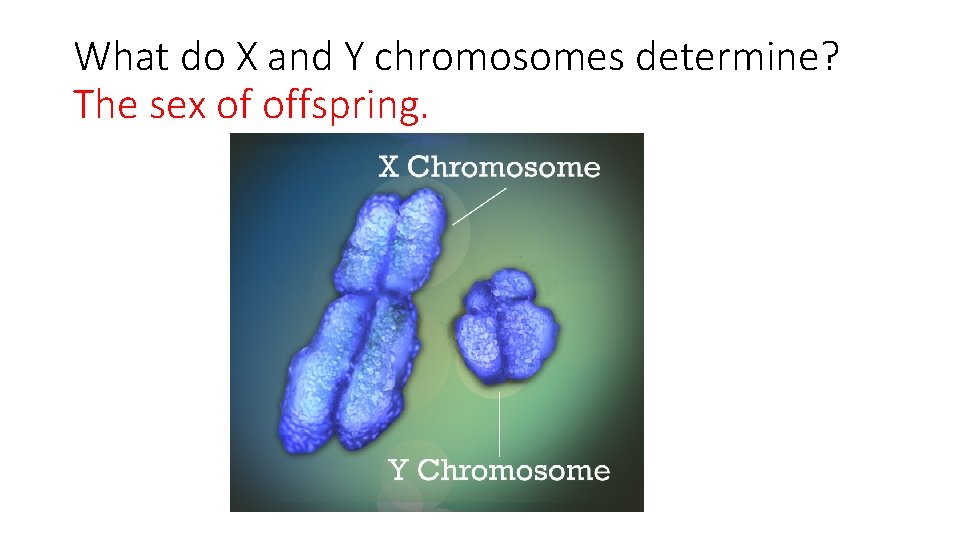
What do X and Y chromosomes determine? The sex of offspring.
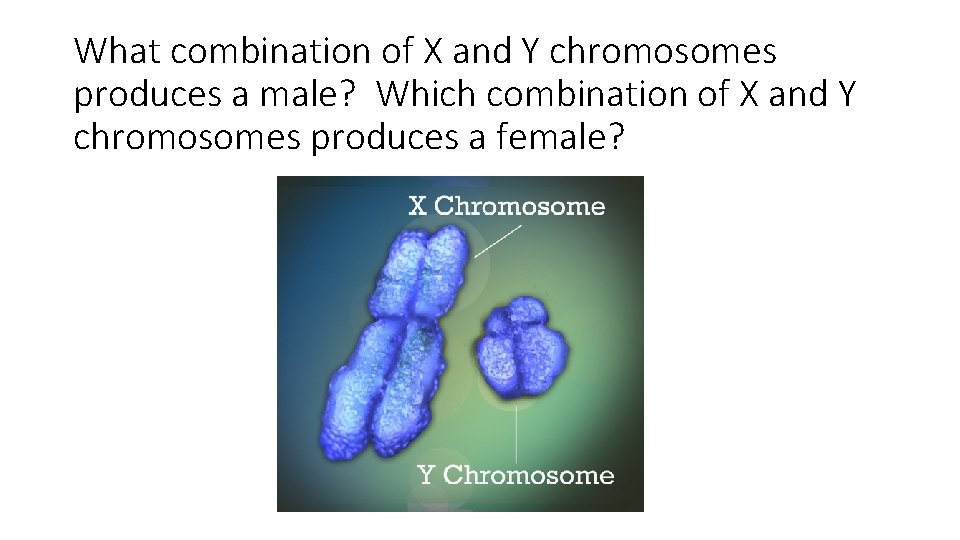
What combination of X and Y chromosomes produces a male? Which combination of X and Y chromosomes produces a female?
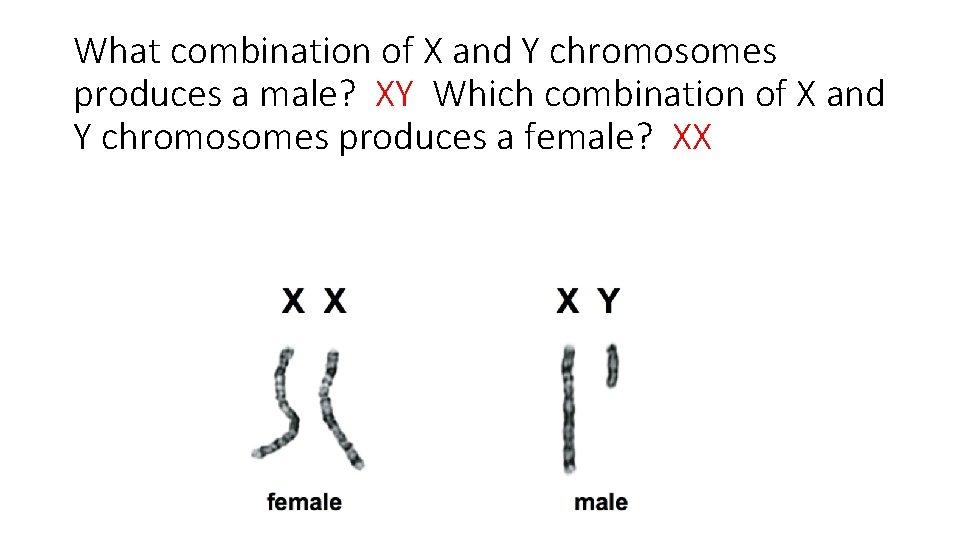
What combination of X and Y chromosomes produces a male? XY Which combination of X and Y chromosomes produces a female? XX
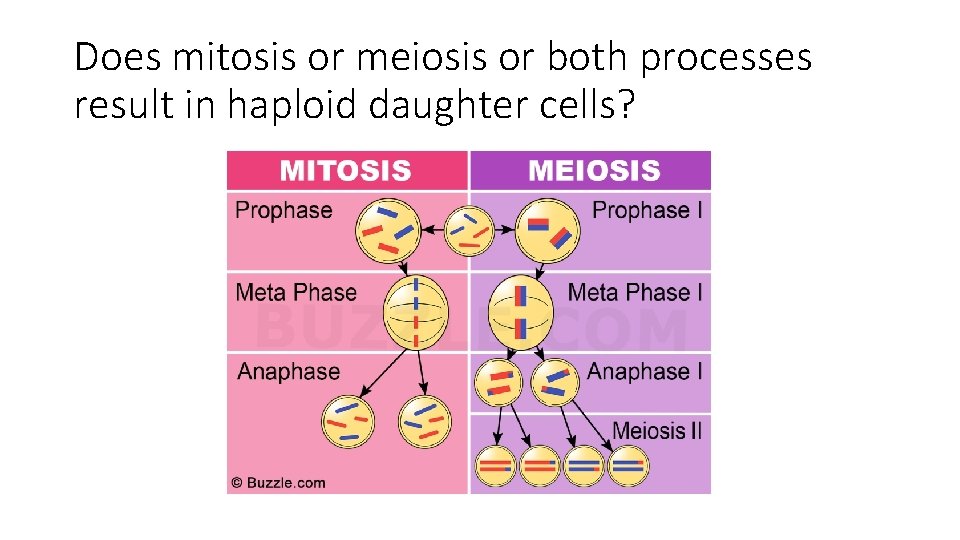
Does mitosis or meiosis or both processes result in haploid daughter cells?
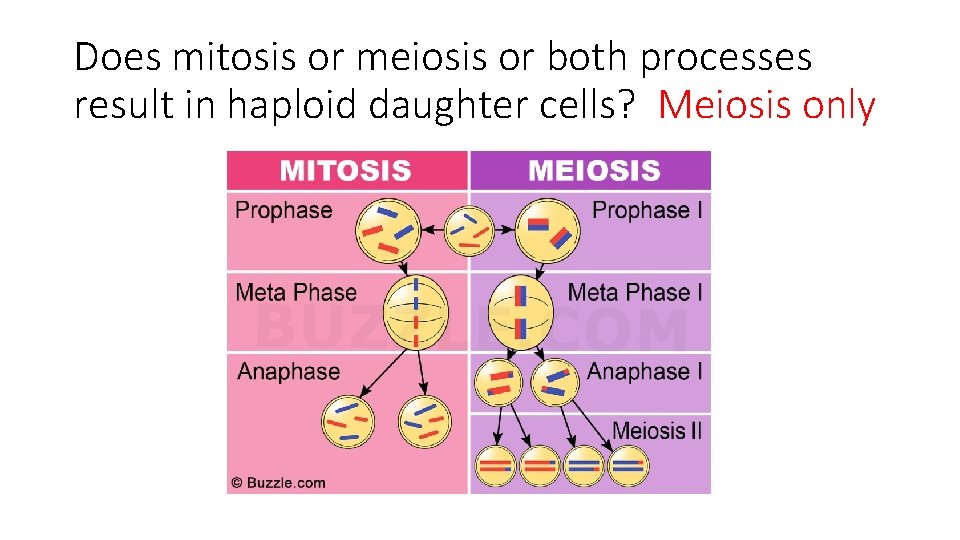
Does mitosis or meiosis or both processes result in haploid daughter cells? Meiosis only
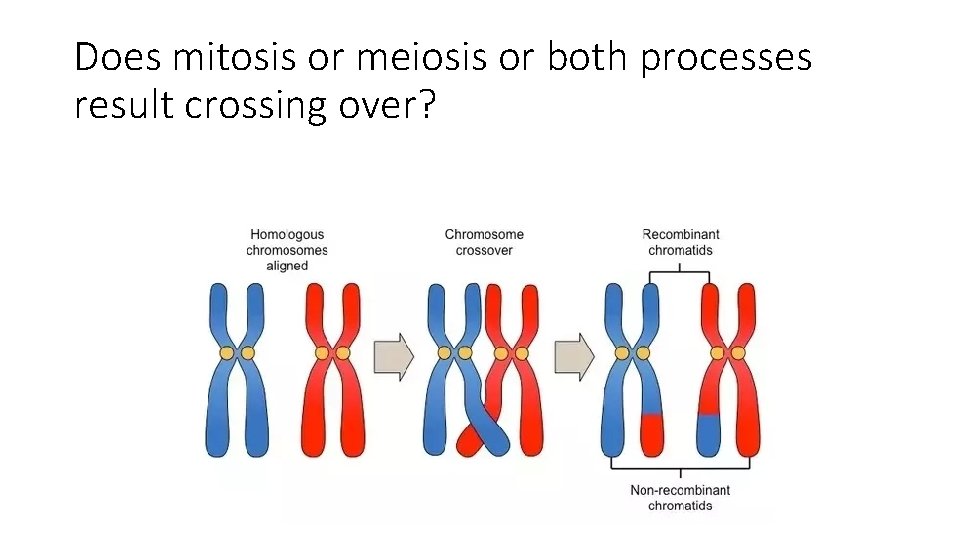
Does mitosis or meiosis or both processes result crossing over?
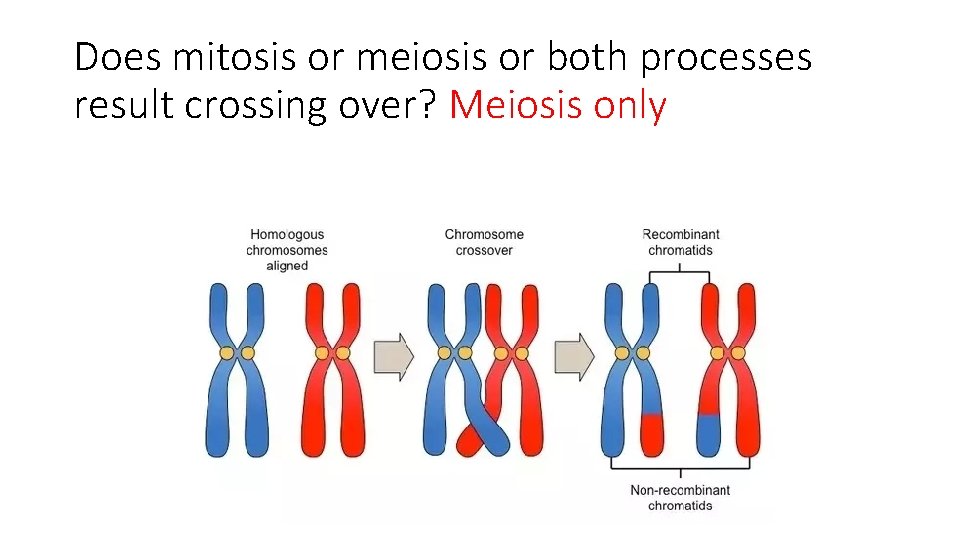
Does mitosis or meiosis or both processes result crossing over? Meiosis only
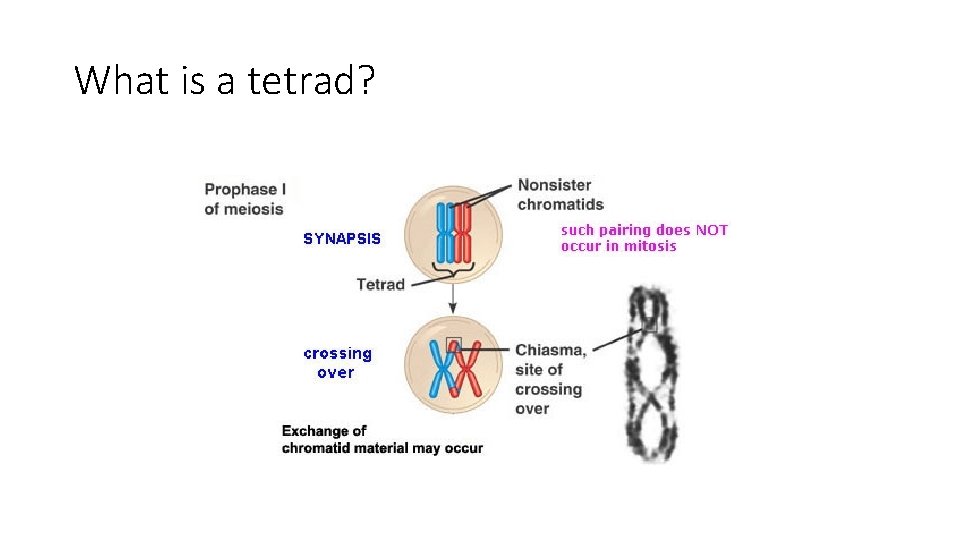
What is a tetrad?
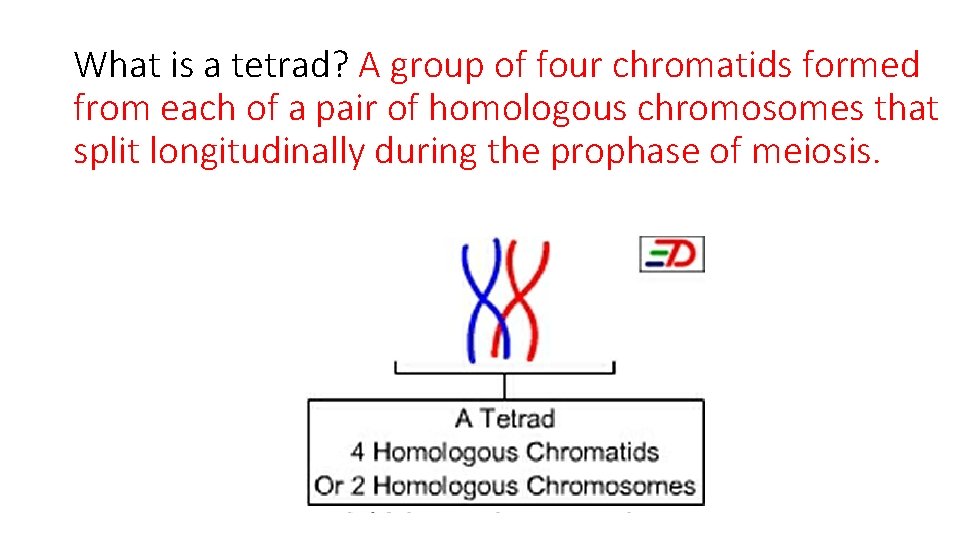
What is a tetrad? A group of four chromatids formed from each of a pair of homologous chromosomes that split longitudinally during the prophase of meiosis.
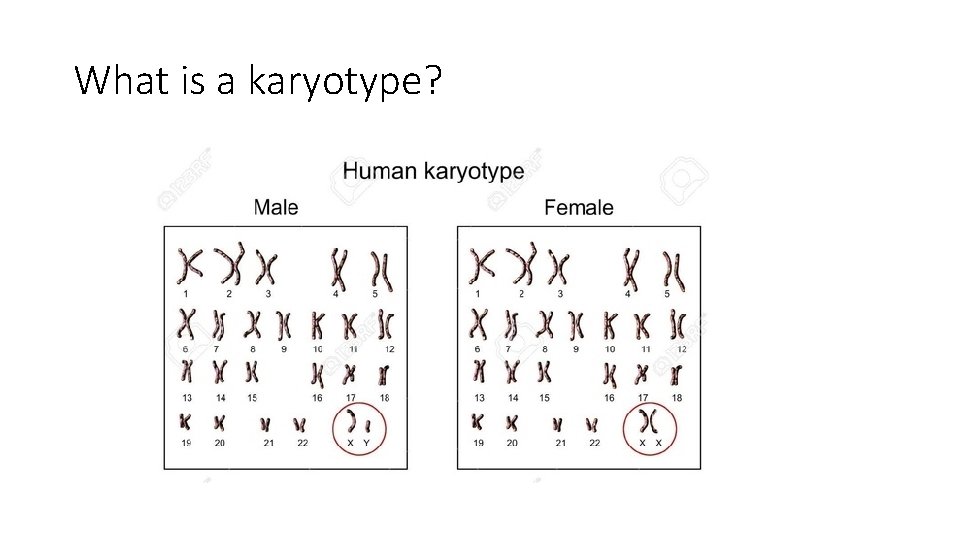
What is a karyotype?
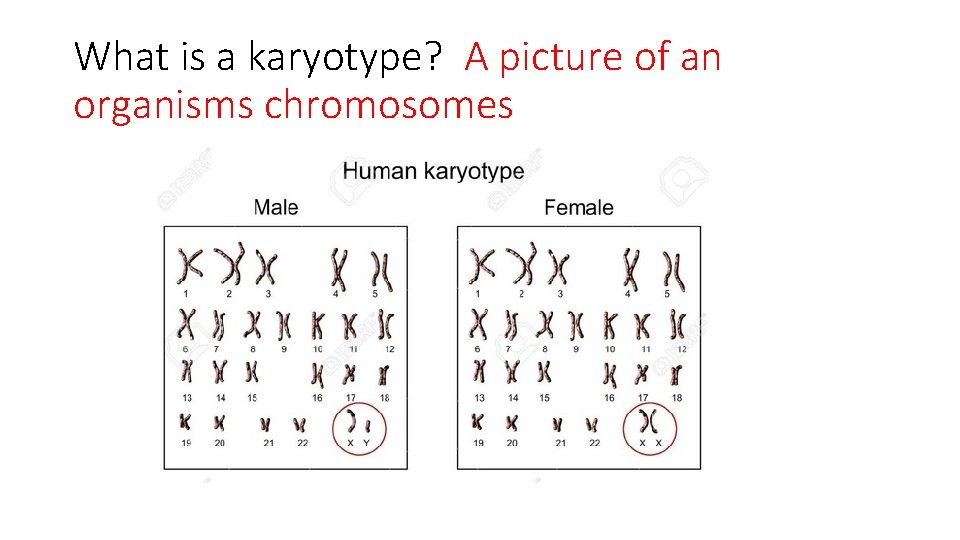
What is a karyotype? A picture of an organisms chromosomes
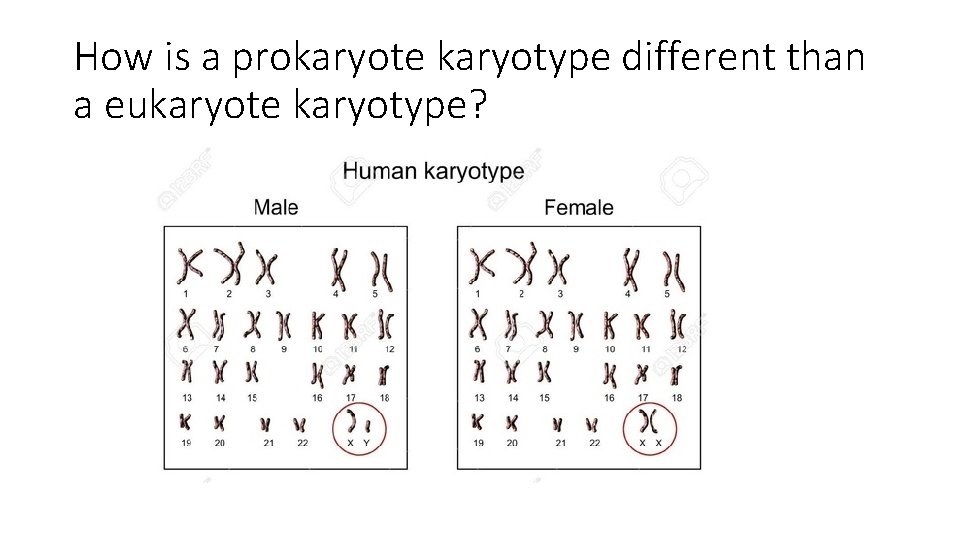
How is a prokaryote karyotype different than a eukaryote karyotype?
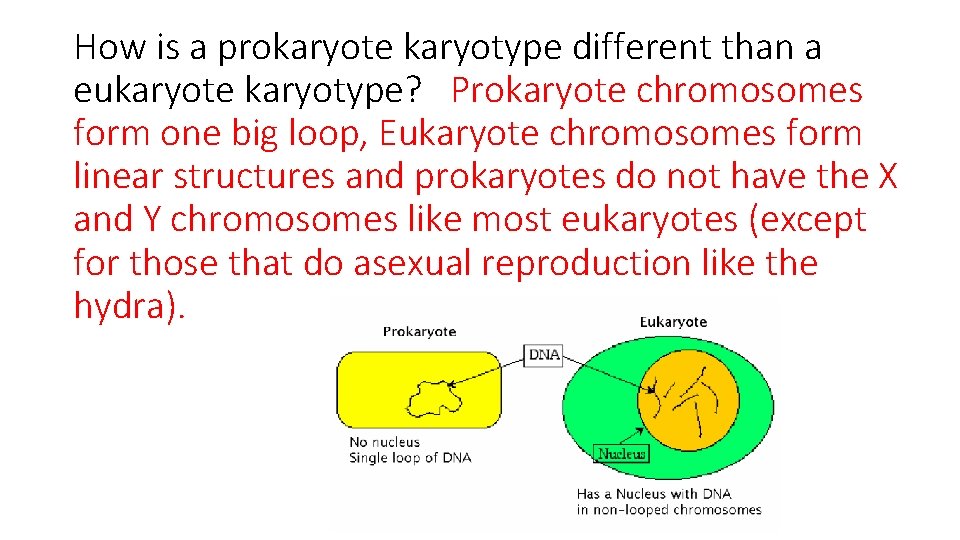
How is a prokaryote karyotype different than a eukaryote karyotype? Prokaryote chromosomes form one big loop, Eukaryote chromosomes form linear structures and prokaryotes do not have the X and Y chromosomes like most eukaryotes (except for those that do asexual reproduction like the hydra).
What is an autosomal chromosome?
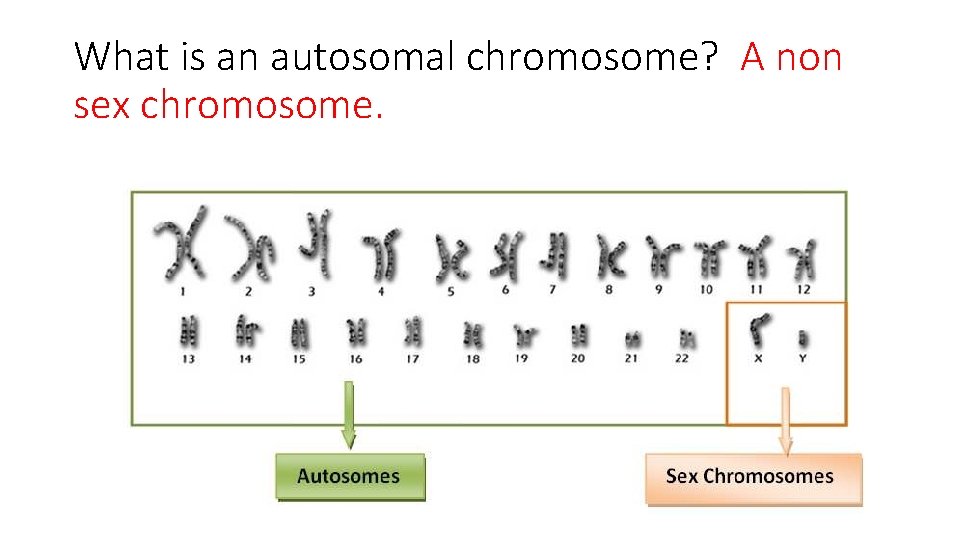
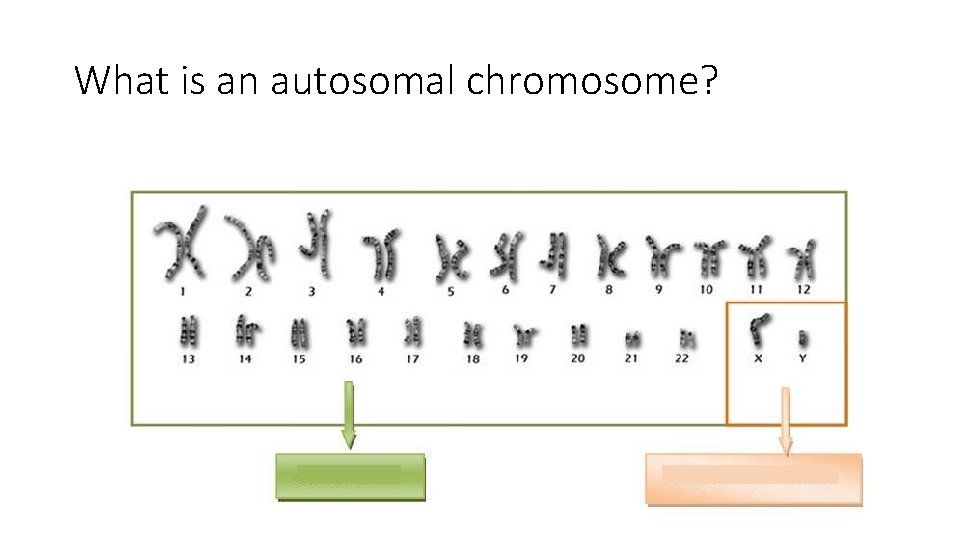
What is an autosomal chromosome? A non sex chromosome.
What forms at the end of telophase 1 in meiosis?
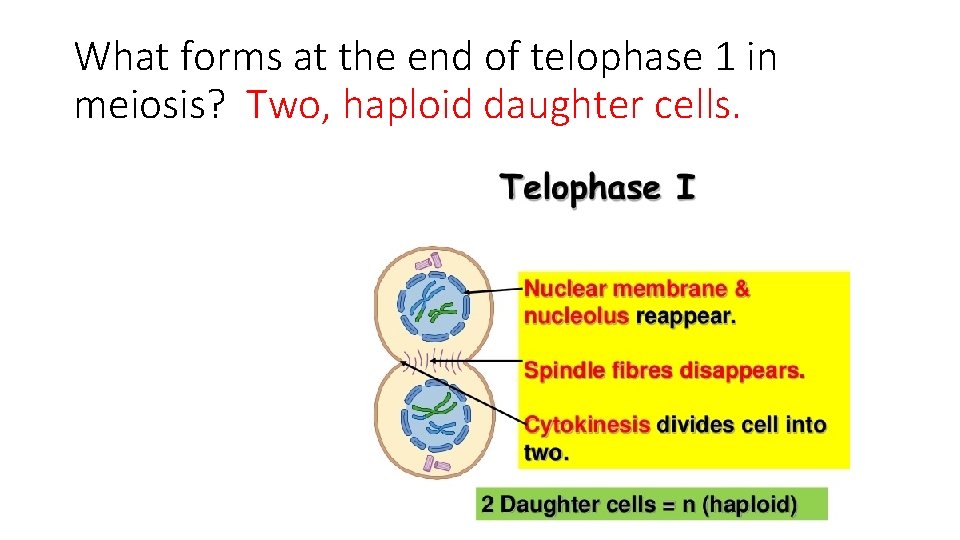
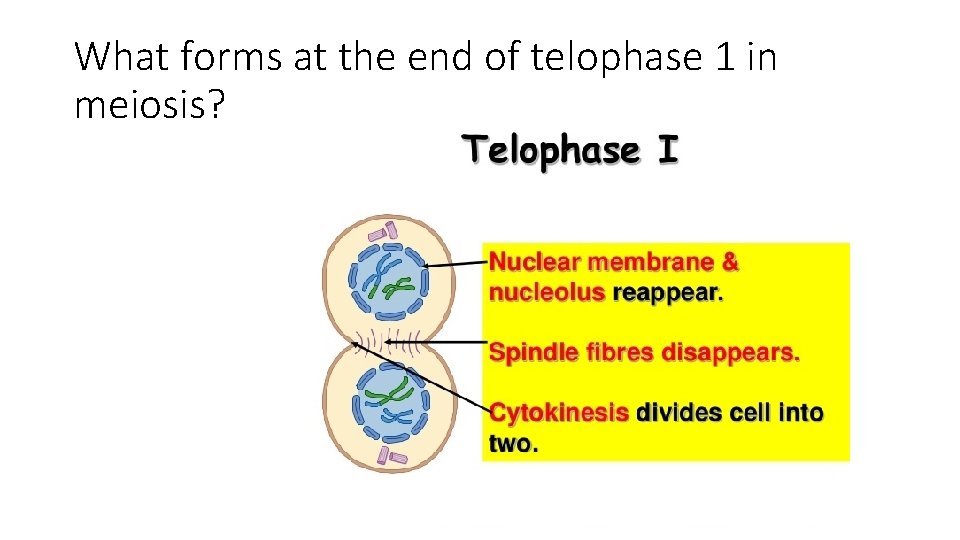
What forms at the end of telophase 1 in meiosis? Two, haploid daughter cells.
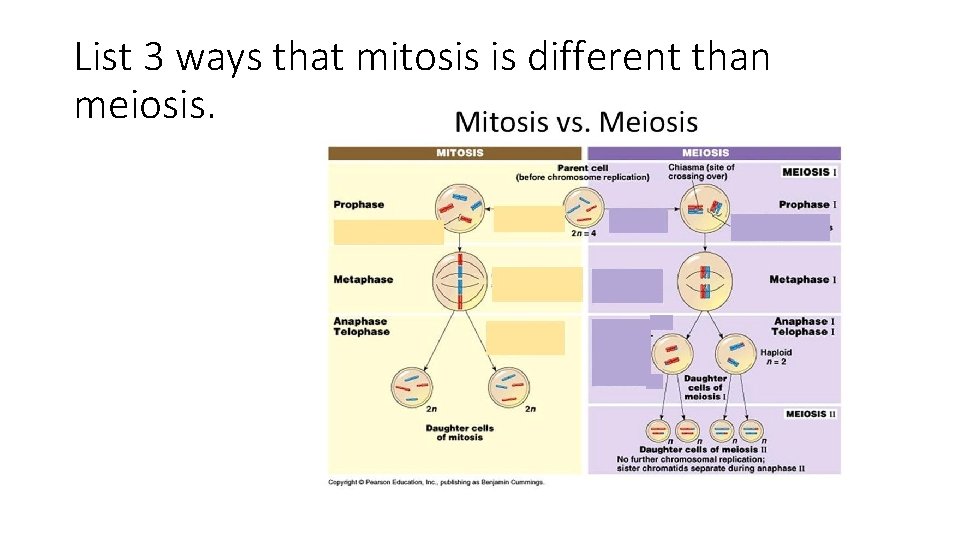
List 3 ways that mitosis is different than meiosis.
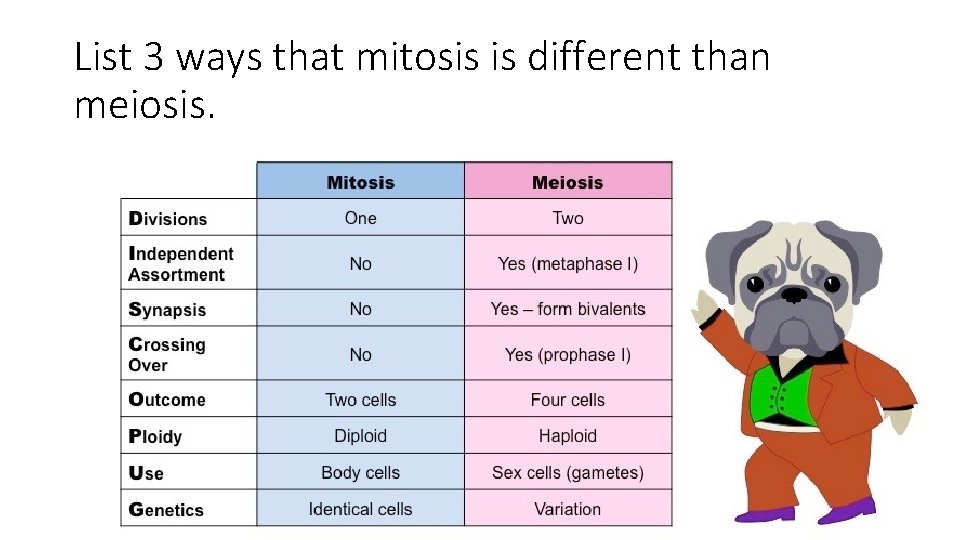
List 3 ways that mitosis is different than meiosis.
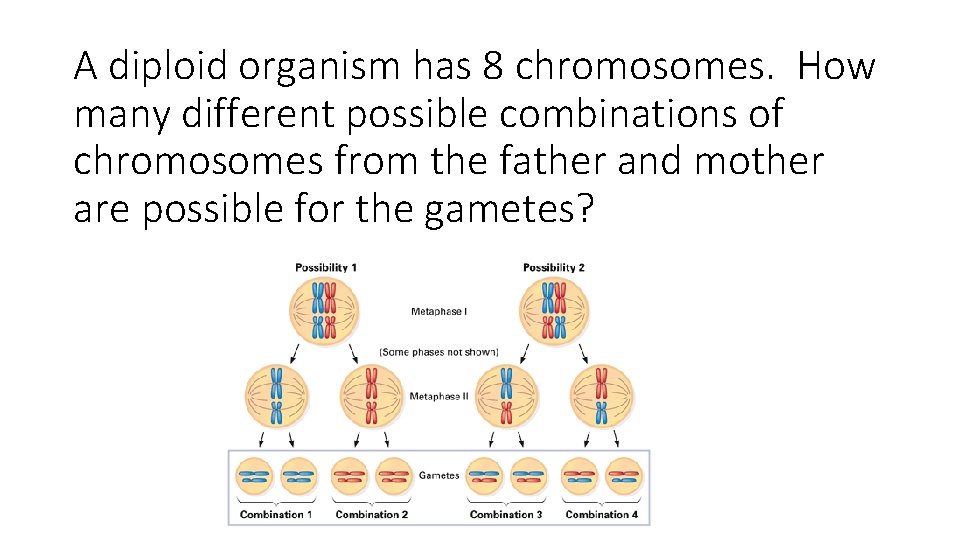
A diploid organism has 8 chromosomes. How many different possible combinations of chromosomes from the father and mother are possible for the gametes?
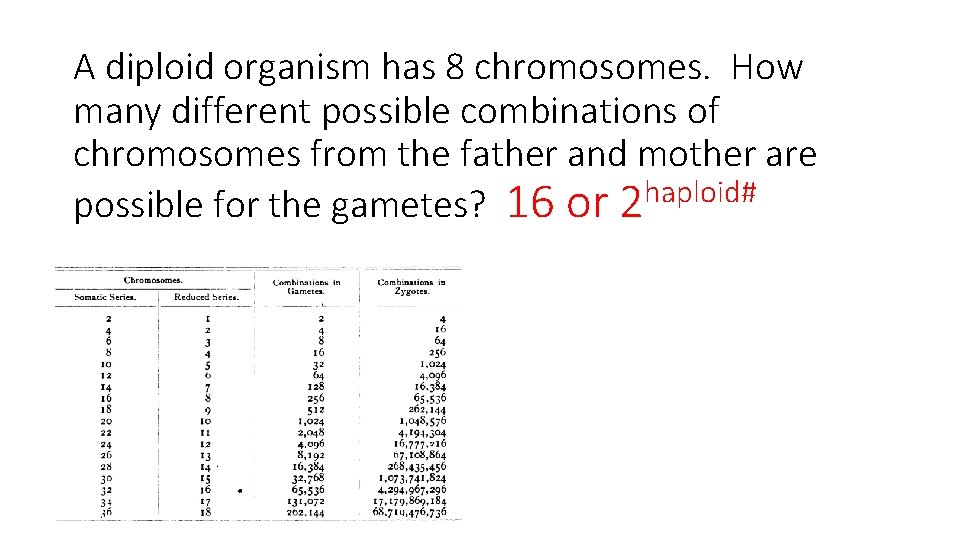
A diploid organism has 8 chromosomes. How many different possible combinations of chromosomes from the father and mother are haploid# possible for the gametes? 16 or 2
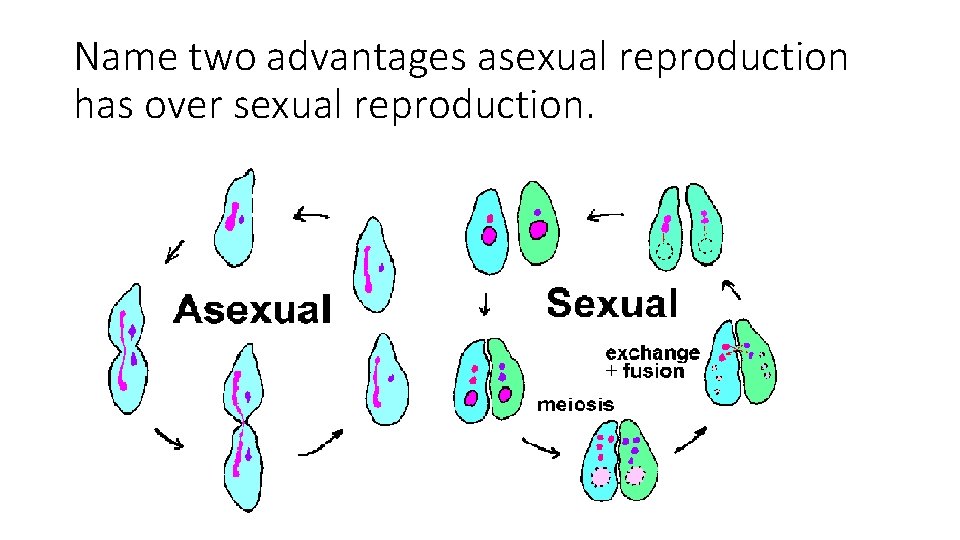
Name two advantages asexual reproduction has over sexual reproduction.
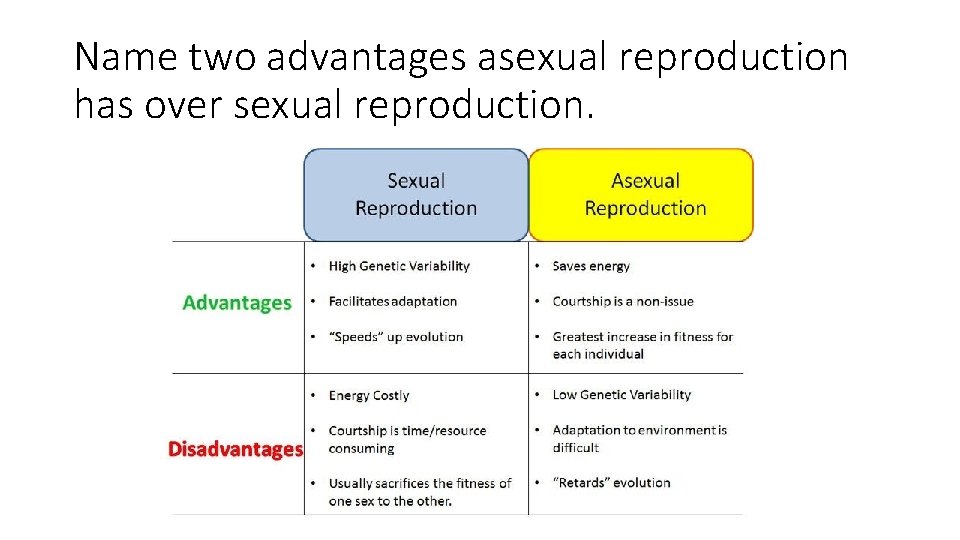
Name two advantages asexual reproduction has over sexual reproduction.
- Slides: 99