
AP BIOLOGY Osmosis Diffusion Labs Slide show by
AP BIOLOGY Osmosis Diffusion Labs Slide show by Kelly Riedell LEARNING OBJECTIVE ENE-2. E Describe the mechanisms that organisms use to maintain solute and water balance. ESSENTIAL KNOWLEDGE ENE-2. E. 1 Passive transport is the net movement of molecules from high concentration to low concentration without the direct input of metabolic energy. LEARNING OBJECTIVE ENE-2. H Explain how concentration gradients affect the movement of molecules across membranes. ESSENTIAL KNOWLEDGE ENE-2. H. 1 External environments can be hypotonic, hypertonic or isotonic to internal environments of cells— a. Water moves by osmosis from areas of high water potential/low osmolarity/ low solute concentration to areas of low water potential/high osmolarity/high solute concentration.
SP 1. C Explain biological concepts, processes, and/or models in applied contexts SP 3. A Identify or pose a testable question based on an observation, data, or a model. SP 3. B State the null or alternative hypotheses, or predict the results of an experiment. SP 3. C Identify experimental procedures that are aligned to the question, including a. Identifying dependent and independent variables. b. Identifying appropriate controls. c. Justifying appropriate controls. SP 3. D Make observations, or collect data from representations of laboratory setups or results. SP 3. E Propose a new/next investigation based on a. An evaluation of the evidence from an experiment. b. An evaluation of the design/methods. SP 4. A Construct a graph, plot, or chart (Line). a. Orientation b. Labeling c. Units d. Scaling e. Plotting f. Type g. Trend line SP 4. B Describe data from a table or graph, including a. Identifying specific data points. b. Describing trends and/or patterns in the data. c. Describing relationships between variables. SP 5. A Perform mathematical calculations, including a. Mathematical equations in the curriculum. SP 6. A Make a scientific claim. SP 6. B Support a claim with evidence from biological principles, concepts, processes, and/or data. SP 6. C Provide reasoning to justify a claim by connecting evidence to biological theories. SP 6. D Explain the relationship between experimental results and larger biological concepts, processes, or theories.
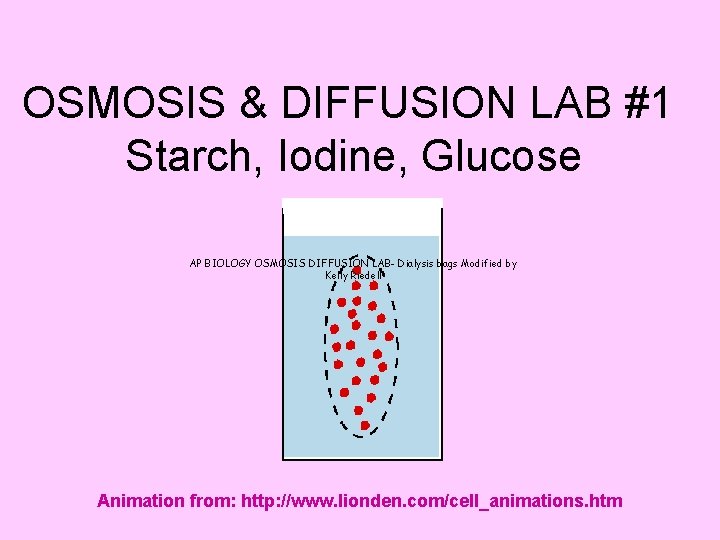
OSMOSIS & DIFFUSION LAB #1 Starch, Iodine, Glucose AP BIOLOGY OSMOSIS DIFFUSION LAB- Dialysis bags Modified by Kelly Riedell Animation from: http: //www. lionden. com/cell_animations. htm
SAFETY • DO NOT EAT OR DRINK ANYTHING IN LAB! • IODINE IS POISONOUS • WEAR AN APRON! IODINE WILL STAIN YOUR SKIN AND CLOTHING Image from: http: //www. llnsciencepark. be/en 2/images/caution. jpg
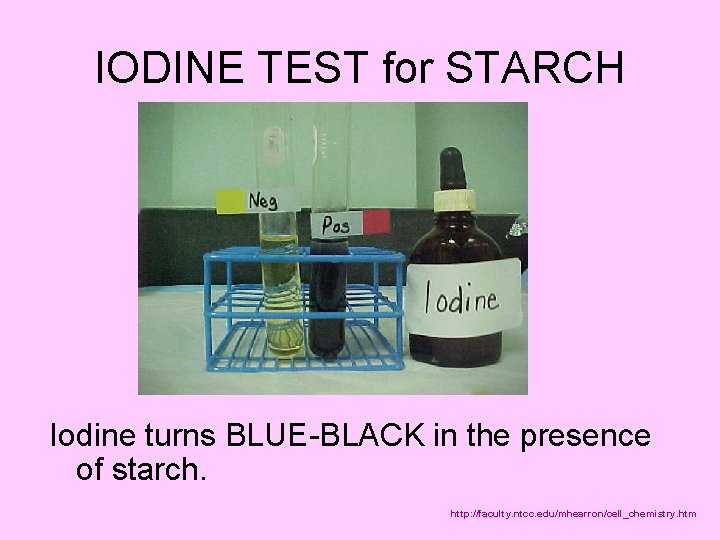
IODINE TEST for STARCH Iodine turns BLUE-BLACK in the presence of starch. http: //faculty. ntcc. edu/mhearron/cell_chemistry. htm

DIP TEST FOR GLUCOSE If glucose is present strip will turn from AQUA BLUE to YUCKY GREENISH BROWN Image modified from: http: //www. freepatentsonline. com/6531322. html
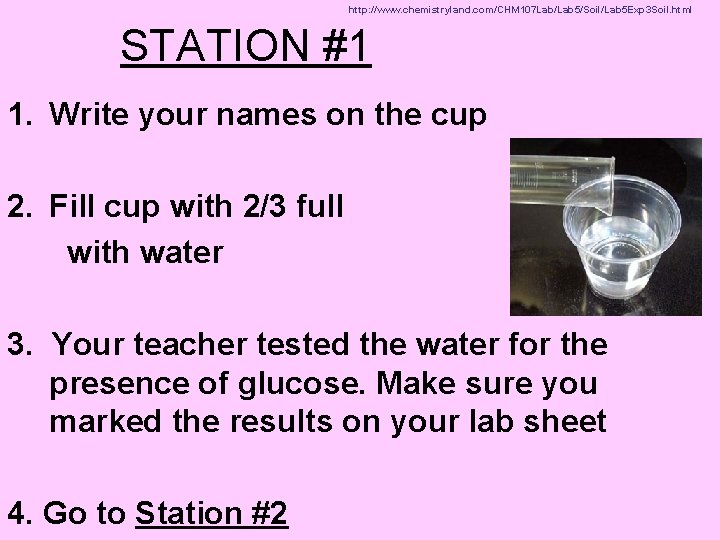
http: //www. chemistryland. com/CHM 107 Lab/Lab 5/Soil/Lab 5 Exp 3 Soil. html STATION #1 1. Write your names on the cup 2. Fill cup with 2/3 full with water 3. Your teacher tested the water for the presence of glucose. Make sure you marked the results on your lab sheet 4. Go to Station #2
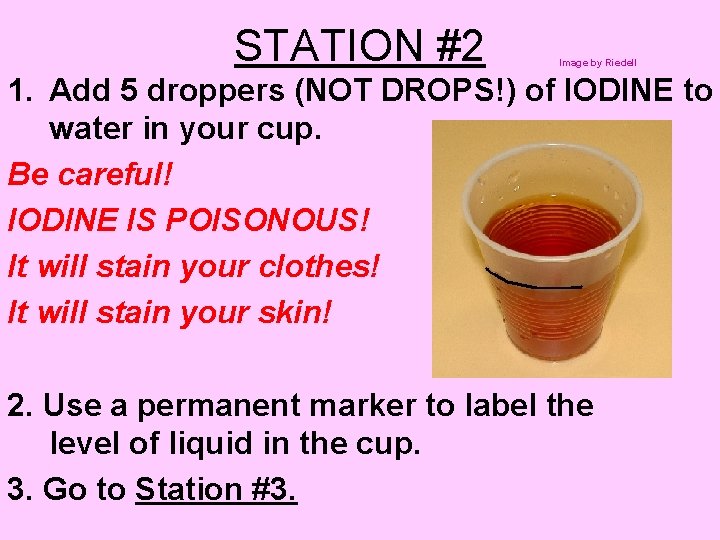
STATION #2 Image by Riedell 1. Add 5 droppers (NOT DROPS!) of IODINE to water in your cup. Be careful! IODINE IS POISONOUS! It will stain your clothes! It will stain your skin! 2. Use a permanent marker to label the level of liquid in the cup. 3. Go to Station #3.
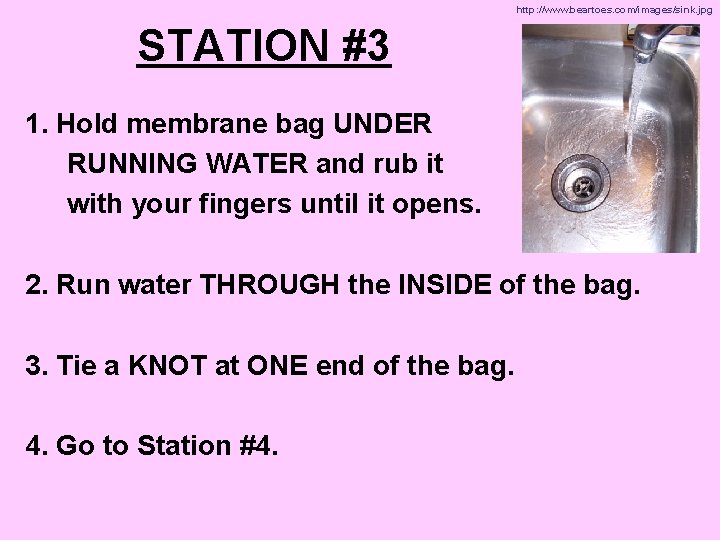
http: //www. beartoes. com/images/sink. jpg STATION #3 1. Hold membrane bag UNDER RUNNING WATER and rub it with your fingers until it opens. 2. Run water THROUGH the INSIDE of the bag. 3. Tie a KNOT at ONE end of the bag. 4. Go to Station #4.
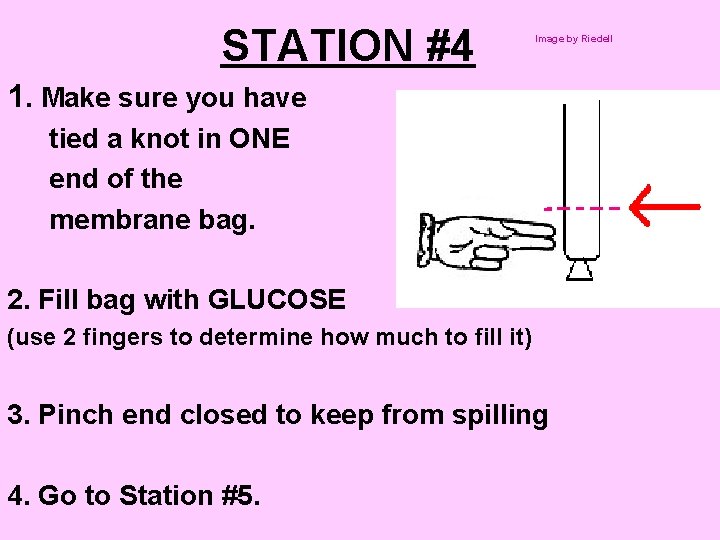
STATION #4 Image by Riedell 1. Make sure you have tied a knot in ONE end of the membrane bag. 2. Fill bag with GLUCOSE (use 2 fingers to determine how much to fill it) 3. Pinch end closed to keep from spilling 4. Go to Station #5.
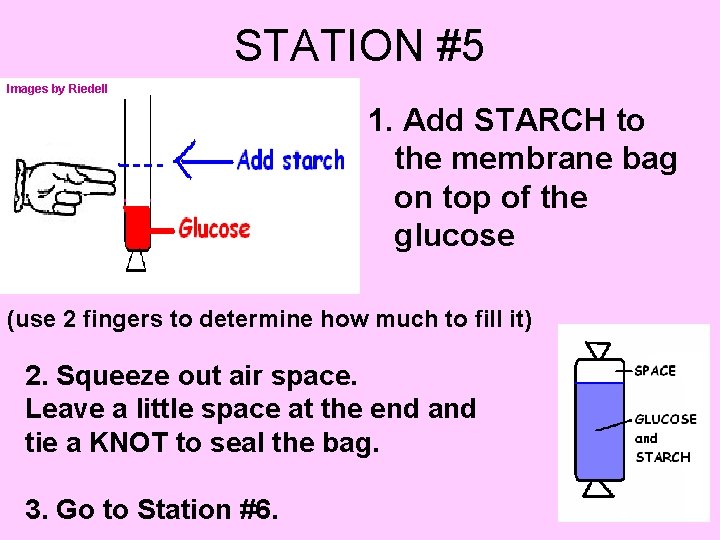
STATION #5 Images by Riedell 1. Add STARCH to the membrane bag on top of the glucose (use 2 fingers to determine how much to fill it) 2. Squeeze out air space. Leave a little space at the end and tie a KNOT to seal the bag. 3. Go to Station #6.
STATION #6 1. Take your MEMBRANE BAG to the SINK and RINSE IT ………really, really, (I mean it!) REALLLLY WELL. 2. Go to Station #7.
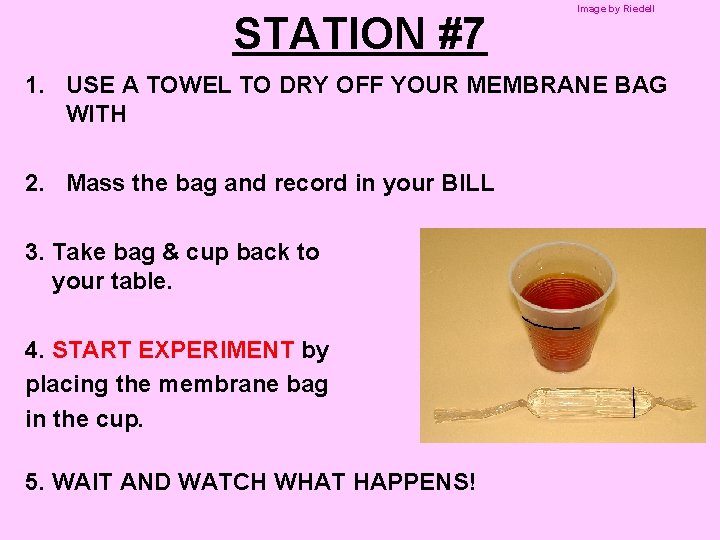
STATION #7 Image by Riedell 1. USE A TOWEL TO DRY OFF YOUR MEMBRANE BAG WITH 2. Mass the bag and record in your BILL 3. Take bag & cup back to your table. 4. START EXPERIMENT by placing the membrane bag in the cup. 5. WAIT AND WATCH WHAT HAPPENS!
OSMOSIS & DIFFUSION LAB #2 - Potatoes https: //www. polyvore. com/cgi/img-thing? . out=jpg&size=l&tid=6678000
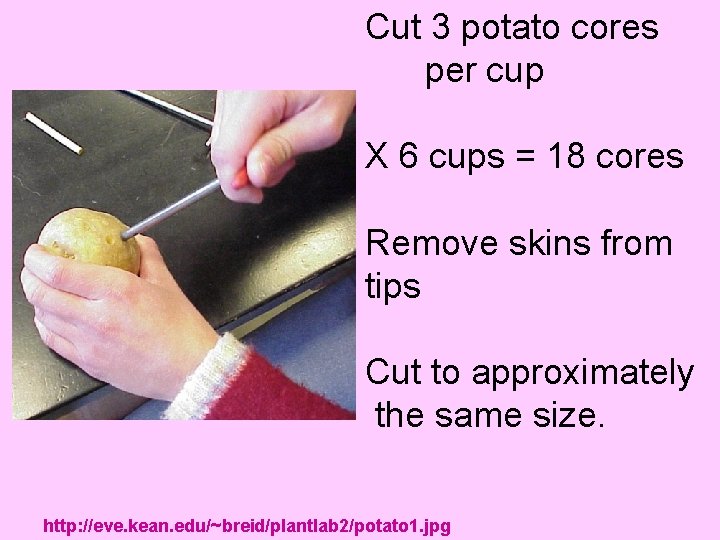
Cut 3 potato cores per cup X 6 cups = 18 cores Remove skins from tips Cut to approximately the same size. http: //eve. kean. edu/~breid/plantlab 2/potato 1. jpg
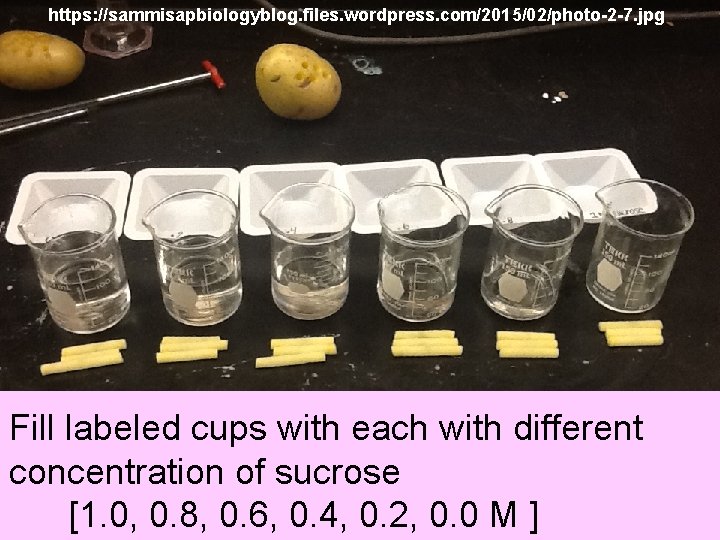
https: //sammisapbiologyblog. files. wordpress. com/2015/02/photo-2 -7. jpg Fill labeled cups with each with different concentration of sucrose [1. 0, 0. 8, 0. 6, 0. 4, 0. 2, 0. 0 M ]
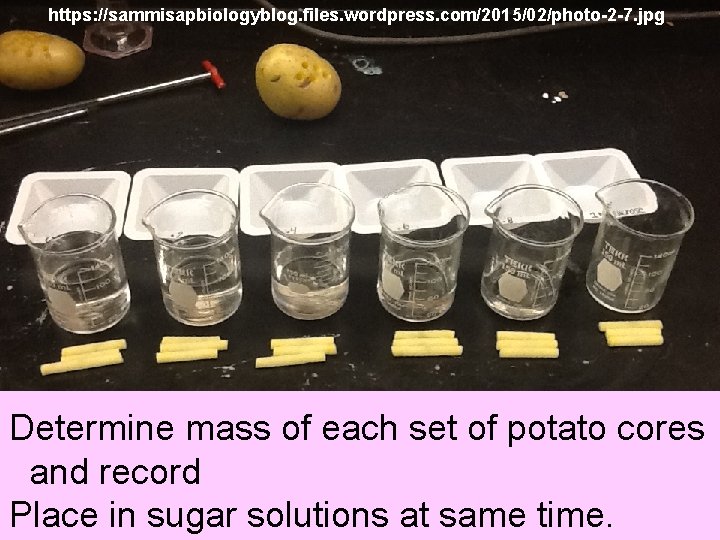
https: //sammisapbiologyblog. files. wordpress. com/2015/02/photo-2 -7. jpg Determine mass of each set of potato cores and record Place in sugar solutions at same time.
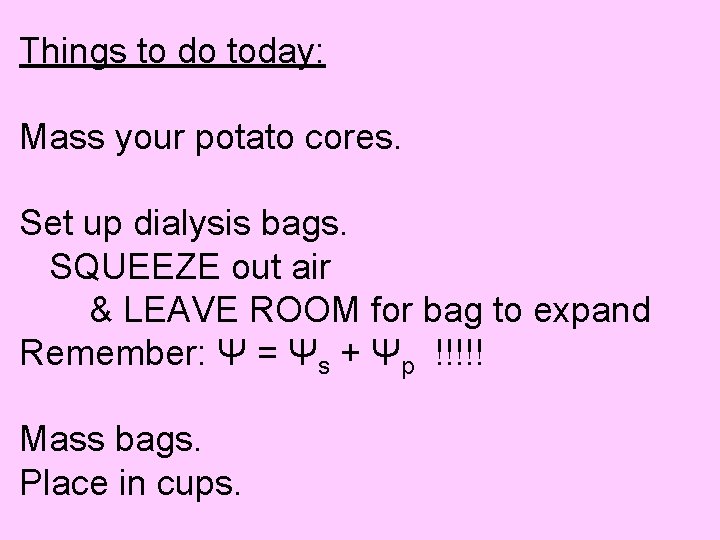
Things to do today: Mass your potato cores. Set up dialysis bags. SQUEEZE out air & LEAVE ROOM for bag to expand Remember: Ψ = Ψs + Ψp !!!!! Mass bags. Place in cups.
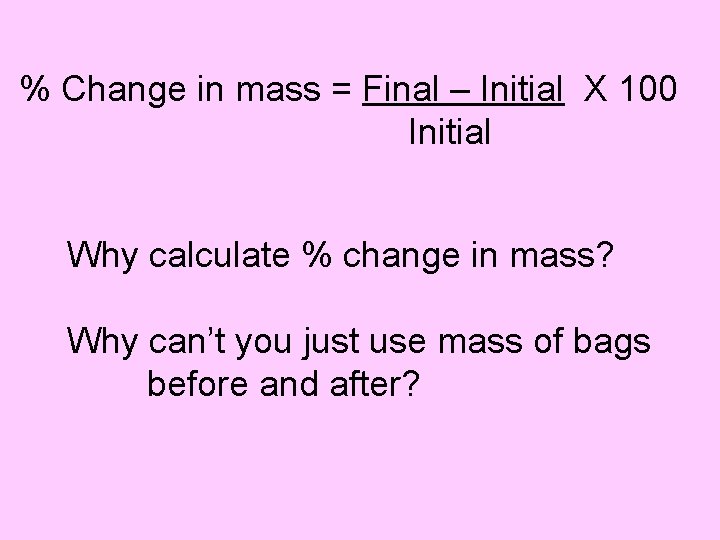
% Change in mass = Final – Initial X 100 Initial Why calculate % change in mass? Why can’t you just use mass of bags before and after?
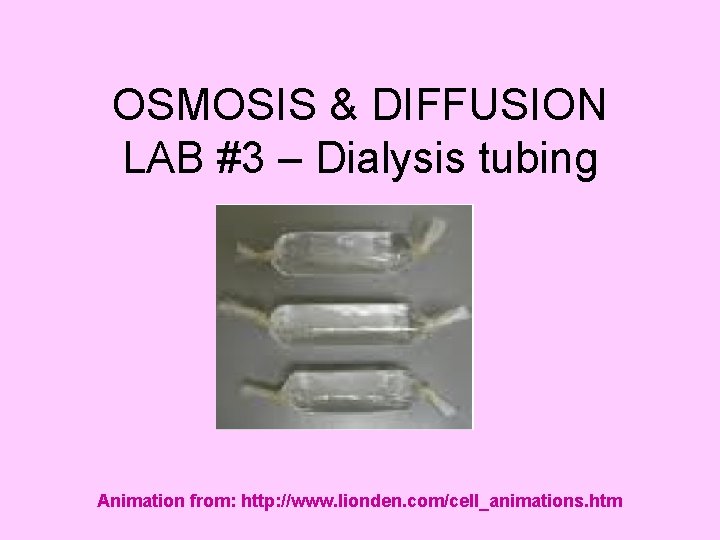
OSMOSIS & DIFFUSION LAB #3 – Dialysis tubing Animation from: http: //www. lionden. com/cell_animations. htm
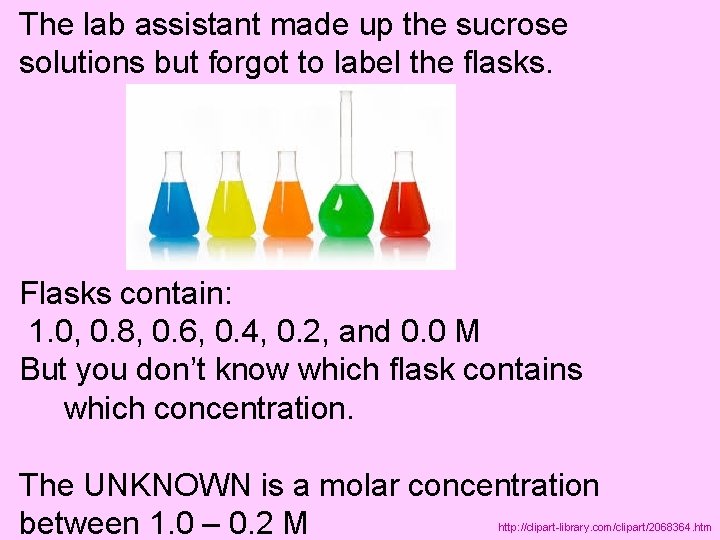
The lab assistant made up the sucrose solutions but forgot to label the flasks. Flasks contain: 1. 0, 0. 8, 0. 6, 0. 4, 0. 2, and 0. 0 M But you don’t know which flask contains which concentration. The UNKNOWN is a molar concentration between 1. 0 – 0. 2 M http: //clipart-library. com/clipart/2068364. htm
Design an experiment using dialysis tubing to determine the identity of the mystery solutions. Which flask contains which sucrose concentration?
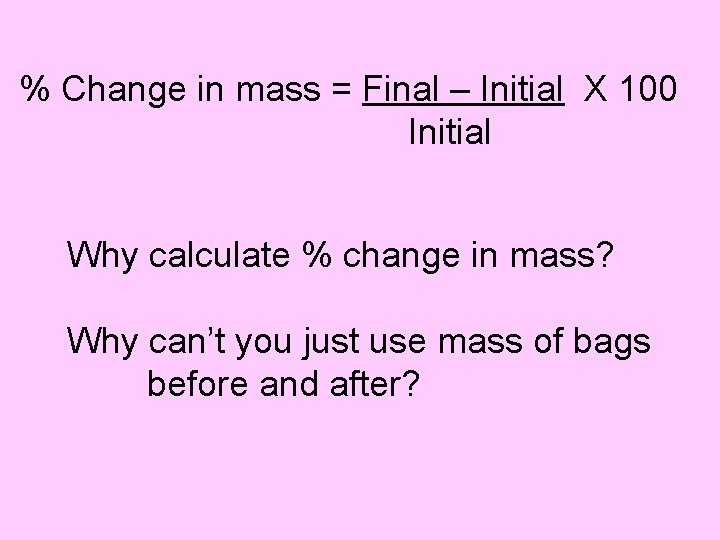
% Change in mass = Final – Initial X 100 Initial Why calculate % change in mass? Why can’t you just use mass of bags before and after?
- Slides: 23