
AP Biology Ecosystems Studying organisms in their environment
AP Biology Ecosystems
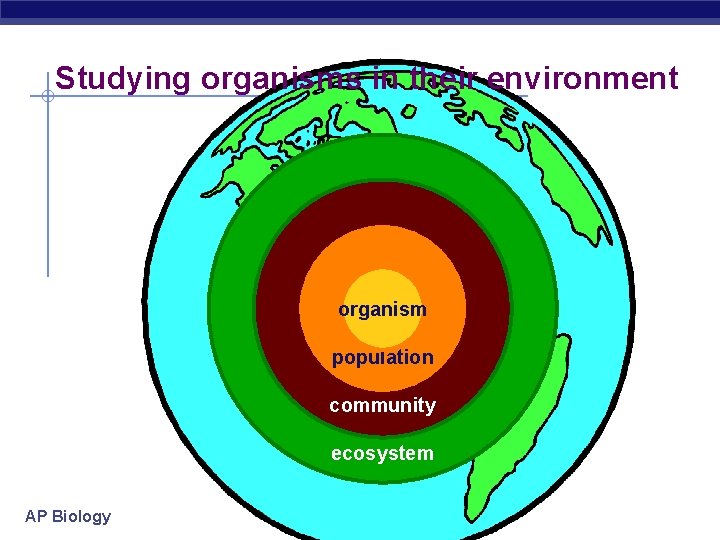
Studying organisms in their environment organism population community ecosystem AP Biology biosphere
Essential questions § What limits the production in ecosystems? § How do nutrients move in the ecosystem? § How does energy move through the ecosystem? AP Biology
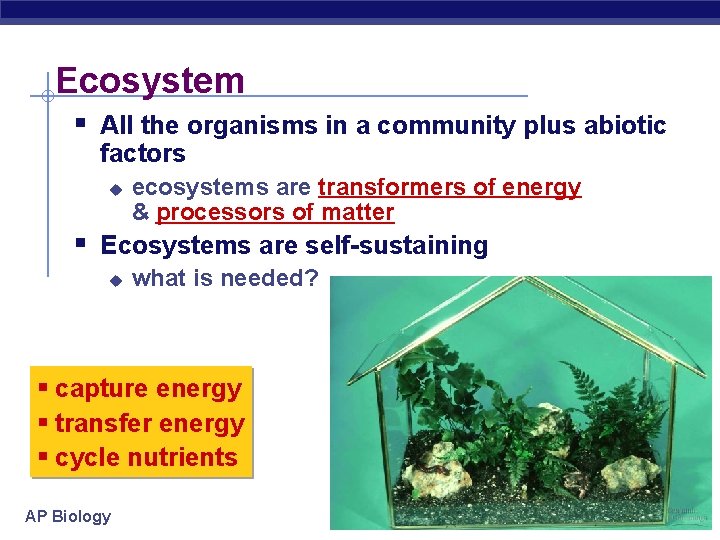
Ecosystem § All the organisms in a community plus abiotic factors u ecosystems are transformers of energy & processors of matter § Ecosystems are self-sustaining u what is needed? § capture energy § transfer energy § cycle nutrients AP Biology
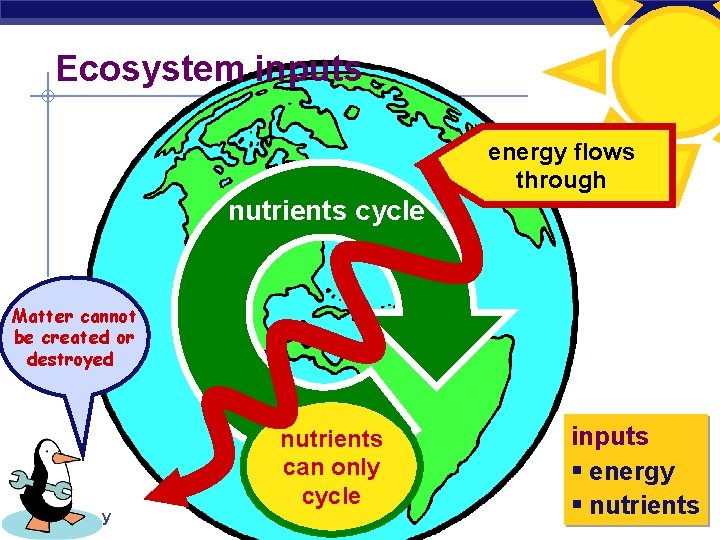
Ecosystem inputs constant energy flows input of through energy nutrients cycle Matter cannot Don’t forget laws of or bethe created Physics! destroyed AP Biology nutrients can only cycle biosphere inputs § energy § nutrients
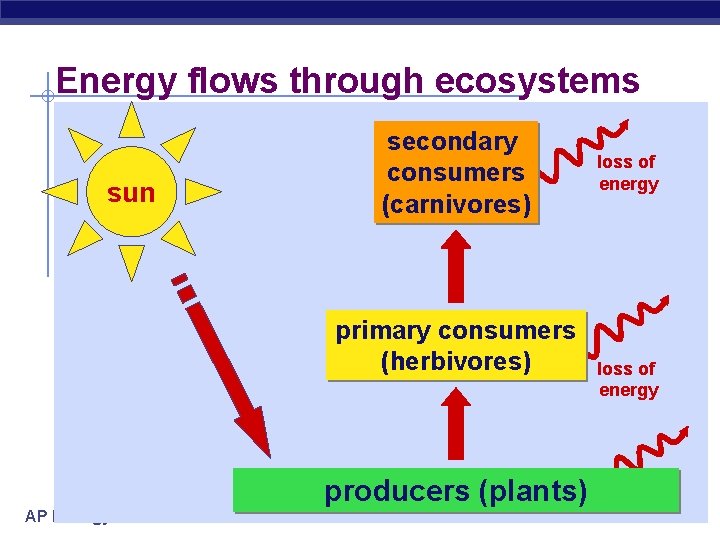
Energy flows through ecosystems sun secondary consumers (carnivores) primary consumers (herbivores) producers (plants) AP Biology loss of energy
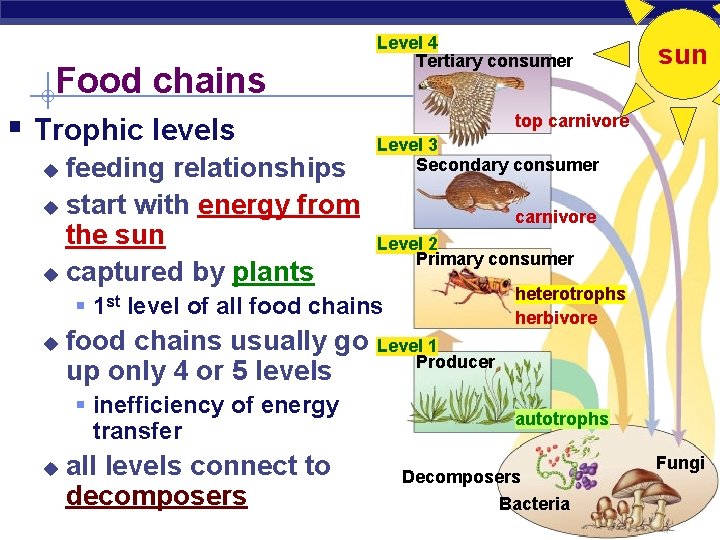
Food chains § Trophic levels feeding relationships u start with energy from the sun u captured by plants u Level 4 Tertiary consumer top carnivore Level 3 Secondary consumer carnivore Level 2 Primary consumer § 1 st level of all food chains usually go Level 1 Producer up only 4 or 5 levels § inefficiency of energy transfer u all levels connect to decomposers AP Biology sun heterotrophs herbivore autotrophs Decomposers Bacteria Fungi
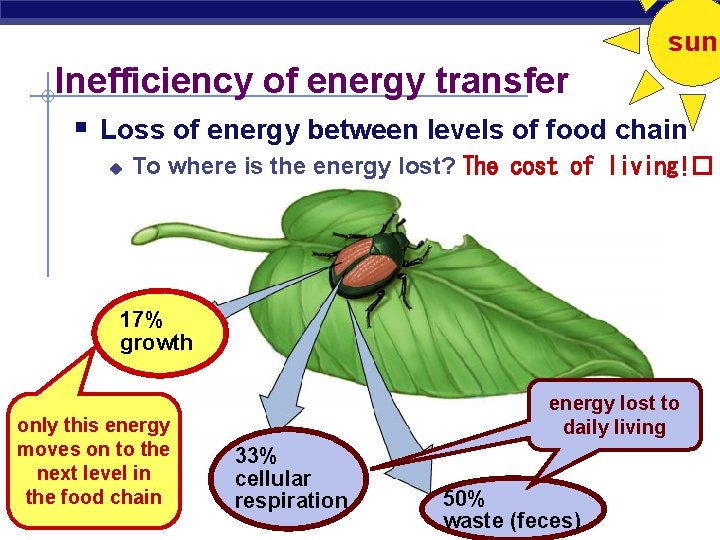
sun Inefficiency of energy transfer § Loss of energy between levels of food chain u To where is the energy lost? The cost of living!� 17% growth only this energy moves on to the next level in the food chain AP Biology energy lost to daily living 33% cellular respiration 50% waste (feces)
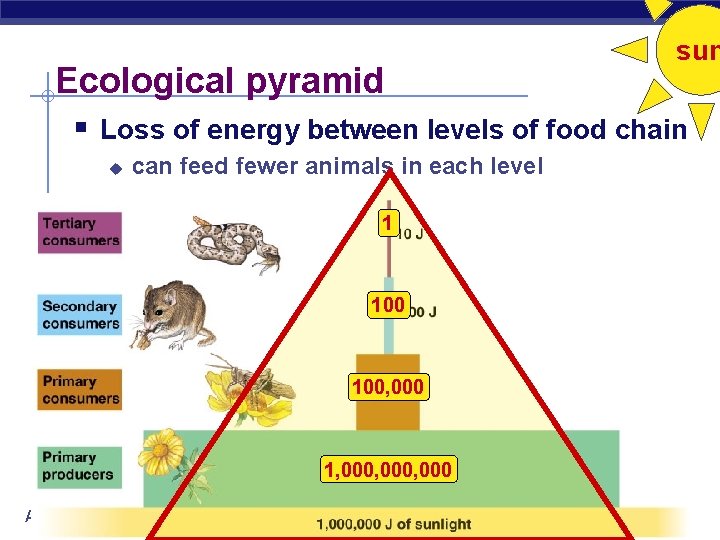
Ecological pyramid sun § Loss of energy between levels of food chain u can feed fewer animals in each level 1 100, 000 1, 000, 000 AP Biology
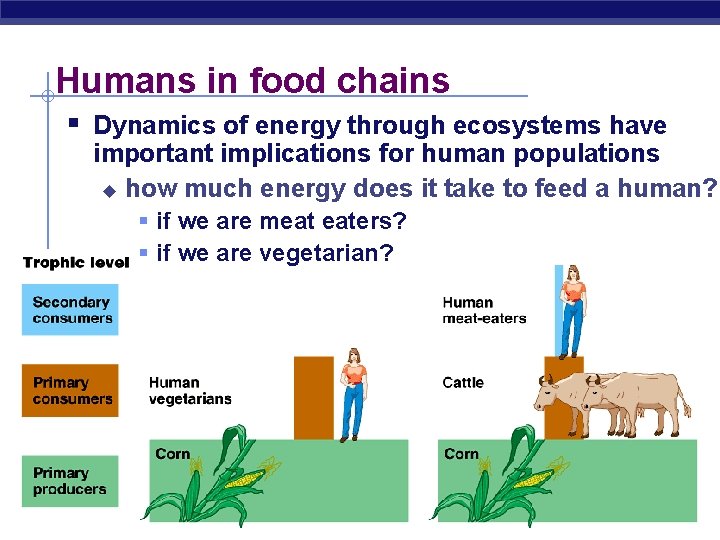
Humans in food chains § Dynamics of energy through ecosystems have important implications for human populations u how much energy does it take to feed a human? § if we are meat eaters? § if we are vegetarian? AP Biology
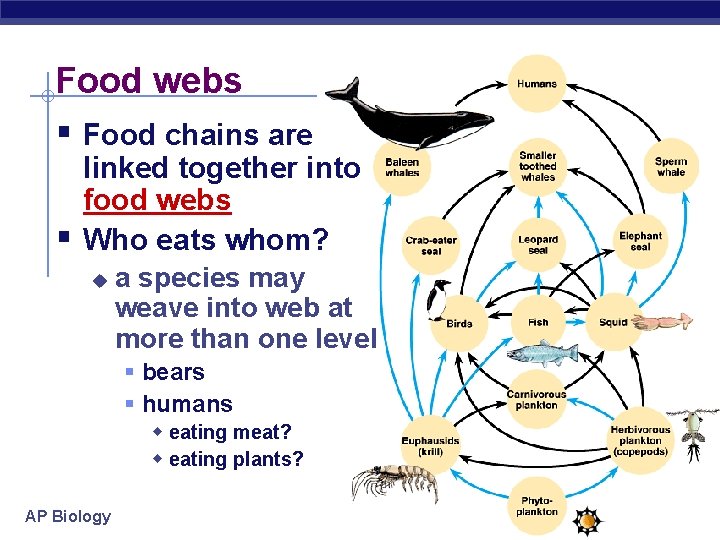
Food webs § Food chains are § linked together into food webs Who eats whom? u a species may weave into web at more than one level § bears § humans w eating meat? w eating plants? AP Biology
Energy in an Ecosystem § Summarize how energy is cycled through an ecosystem AP Biology
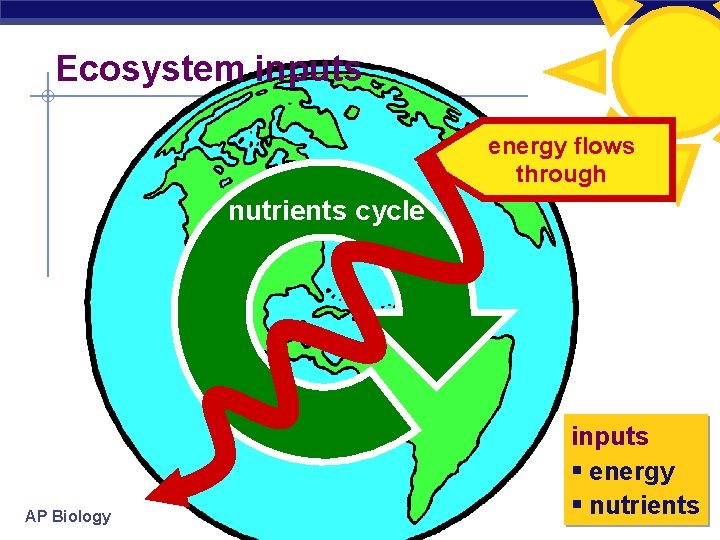
Ecosystem inputs energy flows through nutrients cycle AP Biology biosphere inputs § energy § nutrients
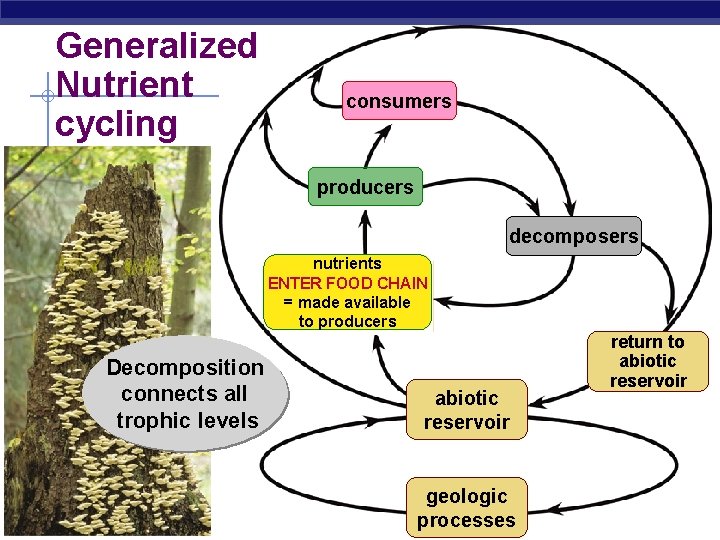
Generalized Nutrient cycling consumers producers consumers decomposers nutrients ENTER FOOD CHAIN made available = made available to producers Decomposition connects all trophic levels AP Biology abiotic reservoir geologic processes return to abiotic reservoir
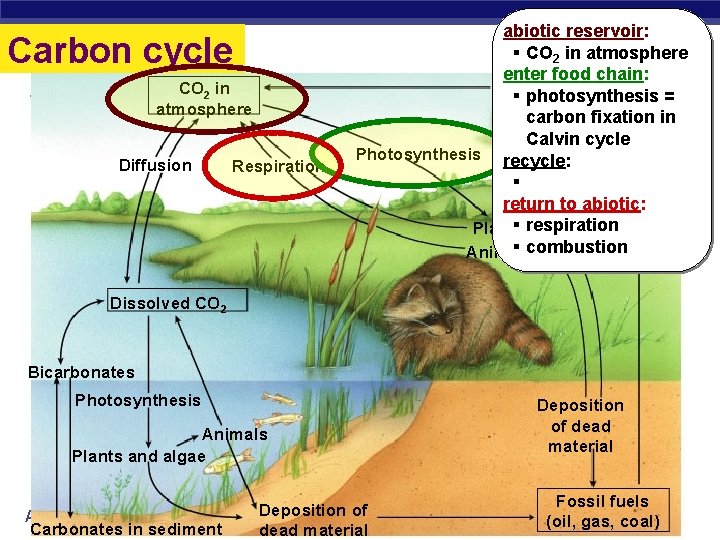
Carbon cycle CO 2 in atmosphere Diffusion Respiration abiotic reservoir: § CO 2 in atmosphere enter food chain: Combustion of fuels = § photosynthesis carbon fixation in Industry and home Calvin cycle Photosynthesis recycle: § return to abiotic: § respiration Plants § combustion Animals Dissolved CO 2 Bicarbonates Photosynthesis Animals Plants and algae AP Biology Carbonates in sediment Deposition of dead material Fossil fuels (oil, gas, coal)
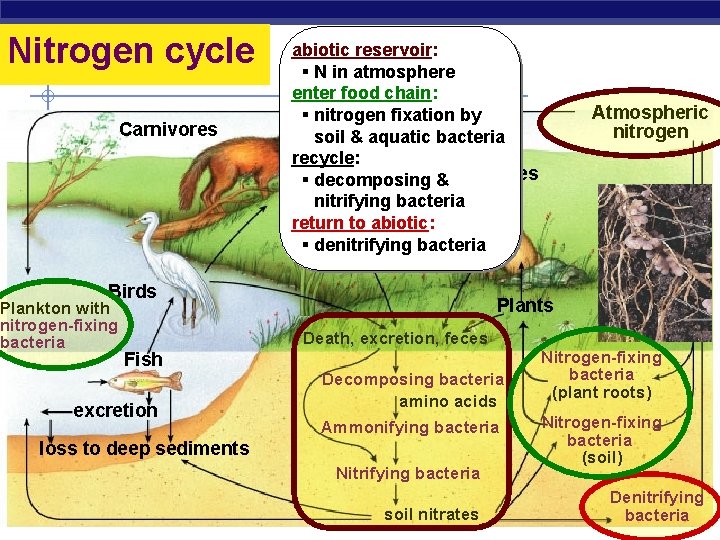
Nitrogen cycle Carnivores abiotic reservoir: § N in atmosphere enter food chain: § nitrogen fixation by soil & aquatic bacteria recycle: Herbivores § decomposing & nitrifying bacteria return to abiotic: § denitrifying bacteria Birds Plankton with nitrogen-fixing bacteria Plants Death, excretion, feces Fish excretion Decomposing bacteria amino acids Ammonifying bacteria loss to deep sediments Nitrifying bacteria AP Biology Atmospheric nitrogen soil nitrates Nitrogen-fixing bacteria (plant roots) Nitrogen-fixing bacteria (soil) Denitrifying bacteria
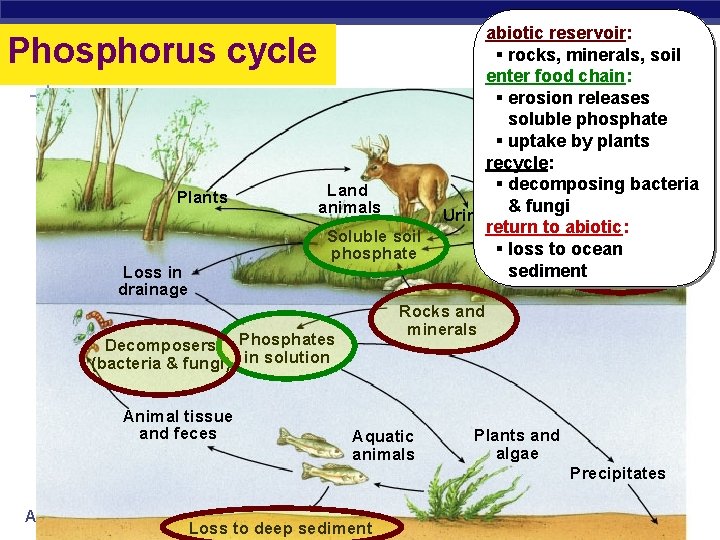
Phosphorus cycle Plants Land animals Soluble soil phosphate Loss in drainage abiotic reservoir: § rocks, minerals, soil enter food chain: § erosion releases soluble phosphate § uptake by plants recycle: § decomposing bacteria Animal tissue & fungi Urine and feces return to abiotic: § loss to. Decomposers ocean (bacteria and sediment fungi) Rocks and minerals Decomposers Phosphates (bacteria & fungi) in solution Animal tissue and feces Aquatic animals Plants and algae Precipitates AP Biology Loss to deep sediment
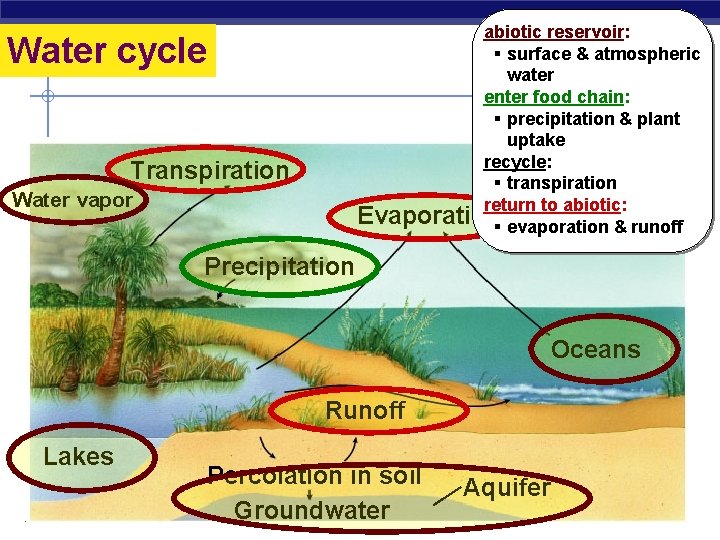
abiotic reservoir: § surface & atmospheric water enter food chain: § precipitation & plant uptake Solar energy recycle: § transpiration return to abiotic: Evaporation§ evaporation & runoff Water cycle Transpiration Water vapor Precipitation Oceans Runoff Lakes AP Biology Percolation in soil Groundwater Aquifer
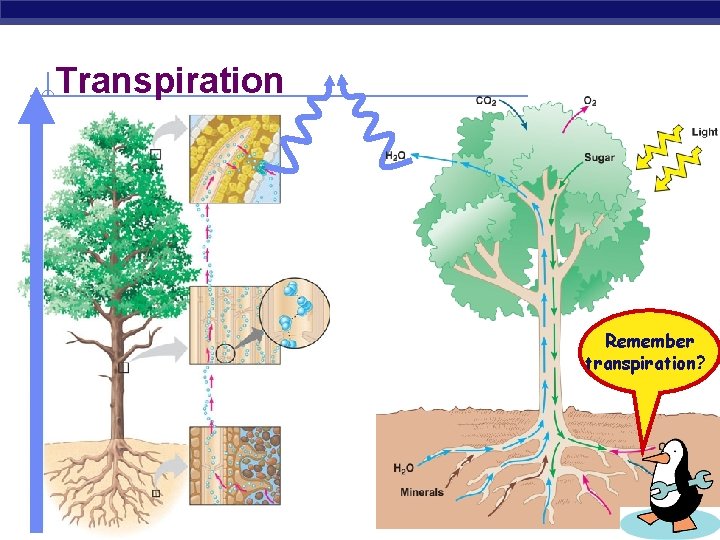
Transpiration Remember transpiration? AP Biology
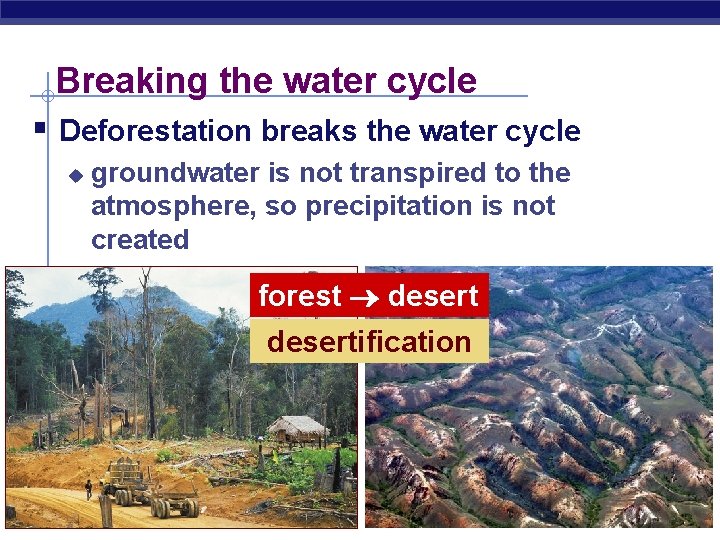
Breaking the water cycle § Deforestation breaks the water cycle u groundwater is not transpired to the atmosphere, so precipitation is not created forest desertification AP Biology
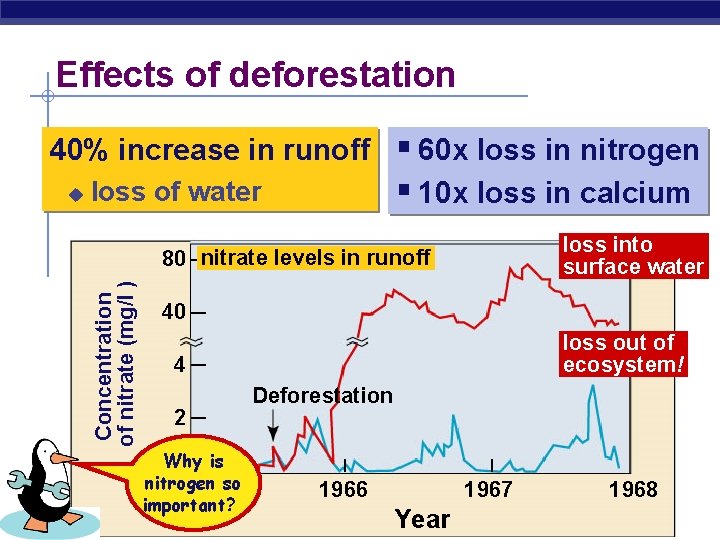
Effects of deforestation 40% increase in runoff u loss of water § 60 x loss in nitrogen § 10 x loss in calcium loss into surface water Concentration of nitrate (mg/l ) 80 nitrate levels in runoff AP Biology 40 loss out of ecosystem! 4 2 Why is 0 nitrogen 1965 so important? Deforestation 1966 1967 Year 1968
Learning Check § Differentiate between the nitrogen, water, carbon and phosphorus cycles Sources of each? u Outputs of each? u AP Biology
Disoolved Oxygen and Productivity § How do you determine how well an ecosystem is functioning? § Measure the productivity of the organisms § Lab Bench AP Biology
Productivity § Primary productivity u rate at which plants and other photosynthetic organisms produce organic compounds in an ecosystem. § Gross productivity u the entire photosynthetic production of organic compounds in an ecosystem. § Net productivity u AP Biology the organic materials that remain after photosynthetic organisms in the ecosystem have used some of these compounds for their cellular energy needs (cellular respiration).
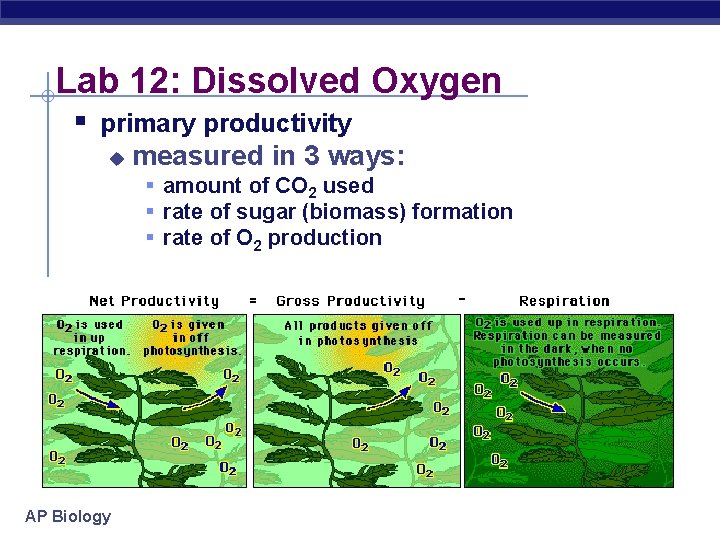
Lab 12: Dissolved Oxygen § primary productivity u measured in 3 ways: § amount of CO 2 used § rate of sugar (biomass) formation § rate of O 2 production AP Biology
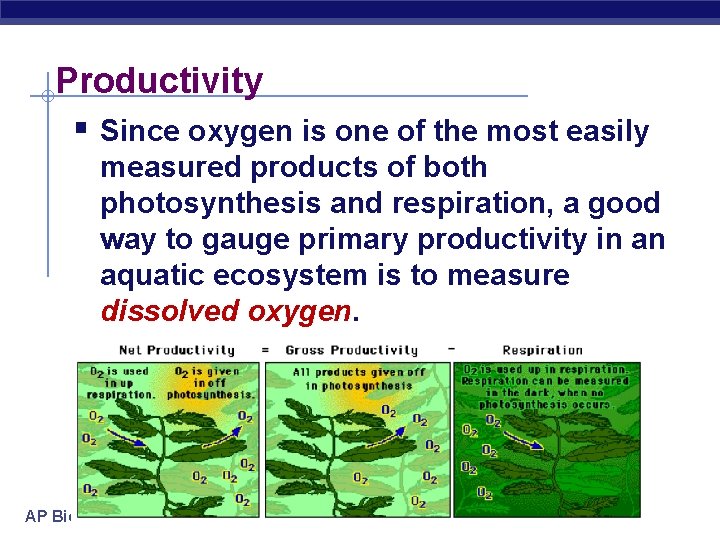
Productivity § Since oxygen is one of the most easily measured products of both photosynthesis and respiration, a good way to gauge primary productivity in an aquatic ecosystem is to measure dissolved oxygen. AP Biology
Lab 12: Dissolved Oxygen § Description u u measure primary productivity by measuring O 2 production factors that affect amount of dissolved O 2 § temperature w as water temperature, its ability to hold O 2 decreases § photosynthetic activity w in bright light, aquatic plants produce more O 2 § decomposition activity w as organic matter decays, microbial respiration consumes O 2 § mixing & turbulence w wave action, waterfalls & rapids aerate H 2 O & O 2 § salinity w as water becomes more salty, its ability to hold O 2 decreases AP Biology
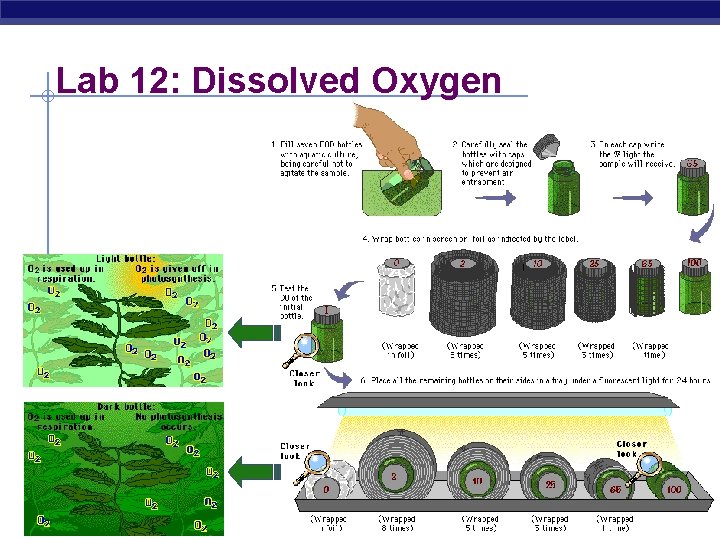
Lab 12: Dissolved Oxygen AP Biology
- Slides: 28