
AP Biology Calculations Standard Deviation and Standard Error
AP Biology Calculations: Standard Deviation and Standard Error
Standard Deviation: • A measure of how spread out the data is from the mean
• Lower standard deviation: ▫ Data is closer to the mean ▫ Greater likelihood that the independent variable is causing the changes in the dependent variable • Higher standard deviation: ▫ Data is more spread out from the mean ▫ More likely factors, other than the independent variable, are influencing the dependent variable
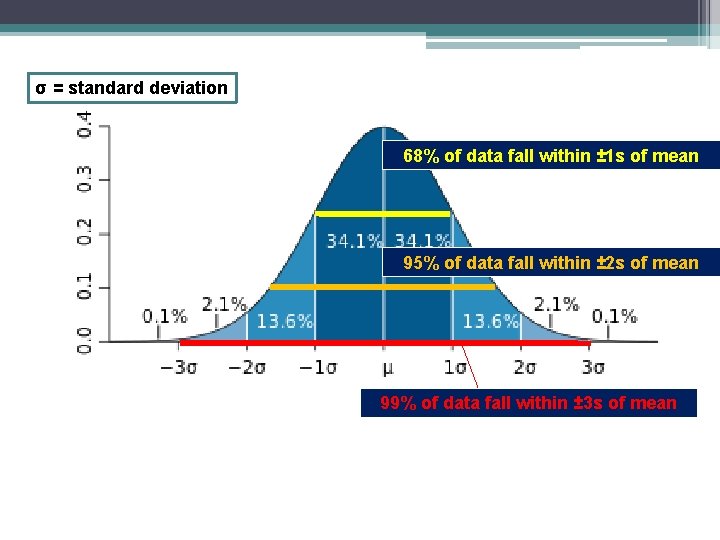
σ = standard deviation 68% of data fall within ± 1 s of mean 95% of data fall within ± 2 s of mean 99% of data fall within ± 3 s of mean
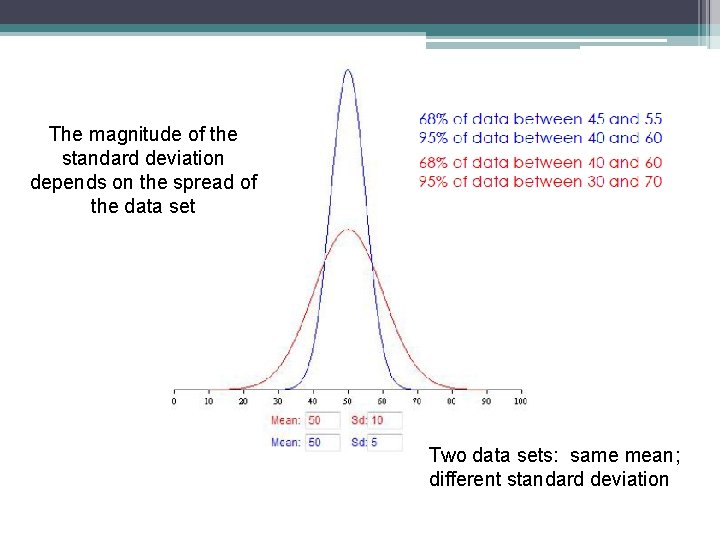
The magnitude of the standard deviation depends on the spread of the data set Two data sets: same mean; different standard deviation
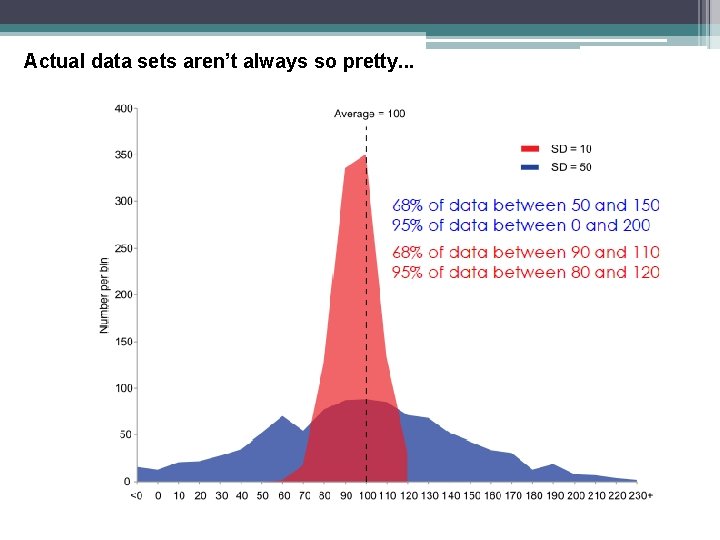
Actual data sets aren’t always so pretty. . .
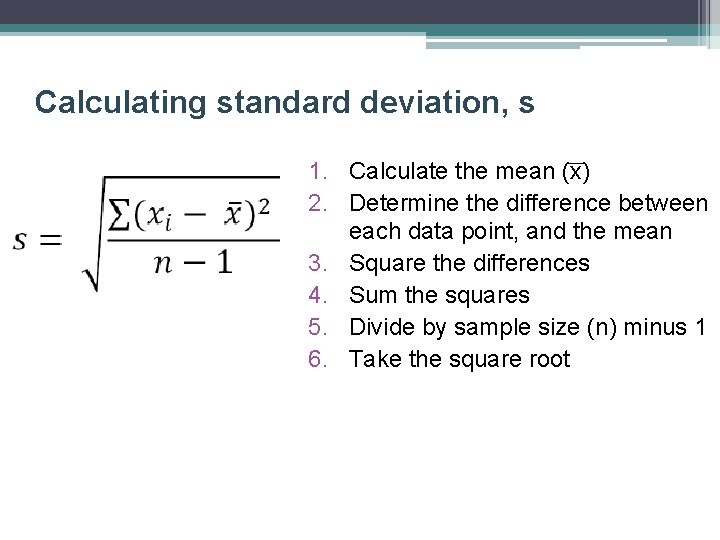
Calculating standard deviation, s 1. Calculate the mean (x) 2. Determine the difference between each data point, and the mean 3. Square the differences 4. Sum the squares 5. Divide by sample size (n) minus 1 6. Take the square root
Standard Error: • Indication of how well the mean of a sample (x) estimates the true mean of a population (μ) • Measure of accuracy, if the true mean is known • Measure of precision, if true mean is not known
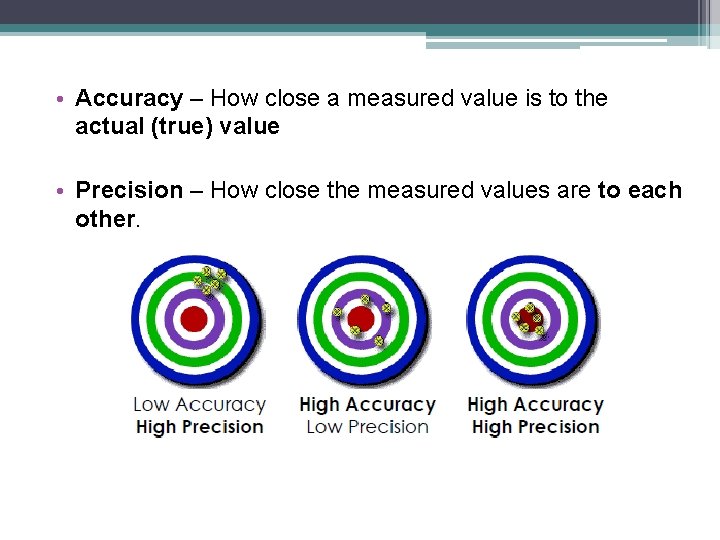
• Accuracy – How close a measured value is to the actual (true) value • Precision – How close the measured values are to each other.
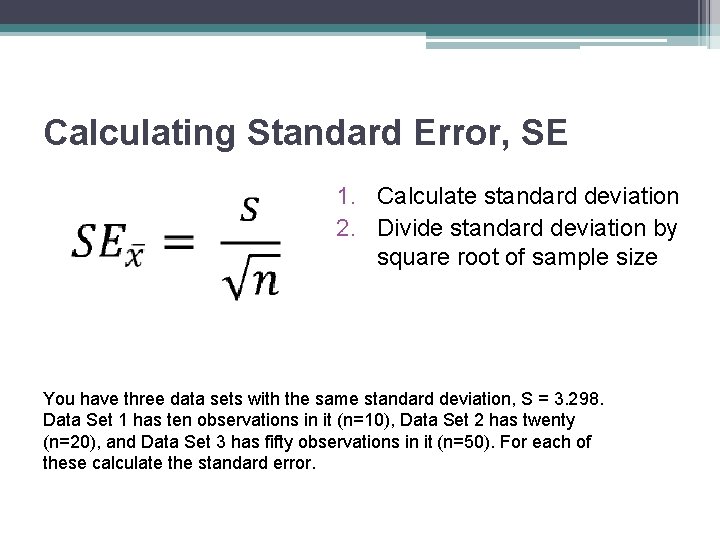
Calculating Standard Error, SE 1. Calculate standard deviation 2. Divide standard deviation by square root of sample size You have three data sets with the same standard deviation, S = 3. 298. Data Set 1 has ten observations in it (n=10), Data Set 2 has twenty (n=20), and Data Set 3 has fifty observations in it (n=50). For each of these calculate the standard error.
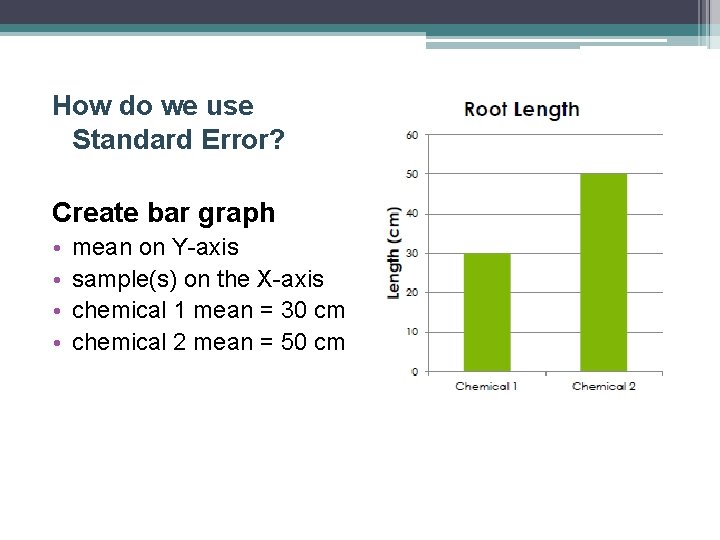
How do we use Standard Error? Create bar graph • • mean on Y-axis sample(s) on the X-axis chemical 1 mean = 30 cm chemical 2 mean = 50 cm
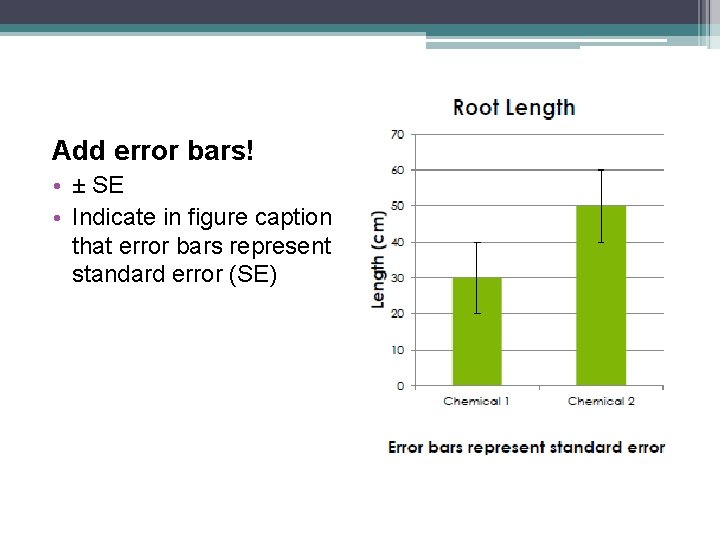
Add error bars! • ± SE • Indicate in figure caption that error bars represent standard error (SE)
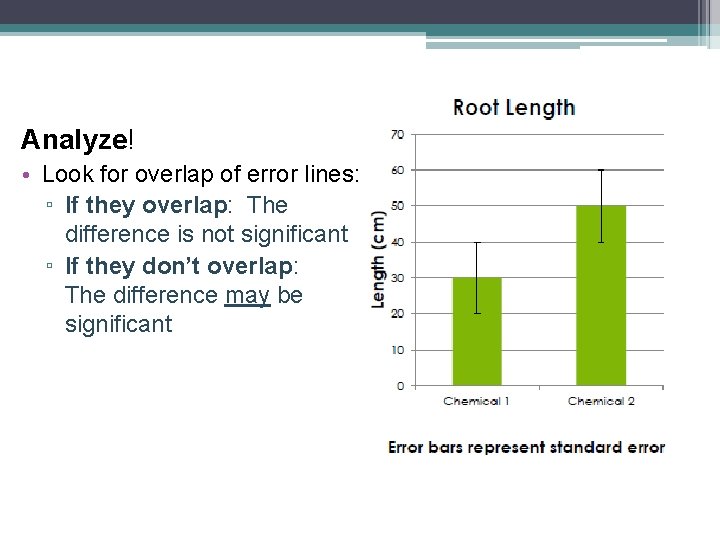
Analyze! • Look for overlap of error lines: ▫ If they overlap: The difference is not significant ▫ If they don’t overlap: The difference may be significant
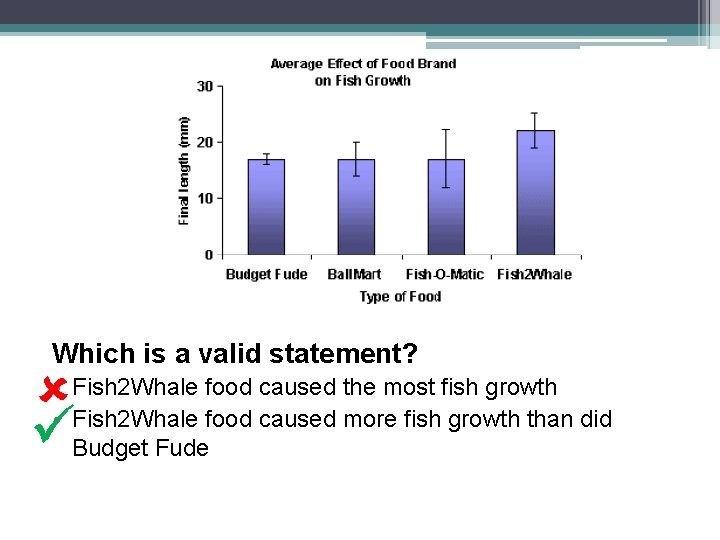
Which is a valid statement? • Fish 2 Whale food caused the most fish growth • Fish 2 Whale food caused more fish growth than did Budget Fude
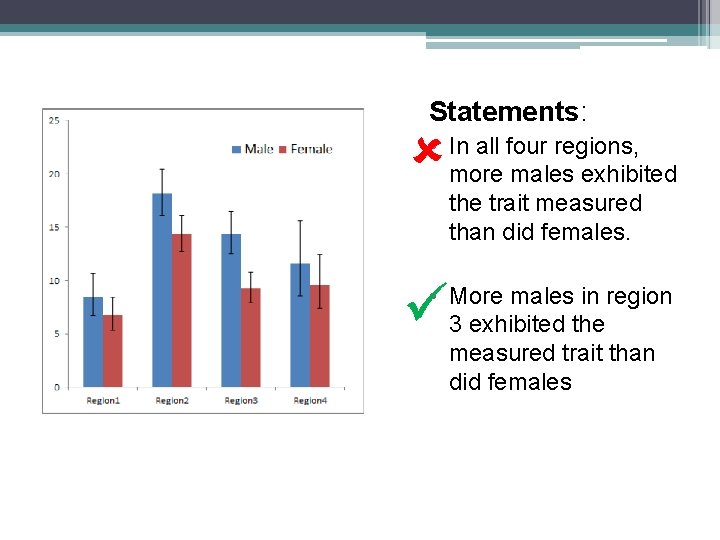
Statements: • In all four regions, more males exhibited the trait measured than did females. • More males in region 3 exhibited the measured trait than did females
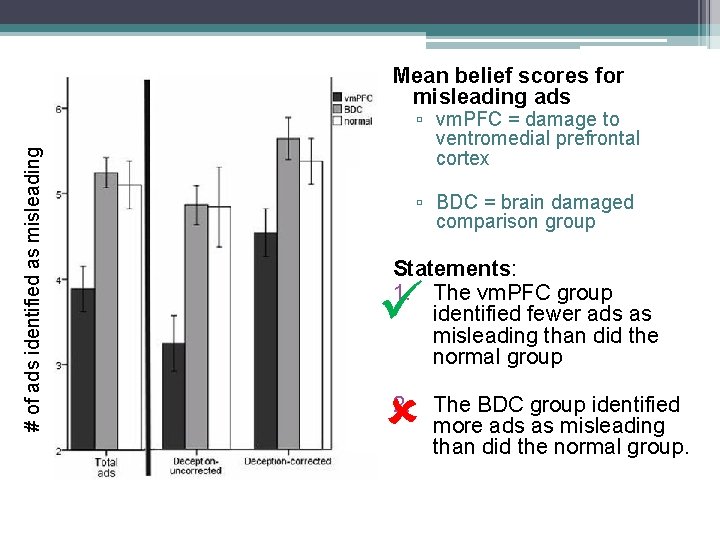
# of ads identified as misleading Mean belief scores for misleading ads ▫ vm. PFC = damage to ventromedial prefrontal cortex ▫ BDC = brain damaged comparison group Statements: 1. The vm. PFC group identified fewer ads as misleading than did the normal group 2. The BDC group identified more ads as misleading than did the normal group.
Example Problem A student noticed that the ivy leaves growing on the shady side of a building were larger than ivy leaves growing on the sunny side of the same building. The student collected and measured the maximum width, in centimeters, of 30 leaves from each habitat. Use statistical analysis to determine if it’s likely that there is a significant difference in leaf size between the shady and sunny ivy plants with 95% confidence (± 2 SE).
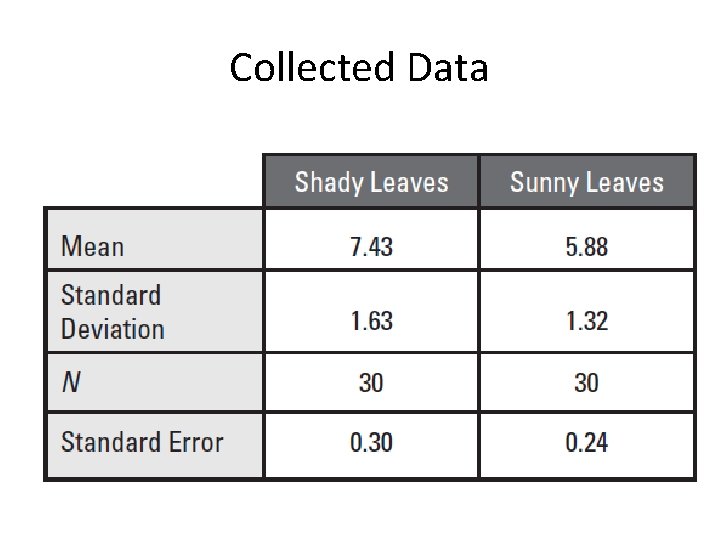
Collected Data
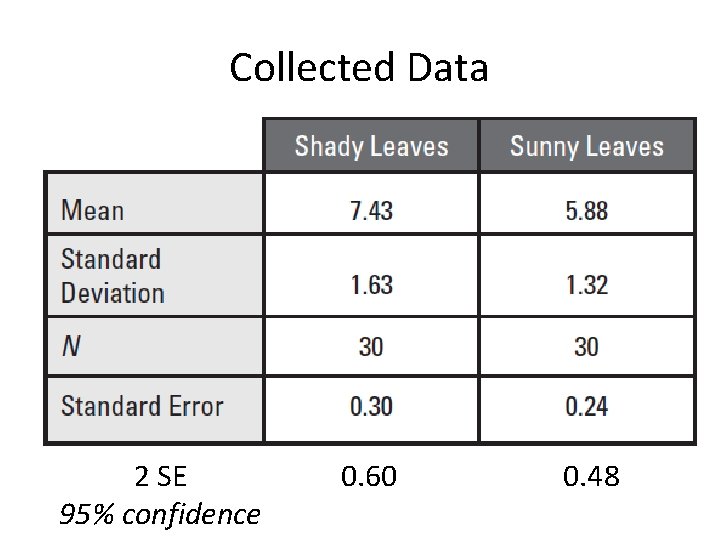
Collected Data 2 SE 95% confidence 0. 60 0. 48
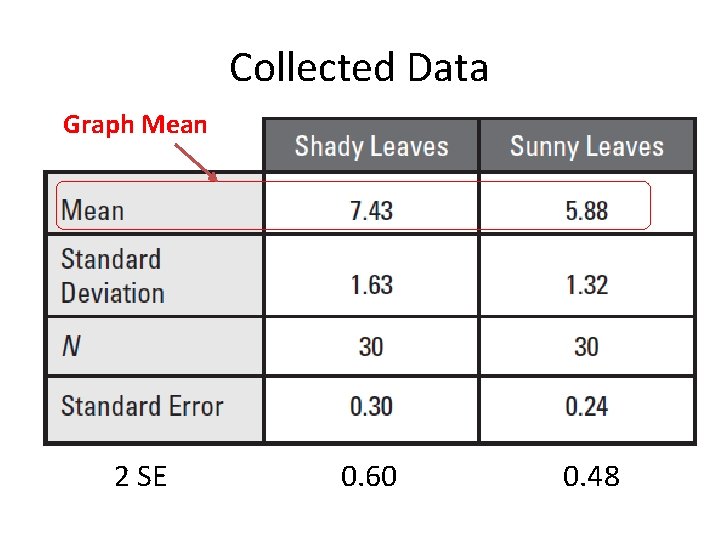
Collected Data Graph Mean 2 SE 0. 60 0. 48
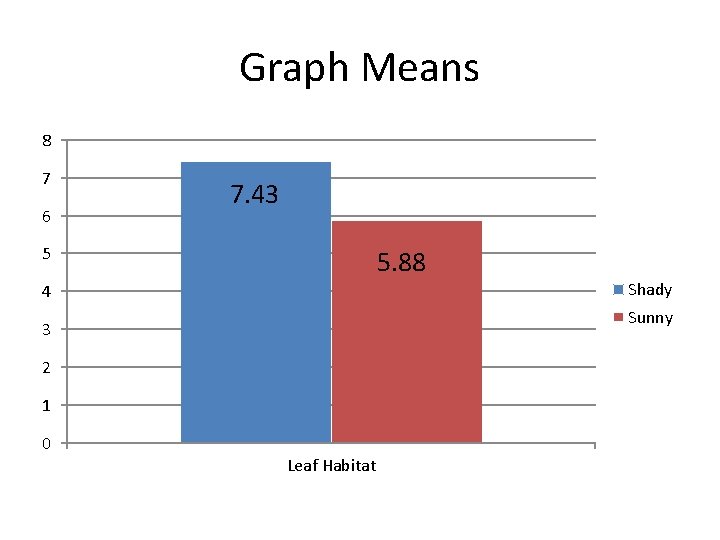
Graph Means 8 7 6 7. 43 5 5. 88 Shady 4 Sunny 3 2 1 0 Leaf Habitat
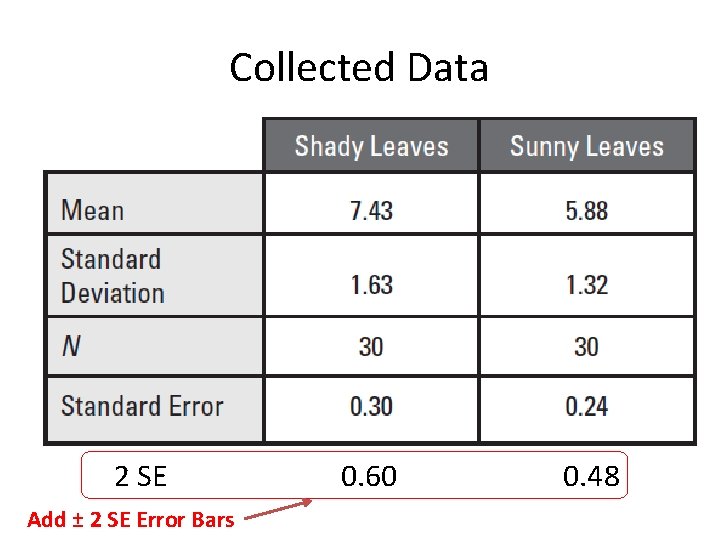
Collected Data 2 SE Add ± 2 SE Error Bars 0. 60 0. 48
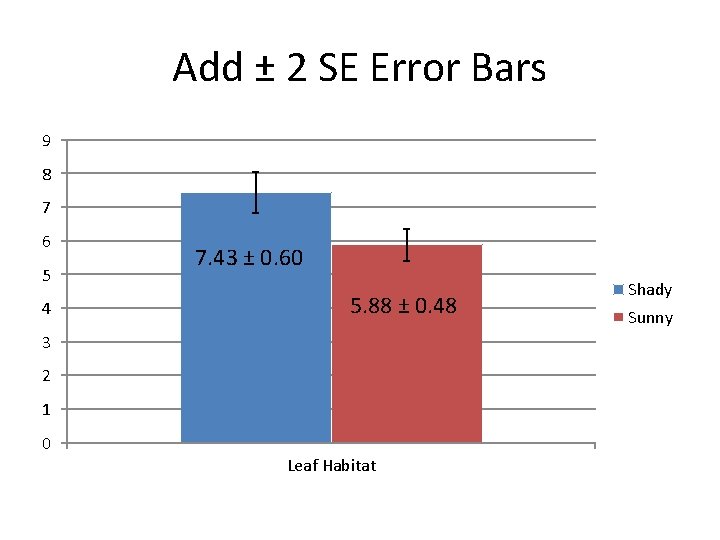
Add ± 2 SE Error Bars 9 8 7 6 5 4 7. 43 ± 0. 60 5. 88 ± 0. 48 3 2 1 0 Leaf Habitat Shady Sunny
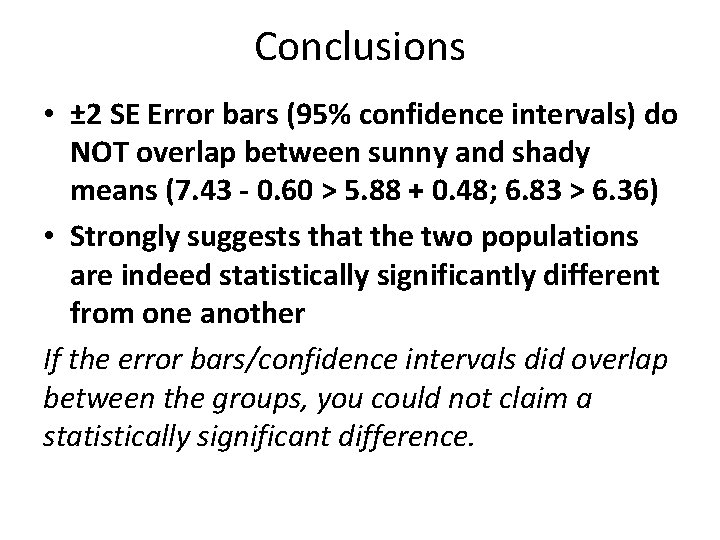
Conclusions • ± 2 SE Error bars (95% confidence intervals) do NOT overlap between sunny and shady means (7. 43 - 0. 60 > 5. 88 + 0. 48; 6. 83 > 6. 36) • Strongly suggests that the two populations are indeed statistically significantly different from one another If the error bars/confidence intervals did overlap between the groups, you could not claim a statistically significant difference.
- Slides: 24