
AP BIOLOGY ANIMAL FORM AND FUNCTION Respiratory System
AP BIOLOGY ANIMAL FORM AND FUNCTION Respiratory System

Gas Exchange Occurs Across Specialized Respiratory Surfaces Animal cells require O 2 for aerobic respiration. If cells are not directly exposed to the outside environment, then some mechanism must provide gas exchange to internal cells— delivering O 2 and removing waste CO 2.
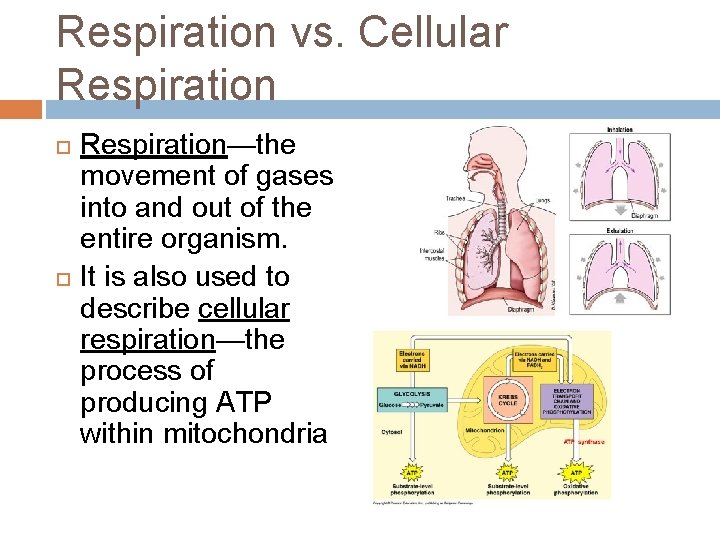
Respiration vs. Cellular Respiration—the movement of gases into and out of the entire organism. It is also used to describe cellular respiration—the process of producing ATP within mitochondria

Gas Exchange in Different Animals Direct with environment: some animals are small enough they can exchange gas directly with the environment. Many of these animals such as the Platyhelminthes (flatworms) have large surface areas—every cell is either exposed to the environment or close enough so that gases can diffuse directly in and out.
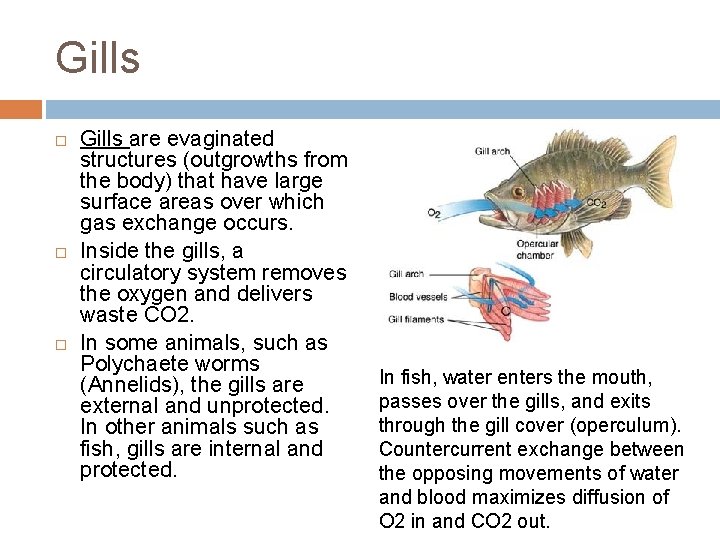
Gills Gills are evaginated structures (outgrowths from the body) that have large surface areas over which gas exchange occurs. Inside the gills, a circulatory system removes the oxygen and delivers waste CO 2. In some animals, such as Polychaete worms (Annelids), the gills are external and unprotected. In other animals such as fish, gills are internal and protected. In fish, water enters the mouth, passes over the gills, and exits through the gill cover (operculum). Countercurrent exchange between the opposing movements of water and blood maximizes diffusion of O 2 in and CO 2 out.

Tracheae Insects have chitinlined tubes, or tracheae, that permeate their bodies. Oxygen enters (and CO 2 exits) the tracheae through openings called spiracles Diffusion occurs across moistened tracheal endings.
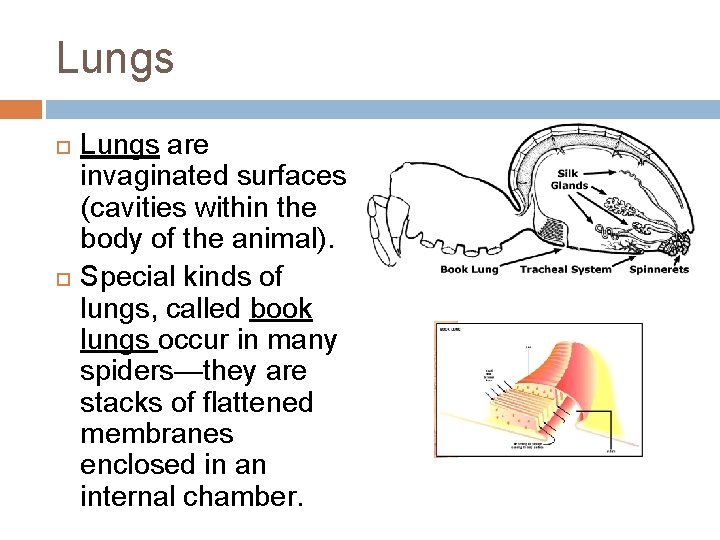
Lungs are invaginated surfaces (cavities within the body of the animal). Special kinds of lungs, called book lungs occur in many spiders—they are stacks of flattened membranes enclosed in an internal chamber.
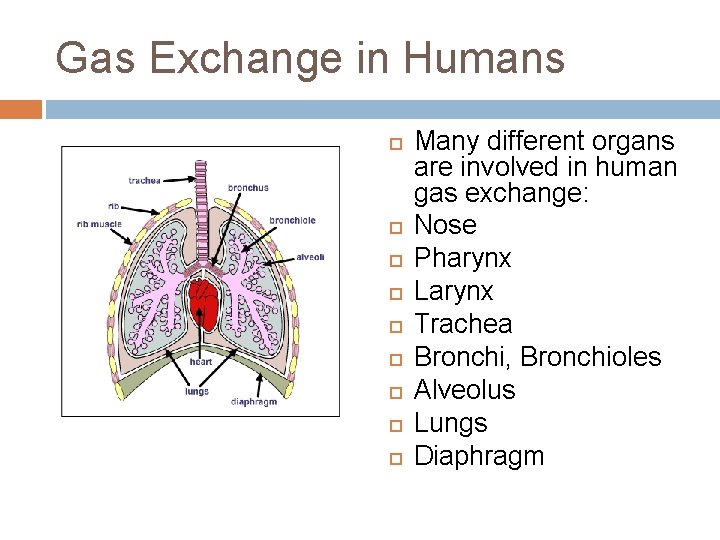
Gas Exchange in Humans Many different organs are involved in human gas exchange: Nose Pharynx Larynx Trachea Bronchi, Bronchioles Alveolus Lungs Diaphragm
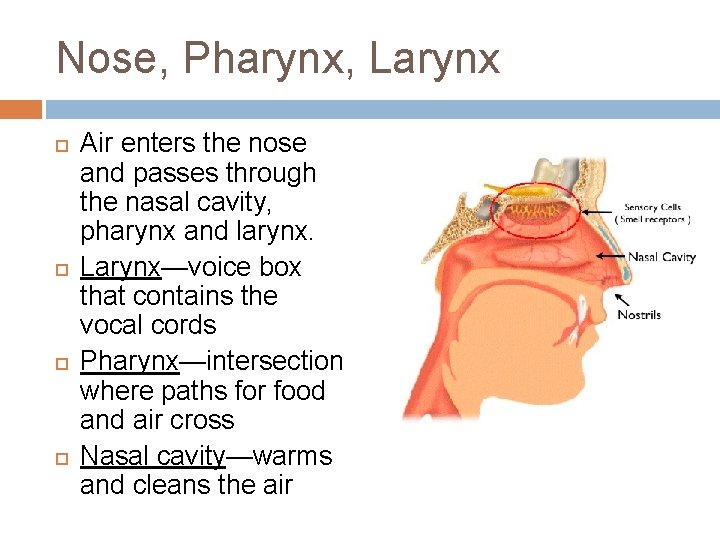
Nose, Pharynx, Larynx Air enters the nose and passes through the nasal cavity, pharynx and larynx. Larynx—voice box that contains the vocal cords Pharynx—intersection where paths for food and air cross Nasal cavity—warms and cleans the air
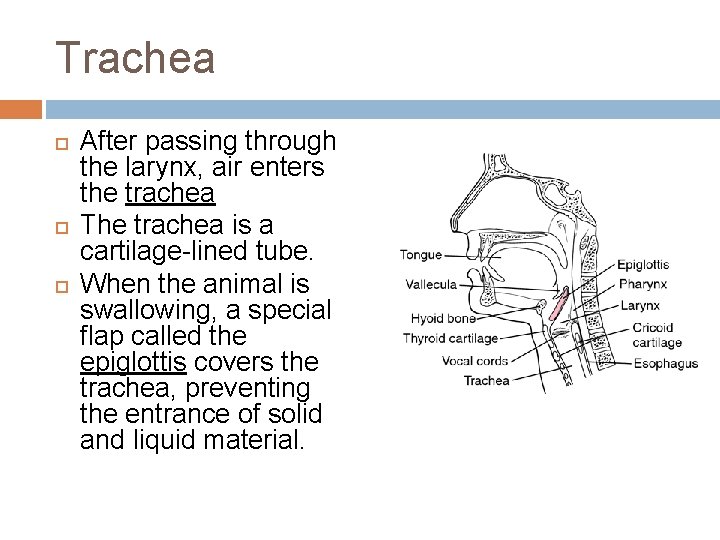
Trachea After passing through the larynx, air enters the trachea The trachea is a cartilage-lined tube. When the animal is swallowing, a special flap called the epiglottis covers the trachea, preventing the entrance of solid and liquid material.
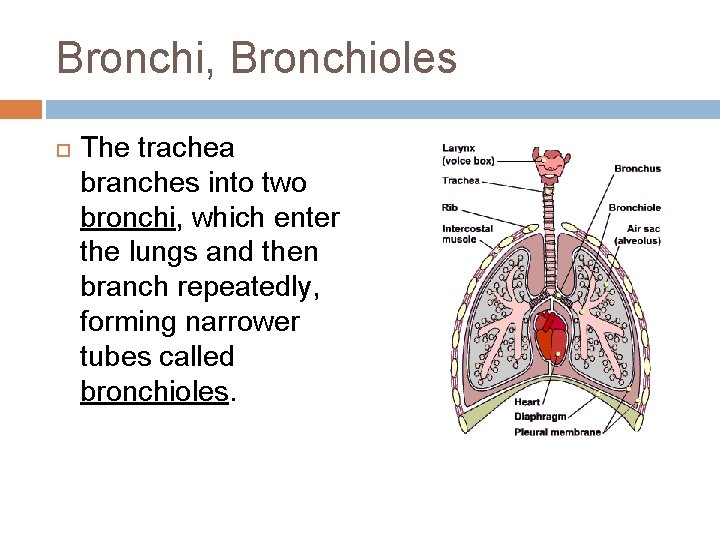
Bronchi, Bronchioles The trachea branches into two bronchi, which enter the lungs and then branch repeatedly, forming narrower tubes called bronchioles.
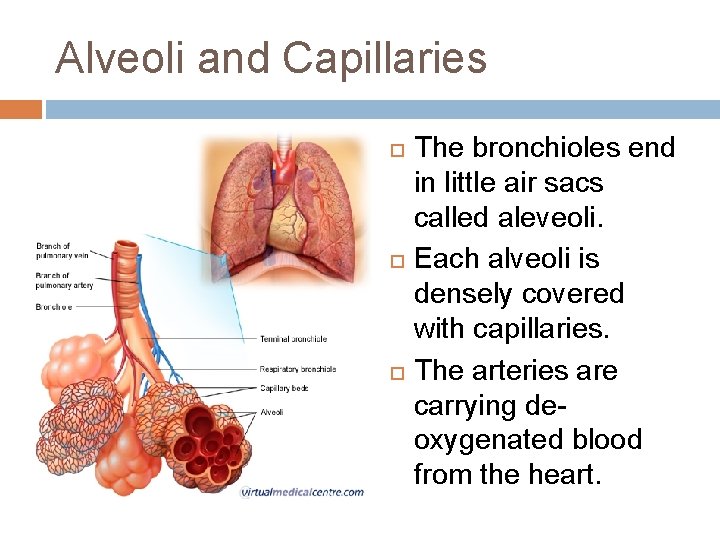
Alveoli and Capillaries The bronchioles end in little air sacs called aleveoli. Each alveoli is densely covered with capillaries. The arteries are carrying deoxygenated blood from the heart.
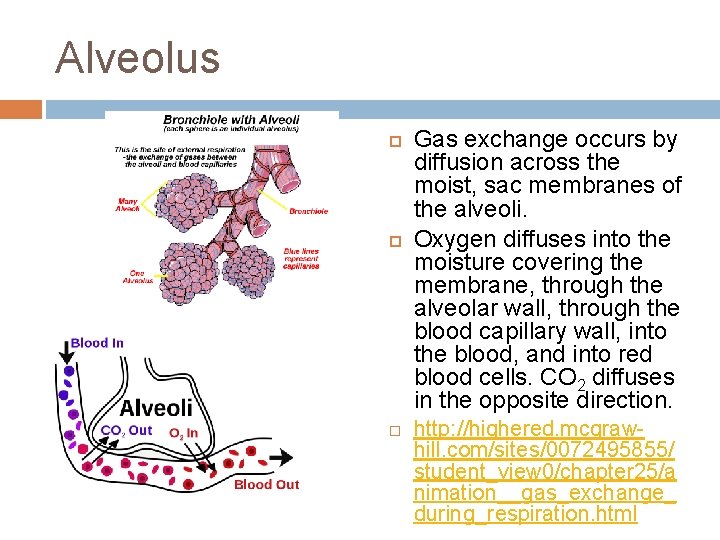
Alveolus Gas exchange occurs by diffusion across the moist, sac membranes of the alveoli. Oxygen diffuses into the moisture covering the membrane, through the alveolar wall, through the blood capillary wall, into the blood, and into red blood cells. CO 2 diffuses in the opposite direction. http: //highered. mcgrawhill. com/sites/0072495855/ student_view 0/chapter 25/a nimation__gas_exchange_ during_respiration. html
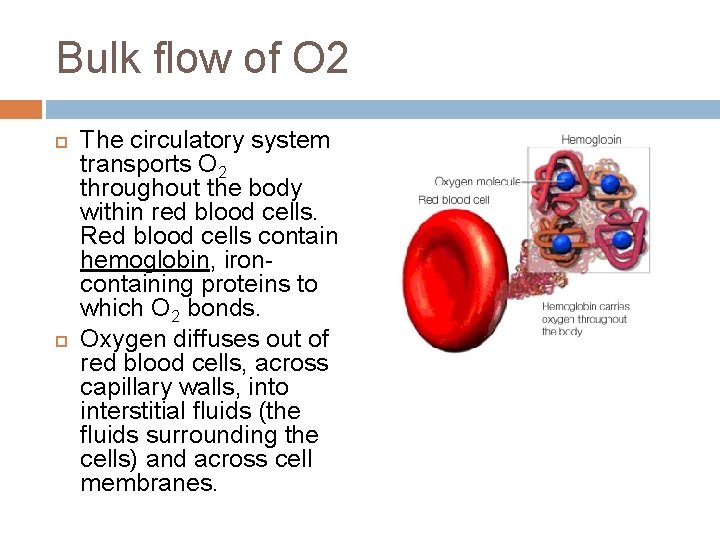
Bulk flow of O 2 The circulatory system transports O 2 throughout the body within red blood cells. Red blood cells contain hemoglobin, ironcontaining proteins to which O 2 bonds. Oxygen diffuses out of red blood cells, across capillary walls, into interstitial fluids (the fluids surrounding the cells) and across cell membranes.
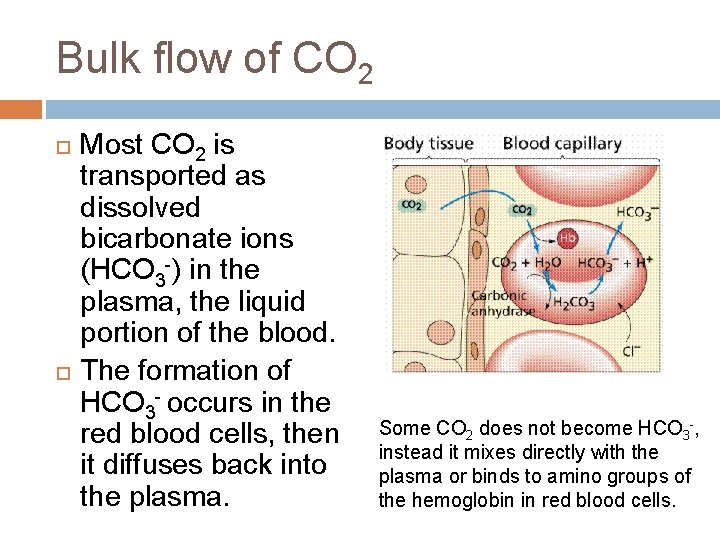
Bulk flow of CO 2 Most CO 2 is transported as dissolved bicarbonate ions (HCO 3 -) in the plasma, the liquid portion of the blood. The formation of HCO 3 - occurs in the red blood cells, then it diffuses back into the plasma. Some CO 2 does not become HCO 3 -, instead it mixes directly with the plasma or binds to amino groups of the hemoglobin in red blood cells.
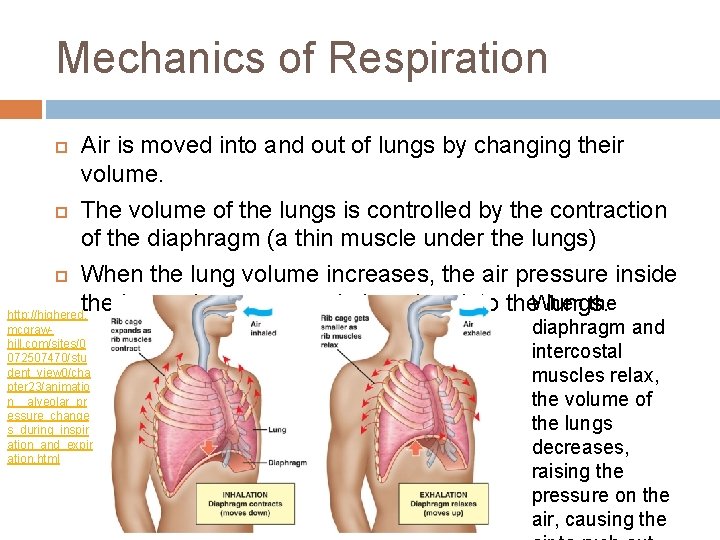
Mechanics of Respiration Air is moved into and out of lungs by changing their volume. The volume of the lungs is controlled by the contraction of the diaphragm (a thin muscle under the lungs) When the lung volume increases, the air pressure inside the lungs decreases and air rushes into the. When lungs. http: //highered. mcgrawhill. com/sites/0 072507470/stu dent_view 0/cha pter 23/animatio n__alveolar_pr essure_change s_during_inspir ation_and_expir ation. html diaphragm and intercostal muscles relax, the volume of the lungs decreases, raising the pressure on the air, causing the
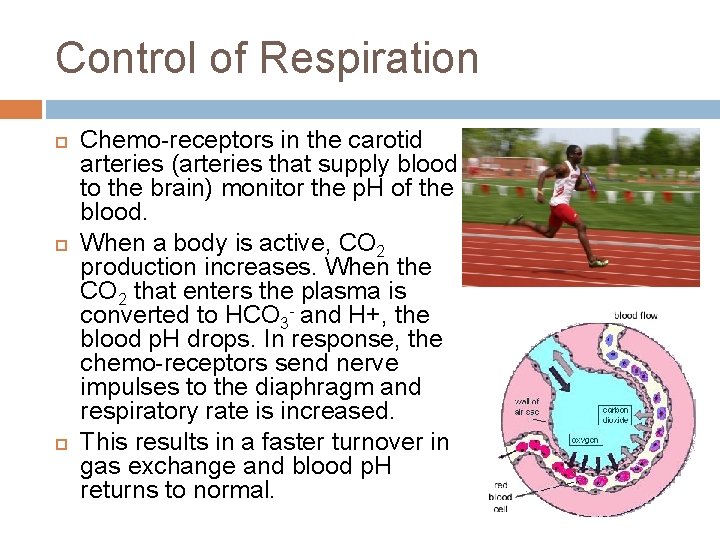
Control of Respiration Chemo-receptors in the carotid arteries (arteries that supply blood to the brain) monitor the p. H of the blood. When a body is active, CO 2 production increases. When the CO 2 that enters the plasma is converted to HCO 3 - and H+, the blood p. H drops. In response, the chemo-receptors send nerve impulses to the diaphragm and respiratory rate is increased. This results in a faster turnover in gas exchange and blood p. H returns to normal.
Respiratory System Quiz http: //www. rcs. rome. ga. us/hargett/anato my/lungs/rspdia. htm Amazing facts about the respiratory system: http: //warriors. warre n. k 12. il. us/dburke/a mazingfactsrespirat ory. htm
- Slides: 18