
AP Biology 1 2 3 Well go over
AP Biology 1. 2. 3. We’ll go over tests from before break Go through study guide (get some hints) Begin chapter 18
Purpose of this chapter… Cells are efficient because they conserve energy for processes that MUST be done. Cells have the ability to turn on or off genes depending on the proteins that are present or absent within the cell. We will learn how cells turn on or off genes to maintain cellular efficiency.

Chapter 18 - Gene Regulation Bacteria respond to environmental change by regulating transcription. Most of what we know about gene regulation is from bacteria. We will be looking at E. coli bacteria E. coli lives in the human intestinal tract
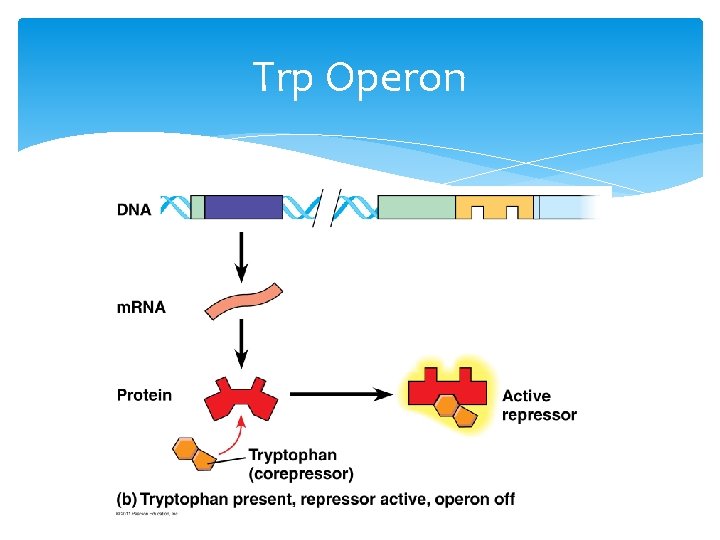
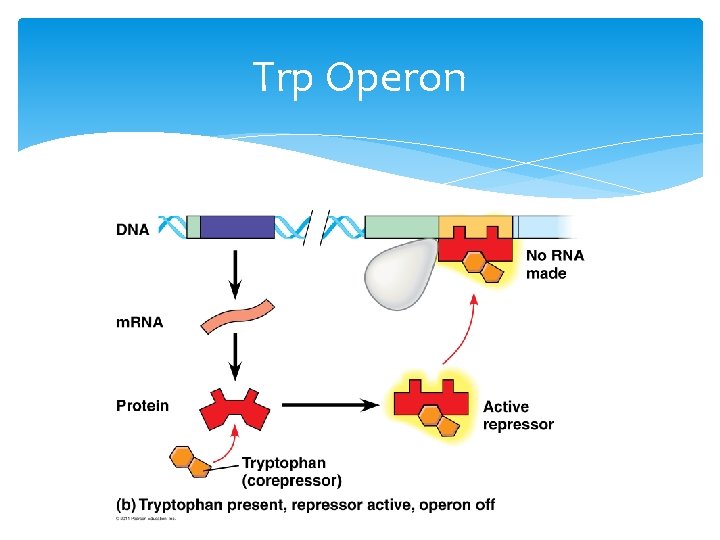
Regulation of gene expression Vocabulary 1. Tryptophan- amino acid needed for survival (bacteria) 2. Feedback- allows cell to adjust the amount of tryptophan made based on availability of the amino acid 3. Operon- the mechanism that controls gene expression
Regulation of Gene Expression Vocabulary Continued: 4. Regulatory Gene- on DNA that regulates a gene further away 5. Promoter- A specific nucleotide sequence in DNA that binds to RNA polymerase- positioning it so it may begin transcribing m. RNA 6. Operator- the on and off switch of DNA 7. Repressor- the mechanics of how the operon may be turned off (blocks attachment of RNA polymerase to promoter)
Types of Gene Regulation 1. Negative Gene Regulation (shut off by an active repressor) A. Repressible Operon B. Inducible Operon 2. Positive Gene Regulation (turned on by an active repressor)

Trp Operon
Trp Operon
Trp Operon
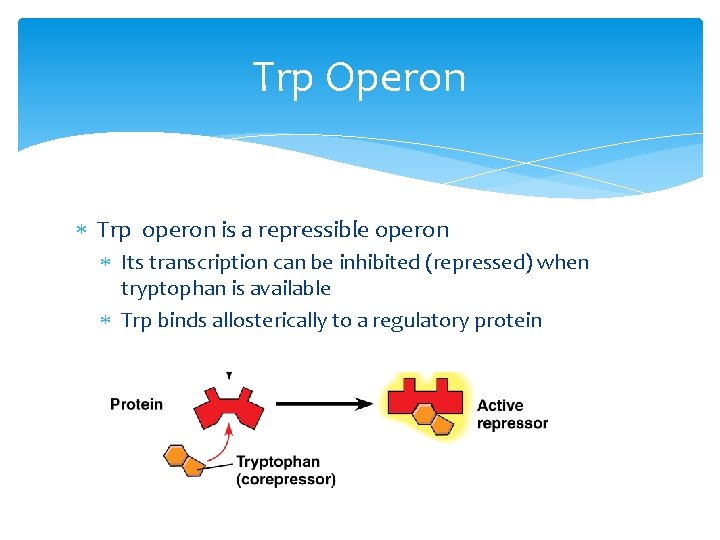
Trp Operon Trp operon is a repressible operon Its transcription can be inhibited (repressed) when tryptophan is available Trp binds allosterically to a regulatory protein
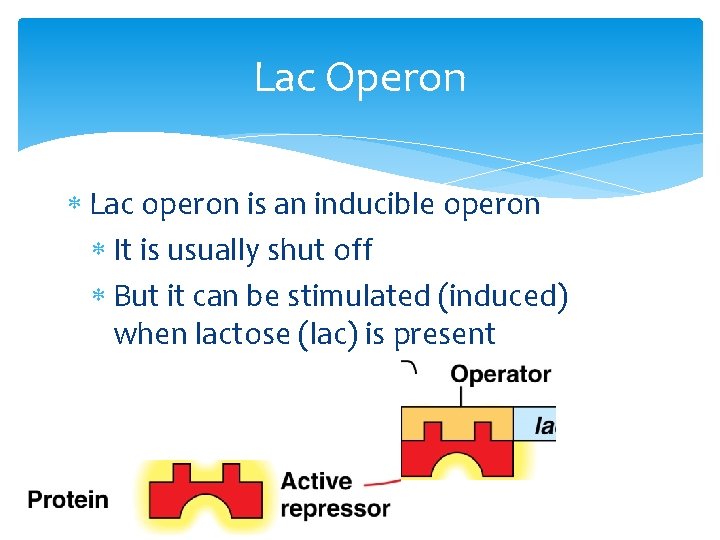
Lac Operon Lac operon is an inducible operon It is usually shut off But it can be stimulated (induced) when lactose (lac) is present

Lac Operon
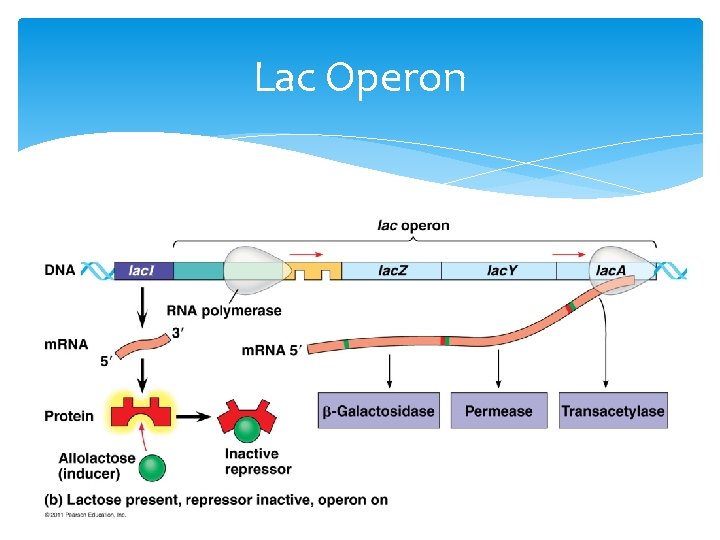
Lac Operon
Positive Gene Control Example is the lac operon (lac operon can be both positive and negative) Here’s why… E. coli prefers glucose to lactose so it will preferentially breakdown glucose rather than lactose (turning lac off) inducible However if glucose is NOT available there must be a gene that transcribes lac enzymes The absence of glucose increases the amount of c. AMP in the cell (positive)
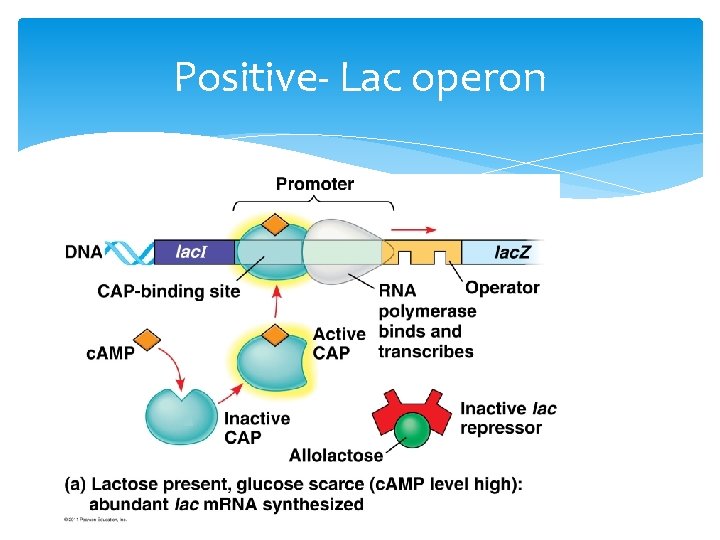
Positive- Lac operon
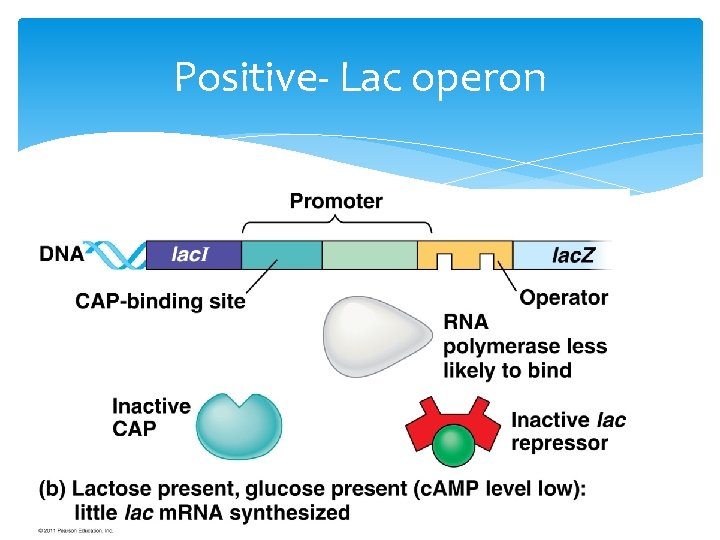
Positive- Lac operon
AP Biology Review try and lac operons Finish chapter 18, begin chapter 19 today Test is February 1 st
Eukaryotic Regulation All organisms must regulate genes. Unicellular and multicellular organisms must continually turn genes on and off in response to external and internal cues. Human cells generally express 20% of its genes at a time Different cell types are different not in DNA but because of differential gene expression
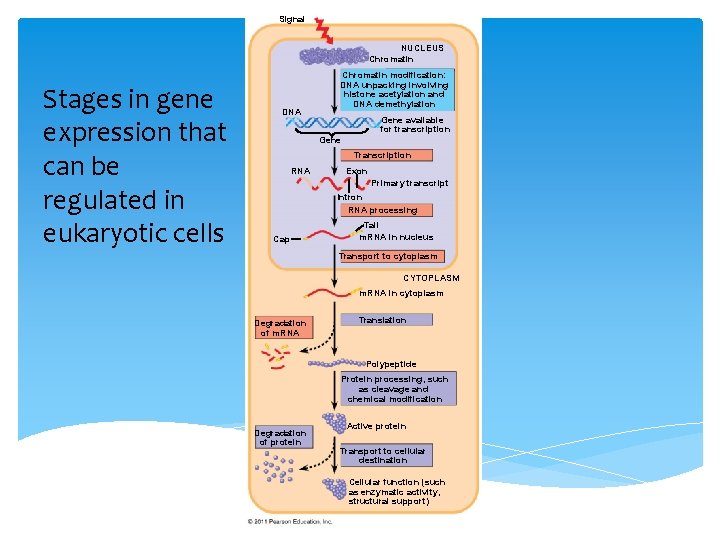
Figure 18. 6 Signal NUCLEUS Chromatin Stages in gene expression that can be regulated in eukaryotic cells DNA Chromatin modification: DNA unpacking involving histone acetylation and DNA demethylation Gene available for transcription Gene Transcription RNA Exon Primary transcript Intron RNA processing Cap Tail m. RNA in nucleus Transport to cytoplasm CYTOPLASM m. RNA in cytoplasm Degradation of m. RNA Translation Polypeptide Protein processing, such as cleavage and chemical modification Degradation of protein Active protein Transport to cellular destination Cellular function (such as enzymatic activity, structural support)
Regulation of Eukaryotic cells 1. Regulation of chromatin structure 2. Regulation of transcription initiation 3. Mechanisms of post-transcriptional regulation
Chromatin structure A. Histone Modifications- when structures around chromatin are changed a decrease in Transcription of gene occurs B. DNA methylation- long stretches of inactivated DNA
Transcription Factors 1. Enhancers- Segment of DNA containing multiple control elements, located far from where the promoter is These allow DNA to bend which brings the enhancers closer to transcription factors DNA folds over top of itself
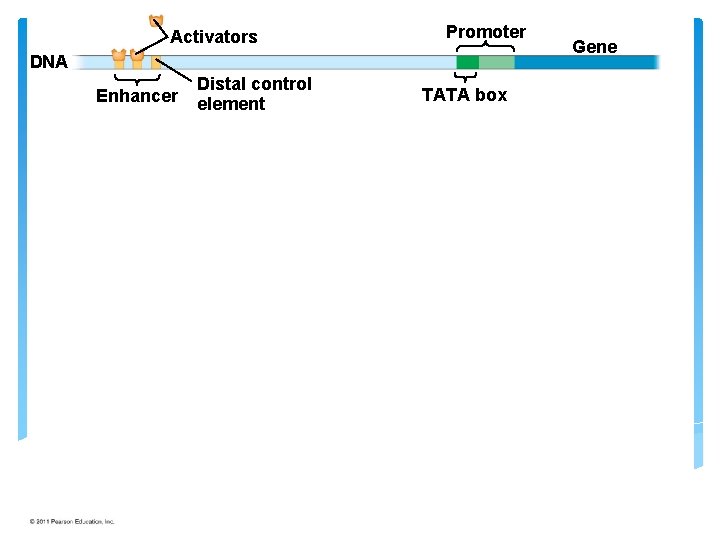
Figure 18. 10 -1 Activators Promoter DNA Enhancer Distal control element TATA box Gene
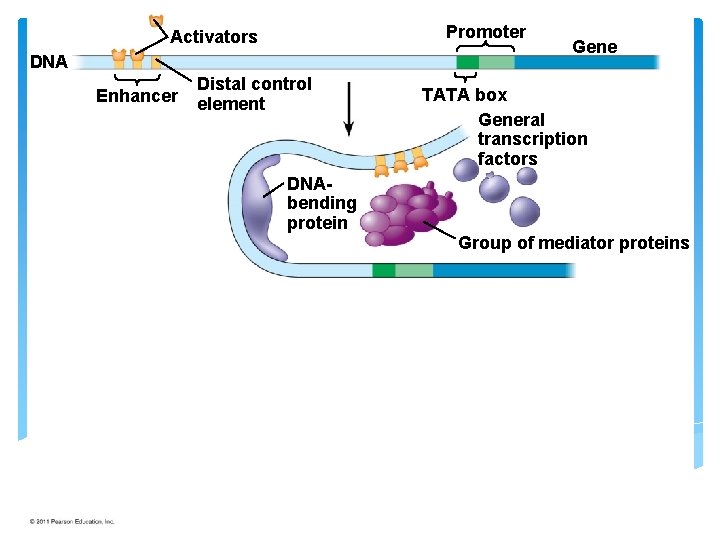
Figure 18. 10 -2 Promoter Activators DNA Enhancer Distal control element Gene TATA box General transcription factors DNAbending protein Group of mediator proteins
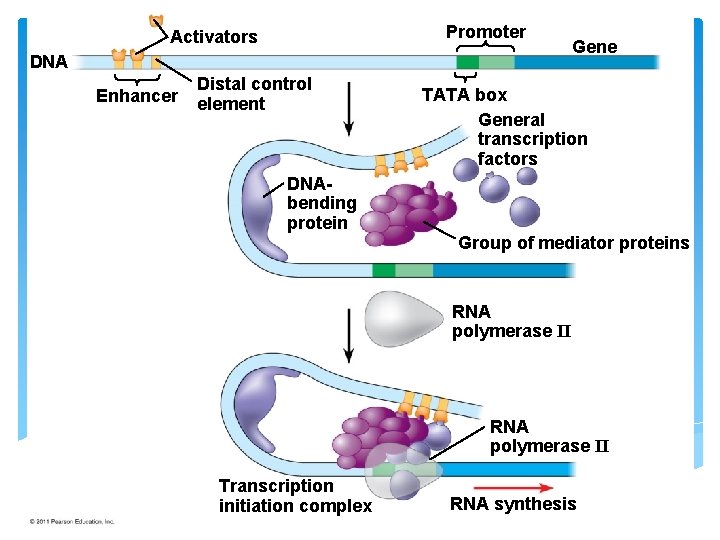
Figure 18. 10 -3 Promoter Activators DNA Enhancer Distal control element Gene TATA box General transcription factors DNAbending protein Group of mediator proteins RNA polymerase II Transcription initiation complex RNA synthesis
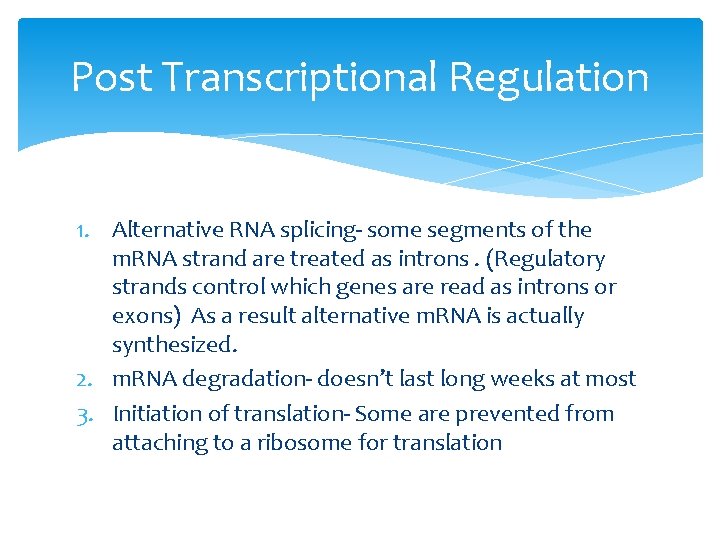
Post Transcriptional Regulation 1. Alternative RNA splicing- some segments of the m. RNA strand are treated as introns. (Regulatory strands control which genes are read as introns or exons) As a result alternative m. RNA is actually synthesized. 2. m. RNA degradation- doesn’t last long weeks at most 3. Initiation of translation- Some are prevented from attaching to a ribosome for translation
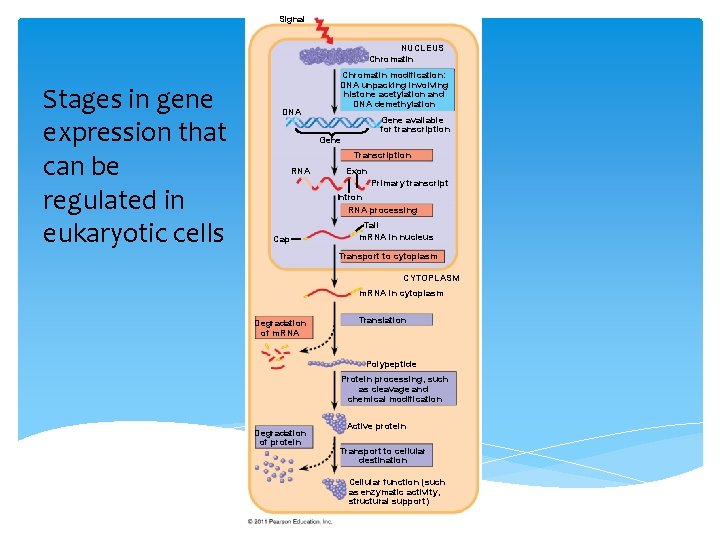
Figure 18. 6 Signal NUCLEUS Chromatin Stages in gene expression that can be regulated in eukaryotic cells DNA Chromatin modification: DNA unpacking involving histone acetylation and DNA demethylation Gene available for transcription Gene Transcription RNA Exon Primary transcript Intron RNA processing Cap Tail m. RNA in nucleus Transport to cytoplasm CYTOPLASM m. RNA in cytoplasm Degradation of m. RNA Translation Polypeptide Protein processing, such as cleavage and chemical modification Degradation of protein Active protein Transport to cellular destination Cellular function (such as enzymatic activity, structural support)
AP Biology YAY the projector is working! Finish chapter 19 today
Chapter 19 - Viruses Virus- very simple, very small. Lack metabolic machinery An infectious particle consisting of a few genes packaged in a protein coat Are viruses living or non-living? Discussion-
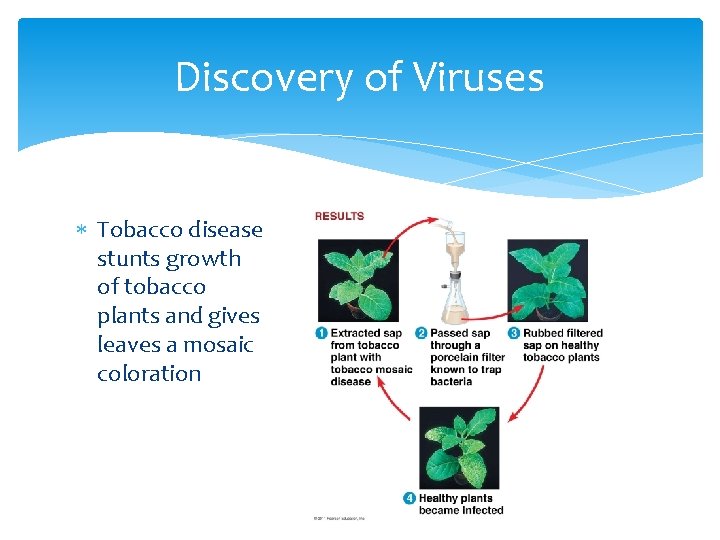
Discovery of Viruses Tobacco disease stunts growth of tobacco plants and gives leaves a mosaic coloration
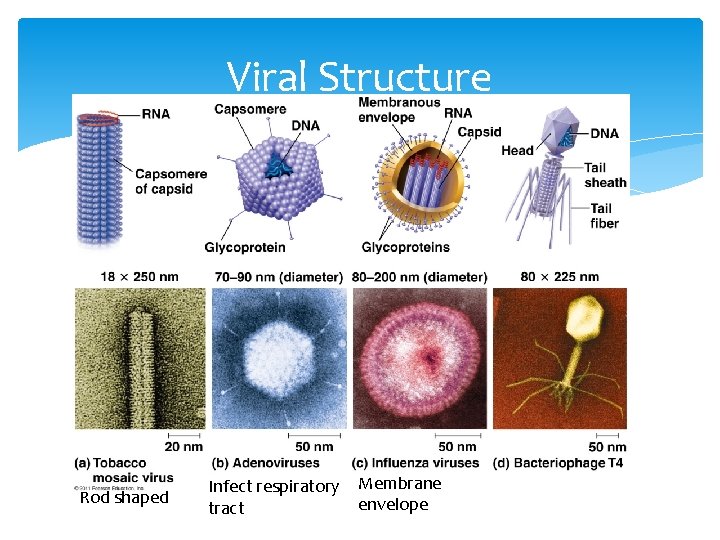
Viral Structure Rod shaped Infect respiratory tract Membrane envelope
Viral Genomes Many viruses differ in the type of genetic material they carry Double-stranded DNA Single-stranded DNA Double-stranded RNA Single-stranded RNA
Capsids and Envelopes Capsid- protein shell enclosing the viral genome Depending on virus can be rod, polyhedral, or more complex Viral envelope- membranes of host cell studded with glycoprotein spikes Influenza have this membrane envelope which encloses the capsid
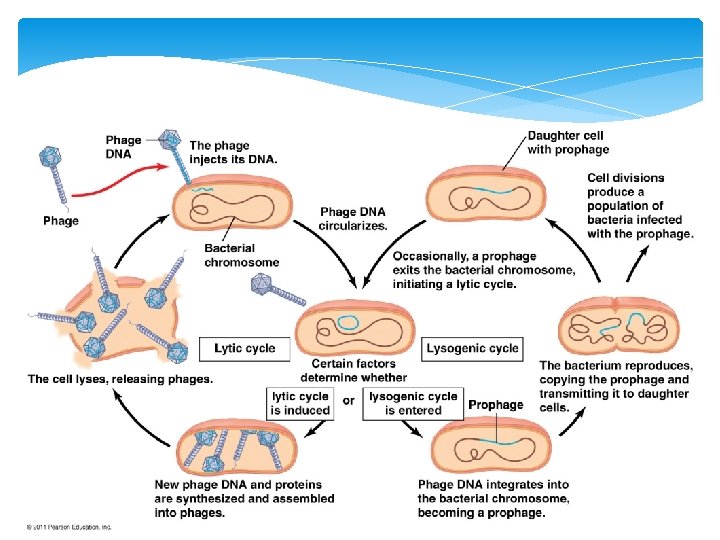
Viral Replication Lytic cycle 1. 2. 3. 4. 5. 6. 7. Attachment of virus to host cell Virus drops off genetic material Genetic material goes into nucleus Genetic material is replicated Transcription occurs Translation makes proteins Lyse= break= as protein leave it lyses the cell (programmed cell death)
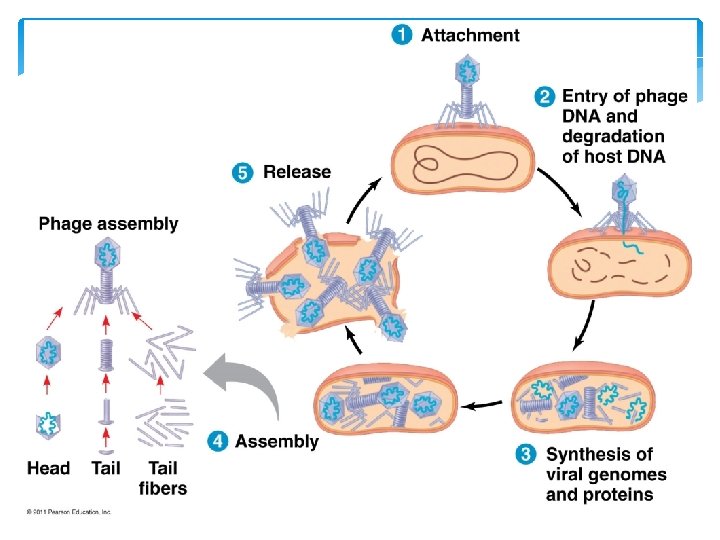
Virulent phage- a virus that only replicates by a lytic cycle Why is there still bacteria? Natural selection favors bacterial mutants with receptor sites that are no longer recognized by the phage type Bacteria produce restriction enzymes that recognize and cut up foreign DNA including phage DNA. This prevents phage to infect the cell
Lysogenic cycle Lysogenic cycle- allows replication of the phage genome without destroying the host Temperate phage- use both lytic and lysogenic cycles Prophage- when DNA from phage is integrated into the host. Host lives silently within the bacterium
Lysogenic Cycle Lysogenic cycle- the phage replicates without destroying the host cell Temperate phage- use both lytic and lysogenic cycles
Lysogenic Cycle The λ phage is temperate 1. λ binds to the surface of the cell and injects it with DNA 2. Next step depends on lytic or lysogenic cycle 3. Lysogenic= the λ DNA is incorporated into a specific site on the bacteria (E. coli) virus replicates without killing the host 4. Lytic = viral genes turn the host cell into a λ producing factory lysing the host cell and infecting more cells.
Animal virus diversity Important variations The type of nucleic acid that serves as virus’ genetic material Viruses equipped with an outer envelope use it to enter host cell Viral envelope is derived from the host’s plasma membrane, although viral genes specify some of the molecules in the membrane
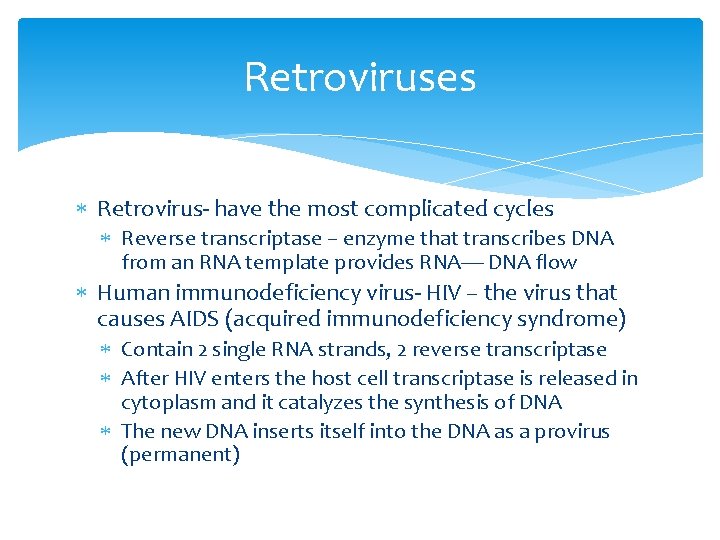
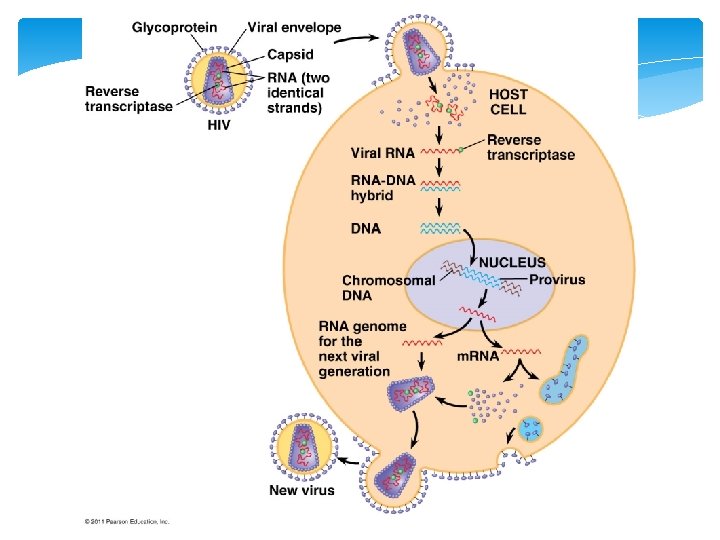
Retroviruses Retrovirus- have the most complicated cycles Reverse transcriptase – enzyme that transcribes DNA from an RNA template provides RNA---- DNA flow Human immunodeficiency virus- HIV – the virus that causes AIDS (acquired immunodeficiency syndrome) Contain 2 single RNA strands, 2 reverse transcriptase After HIV enters the host cell transcriptase is released in cytoplasm and it catalyzes the synthesis of DNA The new DNA inserts itself into the DNA as a provirus (permanent)
Evolution of Viruses have been found to infect every life form (bacteria, animals, plants, fungi, algae and protists) Because virus depends on cells for their own propagation it is likely that they evolved after the first cell appeared. Candidates Plasmids – circular DNA that are separate from chromosomes, independent from rest of the cell (can be transferred from 1 cell to another) Transposons- DNA segments that can move from 1 location to another in a cells genome
Vaccine- harmless variants or derivatives of pathogenic microbes, that stimulate the immune system to mount defenses against the actual pathogen.
AP Biology REVIEW of chapter 18, 19 today- group work. Begin chapter 20 Monday we’ll review essay writing a bit, look at great essays vs not great essays. Essay next Wednesday
AP Biology New seats? ? ? Change to schedule!!! Chapter 18 -20 test January 24!!! This Thursday!!! All labs will take place Jan 28 -Feb 1
Biotechnology Recombinant DNA- DNA segments from 2 different sources Biotechnology- the direct manipulation of organisms and their components to make useful products Genetic engineering- the direct manipulation of organisms and their genes for practical purposes
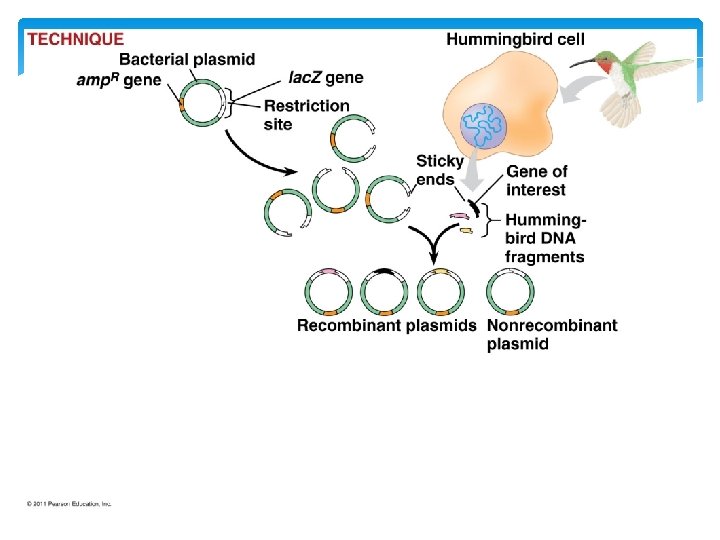
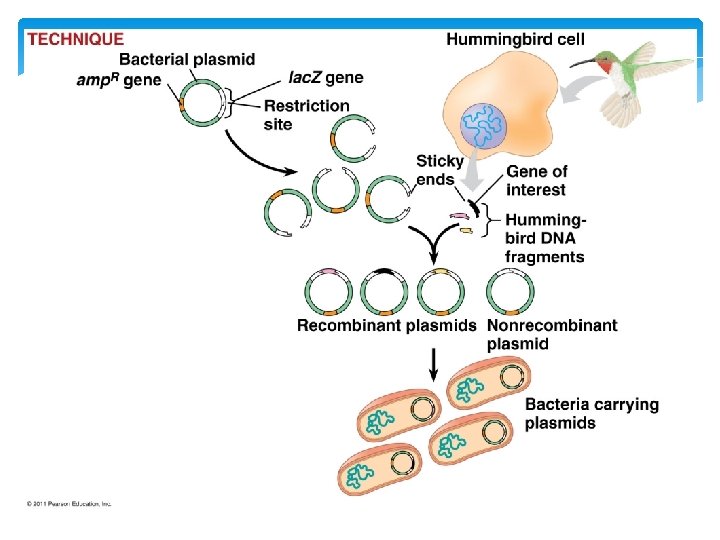
Plasmids Plasmid- small circular DNA molecules with a small number of genes that replicated independently of a chromosome Basic cloning technique begins with insertion of a foreign gene into a bacterial plasmid to produce a recombinant DNA molecule Resulting cell is a recombinant bacterium Gene cloning- the production of multiple copies of a single gene
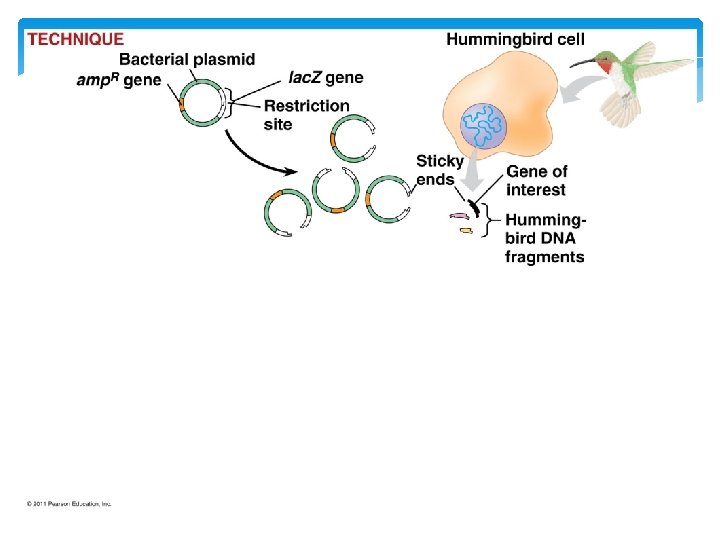
Restriction enzymes Restriction enzymes- enzymes that cut DNA molecules at specific locations In nature bacteria use restriction enzymes to cut DNA molecules for protection Restriction site- a specific site where DNA will be cut Restriction fragments- small cuts of DNA Sticky ends- the end of the cut plasmid DNA ligase- glues and fuses DNA back together
Cloning vector – DNA molecule that can carry foreign DNA into a cell to replicate there.
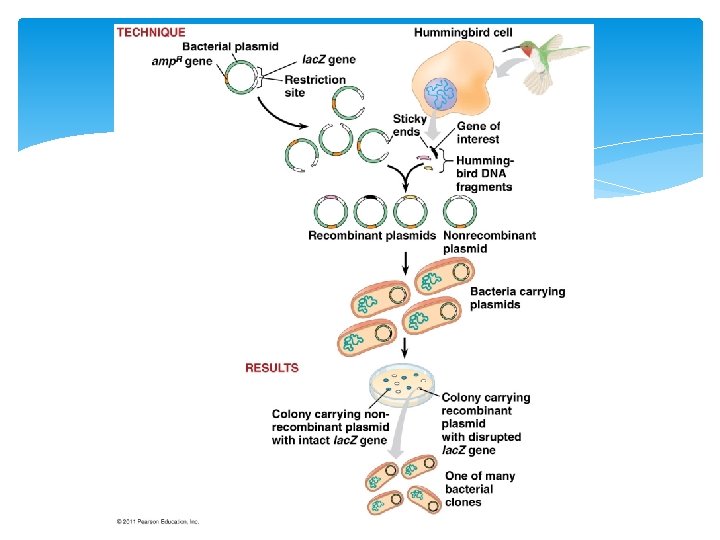
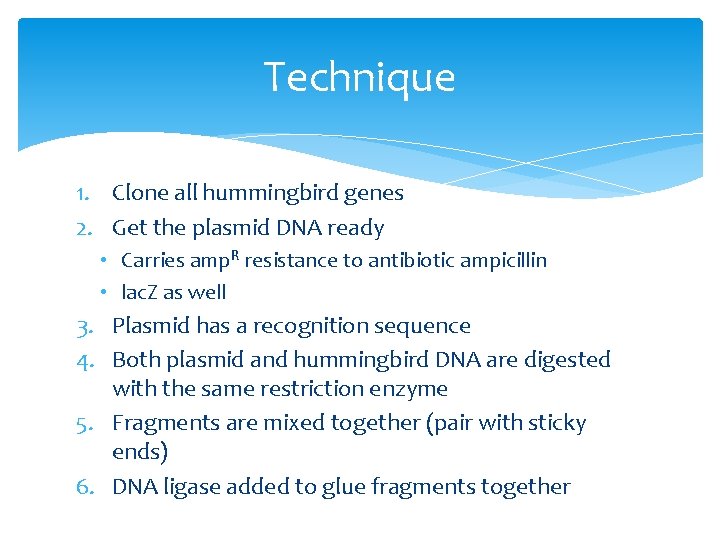
Technique 1. Clone all hummingbird genes 2. Get the plasmid DNA ready • Carries amp. R resistance to antibiotic ampicillin • lac. Z as well 3. Plasmid has a recognition sequence 4. Both plasmid and hummingbird DNA are digested with the same restriction enzyme 5. Fragments are mixed together (pair with sticky ends) 6. DNA ligase added to glue fragments together
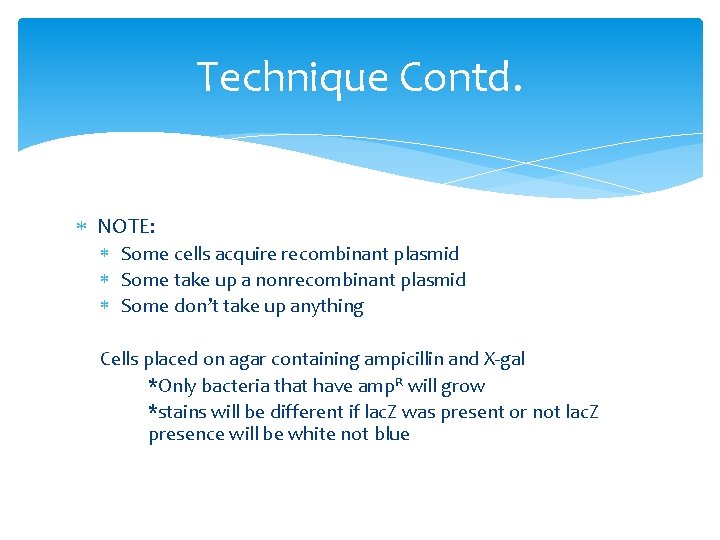
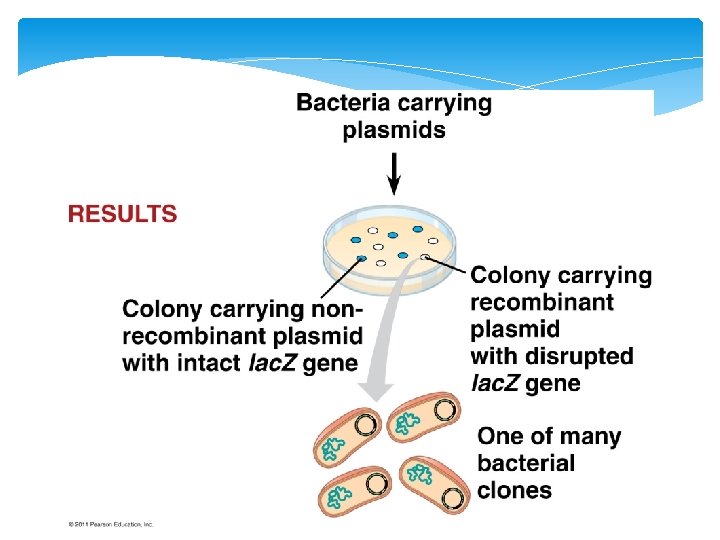
Technique Contd. NOTE: Some cells acquire recombinant plasmid Some take up a nonrecombinant plasmid Some don’t take up anything Cells placed on agar containing ampicillin and X-gal *Only bacteria that have amp. R will grow *stains will be different if lac. Z was present or not lac. Z presence will be white not blue
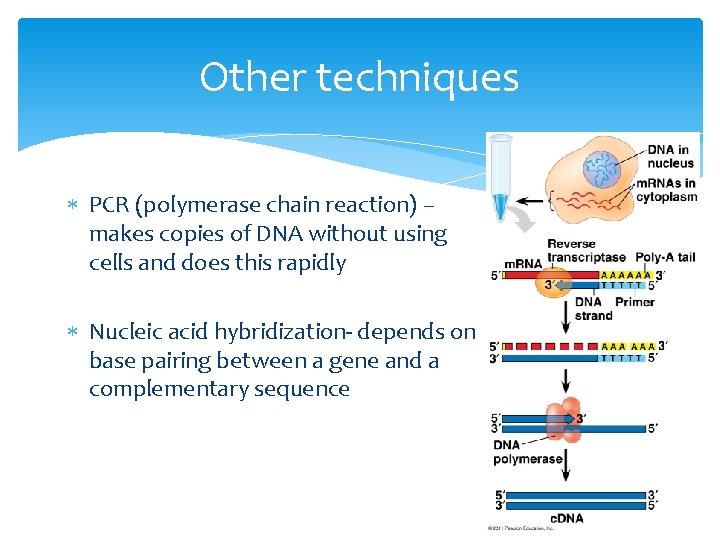
Other techniques PCR (polymerase chain reaction) – makes copies of DNA without using cells and does this rapidly Nucleic acid hybridization- depends on base pairing between a gene and a complementary sequence
Electrophoresis Gel electrophoresis- separates macromolecules (nucleic acids or proteins) on the basis of their rate of movement through a polymer gel in an electrical field. Rate of movement depends on: Molecular size Electrical charge
Gel electrophoresis contd. When the mixture undergoes electrophoresis, it yields a banded pattern characteristic of the starting molecule and the restriction enzyme used. The relatively small DNA molecules of viruses and plasmids can be identified by their patterns.
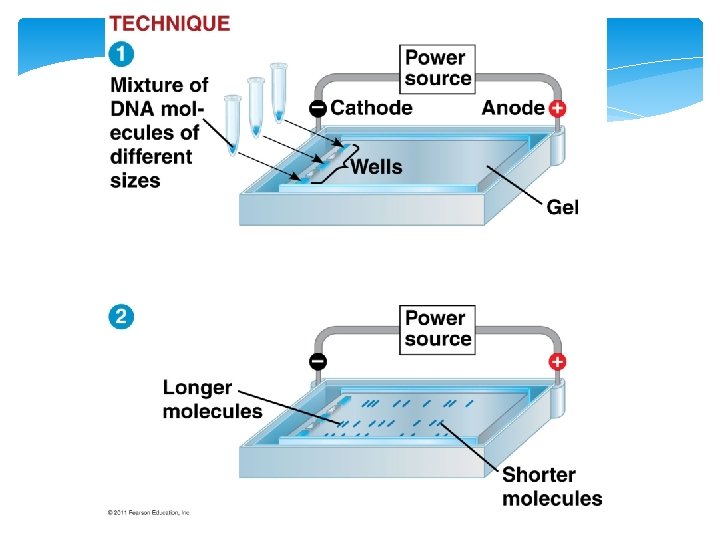
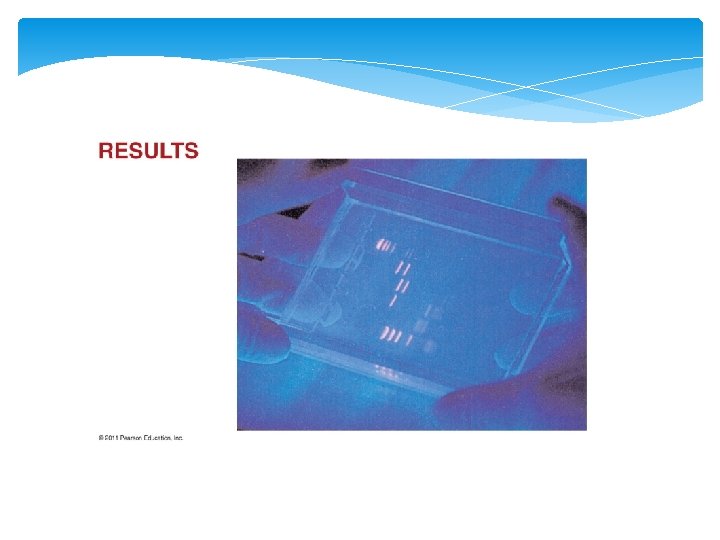
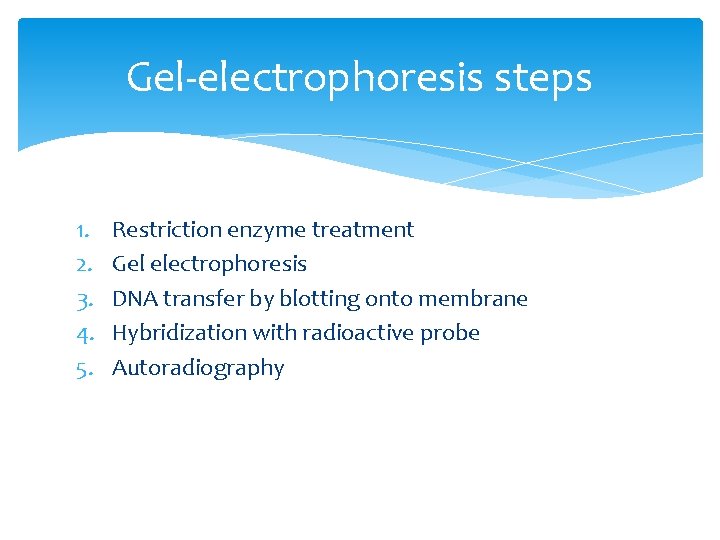
Gel-electrophoresis steps 1. 2. 3. 4. 5. Restriction enzyme treatment Gel electrophoresis DNA transfer by blotting onto membrane Hybridization with radioactive probe Autoradiography
- Slides: 64