
AP Bio Ch 10 The Genetics of Bacteria
AP Bio Ch 10 The Genetics of Bacteria & Viruses Easy Hines!
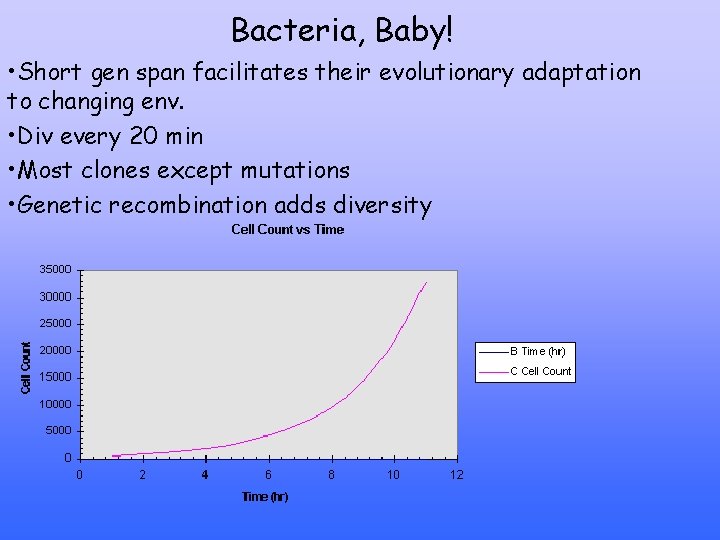
Bacteria, Baby! • Short gen span facilitates their evolutionary adaptation to changing env. • Div every 20 min • Most clones except mutations • Genetic recombination adds diversity
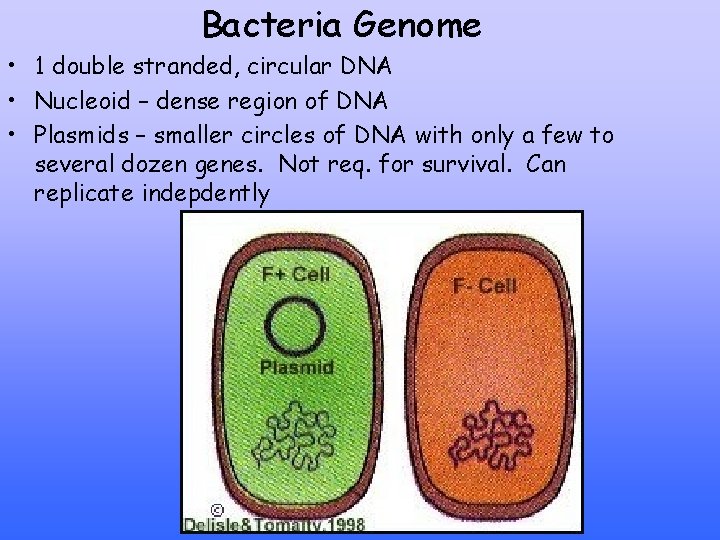
Bacteria Genome • 1 double stranded, circular DNA • Nucleoid – dense region of DNA • Plasmids – smaller circles of DNA with only a few to several dozen genes. Not req. for survival. Can replicate indepdently
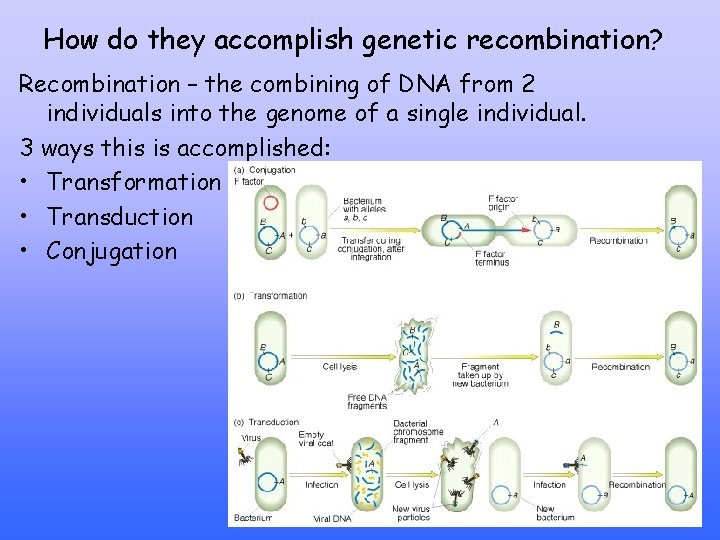
How do they accomplish genetic recombination? Recombination – the combining of DNA from 2 individuals into the genome of a single individual. 3 ways this is accomplished: • Transformation • Transduction • Conjugation
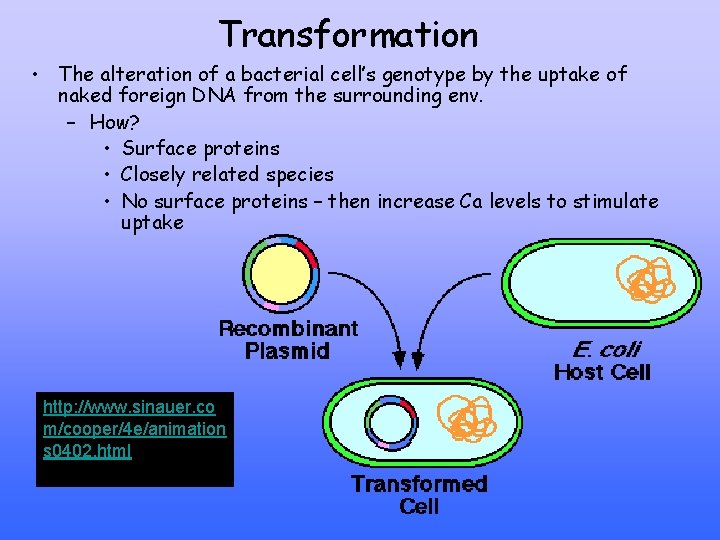
Transformation • The alteration of a bacterial cell’s genotype by the uptake of naked foreign DNA from the surrounding env. – How? • Surface proteins • Closely related species • No surface proteins – then increase Ca levels to stimulate uptake http: //www. sinauer. co m/cooper/4 e/animation s 0402. html
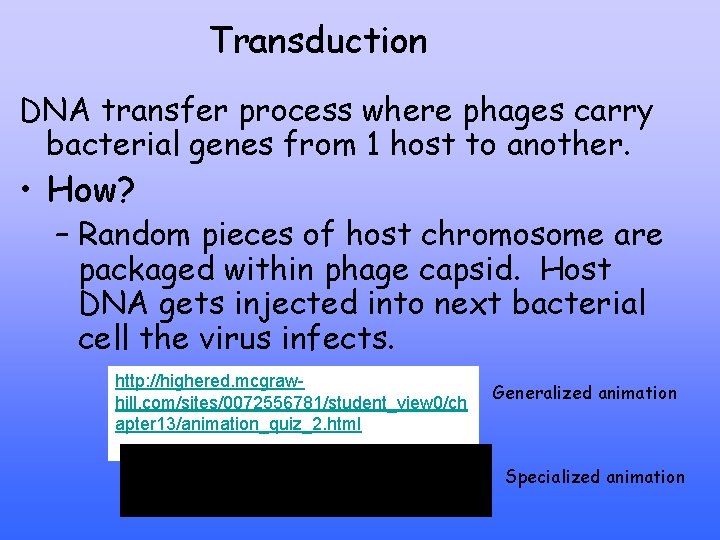
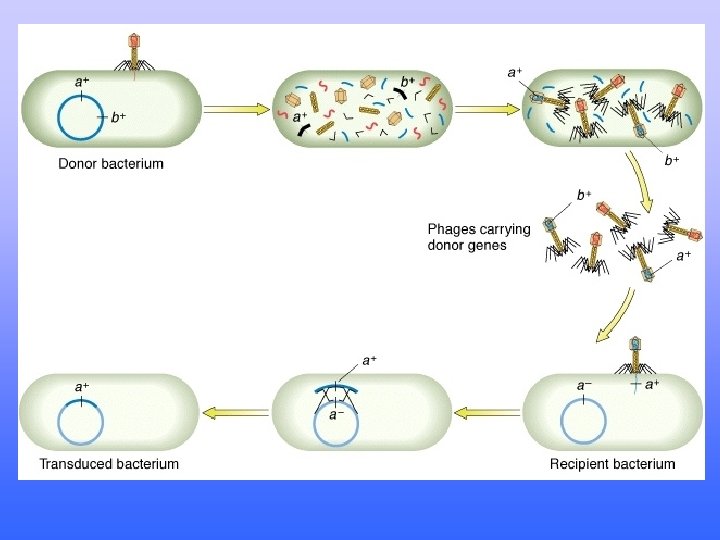
Transduction DNA transfer process where phages carry bacterial genes from 1 host to another. • How? – Random pieces of host chromosome are packaged within phage capsid. Host DNA gets injected into next bacterial cell the virus infects. http: //highered. mcgrawhill. com/sites/0072556781/student_view 0/ch apter 13/animation_quiz_2. html Generalized animation Specialized animation
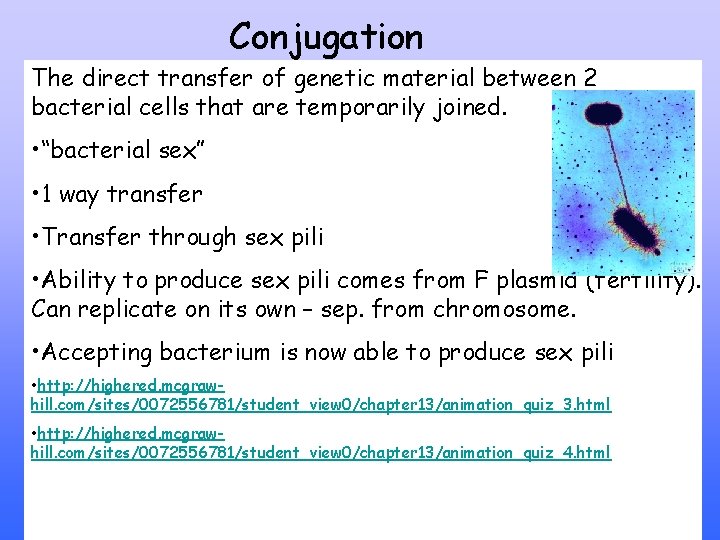
Conjugation The direct transfer of genetic material between 2 bacterial cells that are temporarily joined. • “bacterial sex” • 1 way transfer • Transfer through sex pili • Ability to produce sex pili comes from F plasmid (fertility). Can replicate on its own – sep. from chromosome. • Accepting bacterium is now able to produce sex pili • http: //highered. mcgrawhill. com/sites/0072556781/student_view 0/chapter 13/animation_quiz_3. html • http: //highered. mcgrawhill. com/sites/0072556781/student_view 0/chapter 13/animation_quiz_4. html
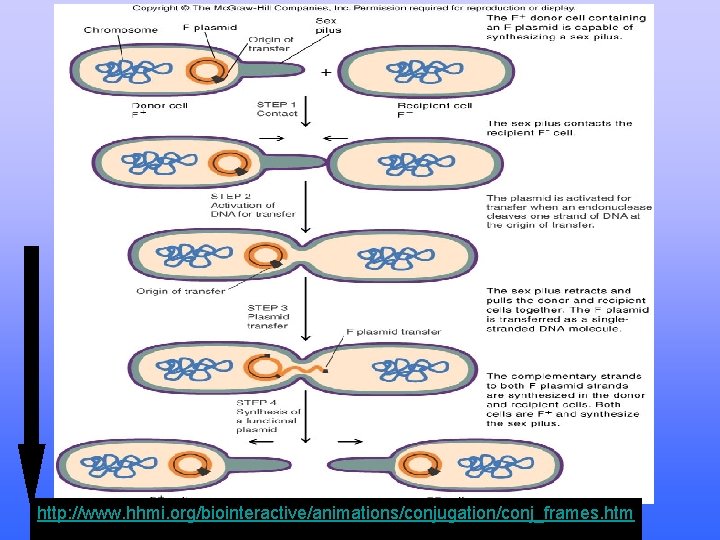
http: //www. hhmi. org/biointeractive/animations/conjugation/conj_frames. htm
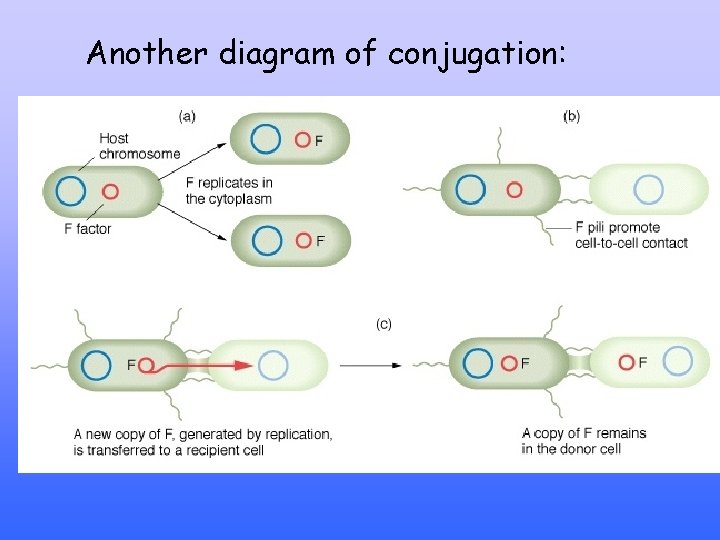
Another diagram of conjugation:
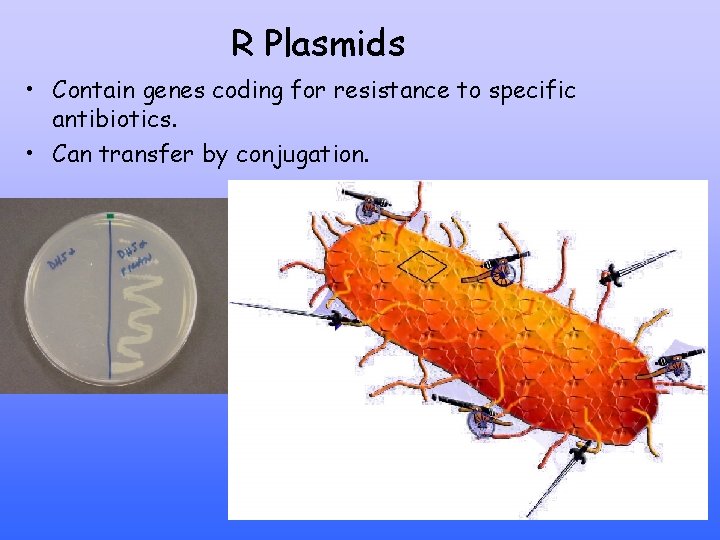
R Plasmids • Contain genes coding for resistance to specific antibiotics. • Can transfer by conjugation.
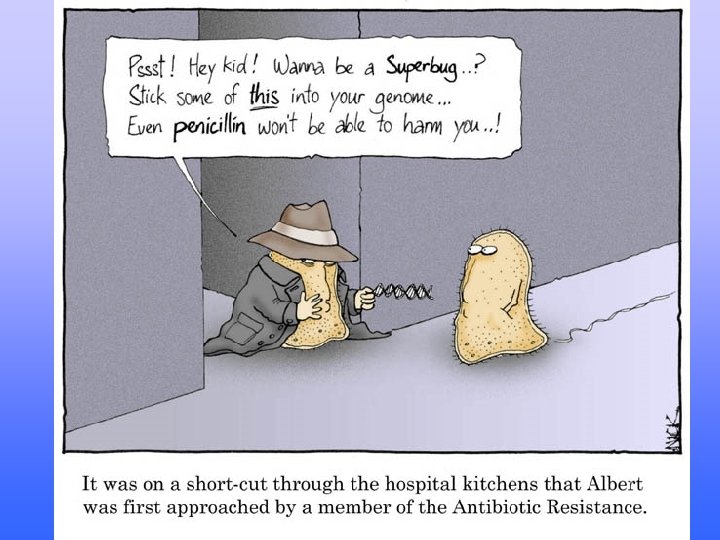
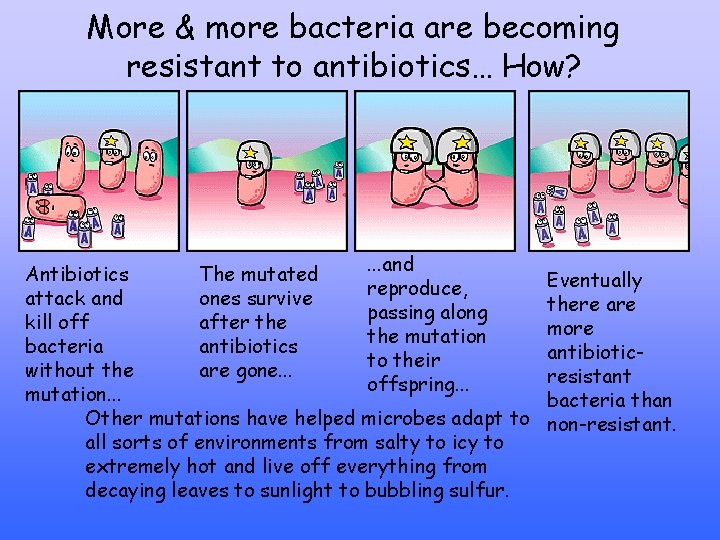
More & more bacteria are becoming resistant to antibiotics… How? . . . and Antibiotics The mutated reproduce, attack and ones survive passing along kill off after the mutation bacteria antibiotics to their without the are gone. . . offspring. . . mutation. . . Other mutations have helped microbes adapt to all sorts of environments from salty to icy to extremely hot and live off everything from decaying leaves to sunlight to bubbling sulfur. Eventually there are more antibioticresistant bacteria than non-resistant.
Transposons • Pieces of DNA that can move from 1 location to another in a cell’s genome. “jumping genes” • Some R plasmids carry 10 genes for resistance b/c of transposons
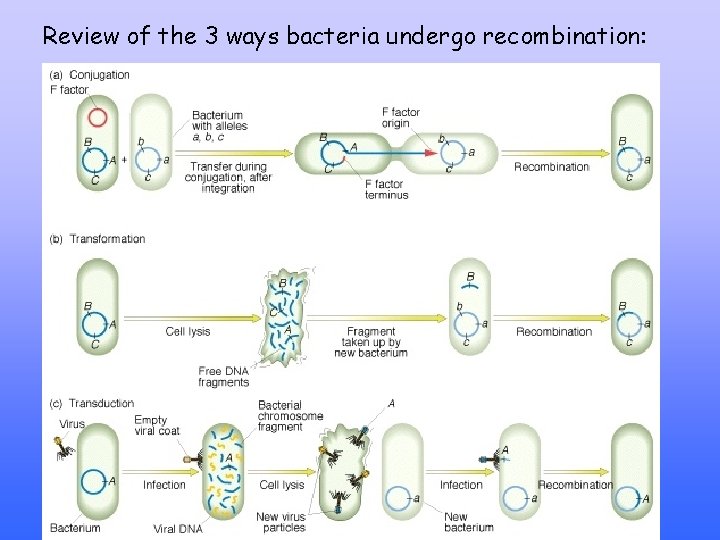
Review of the 3 ways bacteria undergo recombination:
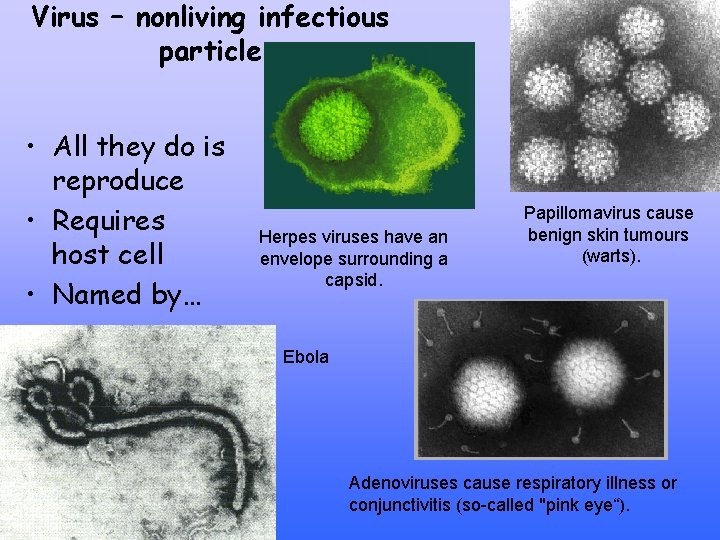
Virus – nonliving infectious particle • All they do is reproduce • Requires host cell • Named by… Herpes viruses have an envelope surrounding a capsid. Papillomavirus cause benign skin tumours (warts). Ebola Adenoviruses cause respiratory illness or conjunctivitis (so-called "pink eye“).
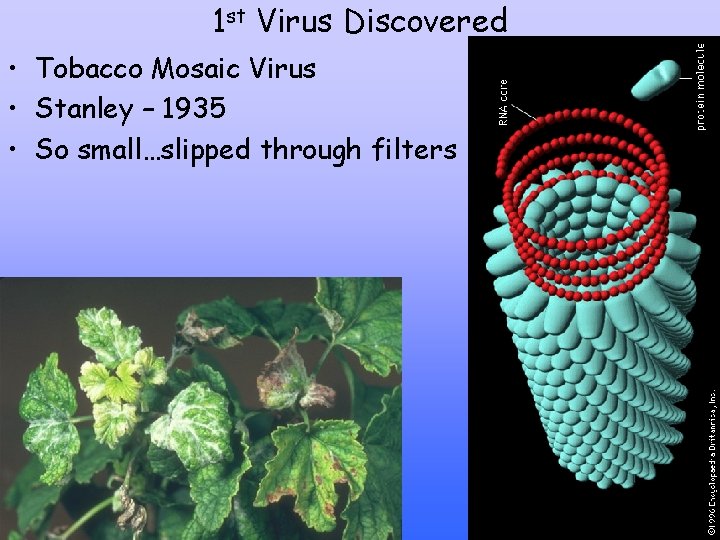
1 st Virus Discovered • Tobacco Mosaic Virus • Stanley – 1935 • So small…slipped through filters
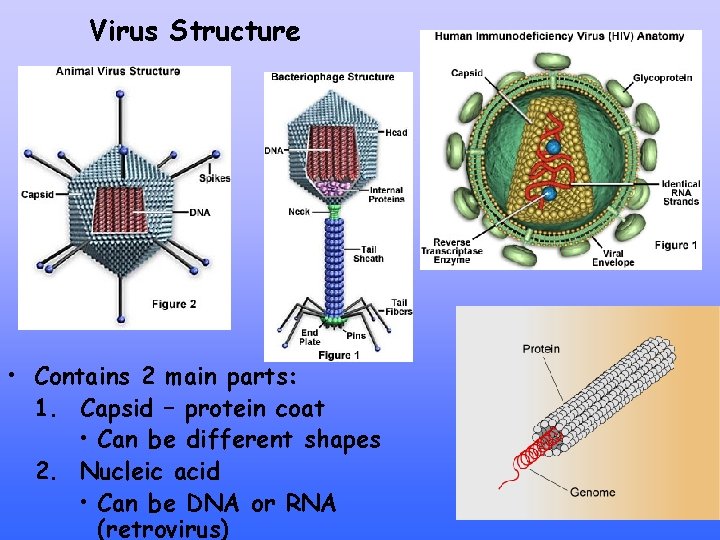
Virus Structure • Contains 2 main parts: 1. Capsid – protein coat • Can be different shapes 2. Nucleic acid • Can be DNA or RNA (retrovirus)
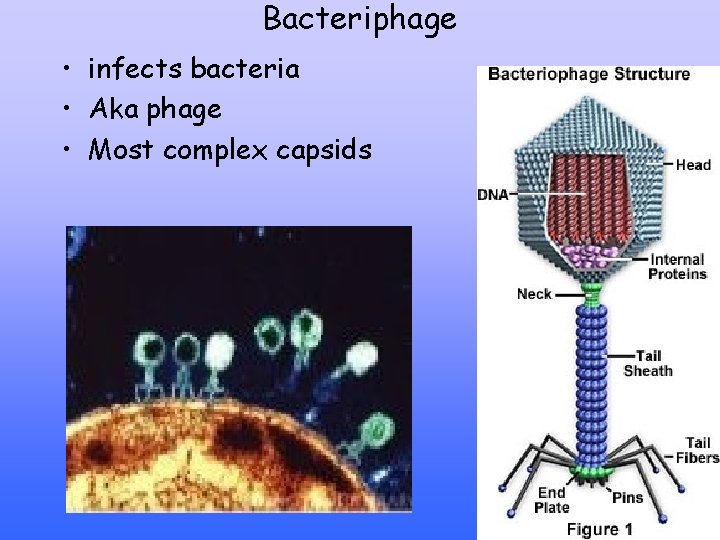
Bacteriphage • infects bacteria • Aka phage • Most complex capsids
Size? • Smallest – 20 nanometers • 1 nanometer is one-billionth of a meter (a water molecule is less than 1 nm) • http: //www. cellsalive. com/howbig. htm
Host Range • Limited range of cells each virus can infect – Lock & key – 1 species – many (change can occur through mutation) – Some tissue specific • Cold viruses, HIV
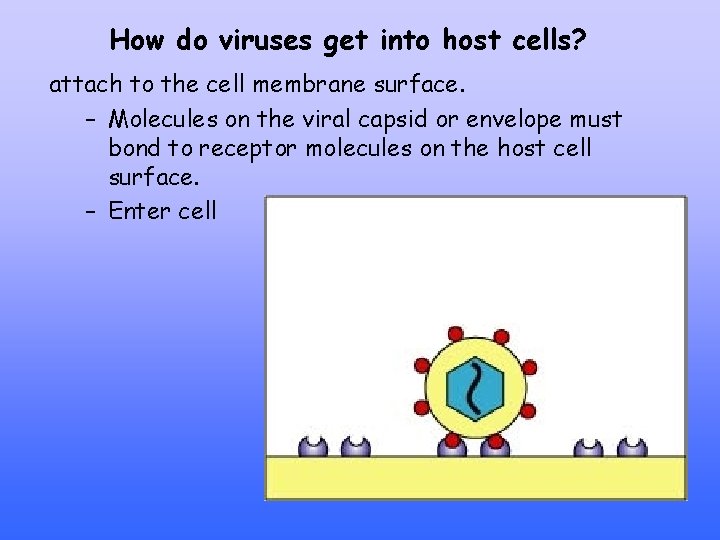
How do viruses get into host cells? attach to the cell membrane surface. – Molecules on the viral capsid or envelope must bond to receptor molecules on the host cell surface. – Enter cell
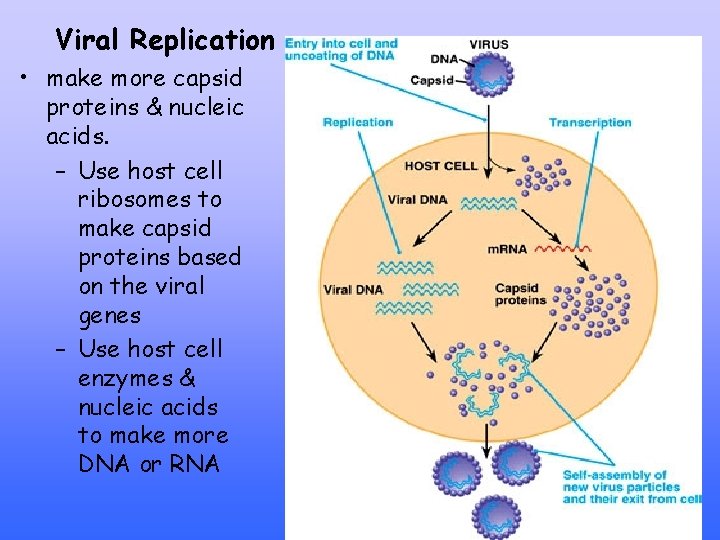
Viral Replication • make more capsid proteins & nucleic acids. – Use host cell ribosomes to make capsid proteins based on the viral genes – Use host cell enzymes & nucleic acids to make more DNA or RNA
Can you think of any way viruses could be used in the medical field, now that you know how they replicate? 1. ________ 2. ________
Viral Replication 2 main cycles • _______cycle – virus begins replicating as soon as it enters cell; killing cells_______. Aka virulent • _______ cycle – viral genome integrates with host cell genome, spreading to new cells each time the host cell _____. Eventually viral genome comes out of hiding and begins active ______, killing the cells.
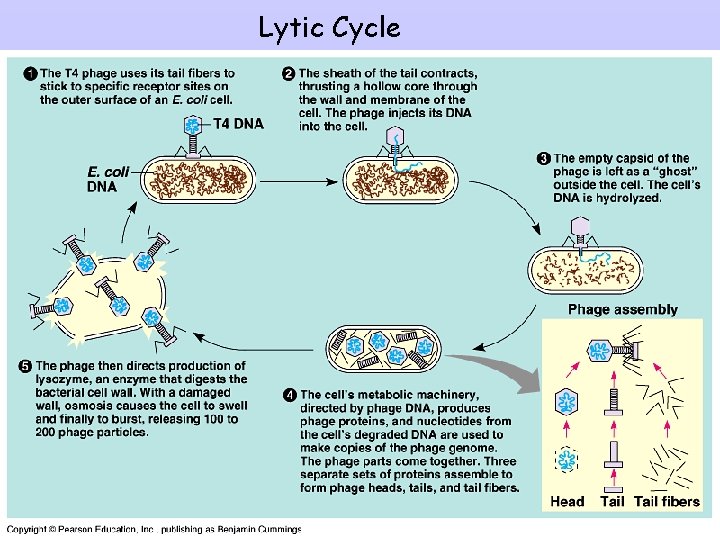
Lytic Cycle
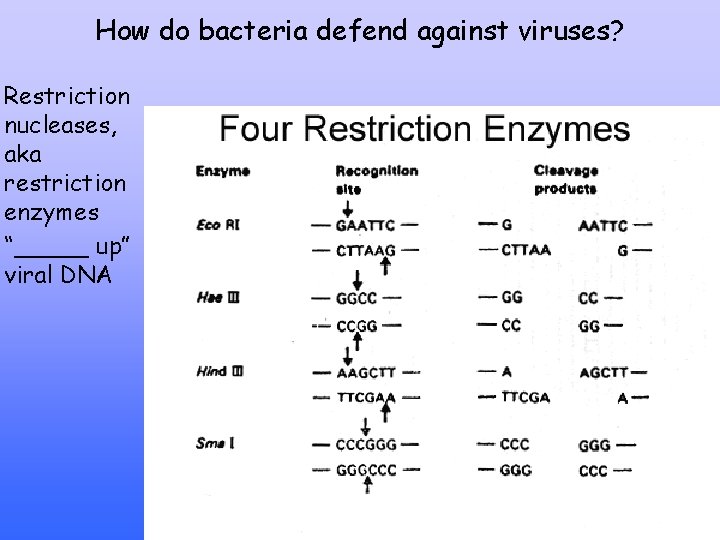
How do bacteria defend against viruses? Restriction nucleases, aka restriction enzymes “_____ up” viral DNA
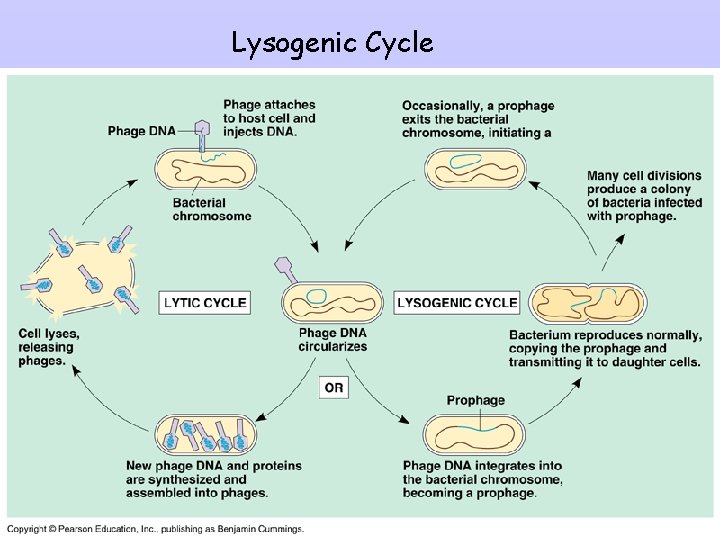
Lysogenic Cycle
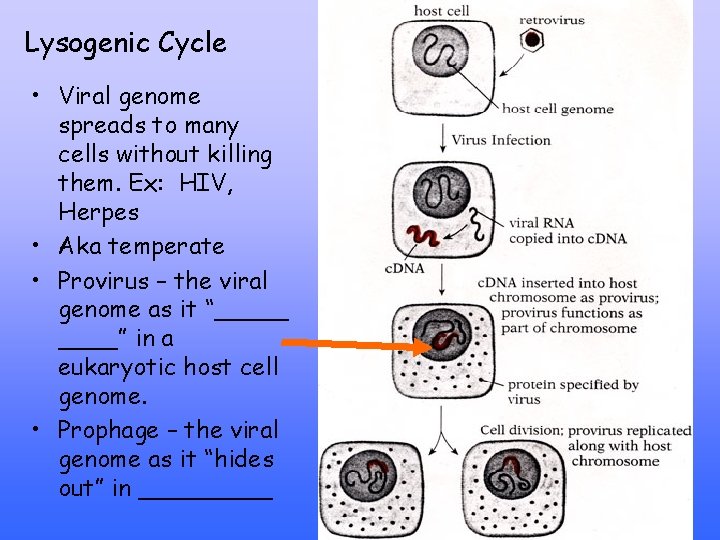
Lysogenic Cycle • Viral genome spreads to many cells without killing them. Ex: HIV, Herpes • Aka temperate • Provirus – the viral genome as it “_____” in a eukaryotic host cell genome. • Prophage – the viral genome as it “hides out” in _____
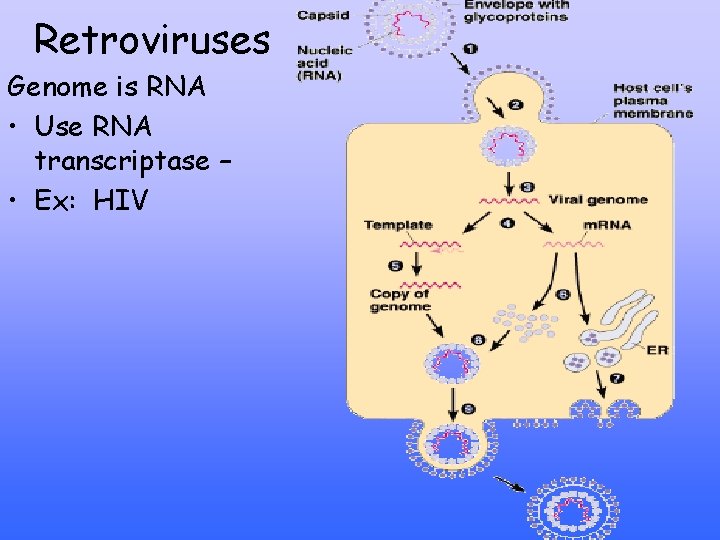
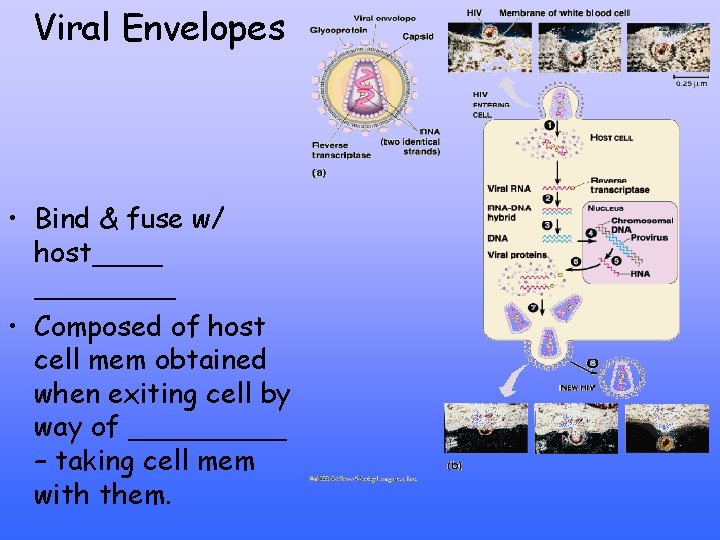
Retroviruses Genome is RNA • Use RNA transcriptase – • Ex: HIV
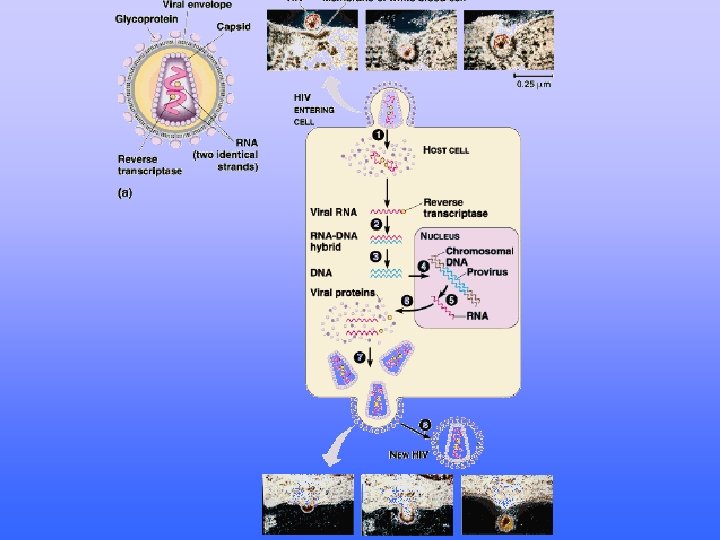
Why so hard to develop vaccines against retroviruses? Why must new flu vaccine be produced each year?
• http: //www. whfreeman. com/kuby/conte nt/anm/kb 03 an 01. htm • The above is HIV life cycle animation
Viral Envelopes • Bind & fuse w/ host____ • Composed of host cell mem obtained when exiting cell by way of _____ – taking cell mem with them.
Viral Diseases in Animals • Cause symptoms by causing – lysosomes to release _____ – Production of ____ – Damage depends on tissue type destroyed – Ex: colds vs polio • Vaccines – weakened viruses or particles of the virus that stimulate _______to defend against pathogen. – 1 st – ____ – late 1700 – Edward Jenner
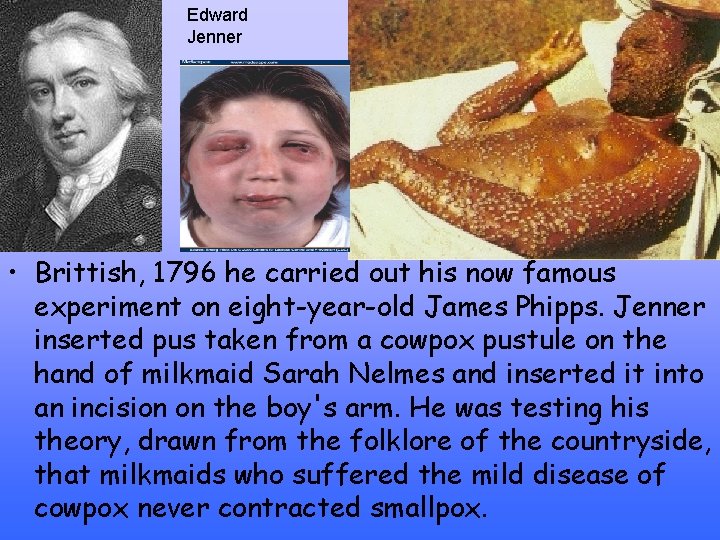
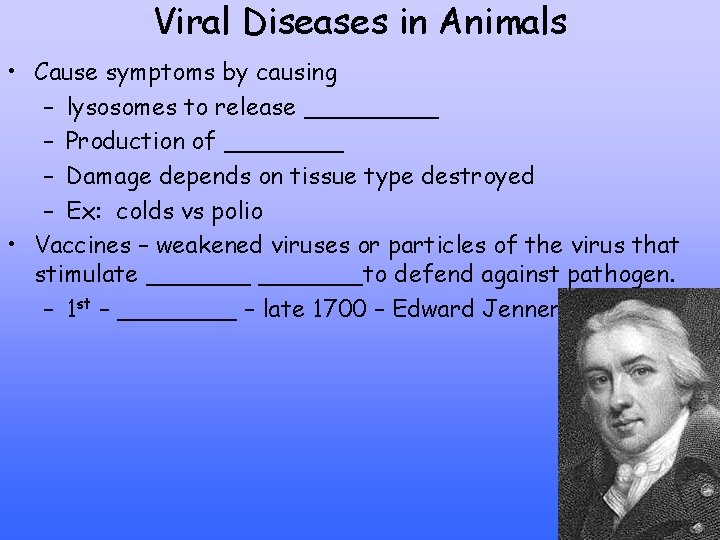
Edward Jenner • Brittish, 1796 he carried out his now famous experiment on eight-year-old James Phipps. Jenner inserted pus taken from a cowpox pustule on the hand of milkmaid Sarah Nelmes and inserted it into an incision on the boy's arm. He was testing his theory, drawn from the folklore of the countryside, that milkmaids who suffered the mild disease of cowpox never contracted smallpox.
• The immediate reaction to Jenner's work was ridicule. Critics, especially the clergy, claimed it was repulsive and ungodly to inoculate someone with material from a diseased animal. A satirical cartoon of 1802 showed people who had been vaccinated sprouting cow's heads. However the obvious advantages of vaccination and the protection it provided won out, and vaccination soon became widespread.
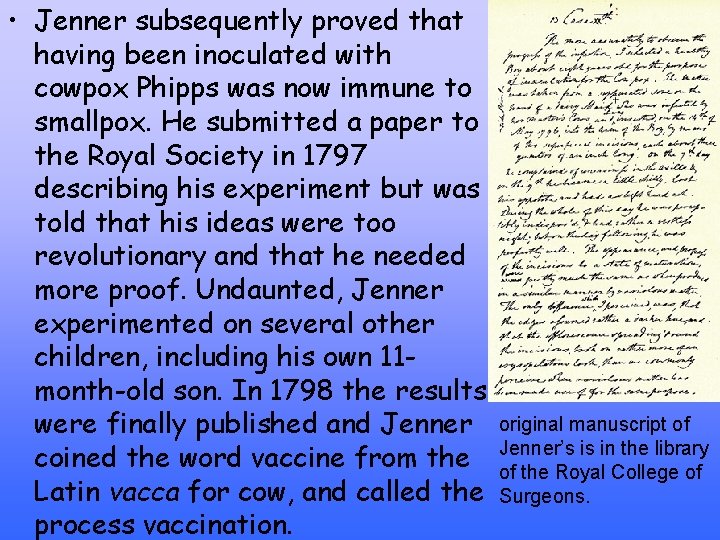
• Jenner subsequently proved that having been inoculated with cowpox Phipps was now immune to smallpox. He submitted a paper to the Royal Society in 1797 describing his experiment but was told that his ideas were too revolutionary and that he needed more proof. Undaunted, Jenner experimented on several other children, including his own 11 month-old son. In 1798 the results were finally published and Jenner coined the word vaccine from the Latin vacca for cow, and called the process vaccination. original manuscript of Jenner’s is in the library of the Royal College of Surgeons.
Cures • None – nothing really to attack
Emerging Viruses • Mutation of existing – esp RNA – Ex: flu • Spread of existing to new hosts – Ex: hantavirus to humans • Spread from small isolated pops – Ex: HIV
Plant Viruses • Serious agricultural pests – Most rod RNA – 2 routes of infection • Horizontal transmission (insects, pruning sheers) • Vertical – asexual reproduction or – Spread through plant by _______ – No cures
Viroids • Tiny molecules of circular ___ that infect plants
Prions • Infectious _____ – Ex: Mad Cow, Creutzfeldt-Jacob
Originate? • Came after cells? • Fragments of nuc acids that jump from cell to cell
- Slides: 45