
AOS 101 Weather Observation Jan 29 302 Jan
AOS 101 Weather Observation Jan 29 (302), Jan 31 (304)
Background • Observations allow meteorologists to assess the current state of the atmosphere • Synchronized: taken at same time at every location • Standardized: all measurements taken the same way • Two main types: – SURFACE and UPPER AIR
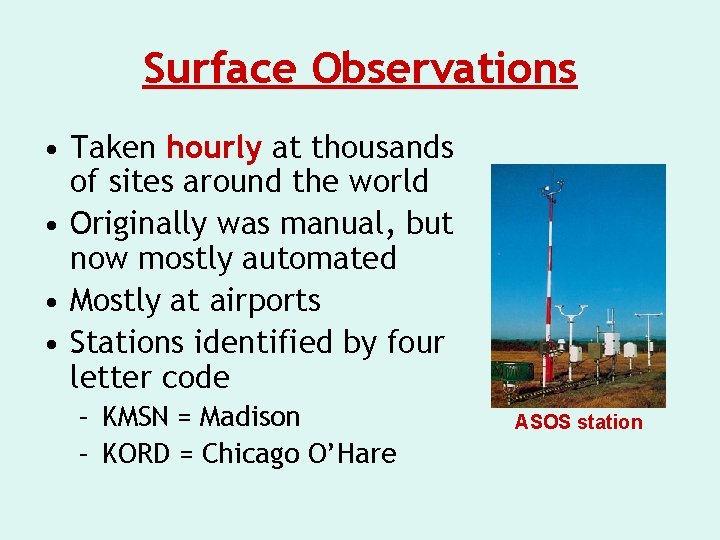
Surface Observations • Taken hourly at thousands of sites around the world • Originally was manual, but now mostly automated • Mostly at airports • Stations identified by four letter code – KMSN = Madison – KORD = Chicago O’Hare ASOS station
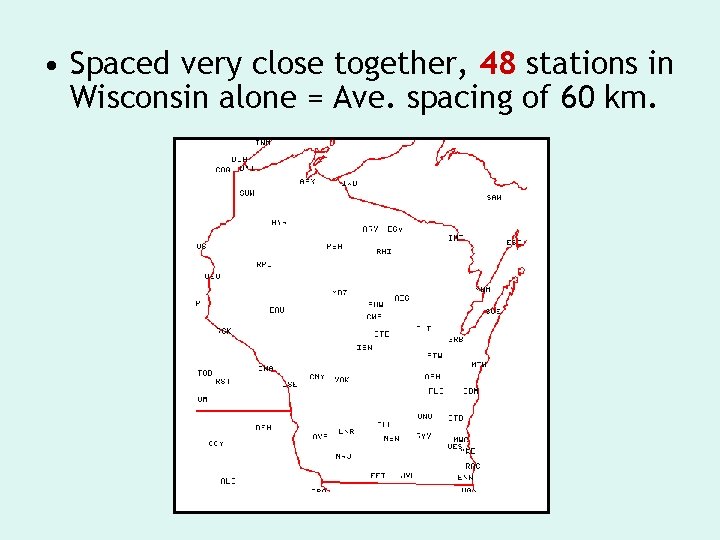
• Spaced very close together, 48 stations in Wisconsin alone = Ave. spacing of 60 km.
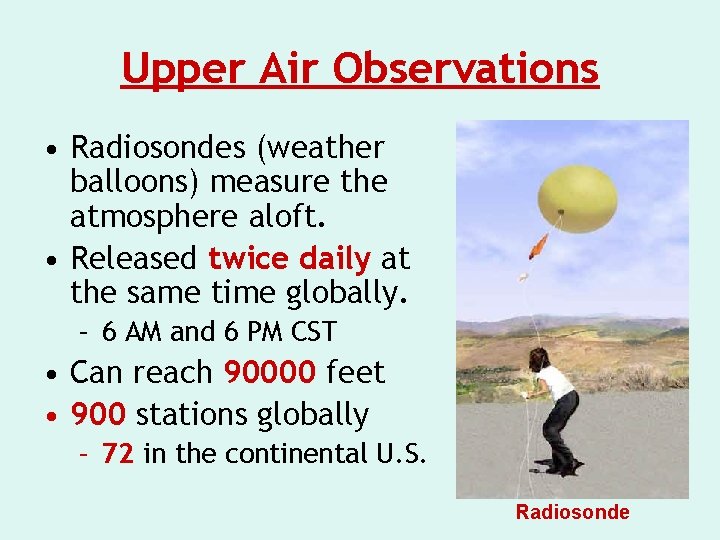
Upper Air Observations • Radiosondes (weather balloons) measure the atmosphere aloft. • Released twice daily at the same time globally. – 6 AM and 6 PM CST • Can reach 90000 feet • 900 stations globally – 72 in the continental U. S. Radiosonde
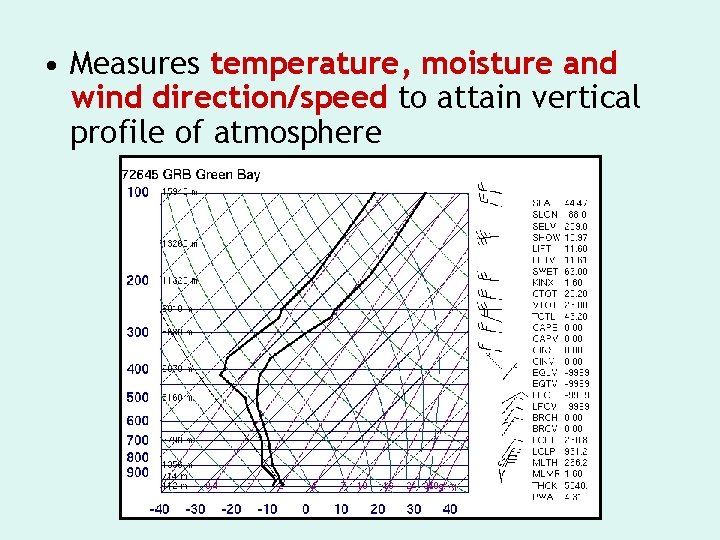
• Measures temperature, moisture and wind direction/speed to attain vertical profile of atmosphere
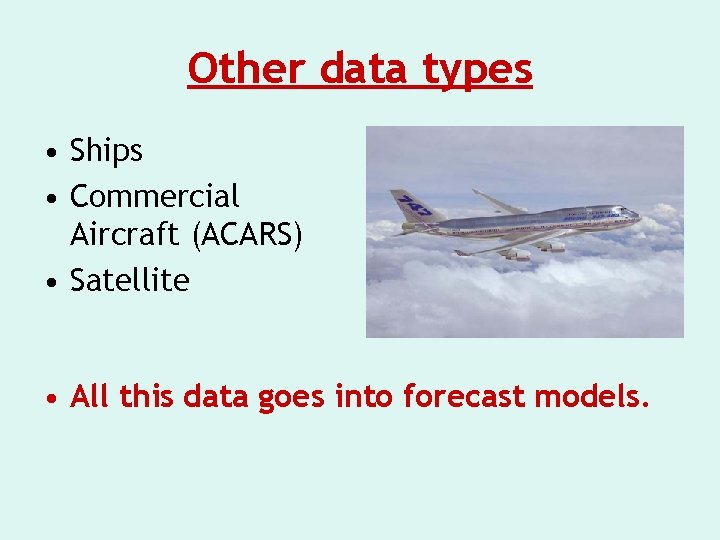
Other data types • Ships • Commercial Aircraft (ACARS) • Satellite • All this data goes into forecast models.
7 important measurements • 1. Sky Cover – How much sky do clouds cover? – Partly cloudy, mostly cloudy, etc. • 2. Current Weather – Is there precipitation falling? What type? – Is it foggy? Thunder?
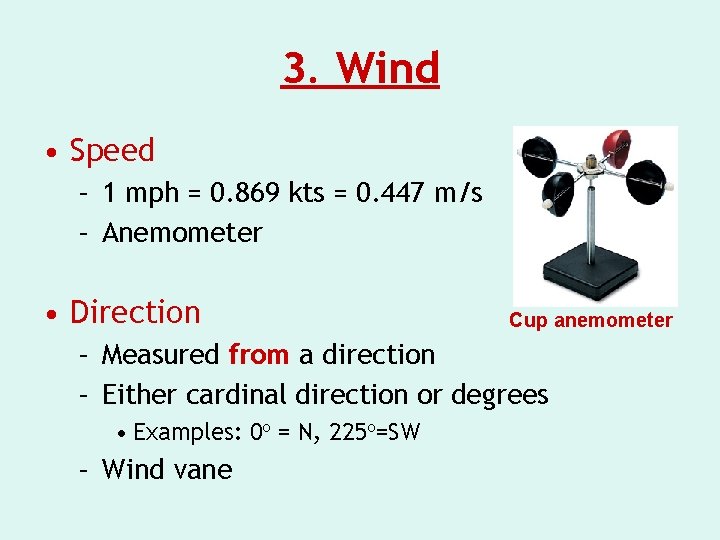
3. Wind • Speed – 1 mph = 0. 869 kts = 0. 447 m/s – Anemometer • Direction Cup anemometer – Measured from a direction – Either cardinal direction or degrees • Examples: 0 o = N, 225 o=SW – Wind vane
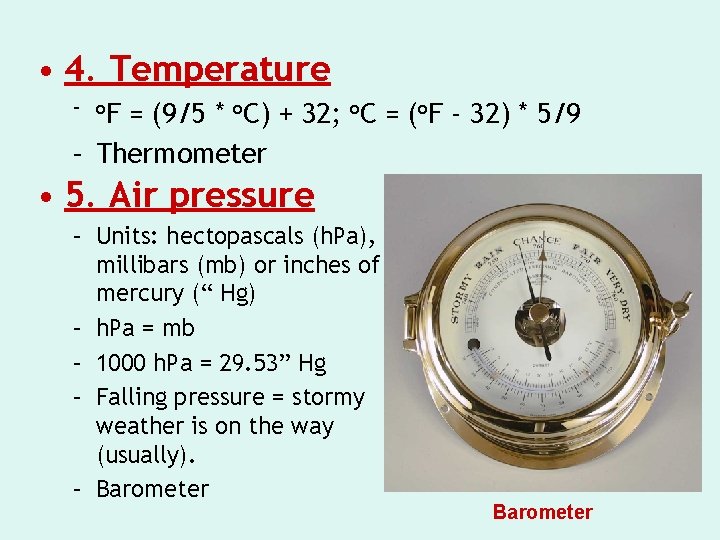
• 4. Temperature – o. F = (9/5 * o. C) + 32; o. C = (o. F - 32) * 5/9 – Thermometer • 5. Air pressure – Units: hectopascals (h. Pa), millibars (mb) or inches of mercury (“ Hg) – h. Pa = mb – 1000 h. Pa = 29. 53” Hg – Falling pressure = stormy weather is on the way (usually). – Barometer
• 6. Dewpoint – Related to amount of moisture (water vapor) in the air except in temperature units. – The temperature to which the air must be cooled for condensation to take place • Example: Morning Dew – If dewpoint is close to temperature (within 3 o), expect fog, haze or precipitation. • 7. Visibility – How far one can see horizontally. – Clear day visibility more than 10 miles – Fog or heavy snow can cause visibilities of less than one mile
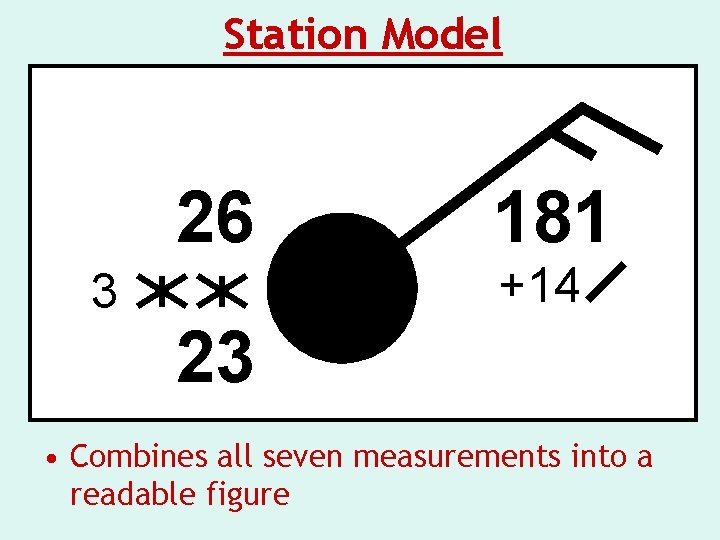
Station Model 26 3 181 +14 23 • Combines all seven measurements into a readable figure
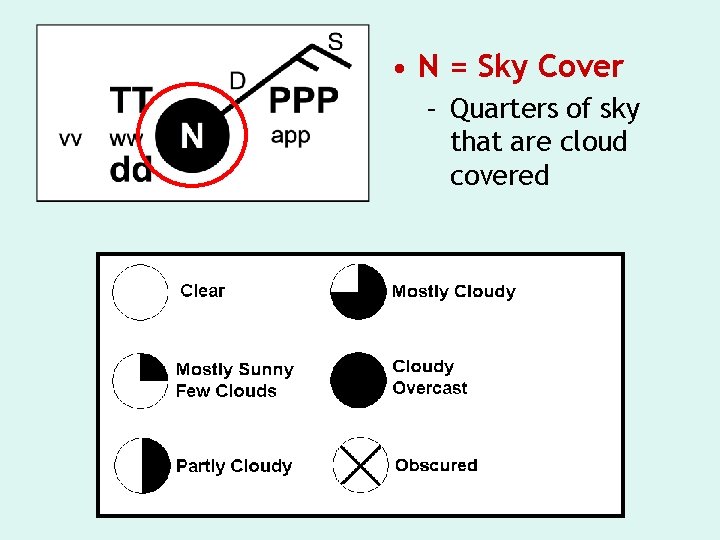
• N = Sky Cover – Quarters of sky that are cloud covered
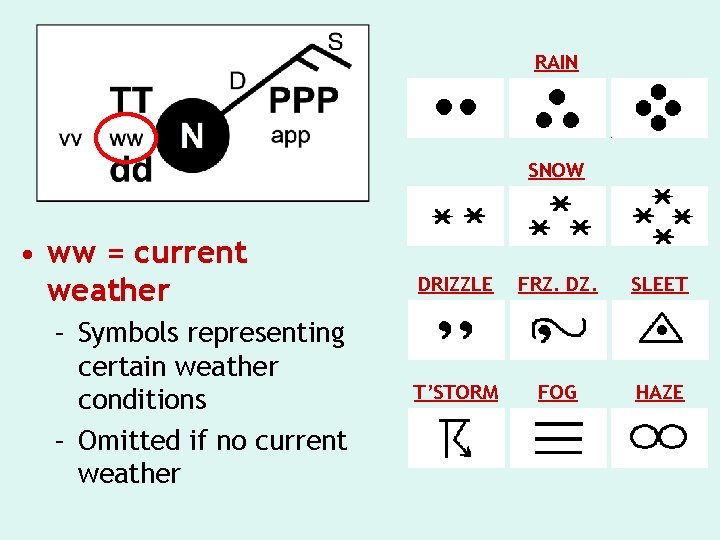
RAIN SNOW • ww = current weather – Symbols representing certain weather conditions – Omitted if no current weather DRIZZLE FRZ. DZ. SLEET T’STORM FOG HAZE
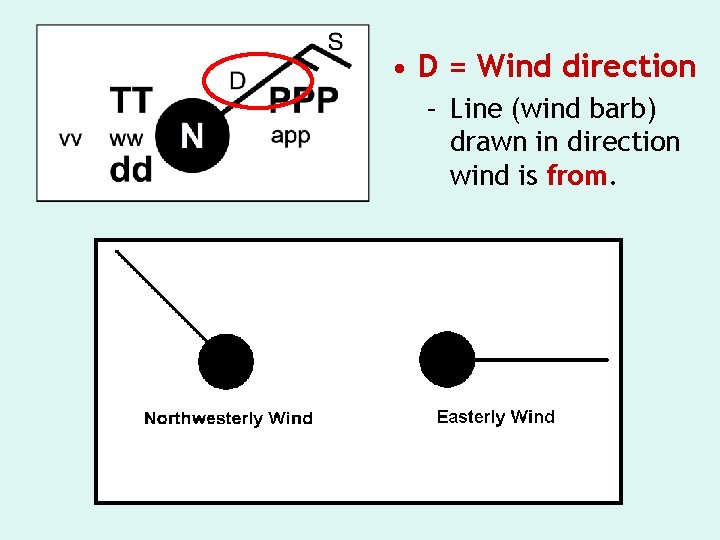
• D = Wind direction – Line (wind barb) drawn in direction wind is from.
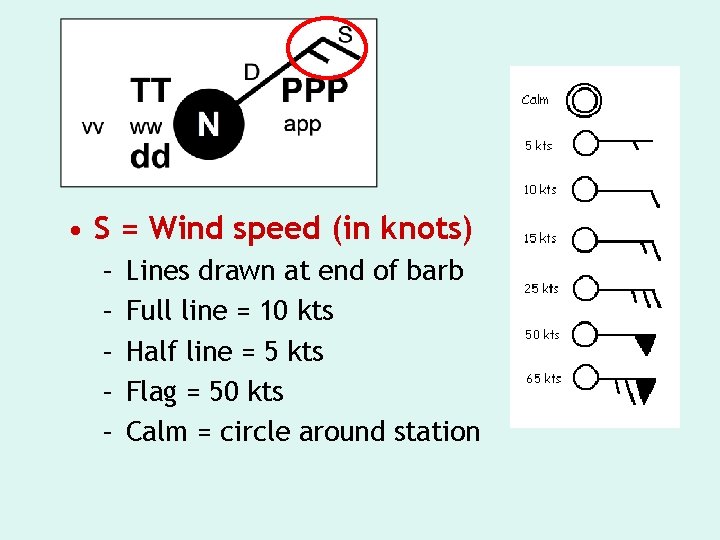
• S = Wind speed (in knots) – – – Lines drawn at end of barb Full line = 10 kts Half line = 5 kts Flag = 50 kts Calm = circle around station
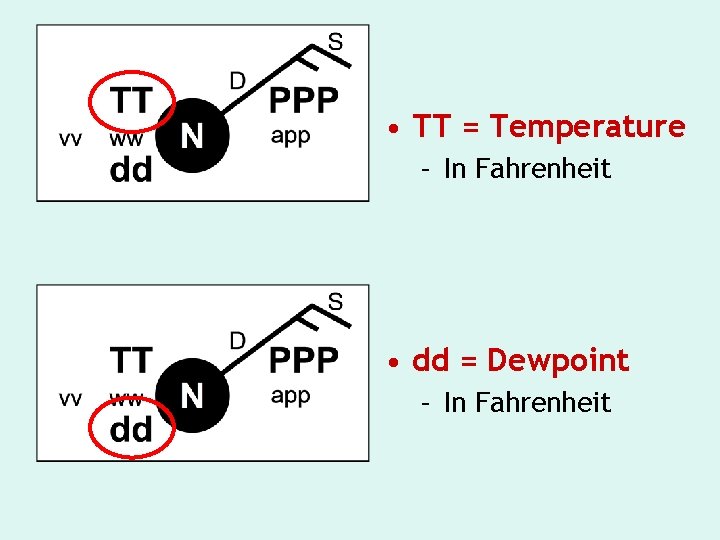
• TT = Temperature – In Fahrenheit • dd = Dewpoint – In Fahrenheit
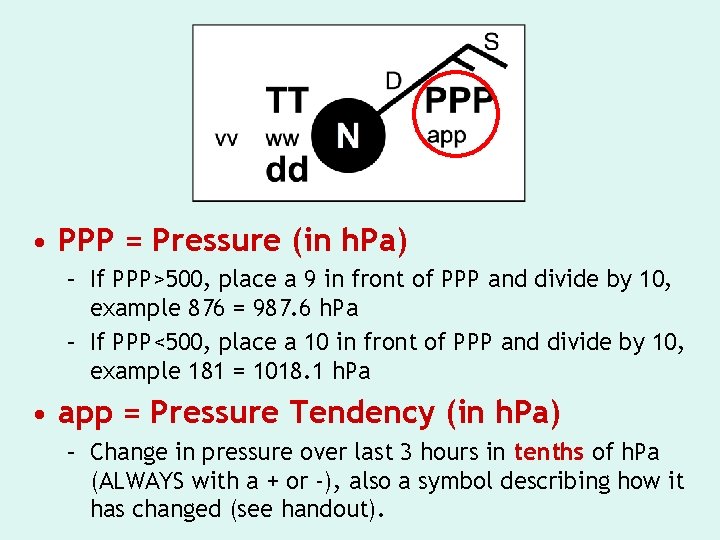
• PPP = Pressure (in h. Pa) – If PPP>500, place a 9 in front of PPP and divide by 10, example 876 = 987. 6 h. Pa – If PPP<500, place a 10 in front of PPP and divide by 10, example 181 = 1018. 1 h. Pa • app = Pressure Tendency (in h. Pa) – Change in pressure over last 3 hours in tenths of h. Pa (ALWAYS with a + or -), also a symbol describing how it has changed (see handout).
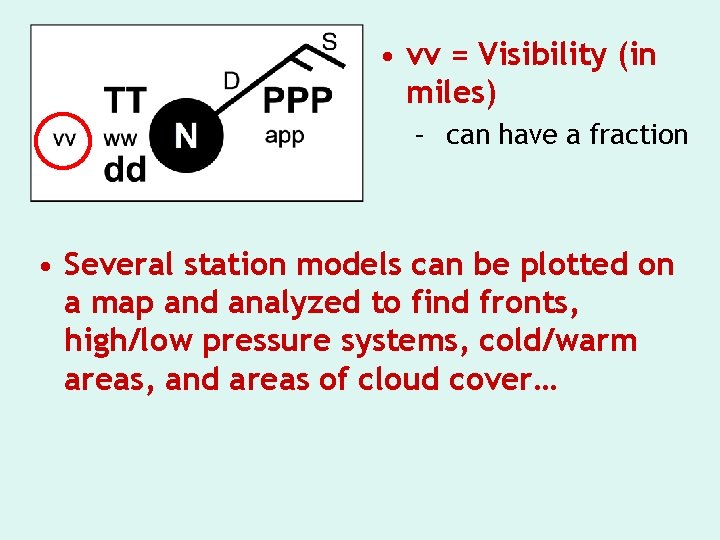
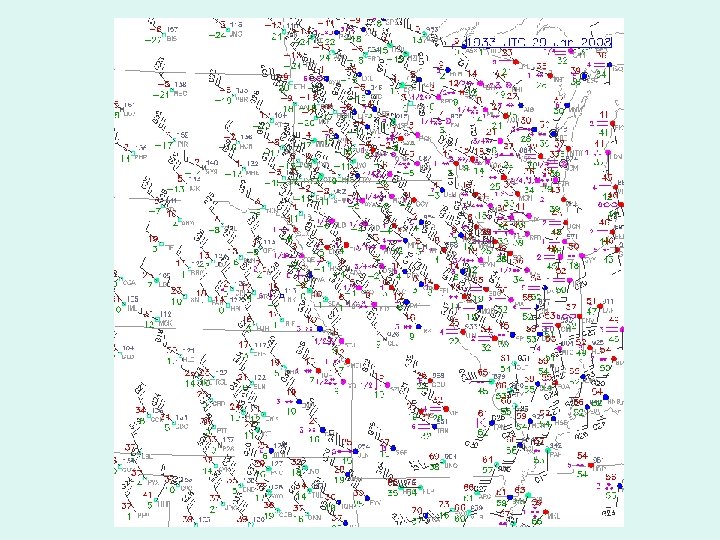
• vv = Visibility (in miles) – can have a fraction • Several station models can be plotted on a map and analyzed to find fronts, high/low pressure systems, cold/warm areas, and areas of cloud cover…
- Slides: 20