
AO VET Orthopaedic Skills Labbooks Posters 1 Position

AO VET Orthopaedic Skills Lab-books / Posters

1 Position and lag screw placement Learning objectives Explain the difference between position and lag screws Position screw Maintains position and orientation of fragments - Screws engages both cortices Describe how to apply a position or a lag screw Anticipate technical challenges during application List indications Lag screw Creates compression during tightening - Glide hole near cortex - Thread hole far cortex

2 Soft tissue trauma during drilling Learning objectives Describe how soft tissue damage can occur during drilling Demonstrate correct use of drill guides Differentiate between sharp and blunt drill bits Explain how transcortical soft tissue damage can occur, and how this can be avoided Take home messages Use sharp drill bits Use correct drill guides to prevent ‘wrapping’ of soft tissues Avoid ‘plunging’ of drill through far cortex Develop feel for penetration of far cortex
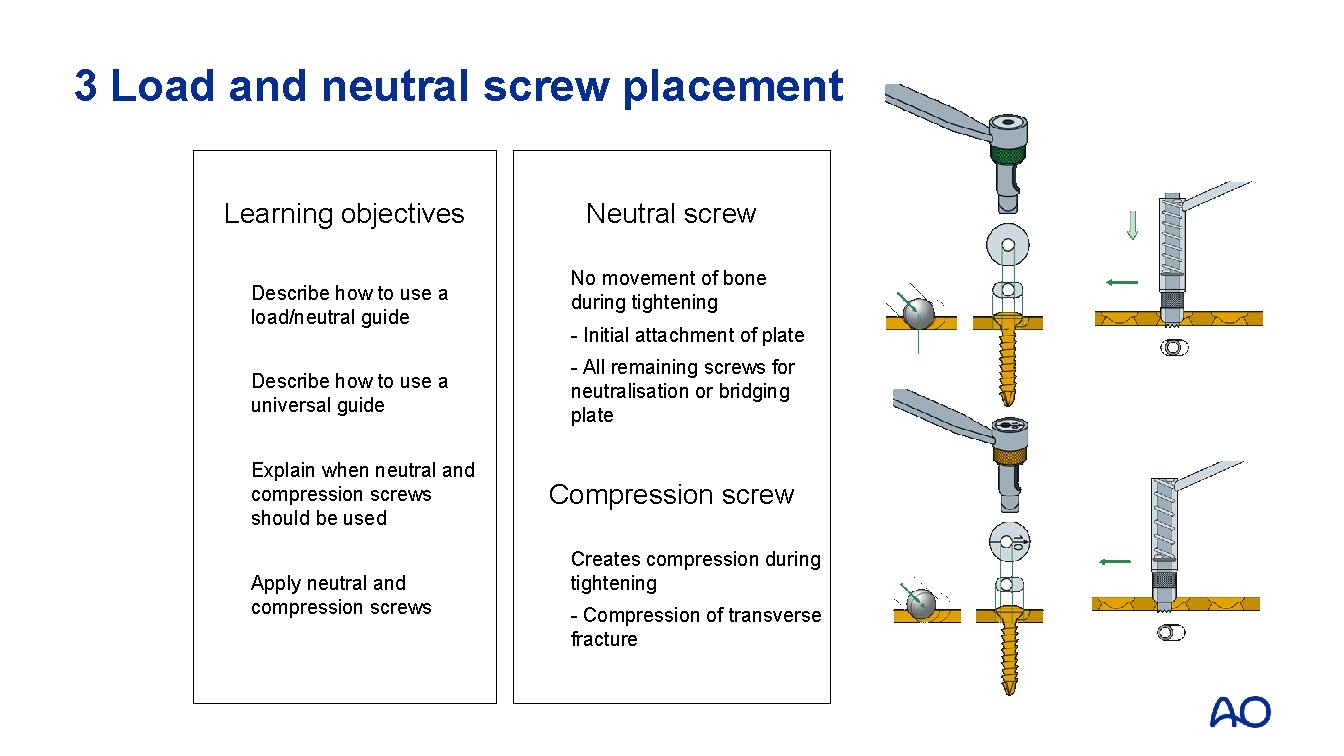
3 Load and neutral screw placement Learning objectives Describe how to use a load/neutral guide Describe how to use a universal guide Explain when neutral and compression screws should be used Apply neutral and compression screws Neutral screw No movement of bone during tightening - Initial attachment of plate - All remaining screws for neutralisation or bridging plate Compression screw Creates compression during tightening - Compression of transverse fracture

4 Plate contouring Learning objectives Explain why plate contouring is important Explain how primary loss of reduction can occur Demonstrate correct use of the bending template, handheld bending pliers and bending irons Contour a plate to the medial aspect of the tibia Take home messages Perfect plate contouring is critical to avoid primary loss of reduction Correct use of the template, bending pliers and bending irons can simplify contouring
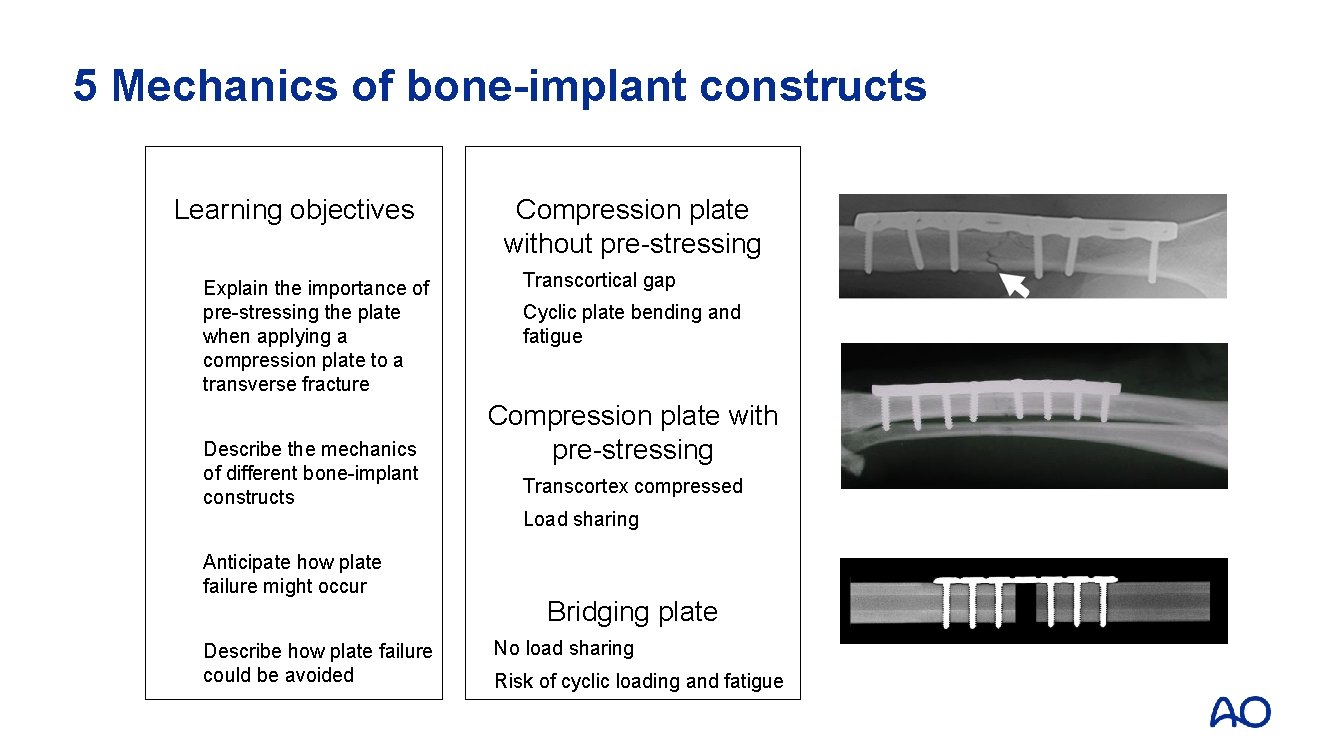
5 Mechanics of bone-implant constructs Learning objectives Explain the importance of pre-stressing the plate when applying a compression plate to a transverse fracture Describe the mechanics of different bone-implant constructs Anticipate how plate failure might occur Describe how plate failure could be avoided Compression plate without pre-stressing Transcortical gap Cyclic plate bending and fatigue Compression plate with pre-stressing Transcortex compressed Load sharing Bridging plate No load sharing Risk of cyclic loading and fatigue
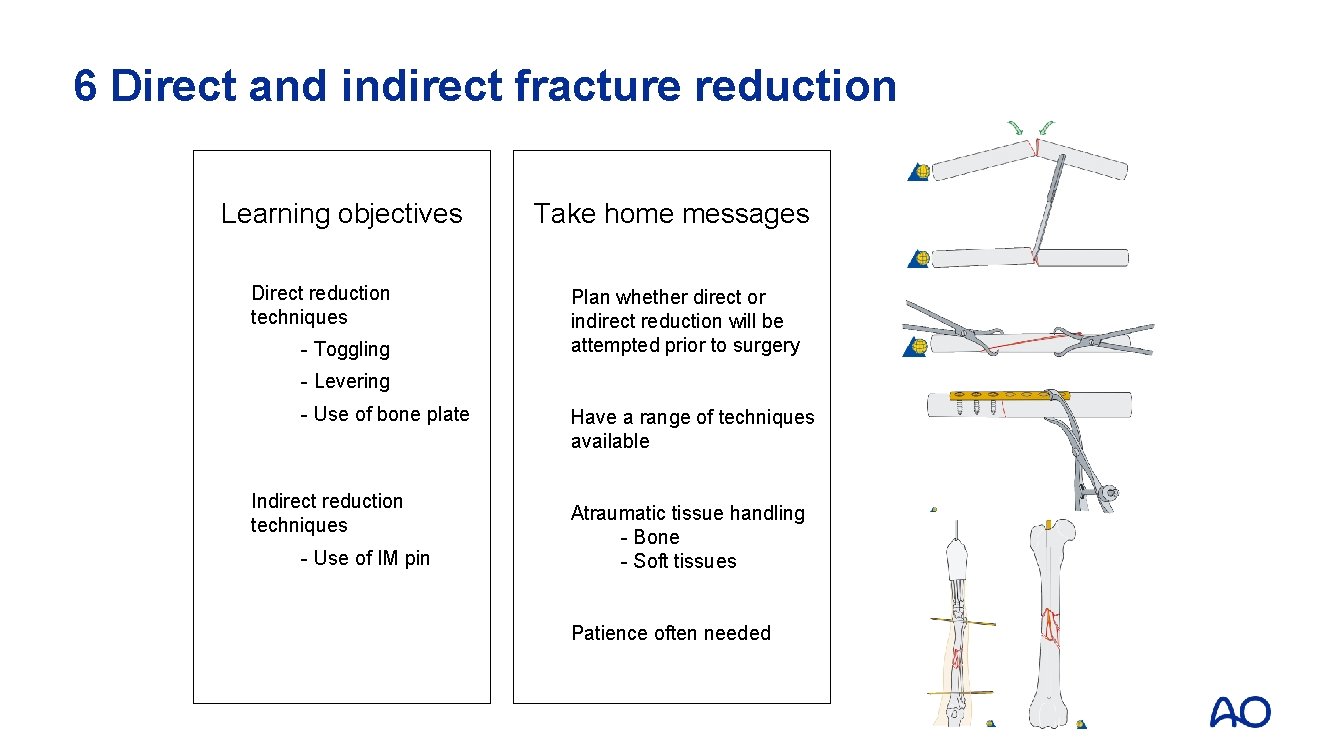
6 Direct and indirect fracture reduction Learning objectives Direct reduction techniques - Toggling Take home messages Plan whether direct or indirect reduction will be attempted prior to surgery - Levering - Use of bone plate Indirect reduction techniques - Use of IM pin Have a range of techniques available Atraumatic tissue handling - Bone - Soft tissues Patience often needed
- Slides: 7