
AO history and philosophy AO Trauma Basic Principles
AO history and philosophy AO Trauma Basic Principles Course
Why are you here?
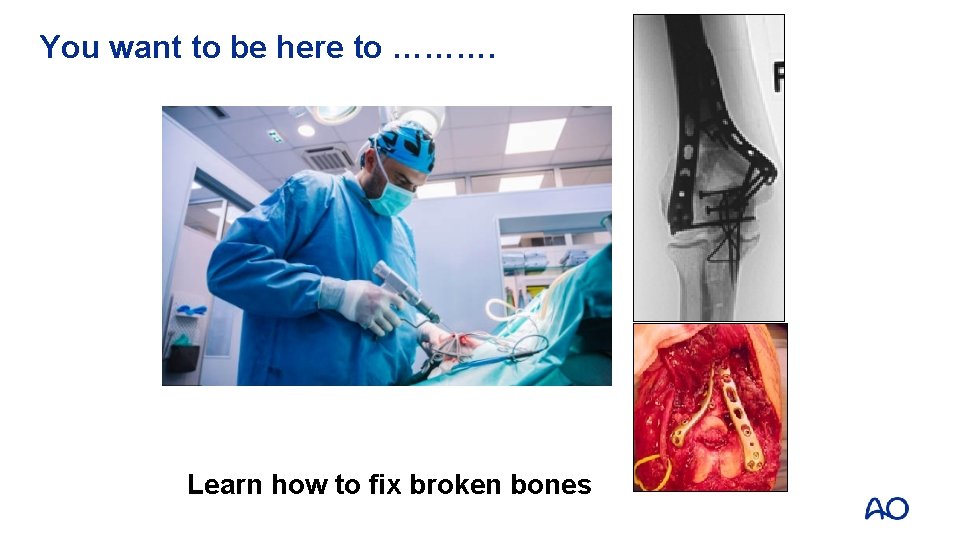
You want to be here to ………. Learn how to fix broken bones
So why would you want to hear about history or the AO?
Learning objectives • • To understand that the AO can help you professionally, personally, and financially To see how participation will provide for personal and professional growth If you want to move forward it is useful to know how you got where you are
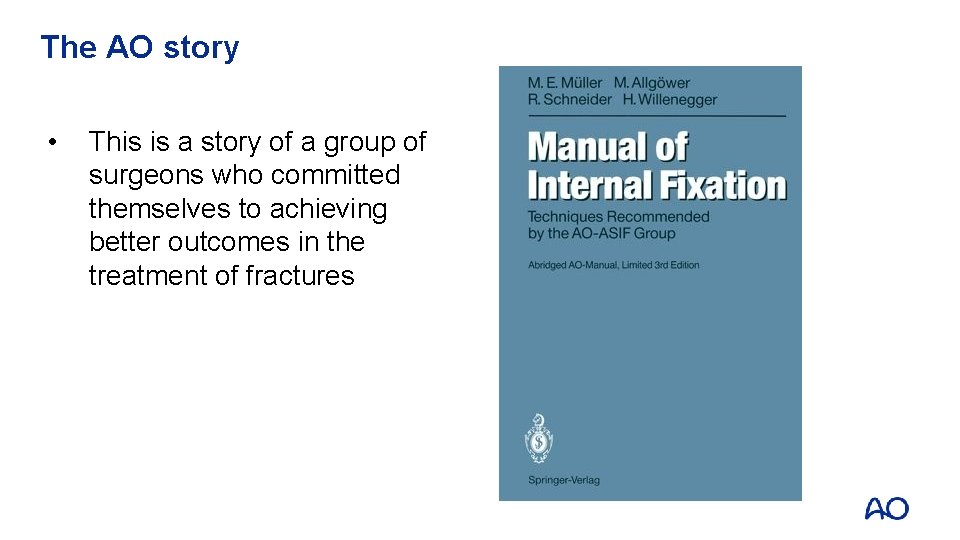
The AO story • This is a story of a group of surgeons who committed themselves to achieving better outcomes in the treatment of fractures
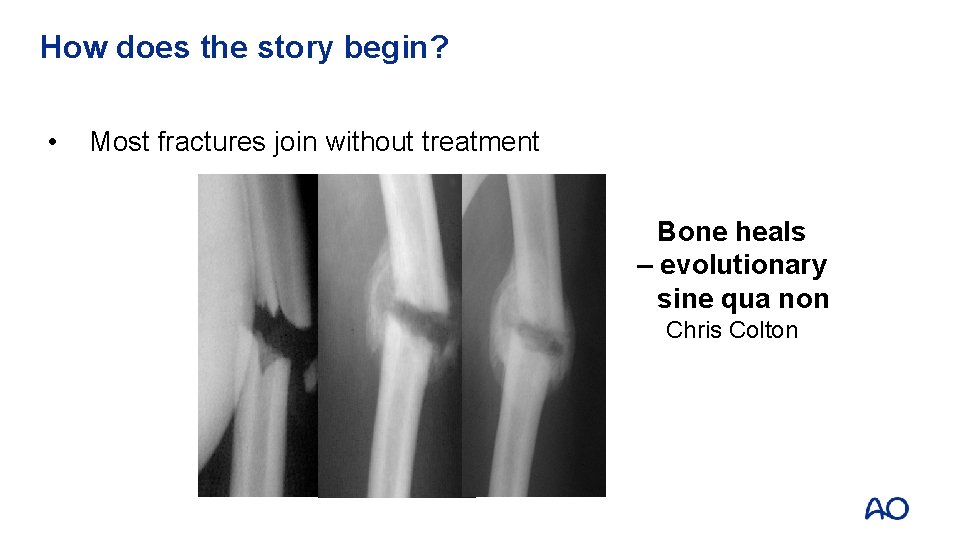
How does the story begin? • Most fractures join without treatment Bone heals – evolutionary sine qua non Chris Colton
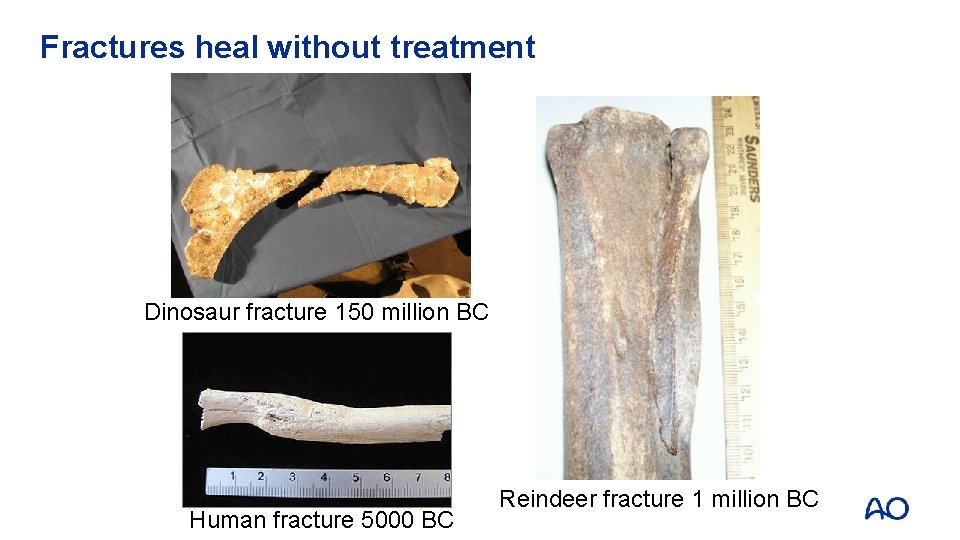
Fractures heal without treatment Dinosaur fracture 150 million BC Human fracture 5000 BC Reindeer fracture 1 million BC
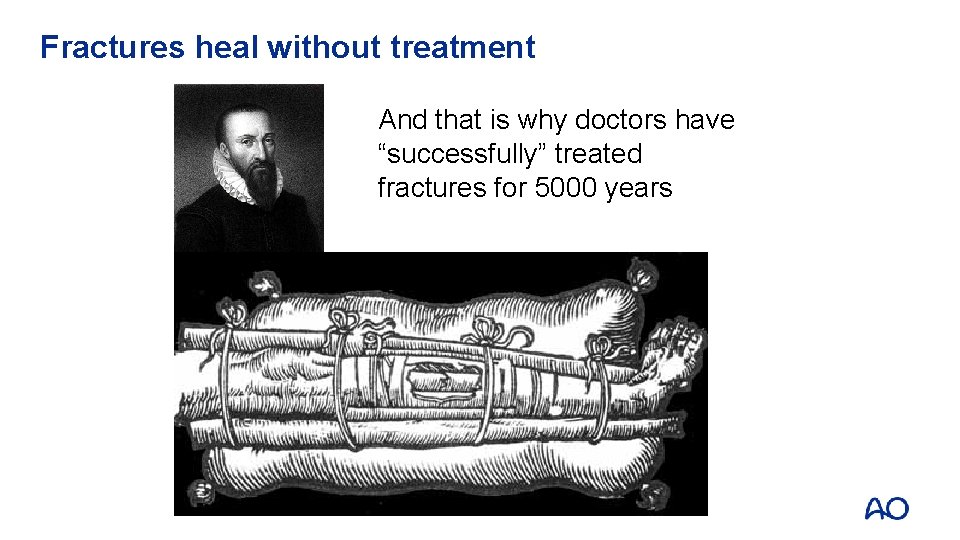
Fractures heal without treatment And that is why doctors have “successfully” treated fractures for 5000 years
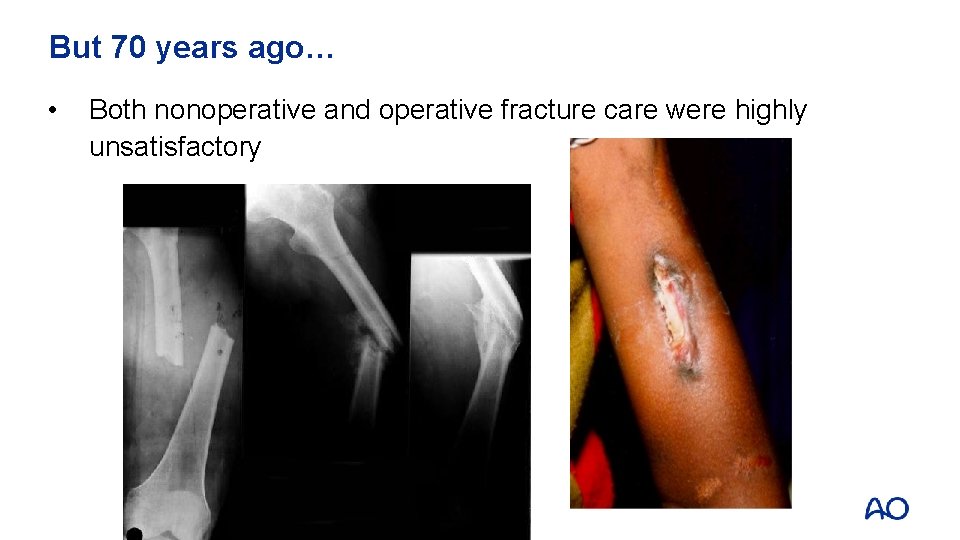
But 70 years ago… • Both nonoperative and operative fracture care were highly unsatisfactory
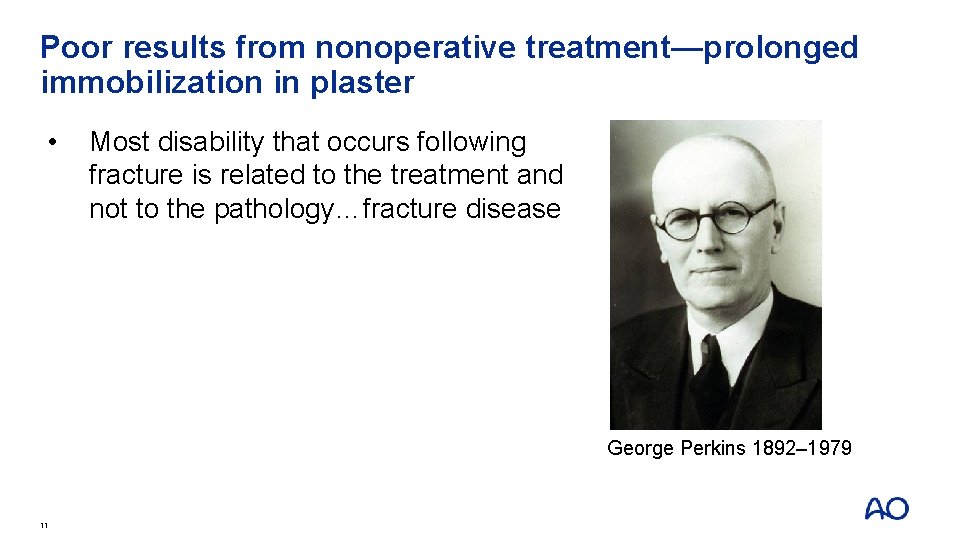
Poor results from nonoperative treatment—prolonged immobilization in plaster • Most disability that occurs following fracture is related to the treatment and not to the pathology…fracture disease George Perkins 1892– 1979 11
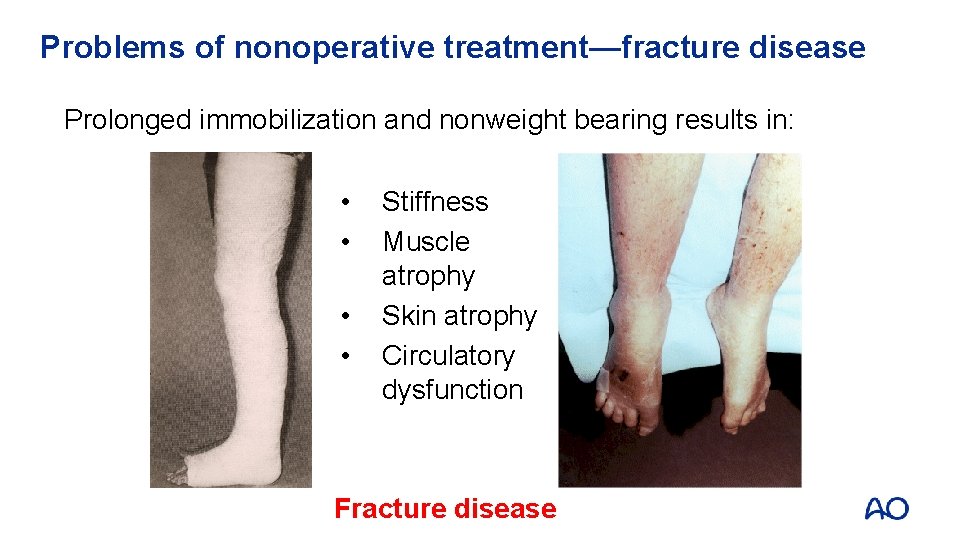
Problems of nonoperative treatment—fracture disease Prolonged immobilization and nonweight bearing results in: • • Stiffness Muscle atrophy Skin atrophy Circulatory dysfunction Fracture disease
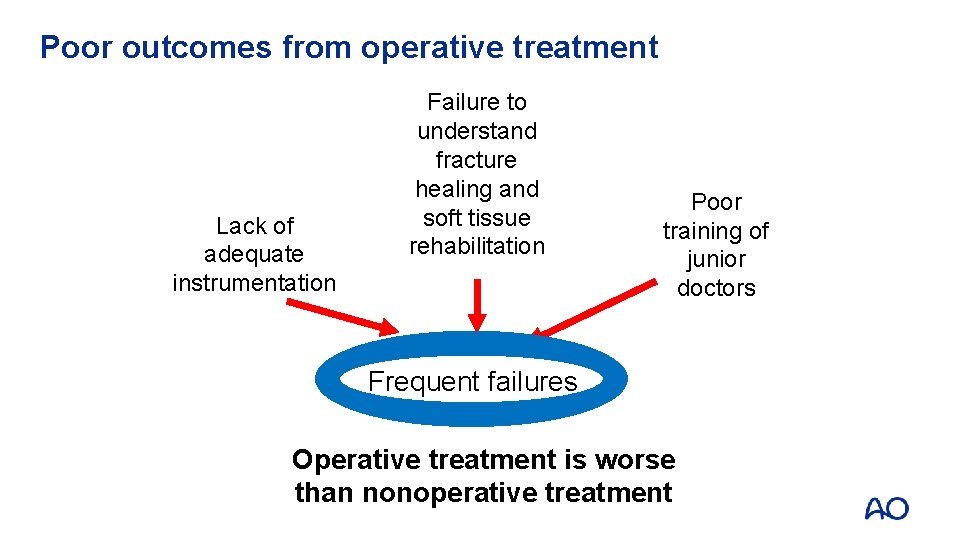
Poor outcomes from operative treatment Lack of adequate instrumentation Failure to understand fracture healing and soft tissue rehabilitation Poor training of junior doctors Frequent failures Operative treatment is worse than nonoperative treatment
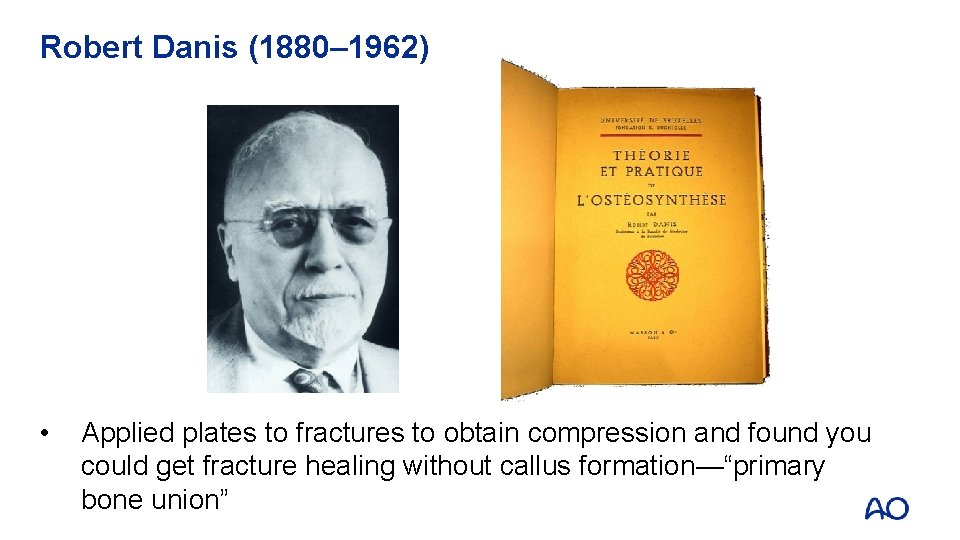
Robert Danis (1880– 1962) • Applied plates to fractures to obtain compression and found you could get fracture healing without callus formation—“primary bone union”
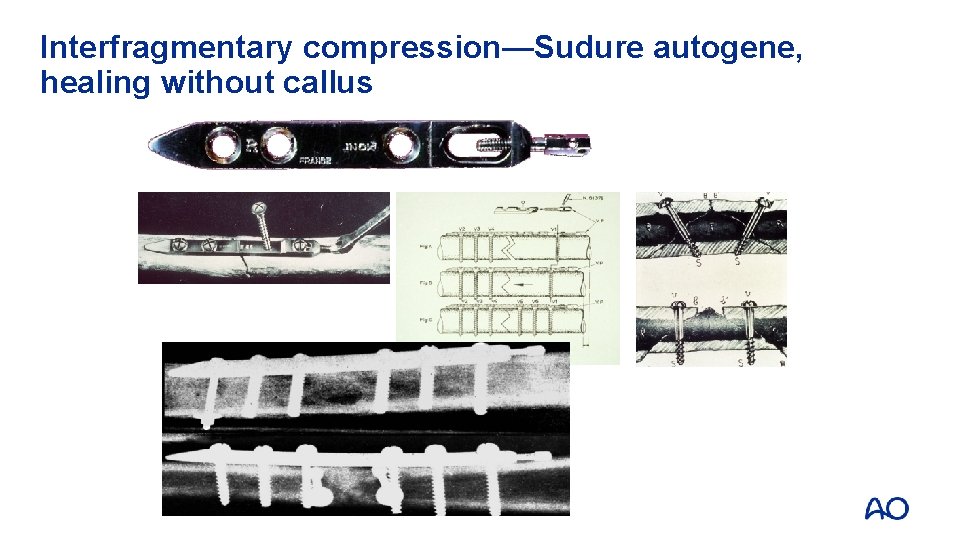
Interfragmentary compression—Sudure autogene, healing without callus
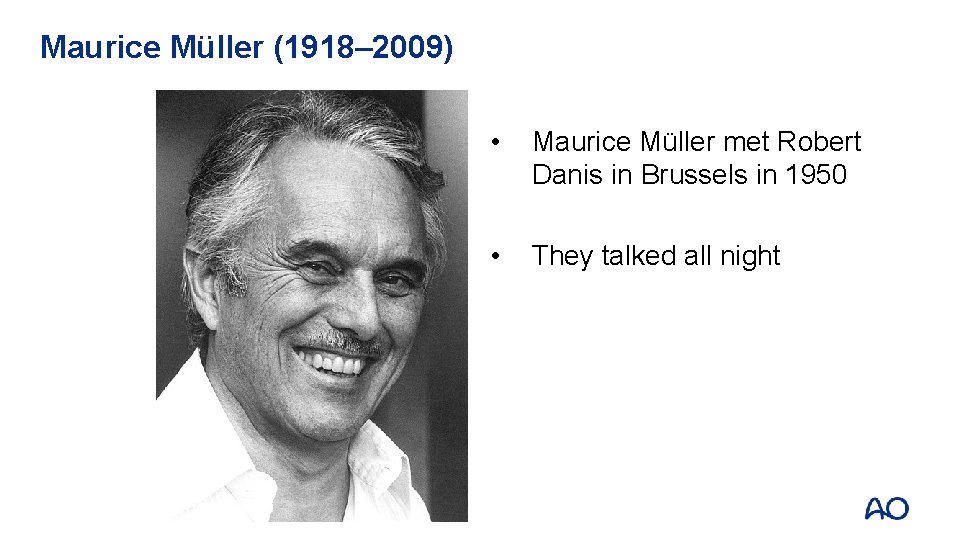
Maurice Müller (1918– 2009) • Maurice Müller met Robert Danis in Brussels in 1950 • They talked all night
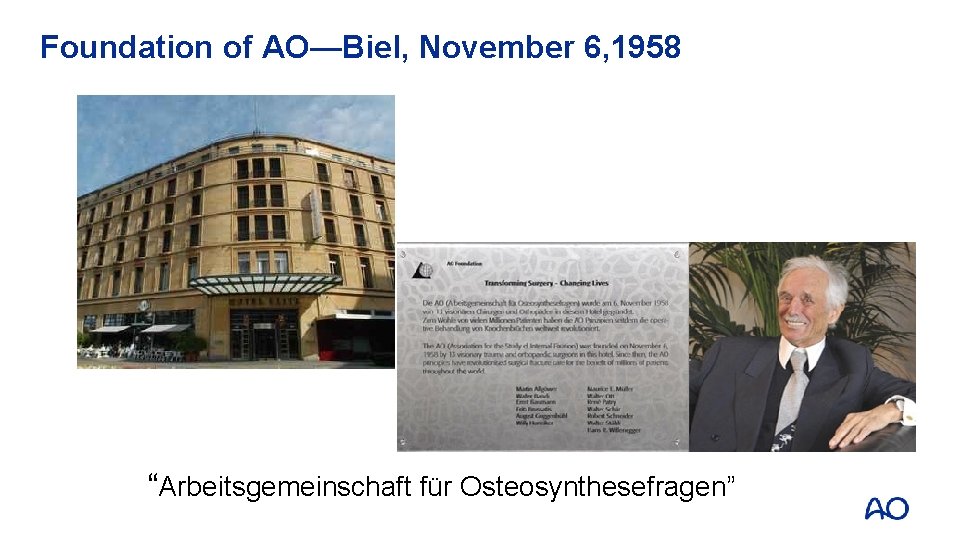
Foundation of AO—Biel, November 6, 1958 “Arbeitsgemeinschaft für Osteosynthesefragen”
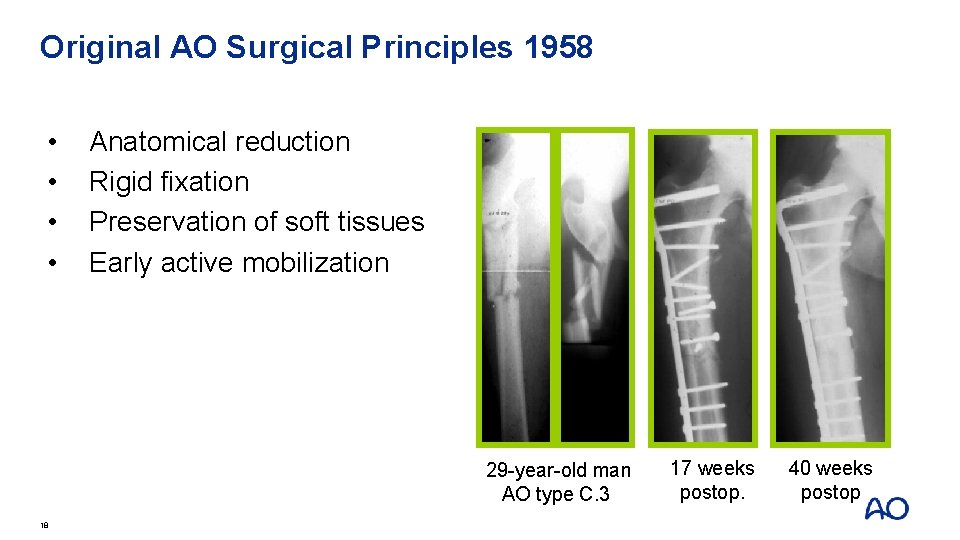
Original AO Surgical Principles 1958 • • Anatomical reduction Rigid fixation Preservation of soft tissues Early active mobilization 29 -year-old man AO type C. 3 18 17 weeks postop. 40 weeks postop
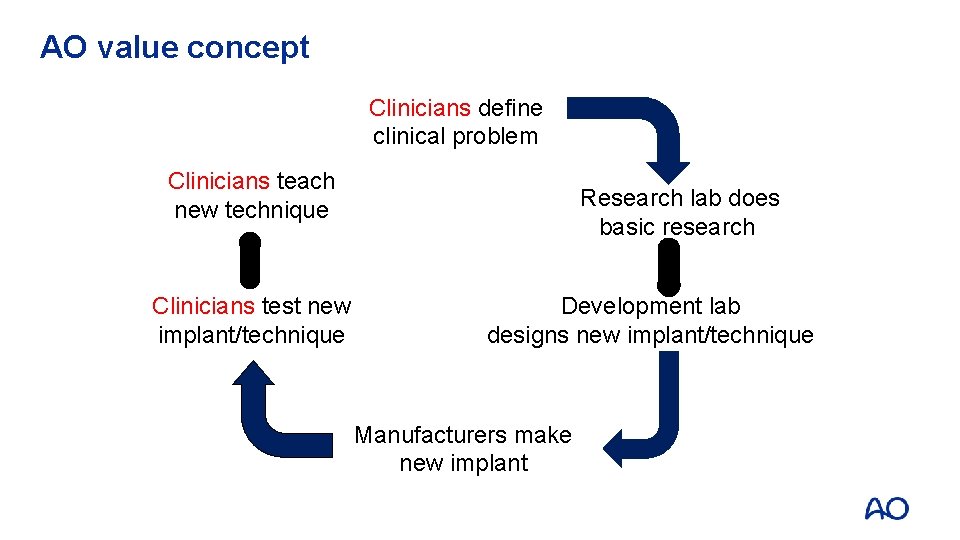
AO value concept Clinicians define clinical problem Clinicians teach new technique Clinicians test new implant/technique Research lab does basic research Development lab designs new implant/technique Manufacturers make new implant
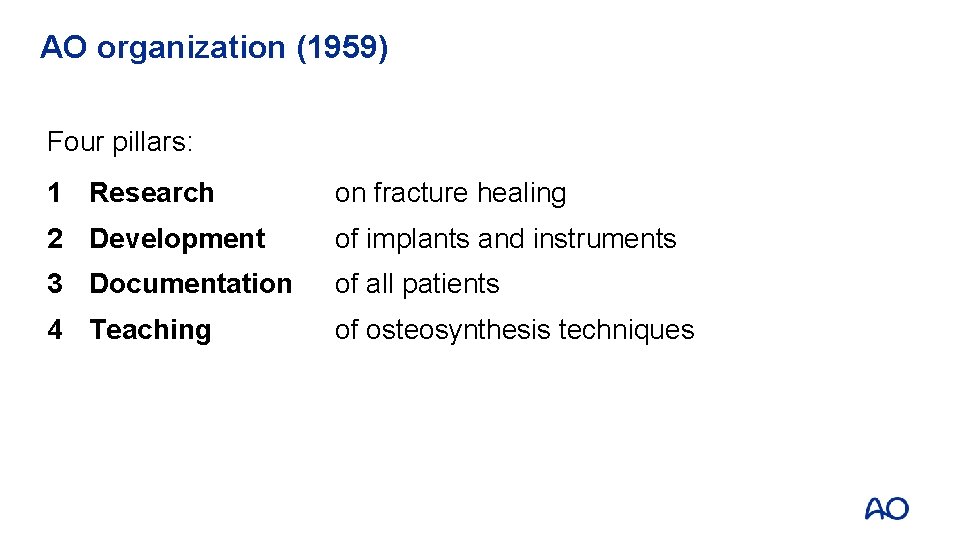
AO organization (1959) Four pillars: 1 Research on fracture healing 2 Development of implants and instruments 3 Documentation of all patients 4 Teaching of osteosynthesis techniques
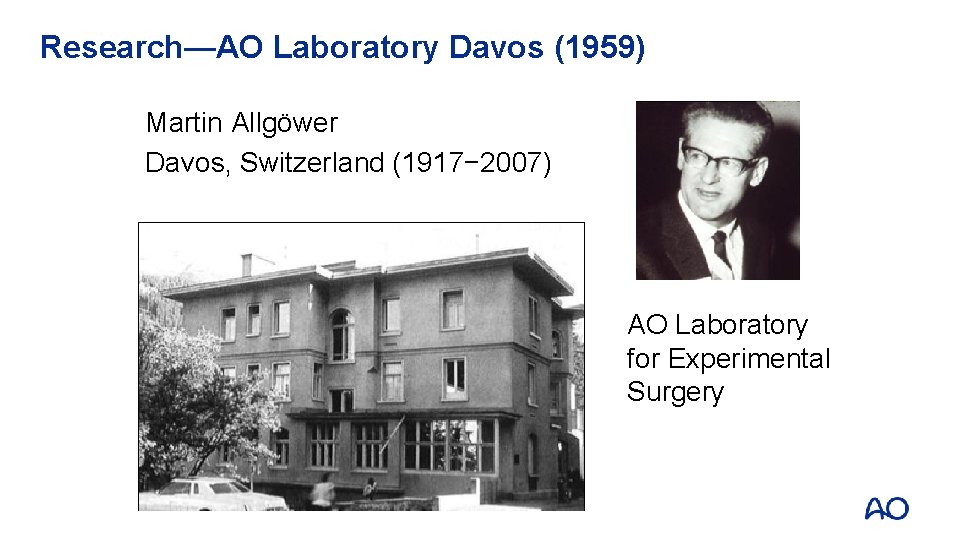
Research—AO Laboratory Davos (1959) Martin Allgöwer Davos, Switzerland (1917− 2007) AO Laboratory for Experimental Surgery
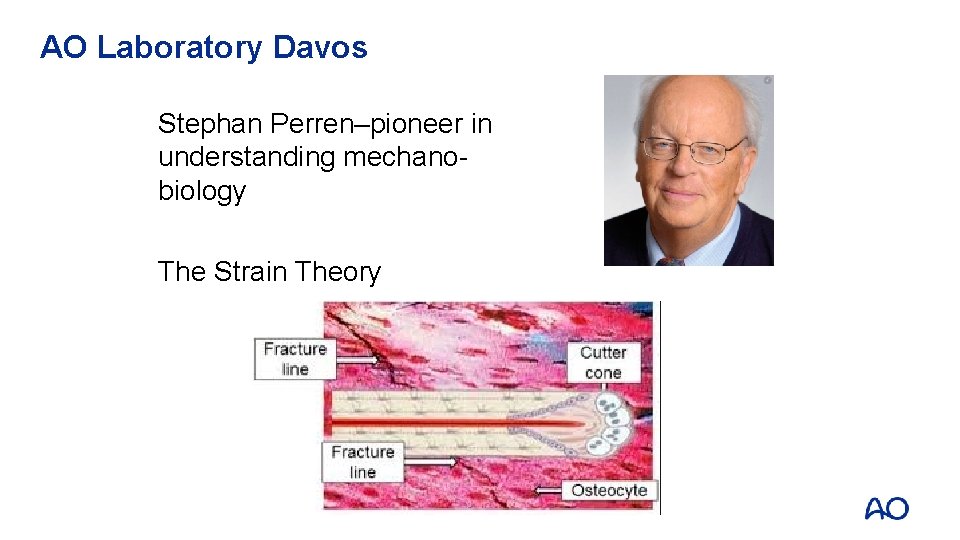
AO Laboratory Davos Stephan Perren–pioneer in understanding mechanobiology The Strain Theory
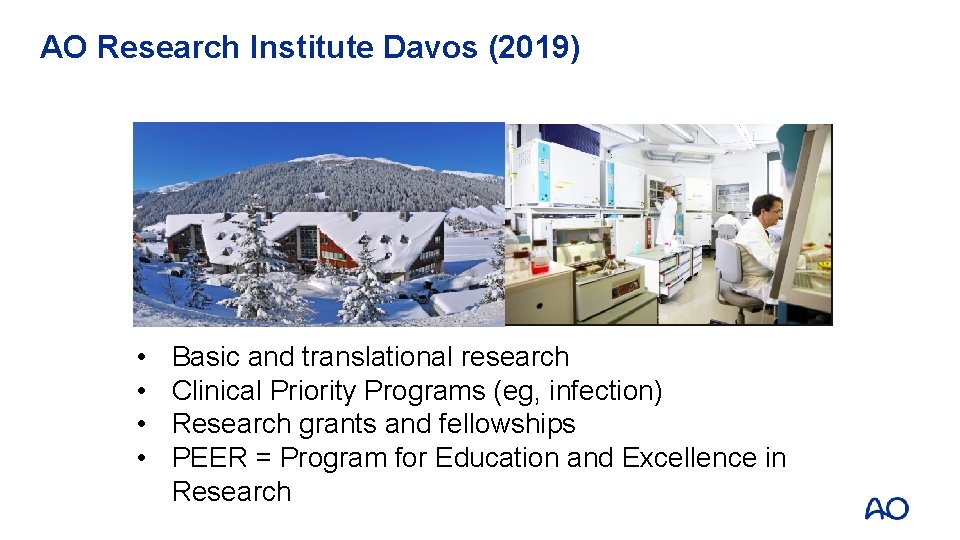
AO Research Institute Davos (2019) • • Basic and translational research Clinical Priority Programs (eg, infection) Research grants and fellowships PEER = Program for Education and Excellence in Research
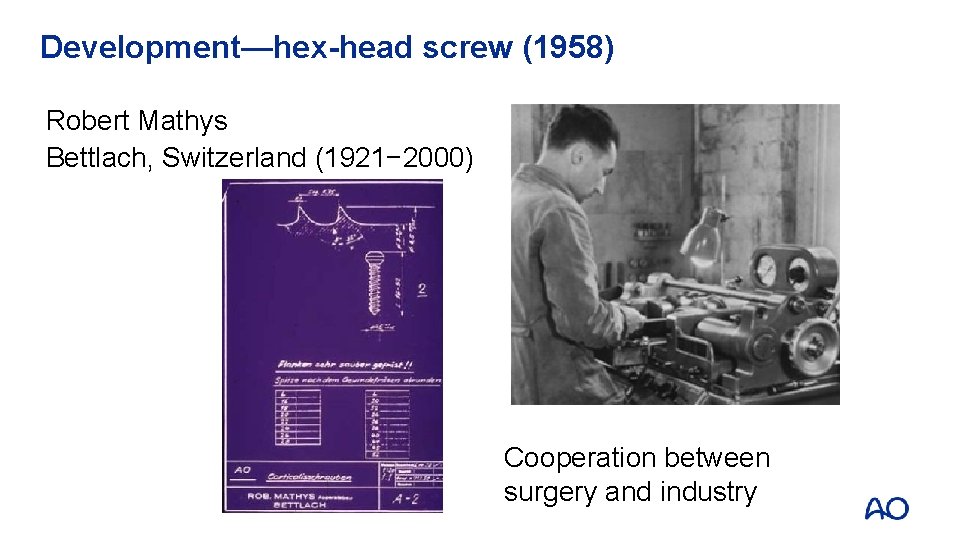
Development—hex-head screw (1958) Robert Mathys Bettlach, Switzerland (1921− 2000) Cooperation between surgery and industry
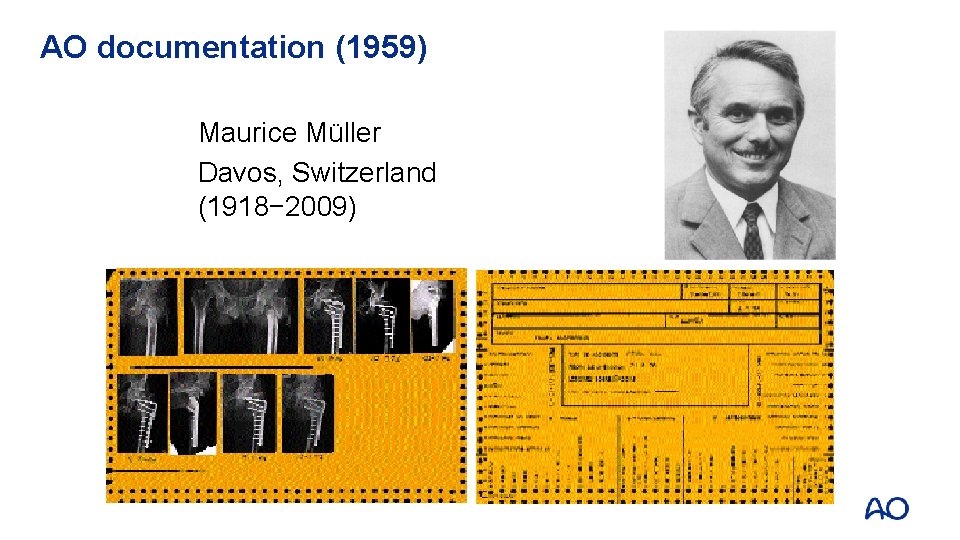
AO documentation (1959) Maurice Müller Davos, Switzerland (1918− 2009)
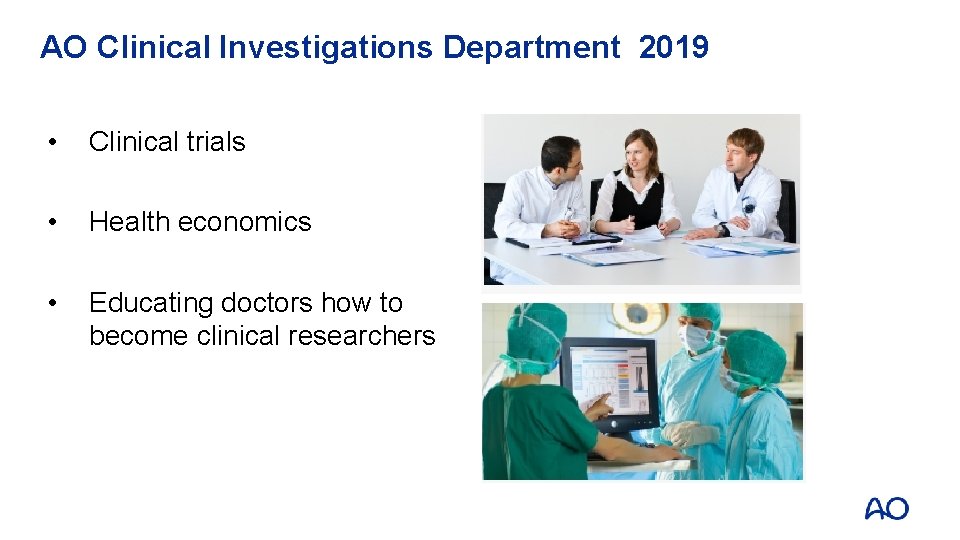
AO Clinical Investigations Department 2019 • Clinical trials • Health economics • Educating doctors how to become clinical researchers
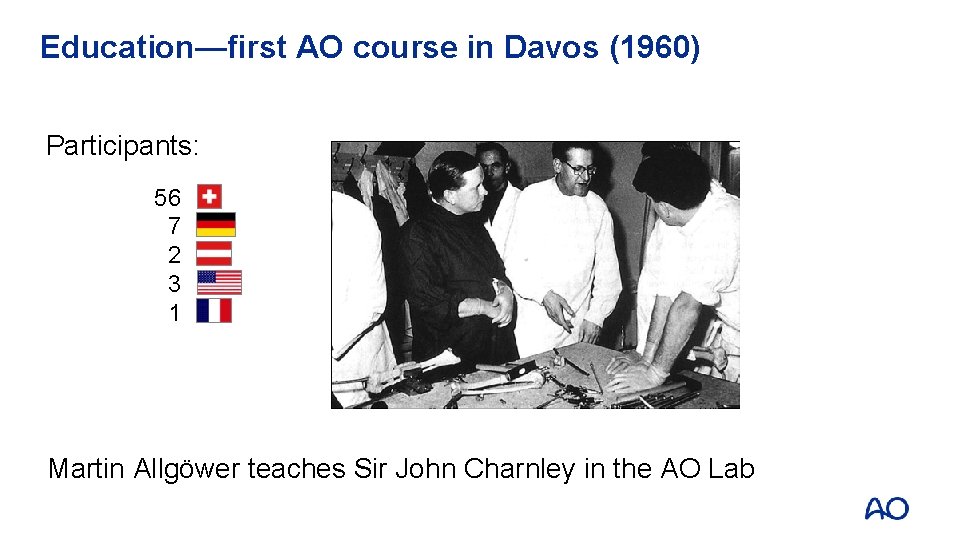
Education—first AO course in Davos (1960) Participants: 56 7 2 3 1 Martin Allgöwer teaches Sir John Charnley in the AO Lab
AO courses 2018 • • 58, 118 participants 832 educational events 22, 311 faculty days 8, 798 faculty, worldwide
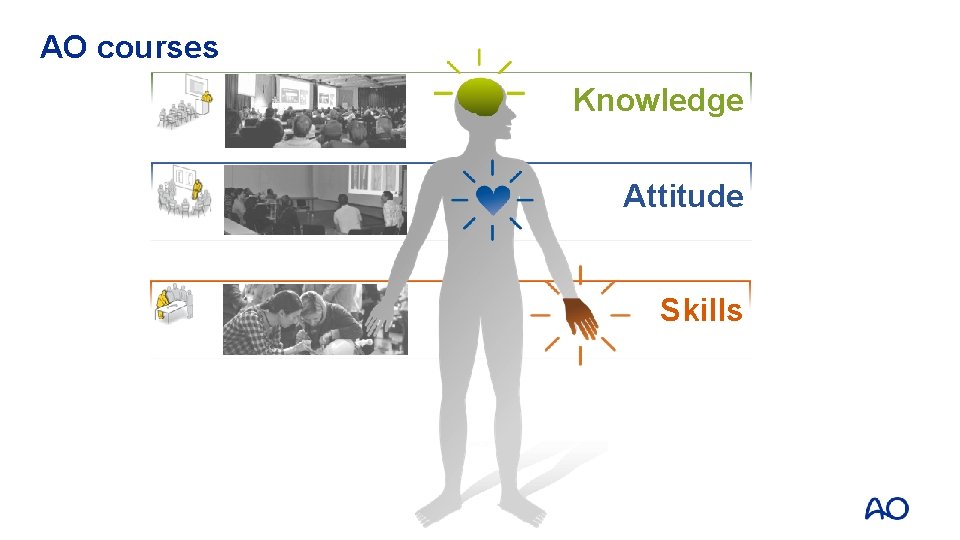
AO courses Knowledge Attitude Skills
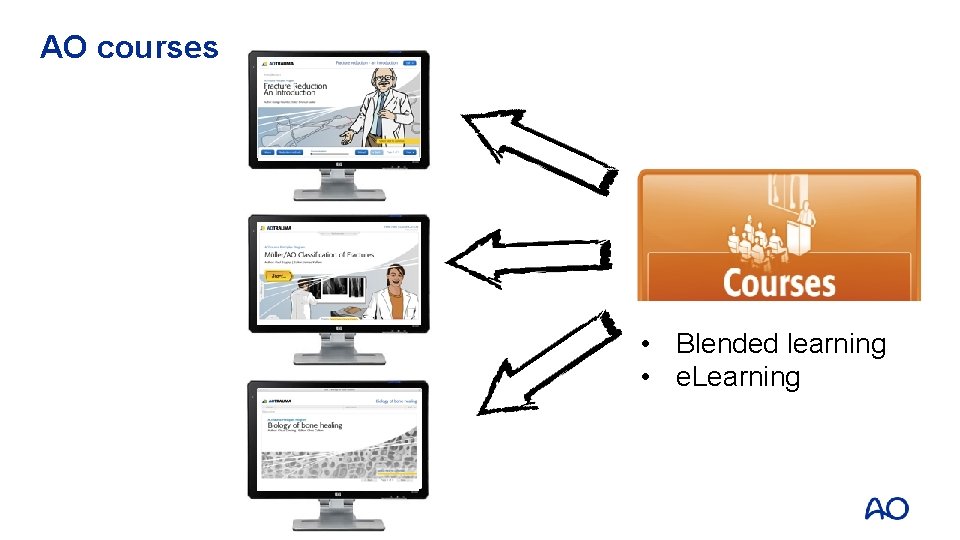
AO courses • Blended learning • e. Learning
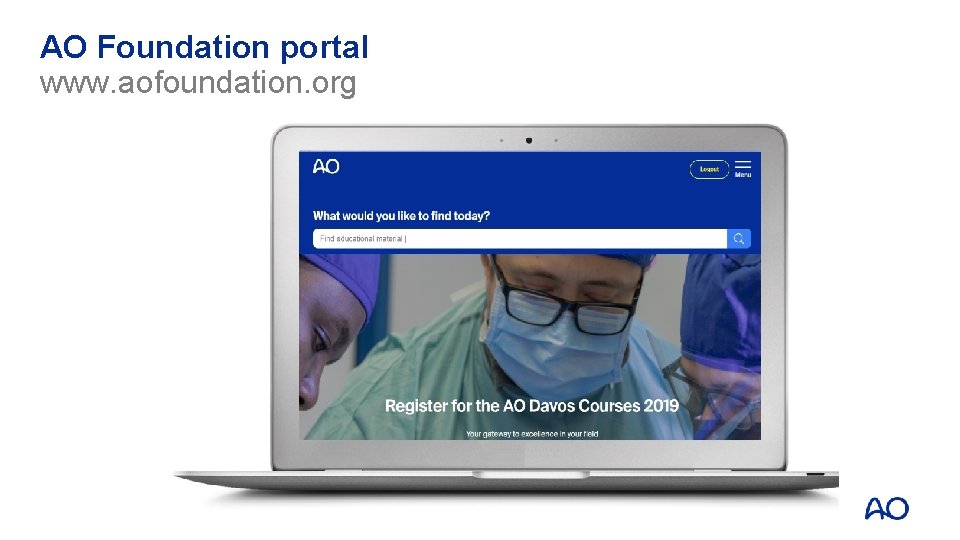
AO Foundation portal www. aofoundation. org
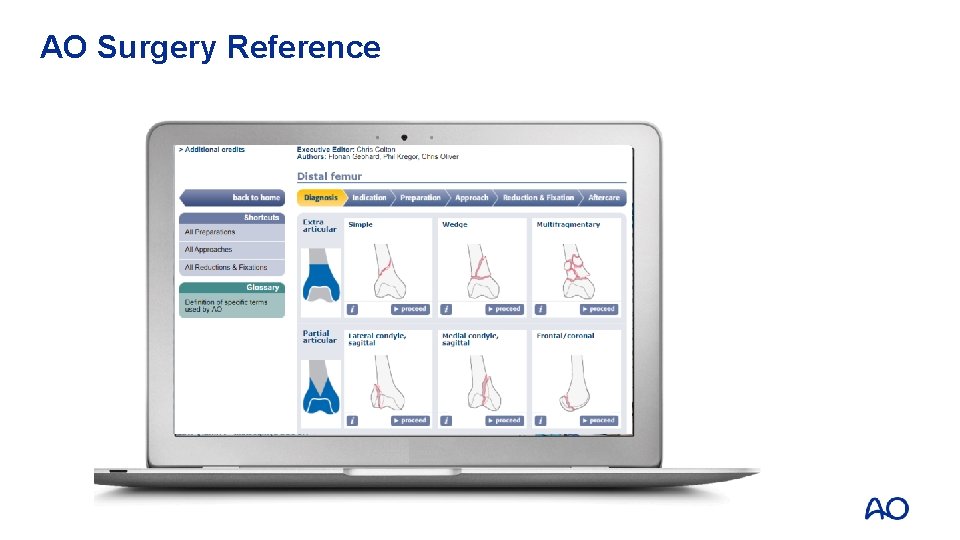
AO Surgery Reference
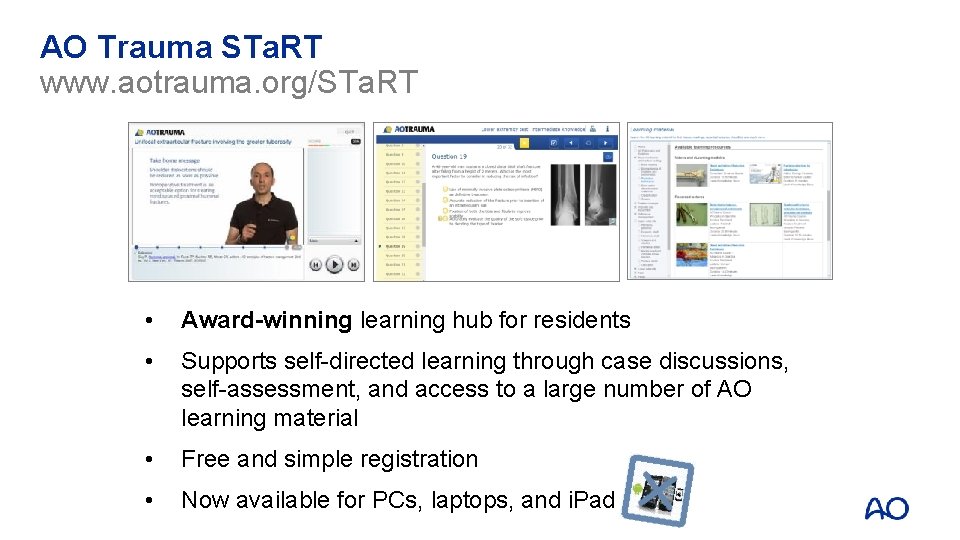
AO Trauma STa. RT www. aotrauma. org/STa. RT • Award-winning learning hub for residents • Supports self-directed learning through case discussions, self-assessment, and access to a large number of AO learning material • Free and simple registration • Now available for PCs, laptops, and i. Pad
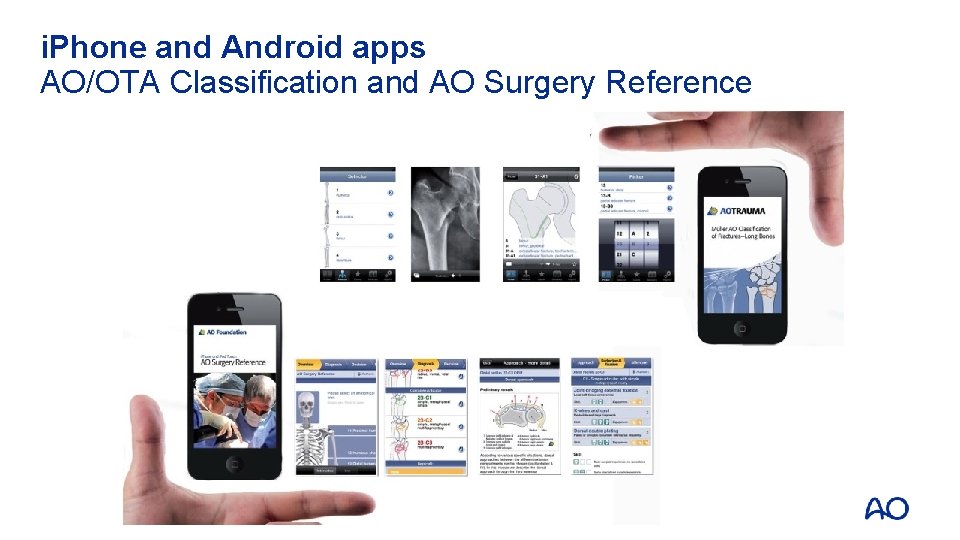
i. Phone and Android apps AO/OTA Classification and AO Surgery Reference 34
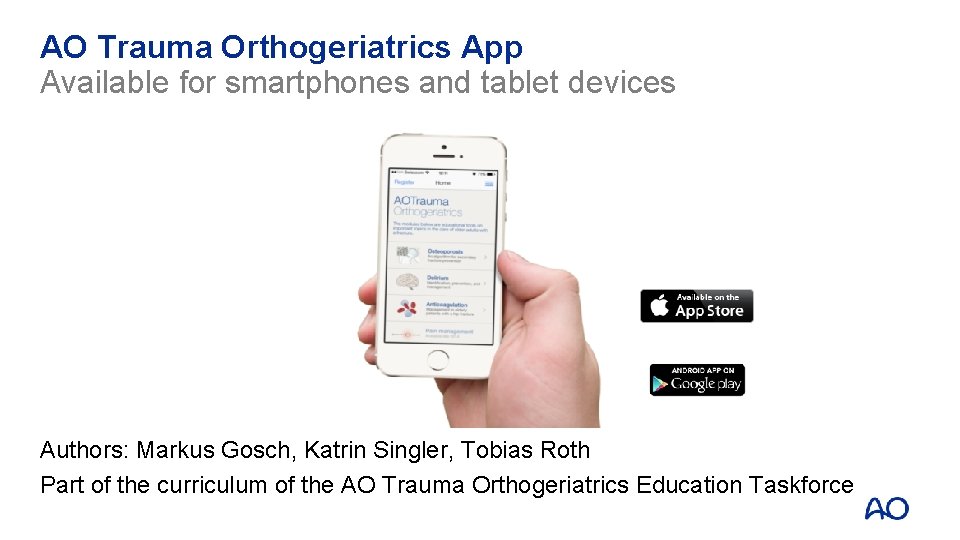
AO Trauma Orthogeriatrics App Available for smartphones and tablet devices Authors: Markus Gosch, Katrin Singler, Tobias Roth Part of the curriculum of the AO Trauma Orthogeriatrics Education Taskforce
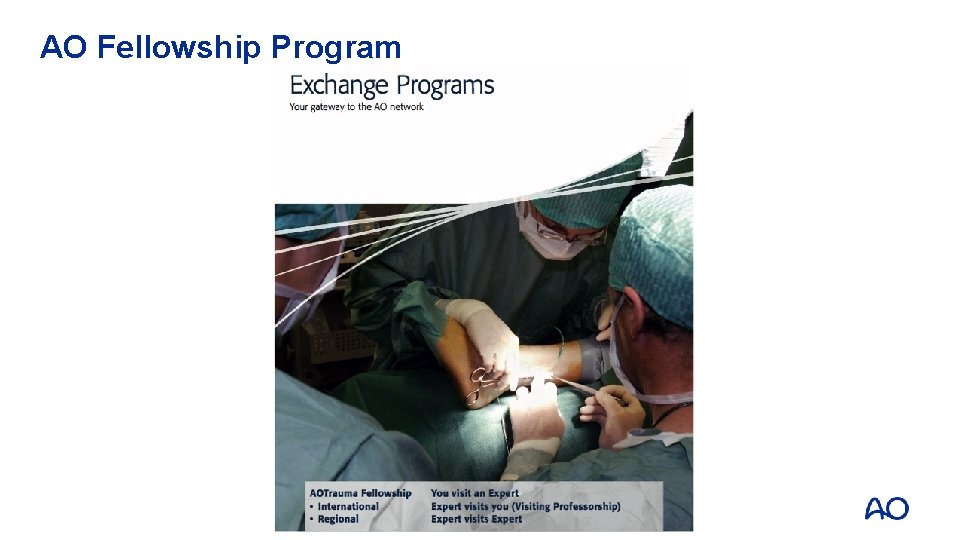
AO Fellowship Program
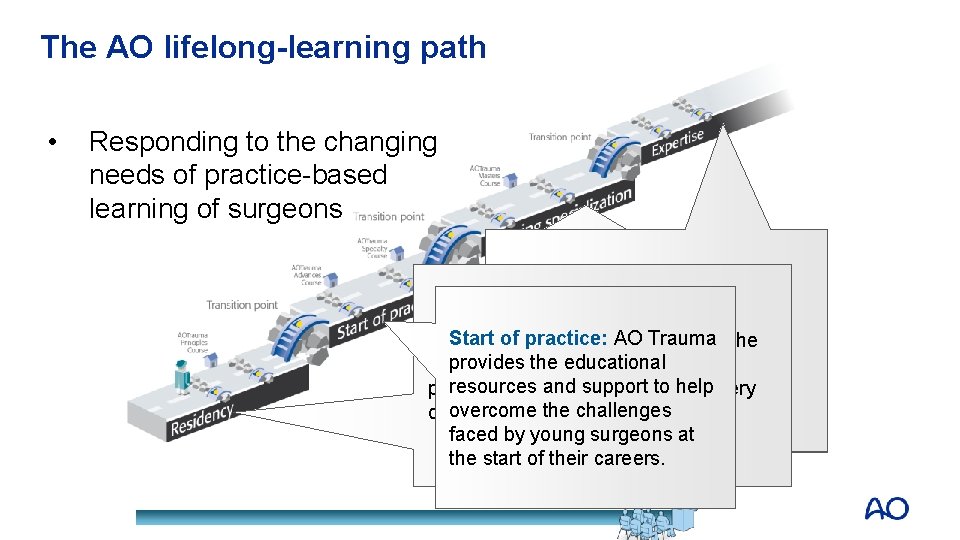
The AO lifelong-learning path • Responding to the changing needs of practice-based learning of surgeons Growing specialization: Expertise: Trauma Educational. AO events and provides learning the meansare for experts to share resources invaluable for those build their reputation, wishing to maintain their Start ideas, of practice: AO Trauma Residency: AO Trauma provides the increase their visibility, andwith the knowledge base, keep up provides the educational resources to nurture transmit their knowledge to the latestand advances, or specific resources support to solve help principle education in trauma surgery next generation problems relatedoftosurgeons. setting up overcome the challenges during the malleable years. faced practice. by young surgeons at the start of their careers.
Success of the AO is based on: • Friendship • Constructive criticism • • Share success as well as failure • Mutual respect • Cooperation • Teaching and learning Interest in R&D Benefit for the patient is the ultimate goal
Take-home messages • • The AO can help you professionally, personally, and financially If you participate, the AO will provide for your personal and professional growth
AO Foundation • Philosophies and techniques of treatment will change with time, but the philosophy that we exist to improve the care given to our patients will last forever
- Slides: 40