
Anxiety Disorders The Dark side of Fear Definitions
- Slides: 32
Anxiety Disorders “The Dark side of Fear”
Definitions • Fear: A short-term emotional and physiological reaction to a threatening event • Anxiety: A longer-term sense of apprehension
Anxiety Disorders • Anxiety so intense and long-lasting that it disrupts the person’s daily functioning.
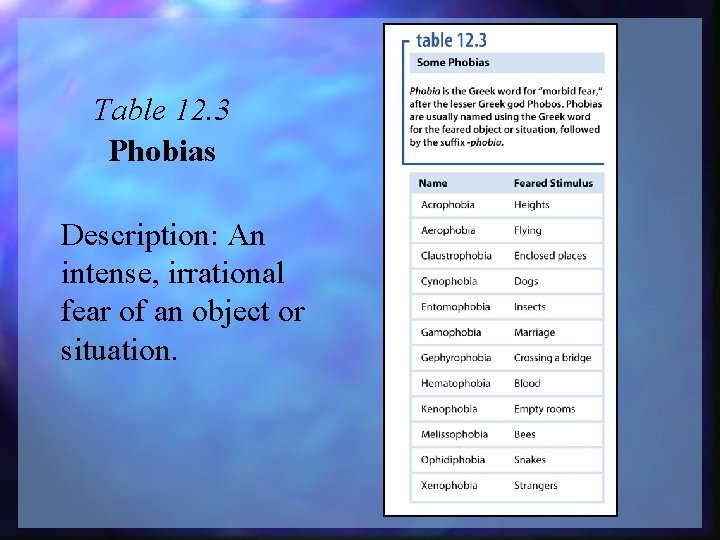
Table 12. 3 Phobias Description: An intense, irrational fear of an object or situation.
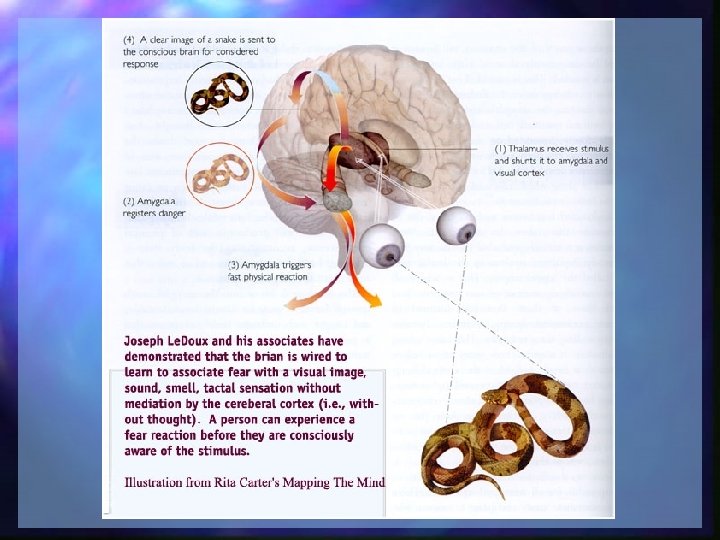
Key to Phobias Irrational fear triggered by unconscious mind
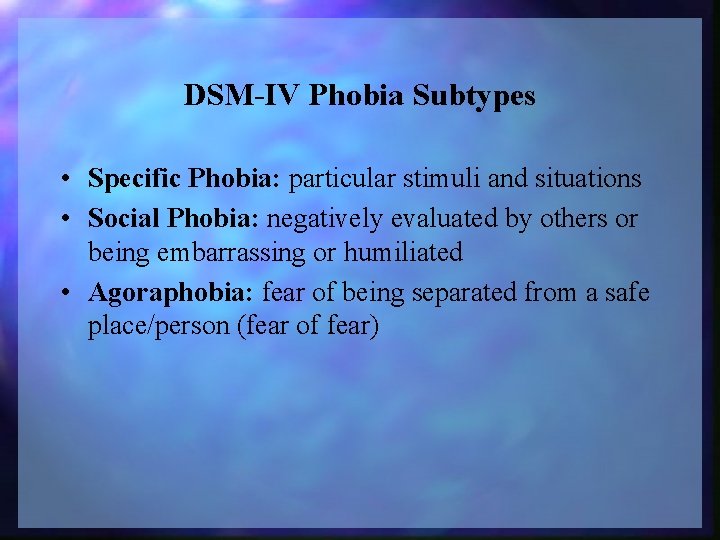
DSM-IV Phobia Subtypes • Specific Phobia: particular stimuli and situations • Social Phobia: negatively evaluated by others or being embarrassing or humiliated • Agoraphobia: fear of being separated from a safe place/person (fear of fear)
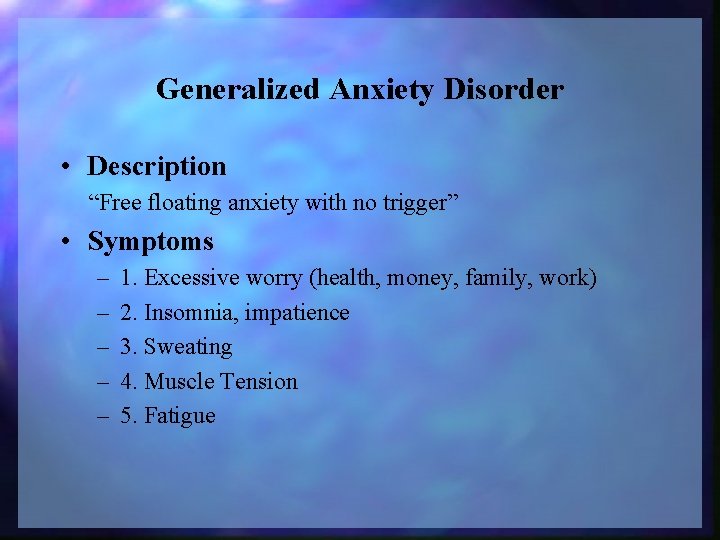
Generalized Anxiety Disorder • Description “Free floating anxiety with no trigger” • Symptoms – – – 1. Excessive worry (health, money, family, work) 2. Insomnia, impatience 3. Sweating 4. Muscle Tension 5. Fatigue
Panic Disorder • Description: experience of recurrent terrifying panic attacks • shortness of breath and irregular heartbeat • dizziness and feelings of unreality – can occur while sleeping – associated with agoraphobia (“comorbidity”) – concerns about “going crazy”
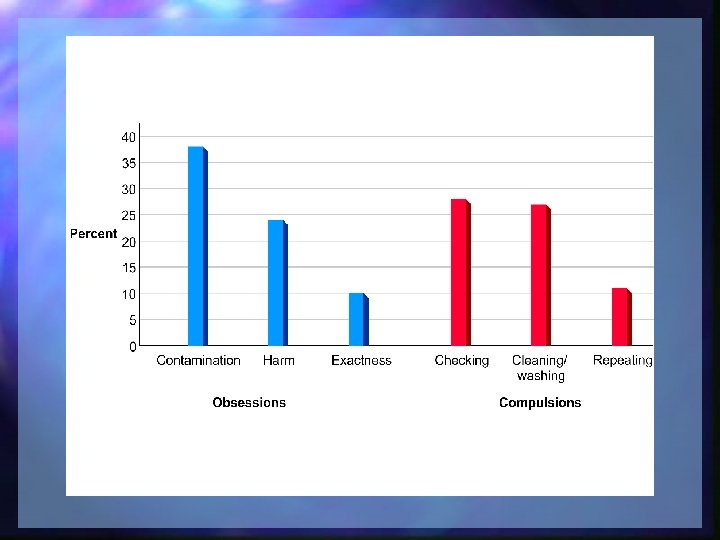
Obsessive-Compulsive Disorder • Description: persistent, upsetting, and unwarranted thoughts (obsessions) that motivate repetitive behaviors (compulsions) – obsession causes anxiety, compulsion reduces it – equally common in men and women – often associated with depression
Obsessions – dirt, germs or toxins – something terrible is happening (fire, death or illness) – symmetry, order or exactness
Compulsions – Checking rituals: checking locks, car brakes, appliances, homework, etc. – Cleaning rituals: hand-washing, bathing, brushing teeth, etc. – Other: getting in/out of chair, opening/closing doors, etc.
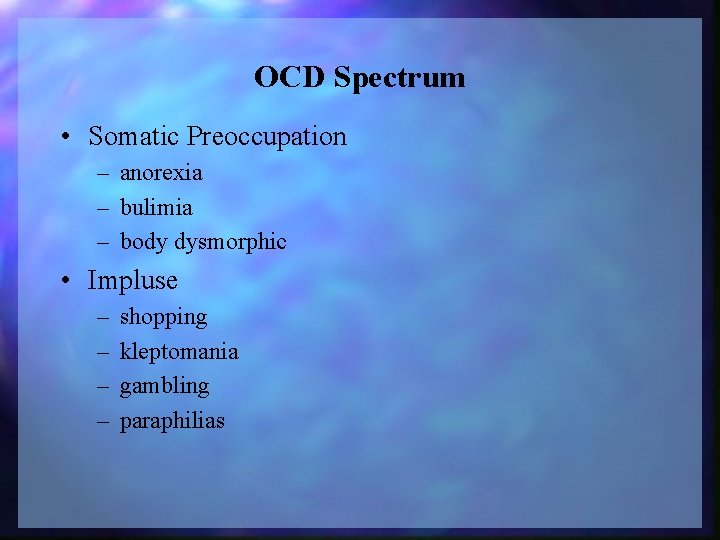
OCD Spectrum • Somatic Preoccupation – anorexia – bulimia – body dysmorphic • Impluse – – shopping kleptomania gambling paraphilias
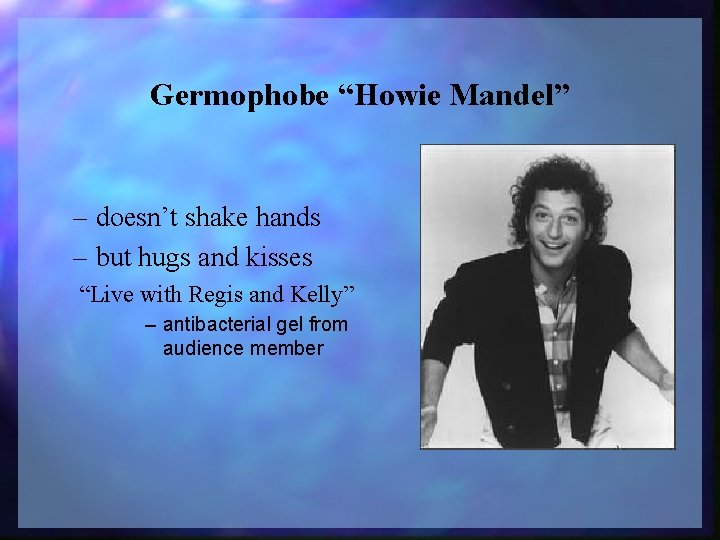
Germophobe “Howie Mandel” – doesn’t shake hands – but hugs and kisses “Live with Regis and Kelly” – antibacterial gel from audience member
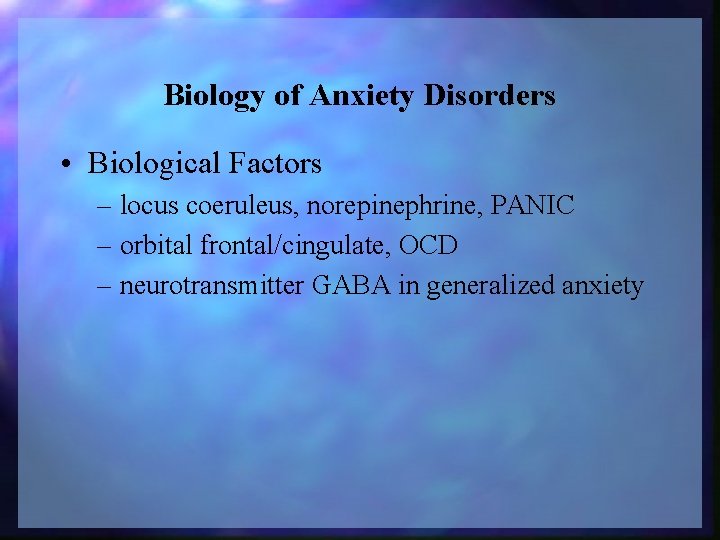
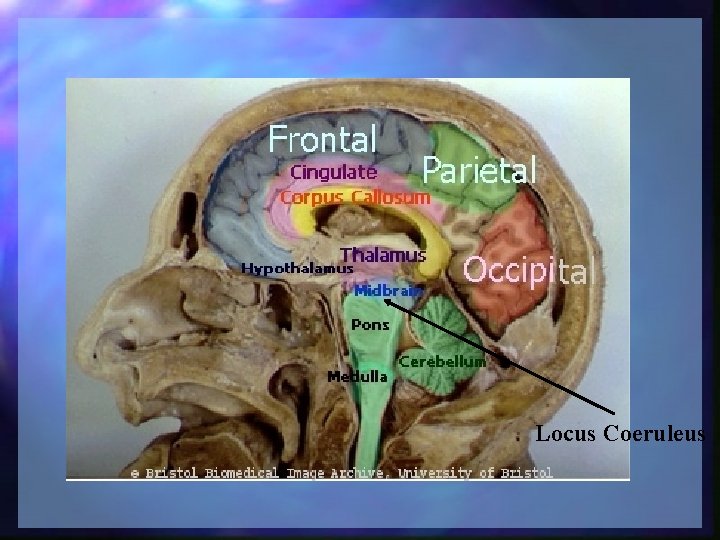
Biology of Anxiety Disorders • Biological Factors – locus coeruleus, norepinephrine, PANIC – orbital frontal/cingulate, OCD – neurotransmitter GABA in generalized anxiety
Locus Coeruleus
Anxiety Disorders and Learning • Compulsive behavior are learned responses which removes temporarily remove distress (trigger could be a thought) • Some phobias acquired through learning – biologically prepared to learn certain phobias – snake fears learned via observation
Other Causes • Psychological Factors – Environmental stressors – Ways of thinking
Somatoform Disorders Can mental disorder cause blindness?
Somatoform Disorders • body disorder even though there is no physical cause • Conversion Disorder: – – appear when person is under severe distress. disorder enables person to avoid unpleasant situations. organically impossible or improbable symptoms little concern for this “serious” problem
Other Somatoform Disorders • Hypochondriasis: strong, unjustified fear of serious physical problem • Somatization Disorder: dramatic but vague, reports about a multitude of physical problems • Pain Disorder: severe, often constant pain with no physical cause.
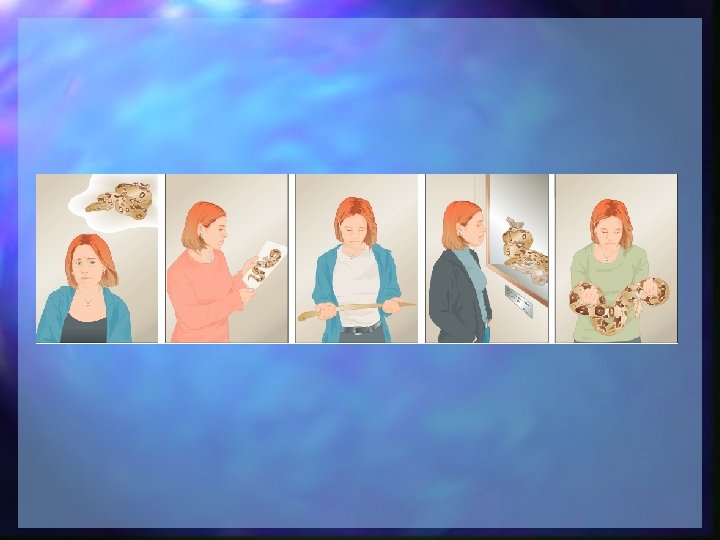
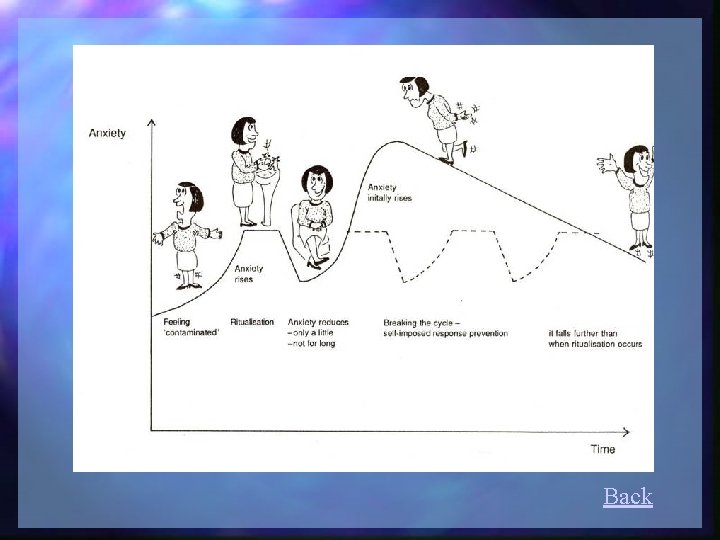
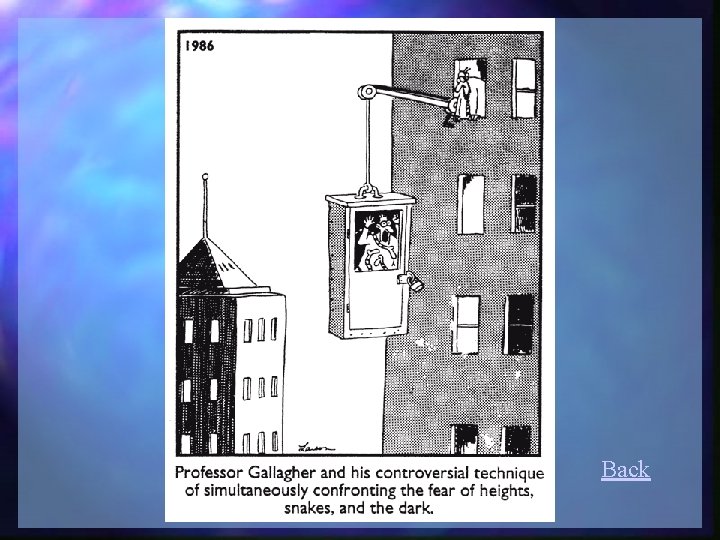
Anxiety Disorder Treatments • Behavior Therapy – 1. systematic desensitization/exposure therapy – 2. response blocking/prevention (OCD) – 3. flooding/implosion • Drugs – yes to antidepressants, no to tranquillizers (valium) • Cognitive – thinking, rumination, worry • Exercise/Progressive Muscle Relaxation/Yoga Next
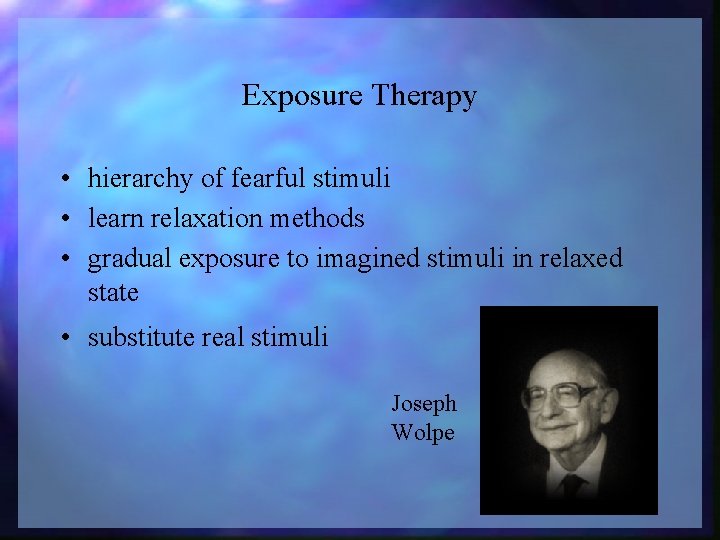
Exposure Therapy • hierarchy of fearful stimuli • learn relaxation methods • gradual exposure to imagined stimuli in relaxed state • substitute real stimuli Joseph Wolpe
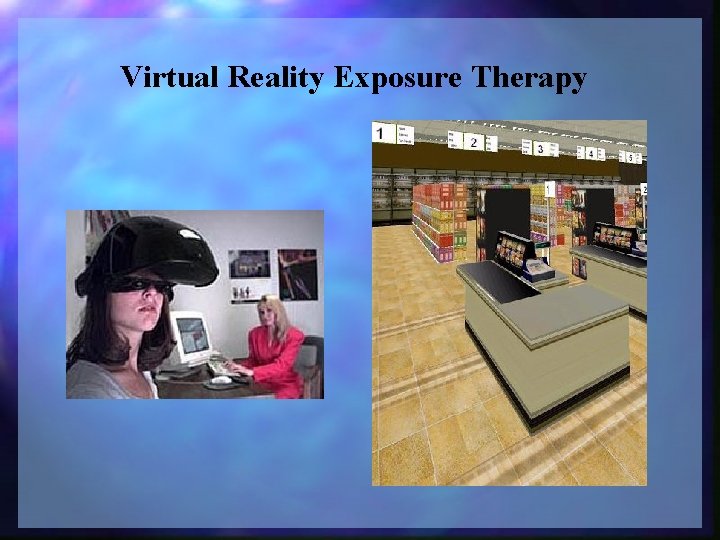
Virtual Reality Exposure Therapy
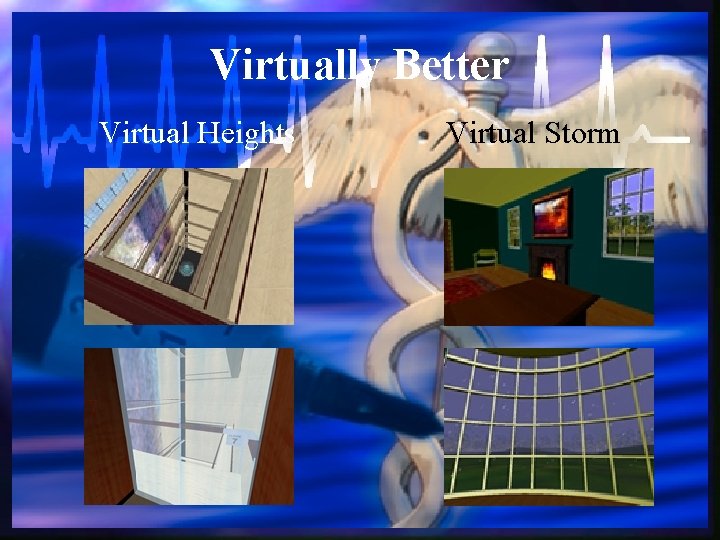
Virtually Better Virtual Heights Virtual Storm
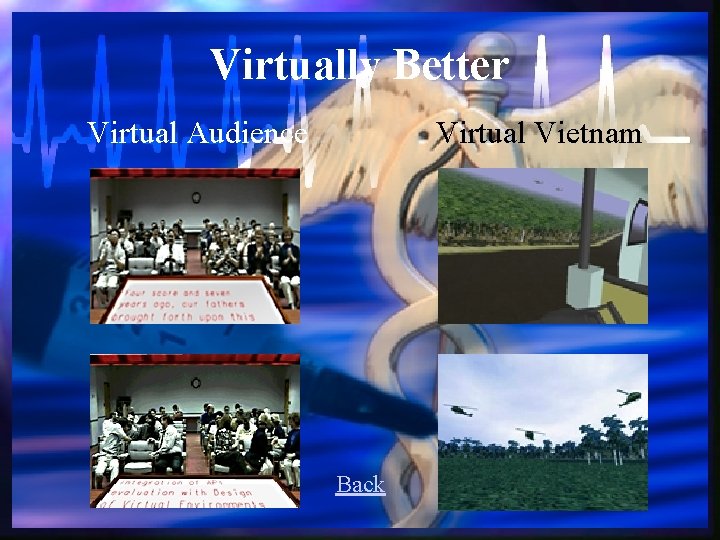
Virtually Better Virtual Audience Virtual Vietnam Back
Back
Back