
Anxiety Disorders in Children and Adolescents Various Forms
- Slides: 9
Anxiety Disorders in Children and Adolescents
Various Forms of Anxiety • • • Generalized Anxiety Separation Anxiety Specific Phobia Panic Disorder Selective Mutism Social Anxiety Somatization Obsessive Compulsive Disorder Post-Traumatic Stress
Fear is, I think, the greatest suffering for children George Sand (1854 -1855)
Basics of Anxiety • Anxiety is a feeling state consisting of physical, emotional and behavioral response to a perceived threat • Often undetected or under treated • Fear and worry are common in normally developing children • Need to distinguish normal from abnormal
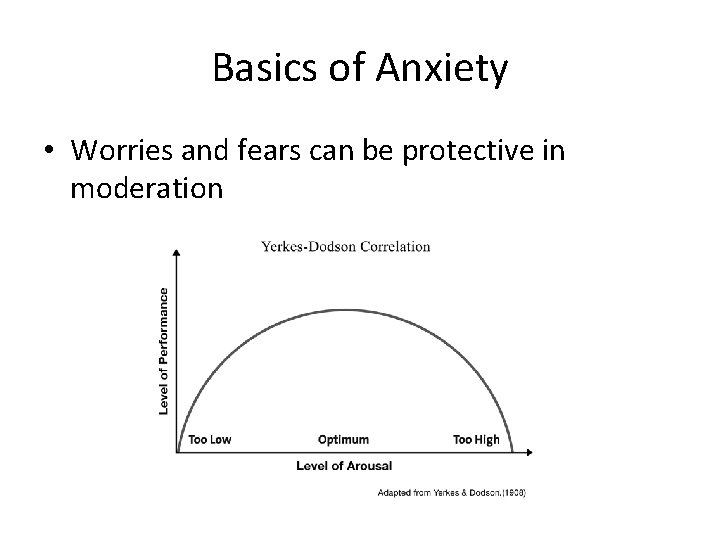
Basics of Anxiety • Worries and fears can be protective in moderation
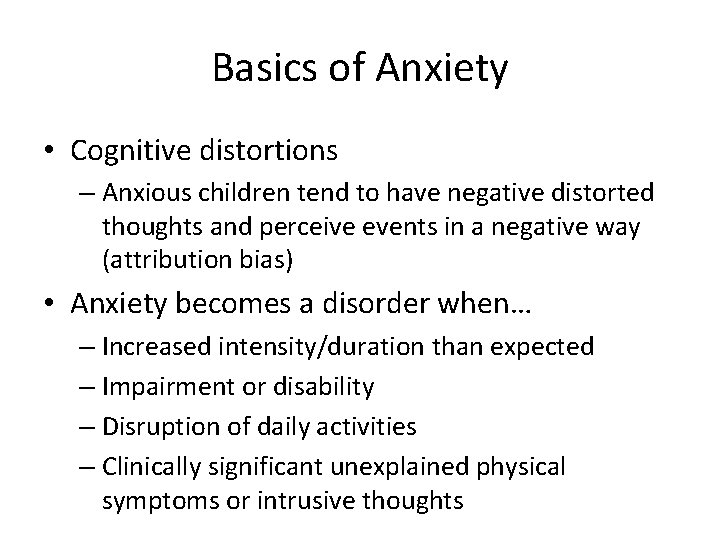
Basics of Anxiety • Cognitive distortions – Anxious children tend to have negative distorted thoughts and perceive events in a negative way (attribution bias) • Anxiety becomes a disorder when… – Increased intensity/duration than expected – Impairment or disability – Disruption of daily activities – Clinically significant unexplained physical symptoms or intrusive thoughts
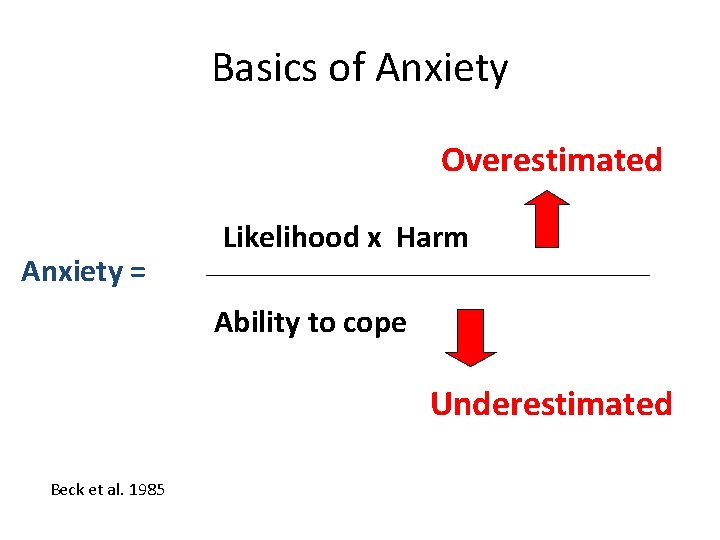
Basics of Anxiety Overestimated Anxiety = Likelihood x Harm Ability to cope Underestimated Beck et al. 1985
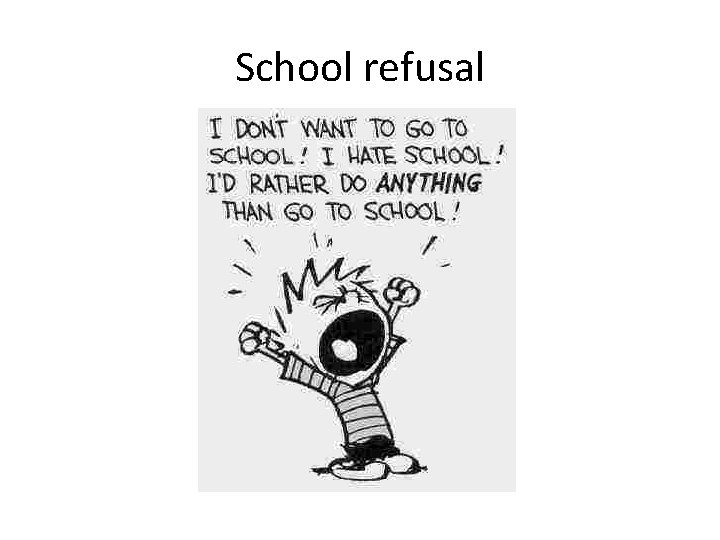
School refusal
Management of Anxiety • Recognize that it is there: develop insight, give it a name, make it less of a mystery. • Teach healthy coping: relaxation, distractions • Exposures: Do not recommending avoiding stimuli that cause anxiety. Rather learn to adapt. • Formal treatment: therapy or medication.