
Anxiety And Depression Dennis Mungall Pharm D Director



- Slides: 123
Anxiety And Depression Dennis Mungall , Pharm. D. Director, Virtual Education, Non traditional Doctor of Pharmacy Program Associate Professor , Pharmacy Practice Ohio State University/ College of Pharmacy
Learning Objectives 1. Understand the various anxiety disorders , Depression and how each disorder presents 2. Understand the treatment strategies for each disorder 3. Understand the signs and symptoms of each disorder 4. Understand the consequences to the health care system of anxiety and depression
History of Depression It is thought that ancient man saw mental illness as possession by supernatural forces. Ancient human skulls have been found with large holes in them, a process that has become known as trepanning. The accepted theory is that it was an attempt to let evil spirits out. We cannot be certain of this, but we do know that again and again human kind has returned to the idea of mental illness being caused by “evil forces”.
History of Depression And yet in certain of these cases there is mere anger and grief and sad dejection of mind………those affected with melancholy are not every one of them affected according to one particular form but they are suspicious of poisoning or flee to the desert from misanthropy or turn superstitious or contract a hatred of life. Or if at any time a relaxation takes place, in most cases hilarity supervenes. The patients are dull or stern, dejected or unreasonably torpid……they also become peevish, dispirited and start up from a disturbed sleep. ” Arateus (AD 150)
History of Depression Hippocrates (460 -377 BC) lived at the time of Hellenic enlightenment, when great advances were made in all areas of knowledge. He applied Empedocles’ theory to mental illness and was insistent that all illness or mental disorder must be explained on the basis of natural causes. Unpleasant dreams and anxiety were seen as being caused by a sudden flow of bile to the brain, melancholia was thought to be brought on by an excess of black bile 4, and exaltation by a predominance of warmth and dampness in the brain. Temperament was thought to be choleric, phlegmatic, sanguine or melancholic depending on the dominating humor
History of Depression By the end of the fifteenth century psychological problems were greatly entwined with legal and religious issues and were not seen alone. The devil was seen as the cause of all ills. Mental disorder was equated with sin. They also stated that where doctors could find no cause for a disease and where the disease did not respond to traditional treatment it was caused by the devil. A witch was stripped and her pubic hair was shaved before presentation to judges, so that the devil would have nowhere to hide. On being found guilty a witch would be burnt at the stake. Literally hundreds of thousands of women and children suffered this fate and probably many of the mentally ill.
History of Depression • Robert Burton’s anatomy of melancholy appeared for the first time in 1621. 2 He described in detail the psychological and social causes (such as poverty, fear and solitude) that were associated with melancholia and seemed to cause it • In Early nineteenth century Heinroth believed that sin was the causal factor in mental illness. Not sin in theological sense, but the offending of an individual’s morals by their own thoughts. He was referring to an internal conflict • The man who exemplified the hard-nosed scientific feel of this era was the German psychiatrist Wilhelm Griesinger (1817 -1868). For him mental diseases were somatic diseases 6, and the cause of mental illness was always to be found in the brain. He firmly believed that psychiatry and neuropathology were one
History of Depression • Freud successfully realised was that neurophysiological and psychological knowledge need not be contradictory. • Psychoanalysis predominated until the 1970 s, which was followed by renewed interest in genetic, biochemical and neuropathological causes of mental disorder which came to be known as biological psychiatry
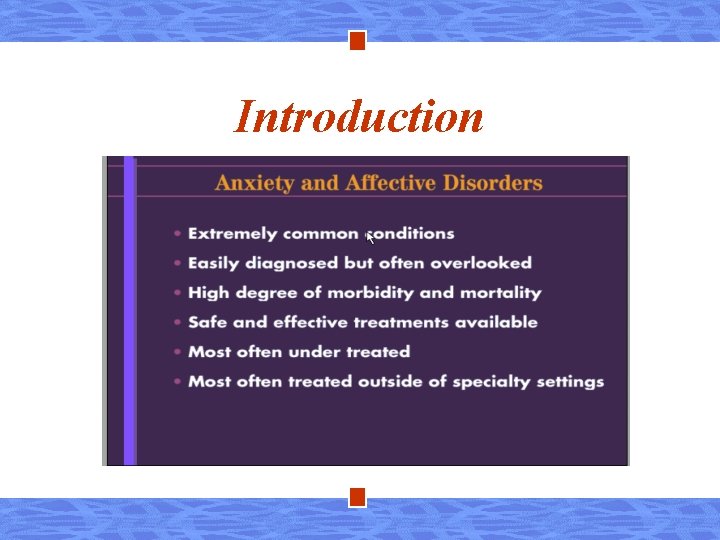
Introduction
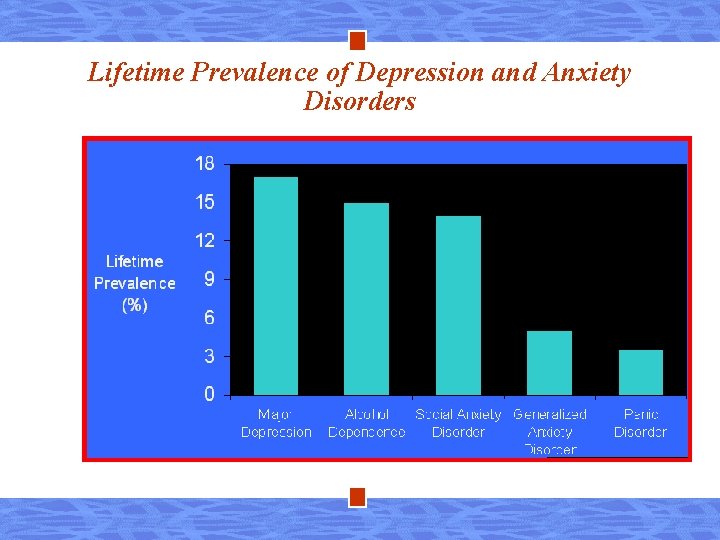
Lifetime Prevalence of Depression and Anxiety Disorders
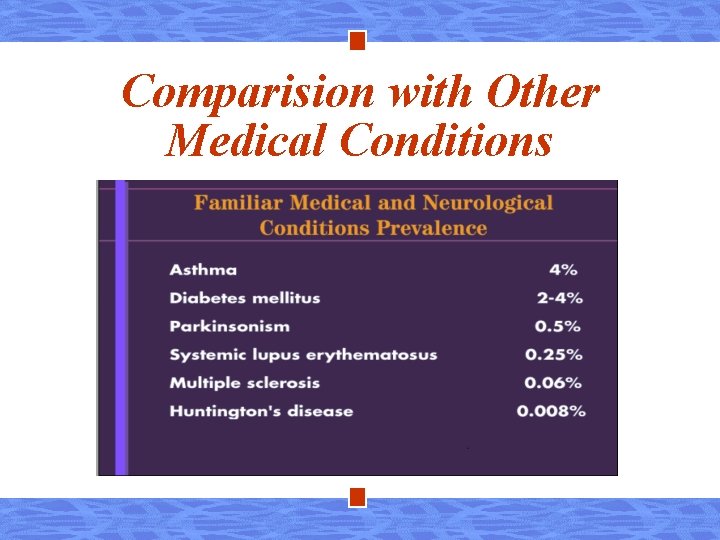
Comparision with Other Medical Conditions
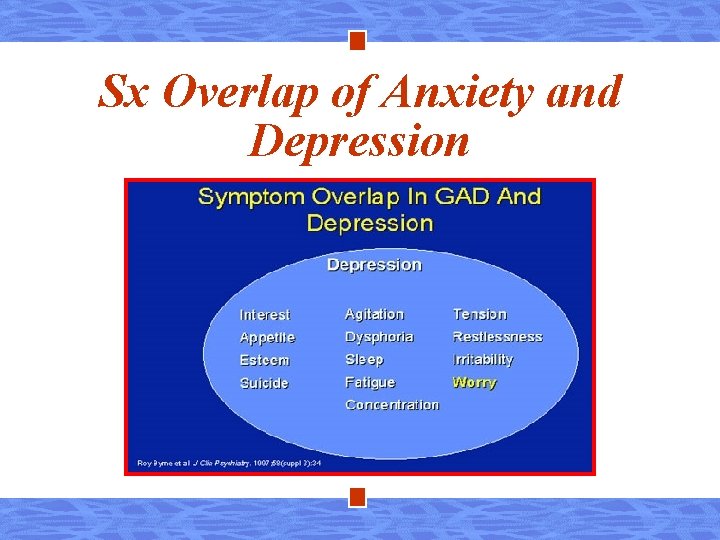
Sx Overlap of Anxiety and Depression
Sx Overlap ( cont. )
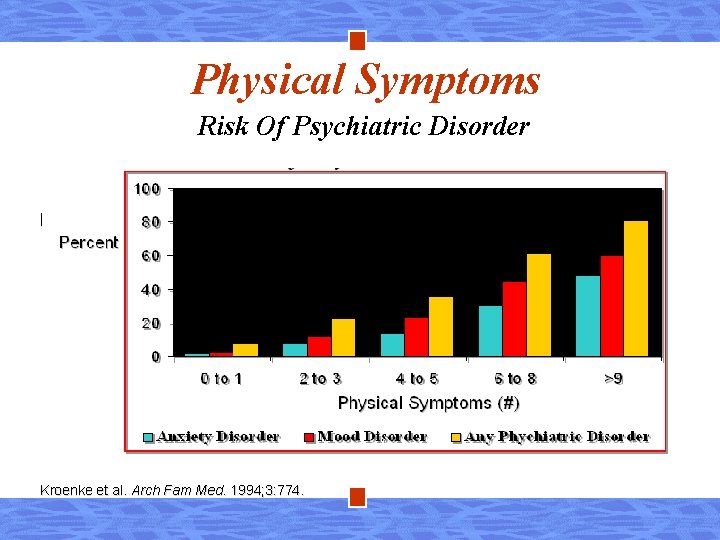
Physical Symptoms Risk Of Psychiatric Disorder Percent Physical Symptoms (#) Kroenke et al. Arch Fam Med. 1994; 3: 774.
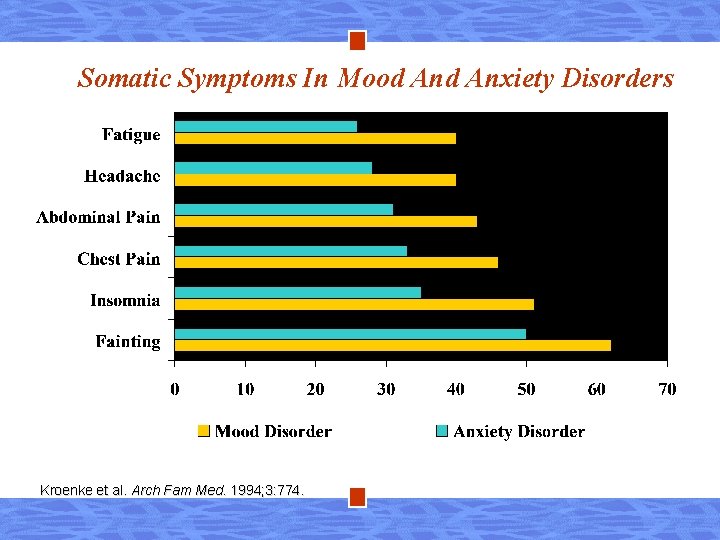
Somatic Symptoms In Mood Anxiety Disorders Kroenke et al. Arch Fam Med. 1994; 3: 774.
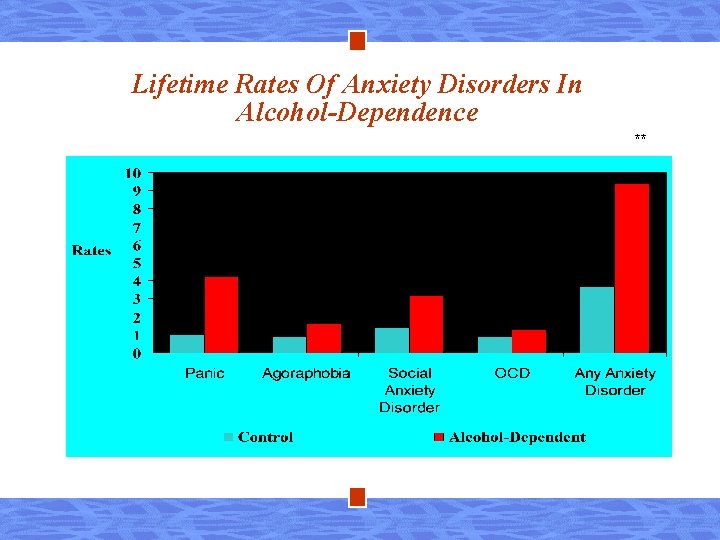
Lifetime Rates Of Anxiety Disorders In Alcohol-Dependence ** * **
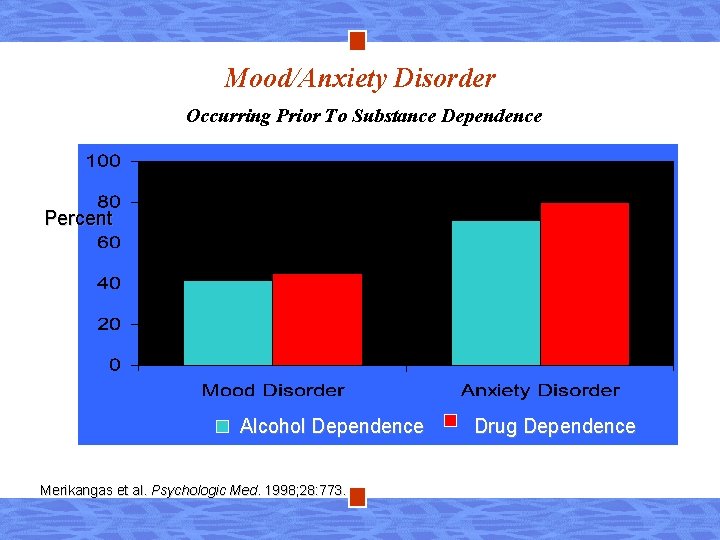
Mood/Anxiety Disorder Occurring Prior To Substance Dependence Percent Alcohol Dependence Merikangas et al. Psychologic Med. 1998; 28: 773. Drug Dependence
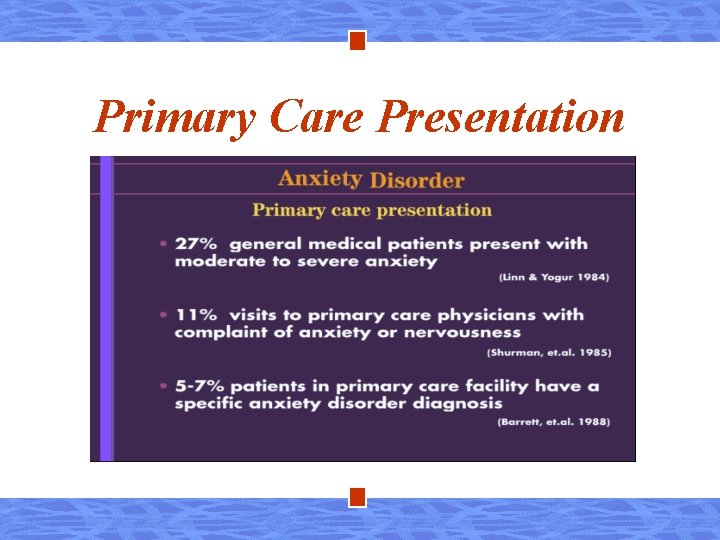
Primary Care Presentation
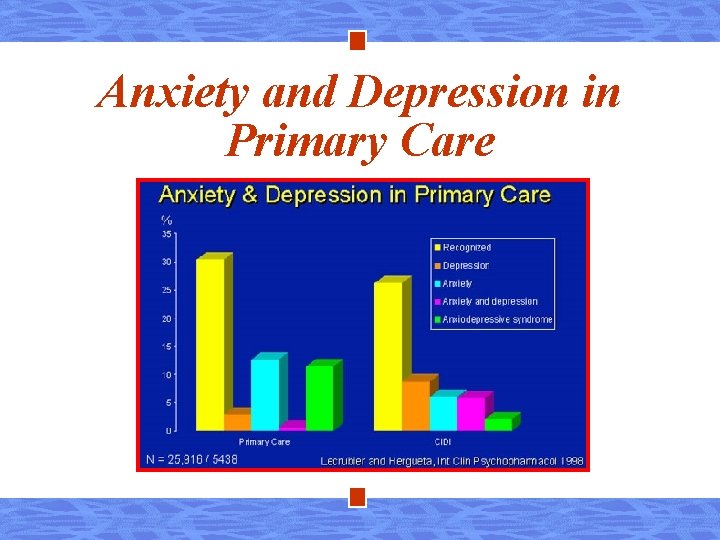
Anxiety and Depression in Primary Care
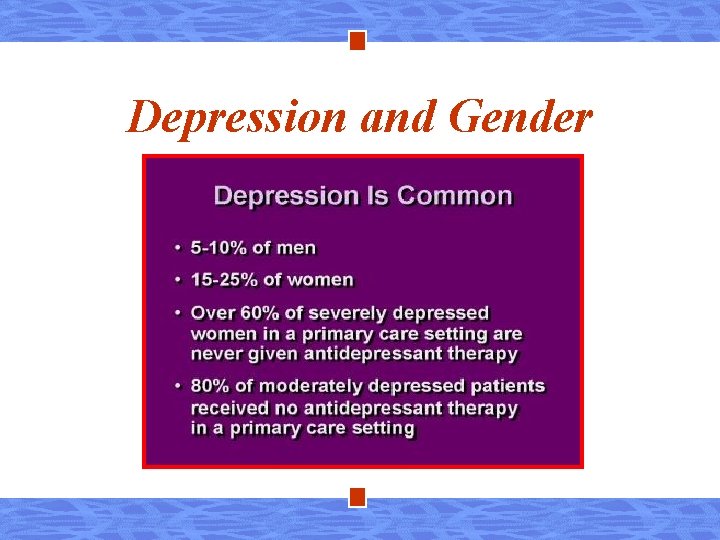
Depression and Gender
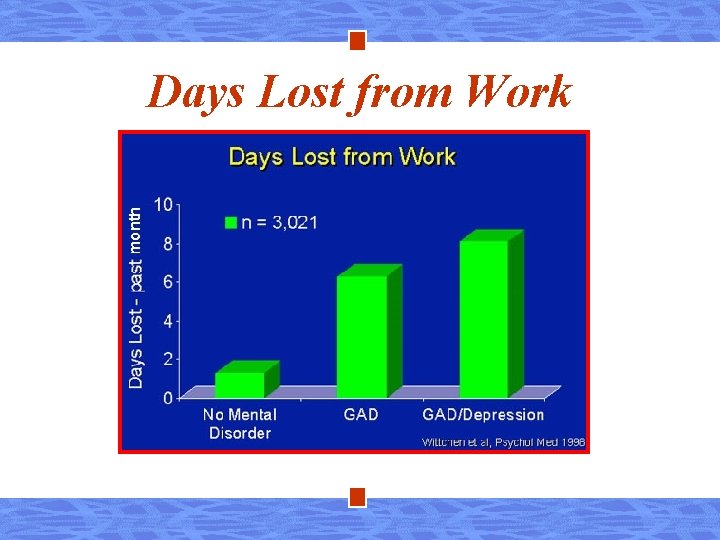
Days Lost from Work
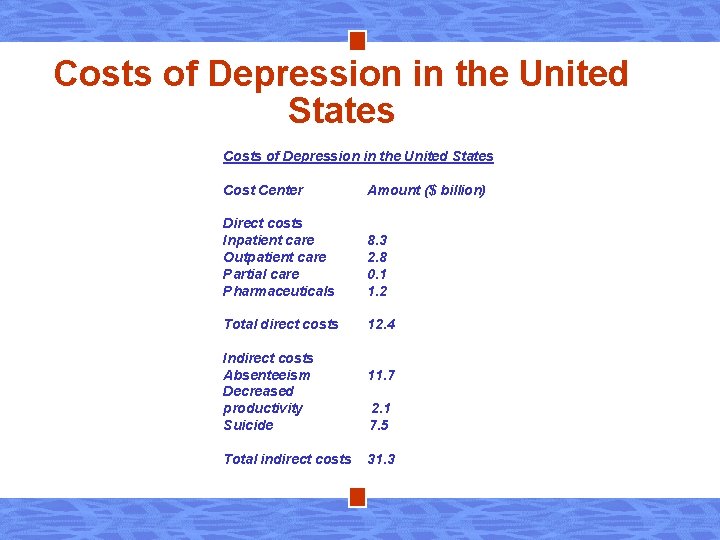
Costs of Depression in the United States Cost Center Amount ($ billion) Direct costs Inpatient care 8. 3 Outpatient care 2. 8 Partial care 0. 1 Pharmaceuticals 1. 2 Total direct costs 12. 4 Indirect costs Absenteeism 11. 7 Decreased productivity 2. 1 Suicide 7. 5 Total indirect costs 31. 3
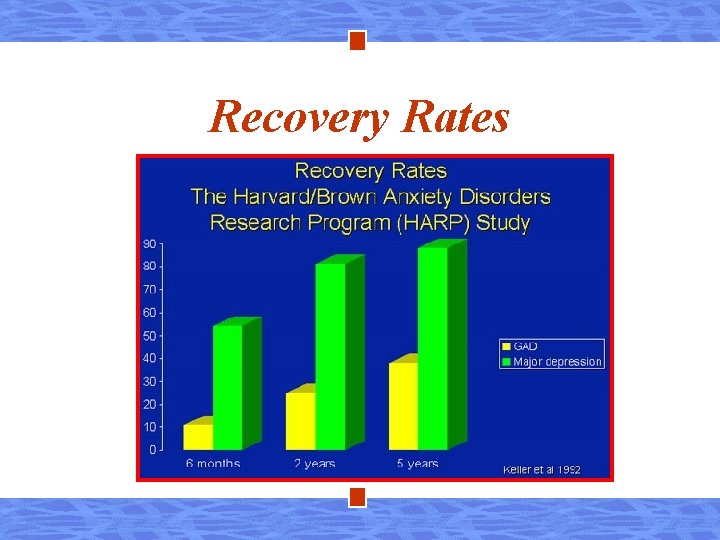
Recovery Rates
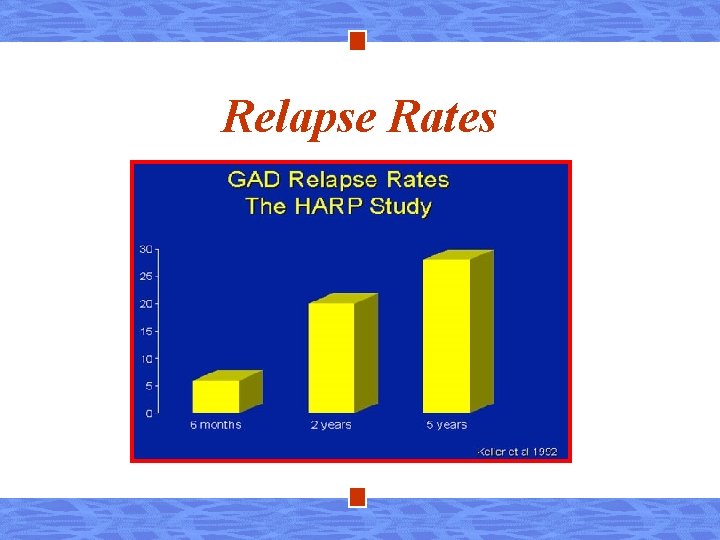
Relapse Rates
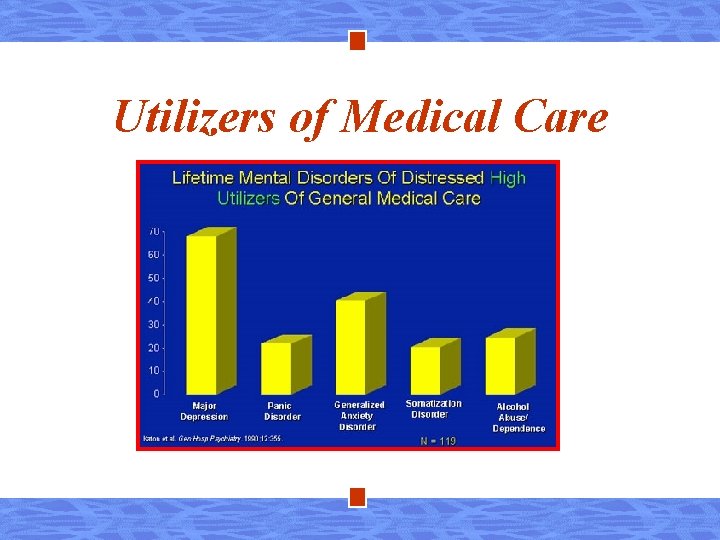
Utilizers of Medical Care
Depression
Case Study
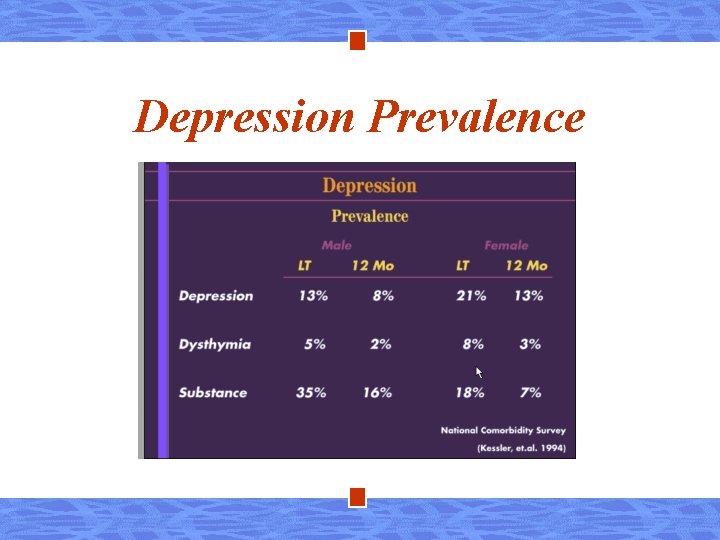
Depression Prevalence
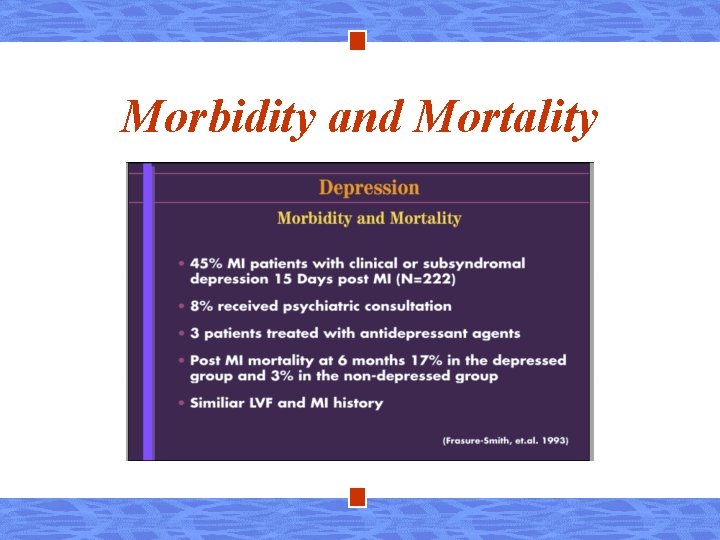
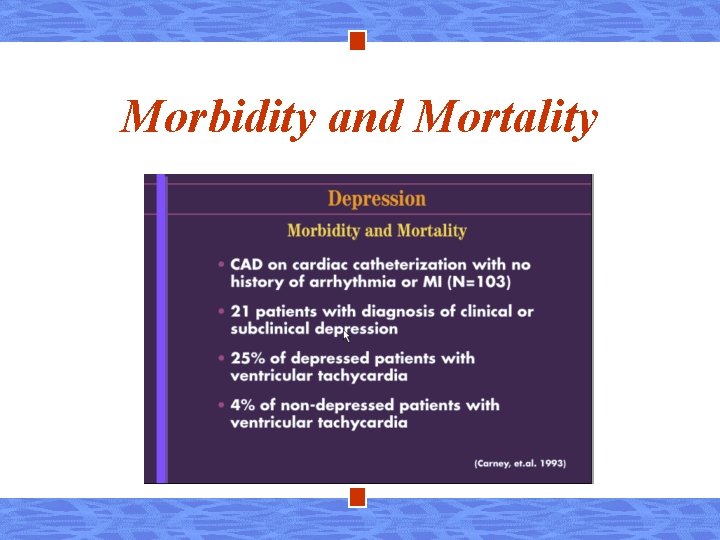
Morbidity and Mortality
Morbidity and Mortality
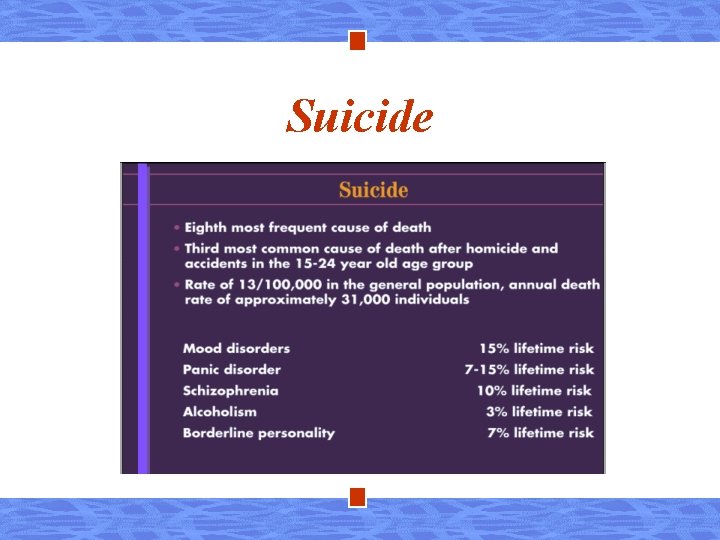
Suicide
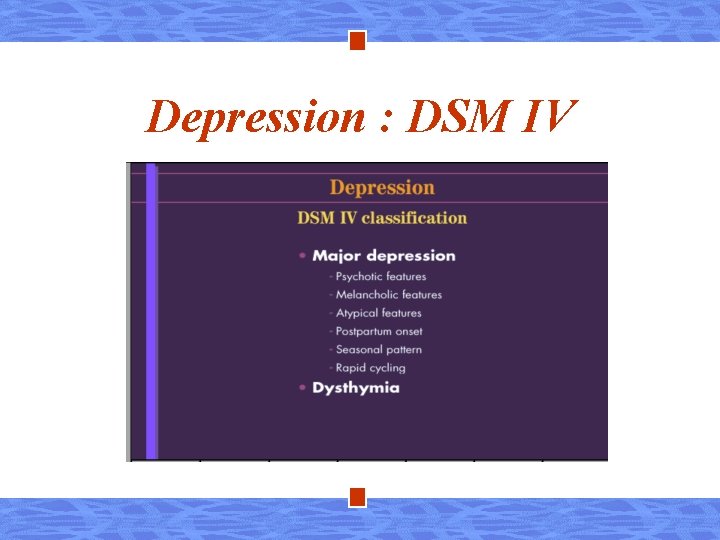
Depression : DSM IV
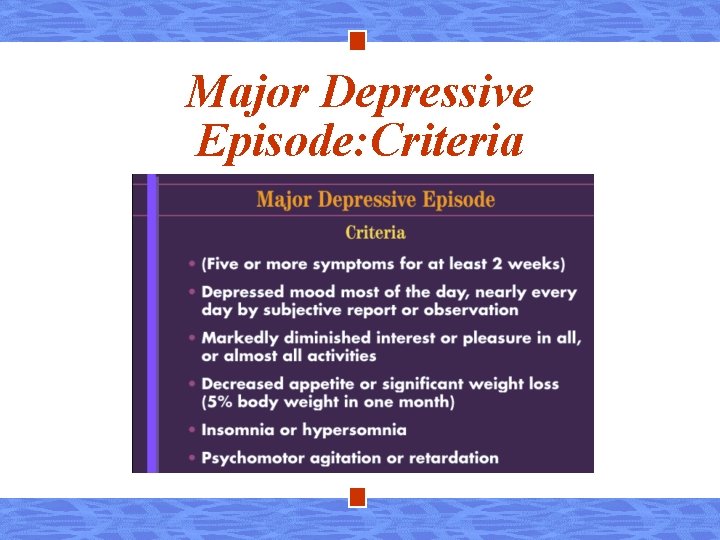
Major Depressive Episode: Criteria
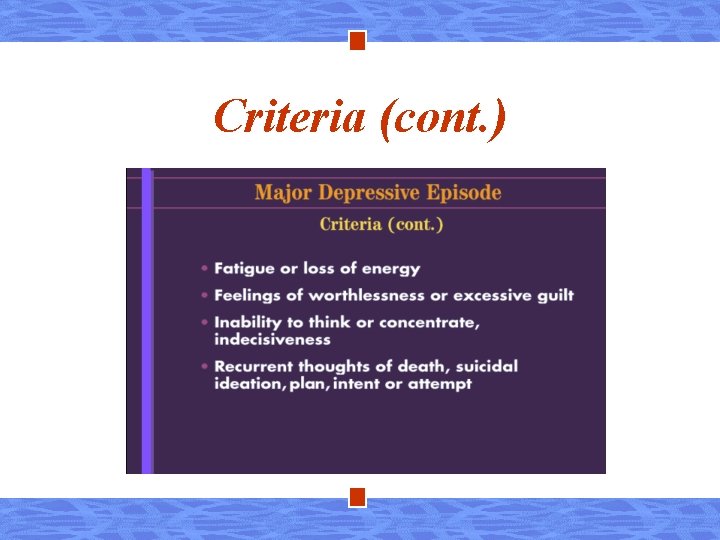
Criteria (cont. )
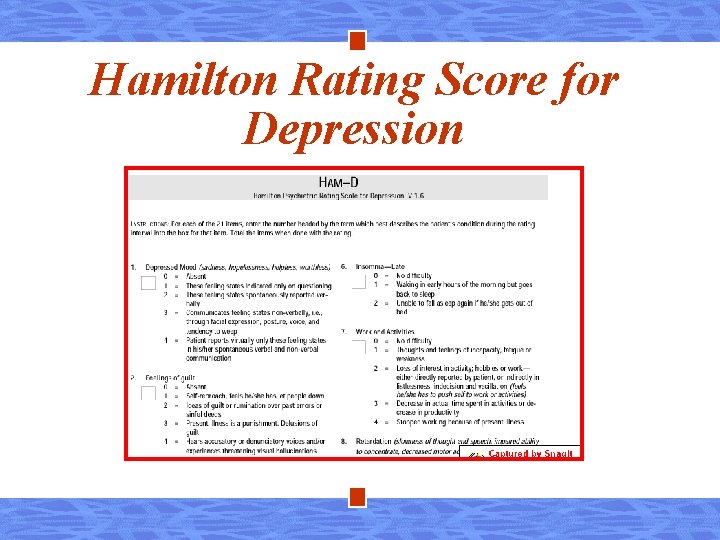
Hamilton Rating Score for Depression
Interview Techniques • Depressed or Down • Restless • Fatigued • Guilty • Inability to Concentrate
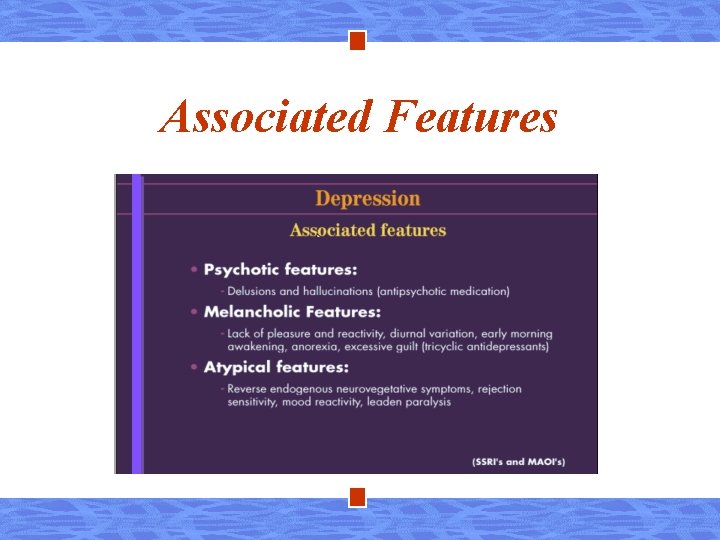
Associated Features
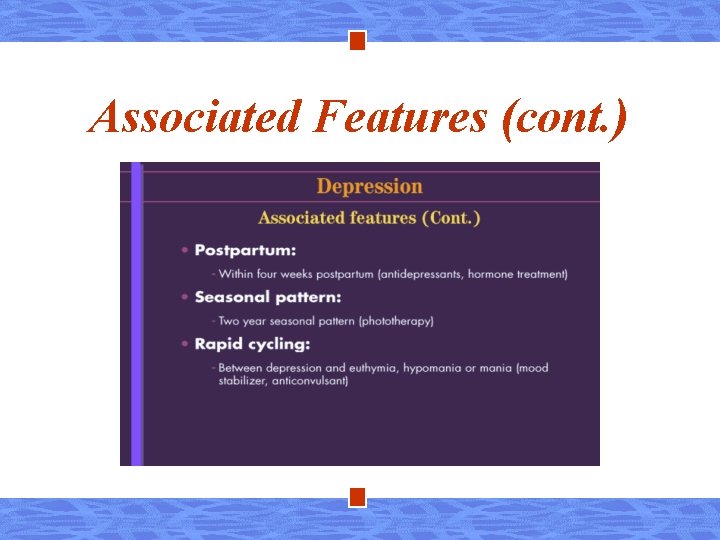
Associated Features (cont. )
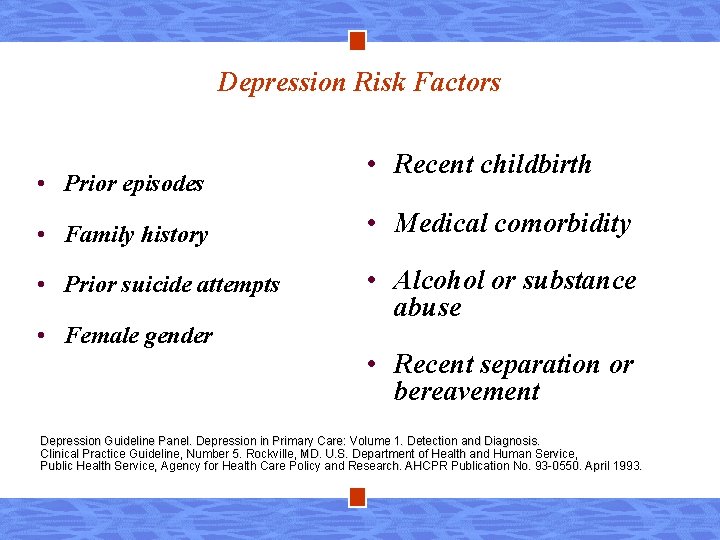
Depression Risk Factors • Prior episodes • Recent childbirth • Family history • Medical comorbidity • Prior suicide attempts • Alcohol or substance abuse • Female gender • Recent separation or bereavement Depression Guideline Panel. Depression in Primary Care: Volume 1. Detection and Diagnosis. Clinical Practice Guideline, Number 5. Rockville, MD. U. S. Department of Health and Human Service, Public Health Service, Agency for Health Care Policy and Research. AHCPR Publication No. 93 -0550. April 1993.
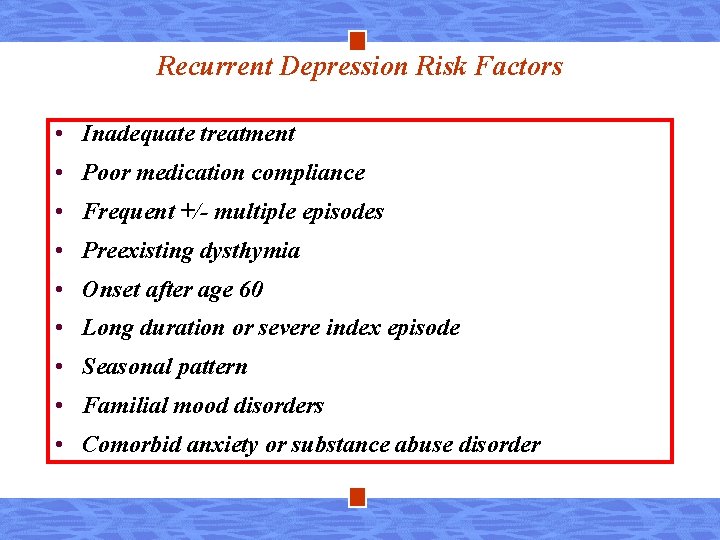
Recurrent Depression Risk Factors • Inadequate treatment • Poor medication compliance • Frequent +/- multiple episodes • Preexisting dysthymia • Onset after age 60 • Long duration or severe index episode • Seasonal pattern • Familial mood disorders • Comorbid anxiety or substance abuse disorder
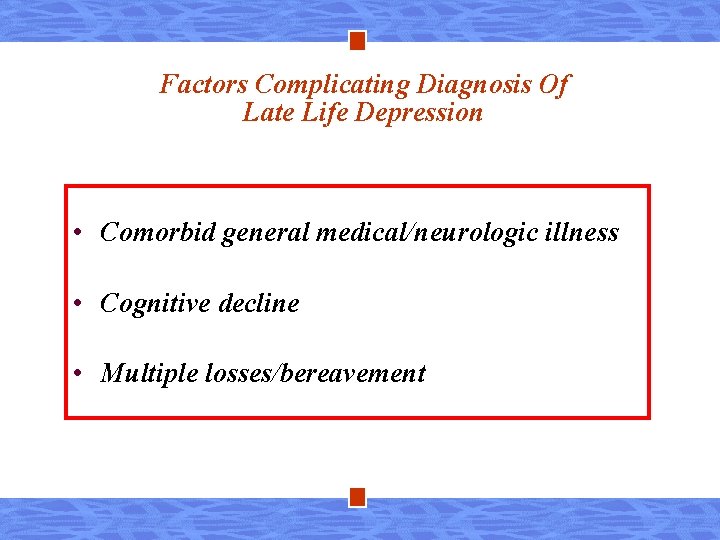
Factors Complicating Diagnosis Of Late Life Depression • Comorbid general medical/neurologic illness • Cognitive decline • Multiple losses/bereavement
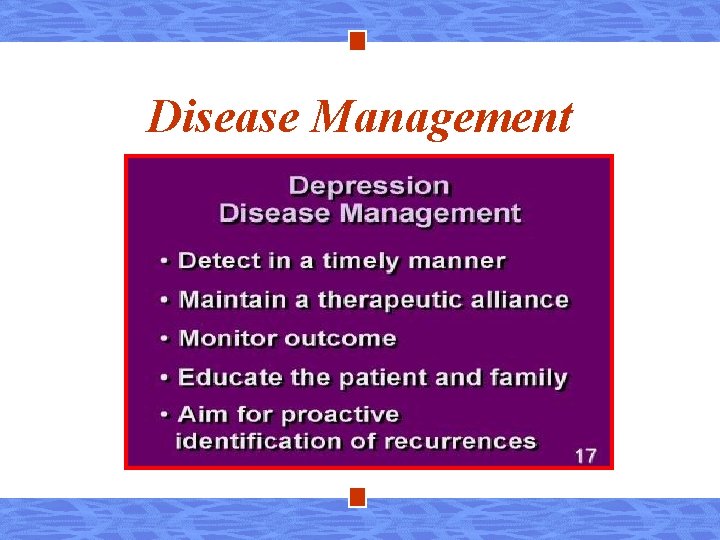
Disease Management
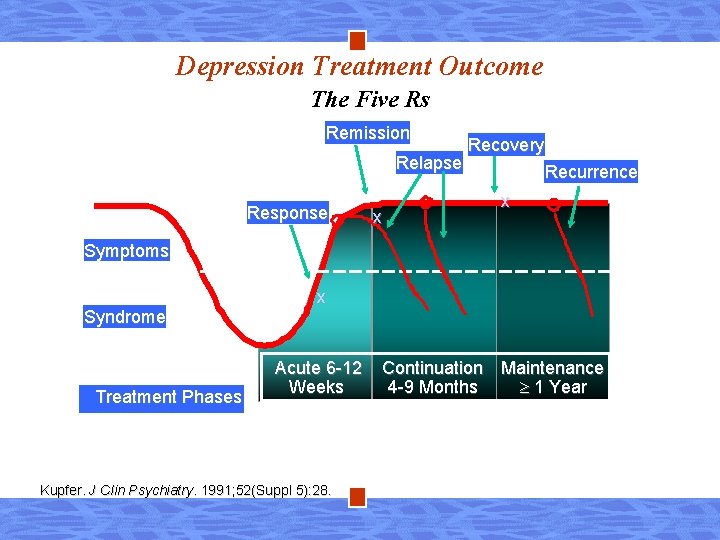
Depression Treatment Outcome The Five Rs Remission Recovery Relapse Recurrence Response x x Symptoms Syndrome Treatment Phases x Acute 6 -12 Weeks Kupfer. J Clin Psychiatry. 1991; 52(Suppl 5): 28. Continuation Maintenance 4 -9 Months 1 Year
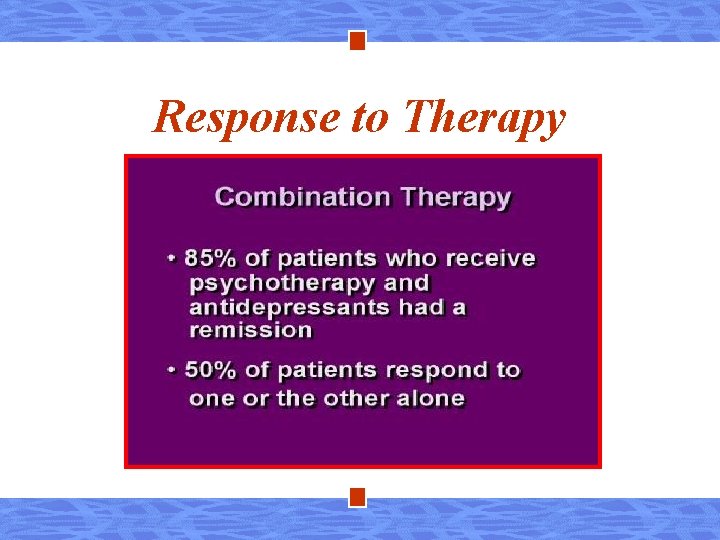
Response to Therapy
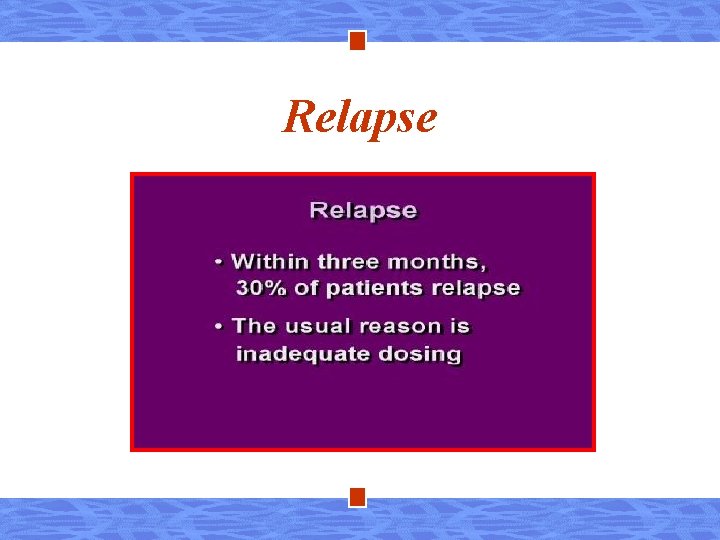
Relapse
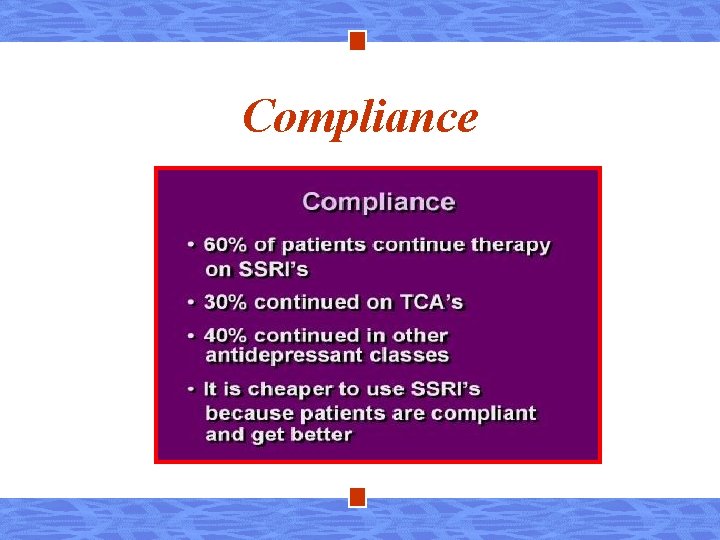
Compliance
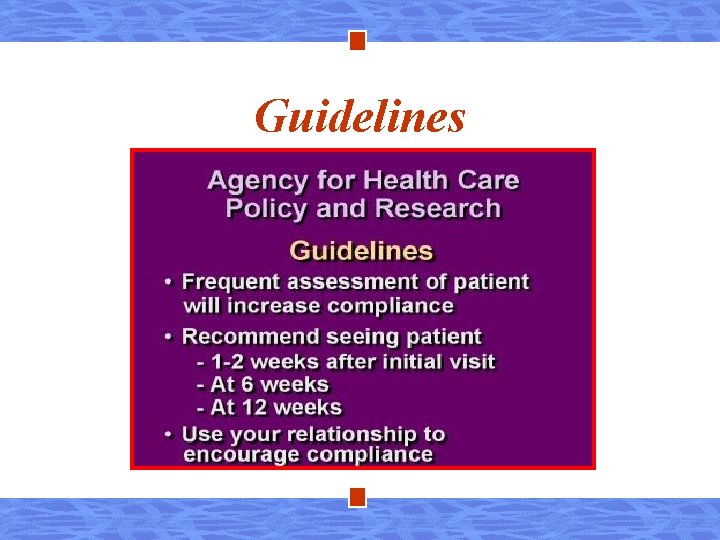
Guidelines
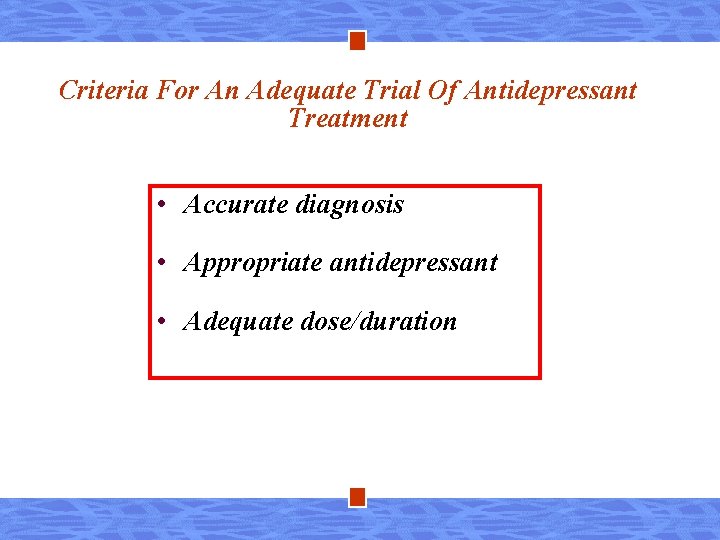
Criteria For An Adequate Trial Of Antidepressant Treatment • Accurate diagnosis • Appropriate antidepressant • Adequate dose/duration
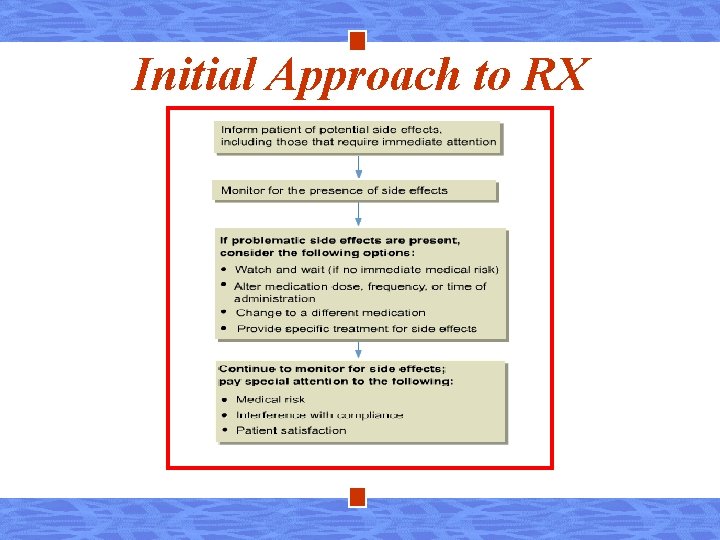
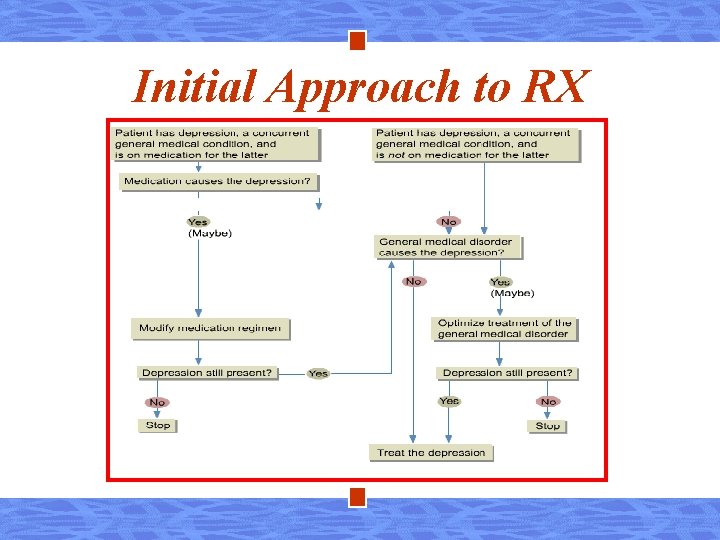
Initial Approach to RX
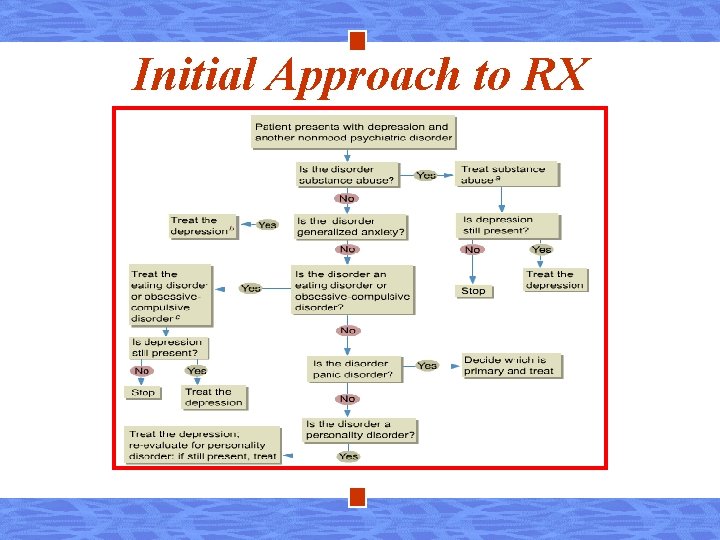
Initial Approach to RX
Initial Approach to RX
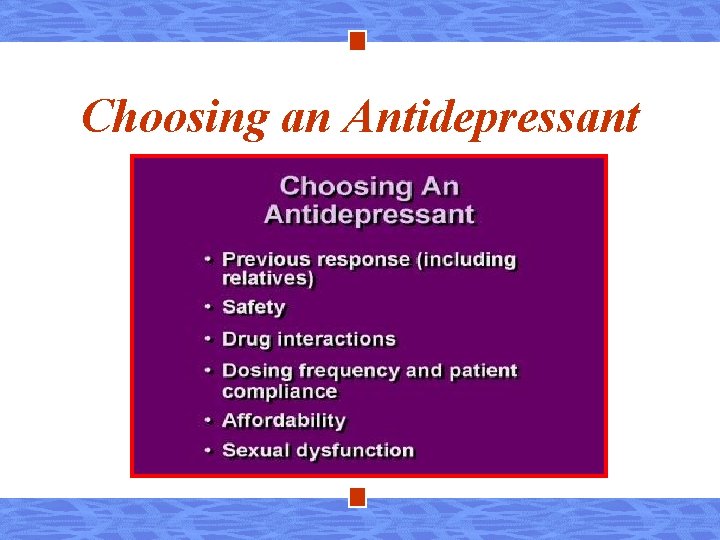
Choosing an Antidepressant
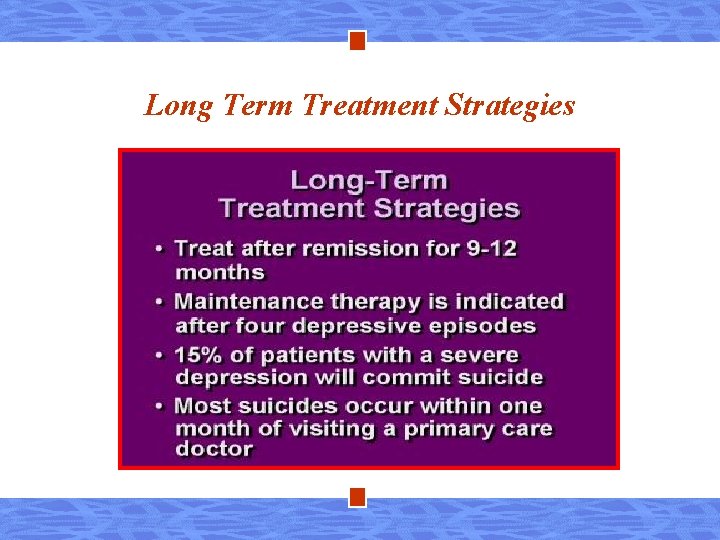
Long Term Treatment Strategies
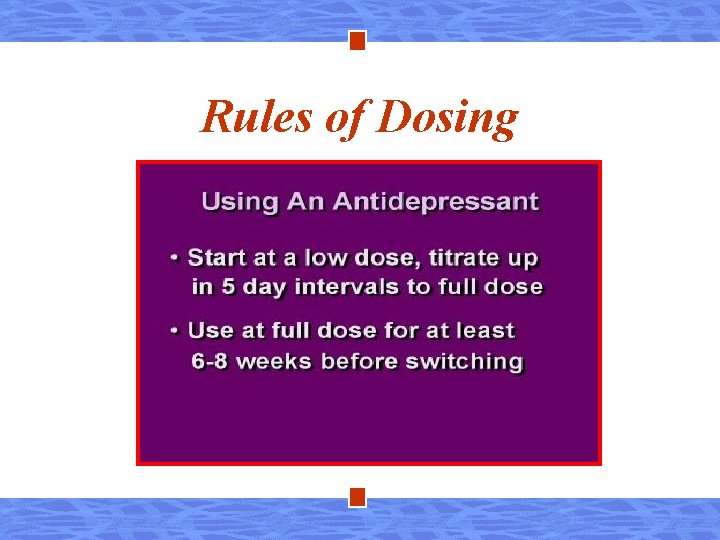
Rules of Dosing
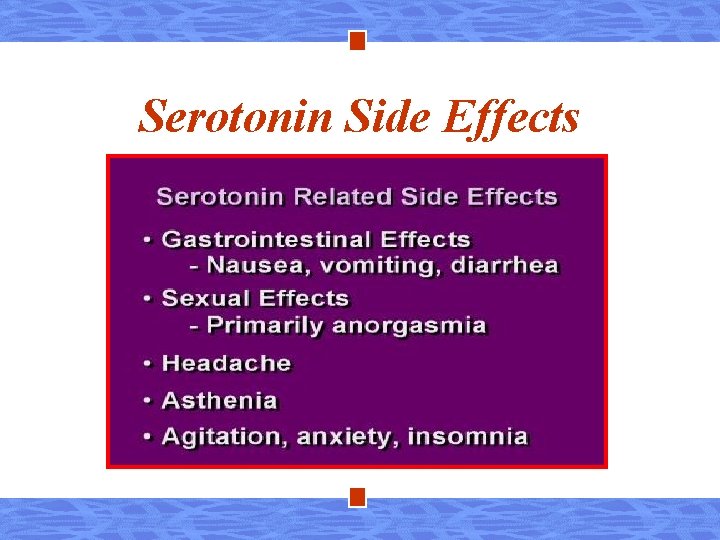
Serotonin Side Effects
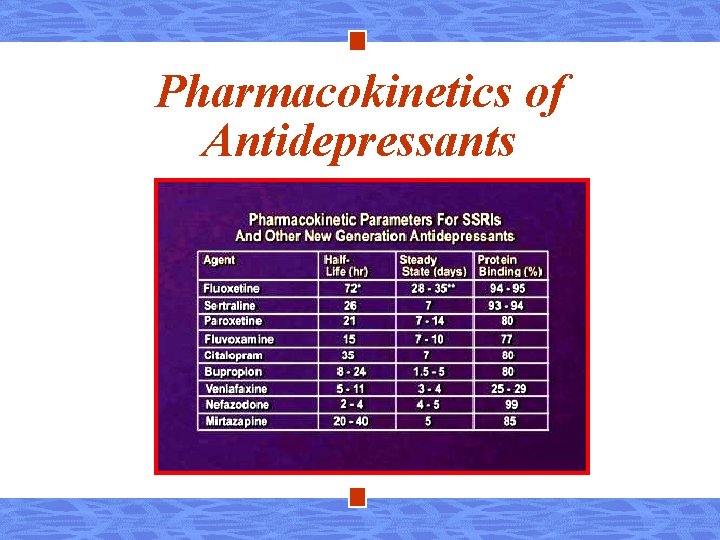
Pharmacokinetics of Antidepressants
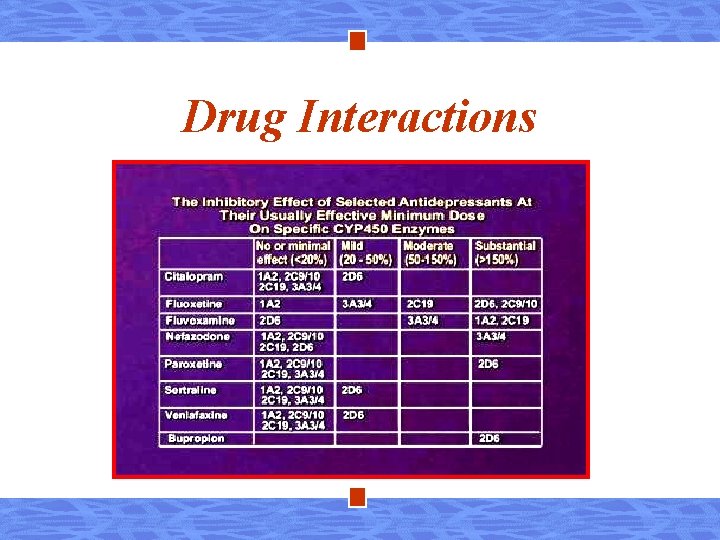
Drug Interactions
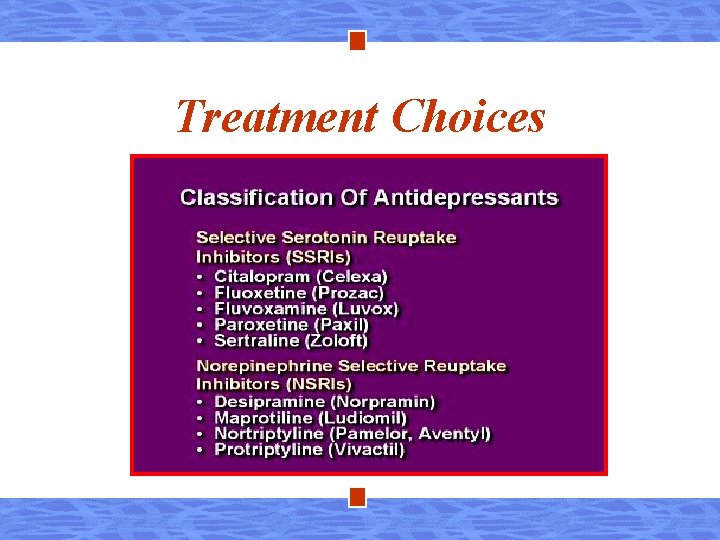
Treatment Choices
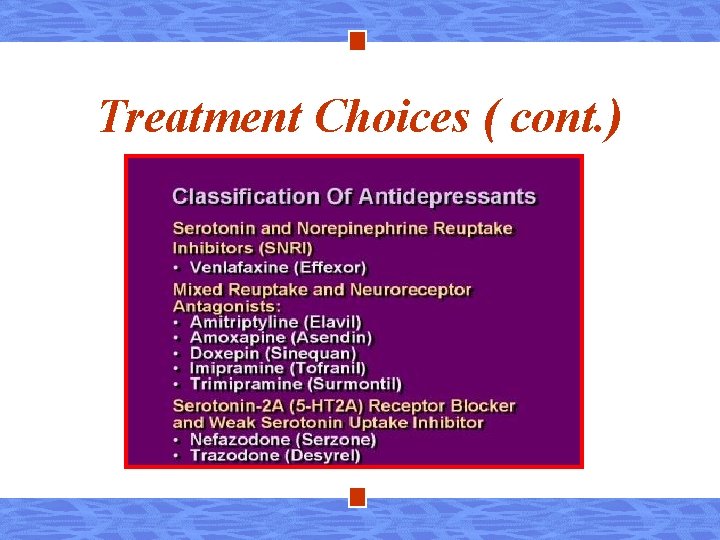
Treatment Choices ( cont. )
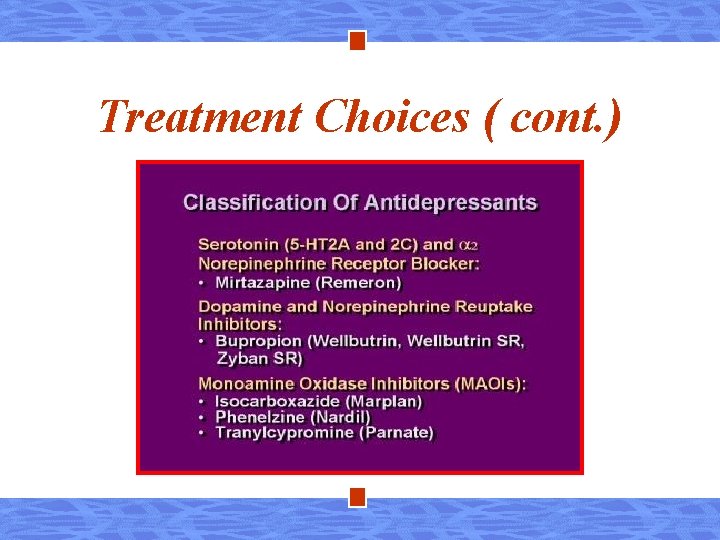
Treatment Choices ( cont. )
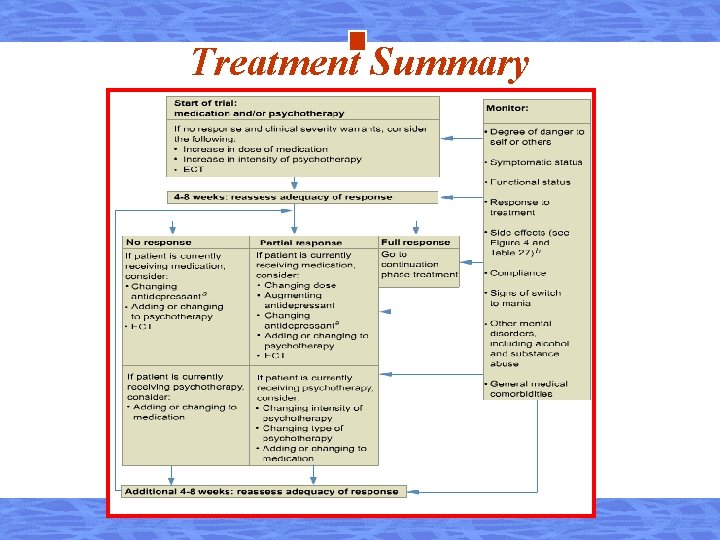
Treatment Summary
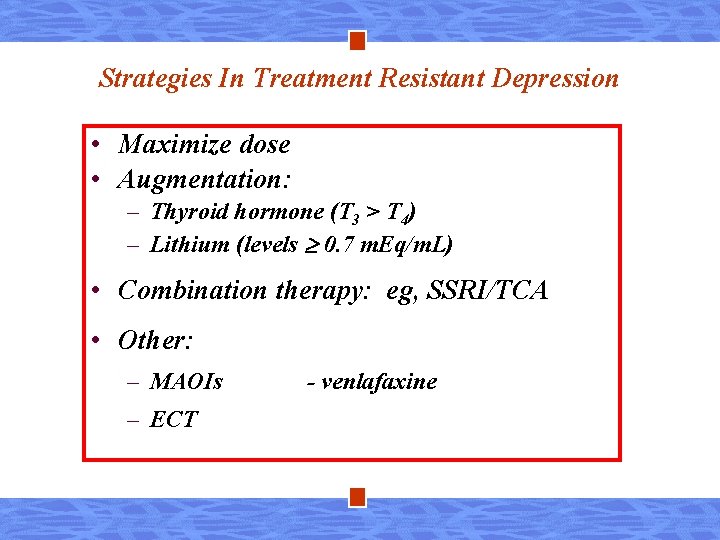
Strategies In Treatment Resistant Depression • Maximize dose • Augmentation: – Thyroid hormone (T 3 > T 4) – Lithium (levels 0. 7 m. Eq/m. L) • Combination therapy: eg, SSRI/TCA • Other: – MAOIs – ECT - venlafaxine
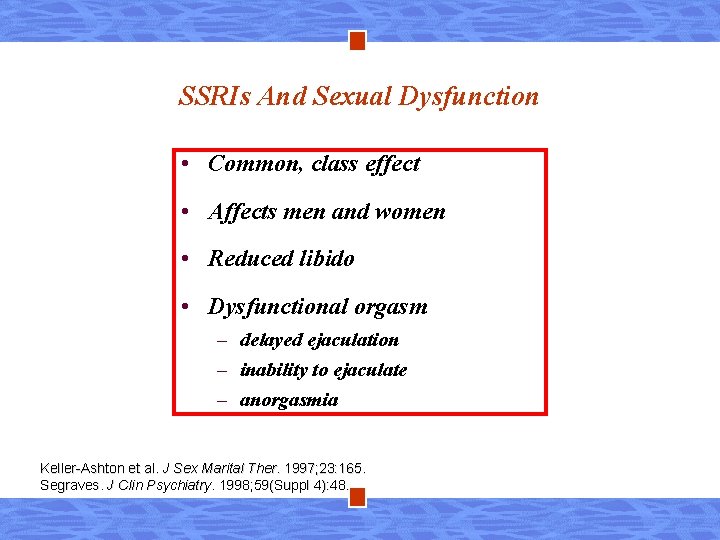
SSRIs And Sexual Dysfunction • Common, class effect • Affects men and women • Reduced libido • Dysfunctional orgasm – delayed ejaculation – inability to ejaculate – anorgasmia Keller-Ashton et al. J Sex Marital Ther. 1997; 23: 165. Segraves. J Clin Psychiatry. 1998; 59(Suppl 4): 48.
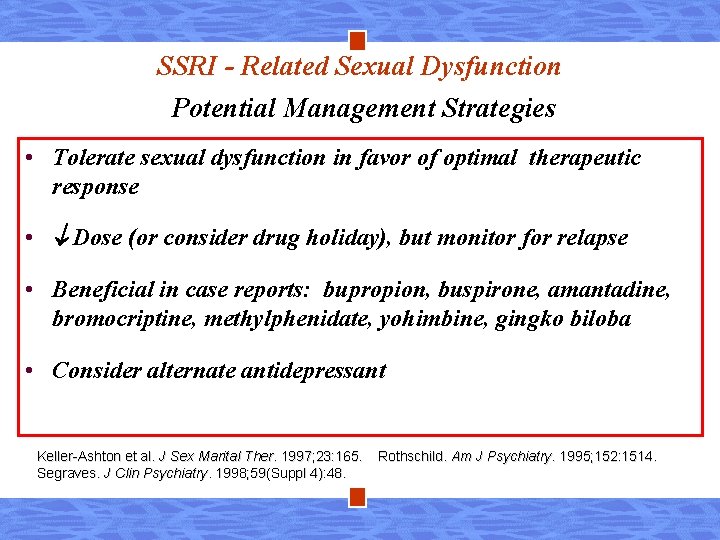
SSRI - Related Sexual Dysfunction Potential Management Strategies • Tolerate sexual dysfunction in favor of optimal therapeutic response • Dose (or consider drug holiday), but monitor for relapse • Beneficial in case reports: bupropion, buspirone, amantadine, bromocriptine, methylphenidate, yohimbine, gingko biloba • Consider alternate antidepressant Keller-Ashton et al. J Sex Marital Ther. 1997; 23: 165. Segraves. J Clin Psychiatry. 1998; 59(Suppl 4): 48. Rothschild. Am J Psychiatry. 1995; 152: 1514.
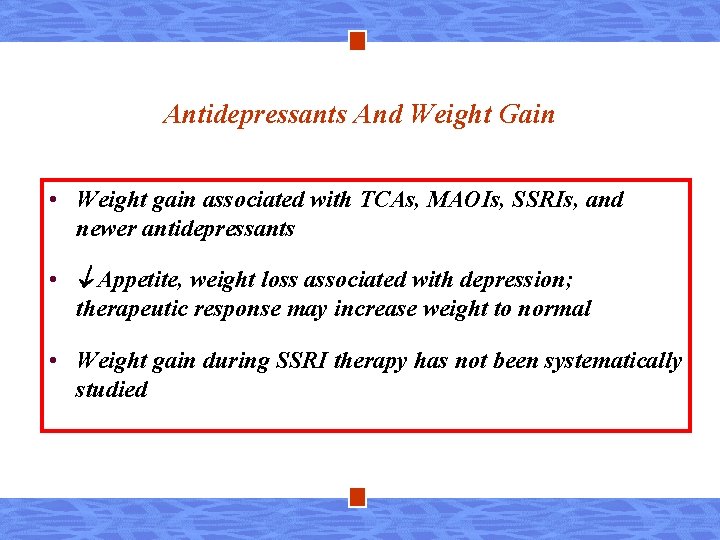
Antidepressants And Weight Gain • Weight gain associated with TCAs, MAOIs, SSRIs, and newer antidepressants • Appetite, weight loss associated with depression; therapeutic response may increase weight to normal • Weight gain during SSRI therapy has not been systematically studied
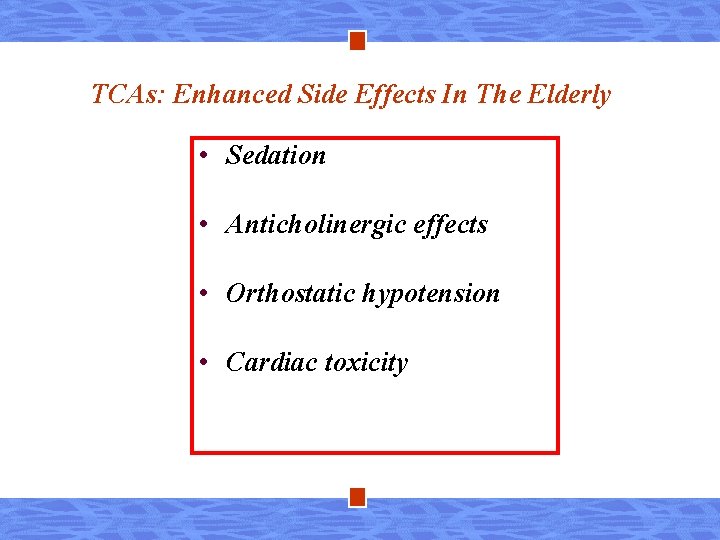
TCAs: Enhanced Side Effects In The Elderly • Sedation • Anticholinergic effects • Orthostatic hypotension • Cardiac toxicity
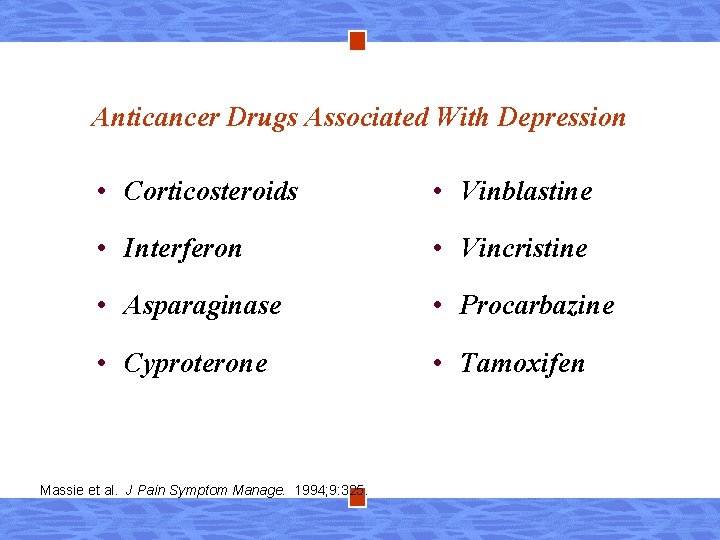
Anticancer Drugs Associated With Depression • Corticosteroids • Vinblastine • Interferon • Vincristine • Asparaginase • Procarbazine • Cyproterone • Tamoxifen Massie et al. J Pain Symptom Manage. 1994; 9: 325.
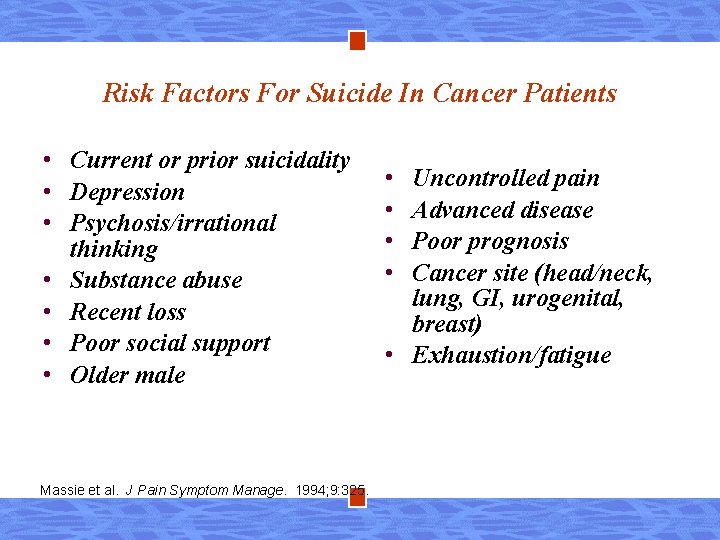
Risk Factors For Suicide In Cancer Patients • Current or prior suicidality • Depression • Psychosis/irrational thinking • Substance abuse • Recent loss • Poor social support • Older male Massie et al. J Pain Symptom Manage. 1994; 9: 325. • • Uncontrolled pain Advanced disease Poor prognosis Cancer site (head/neck, lung, GI, urogenital, breast) • Exhaustion/fatigue
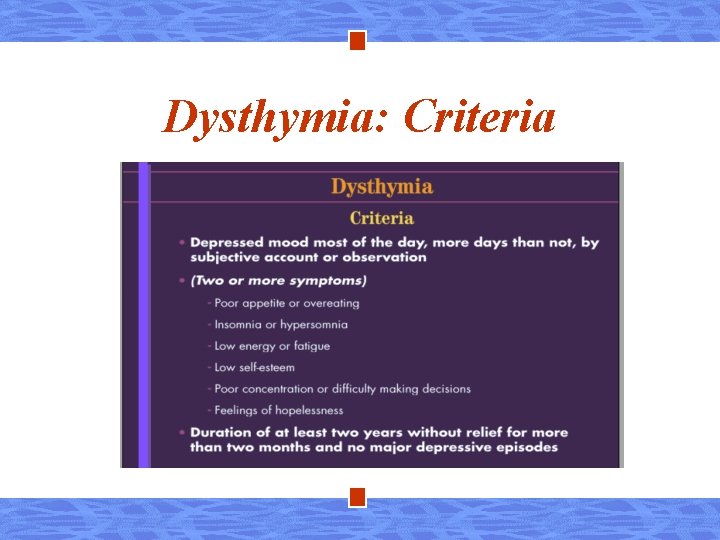
Dysthymia: Criteria
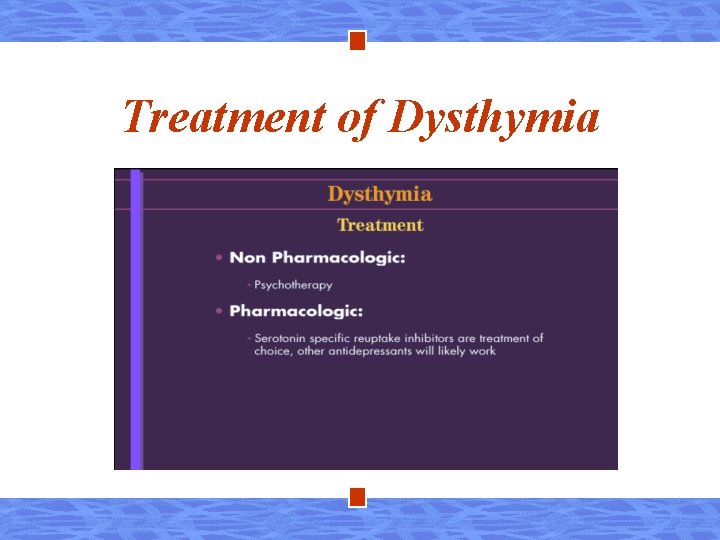
Treatment of Dysthymia
Generalized Anxiety Disorder: Excessive Chronic Anxiety and Worry
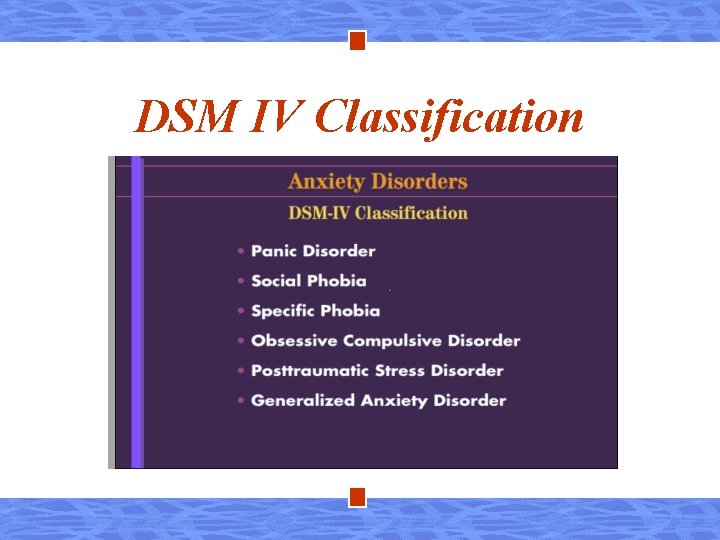
DSM IV Classification
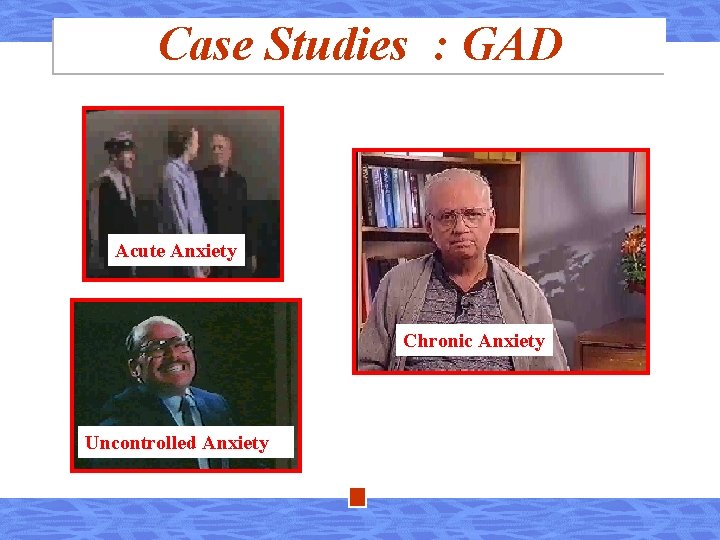
Case Studies : GAD Acute Anxiety Chronic Anxiety Uncontrolled Anxiety
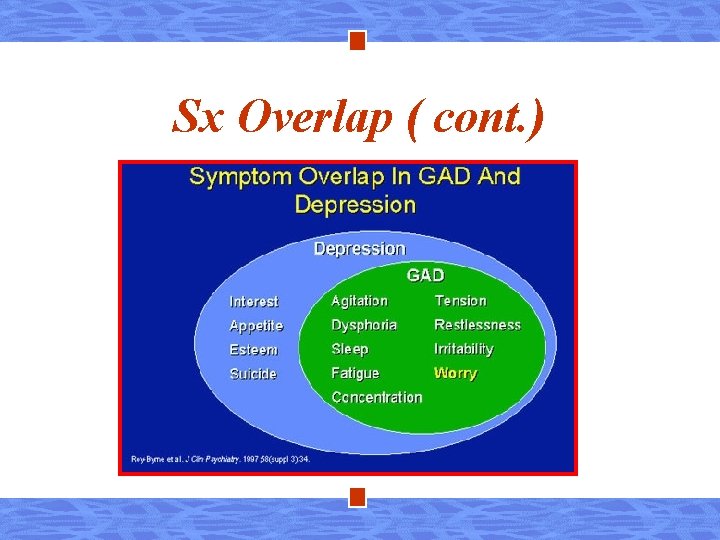
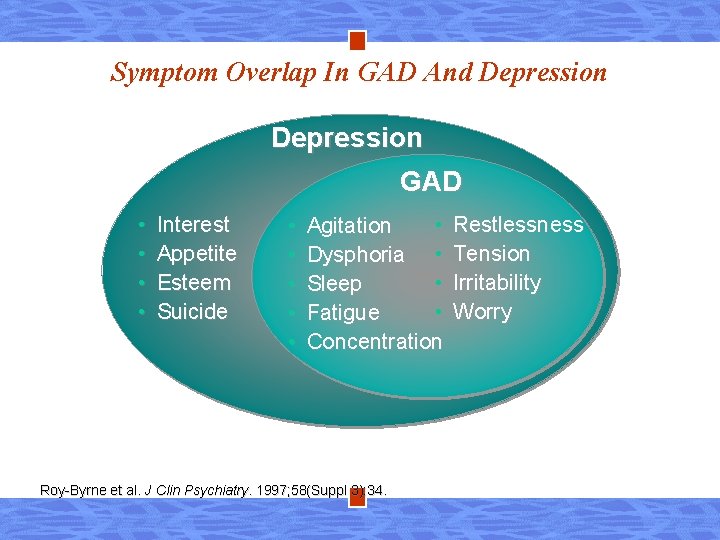
Symptom Overlap In GAD And Depression GAD • • Interest Appetite Esteem Suicide • • • Agitation Dysphoria • • Sleep • Fatigue Concentration Roy-Byrne et al. J Clin Psychiatry. 1997; 58(Suppl 3): 34. Restlessness Tension Irritability Worry
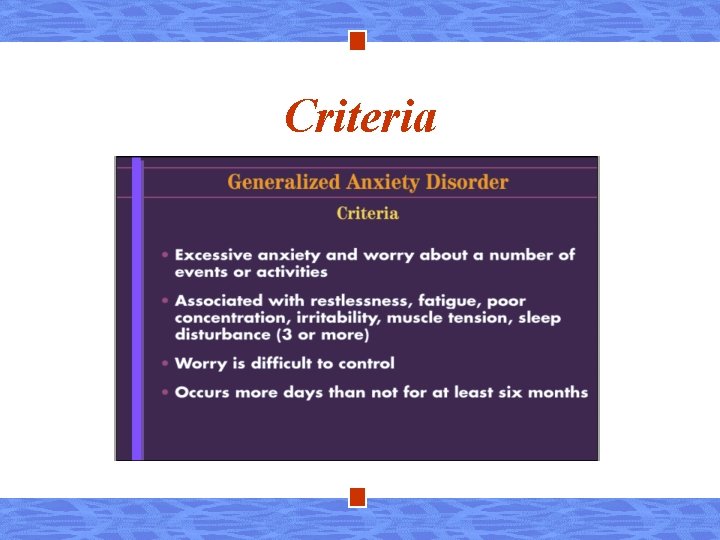
Criteria
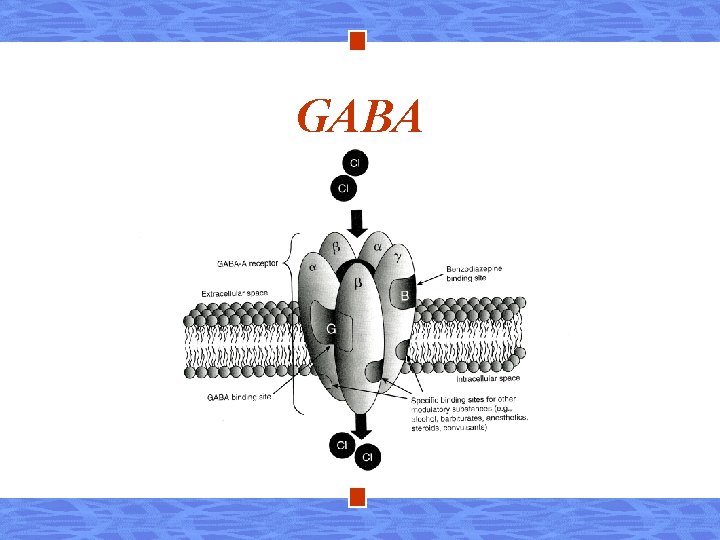
GABA
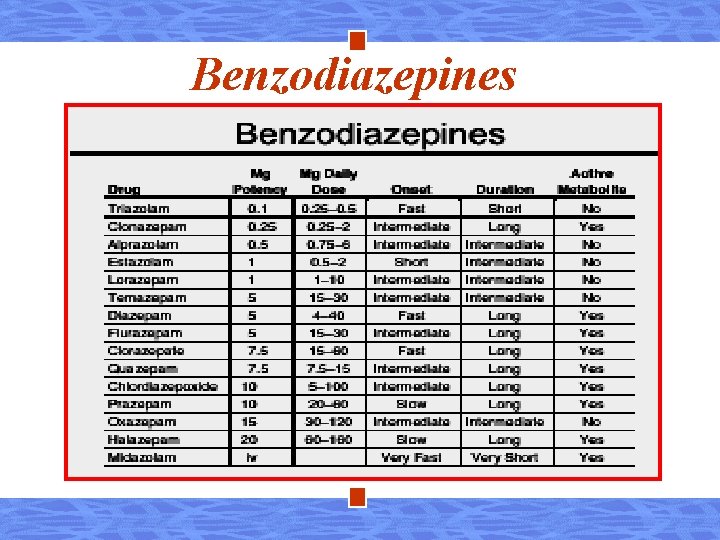
Benzodiazepines
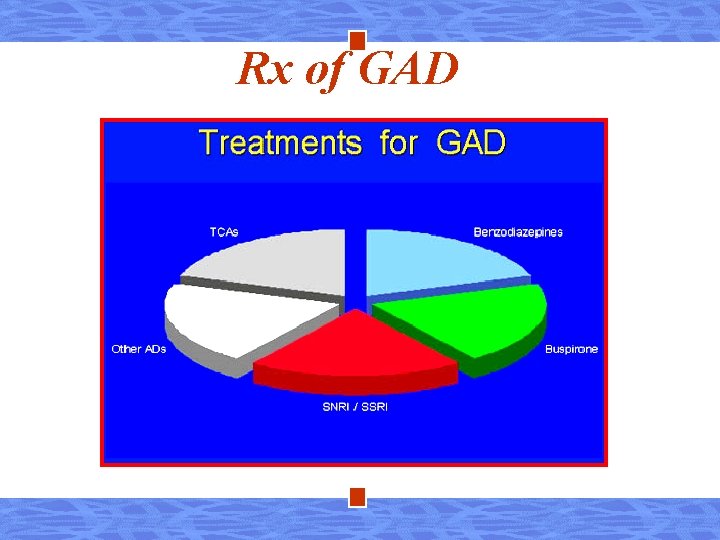
Rx of GAD
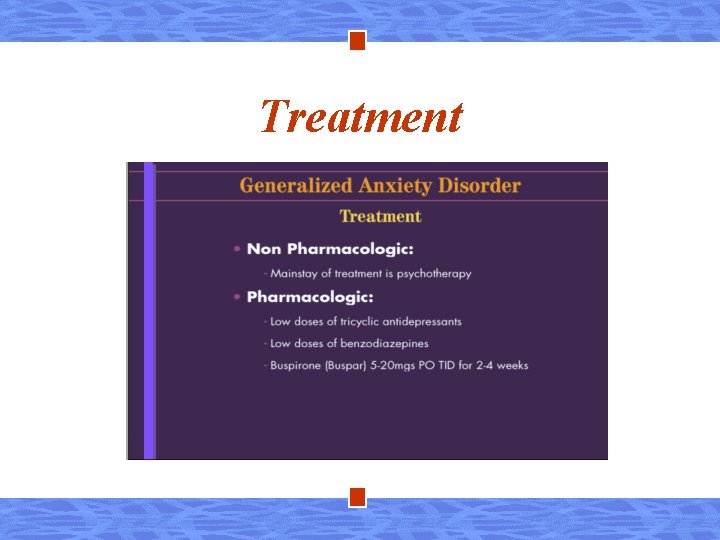
Treatment
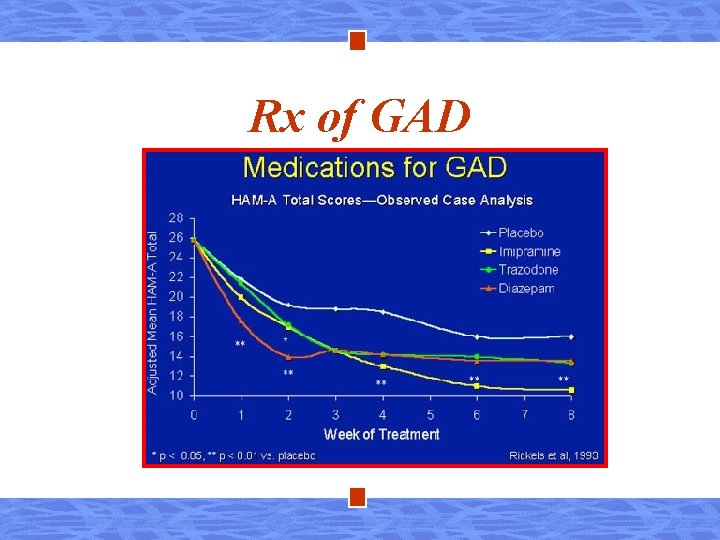
Rx of GAD
Social Phobia/Social Anxiety Disorder : Fear of Scrutiny
Case Study: Social Anxiety
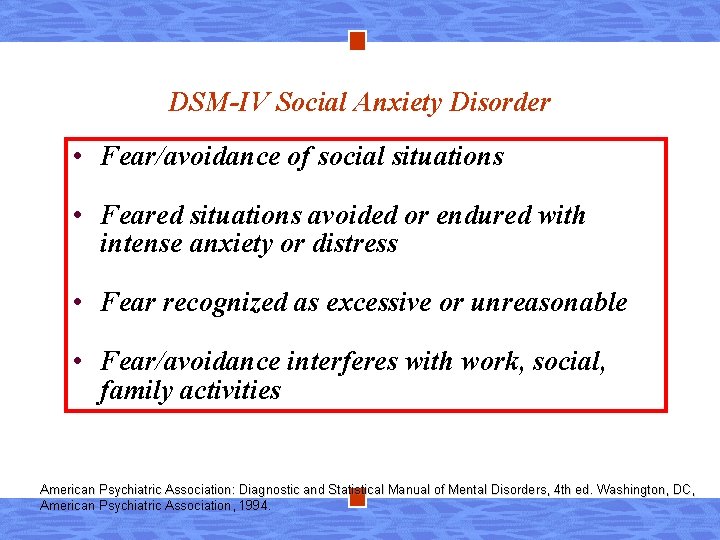
DSM-IV Social Anxiety Disorder • Fear/avoidance of social situations • Feared situations avoided or endured with intense anxiety or distress • Fear recognized as excessive or unreasonable • Fear/avoidance interferes with work, social, family activities American Psychiatric Association: Diagnostic and Statistical Manual of Mental Disorders, 4 th ed. Washington, DC, American Psychiatric Association, 1994.
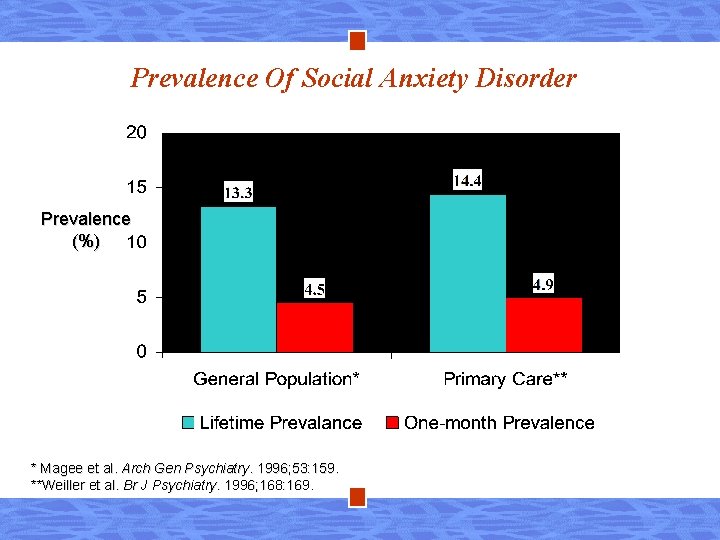
Prevalence Of Social Anxiety Disorder Prevalence (%) * Magee et al. Arch Gen Psychiatry. 1996; 53: 159. **Weiller et al. Br J Psychiatry. 1996; 168: 169.
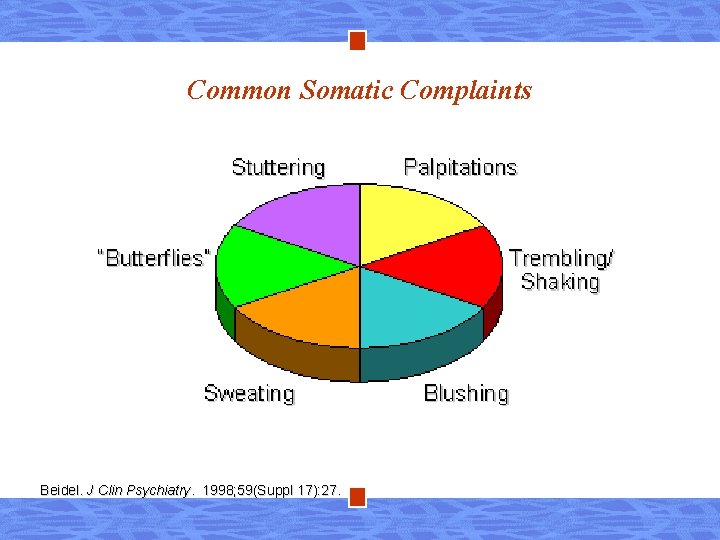
Common Somatic Complaints Palpitations “Butterflies” Sweating Beidel. J Clin Psychiatry. 1998; 59(Suppl 17): 27. Trembling/ Shaking Blushing
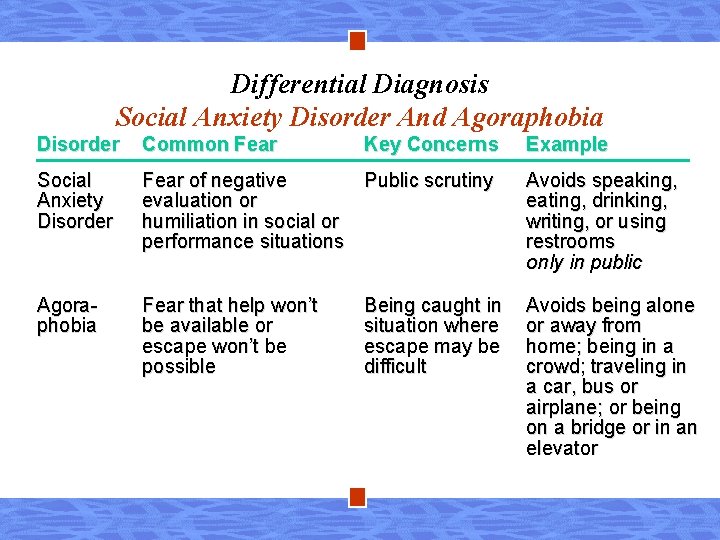
Differential Diagnosis Social Anxiety Disorder And Agoraphobia Disorder Common Fear Key Concerns Social Anxiety Disorder Fear of negative Public scrutiny evaluation or humiliation in social or performance situations Avoids speaking, eating, drinking, writing, or using restrooms only in public Agoraphobia Fear that help won’t be available or escape won’t be possible Avoids being alone or away from home; being in a crowd; traveling in a car, bus or airplane; or being on a bridge or in an elevator Being caught in situation where escape may be difficult Example
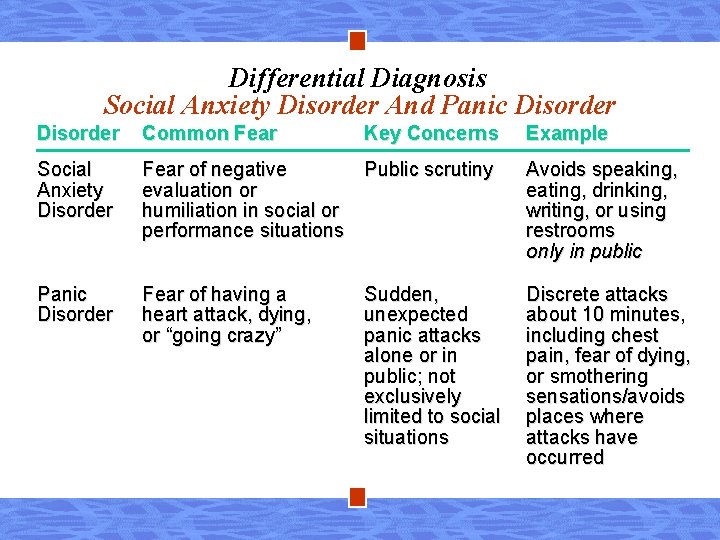
Differential Diagnosis Social Anxiety Disorder And Panic Disorder Common Fear Key Concerns Social Anxiety Disorder Fear of negative Public scrutiny evaluation or humiliation in social or performance situations Avoids speaking, eating, drinking, writing, or using restrooms only in public Panic Disorder Fear of having a heart attack, dying, or “going crazy” Discrete attacks about 10 minutes, including chest pain, fear of dying, or smothering sensations/avoids places where attacks have occurred Sudden, unexpected panic attacks alone or in public; not exclusively limited to social situations Example
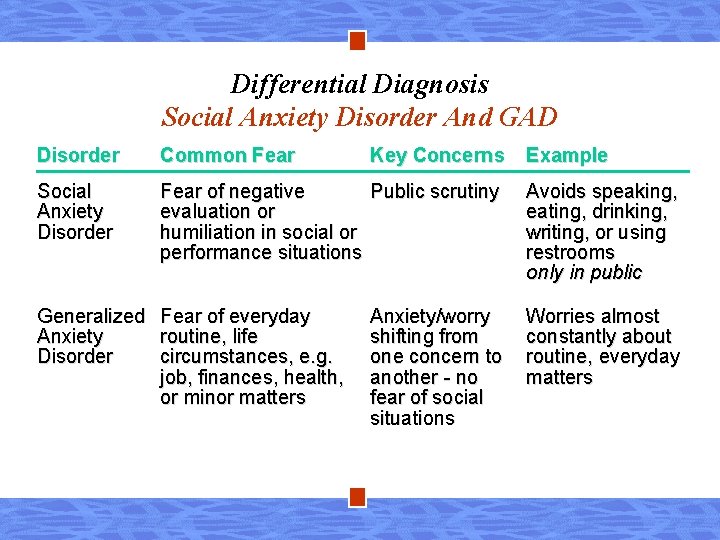
Differential Diagnosis Social Anxiety Disorder And GAD Disorder Common Fear Key Concerns Social Anxiety Disorder Fear of negative Public scrutiny evaluation or humiliation in social or performance situations Avoids speaking, eating, drinking, writing, or using restrooms only in public Generalized Anxiety Disorder Fear of everyday routine, life circumstances, e. g. job, finances, health, or minor matters Worries almost constantly about routine, everyday matters Anxiety/worry shifting from one concern to another - no fear of social situations Example
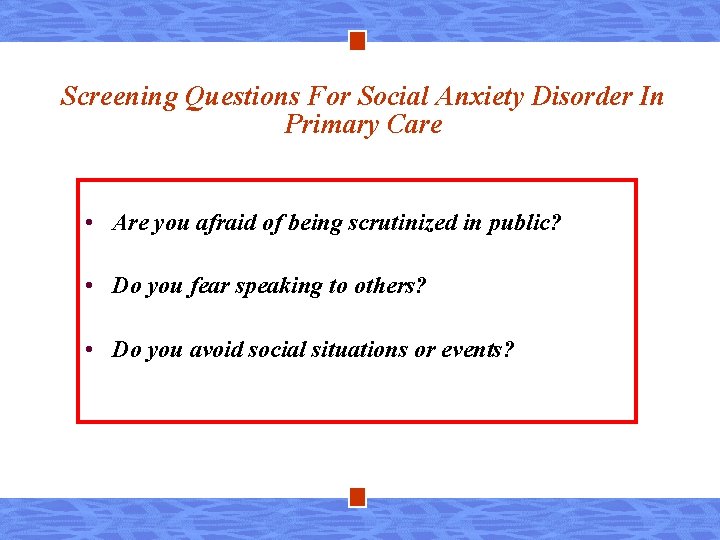
Screening Questions For Social Anxiety Disorder In Primary Care • Are you afraid of being scrutinized in public? • Do you fear speaking to others? • Do you avoid social situations or events?
Social Anxiety Disorder Common Fears • Participating in small groups • Eating, drinking, writing in public • Talking to authority figures • Performing or giving a talk • Attending social events • Working while being observed • Meeting strangers or dating • Using public bathroom • Being center of attention
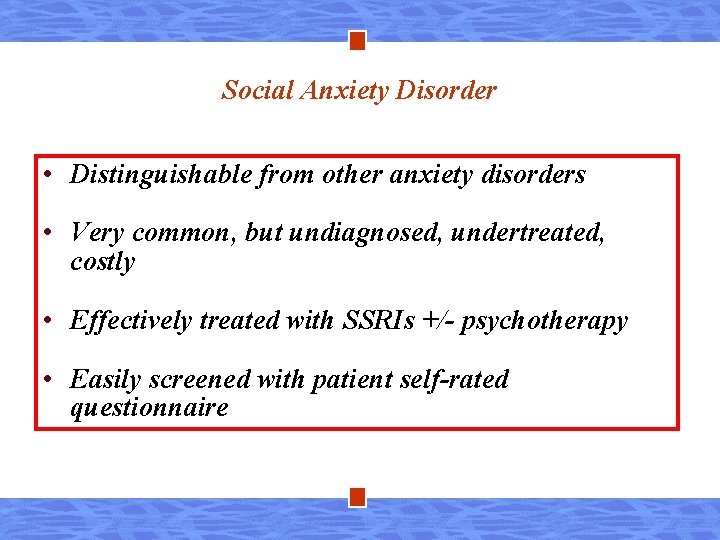
Social Anxiety Disorder • Distinguishable from other anxiety disorders • Very common, but undiagnosed, undertreated, costly • Effectively treated with SSRIs +/- psychotherapy • Easily screened with patient self-rated questionnaire
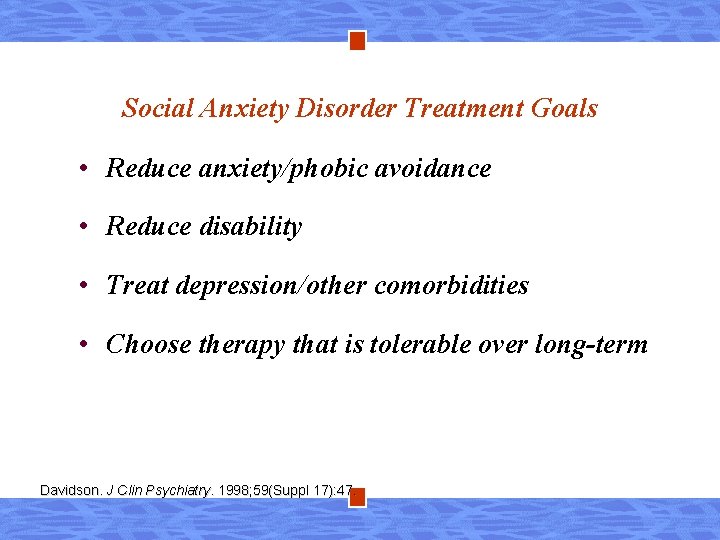
Social Anxiety Disorder Treatment Goals • Reduce anxiety/phobic avoidance • Reduce disability • Treat depression/other comorbidities • Choose therapy that is tolerable over long-term Davidson. J Clin Psychiatry. 1998; 59(Suppl 17): 47.
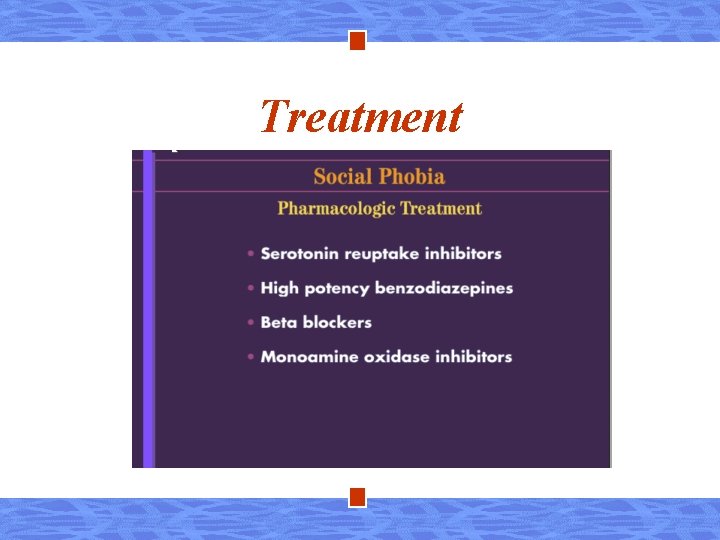
Treatment
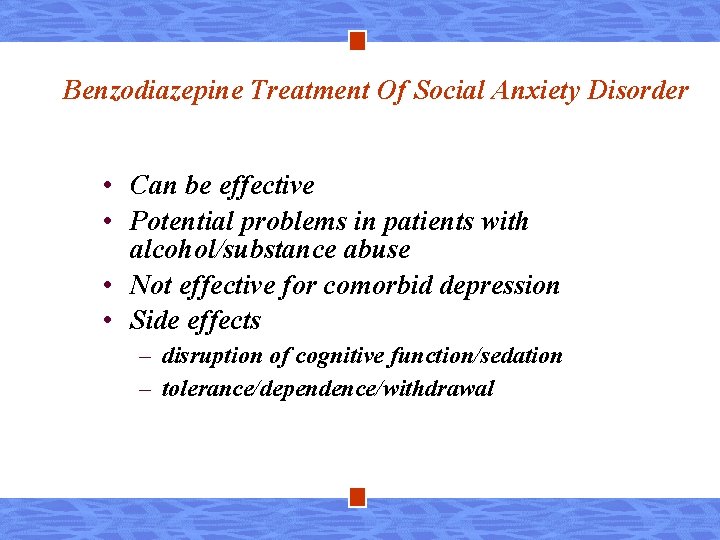
Benzodiazepine Treatment Of Social Anxiety Disorder • Can be effective • Potential problems in patients with alcohol/substance abuse • Not effective for comorbid depression • Side effects – disruption of cognitive function/sedation – tolerance/dependence/withdrawal
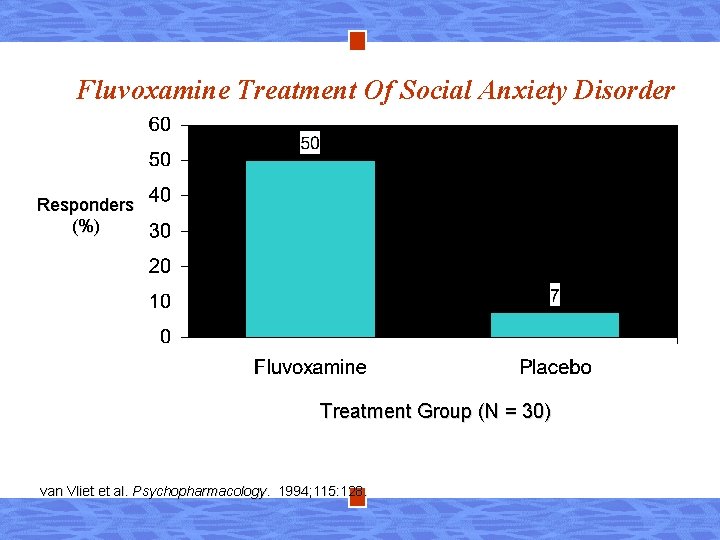
Fluvoxamine Treatment Of Social Anxiety Disorder Responders (%) Treatment Group (N = 30) van Vliet et al. Psychopharmacology. 1994; 115: 128.
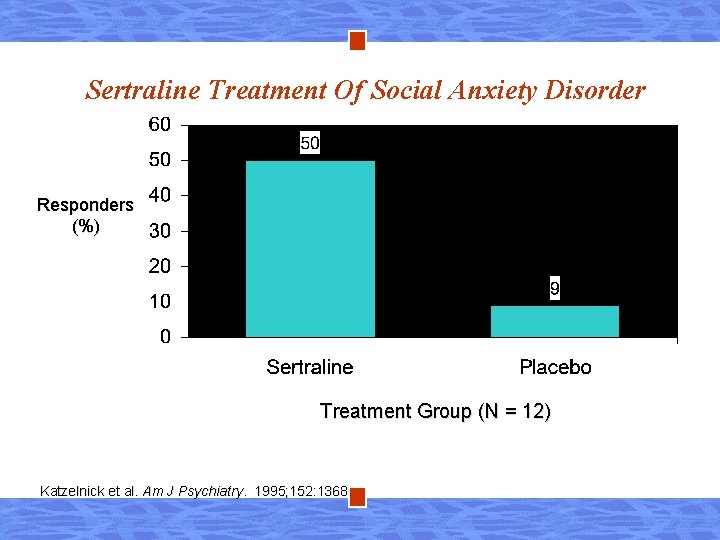
Sertraline Treatment Of Social Anxiety Disorder Responders (%) Treatment Group (N = 12) Katzelnick et al. Am J Psychiatry. 1995; 152: 1368.
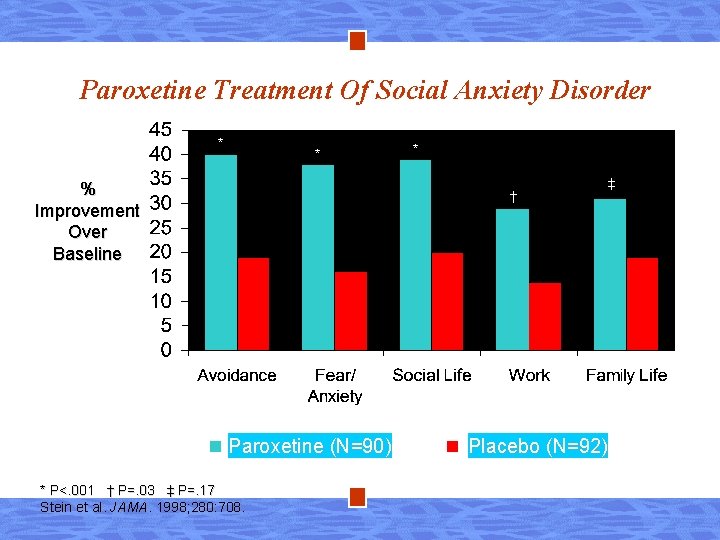
Paroxetine Treatment Of Social Anxiety Disorder * * % Improvement Over Baseline * † Paroxetine (N=90) * P<. 001 † P=. 03 ‡ P=. 17 Stein et al. JAMA. 1998; 280: 708. ‡ Placebo (N=92)
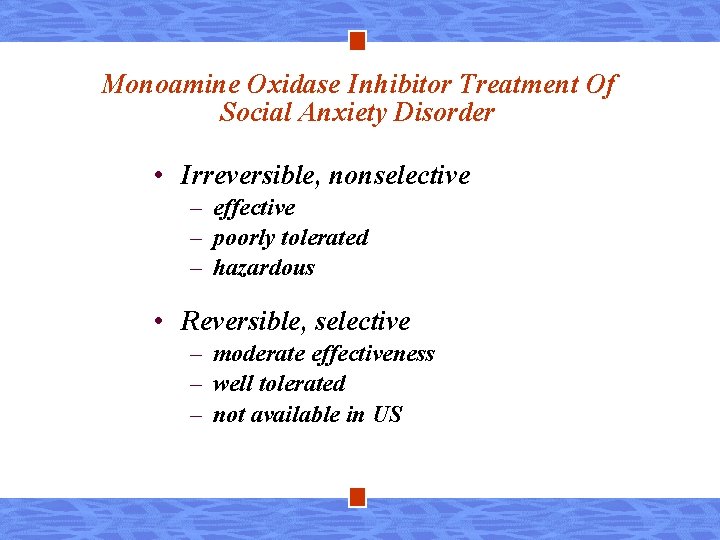
Monoamine Oxidase Inhibitor Treatment Of Social Anxiety Disorder • Irreversible, nonselective – effective – poorly tolerated – hazardous • Reversible, selective – moderate effectiveness – well tolerated – not available in US
MAOI: Diet
-Blocker Treatment Of Social Anxiety Disorder • Effective for mild, occasional performance anxiety • Not effective in generalized social anxiety disorder • Will not treat comorbid conditions • Very limited role
Tricyclic Antidepressant Treatment Of Social Anxiety Disorder • Doubtful efficacy • Poor side effect profile – – – sedation, tremor, dry mouth effects on cognitive function sexual dysfunction weight gain constipation
Conclusions: Social Anxiety Disorder • Frequently undiagnosed and untreated • Presents as marked and persistent fear of social or performance situations or with physiologic symptoms • Treatment options: psychosocial and pharmacologic – SSRIs show most promise
Panic Disorder: Spontaneous panic attacks
Case Study : Panic
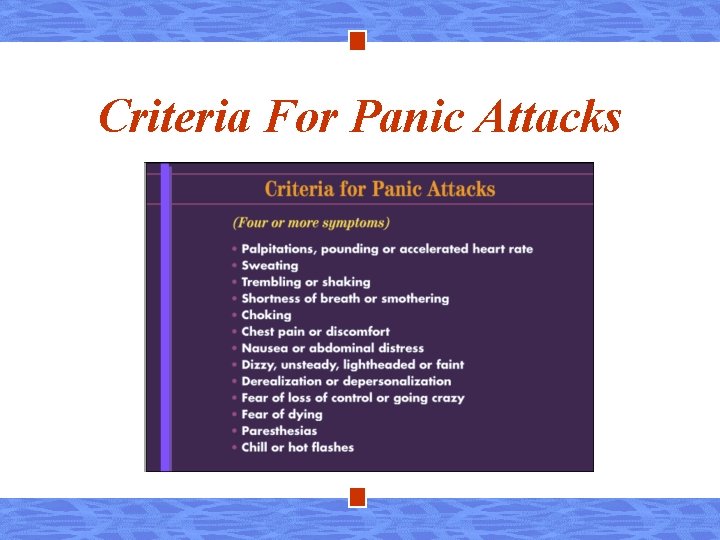
Criteria For Panic Attacks
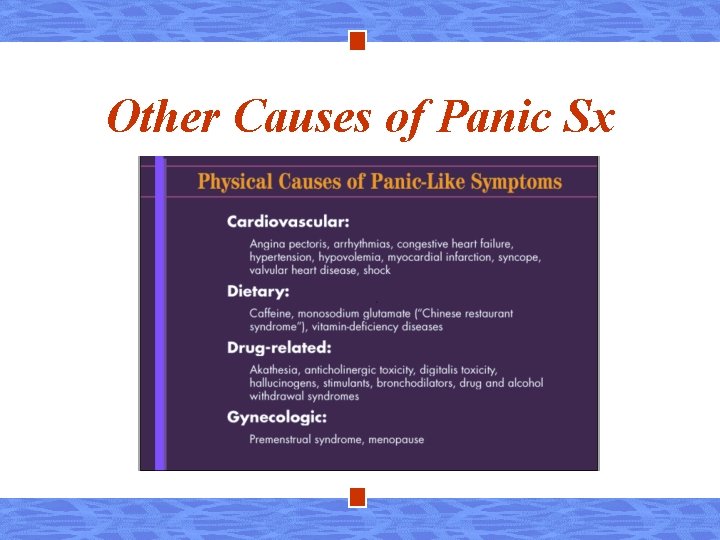
Other Causes of Panic Sx
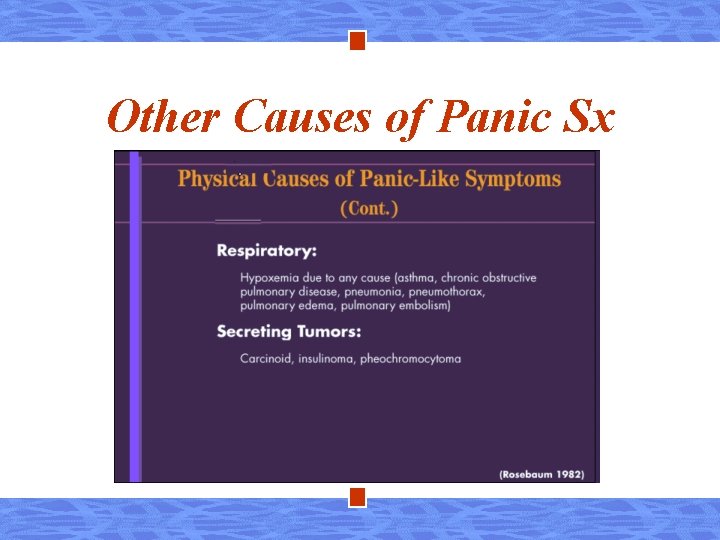
Other Causes of Panic Sx
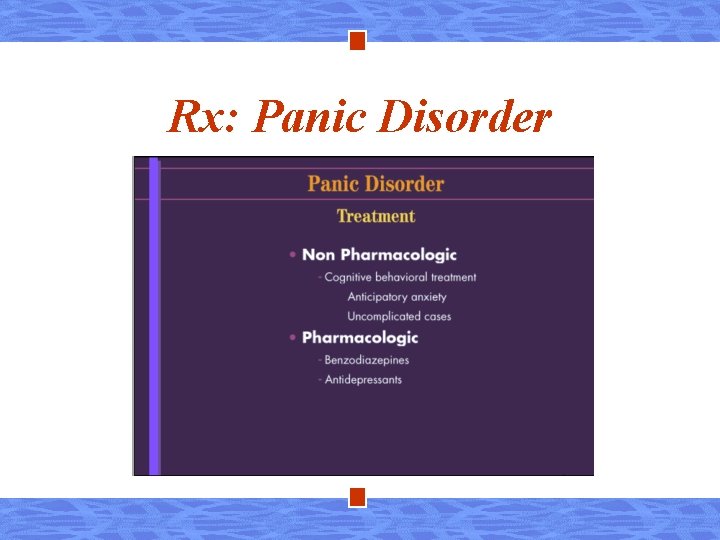
Rx: Panic Disorder
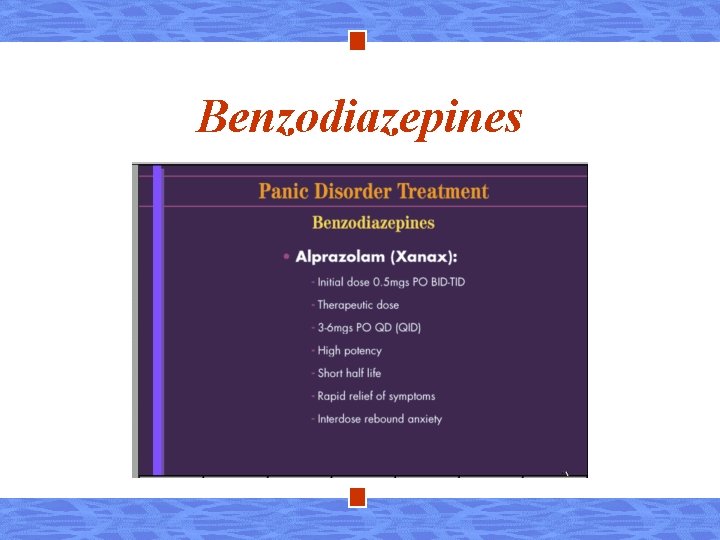
Benzodiazepines
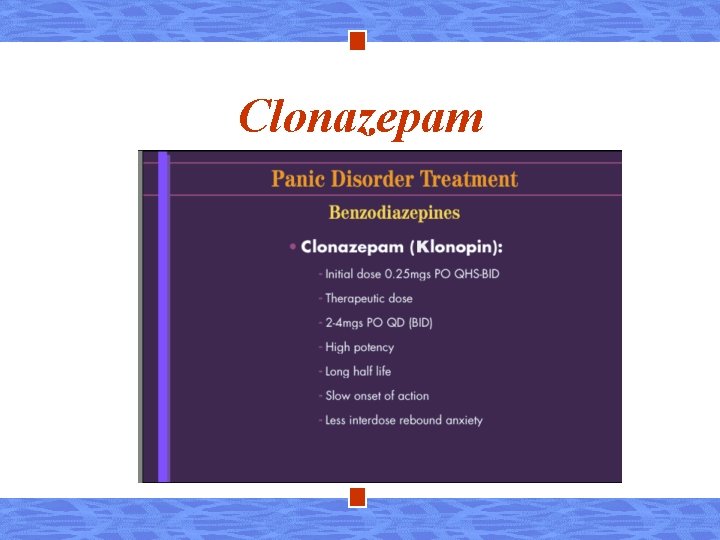
Clonazepam
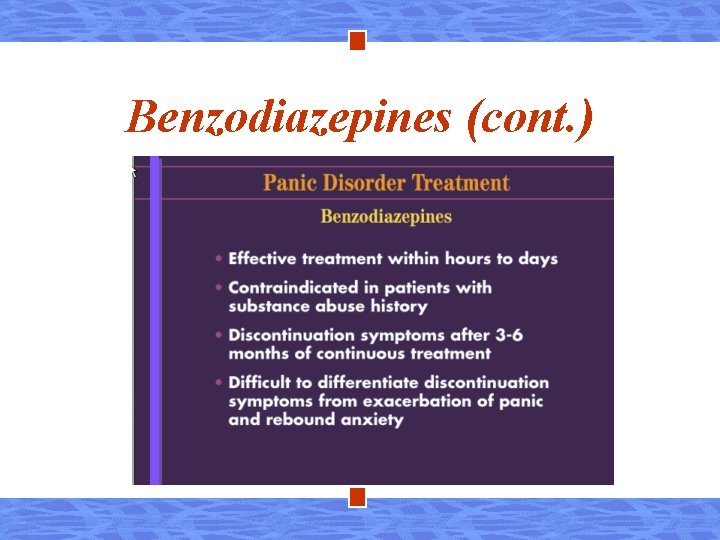
Benzodiazepines (cont. )
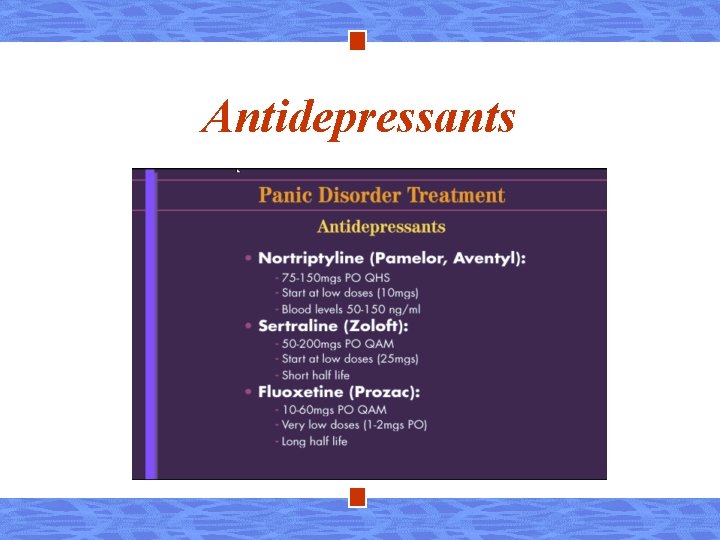
Antidepressants
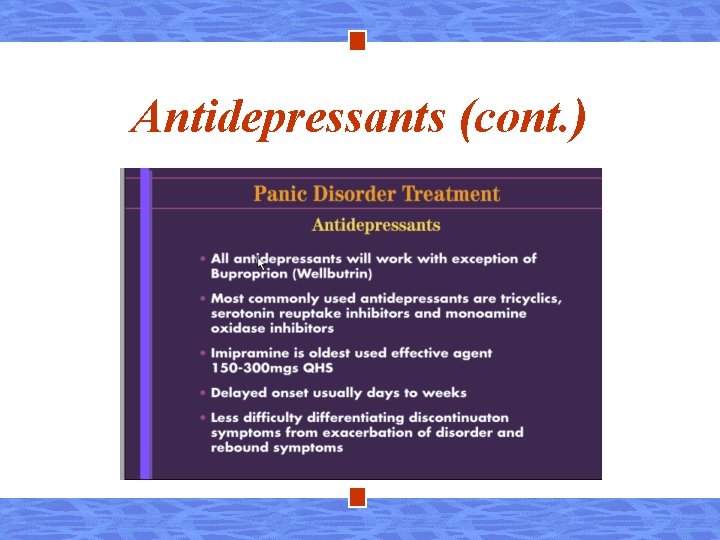
Antidepressants (cont. )
Post Traumatic Stress Disorder
PTSD : Case Study
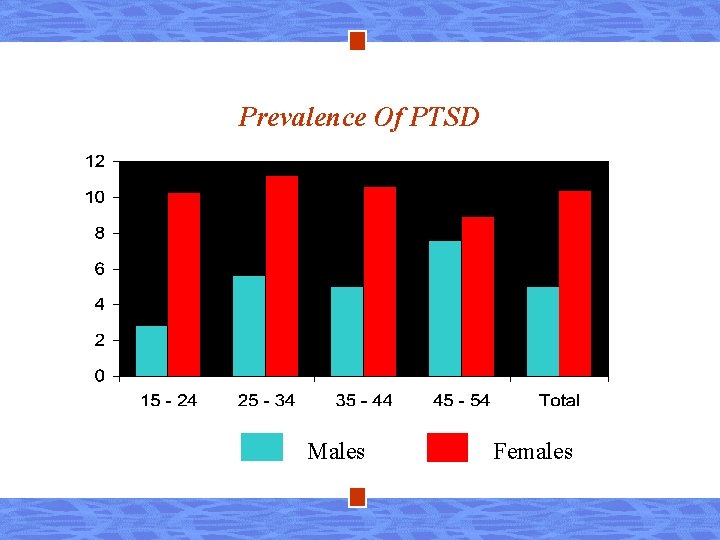
Prevalence Of PTSD Males Females
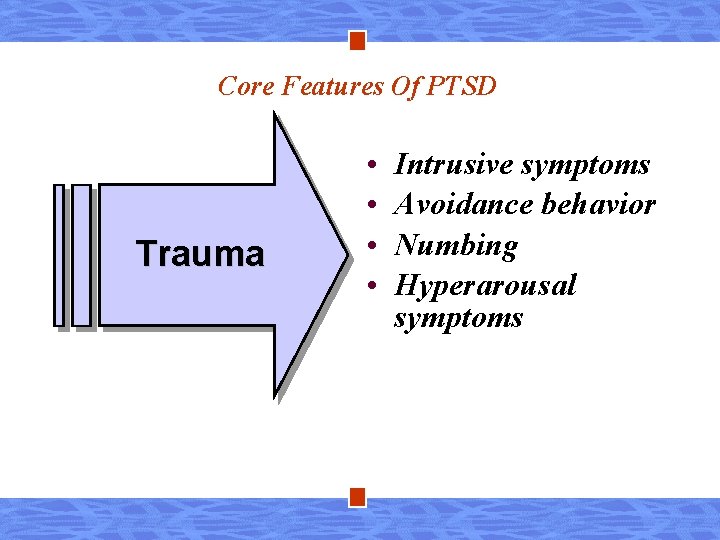
Core Features Of PTSD Trauma • • Intrusive symptoms Avoidance behavior Numbing Hyperarousal symptoms
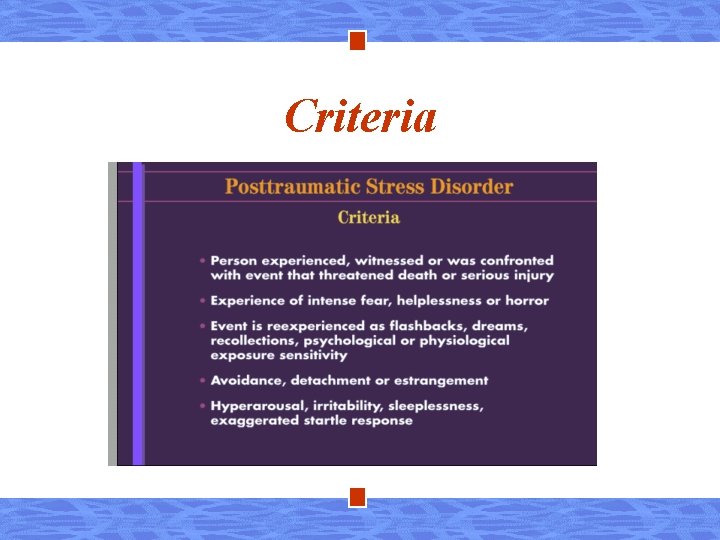
Criteria
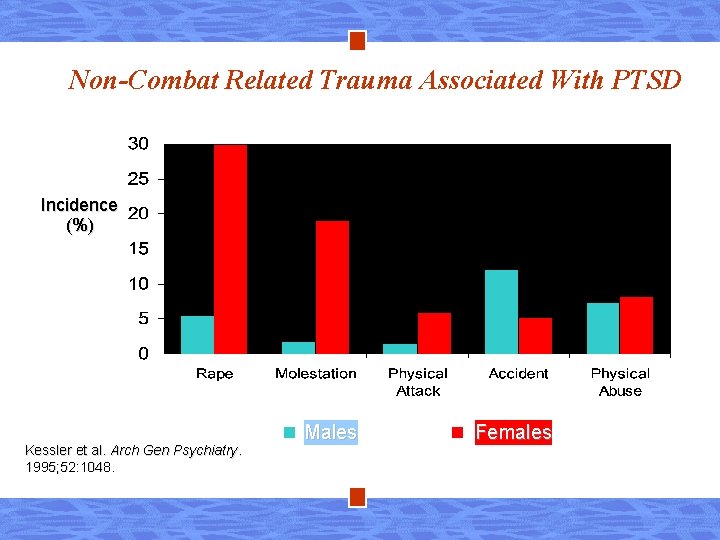
Non-Combat Related Trauma Associated With PTSD Incidence (%) Kessler et al. Arch Gen Psychiatry. 1995; 52: 1048. Males Females
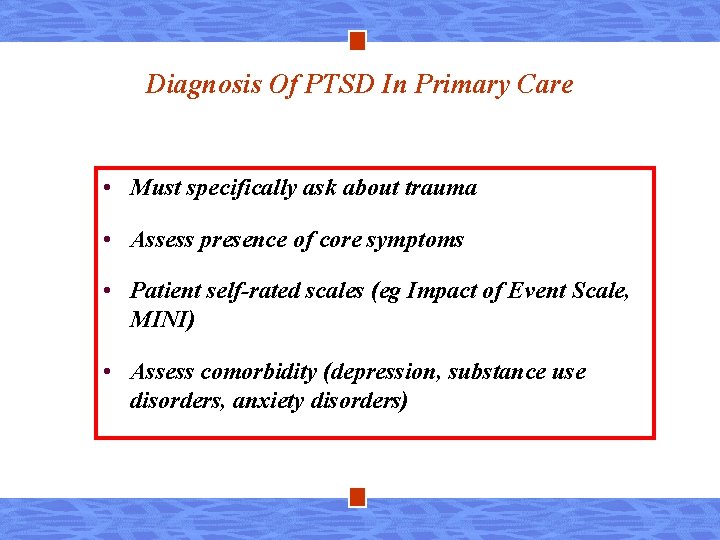
Diagnosis Of PTSD In Primary Care • Must specifically ask about trauma • Assess presence of core symptoms • Patient self-rated scales (eg Impact of Event Scale, MINI) • Assess comorbidity (depression, substance use disorders, anxiety disorders)
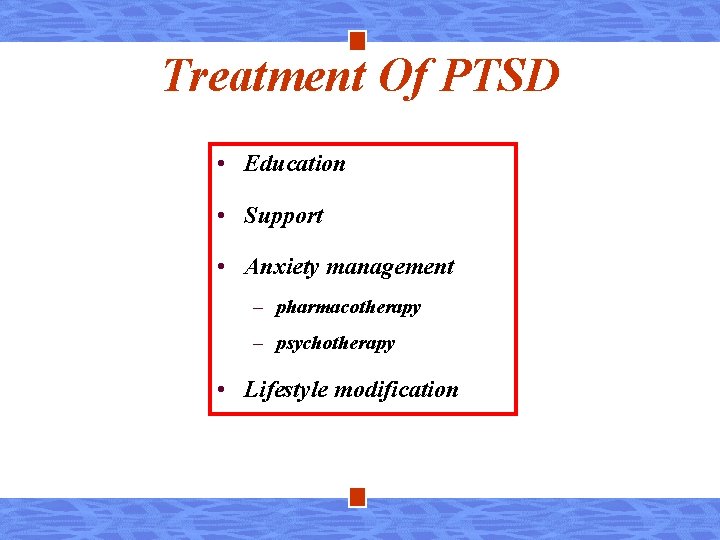
Treatment Of PTSD • Education • Support • Anxiety management – pharmacotherapy – psychotherapy • Lifestyle modification
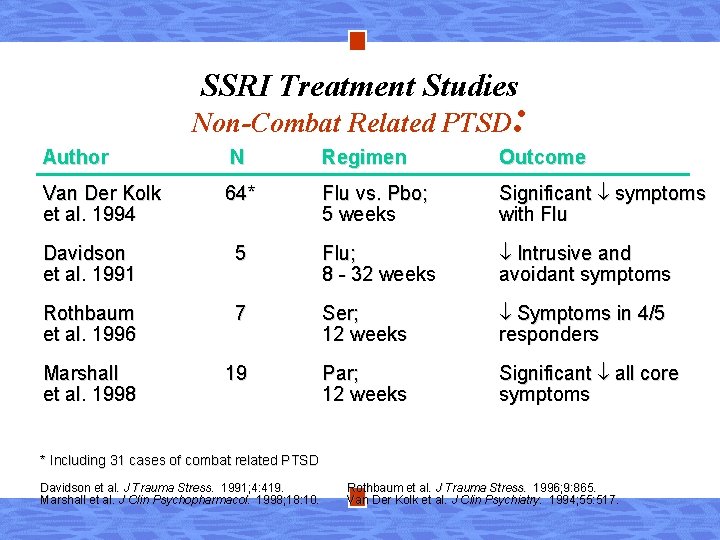
SSRI Treatment Studies Non-Combat Related PTSD : Author N Regimen Outcome Van Der Kolk et al. 1994 64* Flu vs. Pbo; 5 weeks Significant symptoms with Flu Davidson et al. 1991 5 Flu; 8 - 32 weeks Intrusive and avoidant symptoms Rothbaum et al. 1996 7 Ser; 12 weeks Symptoms in 4/5 responders Marshall et al. 1998 19 Par; 12 weeks Significant all core symptoms * Including 31 cases of combat related PTSD Davidson et al. J Trauma Stress. 1991; 4: 419. Marshall et al. J Clin Psychopharmacol. 1998; 18: 10. Rothbaum et al. J Trauma Stress. 1996; 9: 865. Van Der Kolk et al. J Clin Psychiatry. 1994; 55: 517.
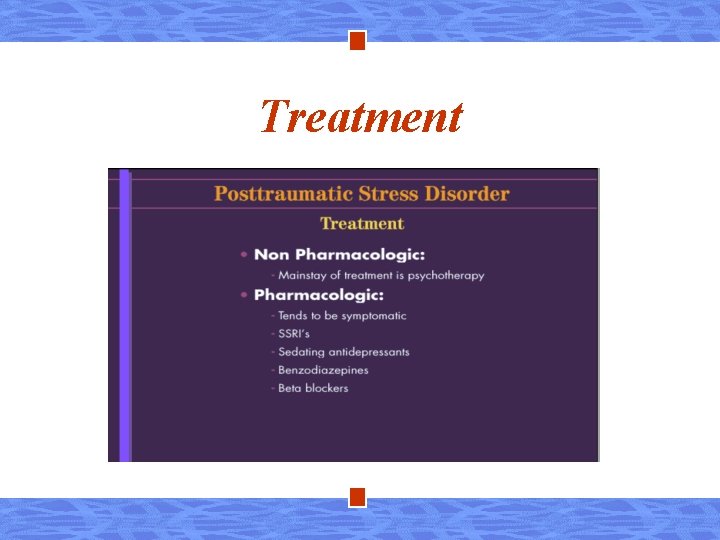
Treatment