
Anton Hemerijck EUI The Social Investment Imperative Palazzo
- Slides: 17
Anton Hemerijck (EUI) The Social Investment Imperative Palazzo Vecchio Firenze, 5 Aprile 2019 1
Outline 1. A puzzle 2. Taking social investment seriously – theory 3. Taking social investment seriously – evidence 4. Taking social investment seriously – politically 1. An EMU social investment pact 2. From subnational innovation to national codification 2
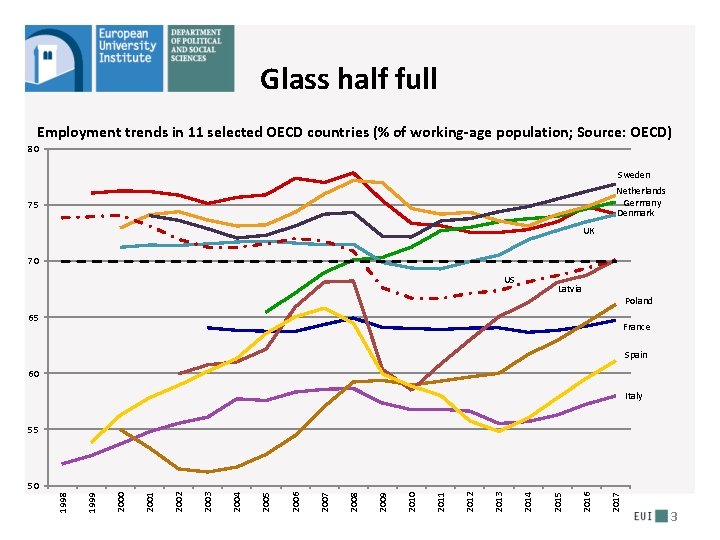
Glass half full Employment trends in 11 selected OECD countries (% of working-age population; Source: OECD) 80 Sweden Netherlands Germany Denmark 75 UK 70 US Latvia Poland 65 France Spain 60 Italy 55 2017 2016 2015 2014 2013 2012 2011 2010 2009 2008 2007 2006 2005 2004 2003 2002 2001 2000 1999 1998 50 3
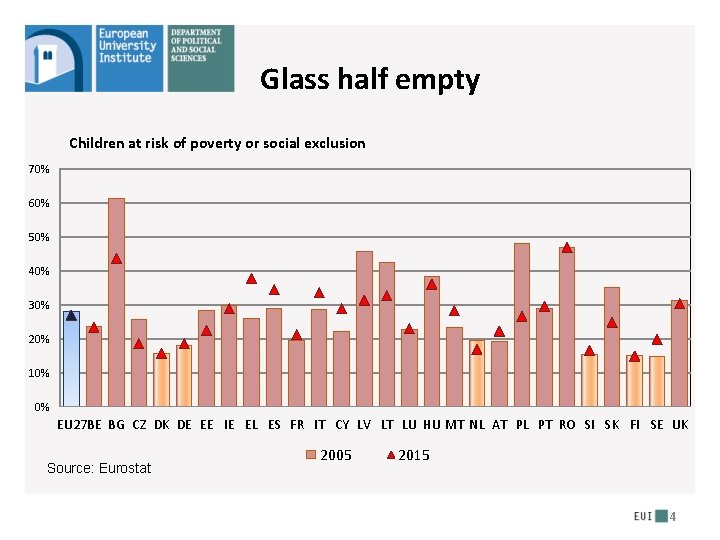
Glass half empty Children at risk of poverty or social exclusion 70% 60% 50% 40% 30% 20% 10% 0% EU 27 BE BG CZ DK DE EE IE EL ES FR IT CY LV LT LU HU MT NL AT PL PT RO SI SK FI SE UK Source: Eurostat 2005 2015 4
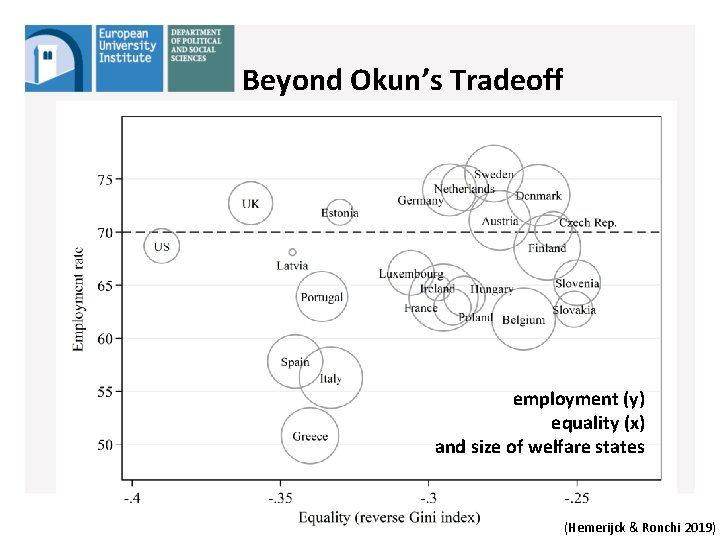
Beyond Okun’s Tradeoff employment (y) equality (x) and size of welfare states 5 (Hemerijck & Ronchi 2019)
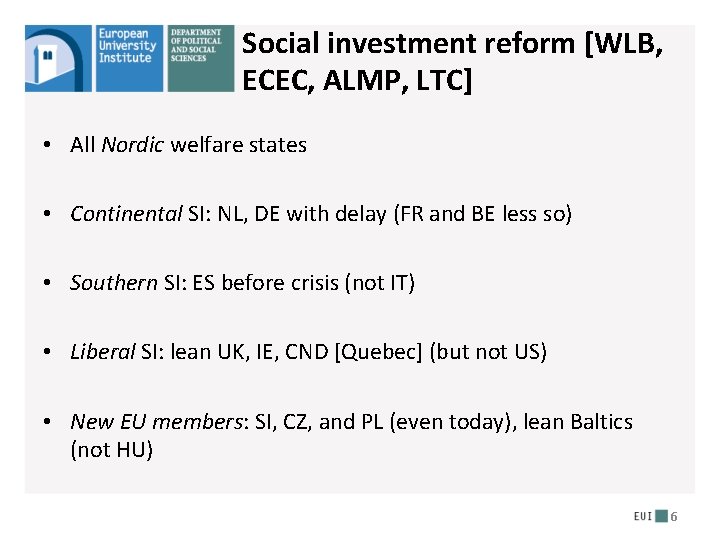
Social investment reform [WLB, ECEC, ALMP, LTC] • All Nordic welfare states • Continental SI: NL, DE with delay (FR and BE less so) • Southern SI: ES before crisis (not IT) • Liberal SI: lean UK, IE, CND [Quebec] (but not US) • New EU members: SI, CZ, and PL (even today), lean Baltics (not HU) 6
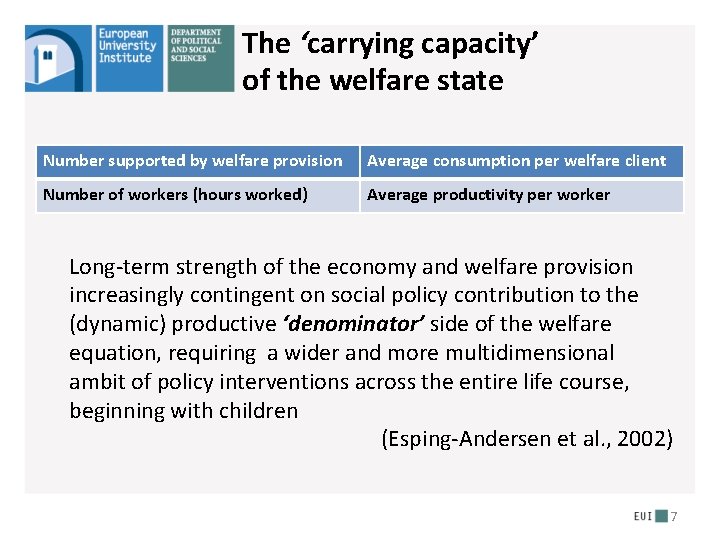
The ‘carrying capacity’ of the welfare state Number supported by welfare provision Average consumption per welfare client Number of workers (hours worked) Average productivity per worker Long-term strength of the economy and welfare provision increasingly contingent on social policy contribution to the (dynamic) productive ‘denominator’ side of the welfare equation, requiring a wider and more multidimensional ambit of policy interventions across the entire life course, beginning with children (Esping-Andersen et al. , 2002) 7
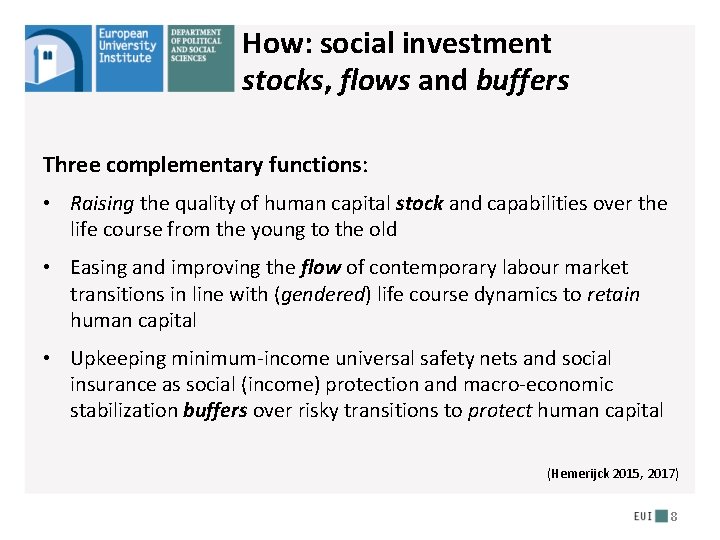
How: social investment stocks, flows and buffers Three complementary functions: • Raising the quality of human capital stock and capabilities over the life course from the young to the old • Easing and improving the flow of contemporary labour market transitions in line with (gendered) life course dynamics to retain human capital • Upkeeping minimum-income universal safety nets and social insurance as social (income) protection and macro-economic stabilization buffers over risky transitions to protect human capital (Hemerijck 2015, 2017) 8
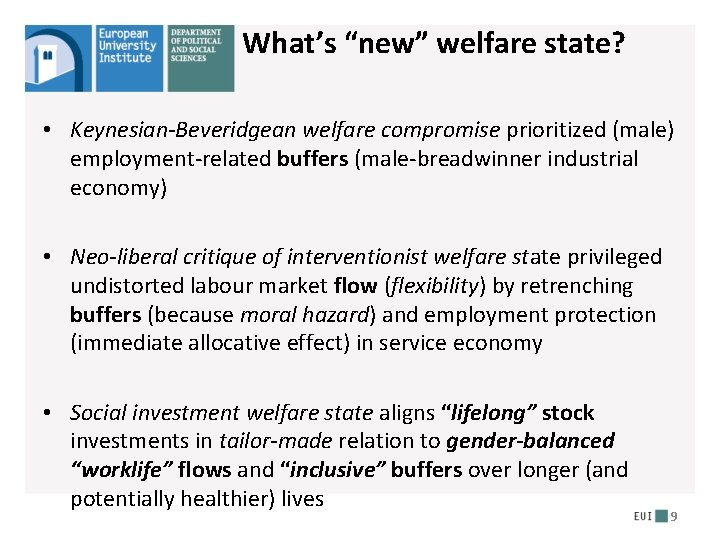
What’s “new” welfare state? • Keynesian-Beveridgean welfare compromise prioritized (male) employment-related buffers (male-breadwinner industrial economy) • Neo-liberal critique of interventionist welfare state privileged undistorted labour market flow (flexibility) by retrenching buffers (because moral hazard) and employment protection (immediate allocative effect) in service economy • Social investment welfare state aligns “lifelong” stock investments in tailor-made relation to gender-balanced “worklife” flows and “inclusive” buffers over longer (and potentially healthier) lives 9
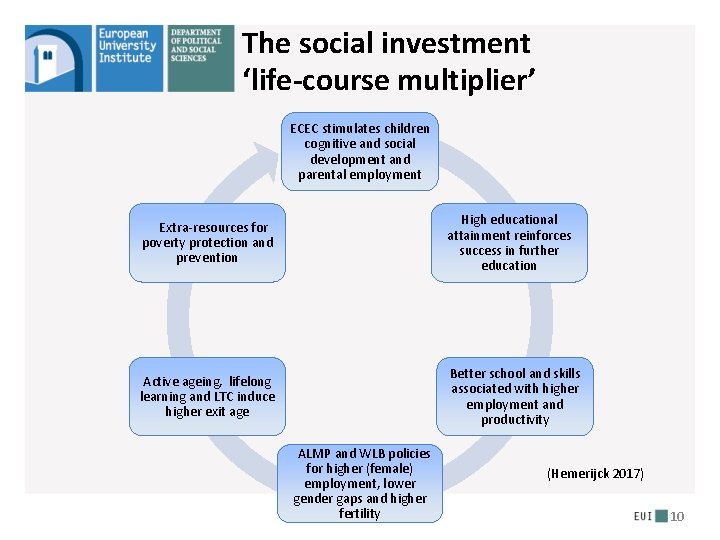
The social investment ‘life-course multiplier’ ECEC stimulates children cognitive and social development and parental employment Extra-resources for poverty protection and prevention High educational attainment reinforces success in further education Active ageing, lifelong learning and LTC induce higher exit age Better school and skills associated with higher employment and productivity ALMP and WLB policies for higher (female) employment, lower gender gaps and higher fertility (Hemerijck 2017) 10
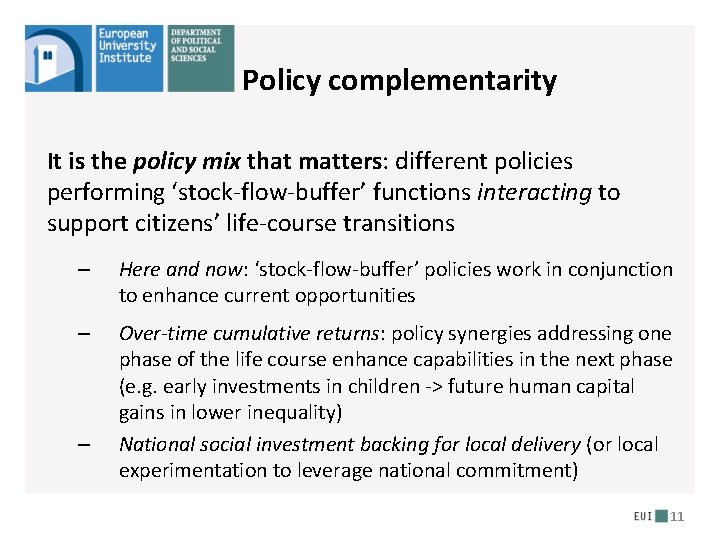
Policy complementarity It is the policy mix that matters: different policies performing ‘stock-flow-buffer’ functions interacting to support citizens’ life-course transitions – Here and now: ‘stock-flow-buffer’ policies work in conjunction to enhance current opportunities – Over-time cumulative returns: policy synergies addressing one phase of the life course enhance capabilities in the next phase (e. g. early investments in children -> future human capital gains in lower inequality) National social investment backing for local delivery (or local experimentation to leverage national commitment) – 11
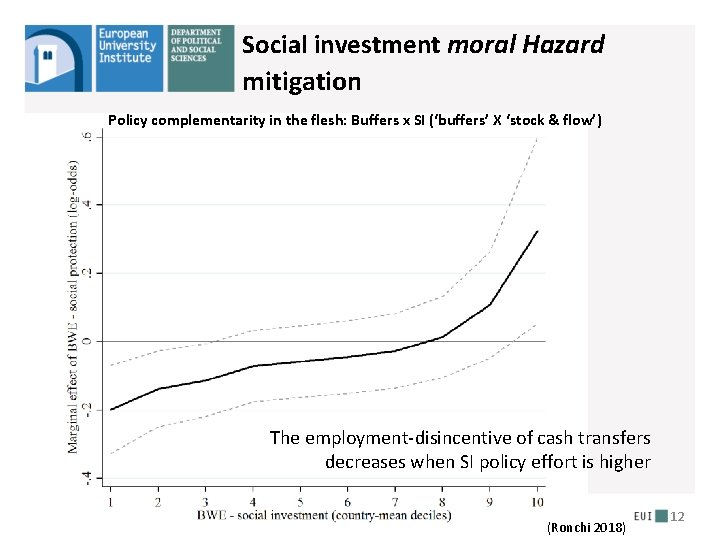
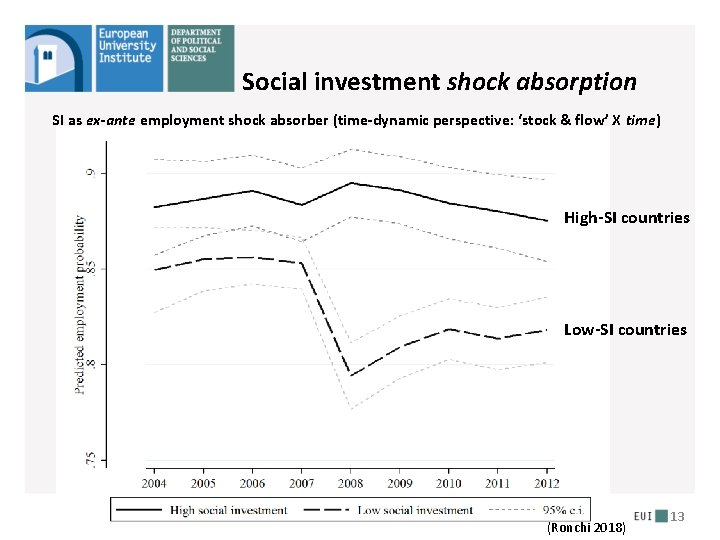
Social investment moral Hazard mitigation Policy complementarity in the flesh: Buffers x SI (‘buffers’ X ‘stock & flow’) The employment-disincentive of cash transfers decreases when SI policy effort is higher (Ronchi 2018) 12
Social investment shock absorption SI as ex-ante employment shock absorber (time-dynamic perspective: ‘stock & flow’ X time) High-SI countries Low-SI countries (Ronchi 2018) 13
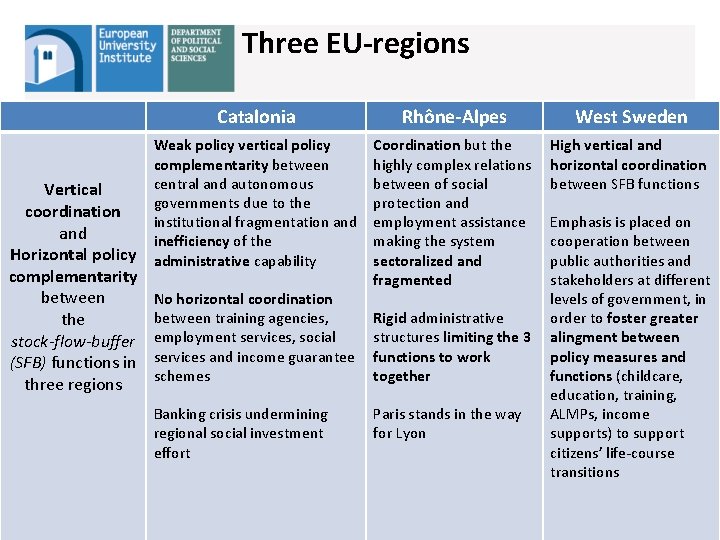
Three EU-regions Vertical coordination and Horizontal policy complementarity between the stock-flow-buffer (SFB) functions in three regions Catalonia Rhône-Alpes West Sweden Weak policy vertical policy complementarity between central and autonomous governments due to the institutional fragmentation and inefficiency of the administrative capability Coordination but the highly complex relations between of social protection and employment assistance making the system sectoralized and fragmented High vertical and horizontal coordination between SFB functions Emphasis is placed on cooperation between public authorities and stakeholders at different levels of government, in order to foster greater alingment between policy measures and functions (childcare, education, training, ALMPs, income supports) to support citizens’ life-course transitions No horizontal coordination between training agencies, employment services, social services and income guarantee schemes Banking crisis undermining regional social investment effort Rigid administrative structures limiting the 3 functions to work together Paris stands in the way for Lyon 14
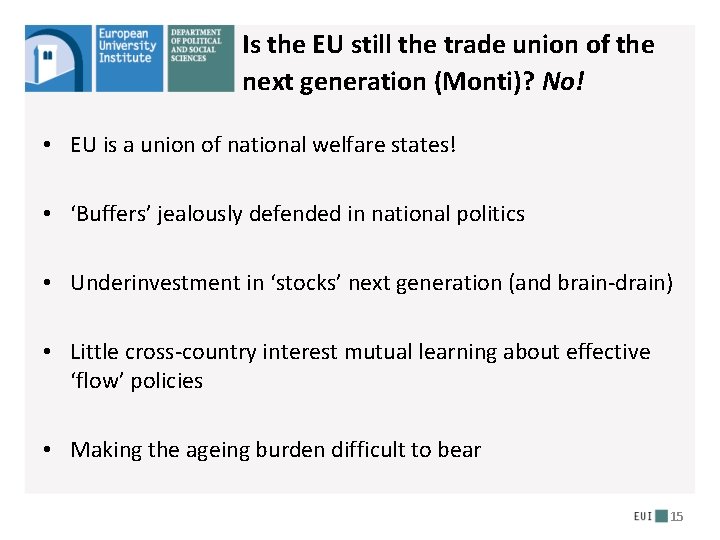
Is the EU still the trade union of the next generation (Monti)? No! • EU is a union of national welfare states! • ‘Buffers’ jealously defended in national politics • Underinvestment in ‘stocks’ next generation (and brain-drain) • Little cross-country interest mutual learning about effective ‘flow’ policies • Making the ageing burden difficult to bear 15
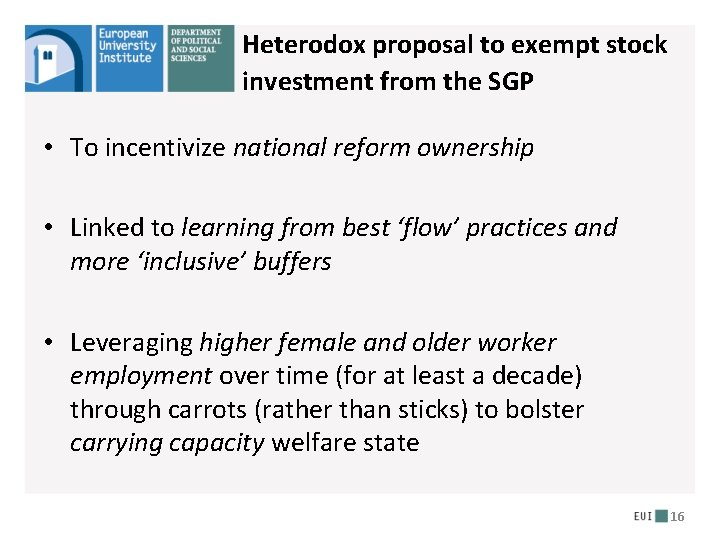
Heterodox proposal to exempt stock investment from the SGP • To incentivize national reform ownership • Linked to learning from best ‘flow’ practices and more ‘inclusive’ buffers • Leveraging higher female and older worker employment over time (for at least a decade) through carrots (rather than sticks) to bolster carrying capacity welfare state 16
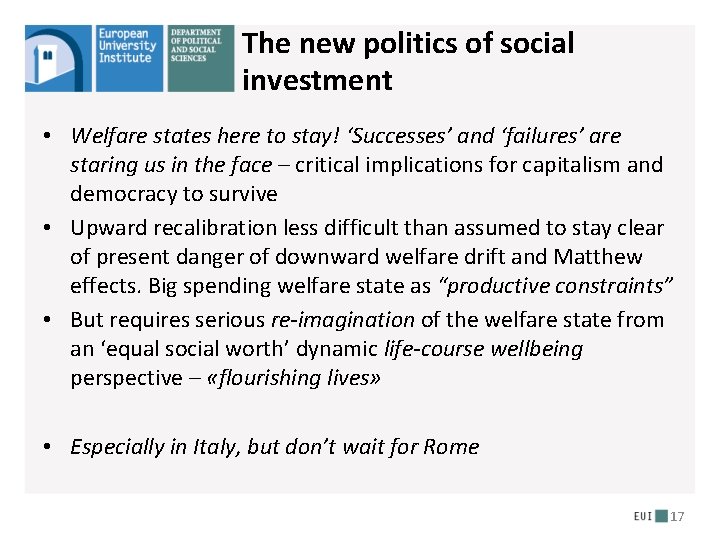
The new politics of social investment • Welfare states here to stay! ‘Successes’ and ‘failures’ are staring us in the face – critical implications for capitalism and democracy to survive • Upward recalibration less difficult than assumed to stay clear of present danger of downward welfare drift and Matthew effects. Big spending welfare state as “productive constraints” • But requires serious re-imagination of the welfare state from an ‘equal social worth’ dynamic life-course wellbeing perspective – «flourishing lives» • Especially in Italy, but don’t wait for Rome 17