
Antisense Oligonucleotide Therapy for Genetic Diseases Tamar R
- Slides: 13
Antisense Oligonucleotide Therapy for Genetic Diseases Tamar R. Grossman, Ph. D
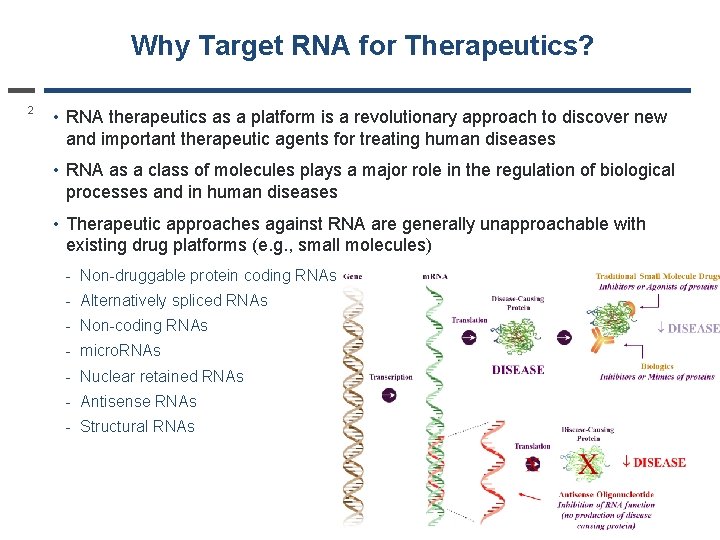
Why Target RNA for Therapeutics? 2 • RNA therapeutics as a platform is a revolutionary approach to discover new and important therapeutic agents for treating human diseases • RNA as a class of molecules plays a major role in the regulation of biological processes and in human diseases • Therapeutic approaches against RNA are generally unapproachable with existing drug platforms (e. g. , small molecules) - Non-druggable protein coding RNAs - Alternatively spliced RNAs - Non-coding RNAs - micro. RNAs - Nuclear retained RNAs - Antisense RNAs - Structural RNAs
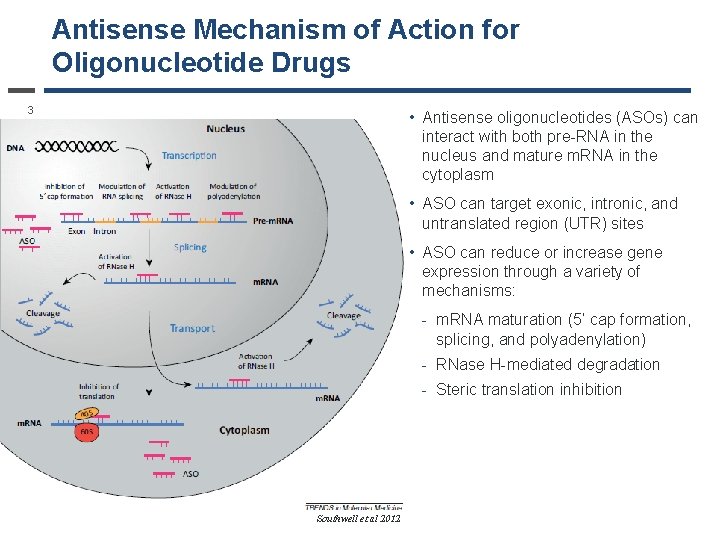
Antisense Mechanism of Action for Oligonucleotide Drugs 3 • Antisense oligonucleotides (ASOs) can interact with both pre-RNA in the nucleus and mature m. RNA in the cytoplasm • ASO can target exonic, intronic, and untranslated region (UTR) sites • ASO can reduce or increase gene expression through a variety of mechanisms: - m. RNA maturation (5’ cap formation, splicing, and polyadenylation) - RNase H-mediated degradation - Steric translation inhibition Southwell et al 2012
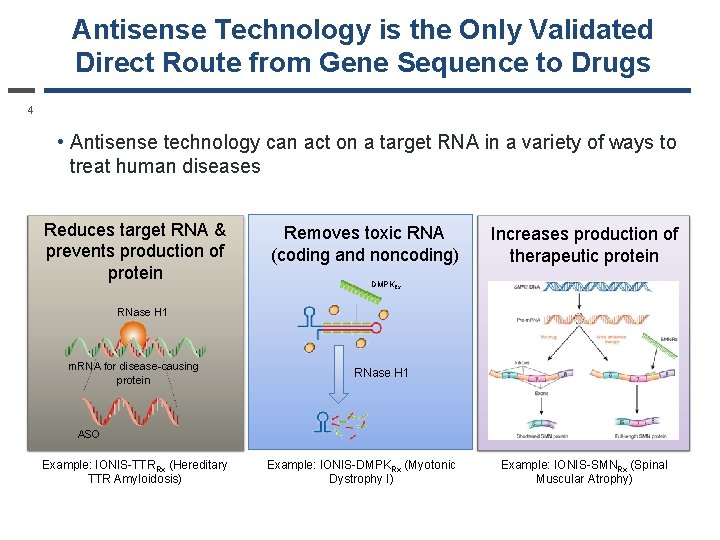
Antisense Technology is the Only Validated Direct Route from Gene Sequence to Drugs 4 • Antisense technology can act on a target RNA in a variety of ways to treat human diseases Reduces target RNA & prevents production of protein Removes toxic RNA (coding and noncoding) Increases production of therapeutic protein DMPKRx RNase H 1 m. RNA for disease-causing protein RNase H 1 ASO Example: IONIS-TTRRx (Hereditary TTR Amyloidosis) Example: IONIS-DMPKRx (Myotonic Dystrophy I) Example: IONIS-SMNRx (Spinal Muscular Atrophy)
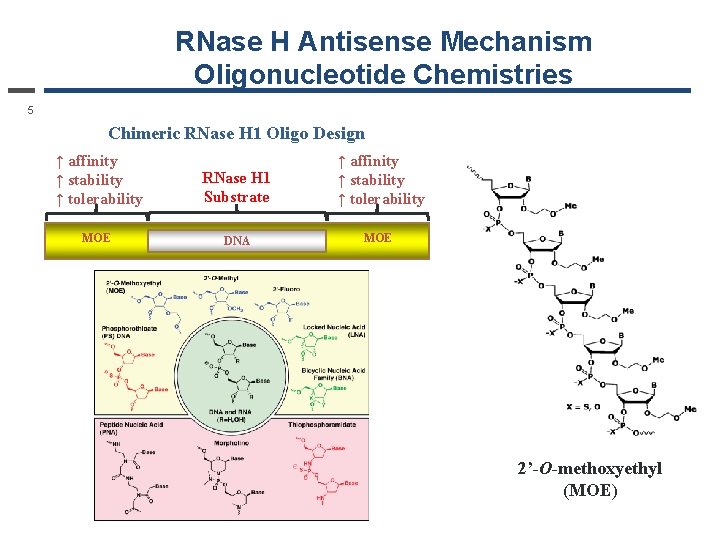
RNase H Antisense Mechanism Oligonucleotide Chemistries 5 Chimeric RNase H 1 Oligo Design ↑ affinity ↑ stability ↑ tolerability RNase H 1 Substrate ↑ affinity ↑ stability ↑ tolerability MOE DNA MOE 2’-O-methoxyethyl (MOE)
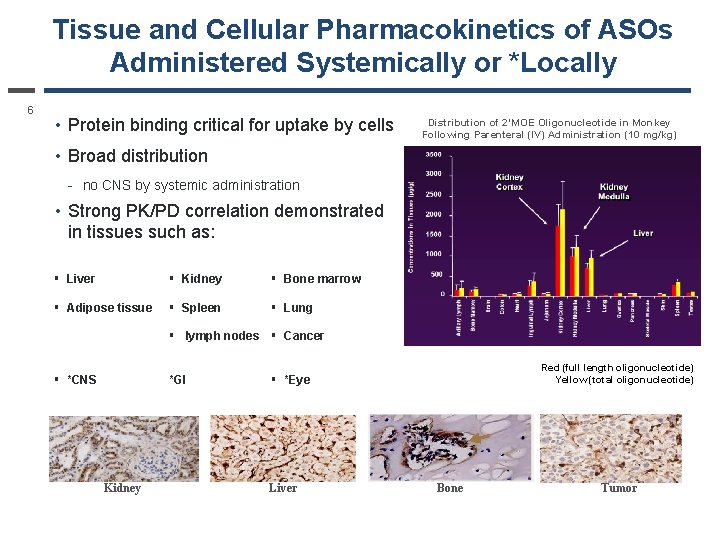
Tissue and Cellular Pharmacokinetics of ASOs Administered Systemically or *Locally 6 • Protein binding critical for uptake by cells Distribution of 2’MOE Oligonucleotide in Monkey Following Parenteral (IV) Administration (10 mg/kg) • Broad distribution - no CNS by systemic administration • Strong PK/PD correlation demonstrated in tissues such as: § Liver § Kidney § Bone marrow § Adipose tissue § Spleen § Lung § lymph nodes § Cancer § *CNS *GI Red (full length oligonucleotide) Yellow (total oligonucleotide) § *Eye Kidney Liver Bone Tumor
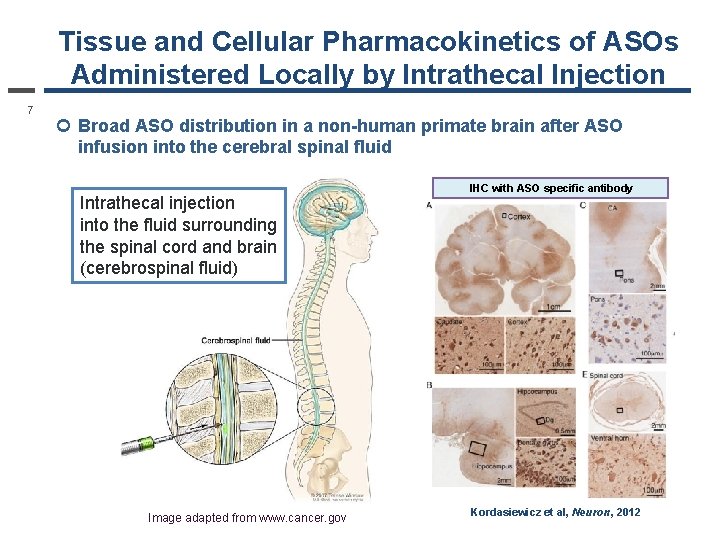
Tissue and Cellular Pharmacokinetics of ASOs Administered Locally by Intrathecal Injection 7 ¢ Broad ASO distribution in a non-human primate brain after ASO infusion into the cerebral spinal fluid Intrathecal injection into the fluid surrounding the spinal cord and brain (cerebrospinal fluid) Image adapted from www. cancer. gov IHC with ASO specific antibody Kordasiewicz et al, Neuron, 2012
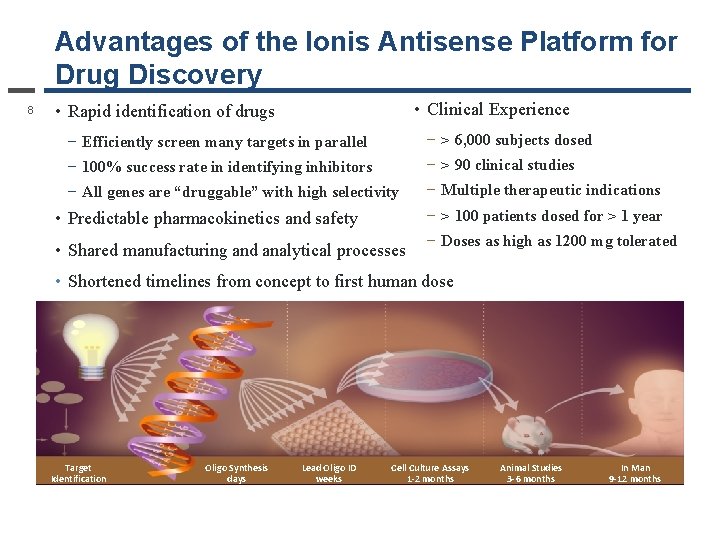
Advantages of the Ionis Antisense Platform for Drug Discovery 8 • Clinical Experience • Rapid identification of drugs − Efficiently screen many targets in parallel − > 6, 000 subjects dosed − 100% success rate in identifying inhibitors − > 90 clinical studies − All genes are “druggable” with high selectivity − Multiple therapeutic indications • Predictable pharmacokinetics and safety − > 100 patients dosed for > 1 year • Shared manufacturing and analytical processes − Doses as high as 1200 mg tolerated • Shortened timelines from concept to first human dose Target Identification Oligo Synthesis days Lead Oligo ID weeks Cell Culture Assays 1 -2 months Animal Studies 3 -6 months In Man 9 -12 months
GYS 1 ASO for Treatment of APBD and Lafora Disease Therapeutic Objective: Slow the progression of APBD/Lafora disease by inhibition of glycogen synthesis in neurons and formation of LB by GYS 1 ASO. Rational: • Gys 1 heterozygous knockout rescues multiple deficits in Lafora disease mouse model (Duran et al 2014) - Glycogen accumulation and lafora bodies reduced - Neurodegeneration reduced as measured by decreased GFAP and Iba 1 staining - Increased LTP in malin KO mouse is normalized - Reduced susceptibility to kainate-induced epilepsy to control levels - Autophagy deficit restored • Humans who have total absence of GYS 1 are healthy except for a latechildhood cardiomyopathy • No health issues in humans with 50% GS activities (Pederson et al 2013). 9
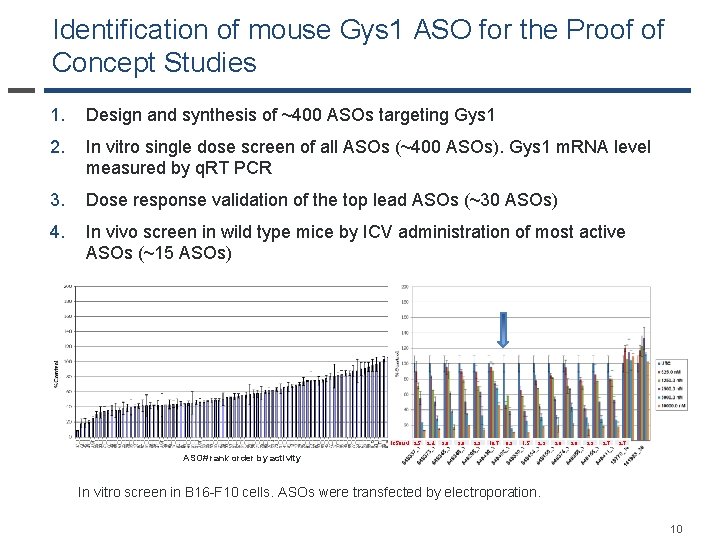
Identification of mouse Gys 1 ASO for the Proof of Concept Studies 1. Design and synthesis of ~400 ASOs targeting Gys 1 2. In vitro single dose screen of all ASOs (~400 ASOs). Gys 1 m. RNA level measured by q. RT PCR 3. Dose response validation of the top lead ASOs (~30 ASOs) 4. In vivo screen in wild type mice by ICV administration of most active ASOs (~15 ASOs) IC 50 u. M 2. 5 2. 4 3. 6 3. 0 2. 9 10. 7 0. 9 1. 5 2. 3 3. 0 3. 6 2. 3 2. 7 ASO# rank order by activity In vitro screen in B 16 -F 10 cells. ASOs were transfected by electroporation. 10
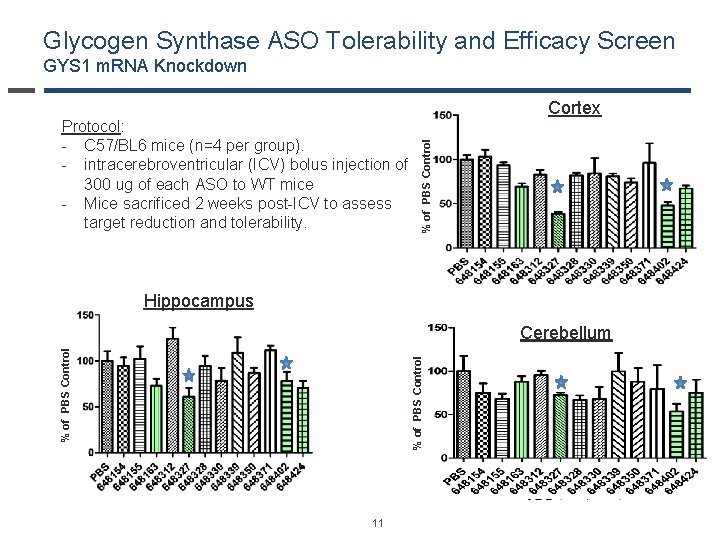
Glycogen Synthase ASO Tolerability and Efficacy Screen GYS 1 m. RNA Knockdown % of PBS Control Protocol: - C 57/BL 6 mice (n=4 per group). - intracerebroventricular (ICV) bolus injection of 300 ug of each ASO to WT mice - Mice sacrificed 2 weeks post-ICV to assess target reduction and tolerability. Cortex Hippocampus % of PBS Control Cerebellum 11
Thank You! Gys 1 ASO Ionis team Lisa Hettrick Holly Kordasiewicz Jose Mendoza Andy Watt Melanie Katz The Hospital for Sick Children, Toronto, Canada Michael Mc. Caleb Brett Monia Eric Swayze Roger Lane Marc Gleichmann Berge Minassian Saija Ahonen 12
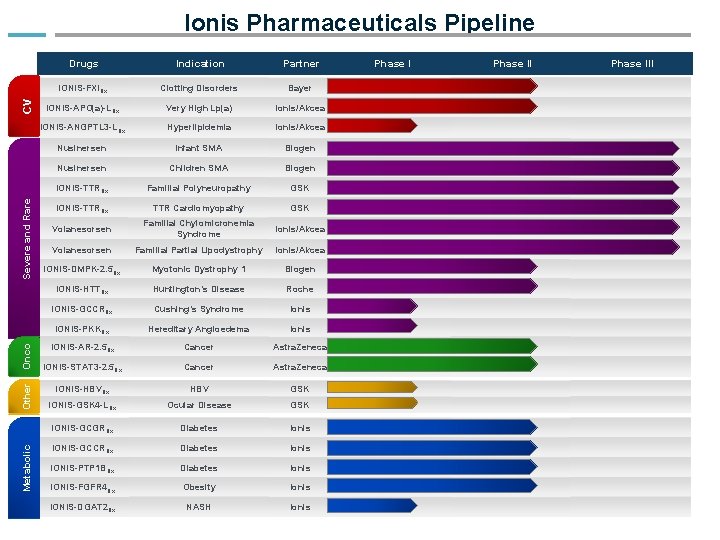
Metabolic Other Onco Severe and Rare CV Ionis Pharmaceuticals Pipeline Drugs Indication Partner IONIS-FXIRx Clotting Disorders Bayer IONIS-APO(a)-LRx Very High Lp(a) Ionis/Akcea IONIS-ANGPTL 3 -LRx Hyperlipidemia Ionis/Akcea Nusinersen Infant SMA Biogen Nusinersen Children SMA Biogen IONIS-TTRRx Familial Polyneuropathy GSK IONIS-TTRRx TTR Cardiomyopathy GSK Volanesorsen Familial Chylomicronemia Syndrome Ionis/Akcea Volanesorsen Familial Partial Lipodystrophy Ionis/Akcea IONIS-DMPK-2. 5 Rx Myotonic Dystrophy 1 Biogen IONIS-HTTRx Huntington’s Disease Roche IONIS-GCCRRx Cushing’s Syndrome Ionis IONIS-PKKRx Hereditary Angioedema Ionis IONIS-AR-2. 5 Rx Cancer Astra. Zeneca IONIS-STAT 3 -2. 5 Rx Cancer Astra. Zeneca IONIS-HBVRx HBV GSK IONIS-GSK 4 -LRx Ocular Disease GSK IONIS-GCGRRx Diabetes Ionis IONIS-GCCRRx Diabetes Ionis IONIS-PTP 1 BRx Diabetes Ionis IONIS-FGFR 4 Rx Obesity Ionis IONIS-DGAT 2 Rx NASH Ionis Phase III