
Antipsychotics The Essentials Module 2 Mechanism of Action
- Slides: 28
Antipsychotics: The Essentials Module 2 Mechanism of Action First and Second Generation Antipsychotics Flavio Guzmán, MD
Outline: Antipsychotics Mechanism of Action • All antipsychotics reduce dopaminergic neurotransmission. • The dopamine theory of schizophrenia • Second generation antipsychotics have additional properties: – 5 -HT 2 A antagonism – Fast dissociation – 5 -HT 1 A agonism
What Do ALL Antipsychotics Have in Common? They reduce dopaminergic neurotransmission.
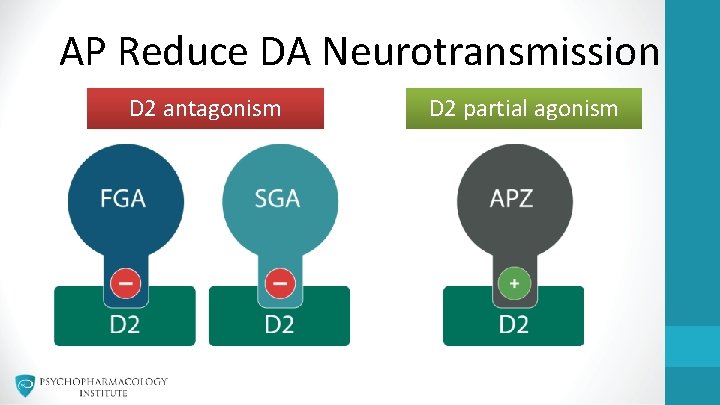
AP Reduce DA Neurotransmission D 2 antagonism D 2 partial agonism
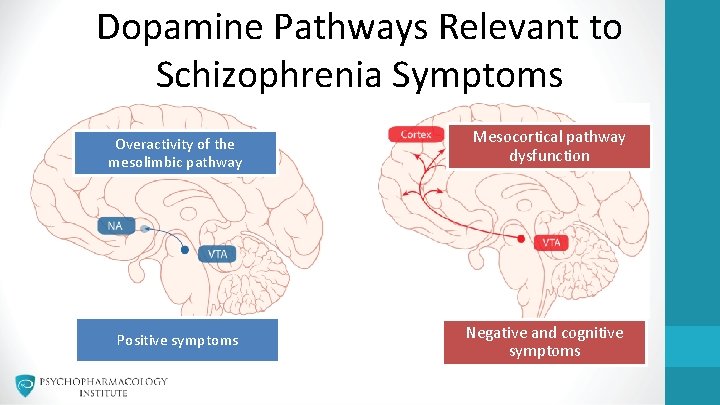
Dopamine Pathways Relevant to Schizophrenia Symptoms Overactivity of the mesolimbic pathway Mesocortical pathway dysfunction Positive symptoms Negative and cognitive symptoms
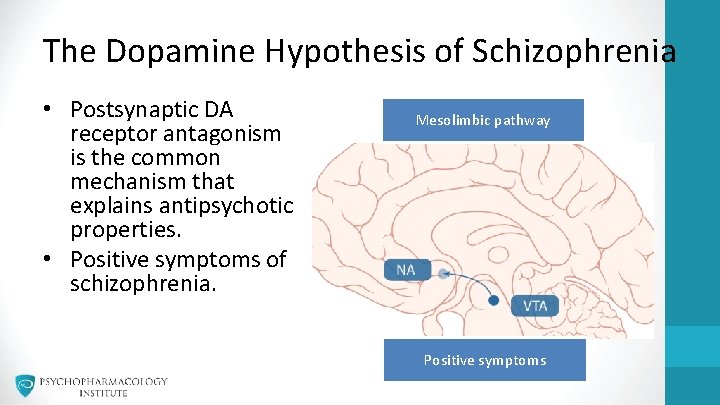
The Dopamine Hypothesis of Schizophrenia • Postsynaptic DA receptor antagonism is the common mechanism that explains antipsychotic properties. • Positive symptoms of schizophrenia. Mesolimbic pathway Positive symptoms
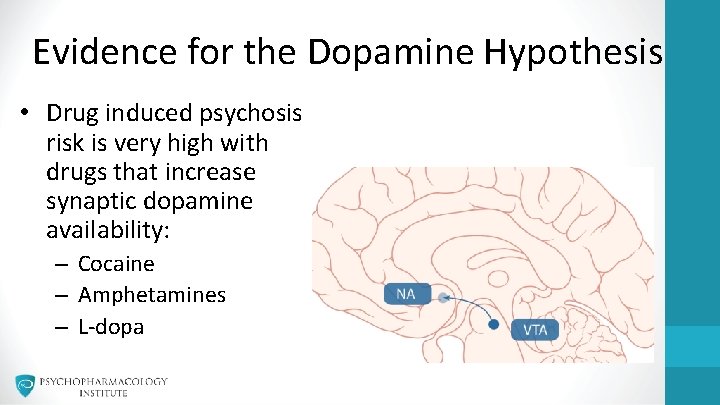
Evidence for the Dopamine Hypothesis • Drug induced psychosis risk is very high with drugs that increase synaptic dopamine availability: – Cocaine – Amphetamines – L-dopa
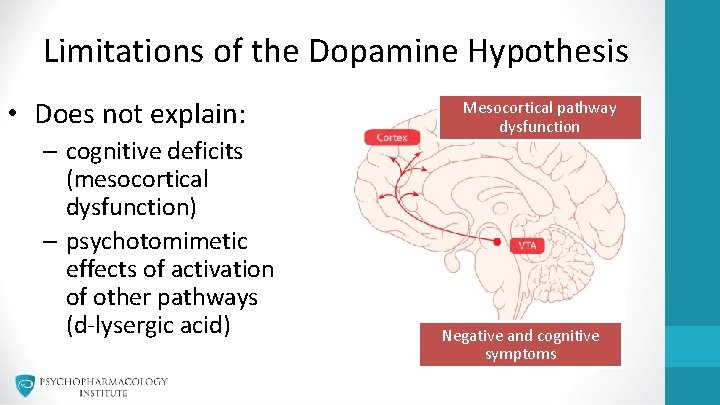
Limitations of the Dopamine Hypothesis • Does not explain: – cognitive deficits (mesocortical dysfunction) – psychotomimetic effects of activation of other pathways (d-lysergic acid) Mesocortical pathway dysfunction Negative and cognitive symptoms
First and Second Generation Antipsychotics
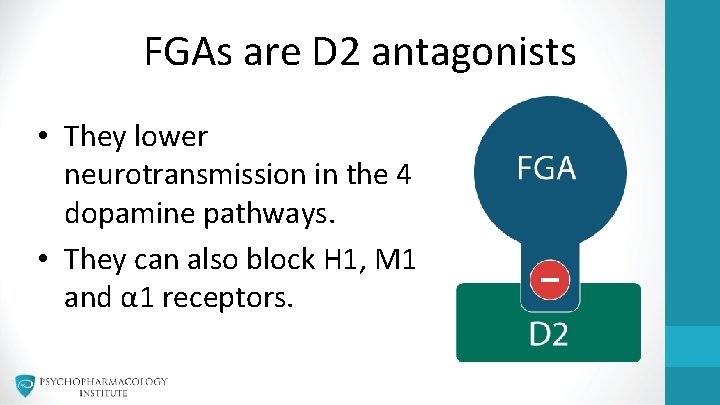
FGAs are D 2 antagonists • They lower neurotransmission in the 4 dopamine pathways. • They can also block H 1, M 1 and α 1 receptors.
About Second Generation Antipsychotics • Also known as: – “atypical” antipsychotics – serotonin-dopamine antagonists
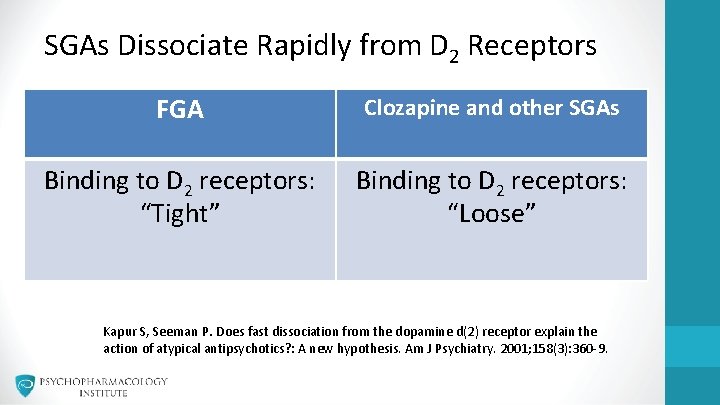
MOA of SGAs • • SGAs are 5 HT 2 A antagonists SGAs dissociate rapidly from D 2 receptors Some SGAs are 5 HT 1 A agonists Other findings
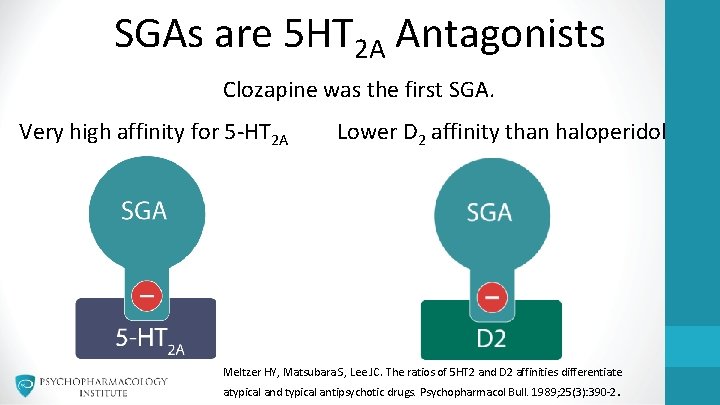
SGAs are 5 HT 2 A Antagonists Clozapine was the first SGA. Very high affinity for 5 -HT 2 A Lower D 2 affinity than haloperidol Meltzer HY, Matsubara S, Lee JC. The ratios of 5 HT 2 and D 2 affinities differentiate atypical and typical antipsychotic drugs. Psychopharmacol Bull. 1989; 25(3): 390 -2.
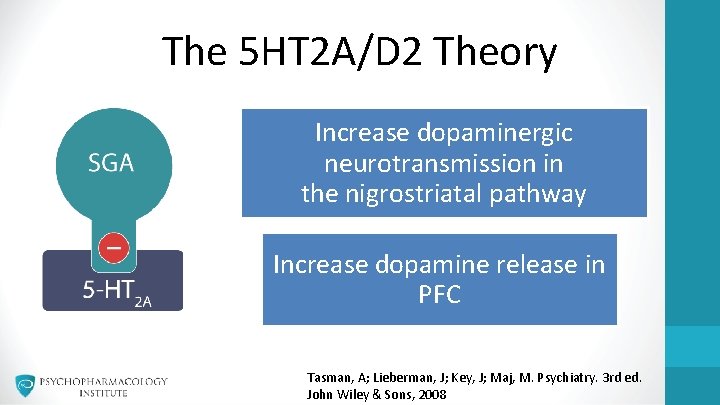
The 5 HT 2 A/D 2 Theory Increase dopaminergic neurotransmission in the nigrostriatal pathway Increase dopamine release in PFC Tasman, A; Lieberman, J; Key, J; Maj, M. Psychiatry. 3 rd ed. John Wiley & Sons, 2008
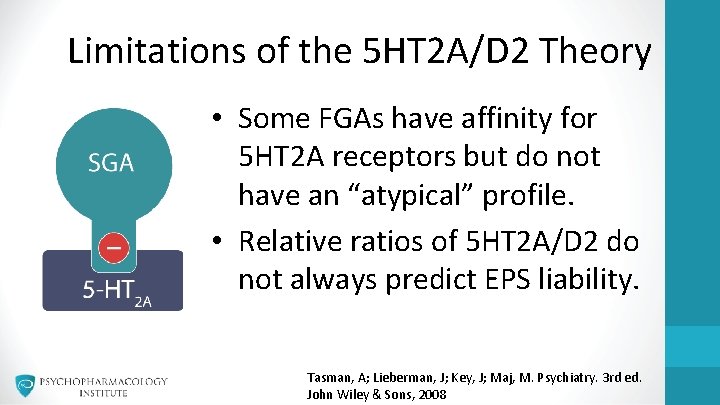
Limitations of the 5 HT 2 A/D 2 Theory • Some FGAs have affinity for 5 HT 2 A receptors but do not have an “atypical” profile. • Relative ratios of 5 HT 2 A/D 2 do not always predict EPS liability. Tasman, A; Lieberman, J; Key, J; Maj, M. Psychiatry. 3 rd ed. John Wiley & Sons, 2008
MOA of SGAs • • SGAs are 5 HT 2 A antagonists SGAs dissociate rapidly from D 2 receptors Some SGAs are 5 HT 1 A agonists Other findings
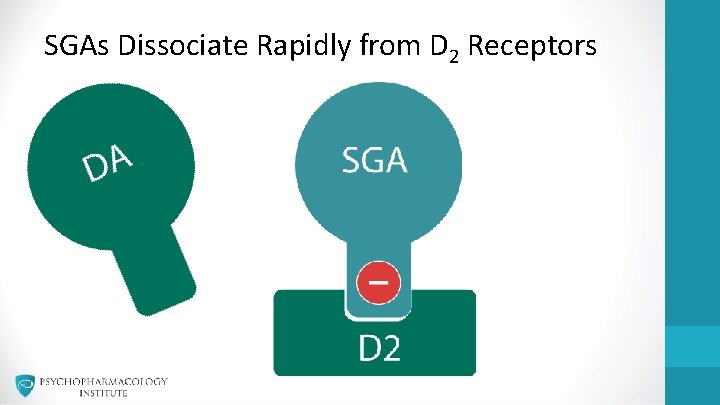
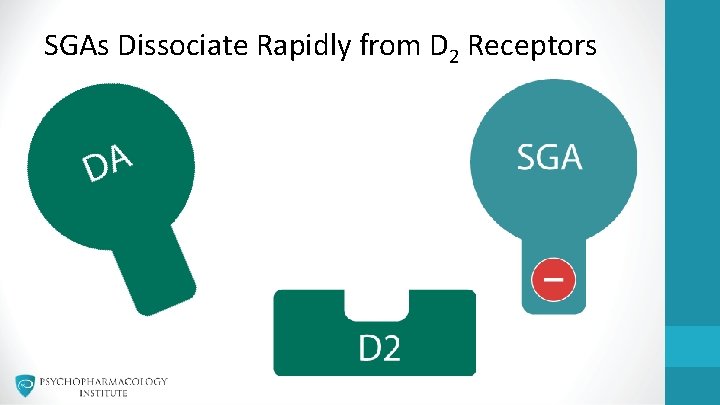
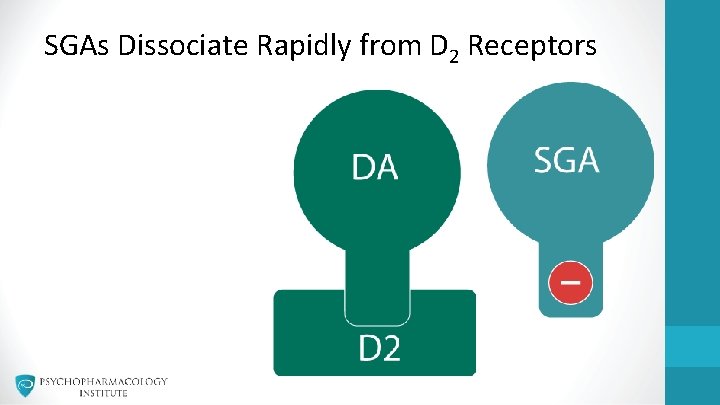
SGAs Dissociate Rapidly from D 2 Receptors FGA Clozapine and other SGAs Binding to D 2 receptors: “Tight” Binding to D 2 receptors: “Loose” Kapur S, Seeman P. Does fast dissociation from the dopamine d(2) receptor explain the action of atypical antipsychotics? : A new hypothesis. Am J Psychiatry. 2001; 158(3): 360 -9.
SGAs Dissociate Rapidly from D 2 Receptors
SGAs Dissociate Rapidly from D 2 Receptors
SGAs Dissociate Rapidly from D 2 Receptors
MOA of SGAs • • SGAs are 5 HT 2 A antagonists SGAs dissociate rapidly from D 2 receptors Some SGAs are 5 HT 1 A agonists Other findings
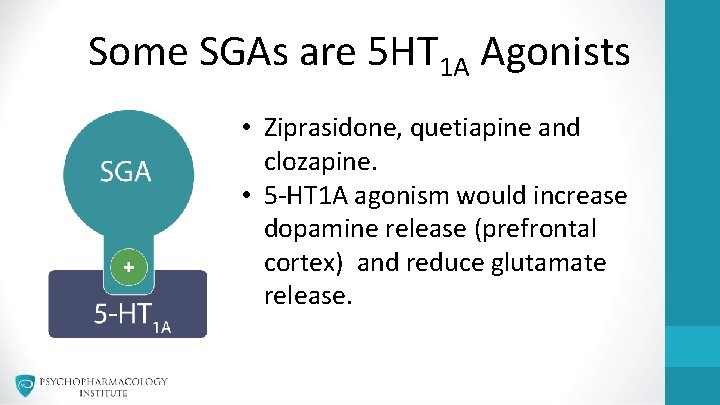
Some SGAs are 5 HT 1 A Agonists • Ziprasidone, quetiapine and clozapine. • 5 -HT 1 A agonism would increase dopamine release (prefrontal cortex) and reduce glutamate release.
MOA of SGAs • • SGAs are 5 HT 2 A antagonists SGAs dissociate rapidly from D 2 receptors Some SGAs are 5 HT 1 A agonists Other findings
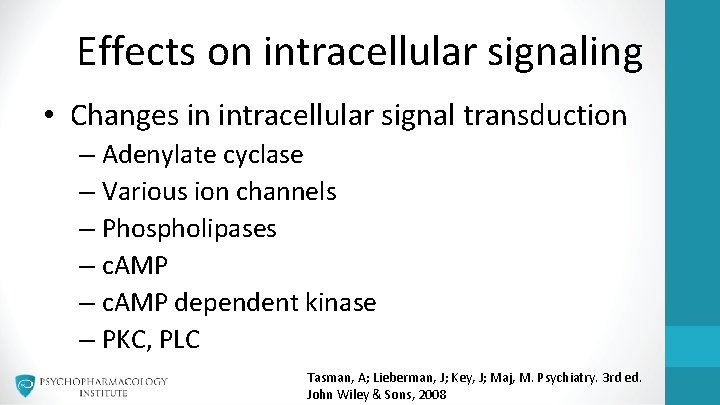
Effects on intracellular signaling • Changes in intracellular signal transduction – Adenylate cyclase – Various ion channels – Phospholipases – c. AMP dependent kinase – PKC, PLC Tasman, A; Lieberman, J; Key, J; Maj, M. Psychiatry. 3 rd ed. John Wiley & Sons, 2008
D 2 occupancy and EPS risk
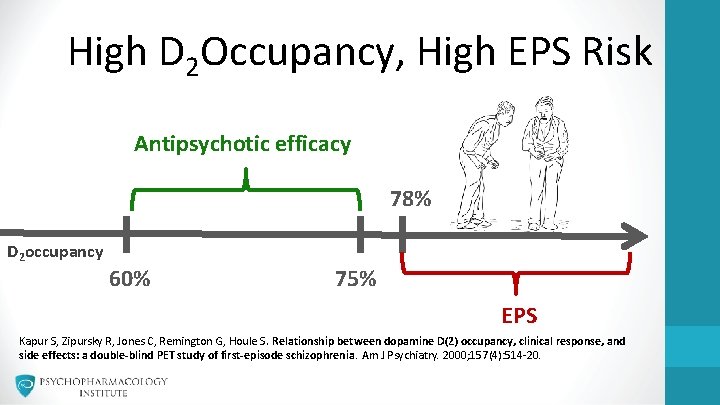
High D 2 Occupancy, High EPS Risk Antipsychotic efficacy 78% D 2 occupancy 60% 75% EPS Kapur S, Zipursky R, Jones C, Remington G, Houle S. Relationship between dopamine D(2) occupancy, clinical response, and side effects: a double-blind PET study of first-episode schizophrenia. Am J Psychiatry. 2000; 157(4): 514 -20.
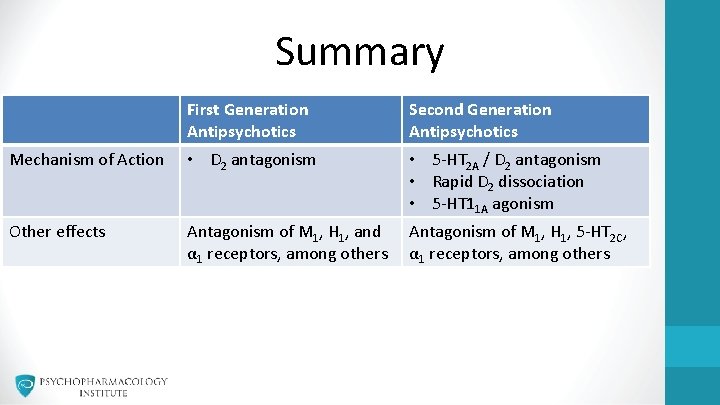
Summary First Generation Antipsychotics Second Generation Antipsychotics Mechanism of Action • D 2 antagonism • 5 -HT 2 A / D 2 antagonism • Rapid D 2 dissociation • 5 -HT 11 A agonism Other effects Antagonism of M 1, H 1, and α 1 receptors, among others Antagonism of M 1, H 1, 5 -HT 2 C, α 1 receptors, among others
References • • • Brunton LB, Lazo JS, Parker KL, eds. Goodman & Gilman's The Pharmacological Basis of Therapeutics. 12 th ed. New York: Mc. Graw-Hill; 2010. Stahl, S M. Stahl's Essential Psychopharmacology: Neuroscientific Basis and Practical Applications. 3 rd ed. New York: Cambrigde University Press; 2008 Tasman, A; Lieberman, J; Key, J; Maj, M. Psychiatry. 3 rd ed. John Wiley & Sons, 2008 Meltzer HY, Matsubara S, Lee JC. The ratios of 5 HT 2 and D 2 affinities differentiate atypical and typical antipsychotic drugs. Psychopharmacol Bull. 1989; 25(3): 390 -2. Kapur S, Seeman P. Does fast dissociation from the dopamine d(2) receptor explain the action of atypical antipsychotics? : A new hypothesis. Am J Psychiatry. 2001; 158(3): 360 -9.