
Antipsychotic Agents Schizophrenia Antipsychotic Agents A chemically diverse

- Slides: 18
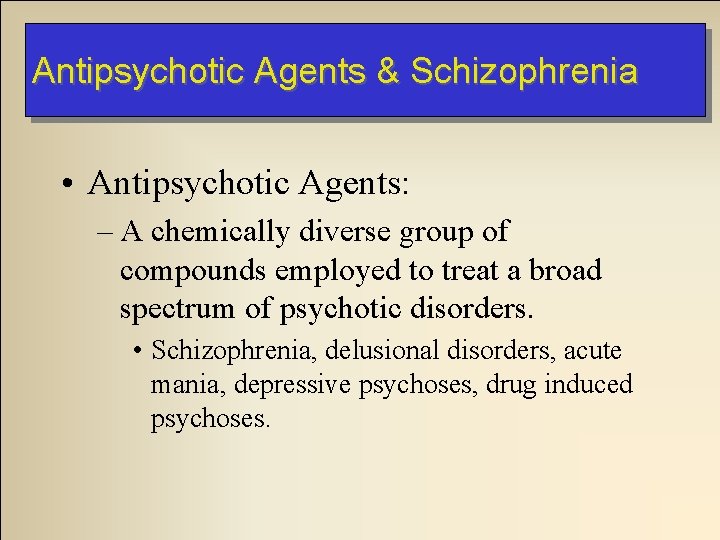
Antipsychotic Agents & Schizophrenia • Antipsychotic Agents: – A chemically diverse group of compounds employed to treat a broad spectrum of psychotic disorders. • Schizophrenia, delusional disorders, acute mania, depressive psychoses, drug induced psychoses.
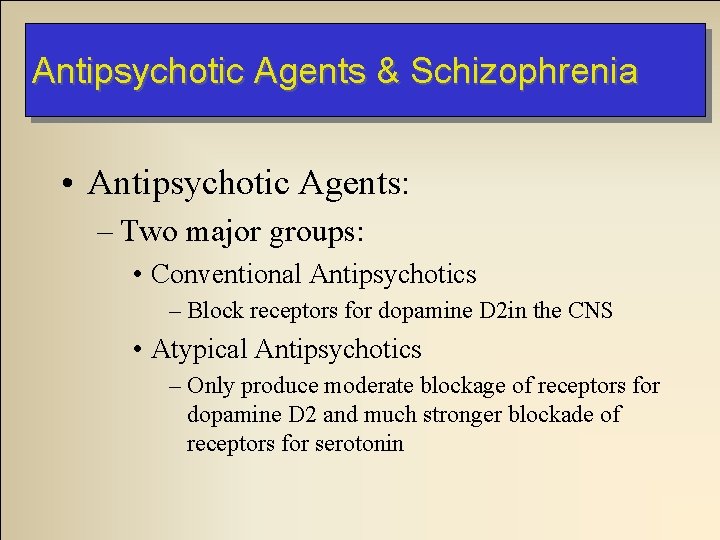
Antipsychotic Agents & Schizophrenia • Antipsychotic Agents: – Two major groups: • Conventional Antipsychotics – Block receptors for dopamine D 2 in the CNS • Atypical Antipsychotics – Only produce moderate blockage of receptors for dopamine D 2 and much stronger blockade of receptors for serotonin
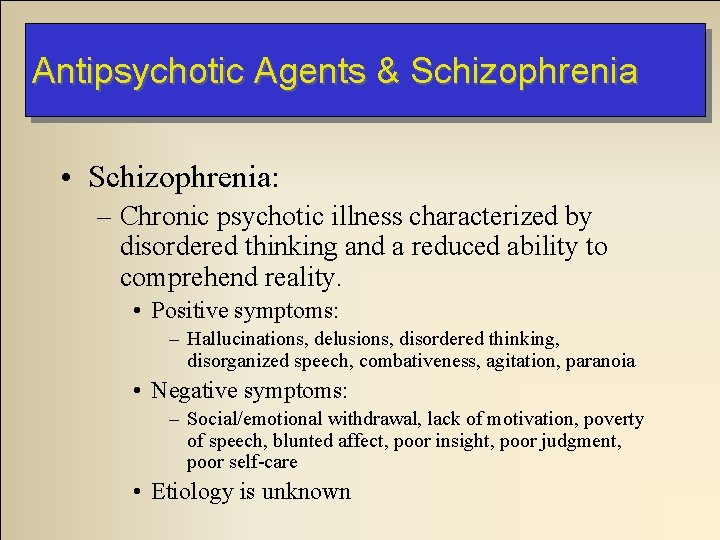
Antipsychotic Agents & Schizophrenia • Schizophrenia: – Chronic psychotic illness characterized by disordered thinking and a reduced ability to comprehend reality. • Positive symptoms: – Hallucinations, delusions, disordered thinking, disorganized speech, combativeness, agitation, paranoia • Negative symptoms: – Social/emotional withdrawal, lack of motivation, poverty of speech, blunted affect, poor insight, poor judgment, poor self-care • Etiology is unknown
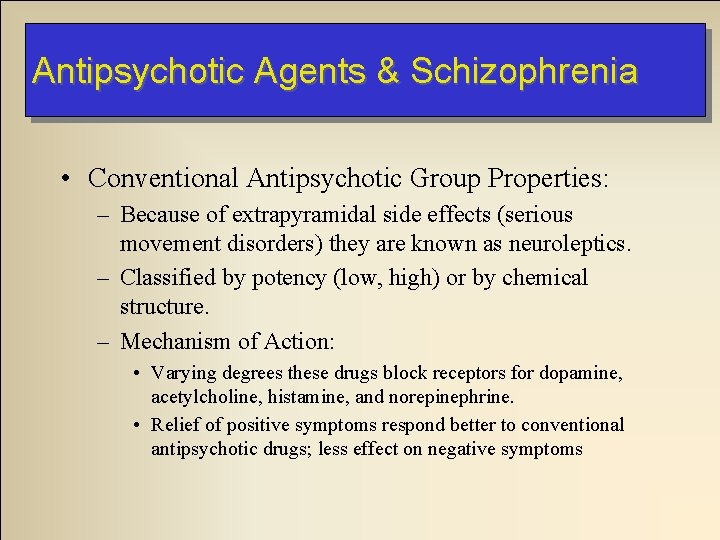
Antipsychotic Agents & Schizophrenia • Conventional Antipsychotic Group Properties: – Because of extrapyramidal side effects (serious movement disorders) they are known as neuroleptics. – Classified by potency (low, high) or by chemical structure. – Mechanism of Action: • Varying degrees these drugs block receptors for dopamine, acetylcholine, histamine, and norepinephrine. • Relief of positive symptoms respond better to conventional antipsychotic drugs; less effect on negative symptoms
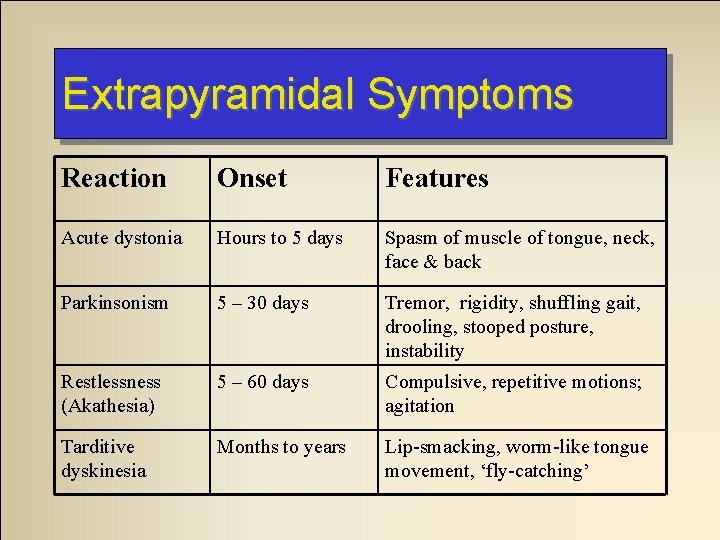
Extrapyramidal Symptoms Reaction Onset Features Acute dystonia Hours to 5 days Spasm of muscle of tongue, neck, face & back Parkinsonism 5 – 30 days Tremor, rigidity, shuffling gait, drooling, stooped posture, instability Restlessness (Akathesia) 5 – 60 days Compulsive, repetitive motions; agitation Tarditive dyskinesia Months to years Lip-smacking, worm-like tongue movement, ‘fly-catching’
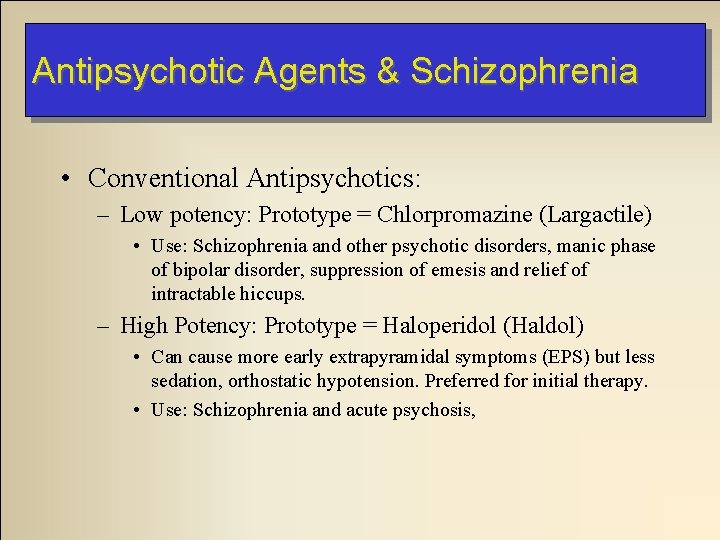
Antipsychotic Agents & Schizophrenia • Conventional Antipsychotics: – Low potency: Prototype = Chlorpromazine (Largactile) • Use: Schizophrenia and other psychotic disorders, manic phase of bipolar disorder, suppression of emesis and relief of intractable hiccups. – High Potency: Prototype = Haloperidol (Haldol) • Can cause more early extrapyramidal symptoms (EPS) but less sedation, orthostatic hypotension. Preferred for initial therapy. • Use: Schizophrenia and acute psychosis,
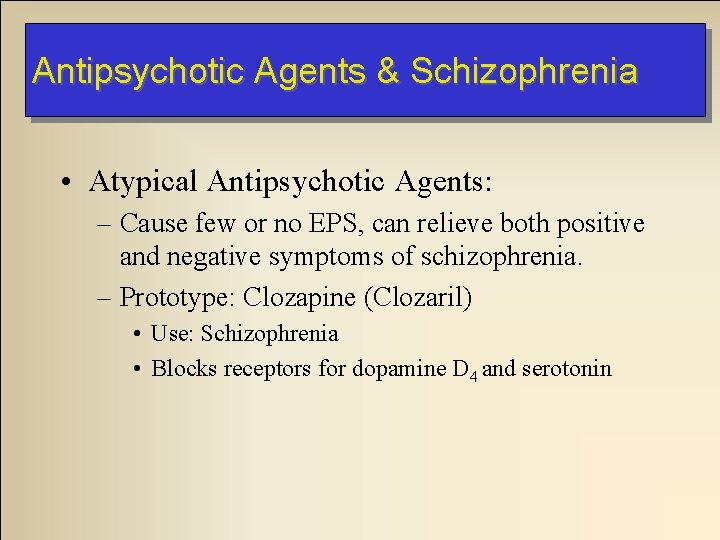
Antipsychotic Agents & Schizophrenia • Atypical Antipsychotic Agents: – Cause few or no EPS, can relieve both positive and negative symptoms of schizophrenia. – Prototype: Clozapine (Clozaril) • Use: Schizophrenia • Blocks receptors for dopamine D 4 and serotonin
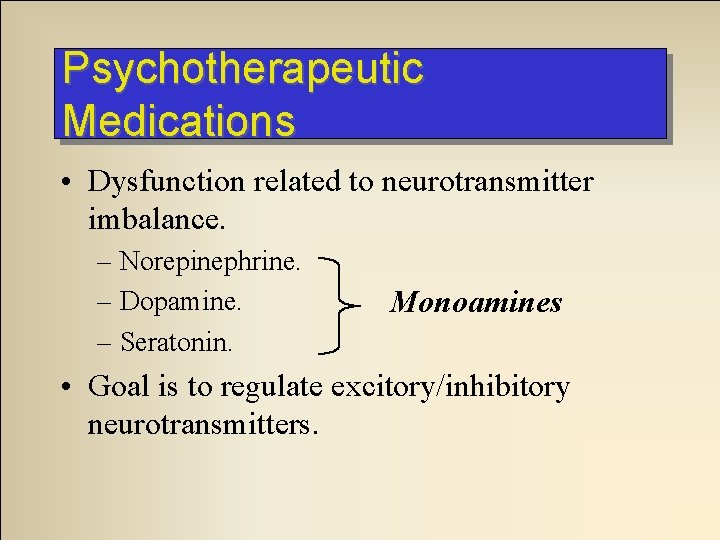
Psychotherapeutic Medications • Dysfunction related to neurotransmitter imbalance. – Norepinephrine. – Dopamine. – Seratonin. Monoamines • Goal is to regulate excitory/inhibitory neurotransmitters.
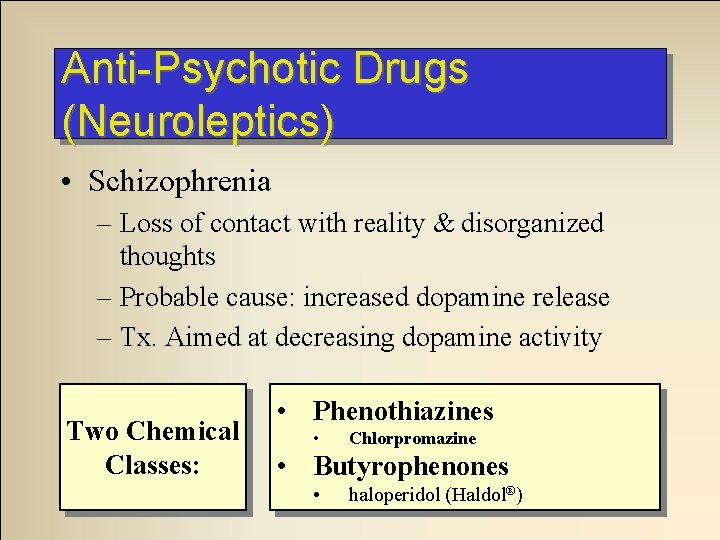
Anti-Psychotic Drugs (Neuroleptics) • Schizophrenia – Loss of contact with reality & disorganized thoughts – Probable cause: increased dopamine release – Tx. Aimed at decreasing dopamine activity Two Chemical Classes: • Phenothiazines • Chlorpromazine • Butyrophenones • haloperidol (Haldol®)
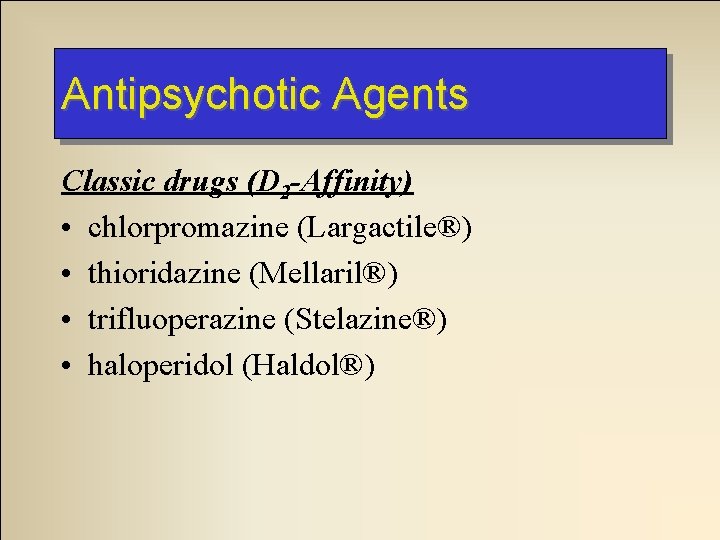
Antipsychotic Agents Classic drugs (D 2 -Affinity) • chlorpromazine (Largactile®) • thioridazine (Mellaril®) • trifluoperazine (Stelazine®) • haloperidol (Haldol®)
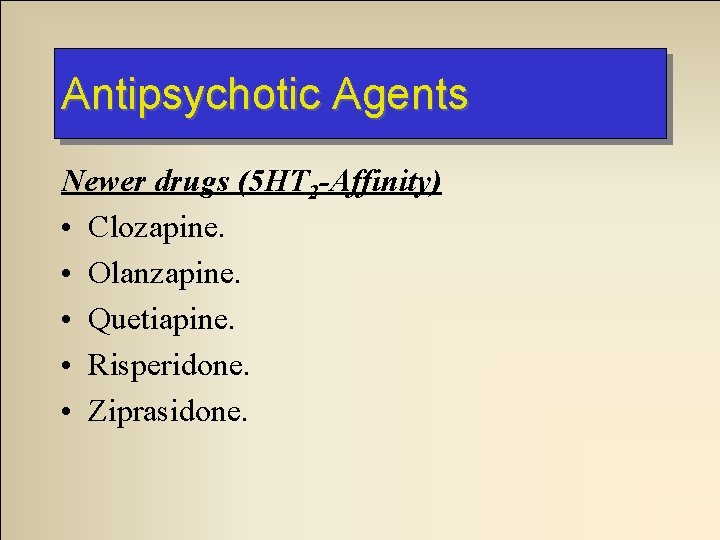
Antipsychotic Agents Newer drugs (5 HT 2 -Affinity) • Clozapine. • Olanzapine. • Quetiapine. • Risperidone. • Ziprasidone.
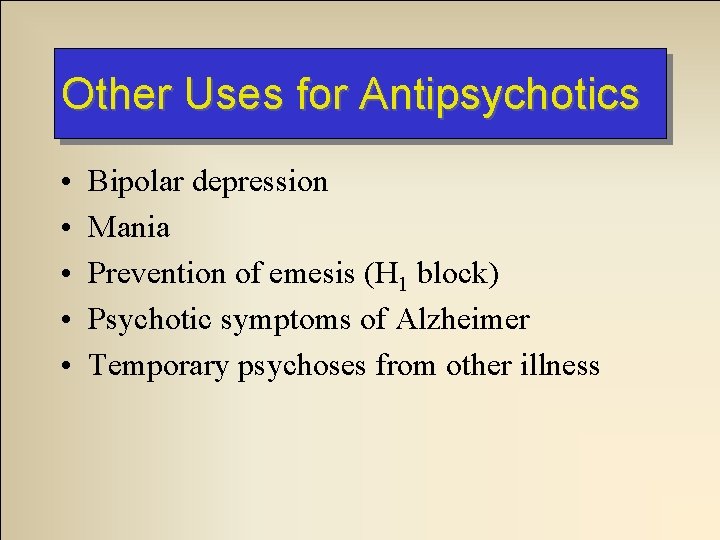
Other Uses for Antipsychotics • • • Bipolar depression Mania Prevention of emesis (H 1 block) Psychotic symptoms of Alzheimer Temporary psychoses from other illness
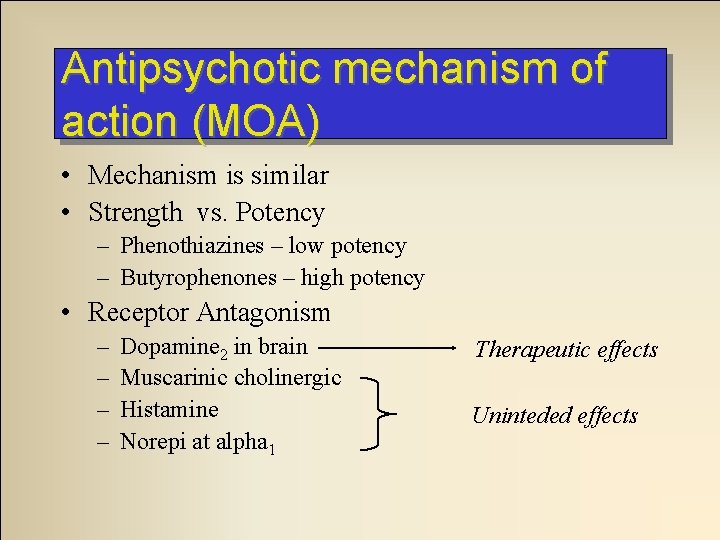
Antipsychotic mechanism of action (MOA) • Mechanism is similar • Strength vs. Potency – Phenothiazines – low potency – Butyrophenones – high potency • Receptor Antagonism – – Dopamine 2 in brain Muscarinic cholinergic Histamine Norepi at alpha 1 Therapeutic effects Uninteded effects
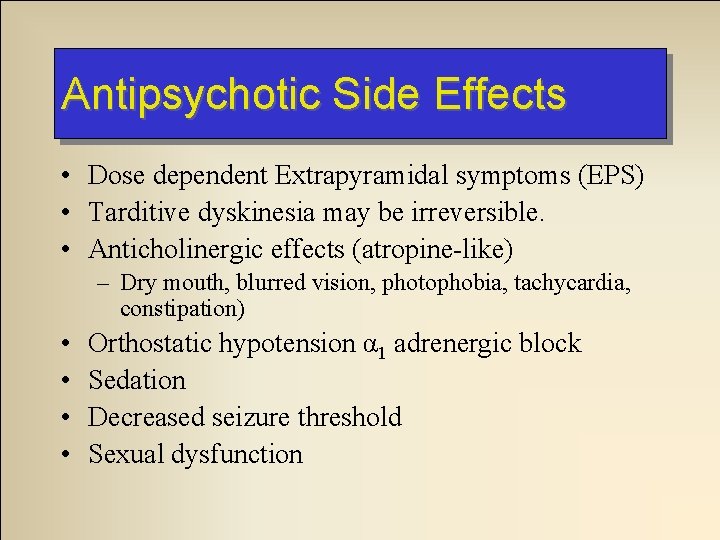
Antipsychotic Side Effects • Dose dependent Extrapyramidal symptoms (EPS) • Tarditive dyskinesia may be irreversible. • Anticholinergic effects (atropine-like) – Dry mouth, blurred vision, photophobia, tachycardia, constipation) • • Orthostatic hypotension α 1 adrenergic block Sedation Decreased seizure threshold Sexual dysfunction
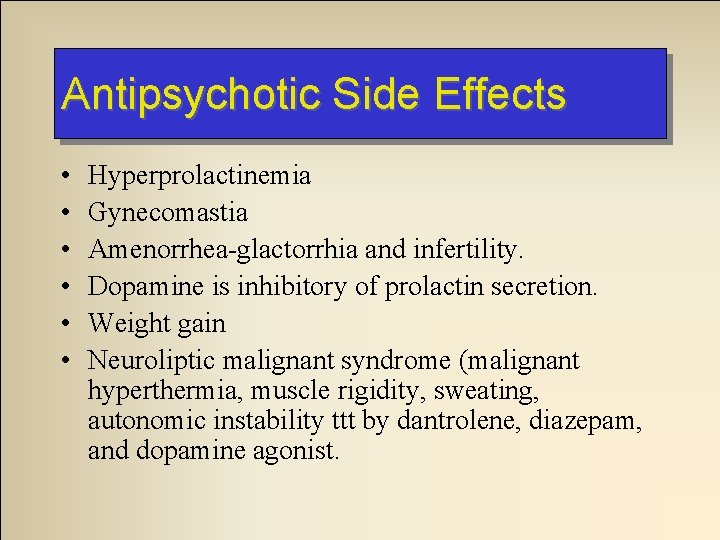
Antipsychotic Side Effects • • • Hyperprolactinemia Gynecomastia Amenorrhea-glactorrhia and infertility. Dopamine is inhibitory of prolactin secretion. Weight gain Neuroliptic malignant syndrome (malignant hyperthermia, muscle rigidity, sweating, autonomic instability ttt by dantrolene, diazepam, and dopamine agonist.
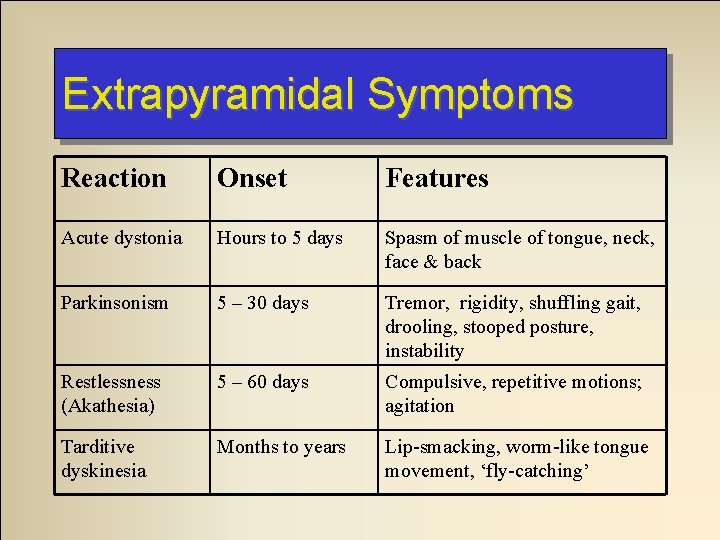
Extrapyramidal Symptoms Reaction Onset Features Acute dystonia Hours to 5 days Spasm of muscle of tongue, neck, face & back Parkinsonism 5 – 30 days Tremor, rigidity, shuffling gait, drooling, stooped posture, instability Restlessness (Akathesia) 5 – 60 days Compulsive, repetitive motions; agitation Tarditive dyskinesia Months to years Lip-smacking, worm-like tongue movement, ‘fly-catching’
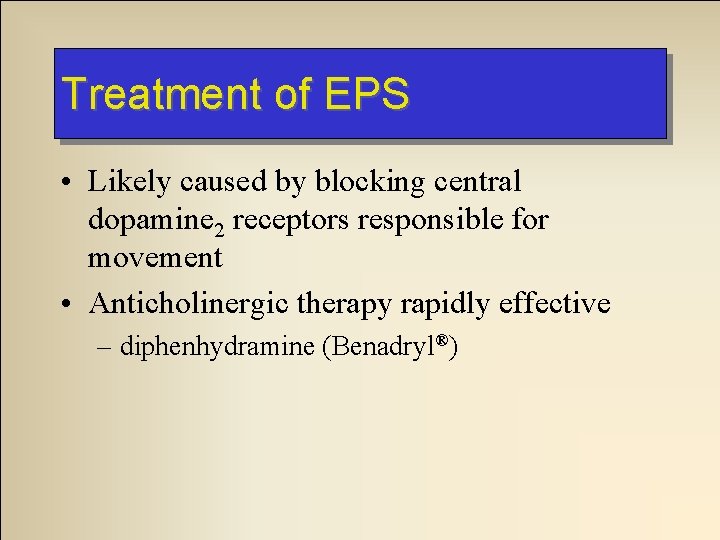
Treatment of EPS • Likely caused by blocking central dopamine 2 receptors responsible for movement • Anticholinergic therapy rapidly effective – diphenhydramine (Benadryl®)
Thank You Team