
Antipsychotic Agents and Their Use in Schizophrenia Antipsychotic

- Slides: 37
Antipsychotic Agents and Their Use in Schizophrenia
Antipsychotic Agents Chemically diverse group of compounds Used for diverse spectrum of psychotic disorders Schizophrenia, delusional disorders, bipolar disorders, depressive psychoses, drug-induced psychoses Ø Also used to suppress emesis and to treat Tourette’s syndrome and Huntington’s chorea Ø Should not be used to treat dementia in the older adult
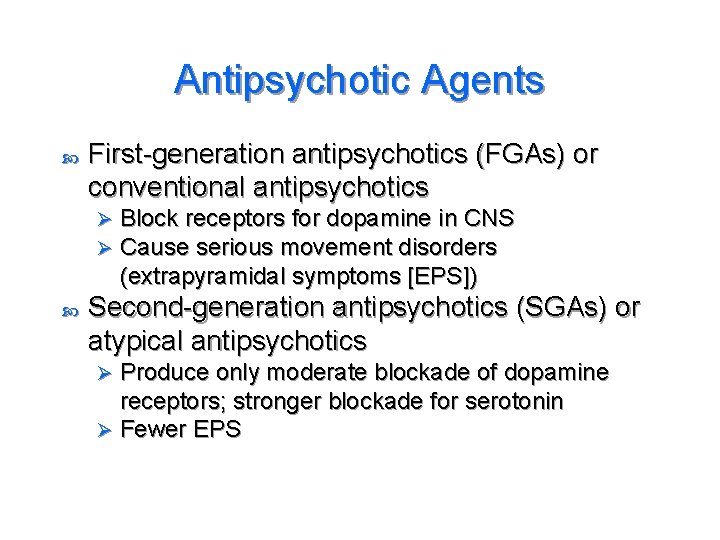
Antipsychotic Agents First-generation antipsychotics (FGAs) or conventional antipsychotics Ø Ø Block receptors for dopamine in CNS Cause serious movement disorders (extrapyramidal symptoms [EPS]) Second-generation antipsychotics (SGAs) or atypical antipsychotics Produce only moderate blockade of dopamine receptors; stronger blockade for serotonin Ø Fewer EPS Ø
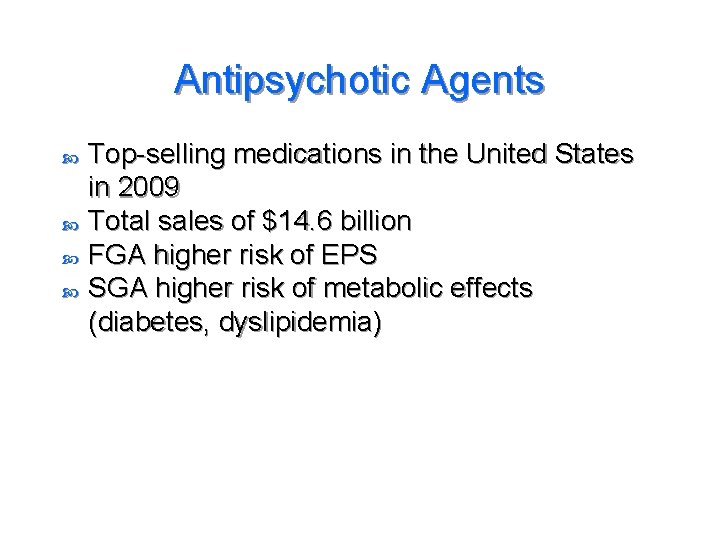
Antipsychotic Agents Top-selling medications in the United States in 2009 Total sales of $14. 6 billion FGA higher risk of EPS SGA higher risk of metabolic effects (diabetes, dyslipidemia)
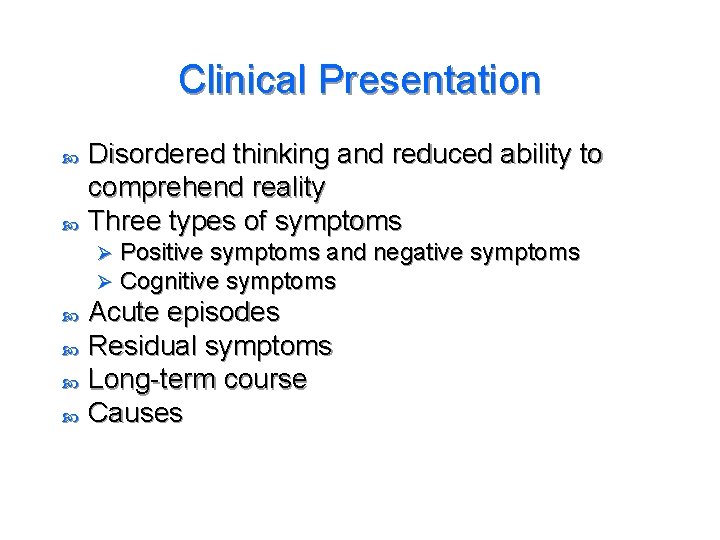
Clinical Presentation Disordered thinking and reduced ability to comprehend reality Three types of symptoms Ø Ø Positive symptoms and negative symptoms Cognitive symptoms Acute episodes Residual symptoms Long-term course Causes
Conventional Antipsychotic Agents I: Group Properties Classification Mechanism of action Therapeutic uses Adverse effects Physical and psychologic dependence Drug interactions Toxicity
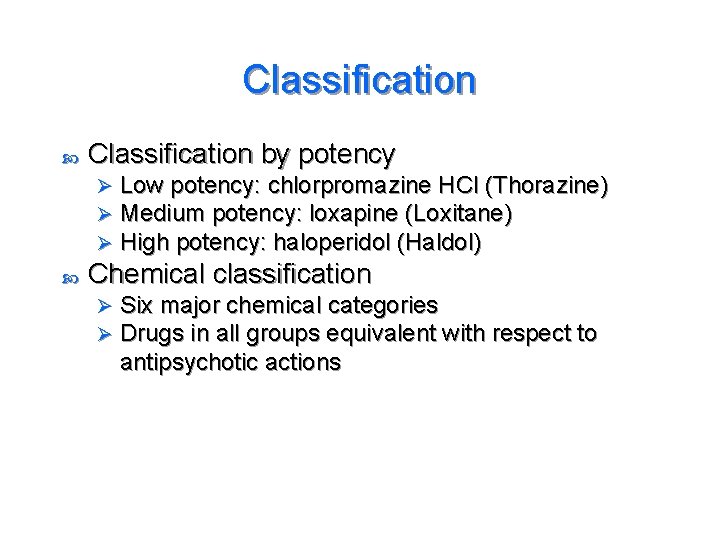
Classification by potency Ø Ø Ø Low potency: chlorpromazine HCl (Thorazine) Medium potency: loxapine (Loxitane) High potency: haloperidol (Haldol) Chemical classification Ø Ø Six major chemical categories Drugs in all groups equivalent with respect to antipsychotic actions
Mechanism of Action Conventional antipsychotic drugs block a variety of receptors within and outside the CNS They block dopamine 2 (D 2) receptors in the mesolimbic area of the brain
Therapeutic Uses Schizophrenia Bipolar disorder (manic-depressive illness) Tourette’s syndrome Prevention of emesis Other applications
Adverse Effects Extrapyramidal symptoms (EPS) Acute dystonia Parkinsonism Akathisia Tardive dyskinesia
Adverse Effects Other adverse effects Ø Neuroleptic malignant syndrome • Rare but serious reaction • Risk of death without treatment • Sweating, rigidity, sudden high fever, autonomic instability Anticholinergic effects • See Table 31 -3. Ø Orthostatic hypotension Ø
Adverse Effects Other adverse effects (cont’d) Ø Ø Ø Ø Sedation Neuroendocrine effects Seizures Sexual dysfunction Dermatologic effects Agranulocytosis Severe dysrhythmias
Physical and Psychologic Dependence Development of physical and psychologic dependence is rare Abrupt withdrawal of antipsychotics can precipitate a mild abstinence syndrome
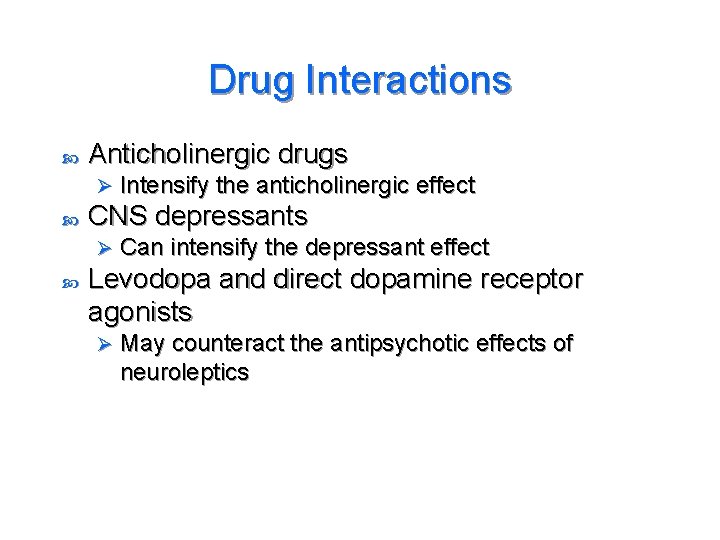
Drug Interactions Anticholinergic drugs Ø CNS depressants Ø Intensify the anticholinergic effect Can intensify the depressant effect Levodopa and direct dopamine receptor agonists Ø May counteract the antipsychotic effects of neuroleptics
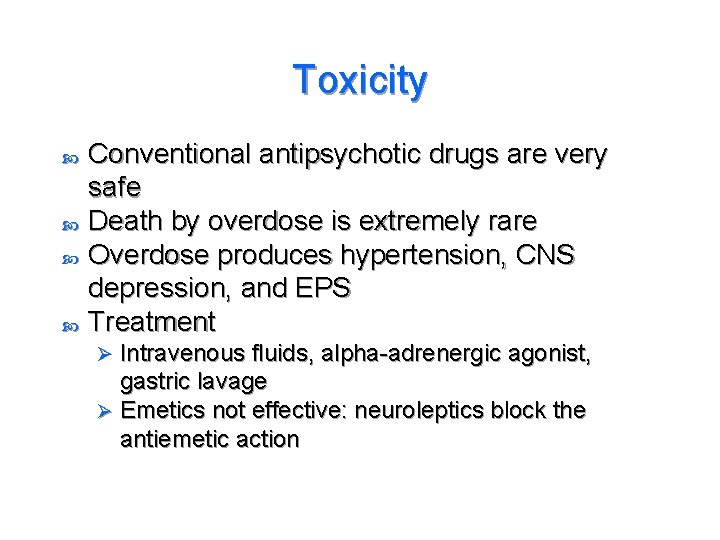
Toxicity Conventional antipsychotic drugs are very safe Death by overdose is extremely rare Overdose produces hypertension, CNS depression, and EPS Treatment Intravenous fluids, alpha-adrenergic agonist, gastric lavage Ø Emetics not effective: neuroleptics block the antiemetic action Ø
Conventional Antipsychotic Agents II: Individual Agents Low-potency agents Medium-potency agents High-potency agents Depot preparations
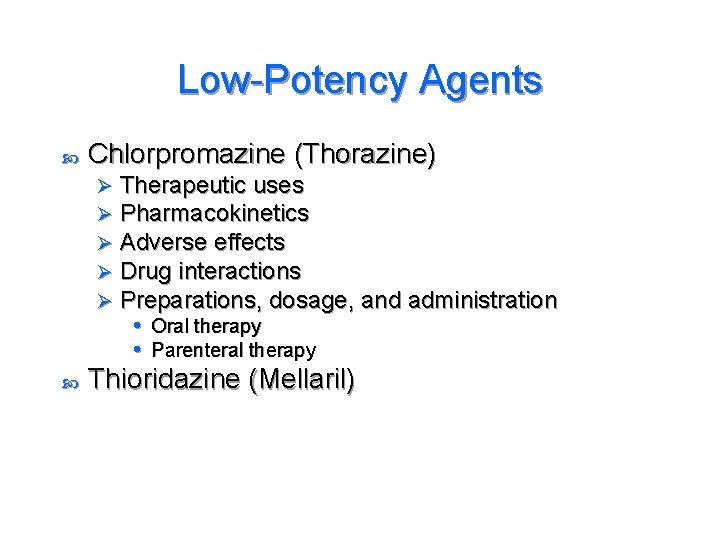
Low-Potency Agents Chlorpromazine (Thorazine) Ø Ø Ø Therapeutic uses Pharmacokinetics Adverse effects Drug interactions Preparations, dosage, and administration • Oral therapy • Parenteral therapy Thioridazine (Mellaril)
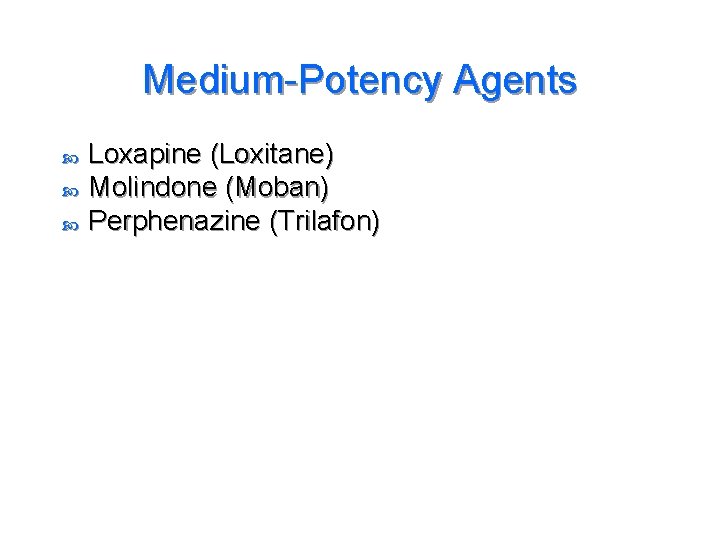
Medium-Potency Agents Loxapine (Loxitane) Molindone (Moban) Perphenazine (Trilafon)
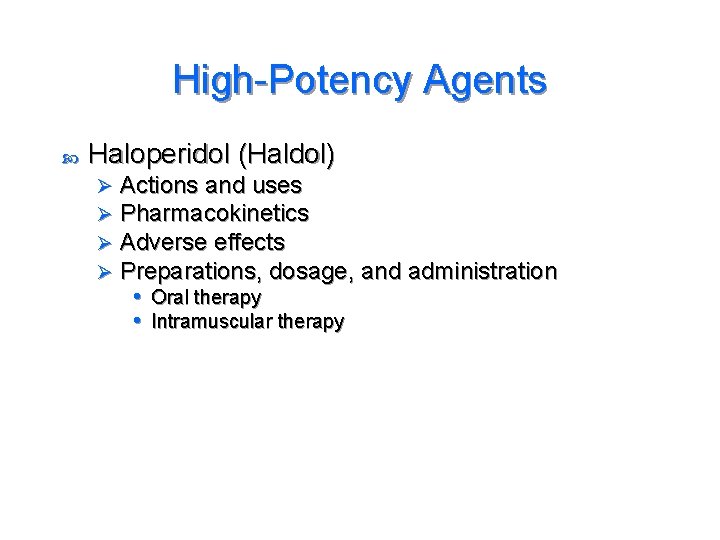
High-Potency Agents Haloperidol (Haldol) Ø Ø Actions and uses Pharmacokinetics Adverse effects Preparations, dosage, and administration • Oral therapy • Intramuscular therapy
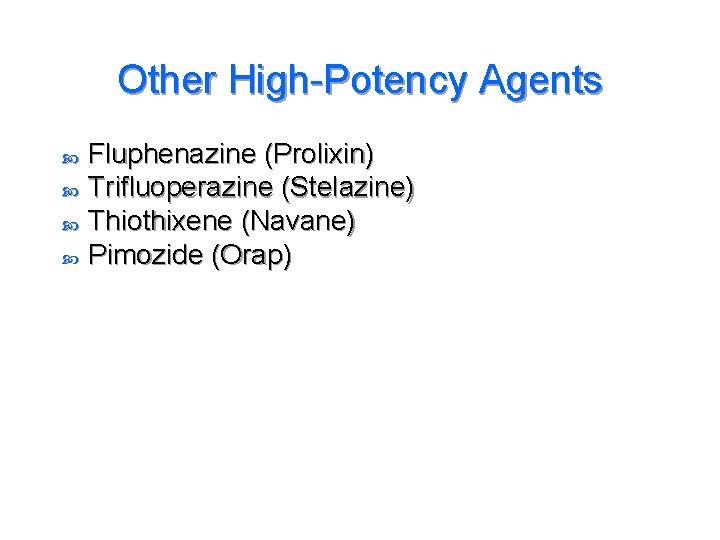
Other High-Potency Agents Fluphenazine (Prolixin) Trifluoperazine (Stelazine) Thiothixene (Navane) Pimozide (Orap)
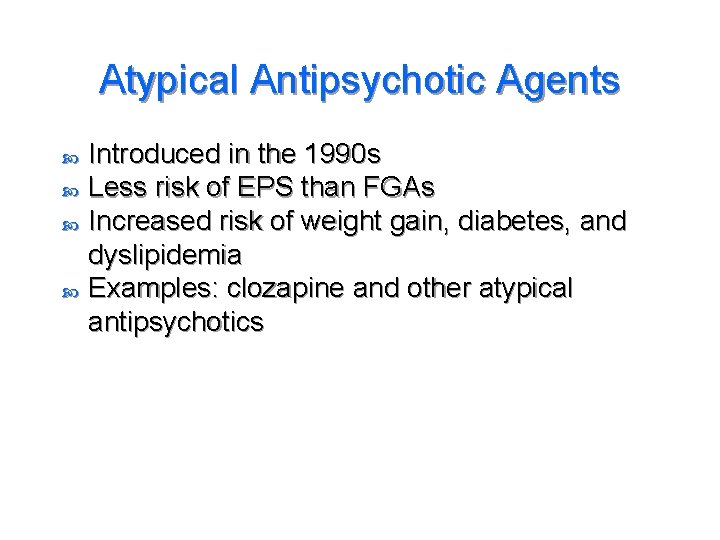
Atypical Antipsychotic Agents Introduced in the 1990 s Less risk of EPS than FGAs Increased risk of weight gain, diabetes, and dyslipidemia Examples: clozapine and other atypical antipsychotics
Clozapine Mechanism of action Ø Therapeutic use Ø Ø Blocks dopamine and serotonin Schizophrenia Levodopa-induced psychosis Pharmacokinetics
Clozapine Adverse effects and interactions Agranulocytosis Seizures Diabetes Weight gain Myocarditis Effects in older adult patients with dementia • About double the mortality rate Ø Drug interactions Ø Ø Ø Preparations, dosage, and administration
Other Atypical Antipsychotics Risperidone (Risperdal) Mechanism of action • Binds to multiple receptors Ø Pharmacokinetics Ø Therapeutic effects Ø Adverse effects • Generally infrequent and mild Ø Preparations, dosage, and administration • Schizophrenia, oral therapy • Schizophrenia, intramuscular therapy • Bipolar disorder Ø
Other Atypical Antipsychotics Olanzapine (Zyprexa) Mechanism of action • Blocks 5 -HT 2 receptors • Blocks D 2 receptors Ø Pharmacokinetics Ø Therapeutic uses • Schizophrenia • Bipolar disorder Ø Adverse effects Ø
Other Atypical Antipsychotics Olanzapine (Zyprexa) (cont’d) Ø Preparations, dosage, and administration • Schizophrenia dosage Oral dosage Oral formulation • Bipolar disorder dosage
Other Atypical Antipsychotics Quetiapine (Seroquel) Ø Ø Ø Actions and uses Pharmacokinetics Adverse effects Drug interactions Preparations, dosage, and administration • Schizophrenia dosage • Bipolar disorder dosage
Other Atypical Antipsychotics Ziprasidone (Geodon) Mechanism of action • Blocks multiple receptors: D 2, 5 -HT 2, H 1 Ø Pharmacokinetics Ø Adverse effects Ø Drug interactions Ø Preparations, dosage, and administration • Schizophrenia, intramuscular dosage • Bipolar disorder (see Table 31 -4) Ø
Other Atypical Antipsychotics Aripiprazole (Abilify) Contrasts with other atypical antipsychotic agents Mechanism of action • Blocks multiple receptor types Ø Pharmacokinetics Ø Adverse effects Ø Drug interactions Ø Preparations, dosage, and administration • Schizophrenia dosage • Bipolar disorder dosage Ø Ø
Depot Preparations Depot antipsychotics: long-acting, injectable formulations used for long-term maintenance therapy of schizophrenia No evidence that depot preparations pose an increased risk of side effects Three depot preparations available Ø Ø Ø Haloperidol decanoate (Haldol Decanoate) Fluphenazine decanoate (Prolixin Decanoate) Risperidone microspheres (Risperdal Consta)
Schizophrenia Drug Therapy Three major objectives Ø Ø Ø Suppression of acute episodes Prevention of acute exacerbations Maintenance of the highest possible level of functioning Drug selection Dosing Route Ø Ø Oral (tablets, capsules, liquids) Intramuscular
Schizophrenia Drug Therapy Most FGAs and SGAs are equally effective, except for clozapine, which is more effective than the rest Ø Ø Ø FGAs: significant risk of EPS SGAs: risk of metabolic effects FGAs: cost 10 times less than SGAs
Schizophrenia Drug Therapy Dosing Ø Ø Ø Highly individualized Older adult patients require relatively small doses. Size and timing likely to be changed over course of therapy Routes Ø Ø Oral (preferred) Intramuscular
Schizophrenia Drug Therapy Initial therapy Maintenance therapy Adjunctive drugs Ø Ø Benzodiazepines Antidepressants
Schizophrenia Drug Therapy Promoting adherence Ensure that the medication is taken Encourage family members to oversee medication for outpatients Ø Provide patients with instructions Ø Inform patients and their families that antipsychotics must be taken on a regular schedule Ø Ø
Schizophrenia Drug Therapy Promoting adherence (cont’d) Inform patients about side effects of treatment Assure patients that antipsychotic drug use does not lead to addiction Ø Establish a good therapeutic relationship with patient Ø Use an intramuscular depot preparation for longterm therapy Ø Ø
Schizophrenia Nondrug Therapy Counseling for patient and family Behavioral therapy Vocational training