
Antiprotozoal inhibitors Komal Pareek 1 Protozoa Eucaryotes unicellular
Antiprotozoal inhibitors Komal Pareek 1
Protozoa Eucaryotes, unicellular (may exist in colonies) Protozoa and algae (protocista) Complex replication (sexual and asexual) Patogenic P. most common tropical area 3. world diseases Many diseases can be prevented by clean drinking water Certain protozal diseases spread by insects 2
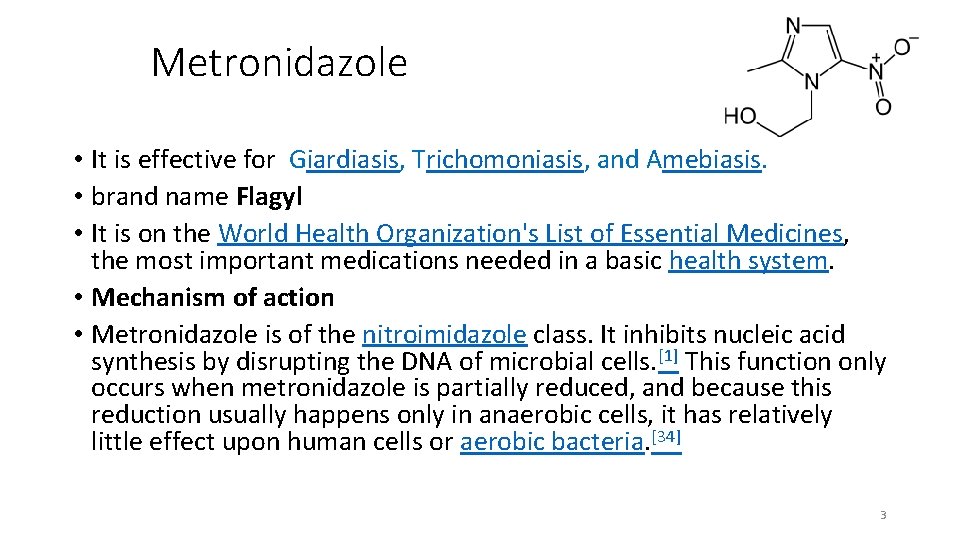
Metronidazole • It is effective for Giardiasis, Trichomoniasis, and Amebiasis. • brand name Flagyl • It is on the World Health Organization's List of Essential Medicines, the most important medications needed in a basic health system. • Mechanism of action • Metronidazole is of the nitroimidazole class. It inhibits nucleic acid synthesis by disrupting the DNA of microbial cells. [1] This function only occurs when metronidazole is partially reduced, and because this reduction usually happens only in anaerobic cells, it has relatively little effect upon human cells or aerobic bacteria. [34] 3
• Adverse events- nausea, diarrhoea, weight loss, abdominal pain, vomiting, headache, dizziness, and metallic taste in the mouth. 4
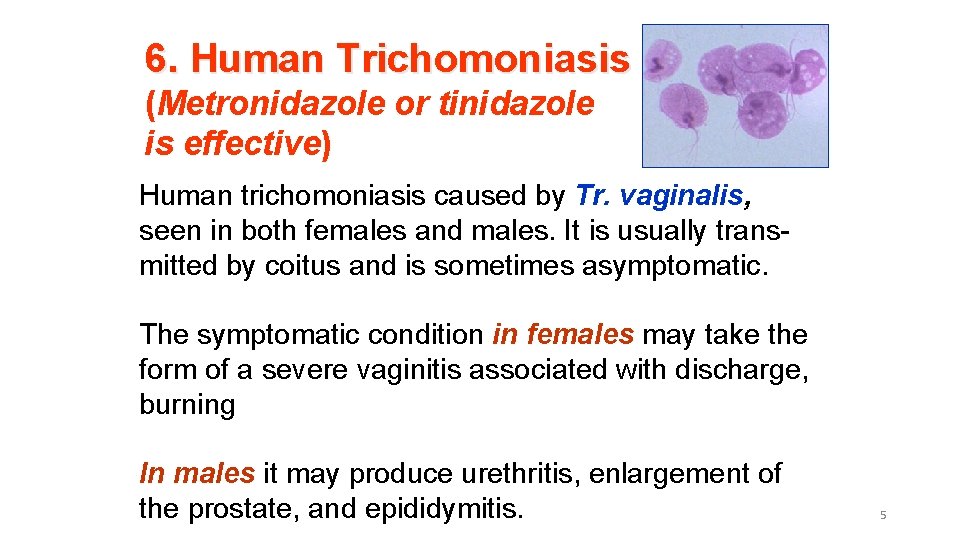
6. Human Trichomoniasis (Metronidazole or tinidazole is effective) Human trichomoniasis caused by Tr. vaginalis, seen in both females and males. It is usually transmitted by coitus and is sometimes asymptomatic. The symptomatic condition in females may take the form of a severe vaginitis associated with discharge, burning In males it may produce urethritis, enlargement of the prostate, and epididymitis. 5

Treatment of diseases caused by amebia, giardia, trichomonas Metronidazol Flagyl®, Metronidazol® Related comp. treatment of African sleeping sickness Also effective against anaerobic bacteria Probably pro-drug -reductive activation (mech. not fully understood) Formation of toxic reactive oxygen species 6
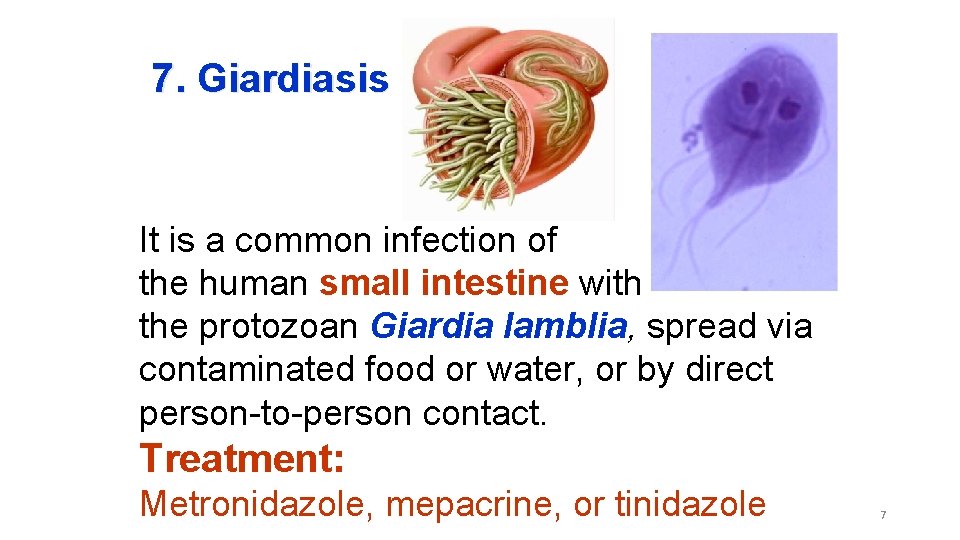
7. Giardiasis It is a common infection of the human small intestine with the protozoan Giardia lamblia, spread via contaminated food or water, or by direct person-to-person contact. Treatment: Metronidazole, mepacrine, or tinidazole 7
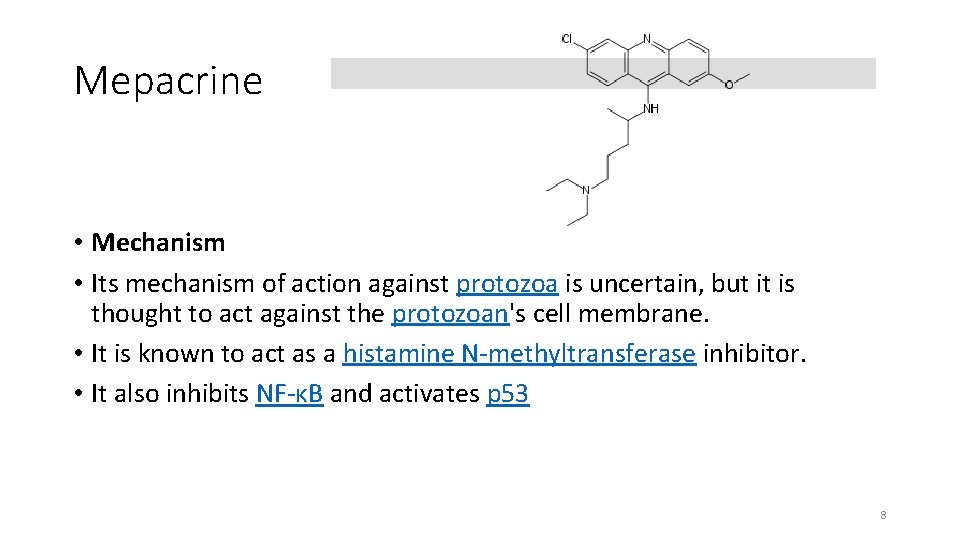
Mepacrine • Mechanism • Its mechanism of action against protozoa is uncertain, but it is thought to act against the protozoan's cell membrane. • It is known to act as a histamine N-methyltransferase inhibitor. • It also inhibits NF-κB and activates p 53 8
Antiprotozoal Mepacrine was initially approved in the 1930 s as an antimalarial drug. It was used extensively during the second World War by US forces fighting in the Far East to prevent malaria. This antiprotozoal is also approved for the treatment of giardiasis (an intestinal parasite), has been researched as an inhibitor of phospholipase A 2. Scientists at Bayer in Germany first synthesised mepacrine in 1931. The product was one of the first synthetic substitutes for quinine although later superseded by chloroquine. Anthelmintics In addition it has been used for treating tapeworm infections 9
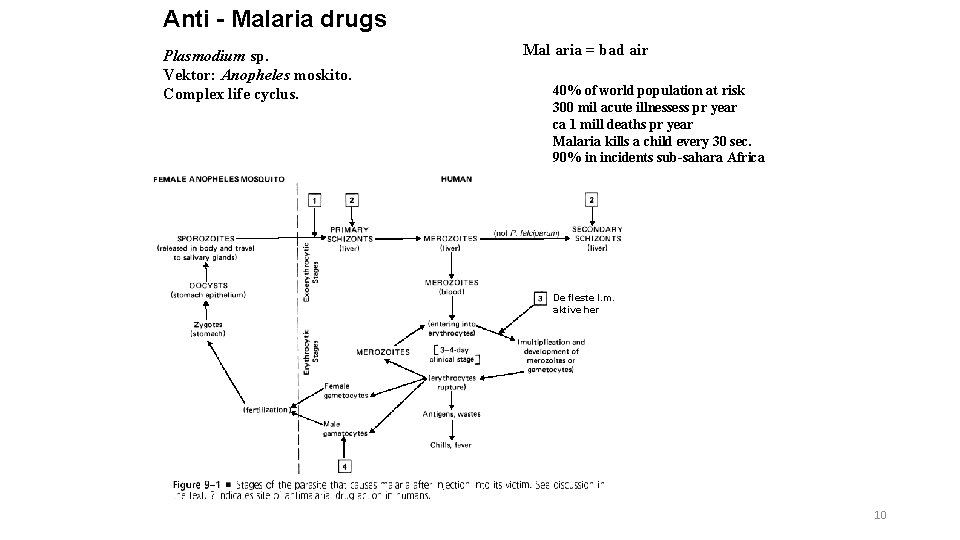
Anti - Malaria drugs Plasmodium sp. Vektor: Anopheles moskito. Complex life cyclus. Mal aria = bad air 40% of world population at risk 300 mil acute illnessess pr year ca 1 mill deaths pr year Malaria kills a child every 30 sec. 90% in incidents sub-sahara Africa De fleste l. m. aktive her 10
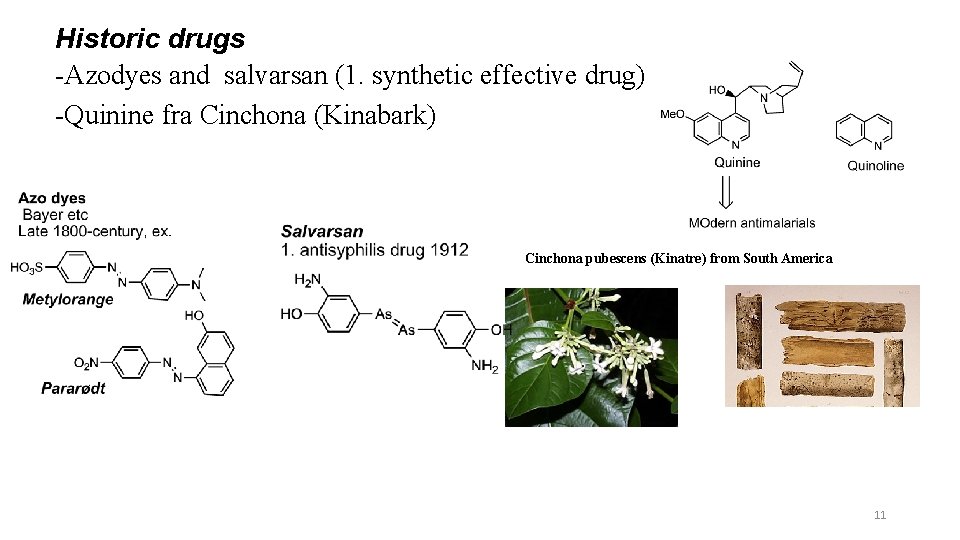
Historic drugs -Azodyes and salvarsan (1. synthetic effective drug) -Quinine fra Cinchona (Kinabark) Cinchona pubescens (Kinatre) from South America 11
Mechanism (DNA Intercalation) Ferriprotoporphyrin IX: Binds to FPIX (metabolite from hemoglobine); tox. form of FPIX, proteinbound FPIX less tox. ) Weak base Hypothesis: Increase p. H in parasite 12
- Slides: 12